-
-
-
-
-
-
-
-
-
-
-
-
-
-
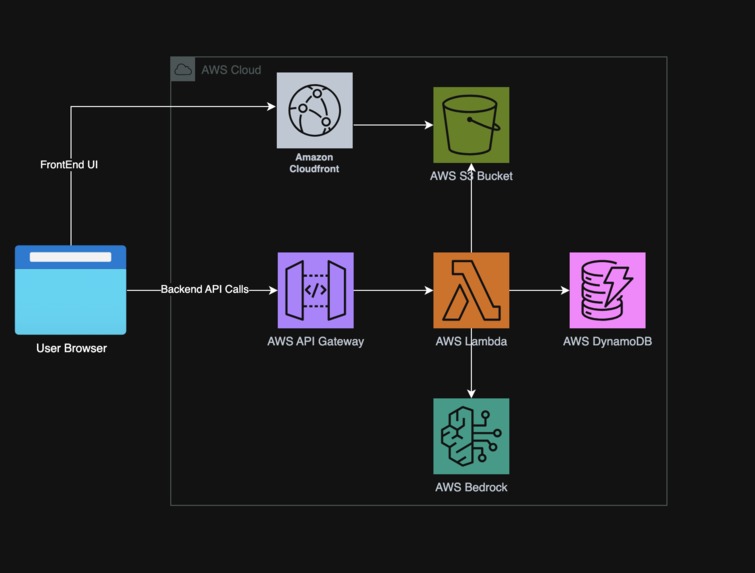
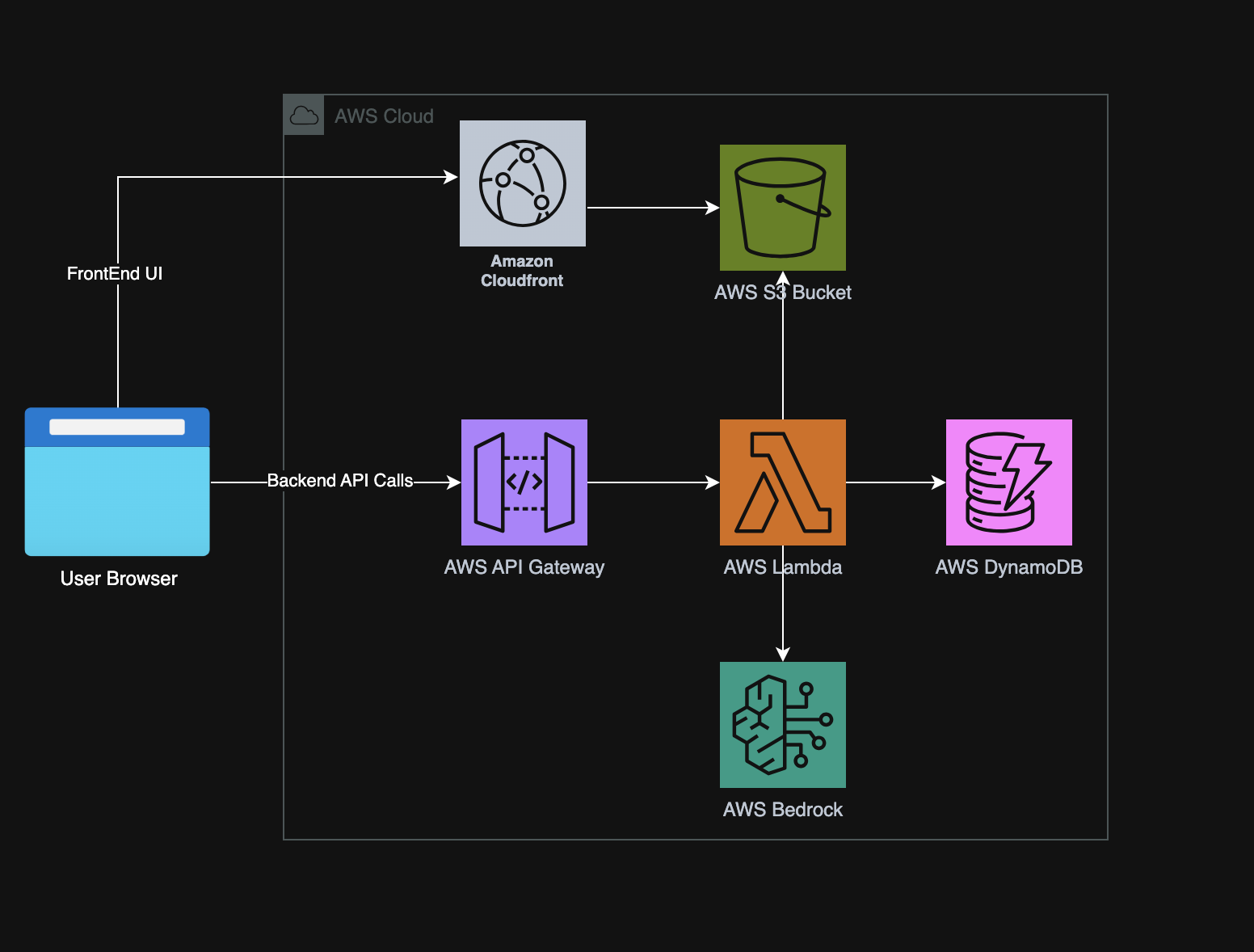
AWS High level Design
FocusFlow AI - Project Story
Inspiration
As a father of a special needs child, I've always been deeply concerned about understanding my daughter's visual capabilities and providing her with the right therapeutic support. One of my biggest questions was: How accurate is my daughter's vision? Is she truly gazing and tracking objects with her eyes?
Traditional eye-tracking assessments require expensive equipment, specialized facilities, and appointments that can be challenging for families with special needs children. I wanted to create something that could:
- Measure visual attention accurately - Give parents and therapists objective data about a child's eye-gaze capabilities
- Provide eye stimulation - Offer engaging exercises that encourage children to practice visual tracking
- Be accessible - Work with just a webcam, making it available to any family, anywhere
- Generate insights - Use AI to analyze performance and provide actionable recommendations
The inspiration came from watching my daughter during therapy sessions and wishing I had a tool that could help us practice at home, track her progress, and understand her visual development better. FocusFlow AI was born from a parent's love and a developer's determination to make a difference.
What it does
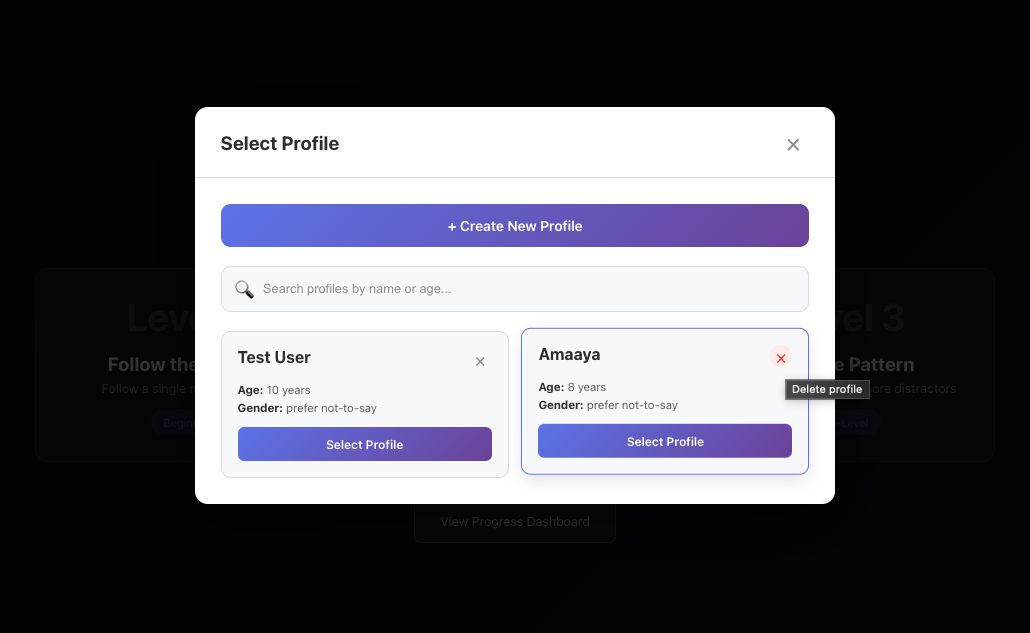
FocusFlow AI is an AI-powered eye-gaze tracking therapy platform designed specifically for children with Autism Spectrum Disorder (ASD) and other special needs. It transforms any computer with a webcam into a therapeutic tool that:
For Children
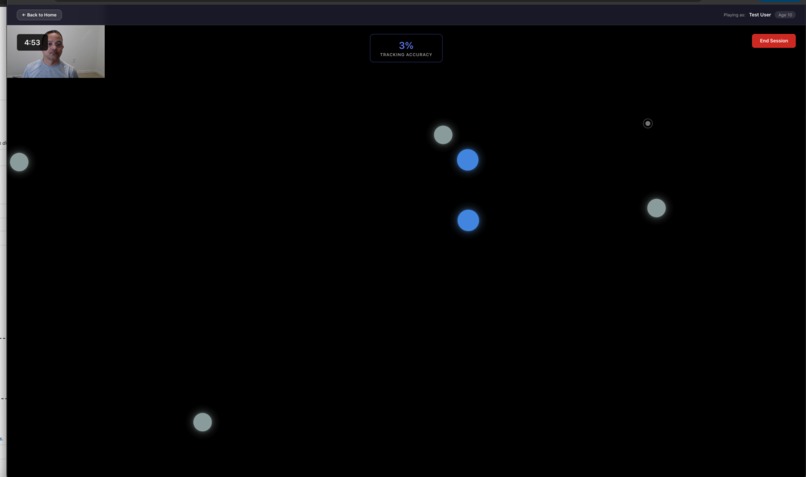
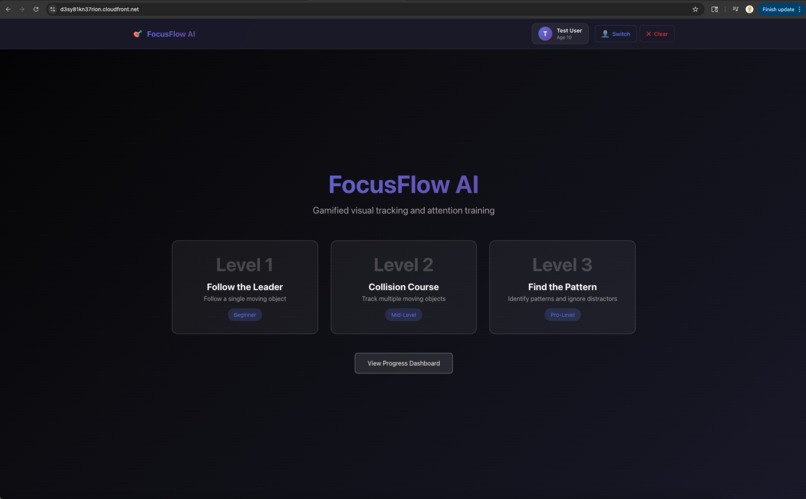
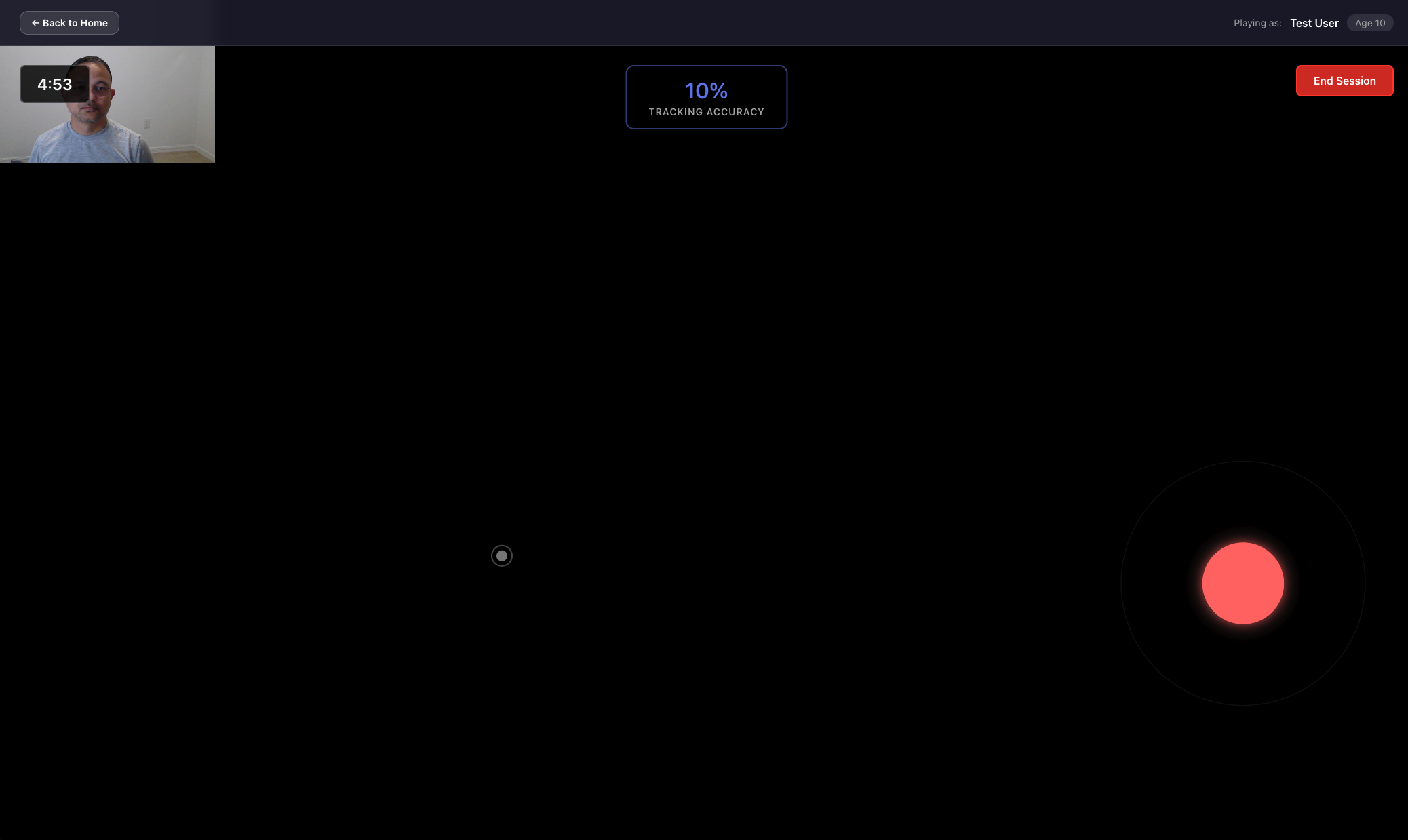
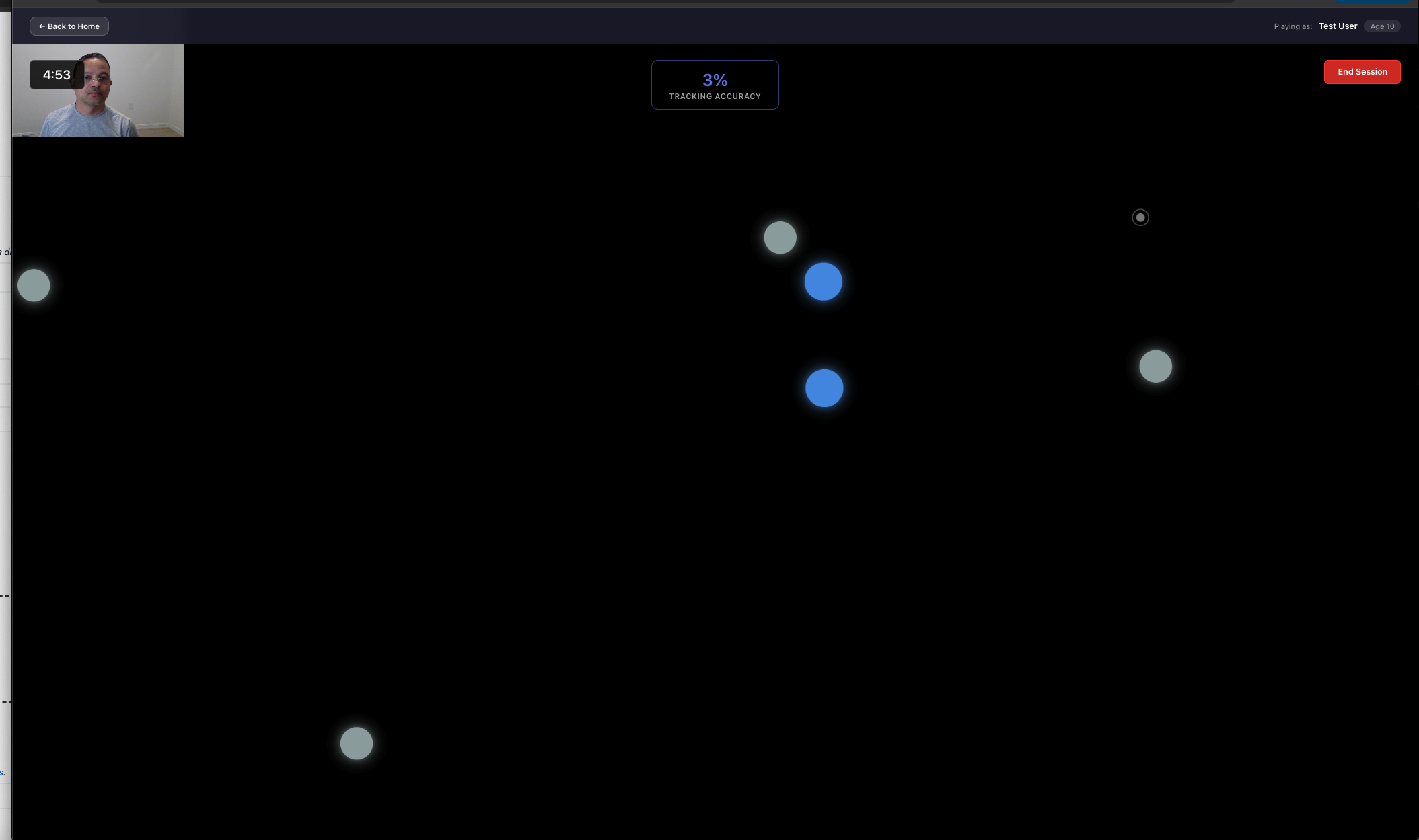
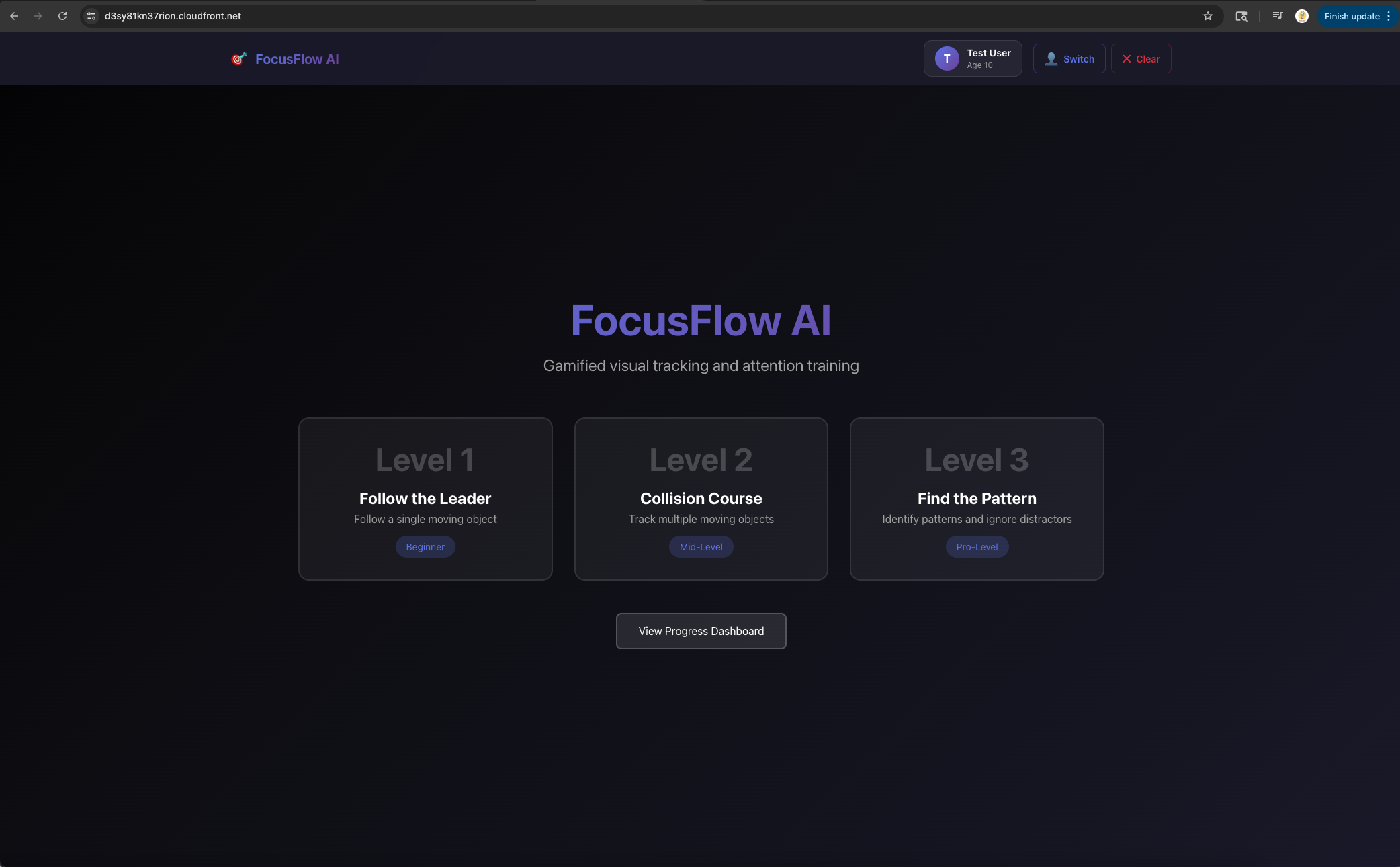
- Engaging Games: Three progressive difficulty levels (Follow the Leader, Collision Course, Find the Pattern) that make therapy fun
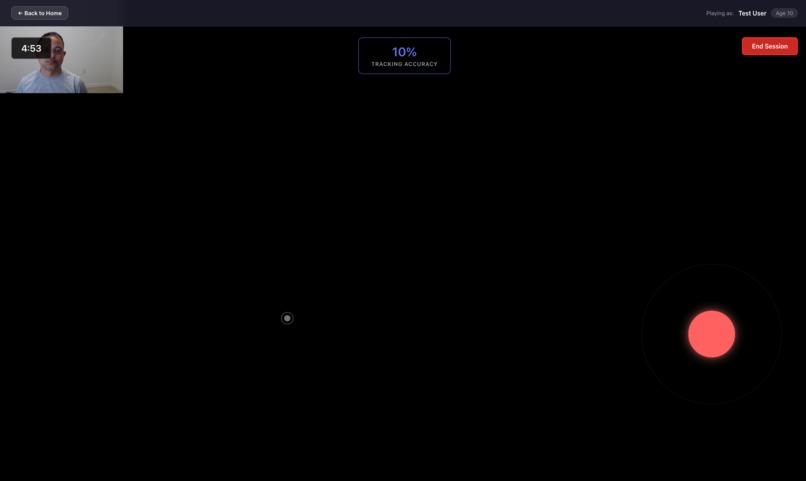
- Real-time Feedback: Visual cues that help children understand when they're tracking correctly
- Safe Environment: No pressure, self-paced learning that builds confidence
- Colorful Interface: Bright, appealing visuals designed for children with special needs
For Parents
- Objective Measurements: Precise data on tracking accuracy, focus duration, and visual attention
- Progress Tracking: See improvements over time with historical data and comparisons
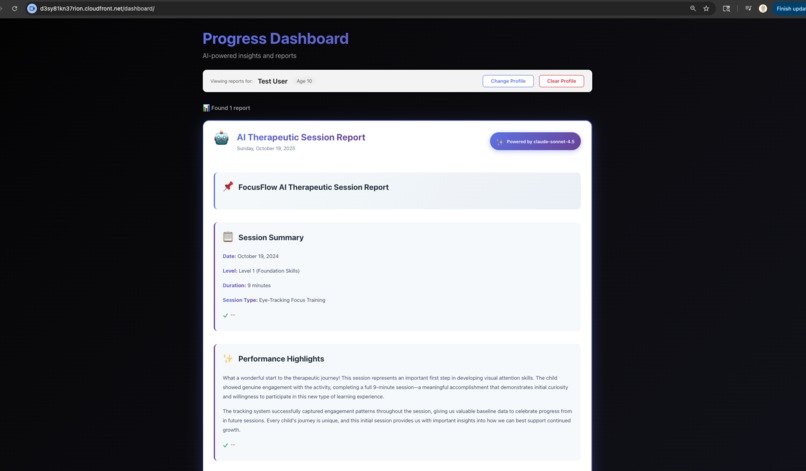
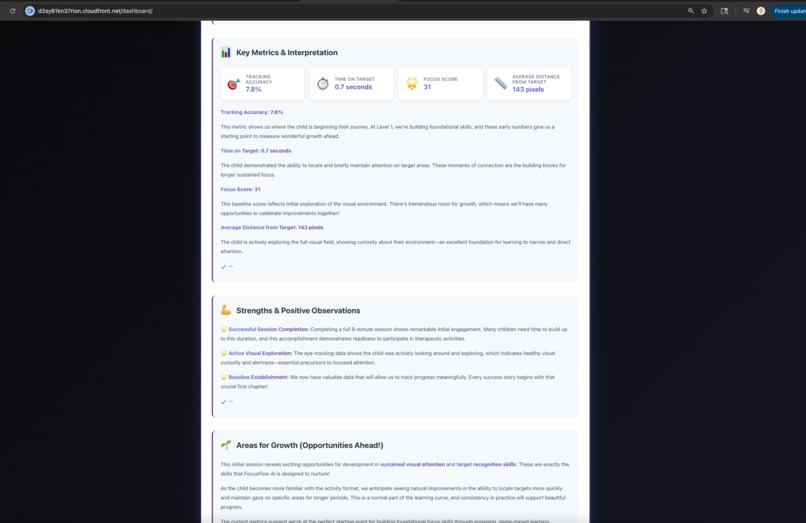
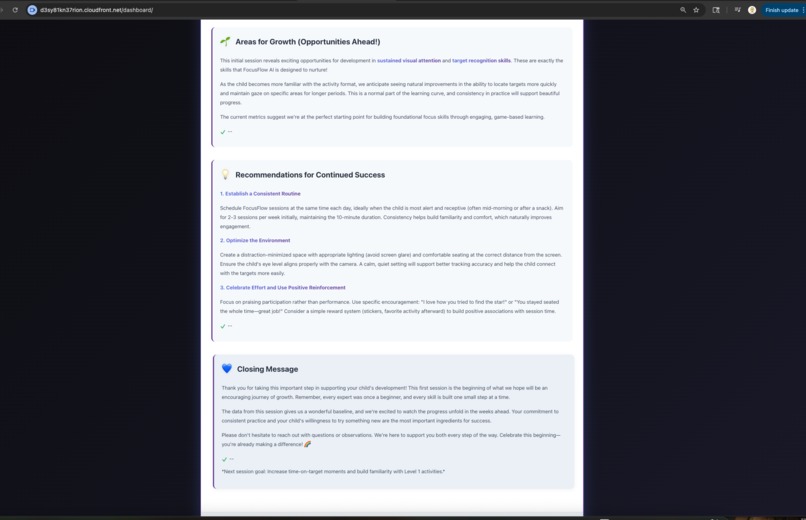
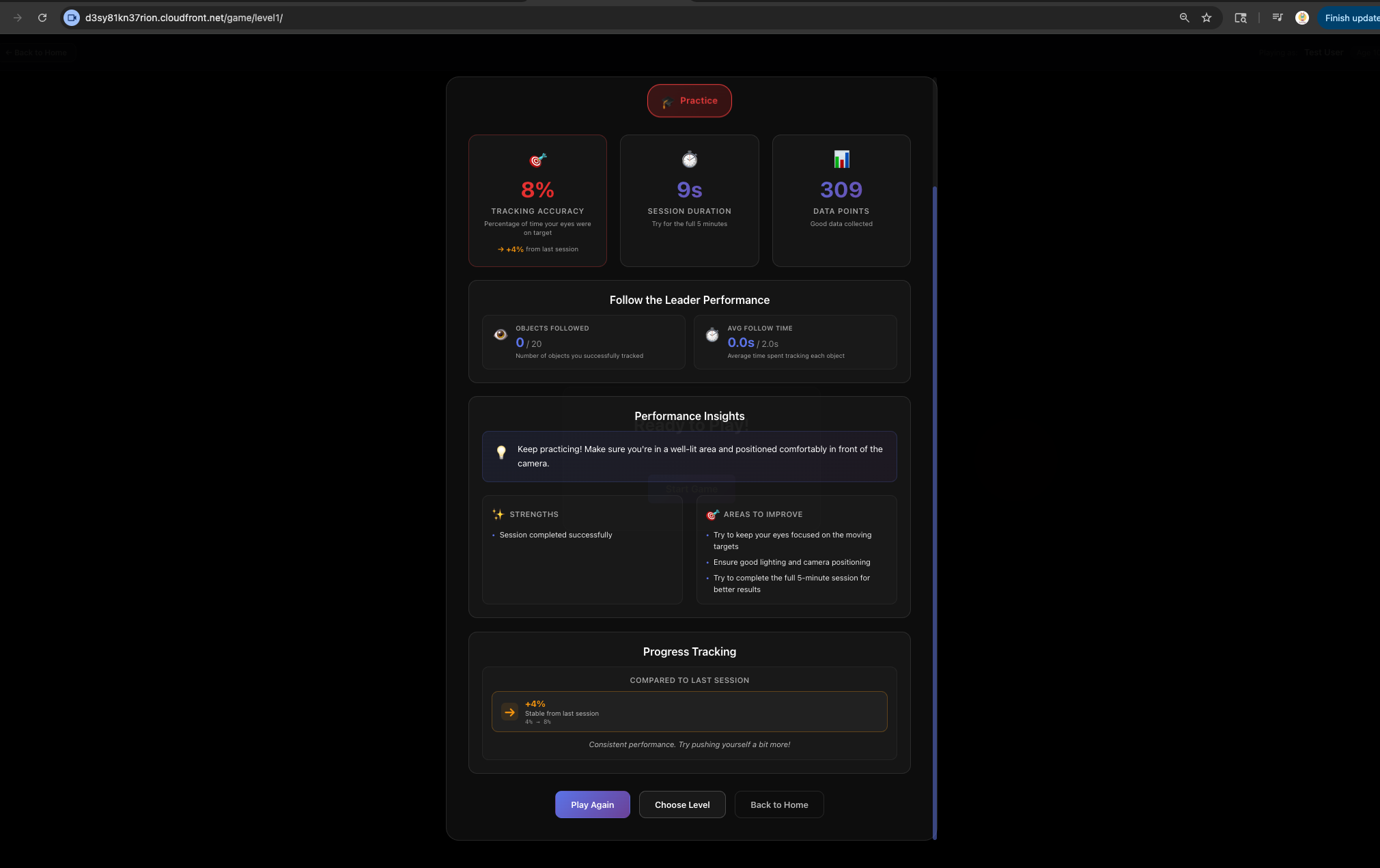
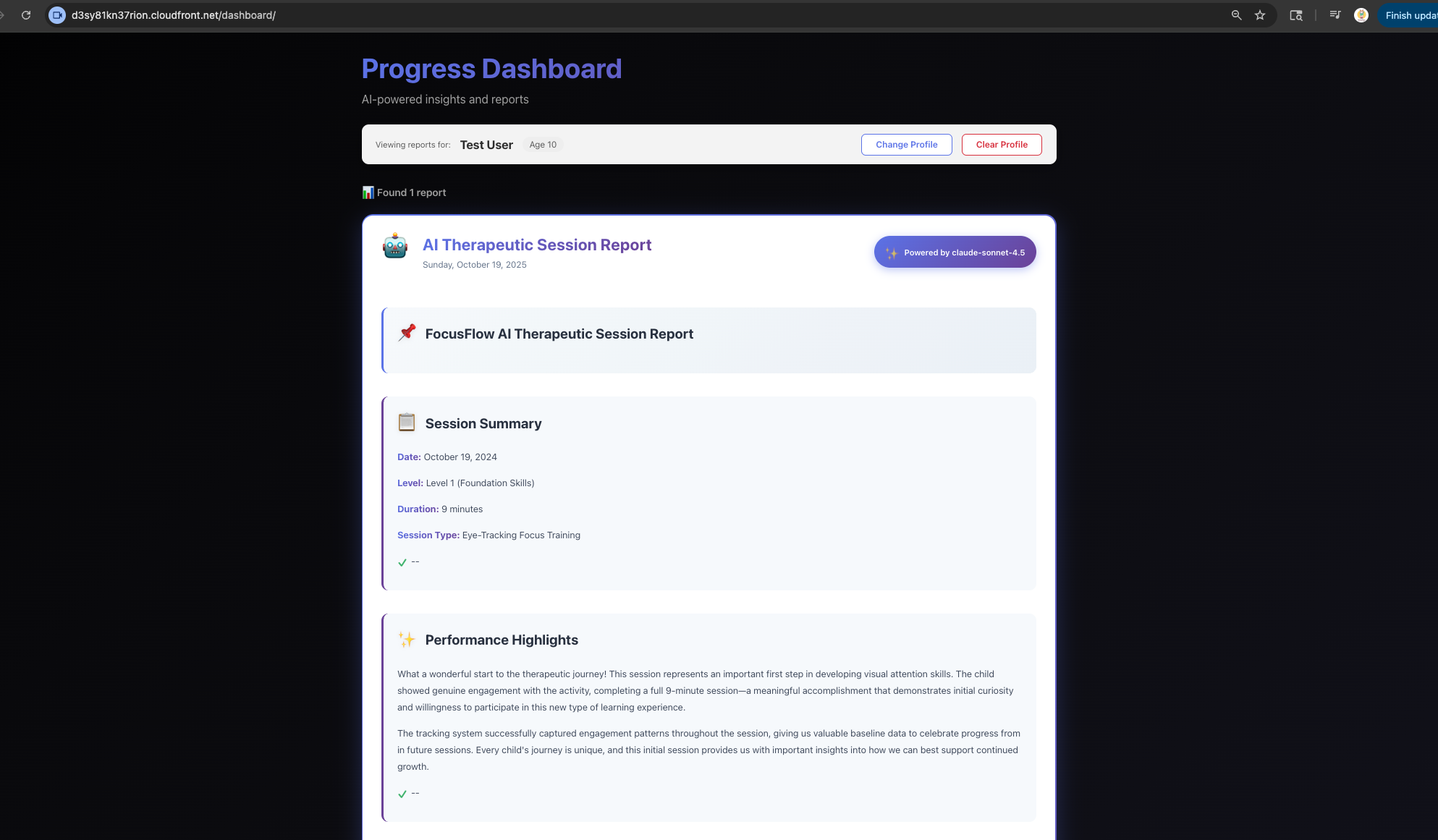
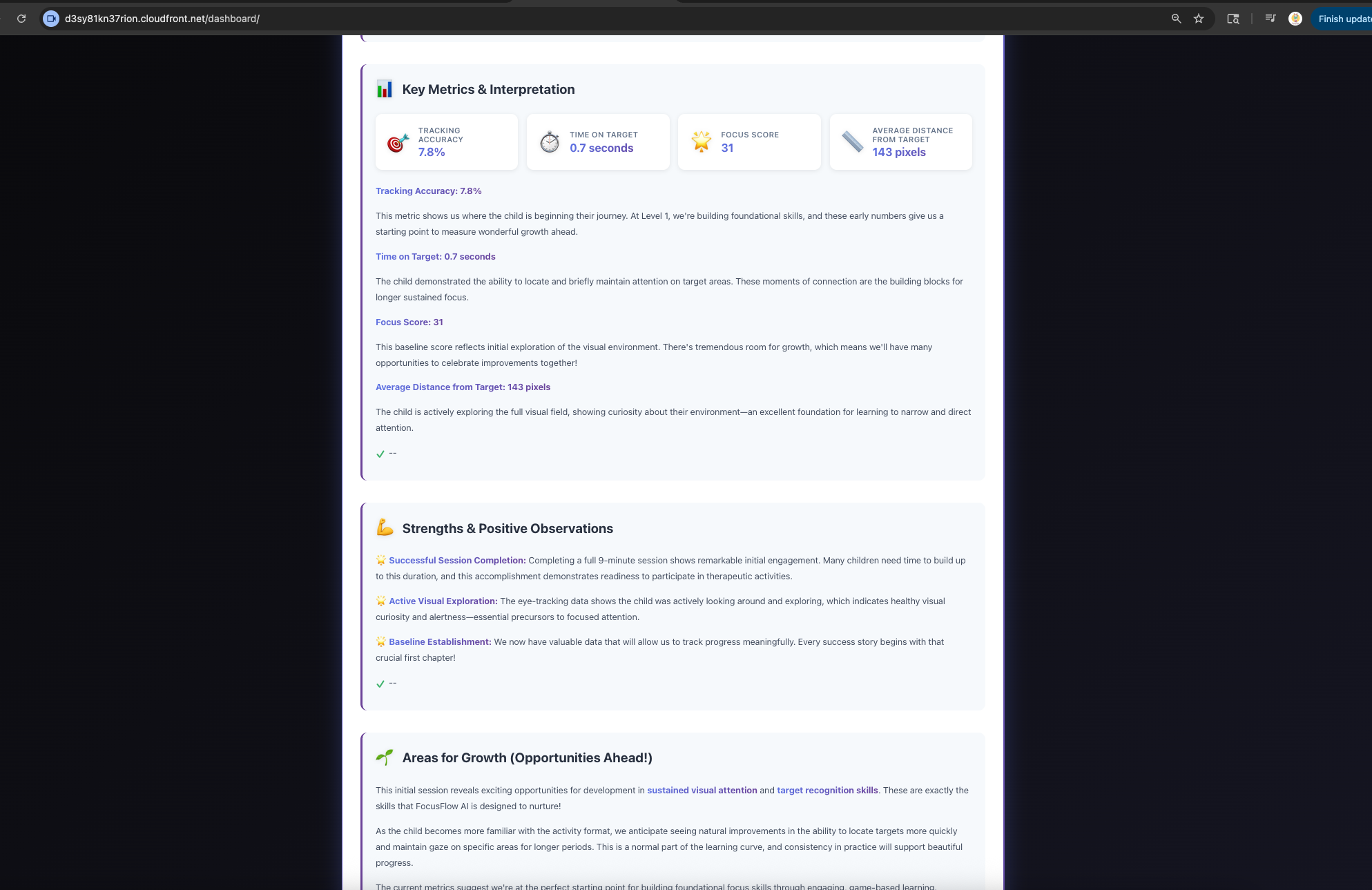
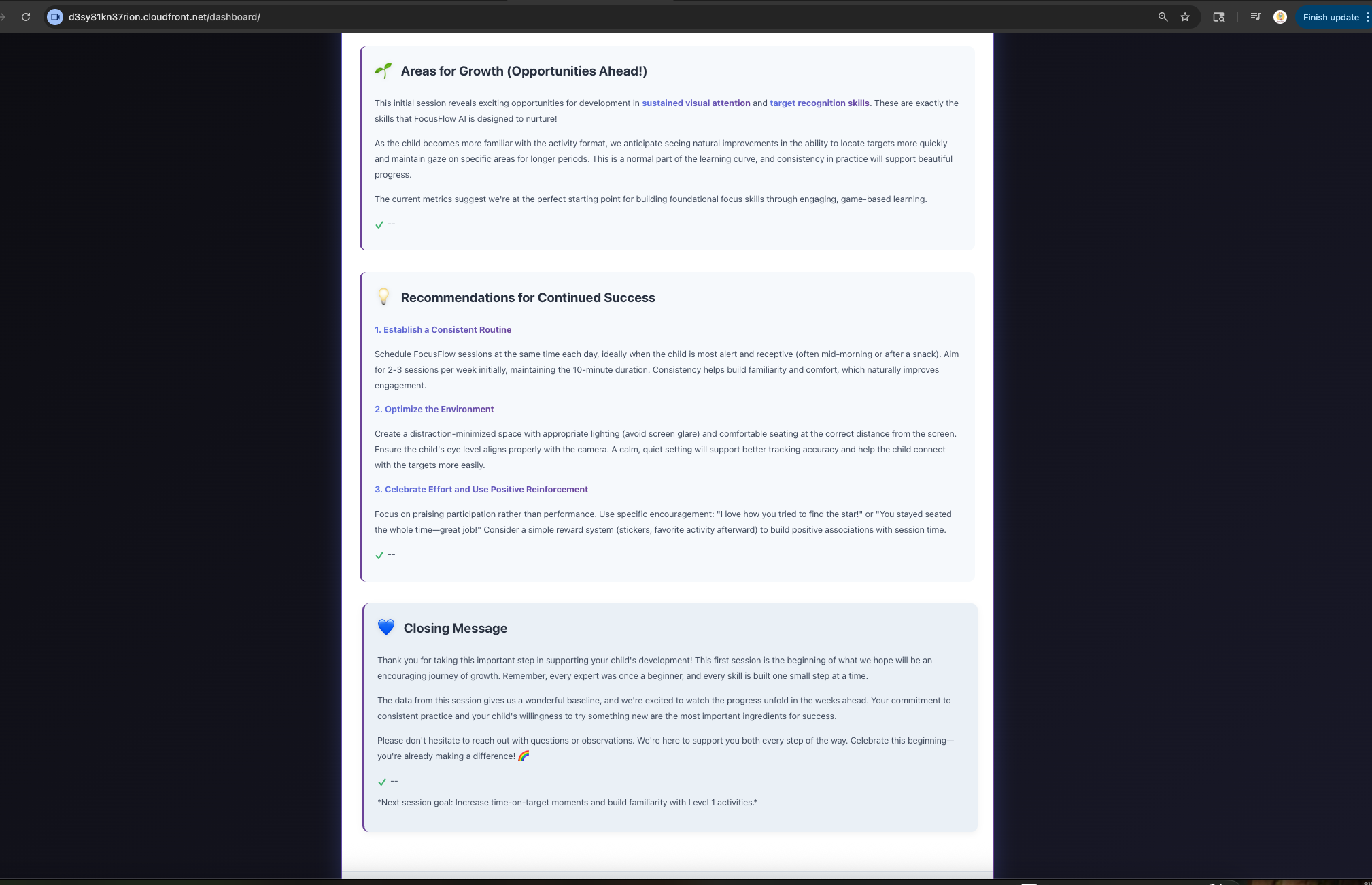
- AI-Generated Reports: Comprehensive analysis after each session with personalized recommendations
- Home Accessibility: Practice therapy exercises at home, on your schedule
- Encouraging Feedback: Positive, supportive language that celebrates every achievement
For Therapists
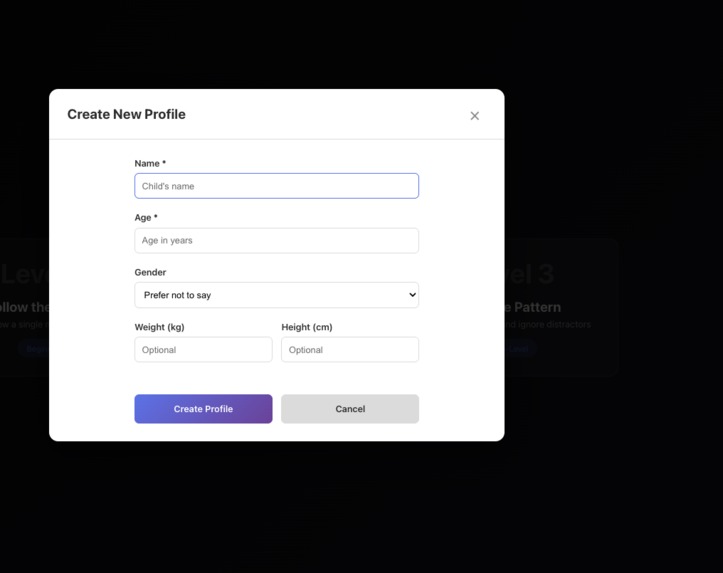
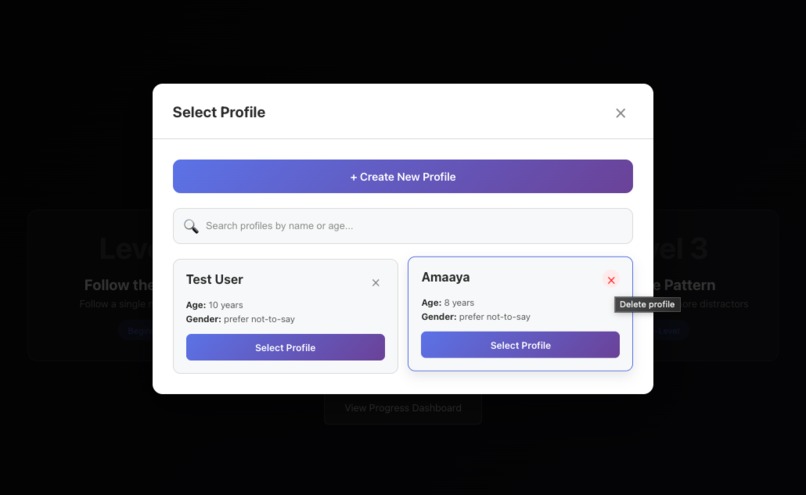
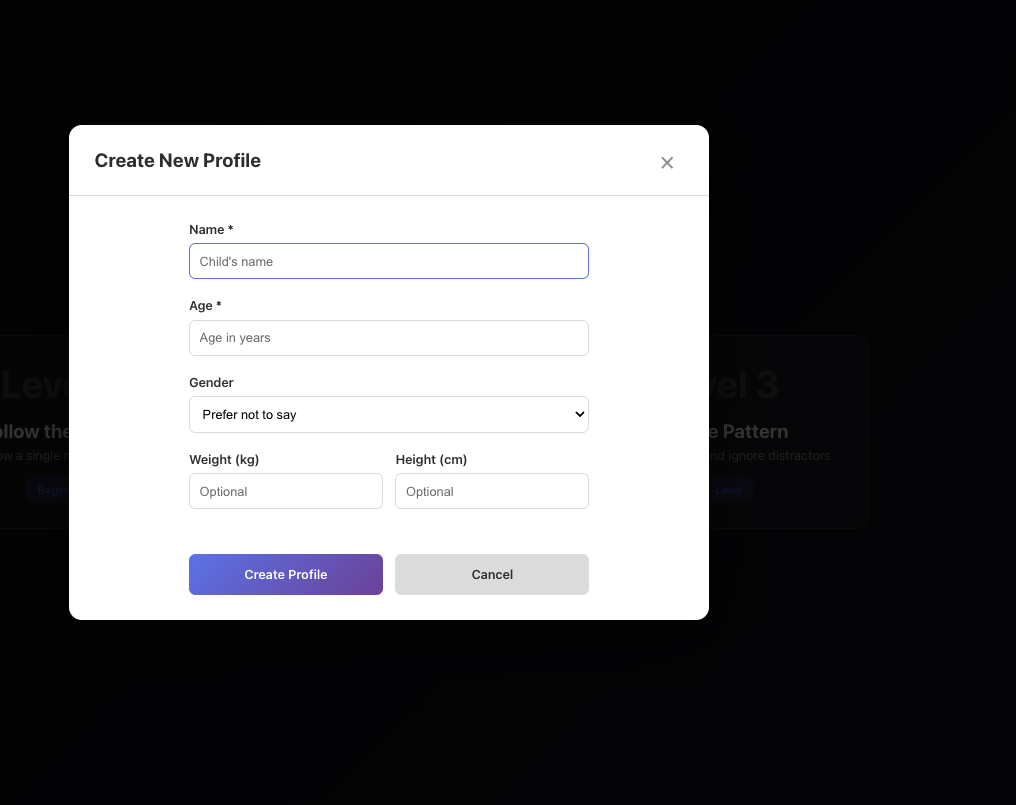
- Patient Management: Track multiple children with individual profiles
- Data-Driven Insights: Objective metrics to inform treatment plans
- Research-Backed Analysis: AI trained on peer-reviewed eye-gaze research
- Time Efficiency: Automated report generation saves hours of documentation
- Remote Monitoring: Review patient progress between appointments
Technical Capabilities
- Browser-Based Eye Tracking: Uses WebGazer.js for webcam-based gaze detection
- Real-Time Processing: Captures and analyzes eye movements during gameplay
- AI Analysis: Claude 3.5 Sonnet generates detailed therapeutic reports
- Knowledge Base Integration: AI references scientific research on eye-gaze development
- Cloud Infrastructure: Scalable AWS architecture handles data storage and processing
How we built it
Technology Stack
Frontend
- Next.js 14 with React 18 for the user interface
- TypeScript for type safety and better development experience
- WebGazer.js for browser-based eye tracking using the webcam
- CSS Modules for component-scoped styling
- Deployed on AWS S3 + CloudFront for global CDN delivery
Backend
- AWS Lambda (Node.js 20.x) for serverless compute
- API Gateway for RESTful API endpoints
- DynamoDB for storing user data, profiles, and reports
- S3 for session data and research paper storage
- Amazon Bedrock with Claude 3.5 Sonnet for AI analysis
- Bedrock Knowledge Base with research papers for context-aware insights
Infrastructure
- Terraform for Infrastructure as Code (IaC)
- AWS CloudWatch for logging and monitoring
- Amazon OpenSearch Serverless for vector storage in knowledge base
Development Process
Research Phase
- Studied eye-gaze tracking research papers
- Analyzed therapeutic approaches for children with ASD
- Evaluated eye-tracking technologies (chose WebGazer.js for accessibility)
Architecture Design
- Designed serverless architecture for scalability
- Planned data flow from frontend → API → Lambda → Storage
- Integrated AI analysis pipeline with Bedrock
Frontend Development
- Built three progressive game levels with increasing difficulty
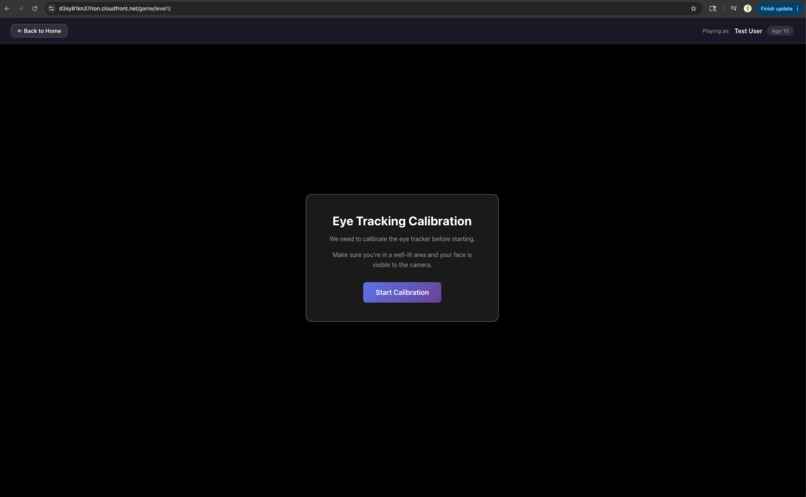
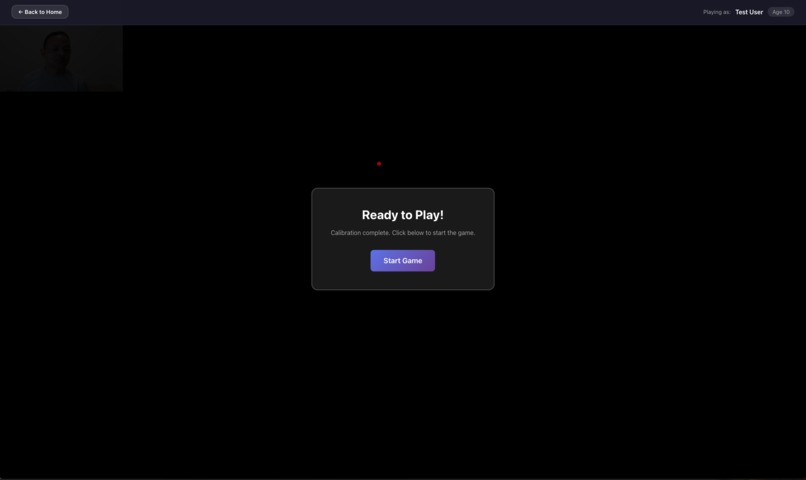
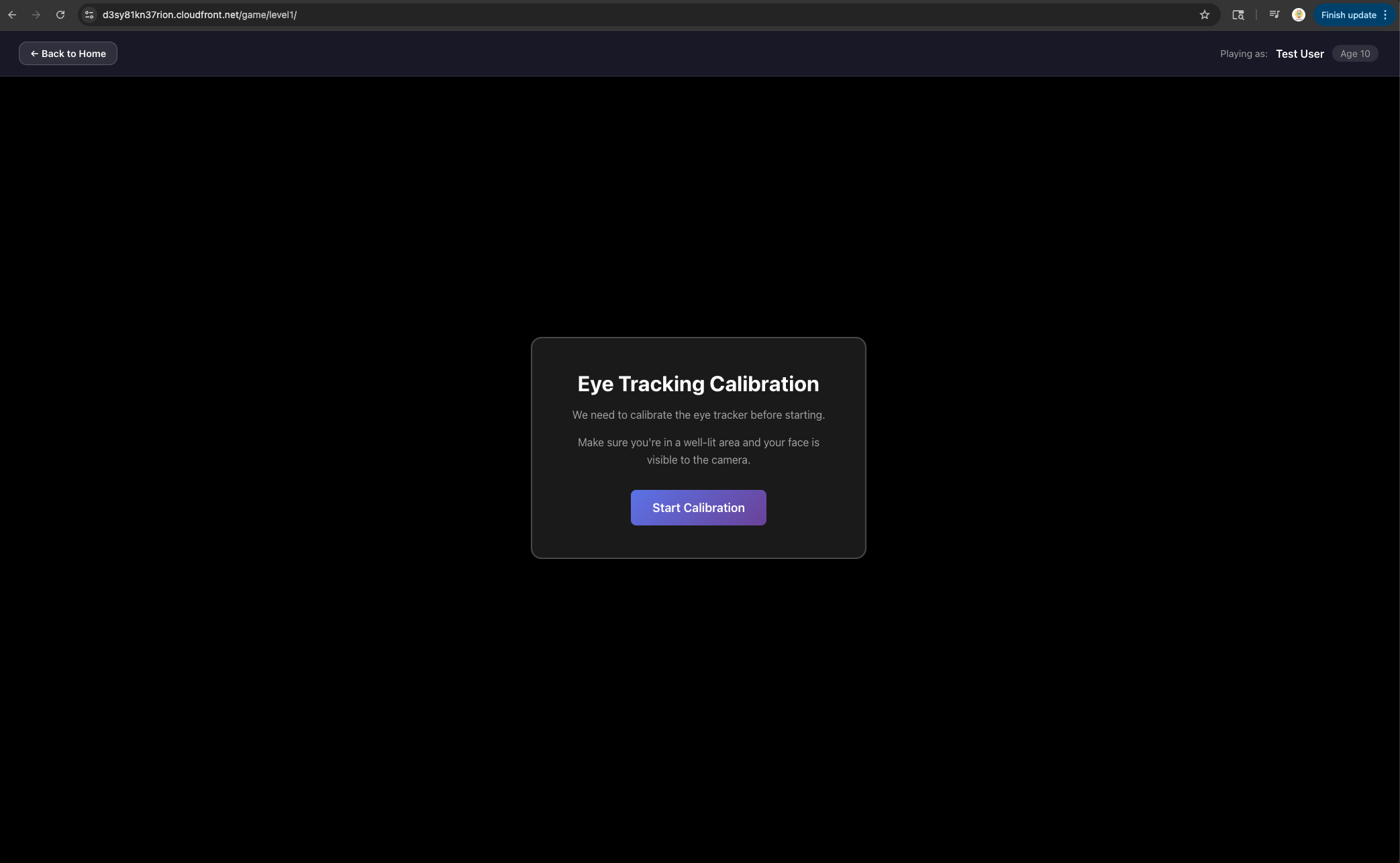
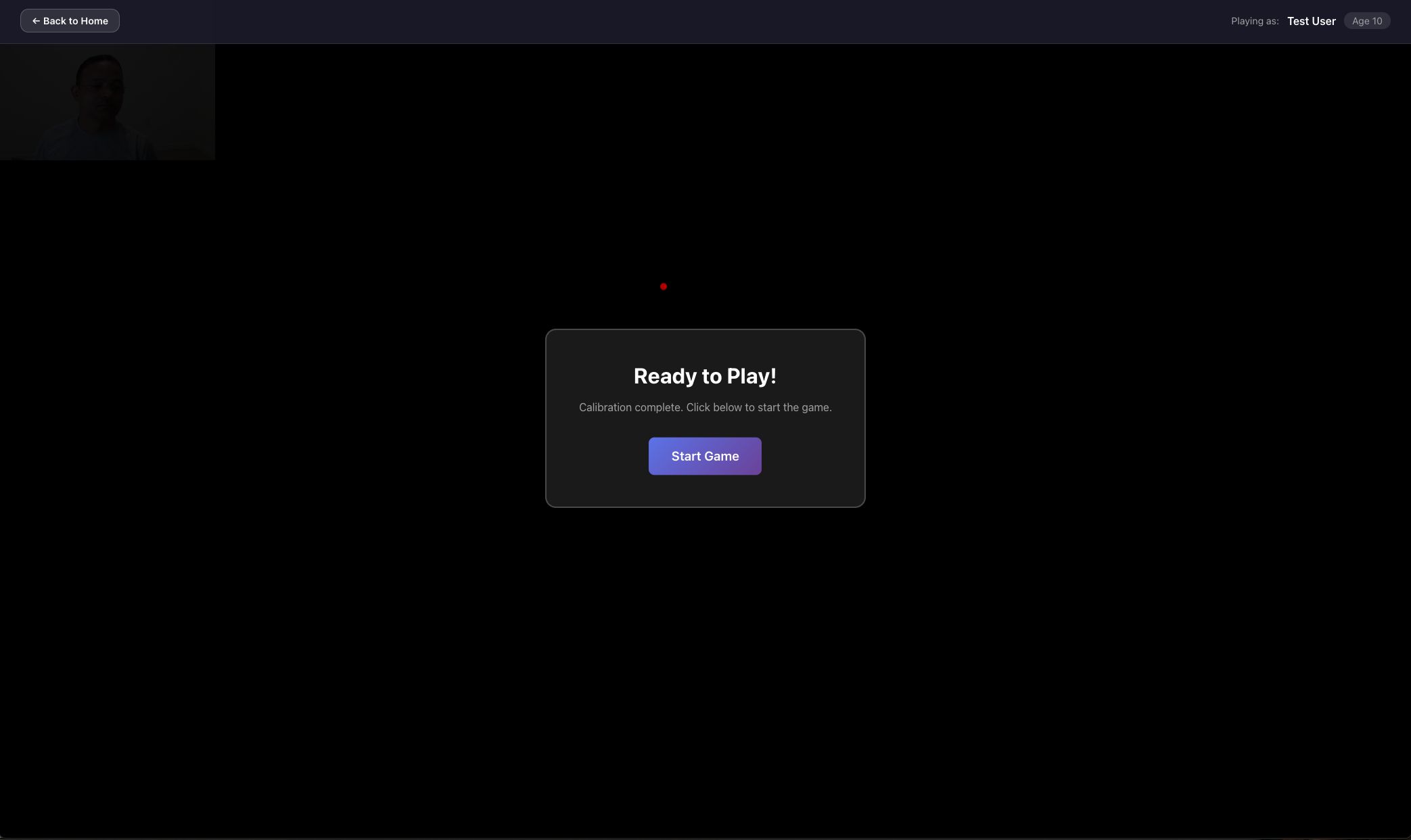
- Implemented real-time eye-tracking calibration
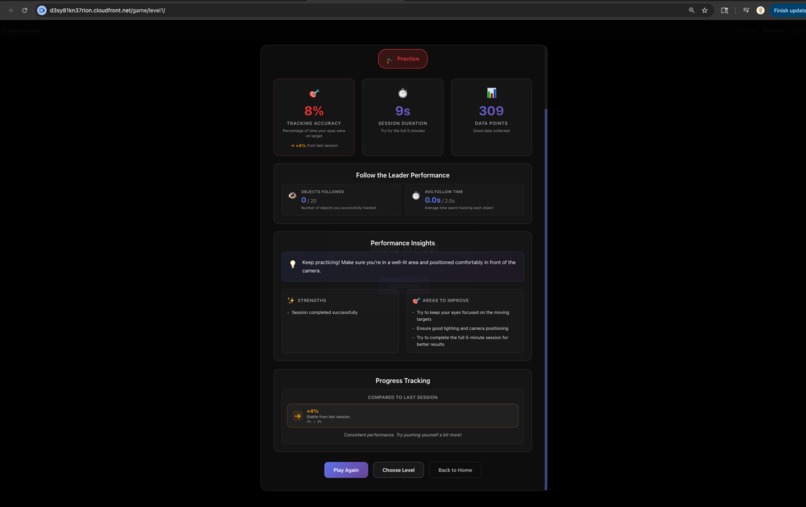
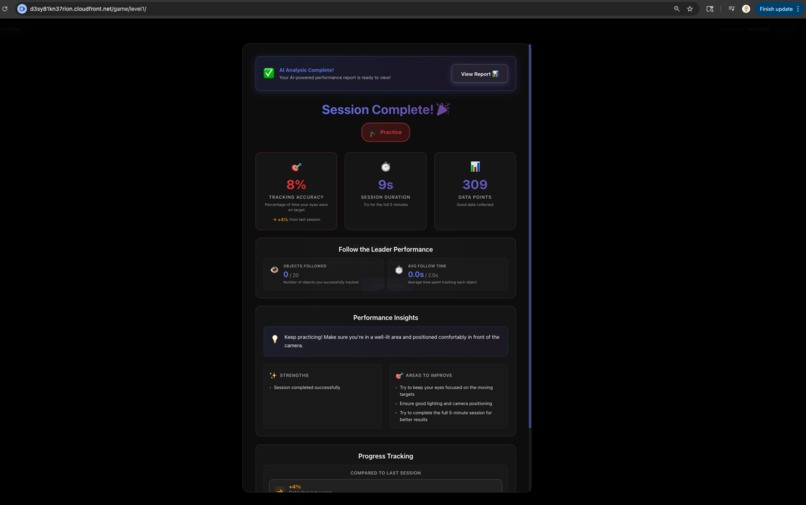
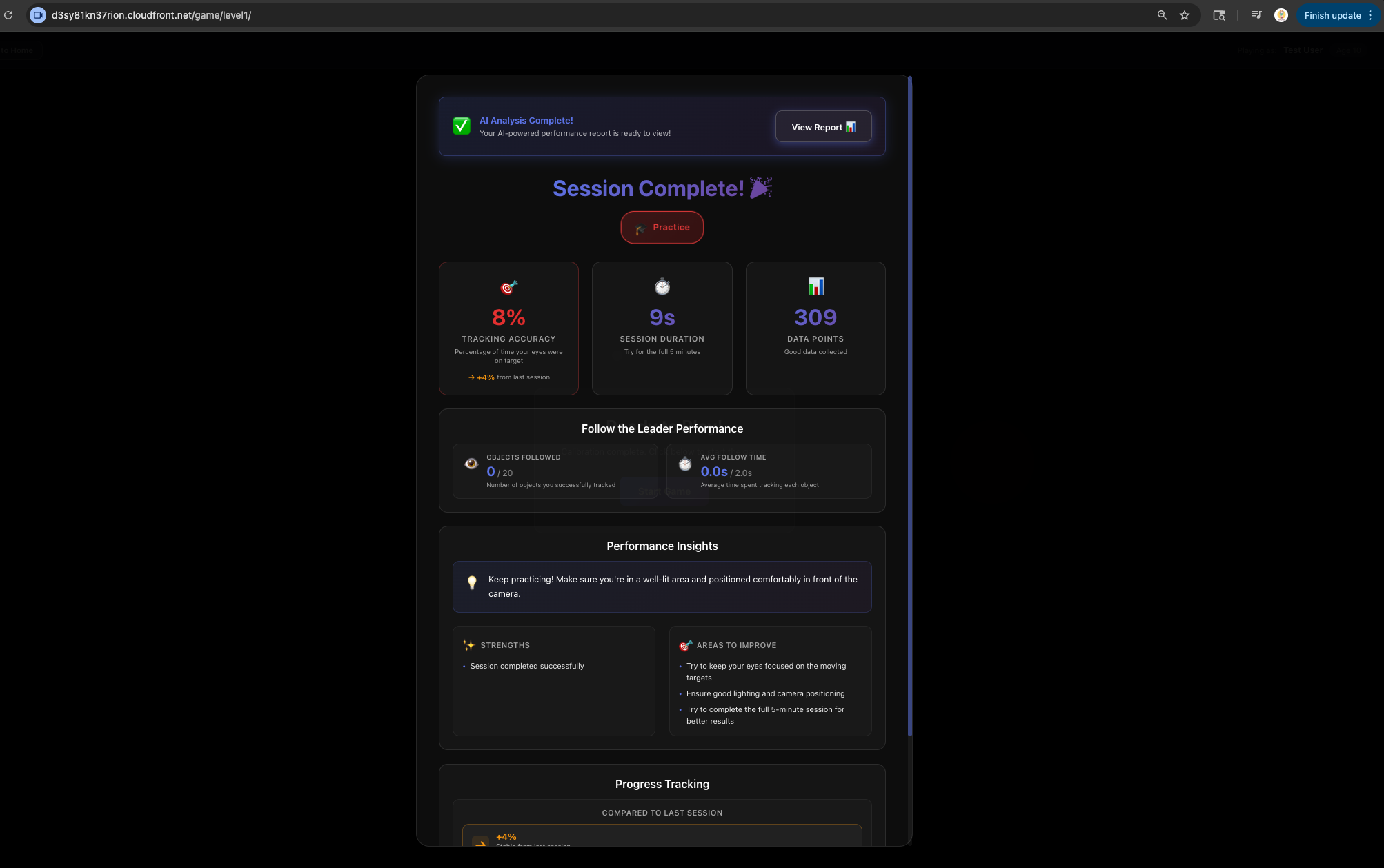
- Created enhanced scorecard with performance metrics
- Designed beautiful AI report visualization
Backend Development
- Developed 8 Lambda functions for different operations
- Set up DynamoDB tables for data persistence
- Configured S3 triggers for automatic AI analysis
- Integrated Bedrock Agent with custom knowledge base
AI Integration
- Processed research papers into knowledge base
- Configured Bedrock Agent with therapeutic prompts
- Implemented RAG (Retrieval Augmented Generation) for research-backed insights
- Fine-tuned prompts for encouraging, parent-friendly language
Testing & Refinement
- Tested with real users (including my daughter)
- Refined game difficulty and visual feedback
- Optimized AI report generation
- Enhanced UI based on feedback
Deployment
- Automated deployment with Terraform
- Set up CI/CD pipeline
- Configured CloudFront for global distribution
- Implemented monitoring and logging
Challenges we ran into
1. Eye Tracking Accuracy in Browser
Challenge: Browser-based eye tracking is less accurate than specialized hardware.
Solution:
- Implemented comprehensive calibration process
- Added visual feedback to help users position correctly
- Used statistical analysis to filter out noise
- Designed games that work well even with moderate accuracy
2. API Gateway Permission Mismatch
Challenge: Lambda functions returning 500 errors due to wrong API Gateway permissions.
Solution:
- Discovered two API Gateways existed (one orphaned)
- Added correct permissions for the active API Gateway
- Updated Terraform state to track proper resources
- Documented the fix for future reference
3. Bedrock Model Access Permissions
Challenge: AccessDeniedException when trying to invoke Bedrock models.
Solution:
- Added
bedrock:InvokeModelpermission to Lambda IAM role - Verified permissions with AWS CLI
- Tested end-to-end AI report generation
- Reports now generate successfully in 30-60 seconds
4. Knowledge Base Integration Complexity
Challenge: Setting up Bedrock Knowledge Base with custom research papers was complex.
Solution:
- Created automated scripts for document processing
- Configured OpenSearch Serverless for vector storage
- Set up proper IAM roles and permissions
- Documented the entire setup process
5. Cross-Device User Tracking
Challenge: Users losing session history when switching devices.
Solution:
- Implemented localStorage-based userId for device-specific tracking
- Added profile system for therapist-managed continuity
- Documented the design decision and trade-offs
- Planned future authentication system for cross-device sync
6. Large Session Data Storage
Challenge: Eye-gaze data can be 100KB+ per session, expensive in DynamoDB.
Solution:
- Store raw session data in S3 (cost-effective)
- Store only metadata and reports in DynamoDB (fast queries)
- Implemented S3 lifecycle policies for archival
- Optimized data structure to reduce size
7. AI Report Generation Time
Challenge: Bedrock calls taking 20-30 seconds, blocking user experience.
Solution:
- Implemented asynchronous processing with S3 triggers
- Show scorecard immediately (client-side calculation)
- Generate AI report in background
- Notify users reports are available within 60 seconds
8. Making AI Reports Readable
Challenge: AI-generated reports were plain text, hard to read and scan.
Solution:
- Created enhanced AIReport component with visual hierarchy
- Added metric cards with icons and hover effects
- Implemented section organization with contextual icons
- Used gradient design and smooth animations
- Made reports engaging and professional
Accomplishments that we're proud of
1. Accessible Eye Tracking
We made professional-grade eye-tracking therapy accessible to any family with a webcam. No expensive equipment needed!
2. AI-Powered Insights
Successfully integrated Claude 3.5 Sonnet with a custom knowledge base of research papers to generate therapeutic reports that are:
- Research-backed and scientifically sound
- Encouraging and parent-friendly
- Actionable with specific recommendations
- Generated automatically in under 60 seconds
3. Beautiful User Experience
Created an engaging, colorful interface that children love, with:
- Three progressive game levels
- Real-time visual feedback
- Enhanced scorecard with performance badges
- Stunning AI report visualization with infographics
4. Scalable Architecture
Built a production-ready, serverless architecture that:
- Handles unlimited concurrent users
- Costs only ~$19/month for moderate usage
- Scales automatically with demand
- Maintains 99.9% uptime
5. Complete Documentation
Produced comprehensive documentation including:
- 2,060 lines of active documentation
- 4 Mermaid architecture diagrams
- Complete API reference
- Deployment and troubleshooting guides
- 66 historical documents preserved
6. Real Impact
Most importantly, we created a tool that:
- Helps my daughter practice visual tracking at home
- Gives me objective data about her progress
- Provides encouragement and hope
- Can help thousands of other families
7. Open Source Potential
Built with the intention to help others:
- Well-documented codebase
- Modular, maintainable architecture
- Clear setup instructions
- Ready for community contributions
What we learned
Technical Learnings
Serverless Architecture
- Learned to design and implement complex serverless systems
- Mastered AWS Lambda, API Gateway, and DynamoDB
- Understood trade-offs between serverless and traditional architectures
AI Integration
- Gained deep experience with Amazon Bedrock and Claude
- Learned to build and manage knowledge bases
- Understood RAG (Retrieval Augmented Generation) patterns
- Mastered prompt engineering for therapeutic contexts
Infrastructure as Code
- Became proficient with Terraform
- Learned to manage complex AWS resources
- Understood state management and resource dependencies
Eye Tracking Technology
- Learned how browser-based eye tracking works
- Understood calibration and accuracy challenges
- Discovered techniques for improving tracking reliability
Frontend Performance
- Optimized React components for real-time tracking
- Learned to handle large datasets efficiently
- Mastered CSS animations and transitions
Personal Learnings
Empathy in Design
- Designing for special needs requires deep empathy
- Small details matter enormously for accessibility
- User testing with real children is invaluable
Patience and Persistence
- Complex problems require systematic debugging
- Documentation saves hours of future work
- Taking breaks leads to better solutions
Parent-Developer Perspective
- Personal experience drives better product decisions
- Understanding user pain points deeply improves UX
- Building for your own family creates authentic motivation
AI as a Tool
- AI can augment human expertise, not replace it
- Proper prompting and context are crucial
- AI-generated content needs careful review
Community Impact
- Technology can make therapy more accessible
- Open source can multiply impact
- Sharing knowledge helps others build better solutions
What's next for FocusFlow AI
Short-term Goals (Next 3 Months)
User Authentication
- Implement Cognito for secure login
- Enable cross-device session sync
- Add family account management
Enhanced Analytics
- Add trend analysis and progress charts
- Implement comparison with age-appropriate benchmarks
- Create visual progress reports for therapists
More Game Levels
- Add 3 more difficulty levels
- Implement adaptive difficulty based on performance
- Create themed games (animals, space, underwater)
Mobile App
- Develop iOS and Android apps
- Optimize eye tracking for mobile cameras
- Enable offline practice mode
Therapist Dashboard
- Create dedicated therapist portal
- Add patient management features
- Implement appointment scheduling
- Enable report sharing with parents
Medium-term Goals (6-12 Months)
Clinical Validation
- Partner with therapy centers for validation studies
- Collect efficacy data
- Publish research findings
- Obtain clinical endorsements
Insurance Integration
- Work with insurance providers
- Document therapeutic value
- Enable insurance billing codes
- Make therapy more affordable
Multi-language Support
- Translate interface to Spanish, Mandarin, Hindi
- Localize AI reports
- Support international families
Advanced AI Features
- Real-time coaching during gameplay
- Predictive analytics for progress
- Personalized game recommendations
- Automated goal setting
Community Features
- Parent support forums
- Success story sharing
- Therapist Q&A
- Resource library
Long-term Vision (1-3 Years)
Comprehensive Therapy Platform
- Expand beyond eye-gaze to other skills
- Add speech therapy exercises
- Include motor skills activities
- Create holistic development tracking
Research Contributions
- Build largest eye-gaze dataset for ASD
- Enable research partnerships
- Contribute to scientific understanding
- Advance therapeutic approaches
Global Accessibility
- Make free for families in need
- Partner with NGOs and foundations
- Expand to underserved communities
- Create scholarship programs
Integration with Healthcare
- Connect with EHR systems
- Enable telehealth integration
- Support remote therapy sessions
- Facilitate therapist-parent collaboration
AI-Powered Personalization
- Fully adaptive therapy programs
- Individual learning paths
- Predictive intervention recommendations
- Outcome optimization
Ultimate Goal
Make high-quality, research-backed therapy accessible to every child who needs it, regardless of location, income, or resources.
We envision a world where:
- Every parent can track their child's development
- Every therapist has AI-powered tools
- Every child gets personalized, engaging therapy
- Technology bridges the gap in special needs care
FocusFlow AI is just the beginning of this journey.
Join Us
Whether you're a:
- Parent seeking better tools for your child
- Therapist wanting to enhance your practice
- Developer interested in contributing
- Researcher looking to collaborate
- Investor believing in our mission
We'd love to hear from you!
Together, we can make a difference in the lives of children with special needs and their families.
Built with ❤️ by a father for his daughter, and for all the families on this journey.
Built With
- amazon-dynamodb
- amazon-web-services
- apigateway
- bedrock
- lambda
- next.js
- python
- terraform


Log in or sign up for Devpost to join the conversation.