-
-
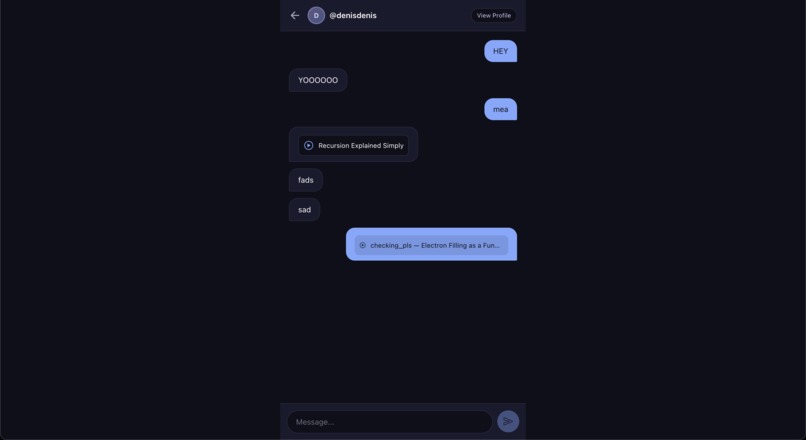
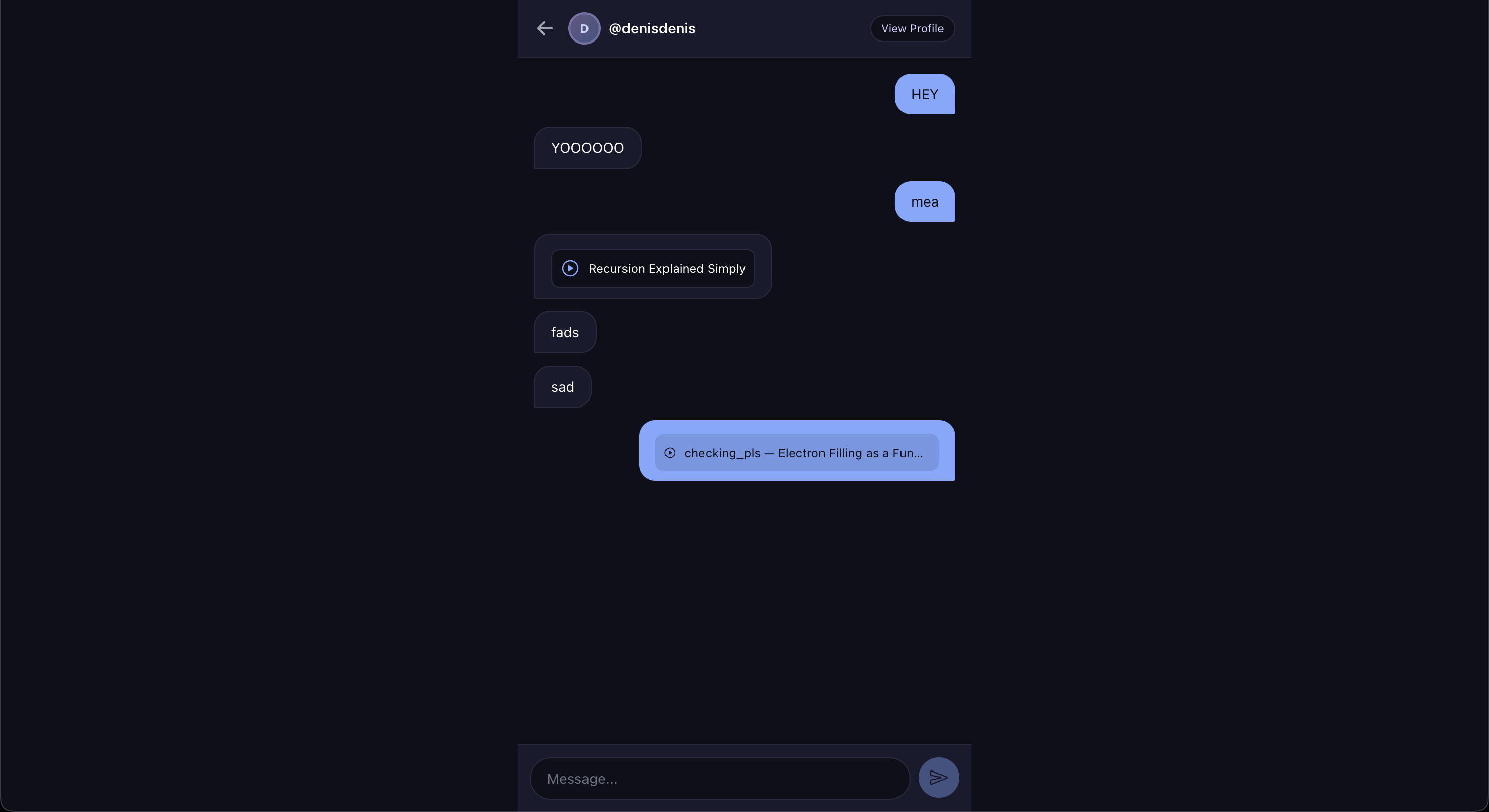
Private Messaging
-
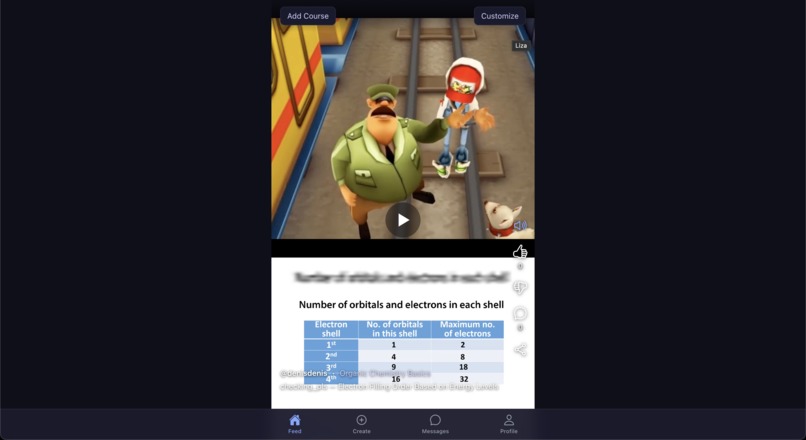
Feed
-
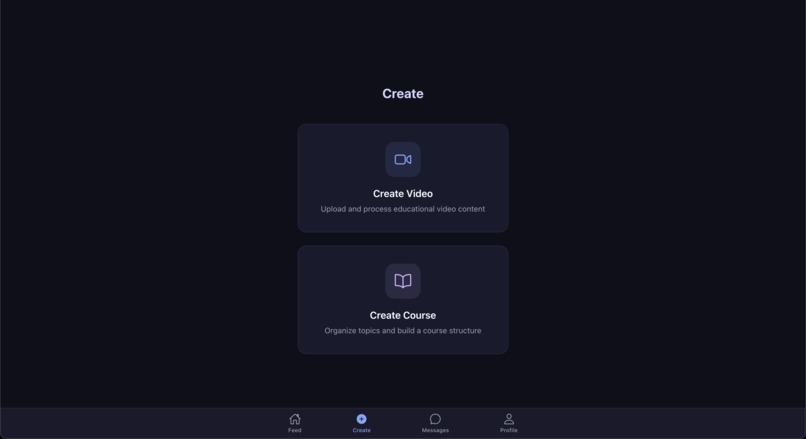
Video & Course Creation
-
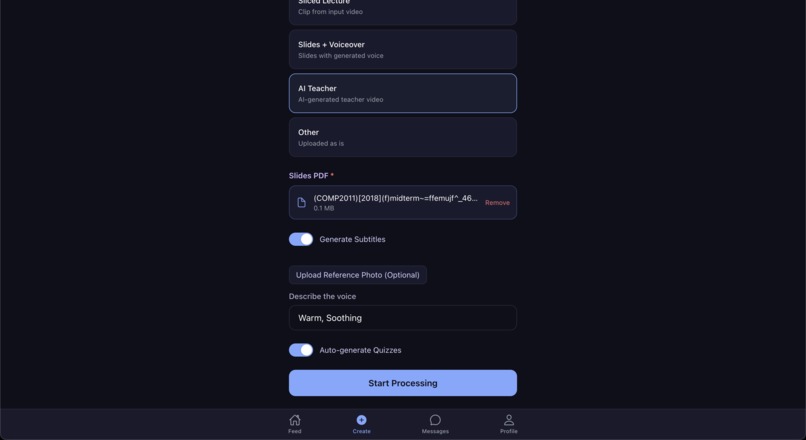
Video Creation Details 2
-
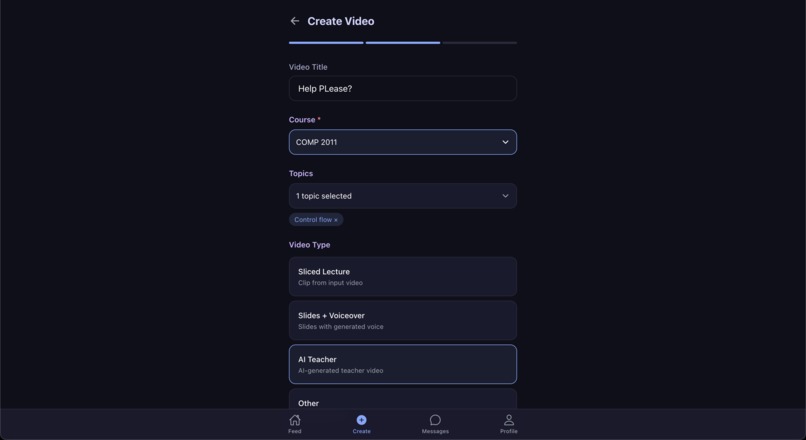
Video Creation Details 1
-
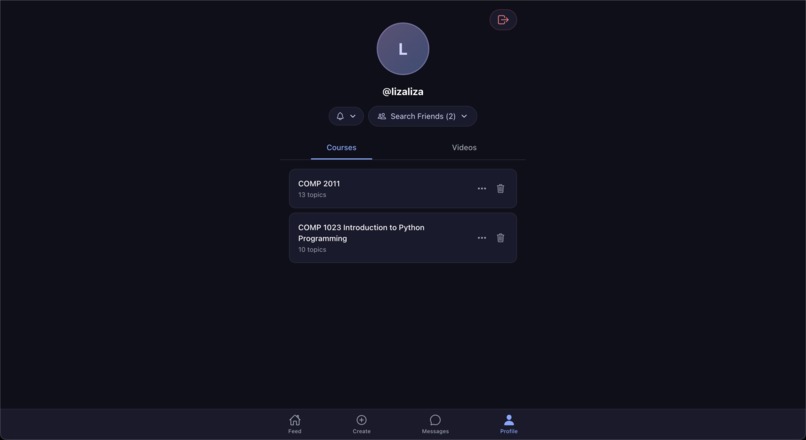
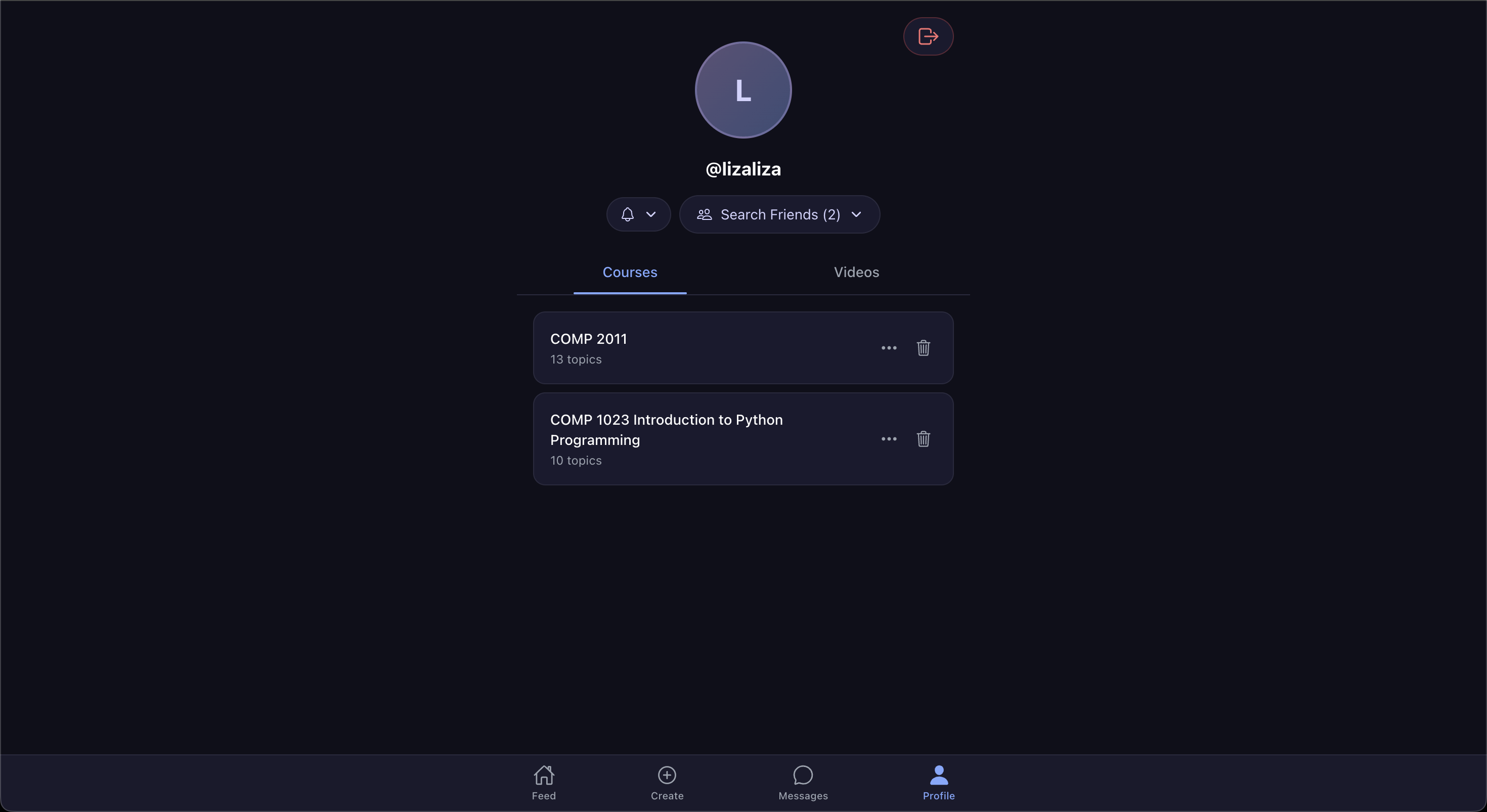
Profile Page
-
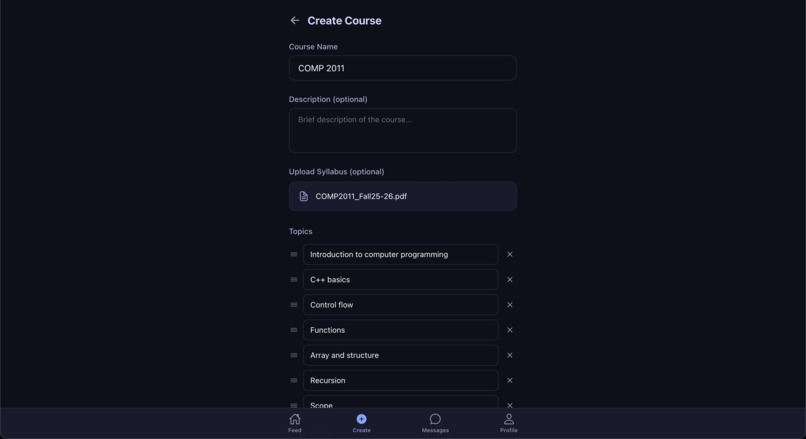
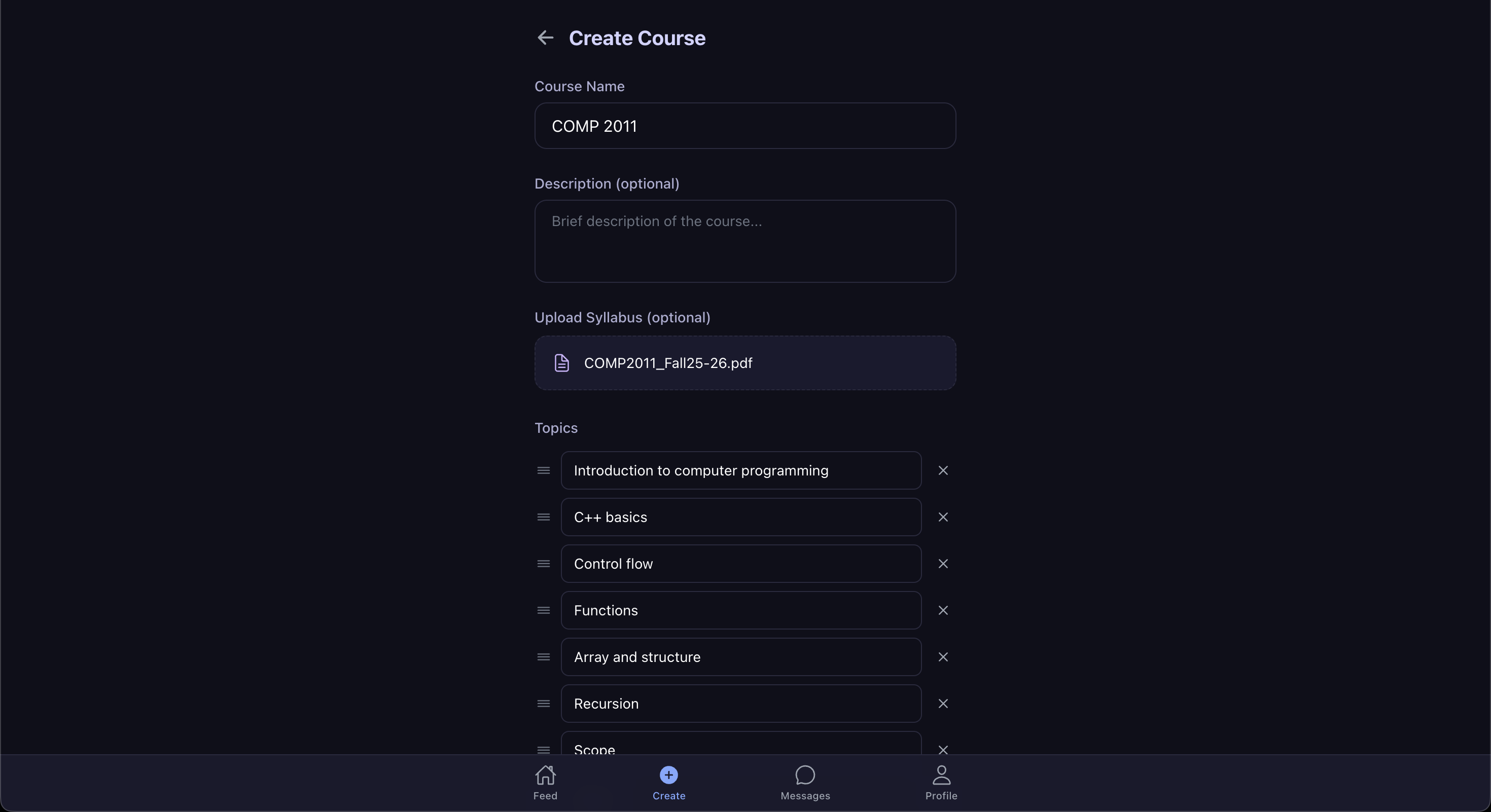
Course Creation Details
-
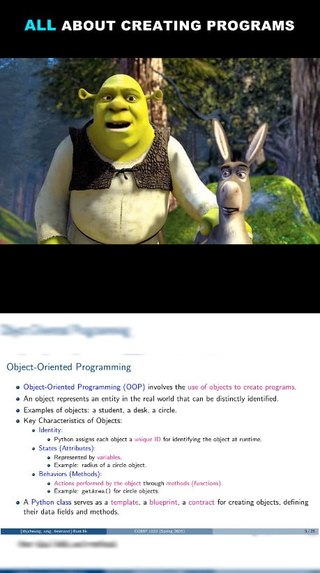
ex1
-
ex2
-

ex5
-
ex3
-
ex4

Inspiration
The idea for \textbf{FocusFeed} was inspired by a teammate's younger cousin who has severe ADHD. Traditional e-learning platforms failed to capture his attention, but he could stay focused on short, dynamic videos such as TikToks or YouTube Shorts. This sparked the realization that education itself could be reimagined — by embracing the short-form video format that dominates modern digital engagement. FocusFeed was conceived as a way to make learning \textit{fast, visual, and focused}, turning distraction into a tool for better retention and engagement.
What it does
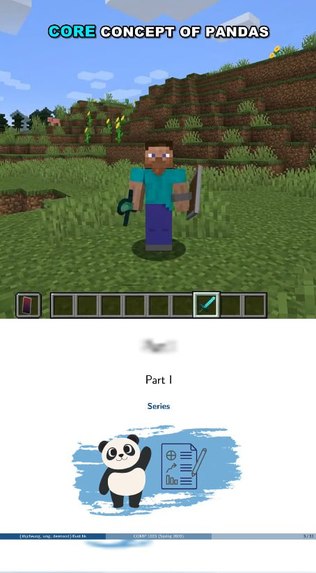
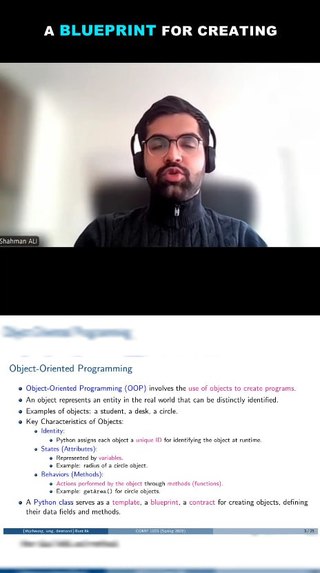
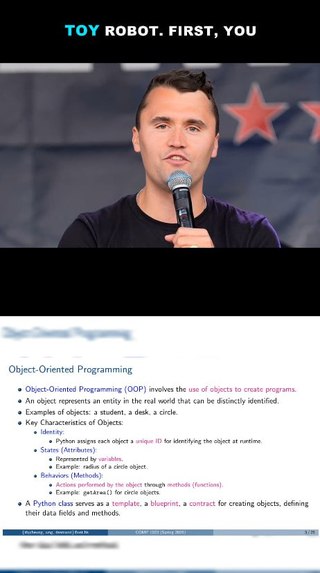
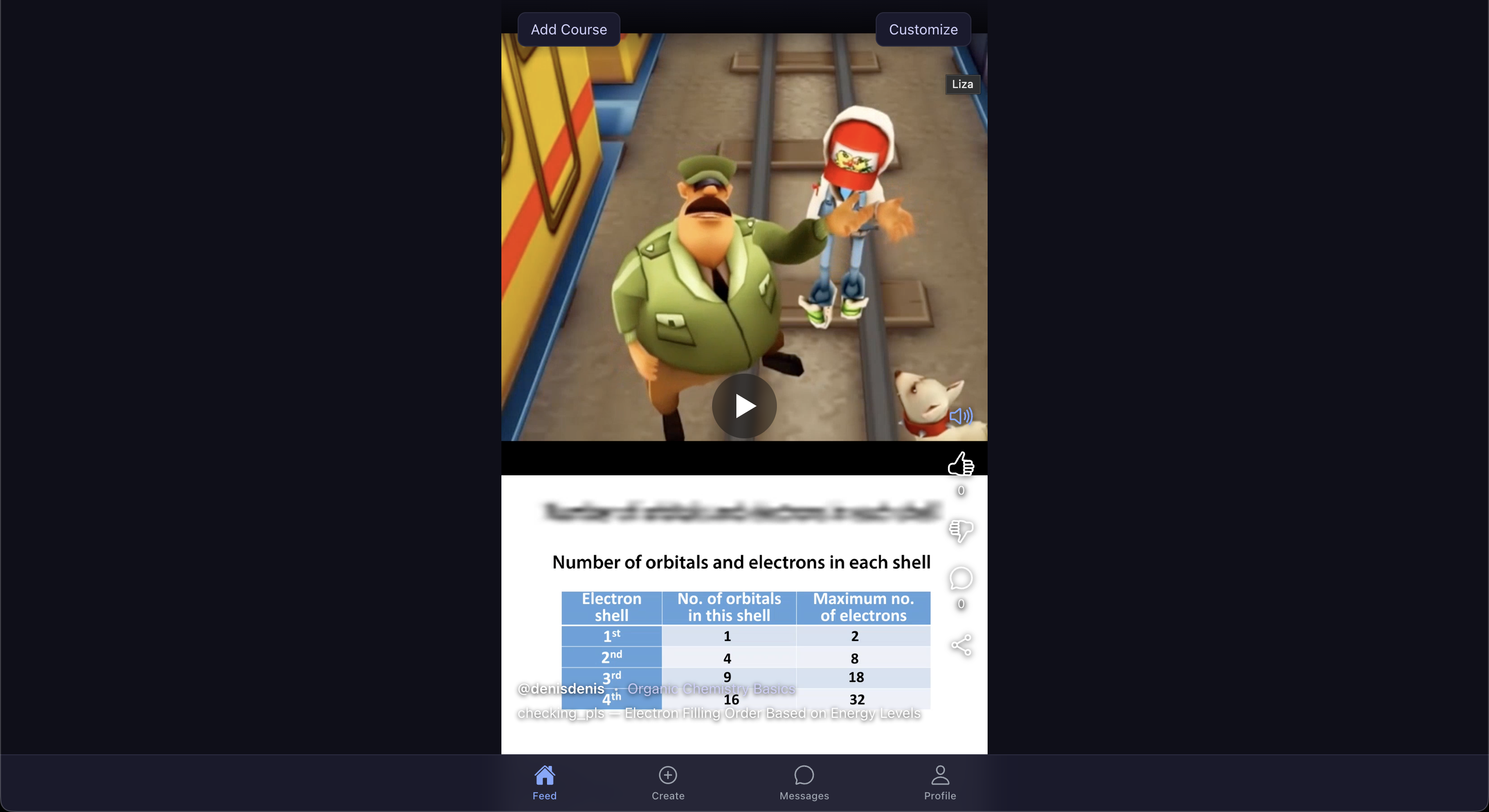
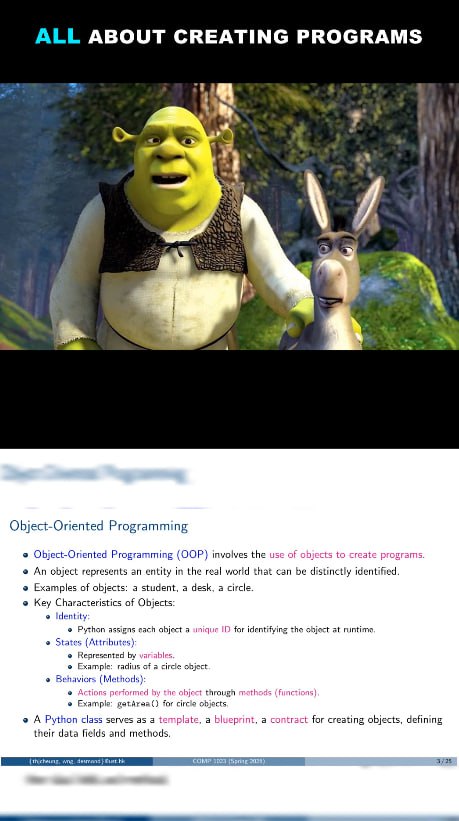
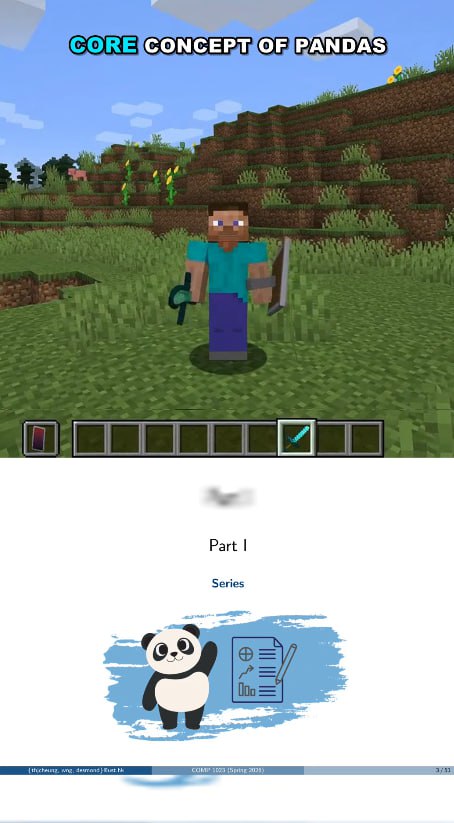
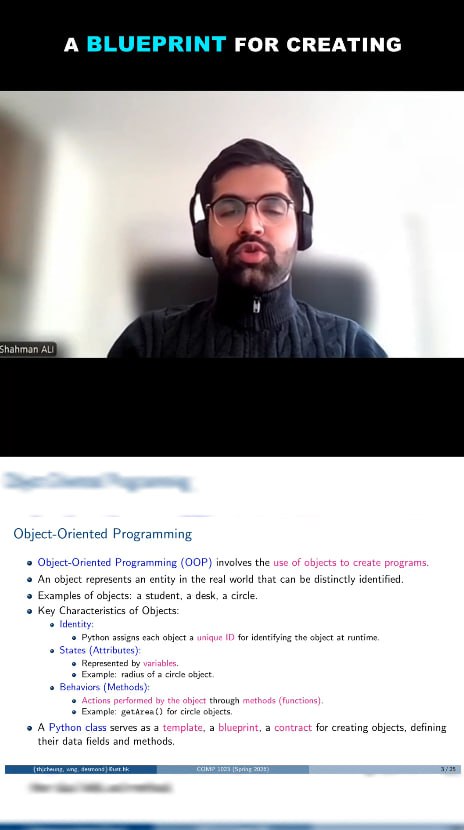
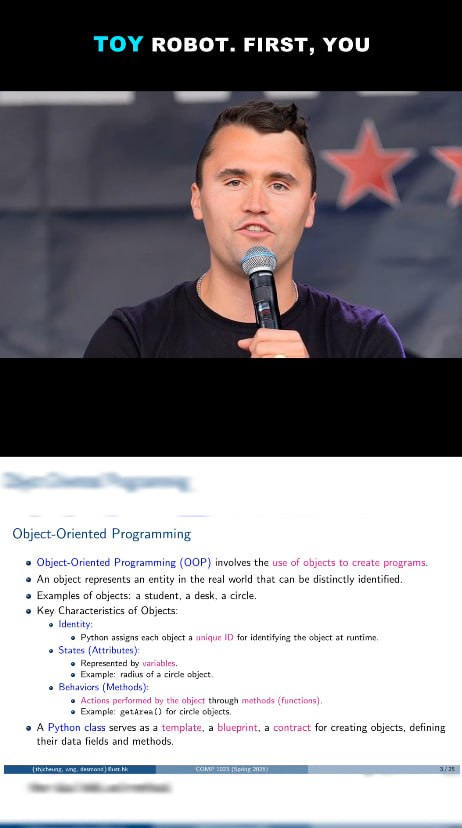
FocusFeed is a short-form educational platform that turns university course material into engaging vertical video reels and interactive quizzes. Students can scroll through a personalized feed, like or dislike content to refine recommendations, and learn through bite-sized video concepts enhanced by AI-generated voiceovers, slides, or animated AI teachers.
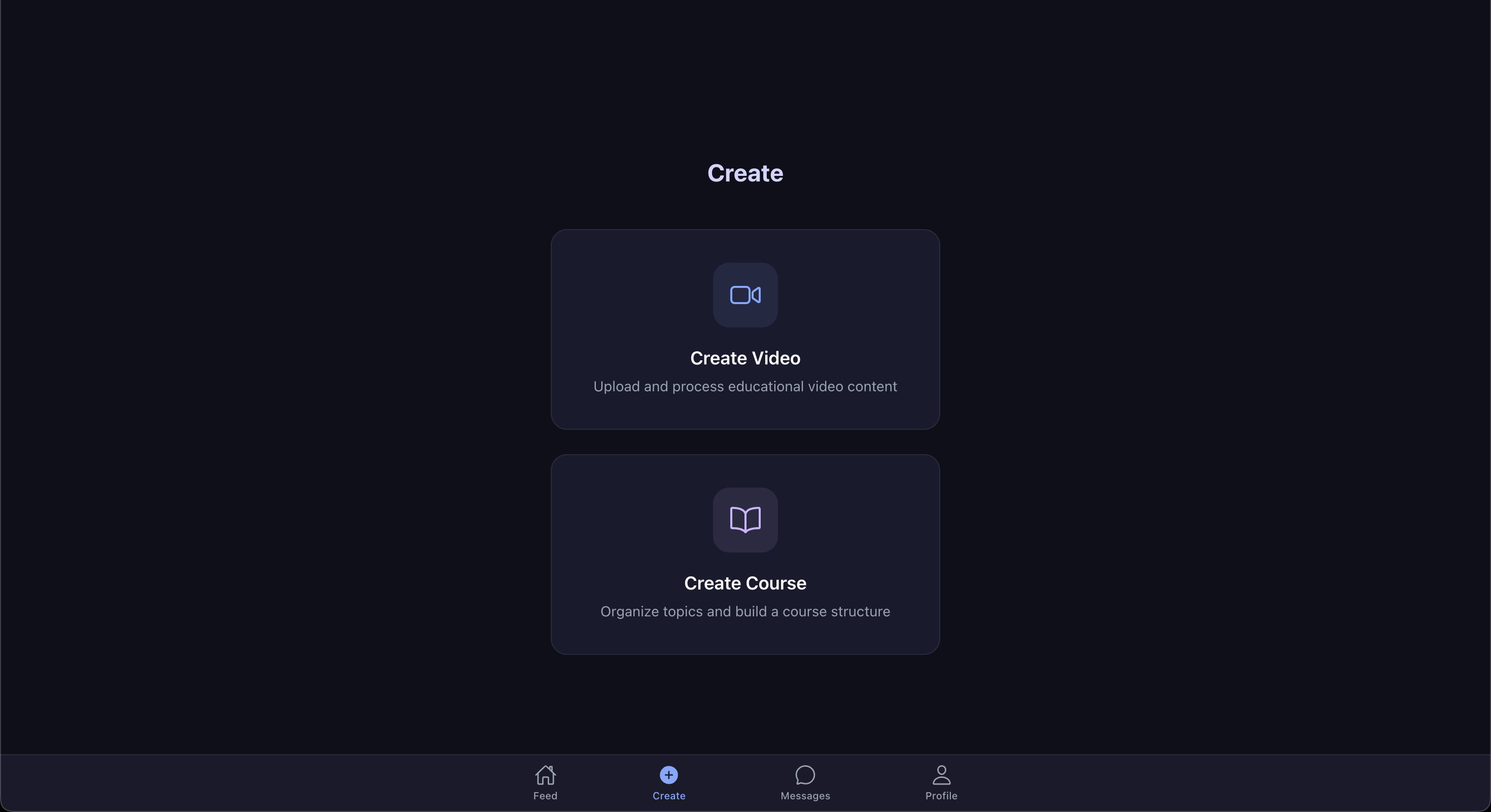
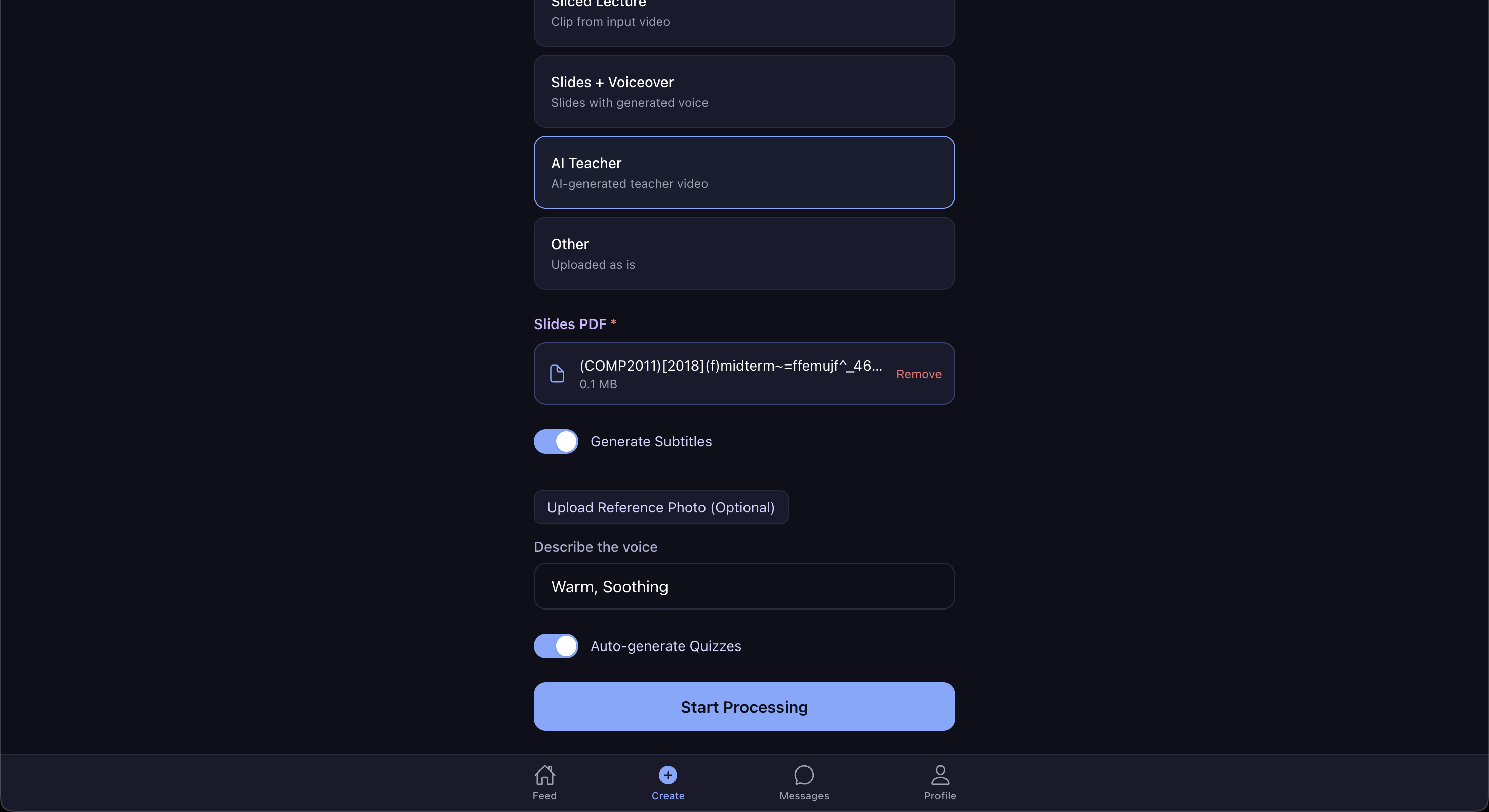
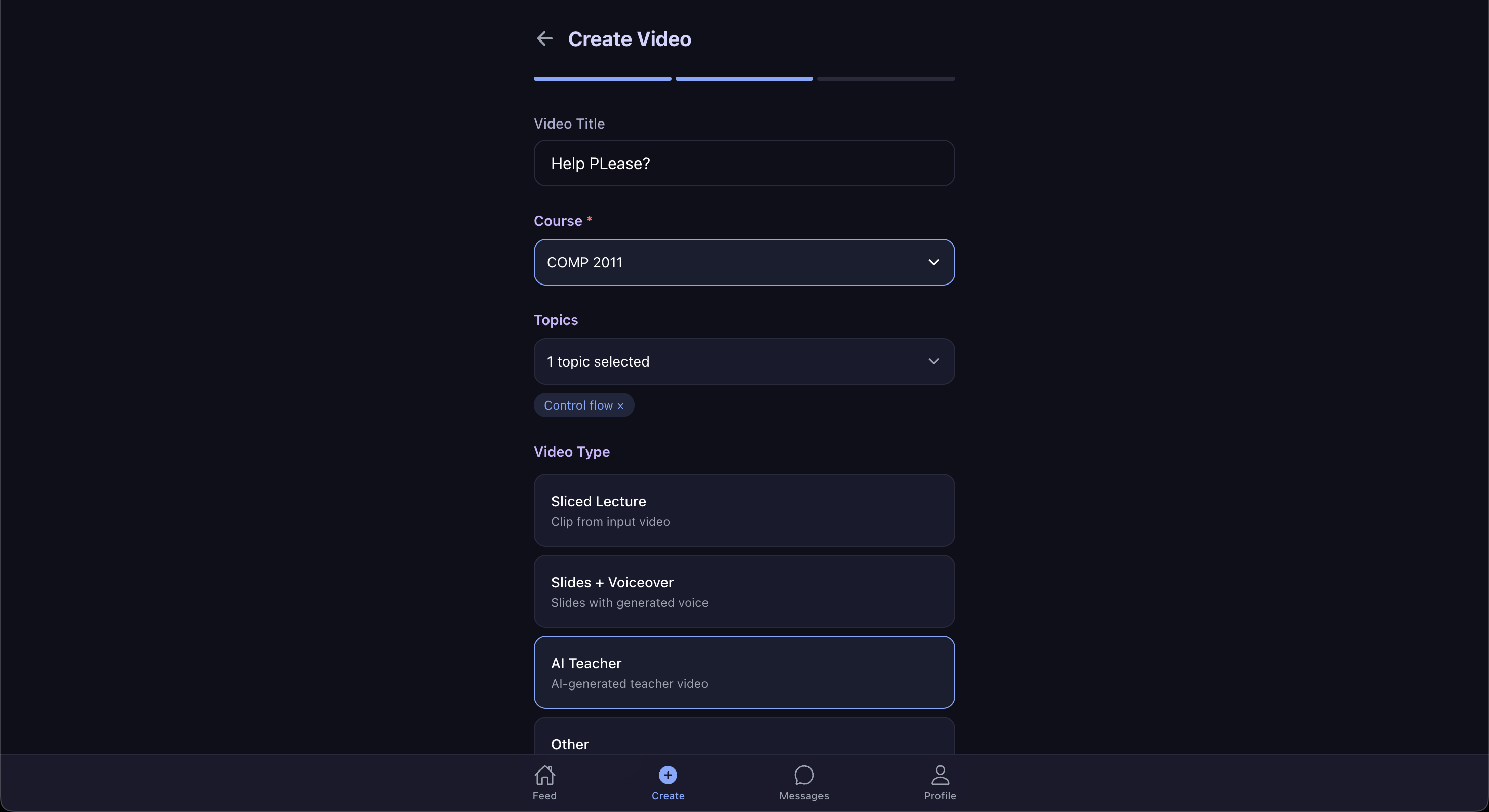
Creators — including professors and students — can upload lectures, slides, or notes, and FocusFeed’s backend automatically: Transcribes or reads the material. Segments it into topics and individual concepts. Generates multiple types of educational reels — ranging from sliced video clips to AI presenter videos. Optionally builds short quizzes to reinforce each concept. In short, FocusFeed transforms traditional academic input into an adaptive, visual, and interactive learning experience tailored for modern students.
How we built it
The application is built using both Python and TypeScript, collaboratively developed through Cursor AI. The front end uses Next.js 14 (App Router) for a sleek and responsive user interface that maintains a vertical layout across devices. On the backend, FocusFeed orchestrates asynchronous Python services to handle video processing, speech-to-text transcription, AI generation, and content management.
The AI stack includes: AWS Transcribe for automatic speech recognition and transcription. Featherless (Qwen) for topic segmentation and summarization. MiniMax for AI-generated teacher avatars and voices. AWS Bedrock for syllabus parsing and structured course topic extraction.
Video assembly and post-processing are handled by FFmpeg, which stitches clips, adds subtitles, enforces the 9:16 format, and applies blur overlays. All user, video, and course data is stored in PostgreSQL, managed with Prisma ORM, and securely hosted on AWS.
Challenges we ran into
Making more than 3 repos because vibe coding ruined it? Yeah that was more than just rough. Creating out latest 4th repo at 1am in the night didn't help either T_T. The greatest challenge was orchestrating multiple asynchronous AI tasks — each with unique dependencies and performance characteristics. Balancing speed, output quality, and cost required fine-tuning model parameters and optimizing concurrency. AI voice and character consistency proved difficult, as tone and alignment often drifted between clip generations. Building a vertically constrained feed that performed smoothly on both mobile and desktop required efficient video caching, adaptive loading, and careful optimization. Synchronizing quiz generation and reel creation pipelines demanded rigorous data validation and proper retry logic. Oh, and how can we forget, THE FUDGING VIBE CODING DEBUGGING!!!!
Accomplishments that we're proud of
Built a complete AI-driven content pipeline that transforms standard university lectures into short, engaging educational reels. Integrated multiple AI systems — AWS Transcribe, Qwen, MiniMax, and FFmpeg — into one cohesive platform. Designed a TikTok-style interface that sustains attention while promoting learning. Created customizable content preferences, such as video length and type, without affecting backend logic. Achieved stable rendering and playback across devices while maintaining high video quality and speed.
What we learned
We learned how to combine modern AI technologies with web frameworks to create an intelligent and interactive educational medium. This project deepened our understanding of scalable architectures for AI integration, asynchronous multimedia pipelines, and responsive front-end design for continuous vertical feeds. We also explored the cognitive psychology behind attention and microlearning, helping us design a product that complements how people naturally focus. Most importantly, we discovered how the intersection of AI and education can make studying not just accessible, but genuinely enjoyable.
What's next for FocusFeed
Develop a cross-platform mobile application for iOS and Android. Implement adaptive analytics to personalize content based on focus duration and engagement data. Enable user-generated quizzes and customizable study playlists for collaborative learning. Explore attention-tracking feedback using lightweight computer vision and eye-tracking features. Partner with universities to integrate FocusFeed into course ecosystems as part of hybrid learning initiatives.

Log in or sign up for Devpost to join the conversation.