-
-
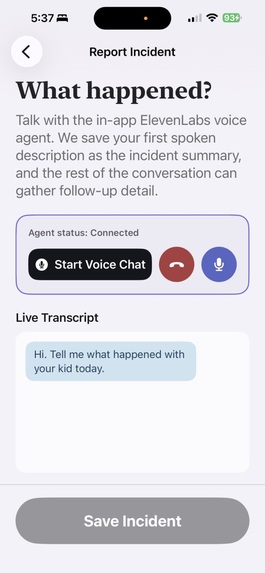
Incident Report Conversation
-
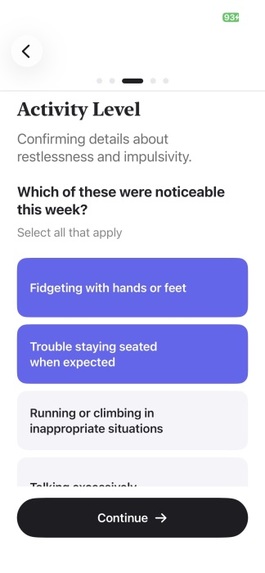
Weekly questionnaire
-
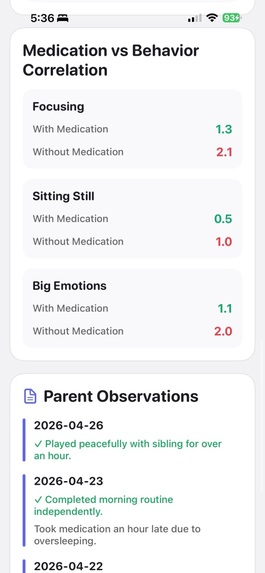
ADHD Analysis
-
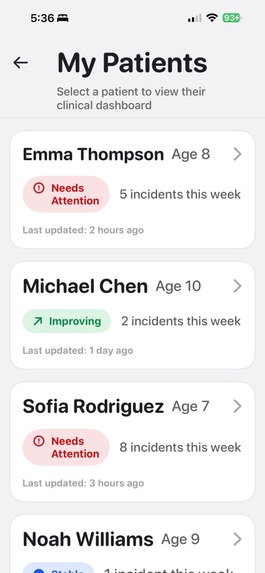
Doctor view
-
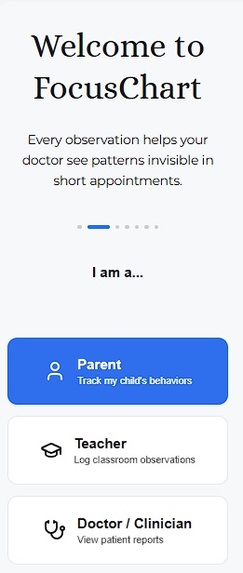
Figma design #1 - with teachers
-
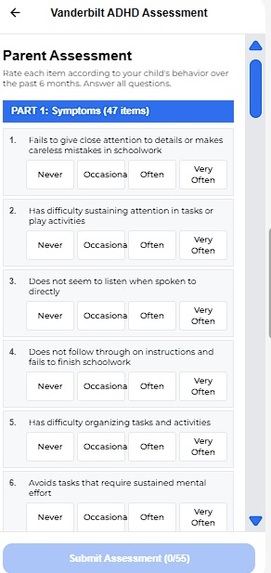
Figma design #2 - too many questions
Doctors diagnose neurodevelopmental disorders off barely any data
We're changing that. FocusChart connects parent experiences to doctors, allowing for more accurate diagnoses.
The current experience
A parent complains about problems their child is facing. The doctor suspects they might have ADHD. The parent takes a 55 question survey about their child over the last 6 weeks. They forget exactly what happened, can't accurately describe what's going on to their doctor off the top of their head, and receive a delayed or wrong diagnosis.
How we get better results
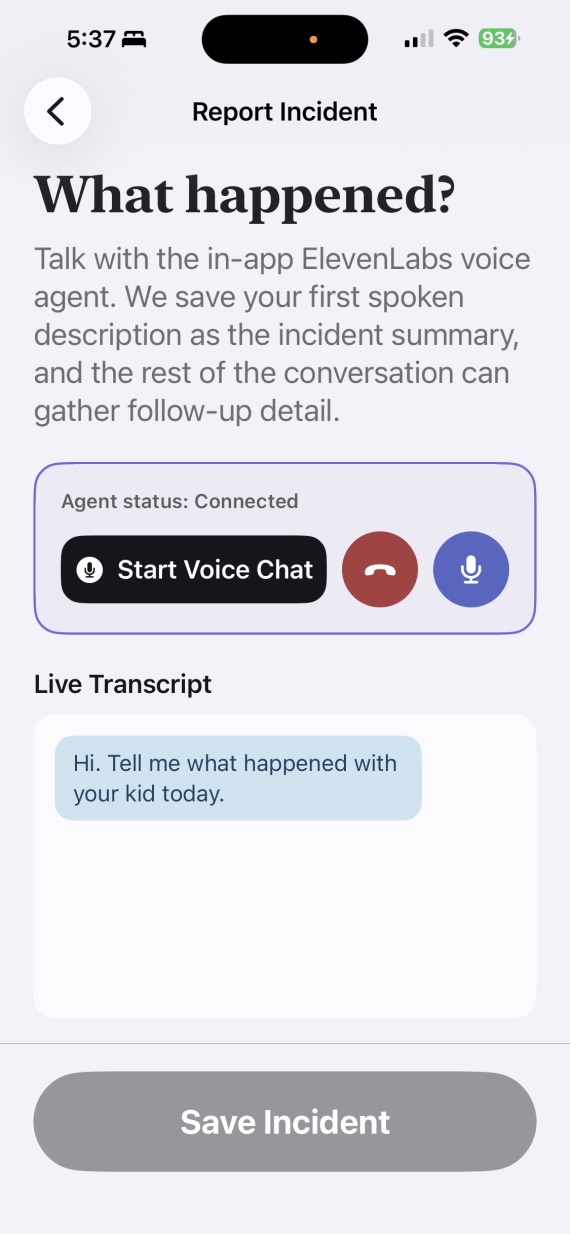
A parent complains about problems their child is facing. The doctor suspects they might have ADHD. The parent downloads FocusChart and regularly logs incidents involving their child by talking to an ElevenLabs agent that probes for details that may be relevant to diagnosis.
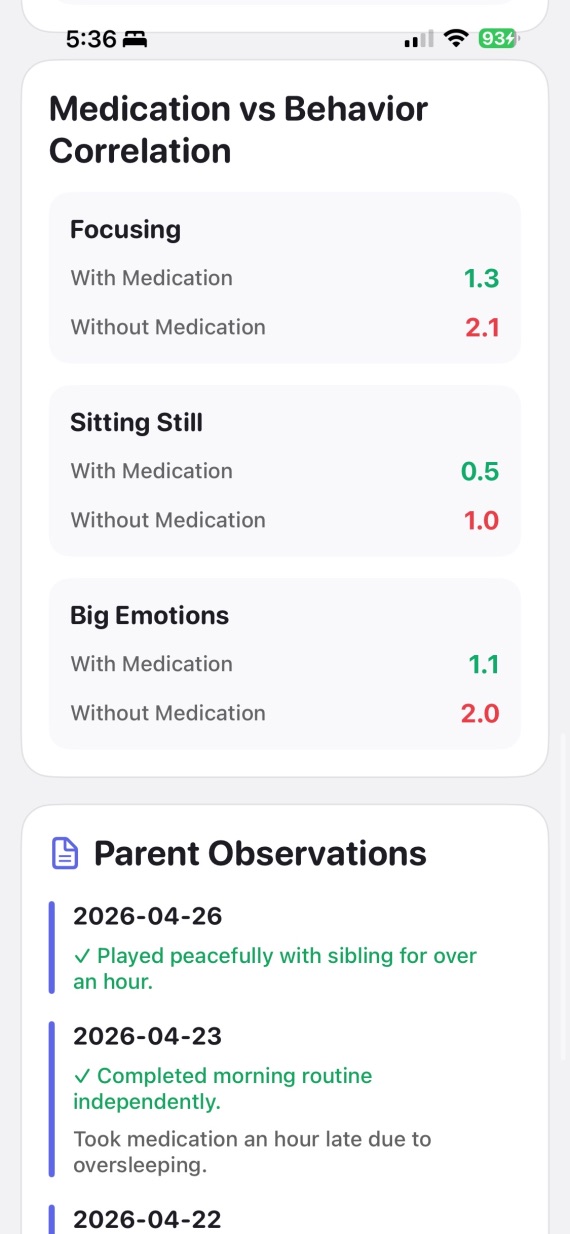
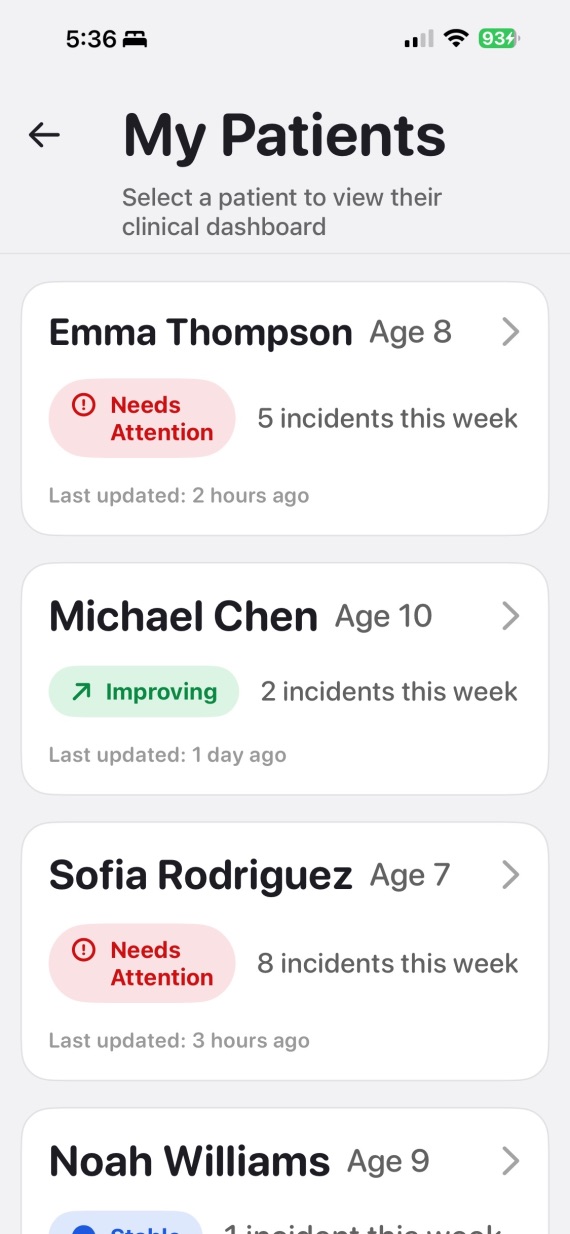
After 6 weeks, the parent brings all of the data they've collected to the doctor's office. FocusChart creates an end-to-end encrypted tunnel with MongoDB from the parent's FocusChart to the doctor's device. Once the data is on the doctor's device, FocusChart uses Google gemma-4-E2B-it through Melange to quickly and securely analyze the parent's experiences. Gemma evaluates the parent's experiences according to the standard Vanderbilt ADHD assessment, providing the doctor with a comprehensive analysis of the past 6 weeks instead of just whatever's on the top of the parent's mind.
Our Inspiration and Building Process
One of our team members, Tom, has a younger brother with ADHD, and he remembers how difficult it was to get him diagnosed so he could get the medication he needed, which ended up helping him a lot. Another team member, Keanu, was already working on an on-device AI use-case as a side project, and proposed using Melange to build secure on-device analysis of patient experiences for doctors.
We spent the first night of the hackathon ideating and building upon this and other ideas. We decided to use a local version of Gemma for its ability to perform complex analyses. Then we drew mockups with Figma Make, continuing to ideate along the way.
Figma Make
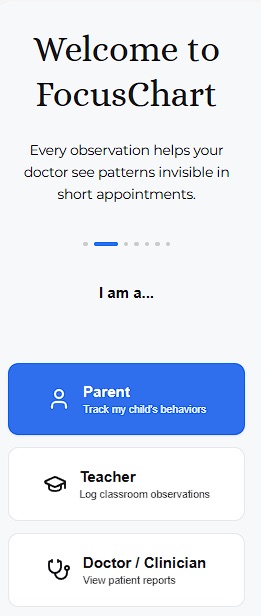
In this mockup, we considered adding teachers as a source of further information, which we may due in a future iteration. Figma Make spun up a fast design for us and made development a simple process of translating our ideas to code.
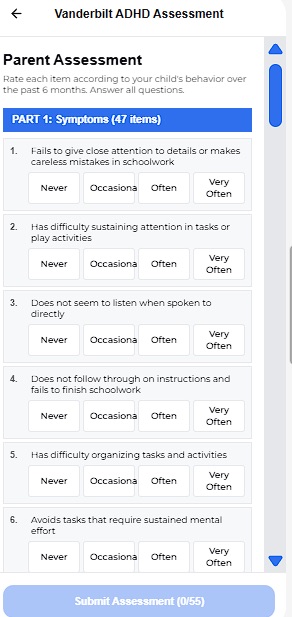
In this mockup, we originally considered using the entire ADHD scoring criteria as a questionnaire in the app. However, upon iterating in Figma, we realized how nobody would want to fill out such a form daily and pivoted to a question approach that optimized for the least number of questions possible.
We asked the Zetic team on the hacker floor for advice; we initially thought about developing for Android but they told us Melange doesn't work on emulators, and none of us had Android phones. We started developing on iOS with SwiftUI instead.
The process was quick with Figma Make. We copied over screenshots of the UI into Claude Code and Codex and it faithfully built the UIs for us, but didn't implement the core functionality, which was left up to us to design.
MongoDB
We realized early on that we needed a secure way to send information from the parent's phone to the doctor's phone. We considered options like personal area networks but in the end decided to build our own relay using Node.js and Express since communication required secure, short-lived connections. Since we expected the parent and doctor to be in the same room, we settled on using QR codes with the session code embedded in the QR code. At scale, this requires heavy throughput and many queries for small amounts of data, so we ended up using MongoDB to store the temporary encrypted messages sent between phones as opposed to a SQL solution.
ElevenLabs
The ElevenLabs agent was a later addition. In our earlier designs, we simply offered a text input for the parent to log their child's experiences. We realized that an entirely free form box was potentially missing out on important details, so we brought in a voice conversational agent to solve this problem. The ElevenLabs agent probes the parent for more details, resulting in better entries and higher quality data.
Zetic Melange & Gemma
For the actual analysis itself, we had to be careful about prompting because on-device models don't have as many tokens to work with. We adjusted our target output many times and ended up in a spot where we could include enough context about things like the Vanderbilt ADHD assessment while still getting reasonable output times from the model.
Looking Forward
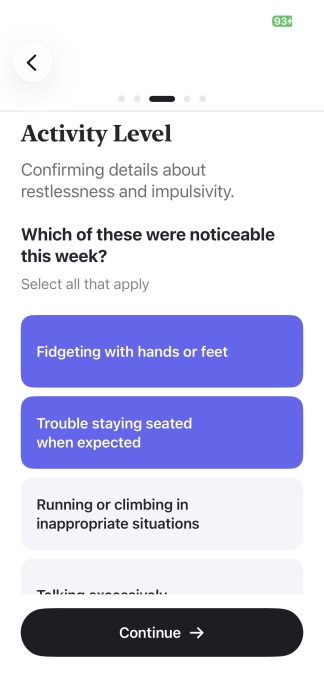
From attending Figma Make workshops to doing nothing but flip-flopping on ideas on the first night and feeling left behind, we experienced many new things this weekend. For FocusChart, we plan on expanding the number of targeted developmental disorders from more than just ADHD. We envision this tool being used by primary care practitioners so the next step would be to reach out to them.
Built With
- elevenlabs
- express.js
- gemma
- melange
- mongodb
- node.js
- swiftui
- zetic

Log in or sign up for Devpost to join the conversation.