-
-
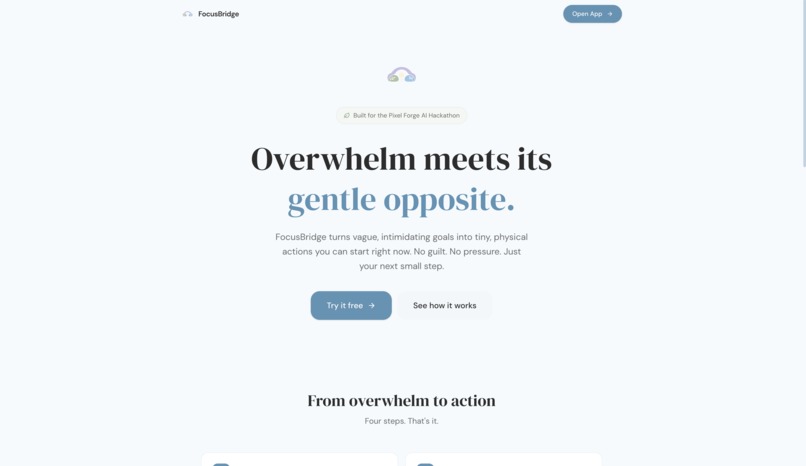
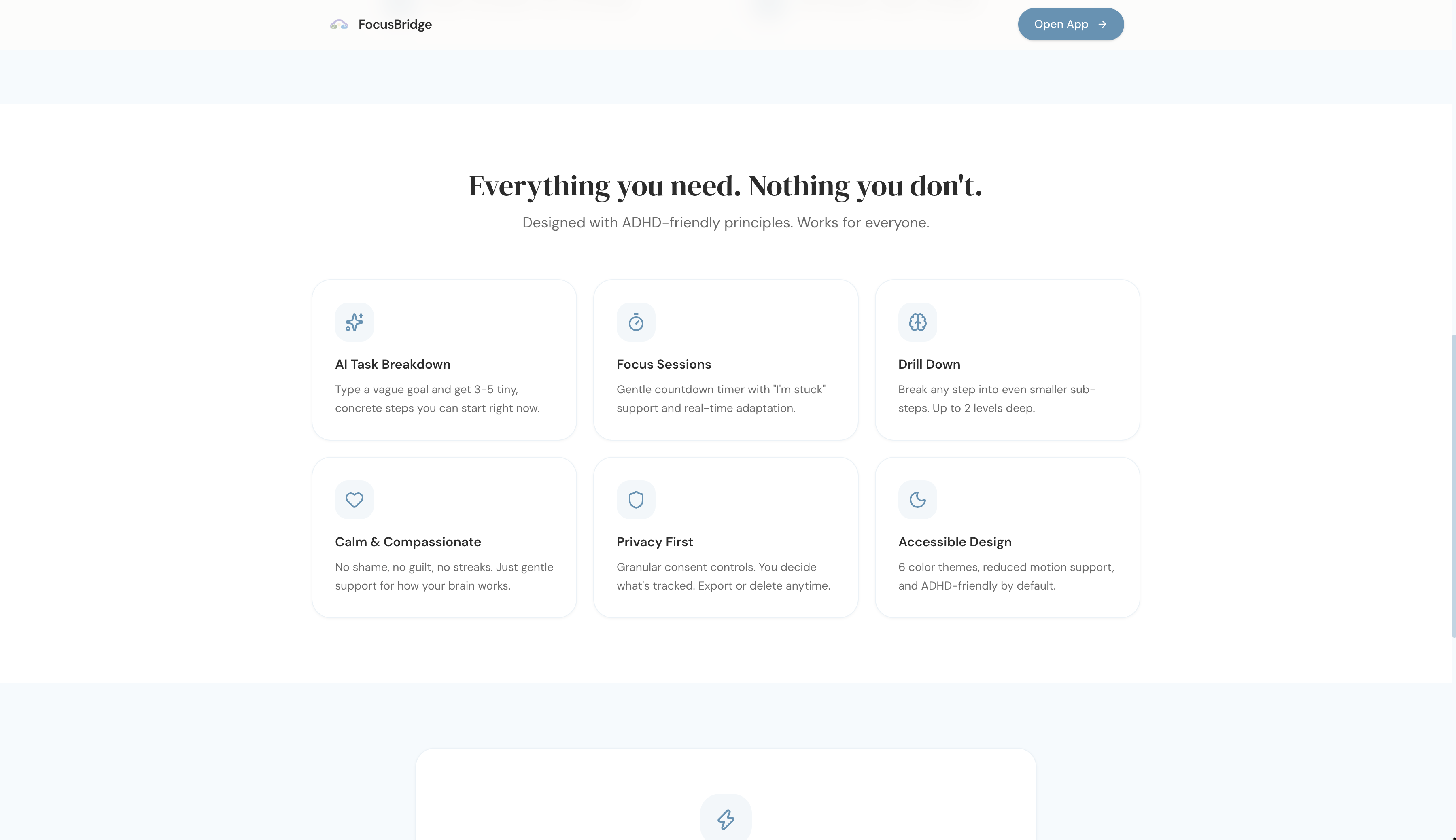
Landing page
-
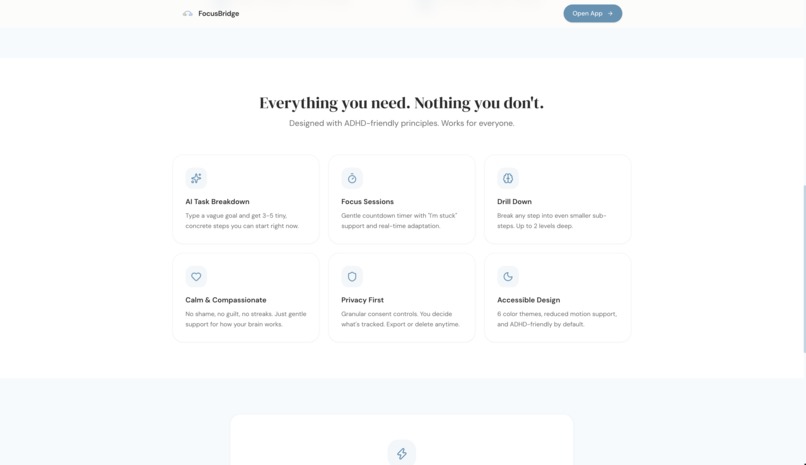
Landing page
-
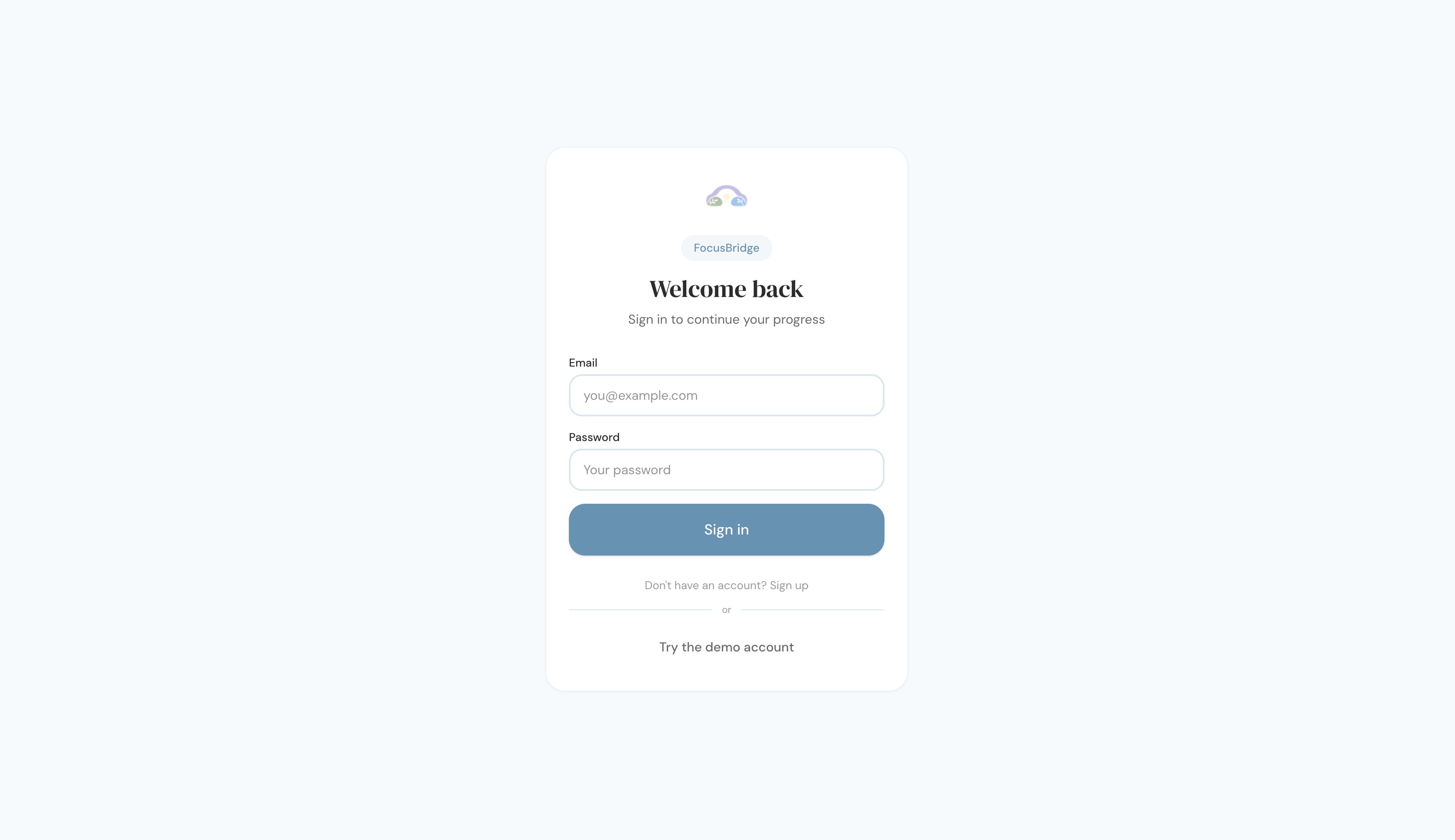
Login page
-
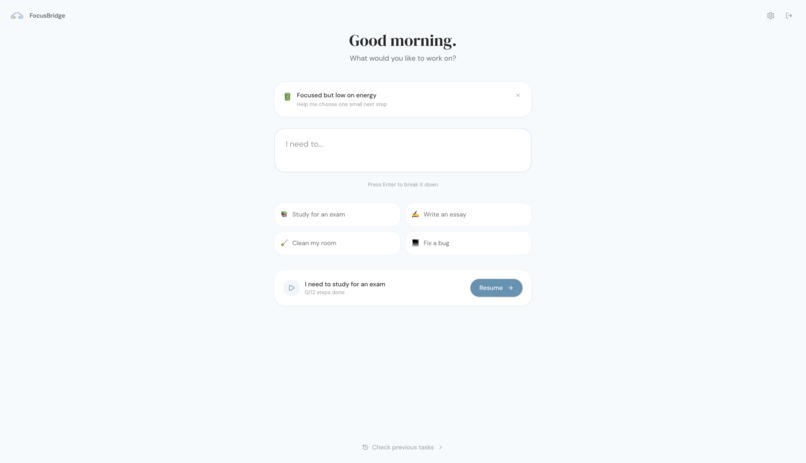
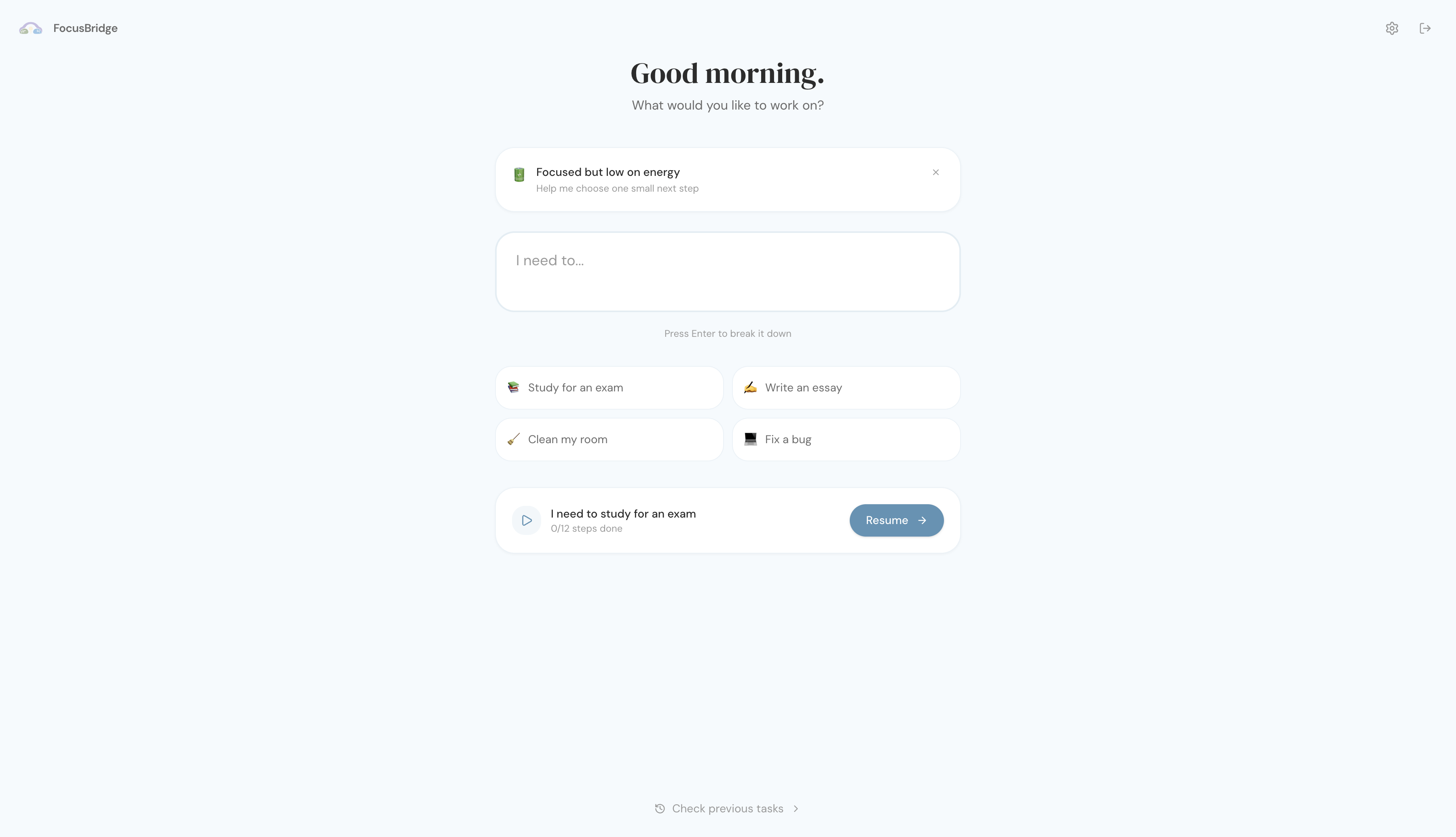
Dashboard
-
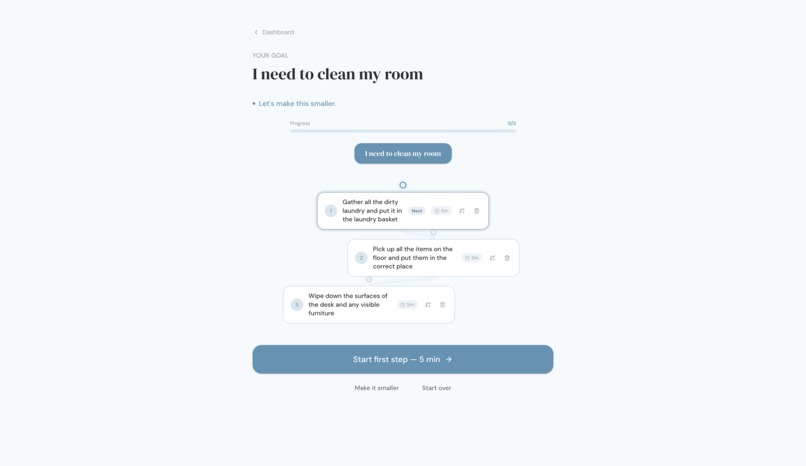
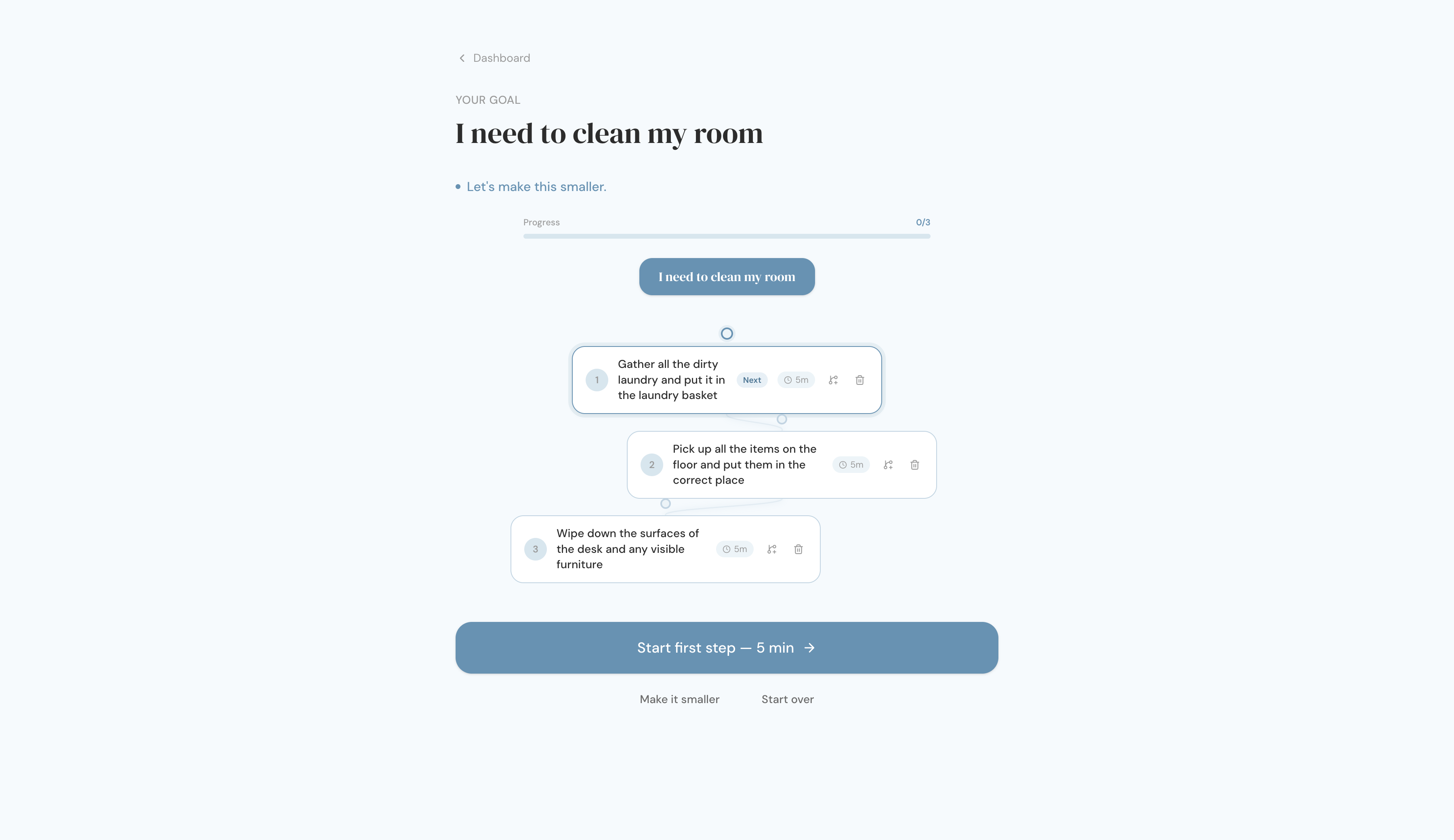
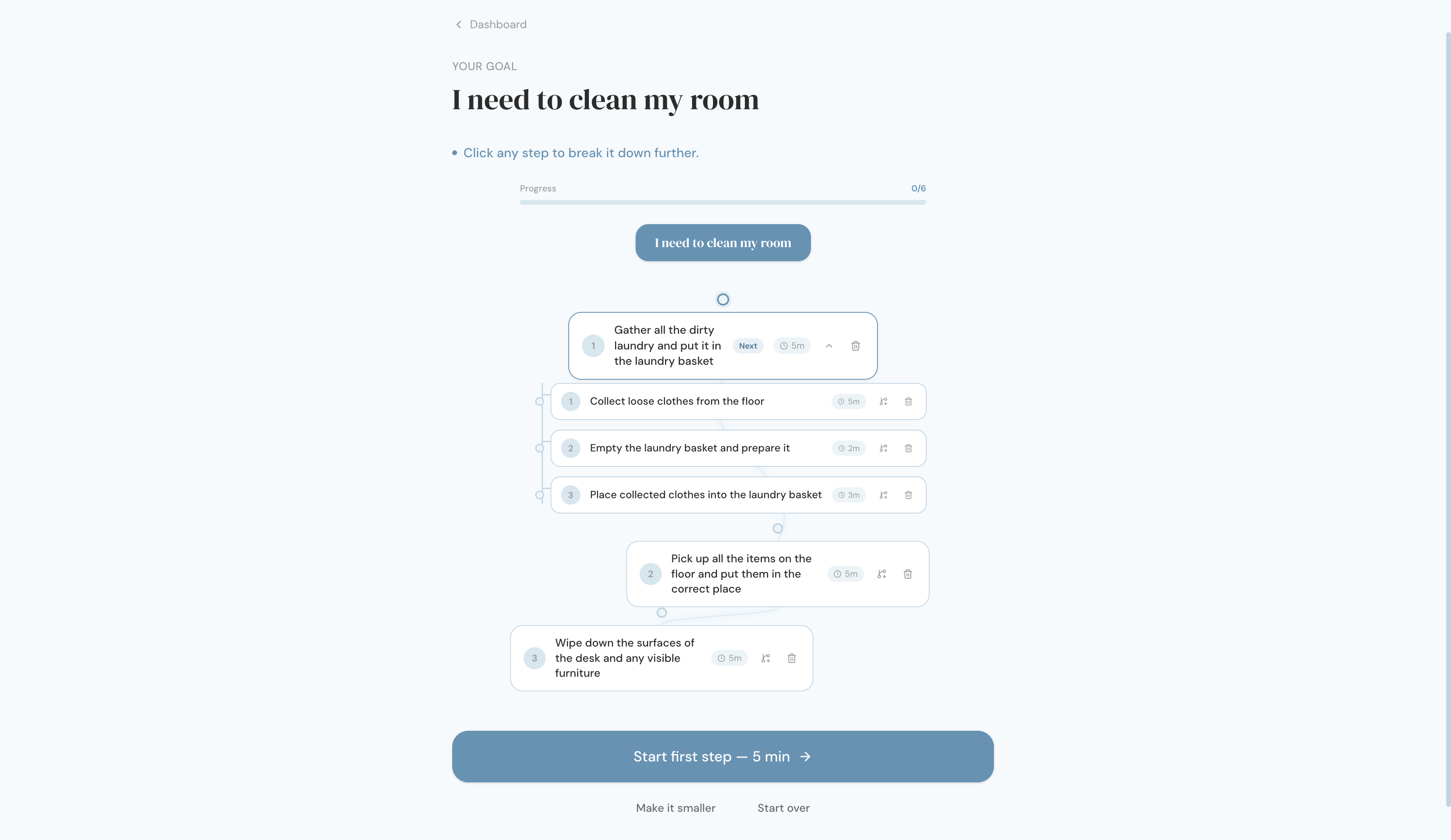
Broken down tasks
-
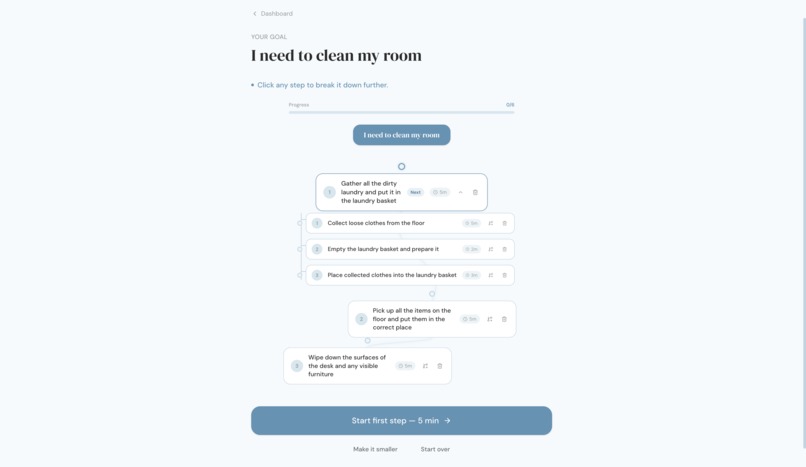
Broken down tasks
-
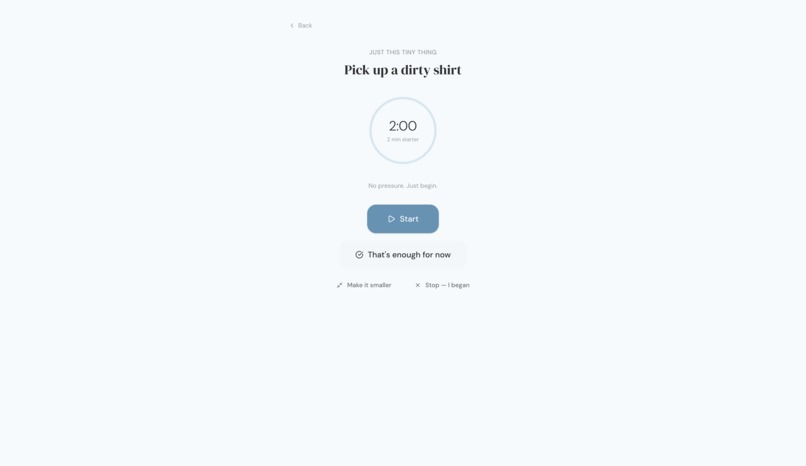
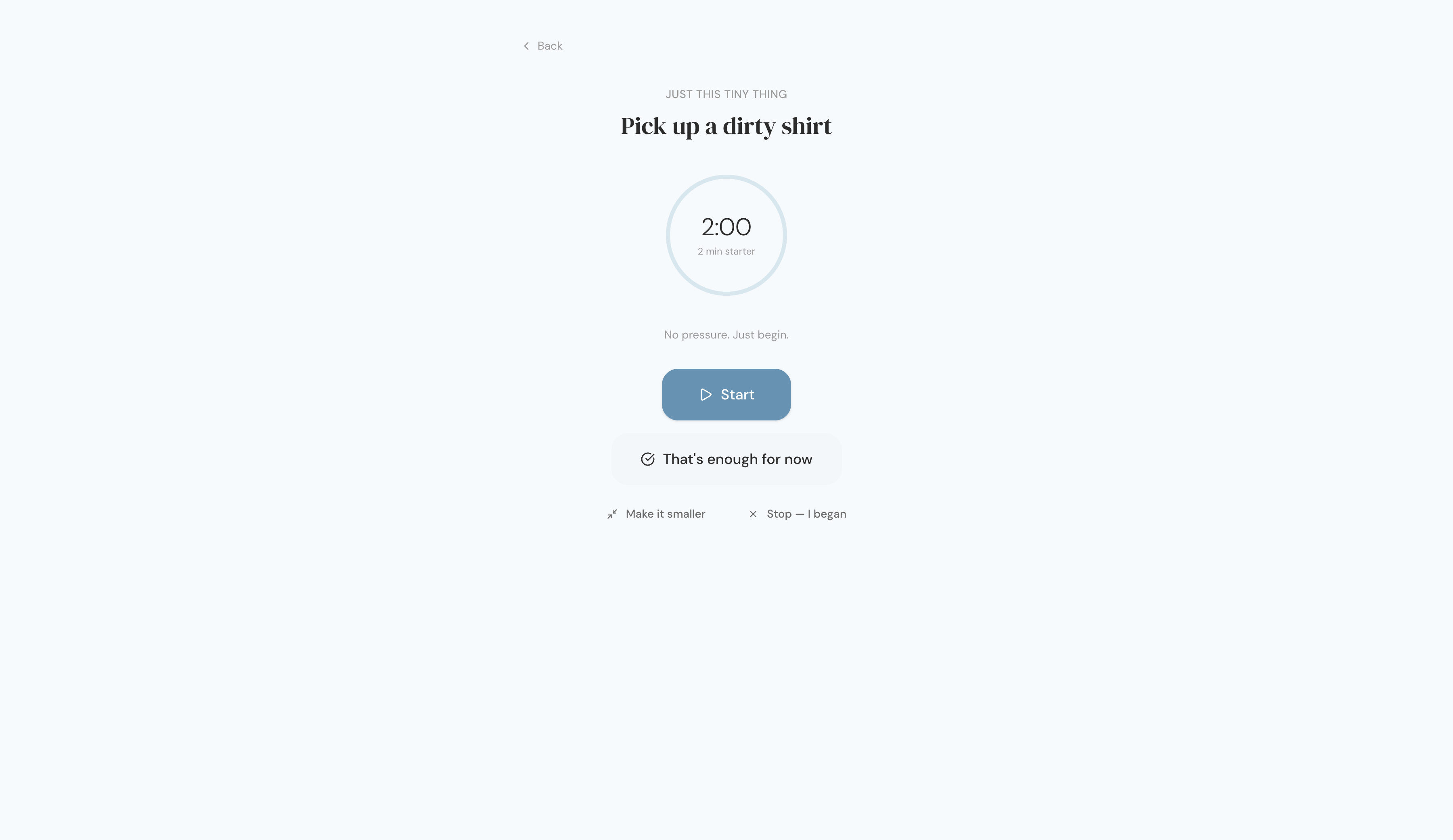
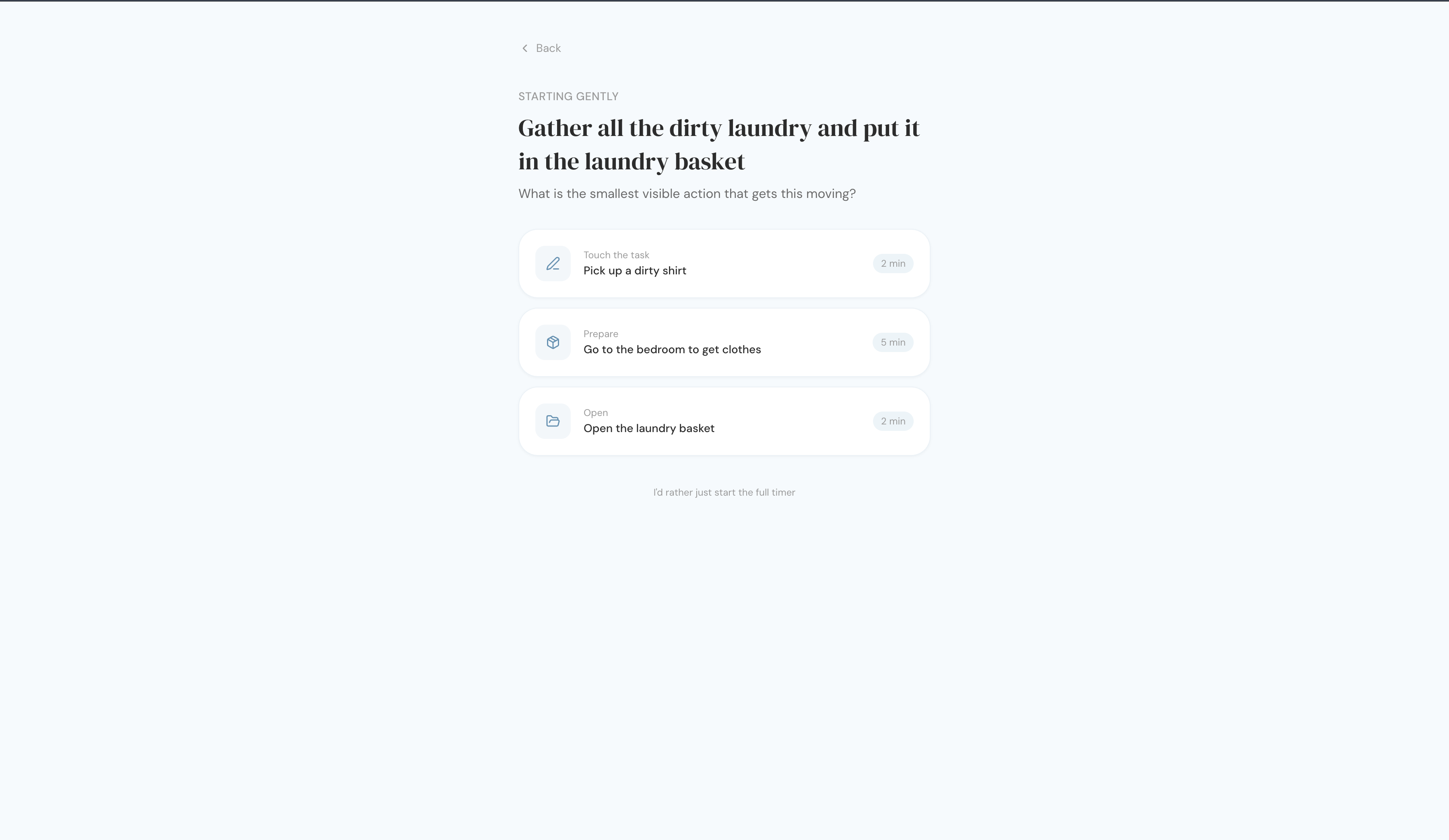
Starting one small task
-
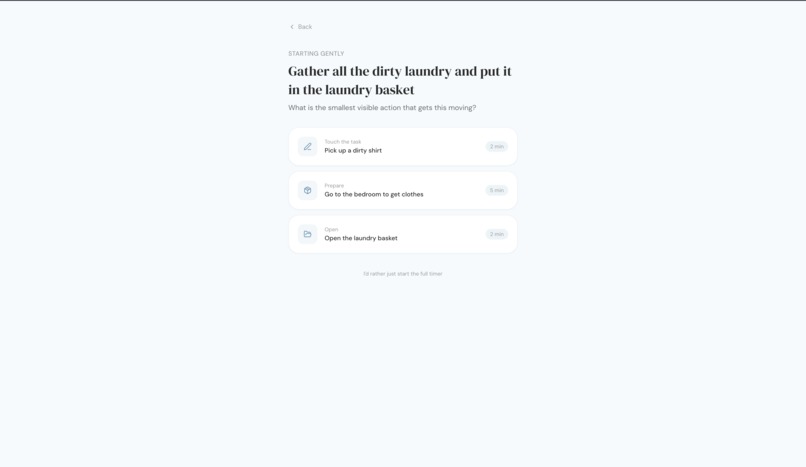
First small task done by AI
-
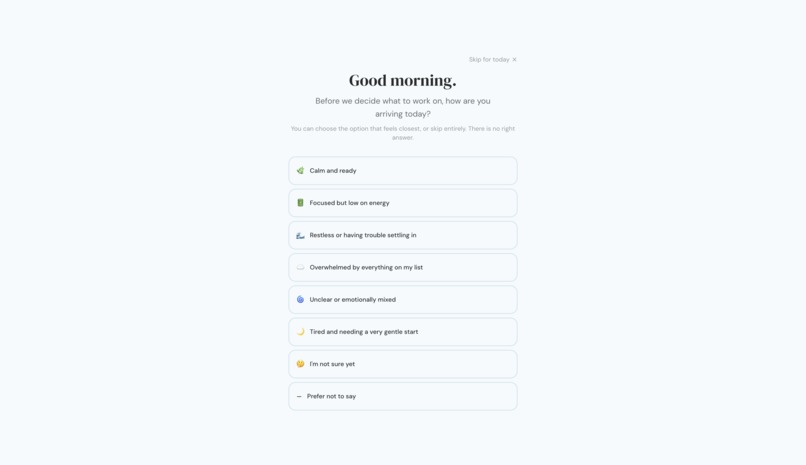
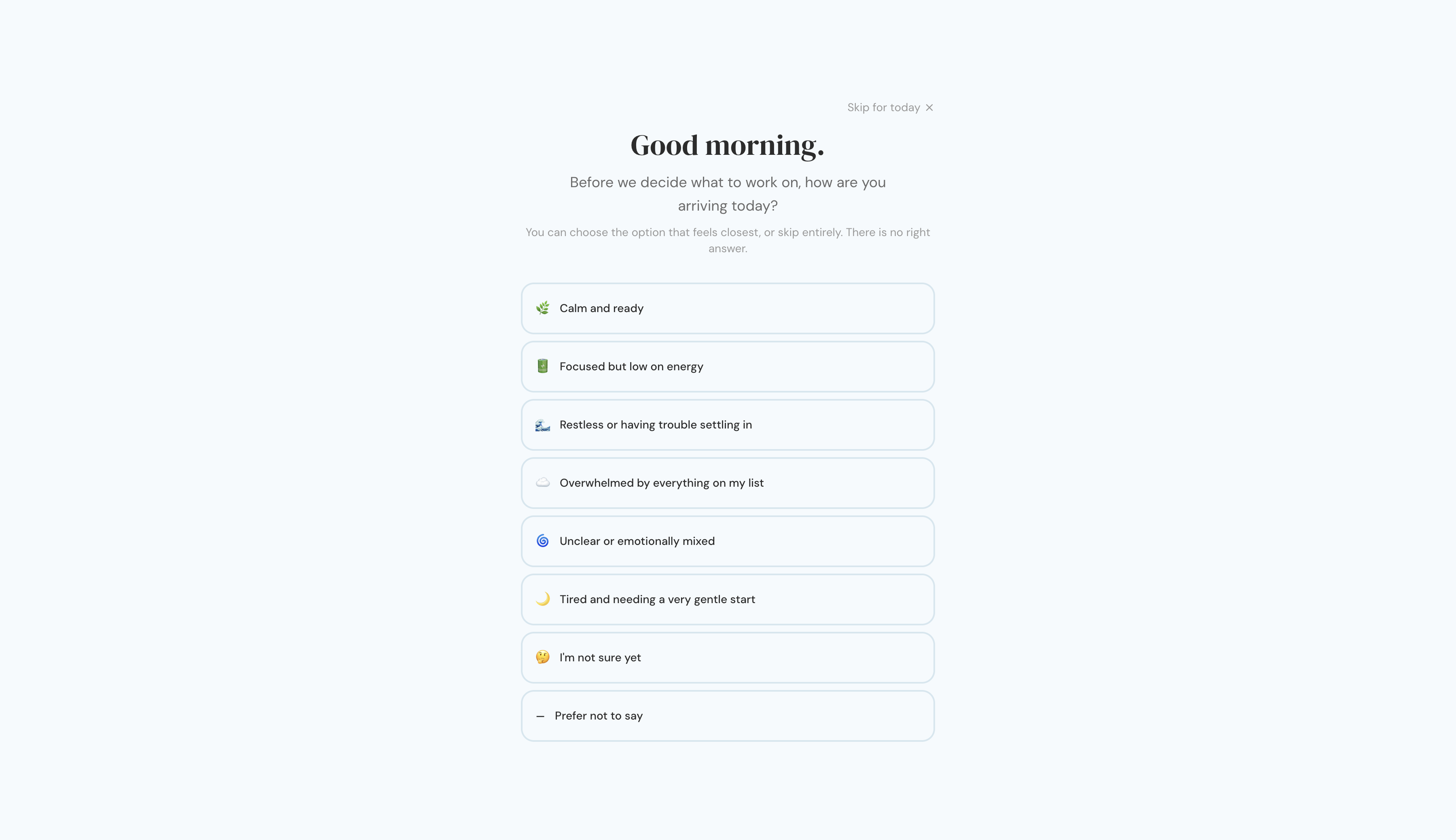
Emotion state
-
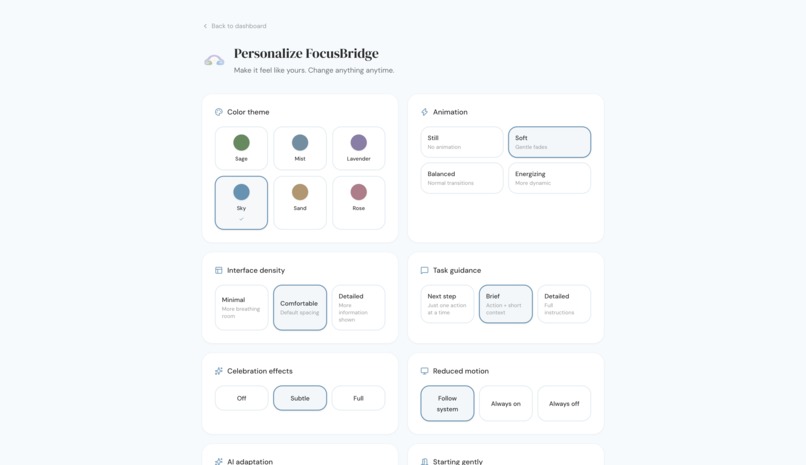
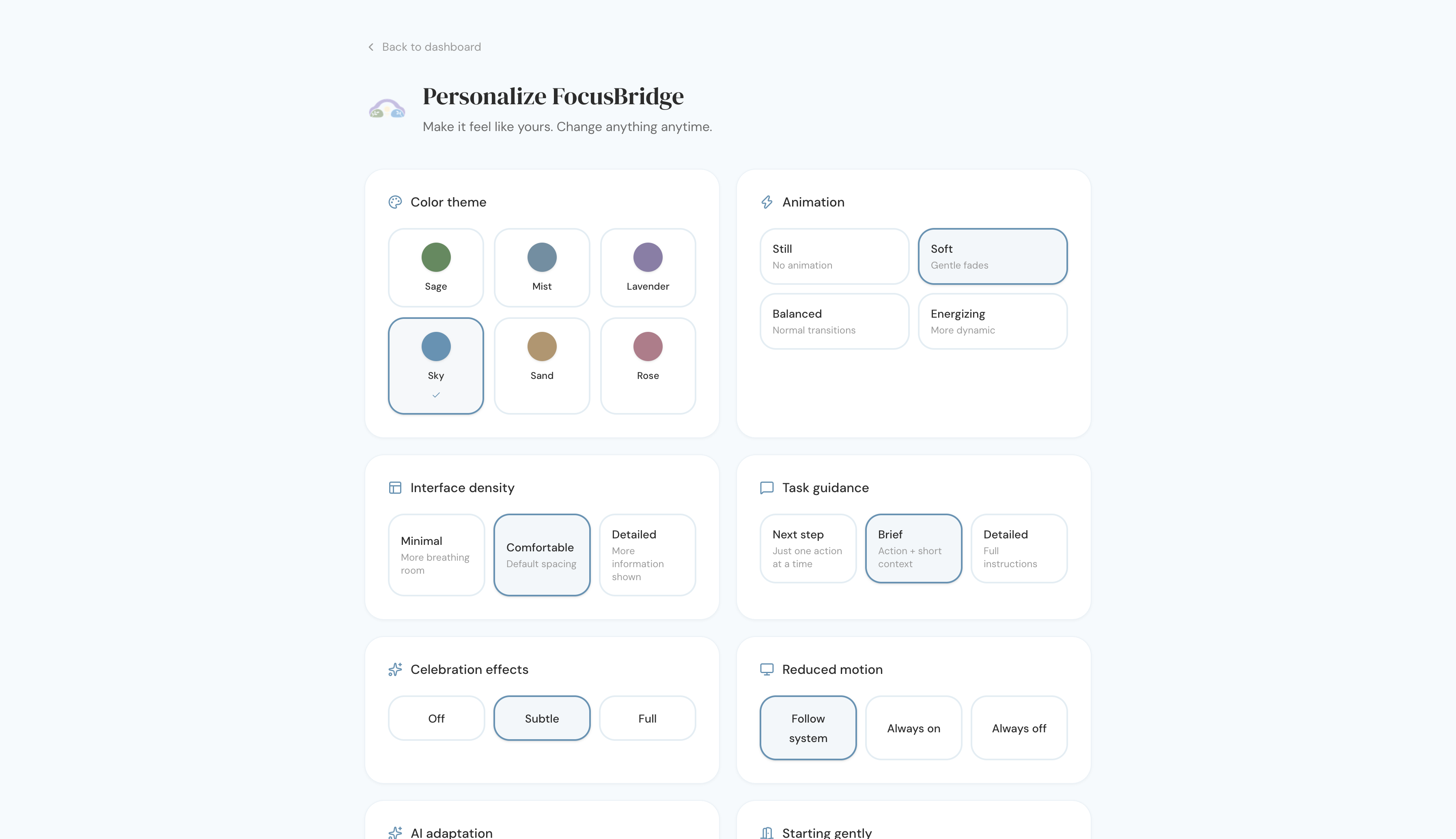
Customizing setting
-
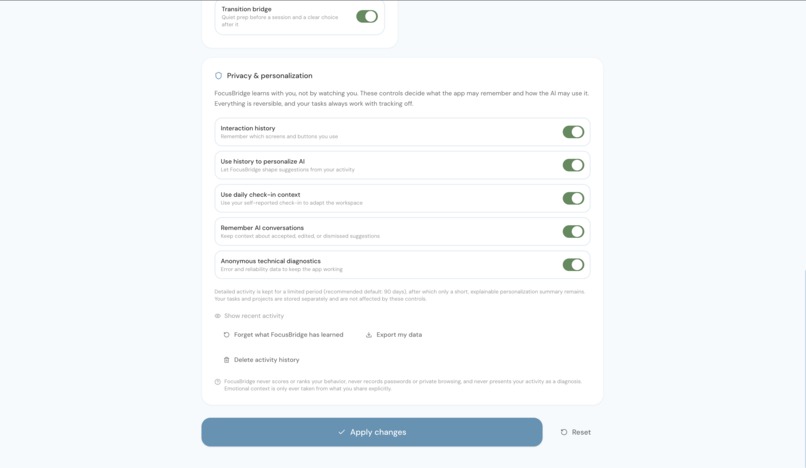
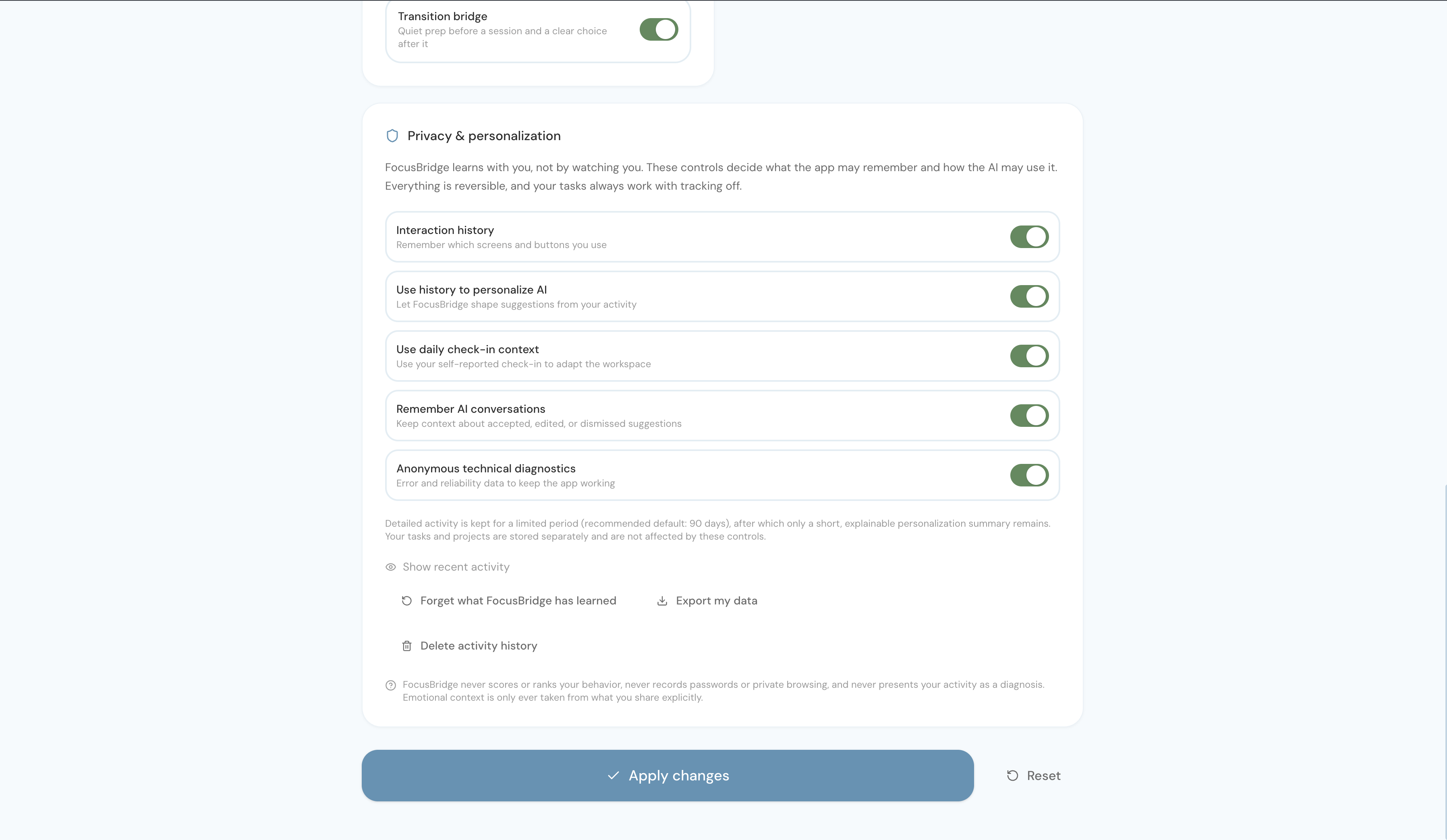
User privacy
Inspiration
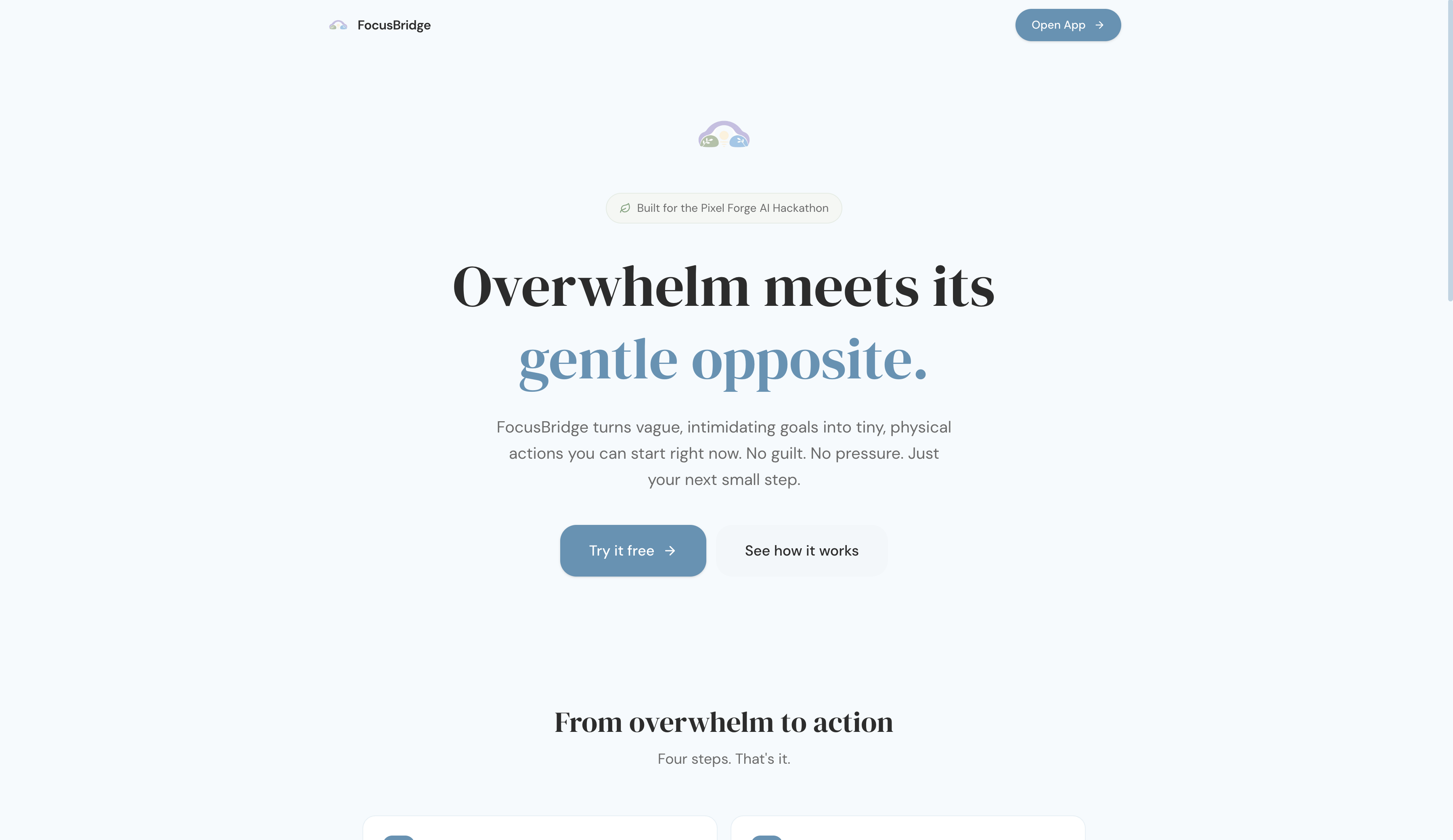
FocusBridge was inspired by the difficulty of turning intentions into action when a task feels overwhelming. Many productivity tools emphasize deadlines, streaks, and output, so we wanted to build a calmer experience that helps people with ADHD and executive-function challenges focus on one manageable next step without shame or pressure.
What it does
FocusBridge is an AI-powered productivity workspace with two modes. Work Tasks breaks overwhelming goals into small, actionable steps using an interactive tree structure. Planning Mode organizes larger goals into roadmap milestones with outcomes, instructions, obstacles, and fallback paths. It also provides daily check-ins, focus sessions, customizable themes and animations, reduced-motion support, distraction capture, reflections, and compassionate AI guidance.
How we built it
We built FocusBridge as a modern web application using React, TypeScript, Vite, Zustand, Firebase, and OpenRouter. Firebase handles authentication and data persistence, while OpenRouter powers AI task breakdown and personalized guidance. We also created a consent-based activity system and a secure context engine that filters, redacts, summarizes, and sends only relevant information to the AI.
Challenges we ran into
One of our biggest challenges was balancing personalization with simplicity. An interface that changes too aggressively can become distracting, so we designed adaptations to be transparent, reversible, and controlled by the user. We also had to make AI behavior reliable by adding validation, fallback steps, privacy controls, prompt-injection protection, and support for using the core product when AI or network services are unavailable.
Accomplishments that we're proud of
We are proud of creating an ADHD-friendly experience centered on compassion rather than pressure. FocusBridge combines task decomposition, visual roadmaps, daily context, focus timers, adaptive guidance, accessibility preferences, and privacy-first activity tracking in one coherent workspace. We are especially proud that the AI supports the user without diagnosing, judging, or silently taking control of their work.
What we learned
We learned that effective productivity software is not about adding as many features as possible. It is about reducing cognitive load, externalizing memory, supporting task initiation, and making it easy to recover after interruptions. We also learned that personalization must preserve user autonomy, and that privacy and graceful fallbacks are essential when building AI-powered products.
What's next for FocusBridge
Next, we plan to improve persistence across the full application, add soft-start focus rituals, flexible session presets, transition and distraction-recovery flows, a working-memory inbox, deadline buffers, and better roadmap editing. We also want to explore optional body-doubling sessions, flexible routines, sensory environment controls, and more explainable AI personalization while continuing to keep the experience calm, accessible, and user-controlled.
Built With
- featherless
- firebase
- openrouter
- react
- tailwind
- typescript
- vite

Log in or sign up for Devpost to join the conversation.