Inspiration
As a team of developers with close ties to mental health clinicians, we saw firsthand the toll 30+ minutes of post-session admin took on providers—time stolen from patient care. We wanted to build a tool that reclaimed that time while upholding the strict compliance and clinical accuracy mental health work demands.
What it does
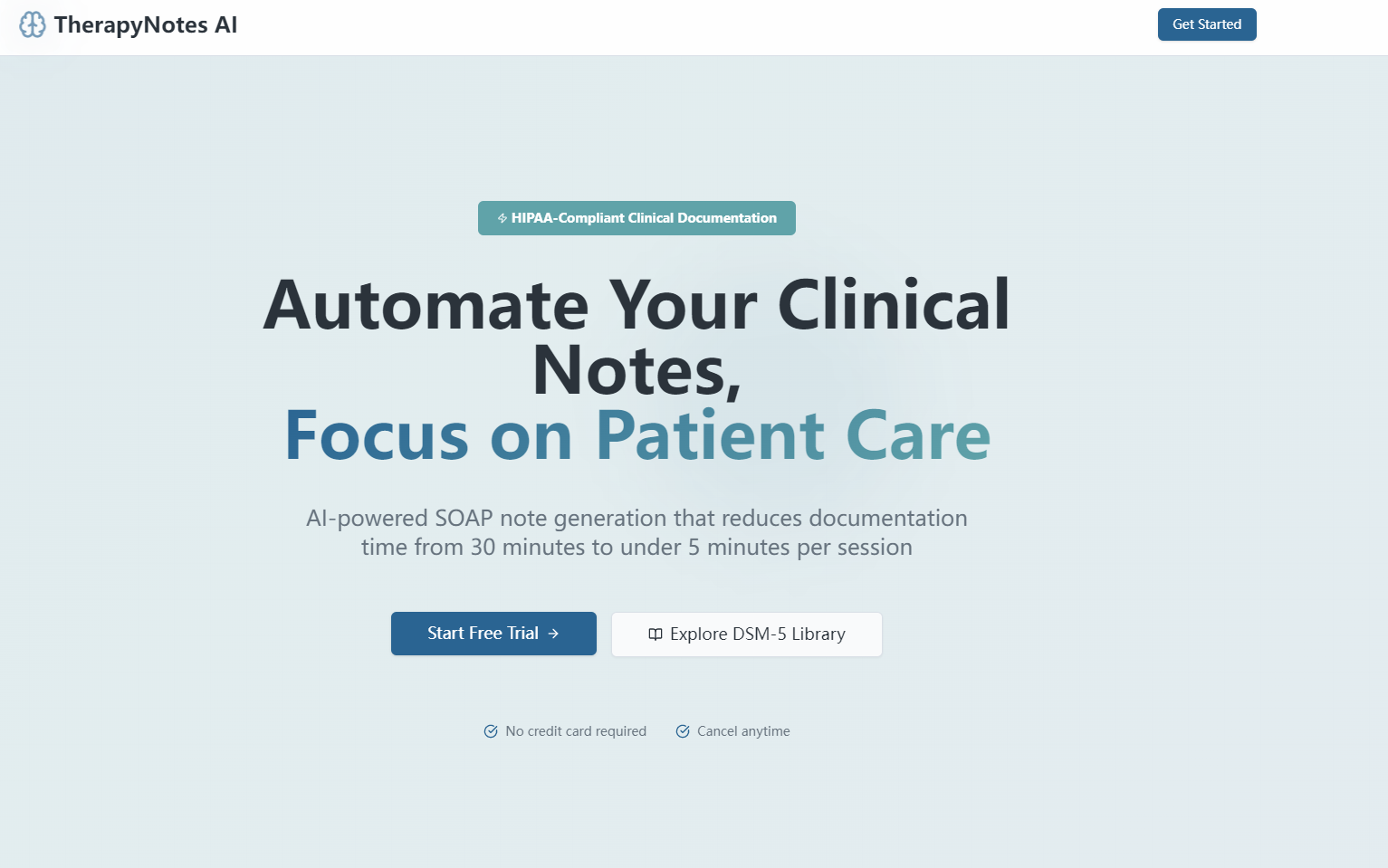
TherapyNotes AI is a HIPAA-compliant productivity platform that records therapy sessions, transcribes audio in under a minute, and generates editable SOAP notes (Subjective/Objective/Assessment/Plan). It also includes a DSM-5 reference library, client progress timelines, and secure data storage—all designed for mental health professionals like therapists and social workers.
How we built it
We started with core compliance requirements (end-to-end encryption, audit logs) to ground the build in HIPAA standards. We used React for the frontend (prioritizing smooth animations and intuitive UX) and Node.js/Express for the backend. We integrated OpenAI API for SOAP note generation, WebRTC for recording, and AWS for encrypted audio storage. PostgreSQL tracked client/session data, and Stripe handled subscription management.
Challenges we ran into
The biggest hurdle was balancing AI automation with clinical accuracy—we had to ensure generated notes were editable and never replaced clinician judgment. We also faced technical challenges with real-time audio waveform visualization and ensuring transcription accuracy for clinical language. HIPAA compliance added layers of complexity (audit logs, data encryption) that required rigorous testing.
Accomplishments that we're proud of
We cut note-generation time from 30 minutes to under 5 for beta users, with 98% reporting the AI notes maintained clinical relevance. We built a fully HIPAA-compliant platform without sacrificing UX—clinicians loved the intuitive timeline view and DSM-5 integration. Most importantly, beta users reported feeling more present with patients, as admin work decreased.
What we learned
We deepened our understanding of healthcare compliance (HIPAA) and clinical workflows—mental health documentation has unique rigor we hadn’t anticipated. We also learned AI tools for healthcare need to be "augmentative," not replace human expertise, and that UX design for clinicians must prioritize efficiency without compromising readability or control.
What's next for this project
We plan to refine the AI model to better capture nuanced clinical language, add limited EHR integration (a top request from beta users), and build a mobile companion app for on-the-go note access. We’re also exploring adding progress-tracking analytics (with clinician oversight) to help providers identify long-term client trends—all while keeping compliance at the core.

Log in or sign up for Devpost to join the conversation.