-
-
Focus Garage app icon — 1024 × 1024
-
-
-
-
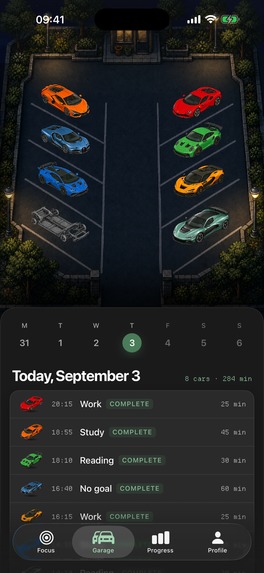
Your focus builds a garage.
Focus Garage is an iPhone focus timer that turns completed work and study sessions into a collection of pixel-art cars. Choose a car, set aside time, and let the build progress while you focus. Finish the session and park the completed car in your garage.
The problem: finding time is only the beginning
You sit down to study, read, or finish a piece of work. A notification arrives. You check one thing, open another app, and the session you intended to start never really begins. Even when you put in the time, the result can feel invisible: another number on a timer, with little to make the next session inviting.
Focus Garage is designed around three practical challenges:
- Getting started: turning a vague intention into a specific session, with a goal and a duration.
- Staying with the task: creating a boundary around that time, with optional app blocking.
- Coming back: giving completed effort a visible place in a collection that grows over time.
The intended audience is students, people doing focused work, and anyone who finds cars and collecting more motivating than an abstract timer.
Why this problem matters
Microsoft's 2025 Work Trend Index reported that 48% of employees said their work felt chaotic and fragmented. Its global survey covered 31,000 knowledge workers across 31 markets. That is workplace context, rather than a measurement of Focus Garage users, but it helps explain why protecting a deliberate block of attention matters. Microsoft, Breaking down the infinite workday
Research also suggests that interruptions can have costs beyond elapsed time. In a controlled study with 48 participants, Gloria Mark, Daniela Gudith, and Ulrich Klocke found that people compensated for interrupted work by working faster, while reporting more stress, frustration, time pressure, and effort. The study concerned an email task in a simulated office; it did not test focus apps or gamification. The Cost of Interrupted Work: More Speed and Stress, CHI 2008
These findings provide context for the problem. Focus Garage's product hypothesis is that a clear session boundary and a personally appealing reward can make a focus routine easier to return to. We have not yet established that effect through a controlled study.
How Focus Garage responds
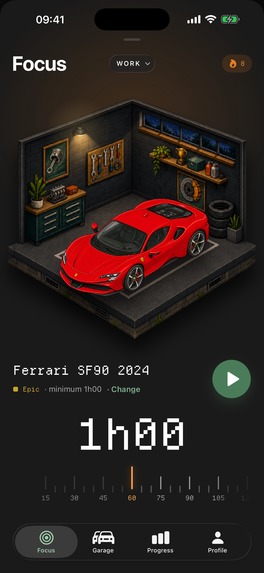
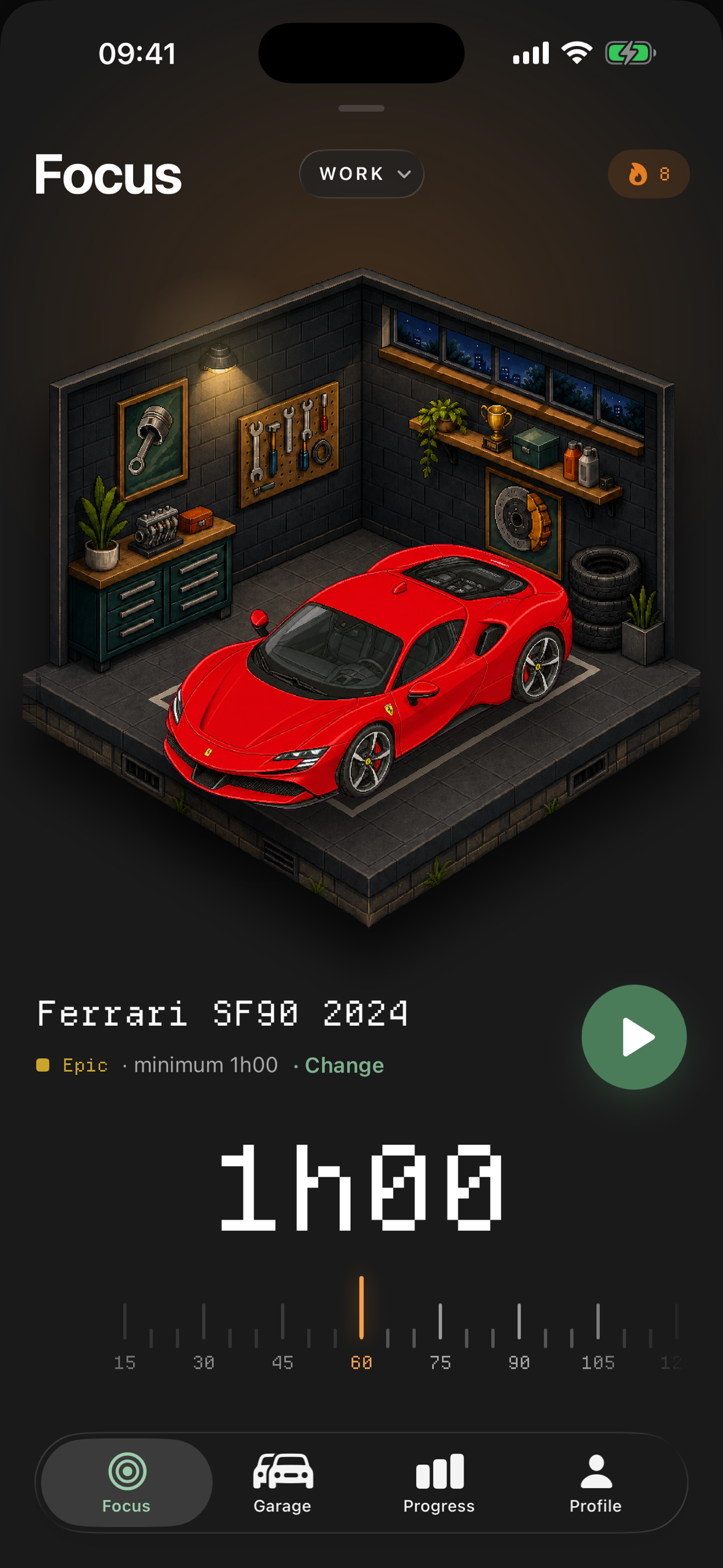
Before the session, choose something to build. Browse cars across six categories, choose a goal such as work or study, and set the time you want to protect. The reward is visible before you begin.
During the session, the workshop reflects your progress. The car moves through construction stages as the timer runs. Optional app blocking can help keep selected distractions out of the session. Timed breaks provide a clear transition between work periods.
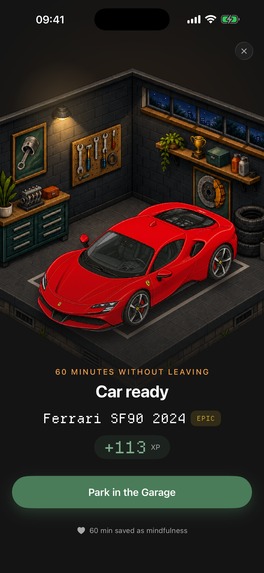
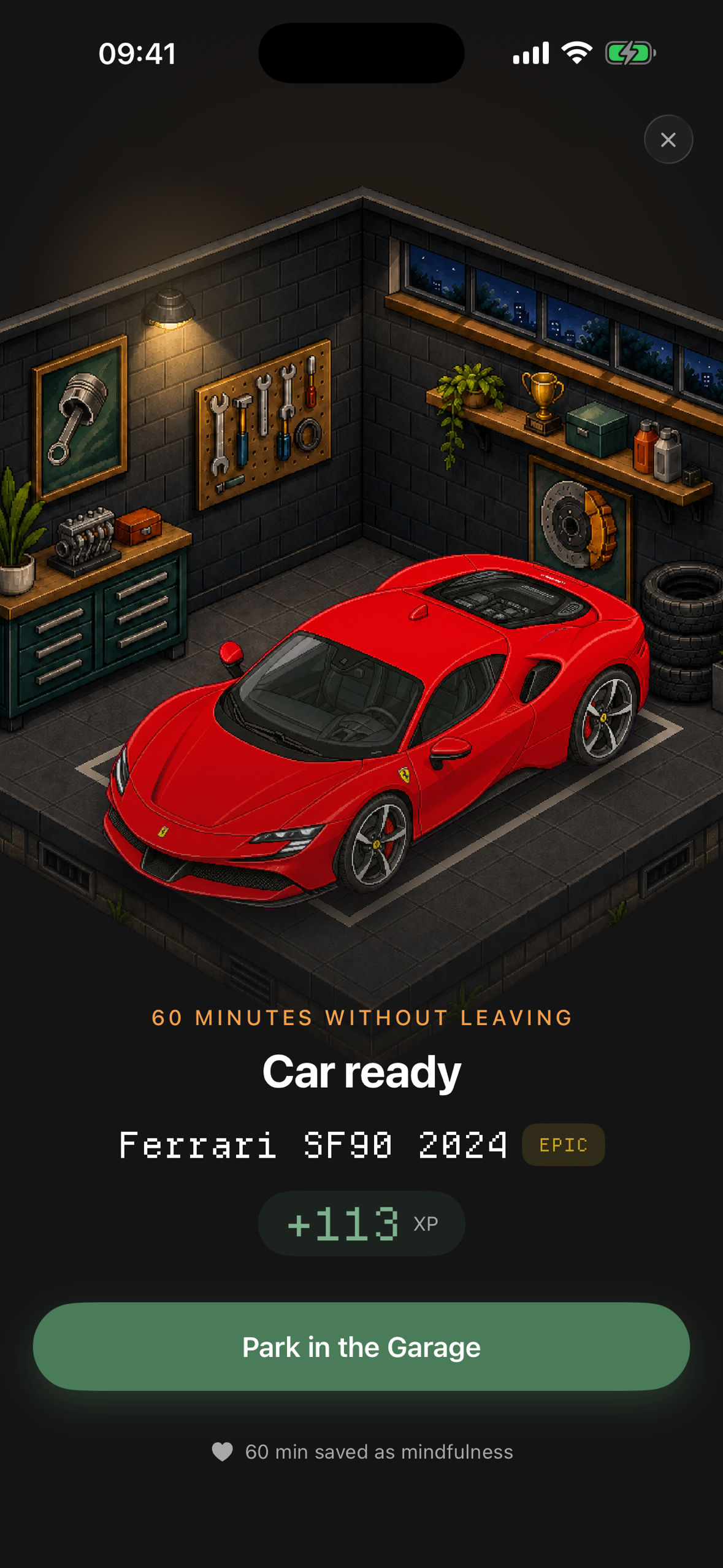
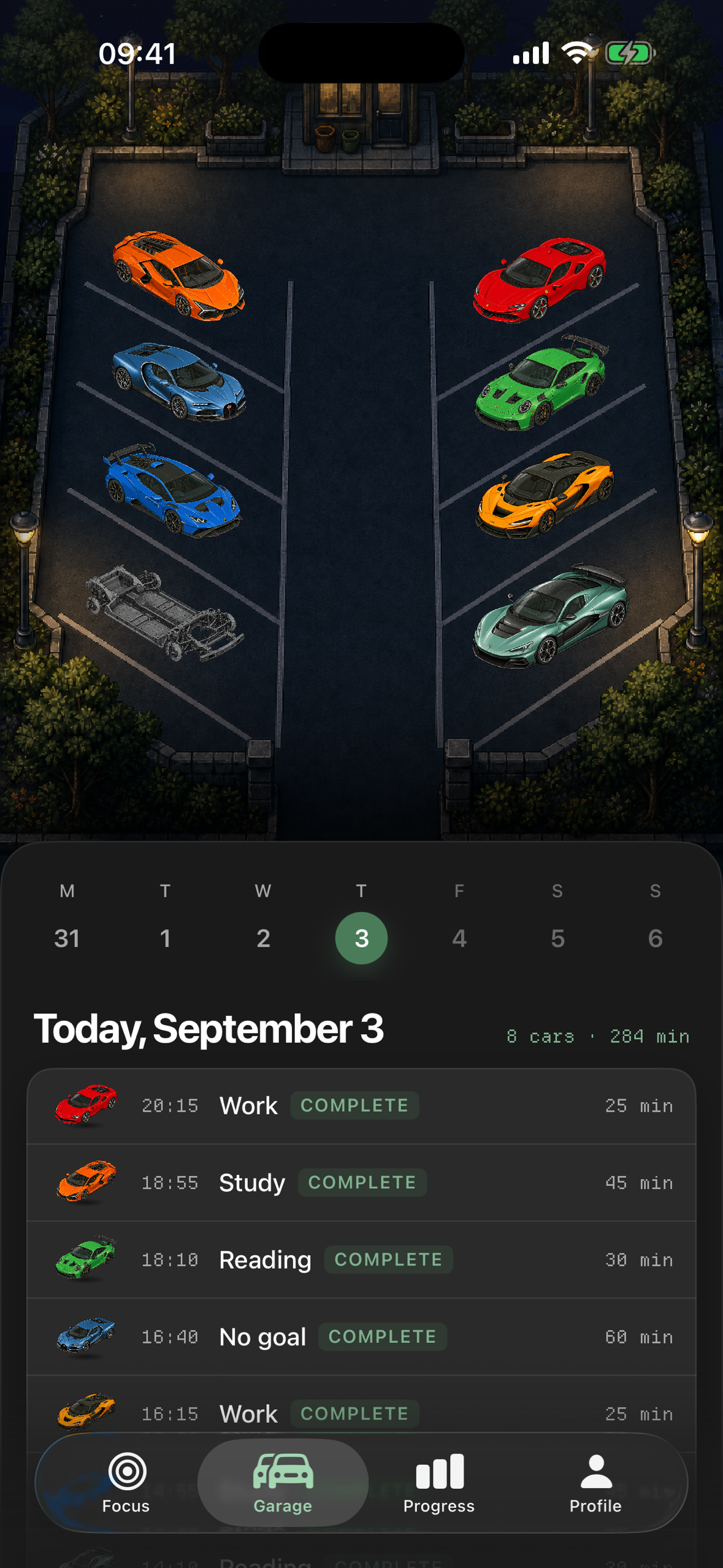
At the end, the effort becomes part of your garage. A completed session reveals the finished car and awards XP. Progression opens new categories, while your garage and session history preserve a record of what you have completed.
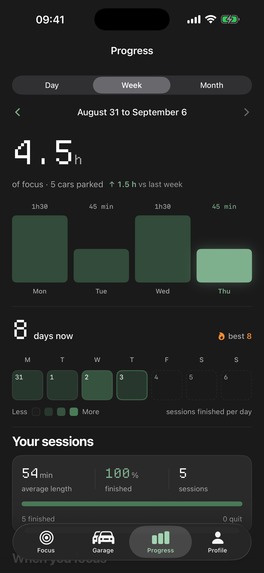
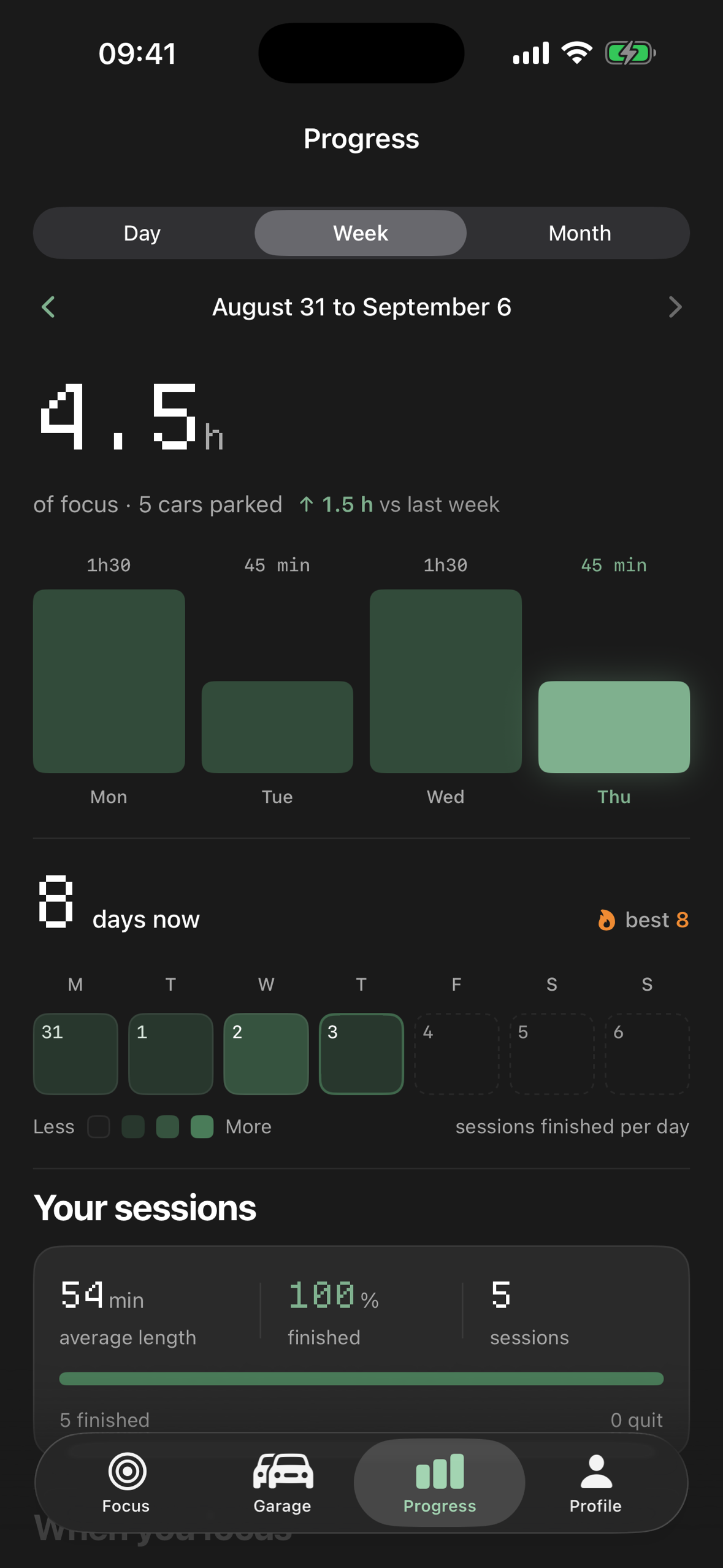
Over time, the collection gains context. Focus time, weekly activity, streaks, achievements, and session history let users look back at their routine. Optional Apple Health integration records Mindful Minutes with permission.
Design: a workshop you want to return to
The workshop is the visual center of the experience. Isometric pixel art, warm lighting, and detailed cars give the timer a setting and make the construction stages readable.
Large timer numerals and clear controls keep the next action easy to find. Pixel typography carries through timers and rewards, while system typography supports navigation and longer text. Green controls and amber highlights connect the screens.
The completion moment carries the same car from the workshop into the collection. That continuity is central to the design: the object selected at the beginning is the object earned at the end.
For the RevenueCat Design Award, we invite judges to examine that complete sequence: car selection, timer adjustment, construction, completion, parking, and reviewing progress. The demo uses real app interactions; construction is condensed in time lapse. Screenshots of the collection and activity use demonstration data.
How it is built
Focus Garage uses Swift and SwiftUI for its native iPhone interface, SwiftData for local persistence, and RevenueCat for subscription management. The product combines the session timer, car progression, collection, and history so the reward and the record belong to the same completed session. Key data is saved on the iPhone and synced with the user's account.
The design and engineering work centers on keeping that sequence coherent: a readable timer during focus, clear construction stages, a satisfying completion, and a collection that remains useful as it grows.
Business model and access
The app includes one complimentary focus session. Continued use requires an active subscription. Monthly and annual plans are available, and eligible new subscribers can try the annual plan free for seven days. RevenueCat manages access to the subscription.
The first public version launched on September 4, 2026, and is available in the US App Store.
What we want to learn next
The next question is whether people return after their first completed build. Useful measures include first-session completion, repeat sessions, retention, and conversion after the trial. These are validation goals, not claims of measured improvement.
The aim is simple: make the next focused session feel concrete, achievable, and worth starting.
Built With
- revenuecat
- swift

Log in or sign up for Devpost to join the conversation.