Inspiration
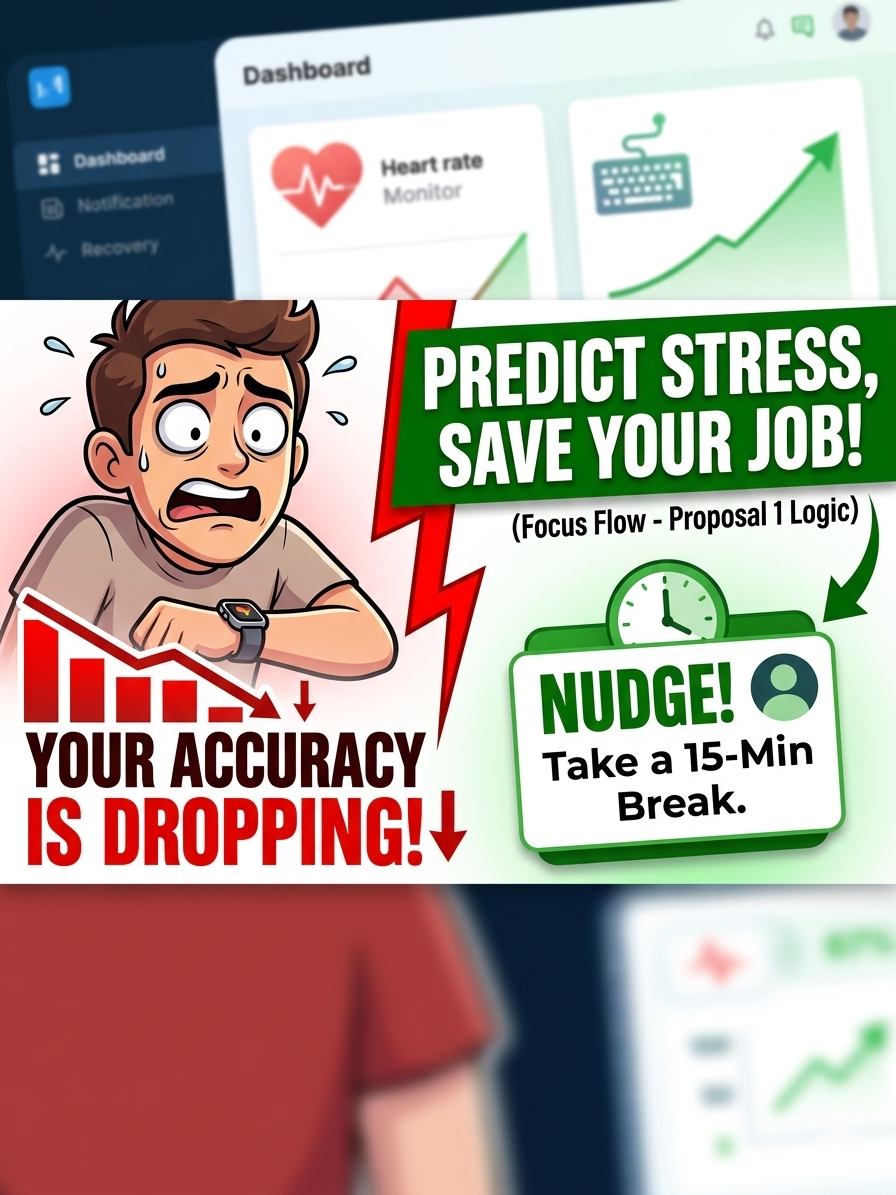
Behavioral Feedback Loop (BBFL). It moves beyond standard "wellness apps" by linking physical health directly to professional performance metrics.Here is the concept explained through its three functional layers:1. The Cognitive Monitoring Layer (The "Sentinel")The system acts as a background "sentinel" that merges two distinct data streams to create a high-fidelity picture of the user’s mental state:Physiological Data: Monitoring heart rate variability (HRV) through a smartwatch. High heart rate during a sedentary task is a primary indicator of a "Fight or Flight" stress response.Micro-Behavioral Data: This is the more unique aspect of your proposal. By measuring Key Press Latency, the system analyzes the "cadence" of work.Normal state: Rhythmic, predictable typing.Stressed state: Staccato, rapid, or inconsistent bursts that suggest the brain is moving faster than the hands can accurately keep up.2. The Human-Centric Intervention (The "Nudge")Instead of a simple alarm, the concept uses forced or suggested friction to break the stress cycle. This is rooted in behavioral economics:The Power of the Lockout: By suggesting a screen lock, the system removes the "sunk cost fallacy" where an employee feels they must keep working even if they are being unproductive.Contextual Breathing: It doesn't just say "relax"; it provides a specific, timed exercise to lower the heart rate metrics that triggered the alert in the first place.3. The Corporate Cultural Shift (The "Recovery Protocol")Perhaps the most significant part of the concept is how it rebrands "down-time" for the company side:From Absence to Maintenance: In traditional offices, an empty desk might be viewed negatively. In your system, the notification to HR changes the status to "Active Recovery." * Validation through Data: By using a Recovery Score (a post-break test), the system provides objective proof to the employer that the employee is actually more valuable after the 15-minute break than they were right before it.Conceptual Summary TableFeatureProblem it SolvesThe GoalTyping LatencyInvisible cognitive fatigue.Early detection of errors before they happen.Smartwatch SyncPhysical burnout and high cortisol.Objective health monitoring.HR NotificationThe "guilt" of taking a break.Normalizing mental health in the workplace.Follow-up TestLack of proof that breaks work.Measuring the "Accuracy ROI."

Log in or sign up for Devpost to join the conversation.