-
-
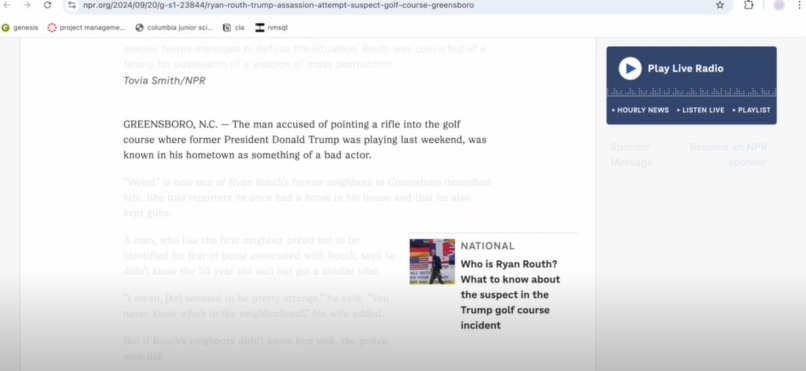
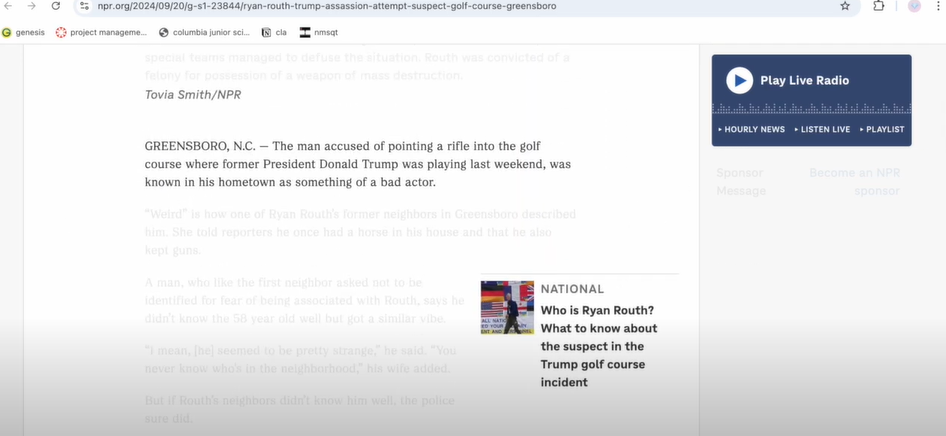
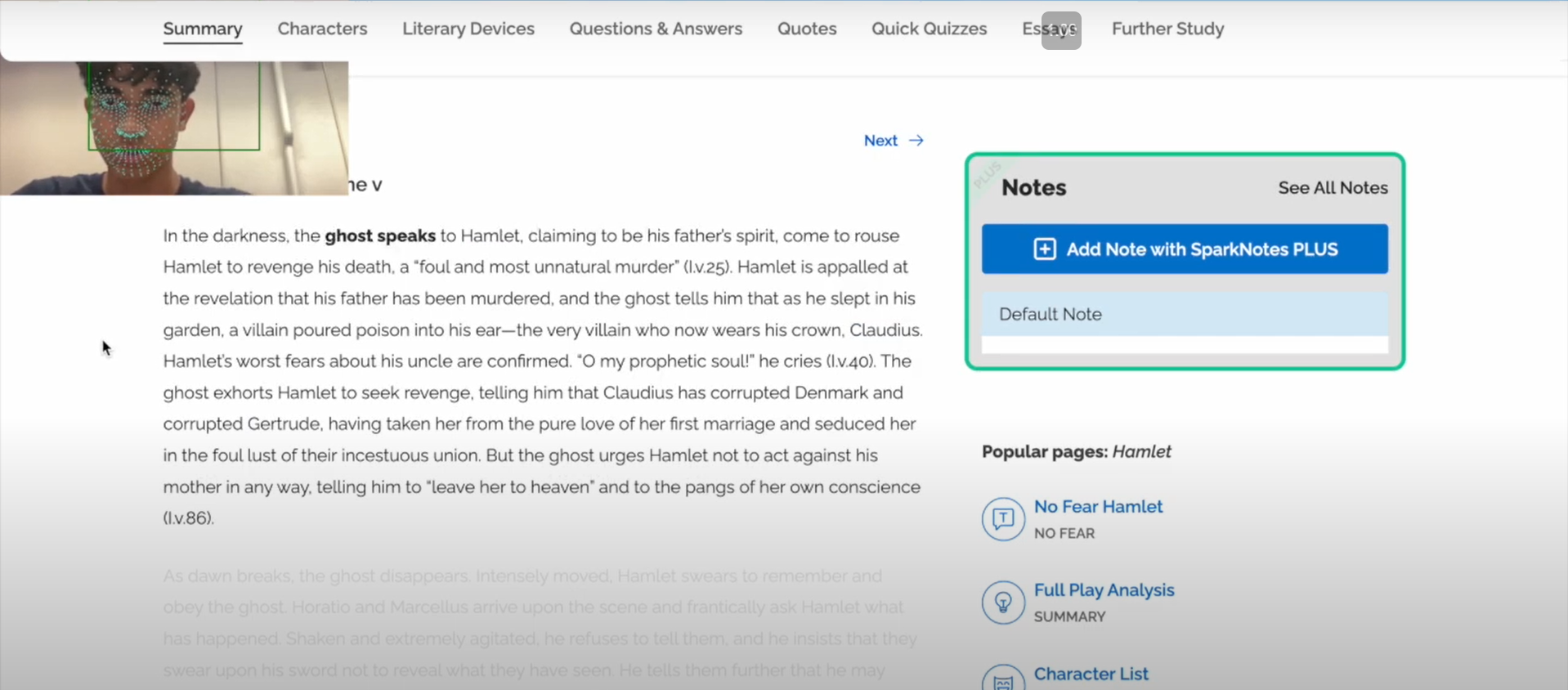
Blurring functionality for focus
-
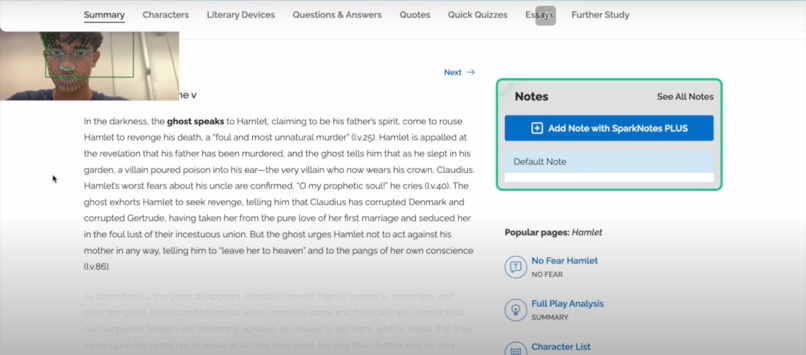
Bolded text based on eye position
-
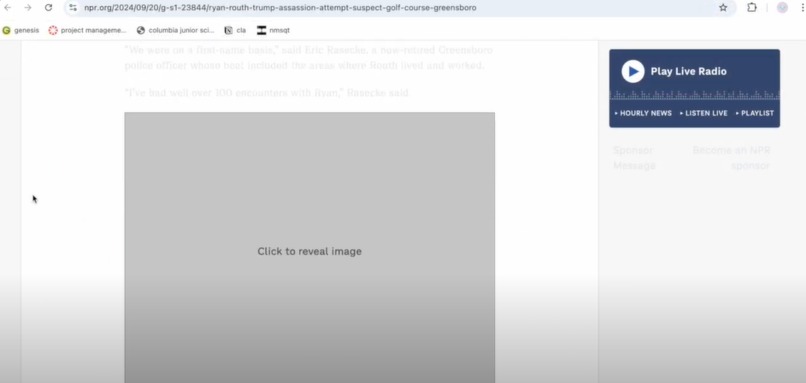
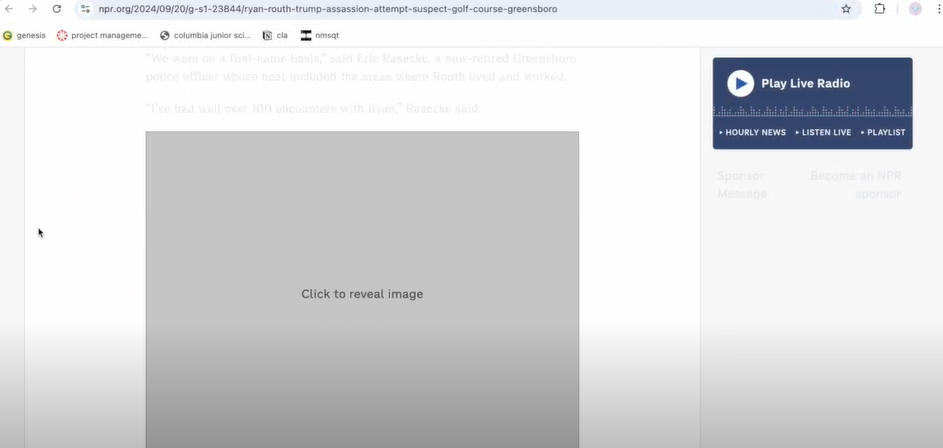
Ad Blocking Functionality
-
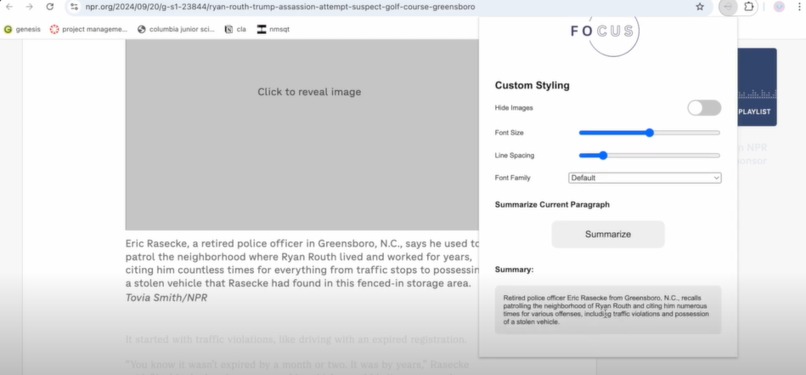
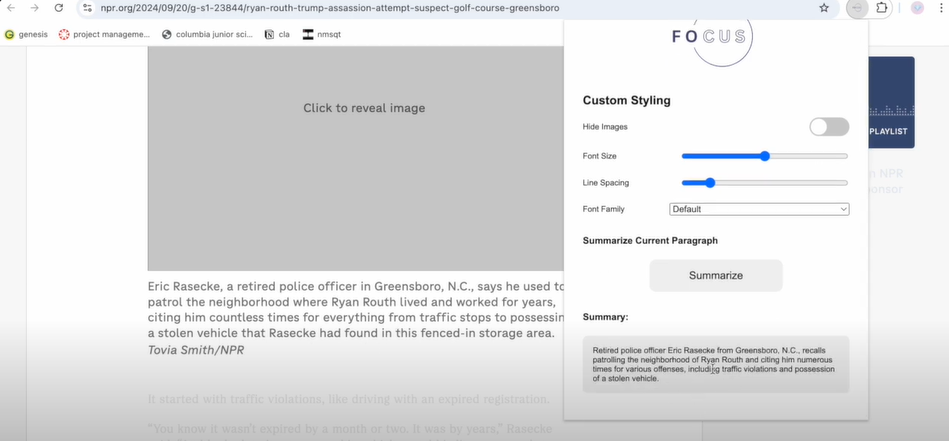
LLM Paragraph Summary Functionality
-
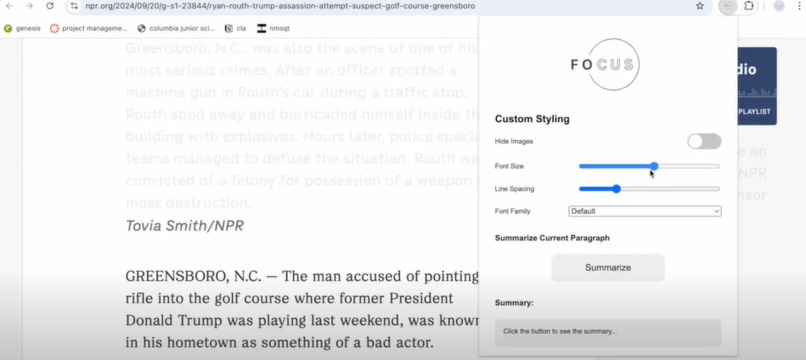
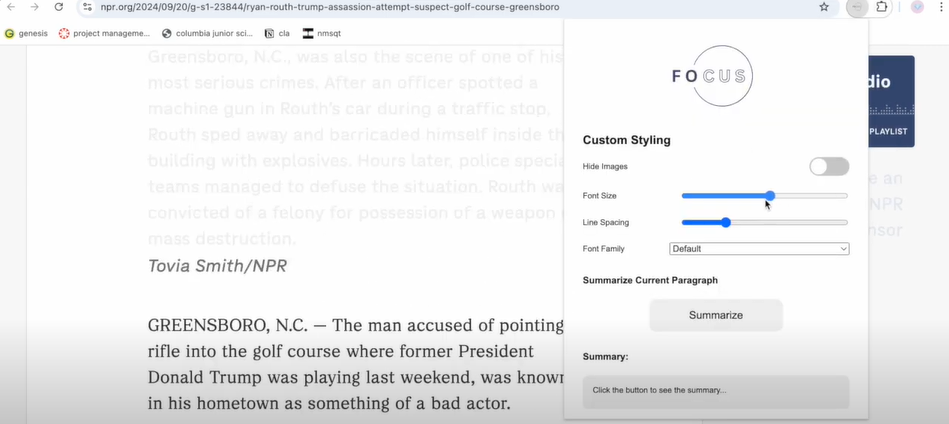
Font Size Customization
-
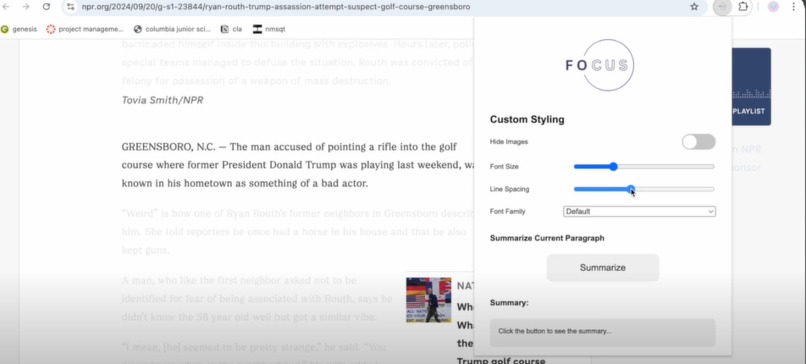
Line Spacing Customization
-
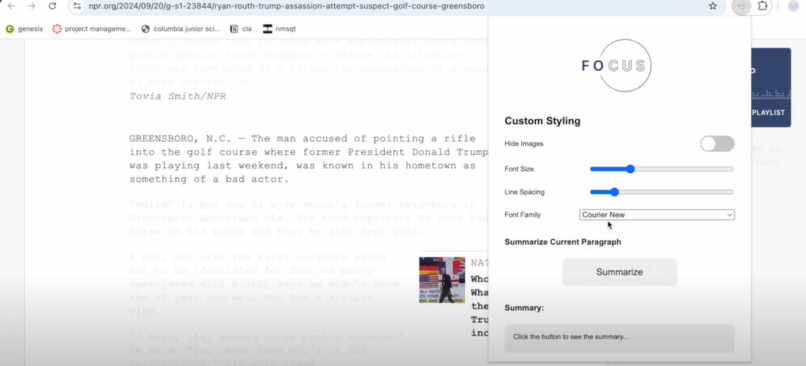
Font Family Customization
Inspiration
- Students who have ADHD
- Traditional web content can overwhelm them with dense text and distracting visuals
- We wanted to create a tool that simplifies reading for students with ADHD by allowing them to control their reading experience
What it does
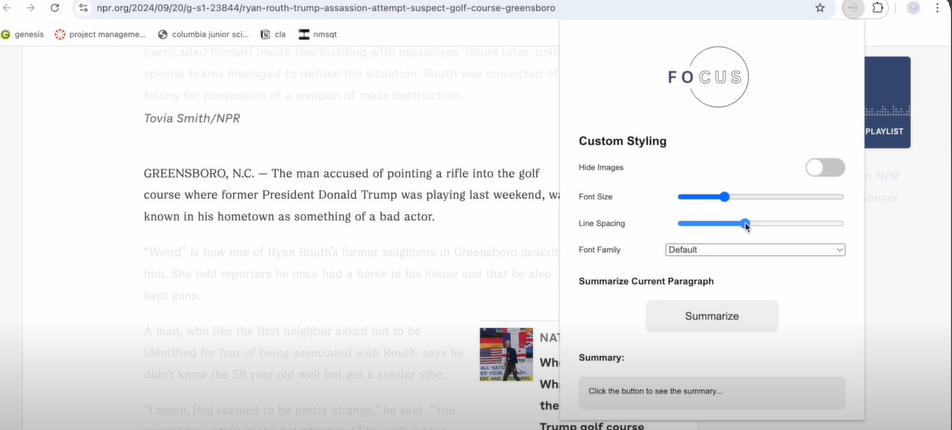
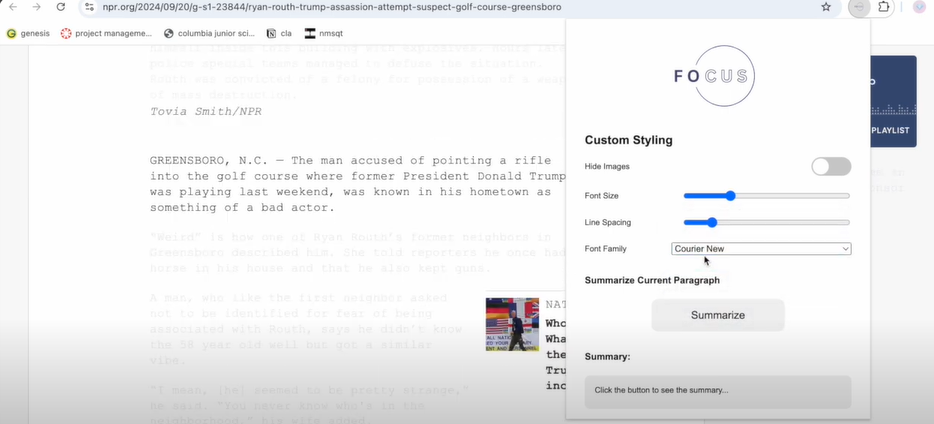
- Customizable text options like font size, line spacing, and font family to enhance readability.
- A summarization tool powered by GPT, which turns lengthy paragraphs into concise bullet points for easier comprehension.
- A toggle feature for distracting images or advertisements, allowing users to concentrate solely on the text.
How we built it
- We built Focus using HTML, CSS, JavaScript, and the GPT API for summarization
- Chrome extension interacts with web pages using content scripts to adjust the appearance of text and provide a more ADHD-friendly reading experience
- We used the GPT API to implement a summarization feature that converts complex paragraphs into digestible bullet points, helping users focus on the most important information.
- Uses Chrome's scripting API to apply font and layout changes on the fly, and all controls for customization and summarization are conveniently placed in a user-friendly popup interface.
Challenges we ran into
- Ensuring that the extension applied the reading adjustments seamlessly across different websites, each with varying structures and styles
- We also encountered some complexity when integrating the GPT API for real-time summarization while maintaining a responsive and smooth user experience
- Optimizing the extension for students with ADHD required careful attention to detail in terms of user interface and accessibility to make sure it was distraction-free yet feature-rich.
Accomplishments that we're proud of
- Successfully integrating the GPT API to deliver real-time bullet-point summaries of paragraphs, which is a valuable tool for students with ADHD who need quick and clear information
- Overall simplicity and ease-of-use of the extension, which provides users with powerful tools to customize their reading experience in a few simple clicks.
What we learned
- Importance of user-centered design, especially when creating tools for people with ADHD
- Reinforced the need to simplify complex information and to offer a range of customization options so users can tailor their experience based on their individual needs
- Gained experience working with APIs, content scripts, and Chrome extension development, learning how to interact with live web content, and understanding the technical and user-experience challenges of building accessibility tools
What's next for Focus
- Eye-tracking or behavior-based focus detection to automatically adjust content based on where users are focusing.
- Multi-language support for summarization, catering to a broader audience of students worldwide.
- Content filtering for removing distracting or irrelevant text elements.
- Improved AI summarization that can extract key takeaways or specific types of information like definitions or explanations, based on user preferences.
Built With
- css
- html
- javascript
- openai
- webgazer


Log in or sign up for Devpost to join the conversation.