Inspiration
“where do you wanna eat?” “idk you pick.”
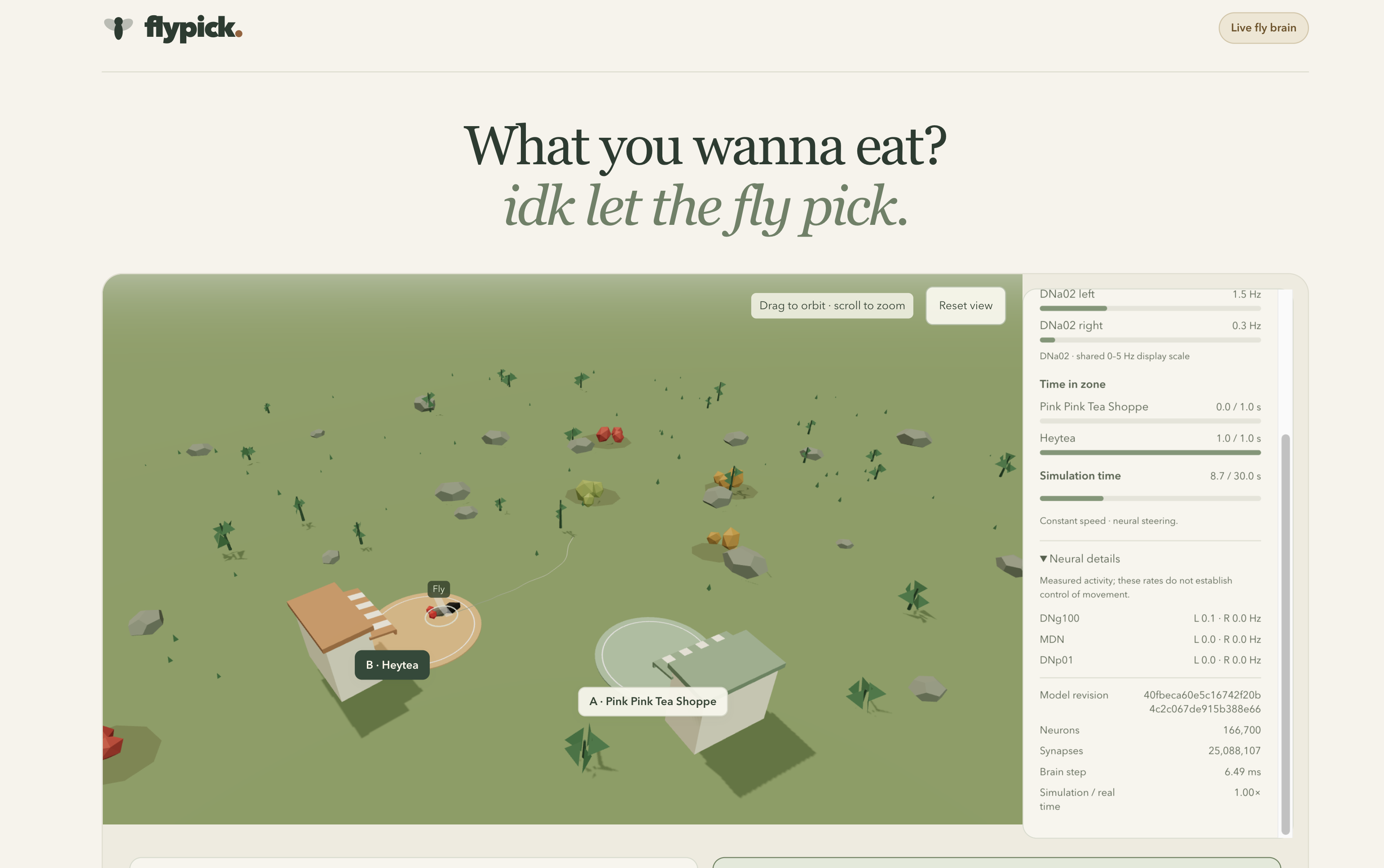
We’ve had this conversation way too many times. The fly brain model has been trending a lot, so we thought why not let it pick our food?
What it does
You give FlyPick restaurants you’d actually eat at. It reads their menus, turns menu details into signals for a simulated fly brain, and lets you watch a little fly move toward its choice.
The fly doesn’t know what a taco is. It reacts to signals, and whichever restaurant zone it stays in long enough wins. If it never settles, it doesn’t pick.
You choose the good options. The fly handles the indecision.
How we built it
We built the 3D world using Three.js, TypeScript, and Vite. Firecrawl extracts menu information, and our code maps that information into sensory inputs for a simulated neural network based on actual fruit fly brain wiring.
We read the network’s left/right steering activity to control the fly’s turns. Forward speed is simplified, while wings and other decorative animations belong to the visual layer.
We split development between the visuals and the data/brain integration, connecting them through a shared simulation interface.
Challenges we ran into
We got a page for the wrong restaurant location, incomplete menus, and image descriptions instead of actual dishes. A successful scrape wasn’t always usable data.
We also had to keep decorative roaming separate from brain-controlled movement. The fly couldn’t keep doing its little idle routine while the backend was trying to choose dinner.
Accomplishments that we're proud of
We connected neural steering to a visible, moving fly and made the idea understandable easily.
What we learned
The interface can explain an unusual idea better than a paragraph of technical terms. Watching the fly turn toward a restaurant makes the project click.
We also learned that data quality matters a lot, and that we need to be clear about what the brain controls versus what we animate.
What's next for FlyPick
We want more reliable restaurant search, better location matching, and support for menus stored as images or PDFs. We also want a live brain panel showing the steering signals and neural activity behind the movement.
The goal is to make the whole experience smoother, more transparent, and more fun.

Log in or sign up for Devpost to join the conversation.