-
-
-
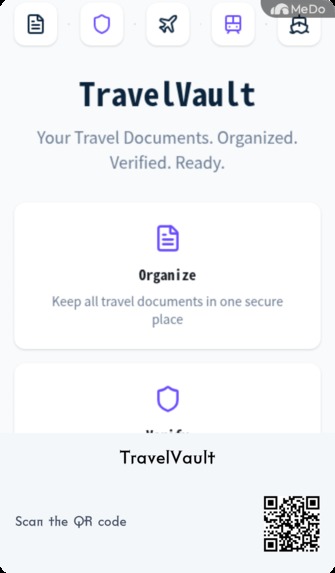
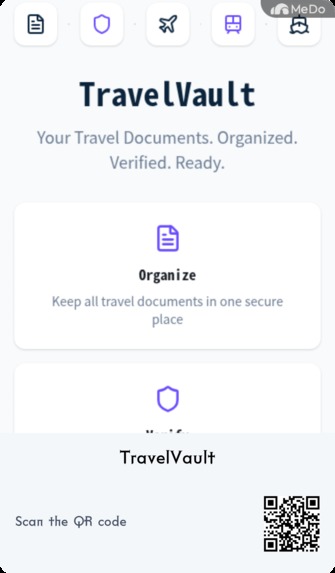
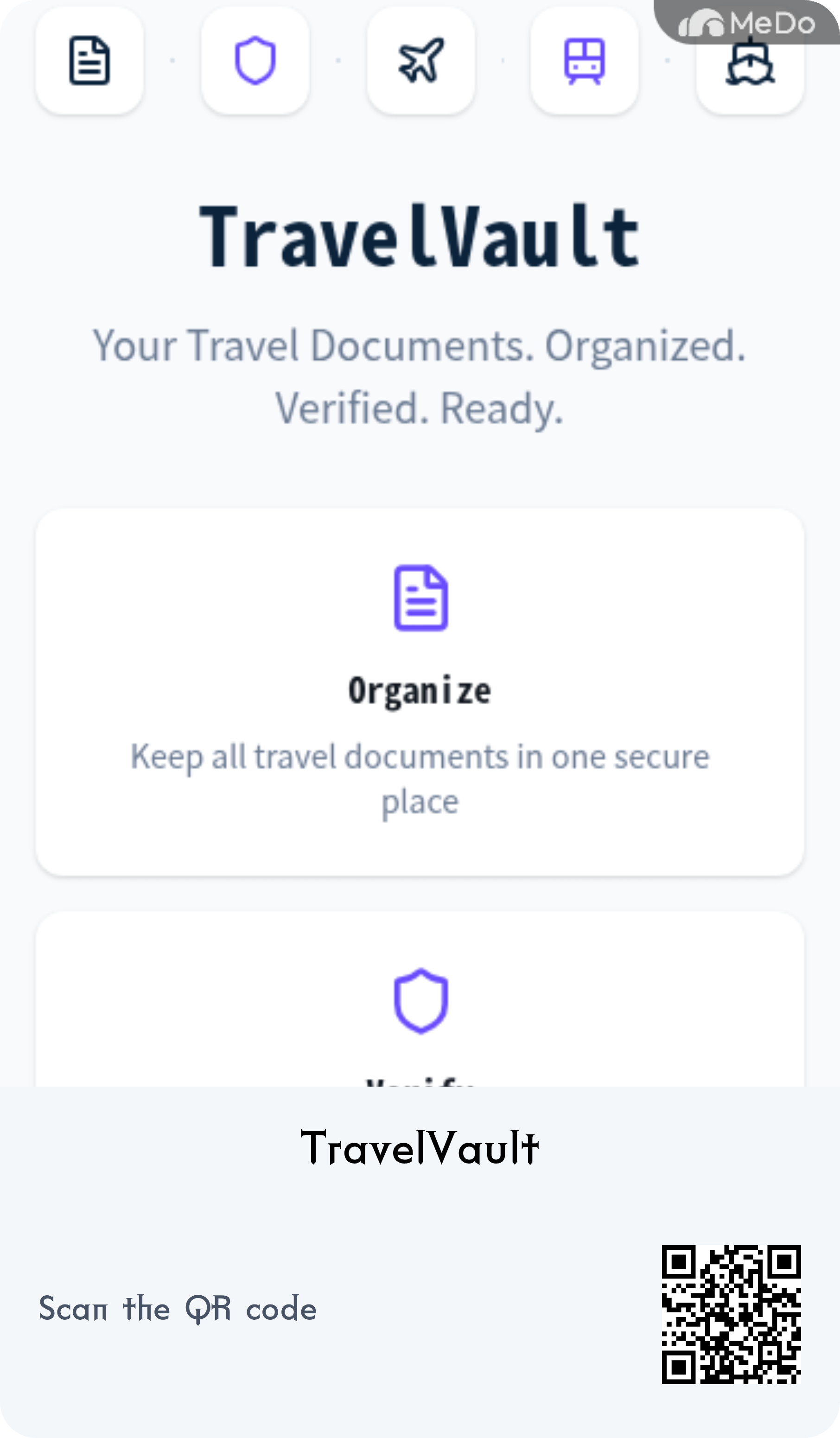
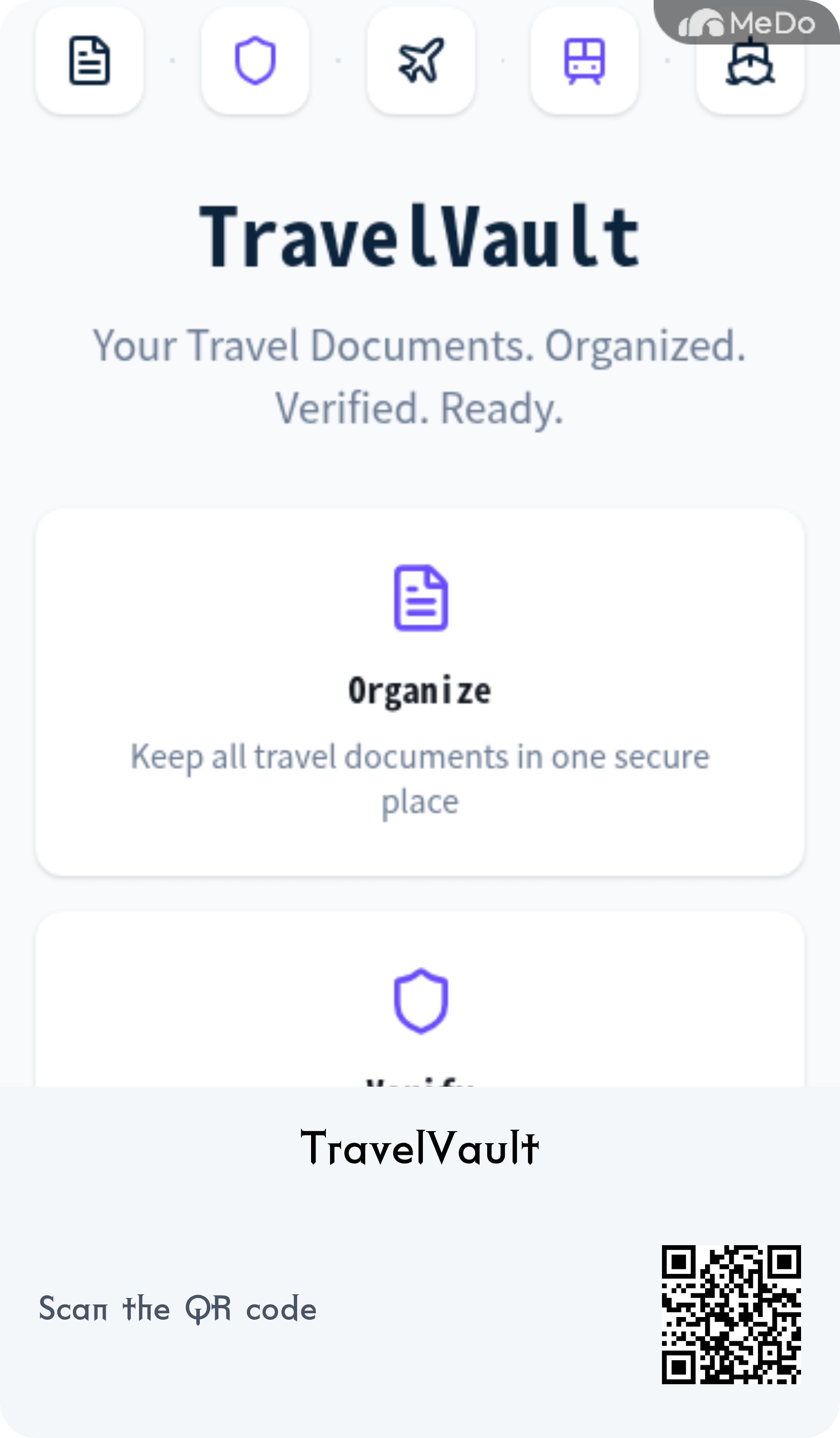
TRAVELVAULT Landing page
Inspiration
The spark for TravelVault didn't happen at a desk; it happened at an airport terminal. During my own journey from Nigeria to Oman, I found myself in a state of constant "document anxiety." I was checking and re-checking my bags every ten minutes, terrified that a visa, a passport, or a printed itinerary had slipped out or been left behind. This isn't just my story—it’s a global one. Millions of travelers face the paralyzing fear of losing hard-copy documents in a foreign country where replacements are hard to find. I realized that while we have apps for booking flights, we didn't have a dedicated "command center" that actively told us how ready we were to fly. I built TravelVault to turn that anxiety into confidence.
What it does
TravelVault acts as your digital travel command center, designed to replace "document anxiety" with organized confidence. Here is a breakdown of what it actually does for the user:
1. Dynamic Journey Life cycle Tracking
Instead of just being a static list of dates, TravelVault tracks the live status of your trip. It guides you through every stage of a journey: Pre-Travel: Planning → Draft → Document Submission. Processing: Biometrics → Approval. On the Move: Travelling → Completed.
2. "Travel Readiness" Score
This is the heart of the app. It calculates a real-time Readiness Percentage by analyzing your uploaded documents.
- If your passport is uploaded but your visa is missing, your score might be at 60%.
- Once all required files (insurance, tickets, IDs) are verified, the score hits 100%, giving you the "green light" to head to the airport. ### 3. The Secure Document Vault It provides a centralized, encrypted space to store all your essential travel files, including: *Passports & Visas (with expiration tracking). *Travel Insurance policies. *Flight & Hotel e-Tickets. *Health/Vaccination Certificates. ### 4. QR Code Verification The app generates a unique QR Verification page. This allows you to quickly pull up a "verification screen" with a countdown timer, making it easy to show proof of your travel status or document validity to officials without digging through folders or emails. ### 5. Smart Validations Thanks to the logic built with MeDo, the app ensures you don't make mistakes. It uses date-format validation to ensure your trip start and end dates are logical, preventing errors before you even save your trip. In short: TravelVault turns a messy pile of papers and emails into a single, visual dashboard that tells you exactly how prepared you are for your next international flight. Is there a specific feature you’d like to highlight more in your video script?
How we built it
I used MeDo as my primary architectural partner. The process was a high-speed collaboration: Rapid Scaffolding: I used MeDo’s Deep Build feature to lay the foundation of the dashboard and the document vault system. Component Refinement: Instead of writing every line of CSS, I used iterative prompts to polish the UI—like the gradient-themed trip cards and the real-time "Travel Readiness" circular progress bar. Full-Stack Integration: I leveraged Supabase for secure authentication and database management, ensuring that personal travel data remains private and accessible.
Challenges we ran into
Building a functional app in a hackathon timeline is never without friction. My biggest challenge was a persistent API endpoint data validation error (v22) that prevented trip details from saving correctly. Initially, the date formats between the frontend picker and the backend database were clashing, causing the app to fail during submission. I used MeDo to analyze the error logs; it identified the mismatch and provided the exact validation logic needed to bridge the gap. Turning a "blocking" error into a working feature in minutes was a massive win.
Accomplishments that we're proud of
- Bridging the Gap Between Anxiety and Utility We successfully turned a stressful personal experience—navigating international borders from Nigeria to Oman—into a functional tool. Transforming "document anxiety" into a quantifiable "Readiness Score" is our proudest achievement. We didn't just build a storage app; we built a peace-of-mind engine.
- Mastering the AI-Co-Developer Workflow We are incredibly proud of how we utilized MeDo. Instead of just generating a static template, we engaged in a sophisticated, iterative dialogue with the AI. We pushed the boundaries of Deep Build to create a complex, multi-state journey tracker that responds dynamically to user input.
- Solving the "v22" Technical Hurdle Every project has a "wall," and ours was a complex API endpoint data validation error regarding date formats. We are proud of our persistence in debugging this. By feeding error logs back into MeDo and iterating on the backend logic, we successfully bridged the gap between the frontend date-picker and the Supabase database requirements.
- Seamless Full-Stack Integration Creating a professional-grade UI is one thing, but making it "live" is another. We successfully integrated: Secure Authentication: Using Supabase to ensure travel data remains private. Dynamic Logic: Implementing a backend that calculates readiness percentages in real-time. Verification Tools: Developing a functional QR-code system for on-the-go verification.
- High-Fidelity UI/UX in Record Time We achieved a level of polish—complete with modern gradients, responsive layouts, and intuitive navigation—that would typically take weeks of manual CSS work. Achieving this "app-store ready" look within the hackathon window is a major win for the team.
What we learned
This project taught me that the role of a developer is evolving. I learned: Speed to Market: That an idea can go from a "travel nightmare" to a functional prototype in days, not months. Logic Over Syntax: I spent less time worrying about semicolons and more time focusing on the user journey and the logic of the "Readiness Score." Resilience: That technical roadblocks (like the Supabase auth issues I faced) are just opportunities to prompt better solutions. TravelVault isn't just an app; it's peace of mind for the modern explorer. ---
What's next for Travel vault
AI-Powered "Scan-to-Fill" (OCR Integration) Currently, users manually input document details. Our next phase is integrating Optical Character Recognition (OCR). Users will simply take a photo of their passport or visa, and TravelVault’s AI will automatically extract the name, document number, and expiration date, eliminating manual entry errors.
- Offline-First "Vault" Access Travelers often lose internet connectivity at border crossings or remote airports. We plan to implement Local Storage persistence and PWA (Progressive Web App) capabilities, ensuring that users can access their critical documents and QR codes even when they are 10,000 miles away from a Wi-Fi signal.
- Proactive Expiration & Renewal Alerts We want TravelVault to think ahead. By tracking the dates within the vault, the app will send push notifications 6 months before a passport expires or 30 days before a visa runs out, linking users directly to the official renewal websites for their specific nationality.
- "Family Vault" for Group Travel Managing one person's documents is hard; managing a family of four is a nightmare. We plan to build a Multi-User Sharing feature where a "Head of Journey" can manage and view the readiness scores for an entire family or group from a single dashboard.
- Live Flight & Gate Integration By connecting TravelVault to real-time flight APIs, we will turn the "Traveling" phase into a live command center, providing gate changes, delay alerts, and baggage carousel numbers alongside your digital documents.
Built With
- medo-database
- react
- vite


Log in or sign up for Devpost to join the conversation.