Inspiration
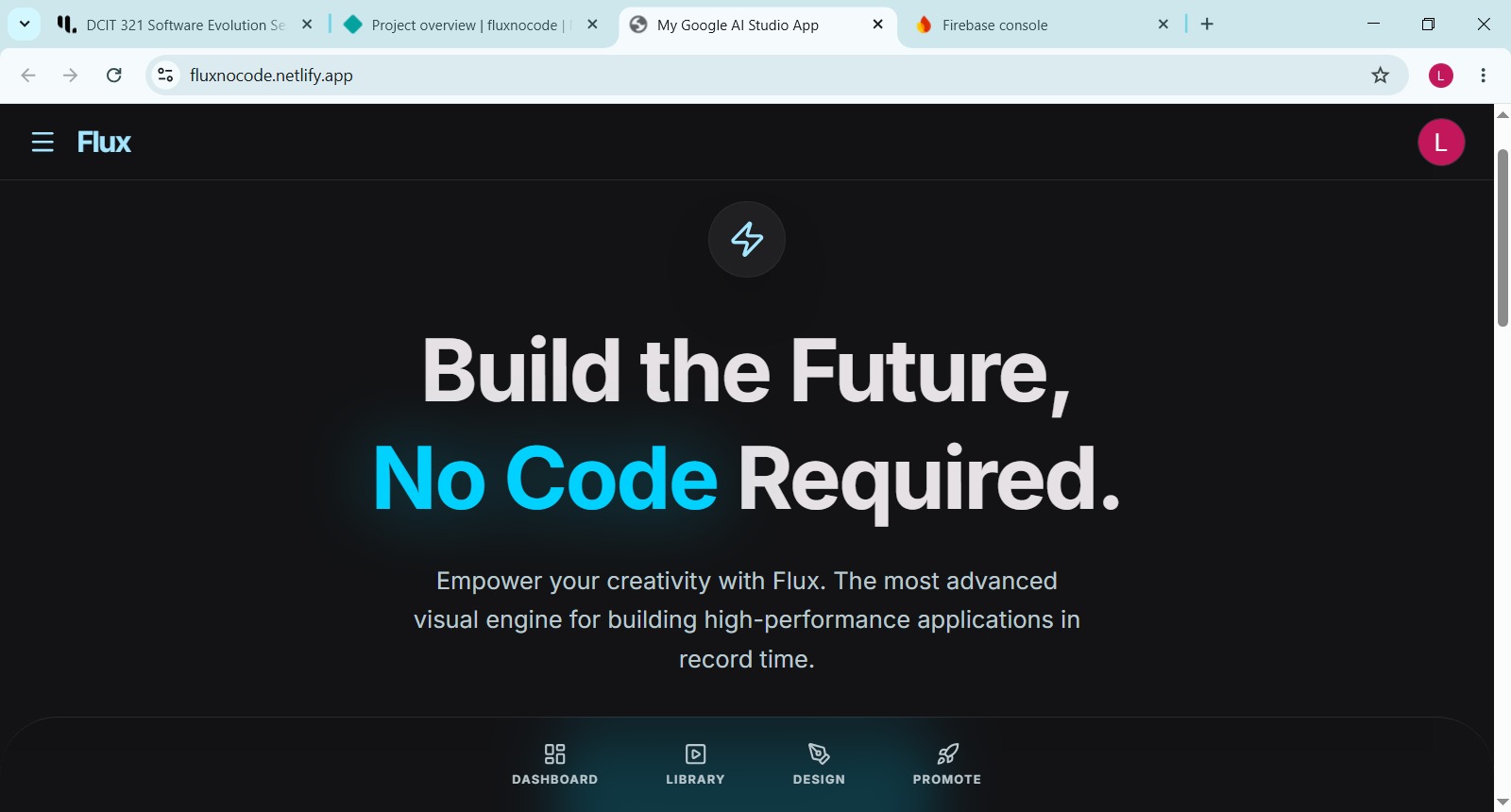
The inspiration for Flux was born from a simple observation: the tools we use to build the future should feel as beautiful as the products they create. While most no-code platforms focus strictly on utility, Flux was designed to inspire the user through its Glassmorphic and High-Tech aesthetic. We wanted to bridge the gap between pro-level design tools (like Figma) and powerful development environments, creating a "Pure Flow" state for creators.
What it does
Flux No-Code is a high-fidelity, designer-centric platform that empowers creative professionals to design, build, and deploy mobile applications without writing a single line of code. Core Features: High-End Visual Builder: A professional-grade canvas featuring a drag-and-drop interface. It uses a "glassmorphic" design language—combining frosted glass effects, deep shadows, and vibrant neon accents—to create a premium workspace. Intuitive Layout Engine: Users can manipulate complex UI components (Buttons, Inputs, Images, Groups) and see them rendered instantly within a pixel-perfect mobile mockup. Intelligent Project Dashboard: A central hub to manage the lifecycle of your apps, tracking real-time deployment status (Live vs. Draft) and recent workspace activity. Template Library: A curated collection of "precision-engineered" templates (Portfolios, E-commerce, Editorial Blogs) that provide a high-performance foundation for new projects. Secure Backend Integration: Powered by Firebase, the platform handles user authentication (Google Login) and secure document storage (Cloud Firestore) automatically, ensuring that every project is data-driven and scalable from day one. Performance Tracking: Built-in analytics tools that monitor "Performance Scores" and active component counts, helping creators maintain application speed and efficiency. In short, Flux bridges the gap between high-level design tools and functional software development, providing a "Zero-G" environment where ideas move from concept to live URL in record time. lightbulb_tips
How we built it
Flux is a full-stack, single-page application (SPA) built with the following core technologies: Frontend: React 19 + TypeScript, leveraging Tailwind CSS for a high-performance, utility-first design system. Interactions: motion (formerly Framer Motion) handles all state transitions and micro-animations. Backend: A robust Firebase integration. We used Firebase Authentication for Google login and Cloud Firestore for real-time project syncing and template management. Icons: The sleek, minimal iconography is powered by Lucide React. We can quantify the "Efficiency Factor" ( ) of building with Flux compared to manual coding using a simplified model: Where:
is the number of pre-built Components.
is the Aesthetic Multiplier (design system polish).
is the Time taken to deploy.
With Flux, we minimize and maximize , leading to an exponential growth in creative output.
Challenges we ran into
Glassmorphic Complexity: Maintaining high performance while using heavy backdrop blurs and semi-transparent layers across mobile devices required careful CSS optimization. Relational Security Rules: Creating a "Fortress" ruleset in Firestore was non-trivial. We had to ensure that while users can browse a public gallery, their private projects remain strictly accessible only to them, using logic like: Auth Edge Cases: Dealing with handled popup cancellations and ensuring the "Sign-in with Google" flow didn't break during high-frequency clicks required a robust loading state and error-handling wrapper.
Accomplishments that we're proud ofSeamless Integration: Successfully bridging a complex React frontend with a live Firebase backend, allowing users to create real, persistent data in seconds.
Visual Fidelity: Achieving a "Dark Mode" aesthetic that feels truly premium, featuring custom neon glows and a responsive bento-grid layout. The Builder Canvas: Implementing a resizable, interactive canvas that gives creators a "what you see is what you get" experience without the clutter of traditional IDEs.
What we learned
Building Flux was a deep dive into the intersection of Visual Design Systems and Real-time Infrastructure. Aesthetic Consistency: We learned that a cohesive theme (like our Creative Pro Adaptive) requires more than just colors; it requires a rhythm of spacing and typography that guides the user's eye. User Engagement: High-fidelity animations using motion aren't just "eye candy"—they provide critical feedback in complex UIs, making the transition between "Gallery" and "Build" modes feel seamless.
What's next for Flux No -Code
The journey is just beginning. Our roadmap includes: AI Smart-Generate: Allowing users to describe a component (e.g., "Build a glassmorphic music player") and having the Flux AI engine generate the layer structure instantly. Collaborative Workspaces: Live, multi-user editing where teams can build apps together in real-time. Native Export: A one-click secondary compiler to turn Flux projects into standalone React components or production-ready bundles.


Log in or sign up for Devpost to join the conversation.