Inspiration
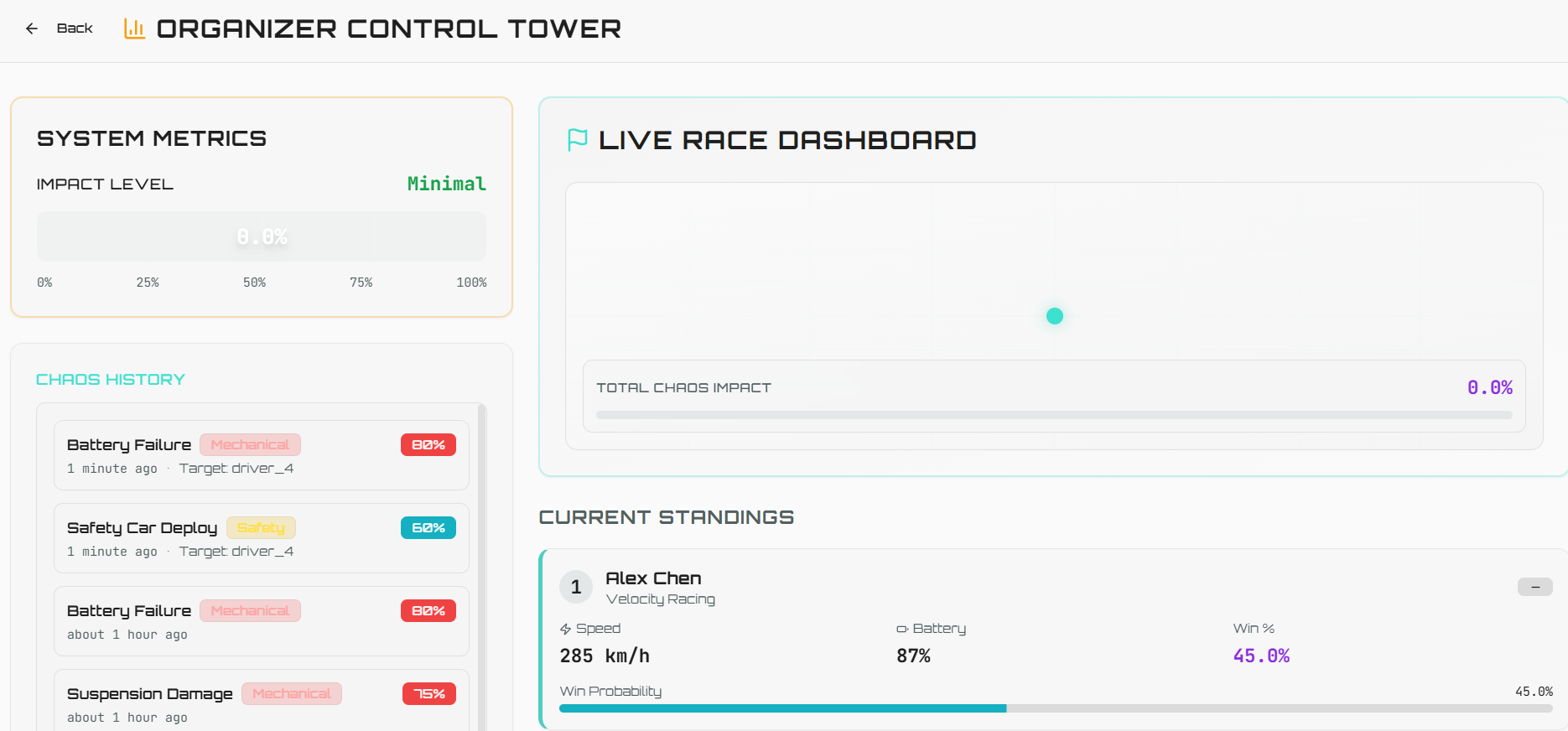
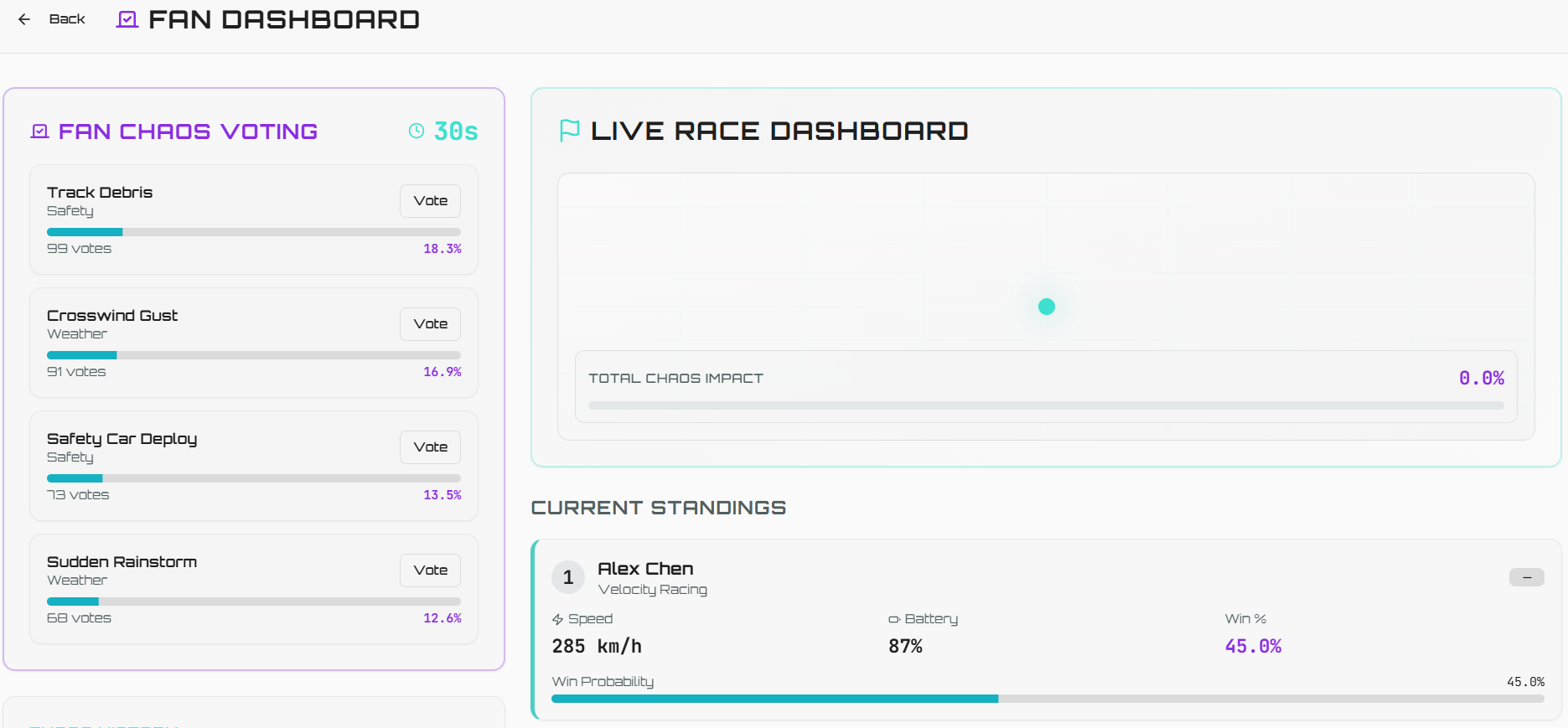
Formula E represents precision under uncertainty — every race is defined by energy limits, weather shifts, and split-second strategy calls. Yet most simulators remain predictable and linear. We wanted to capture the real drama of motorsport: chaos that demands intelligence.
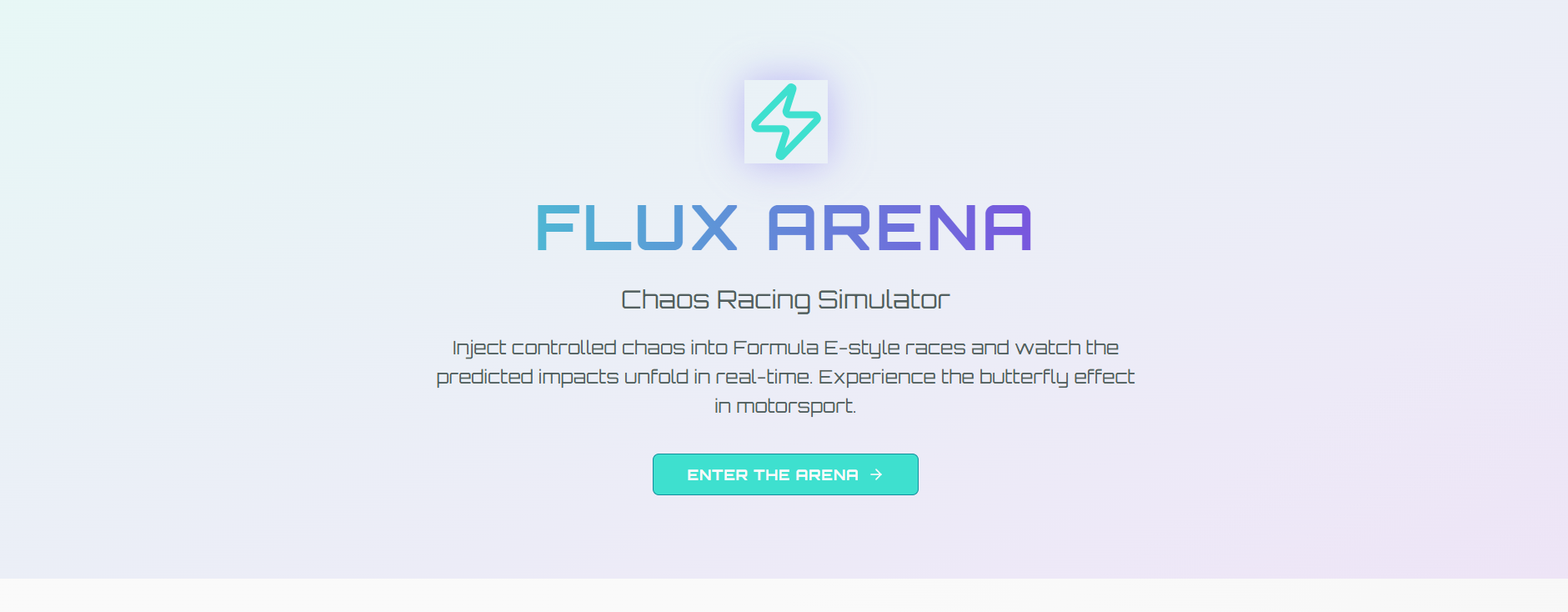
Flux Arena was conceived as a digital twin that fuses physics, AI, and data analytics to let teams, engineers, and fans replay and reimagine every race scenario. It answers the question — “What if we could simulate the unpredictable?”
About the Project
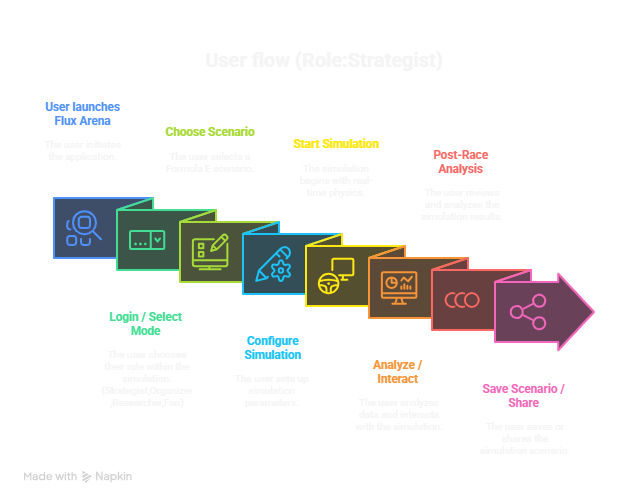
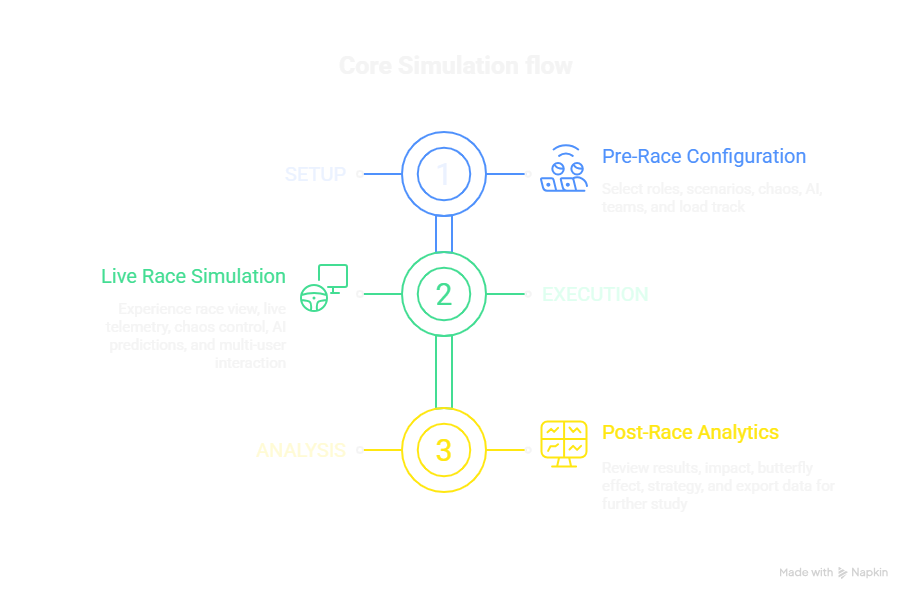
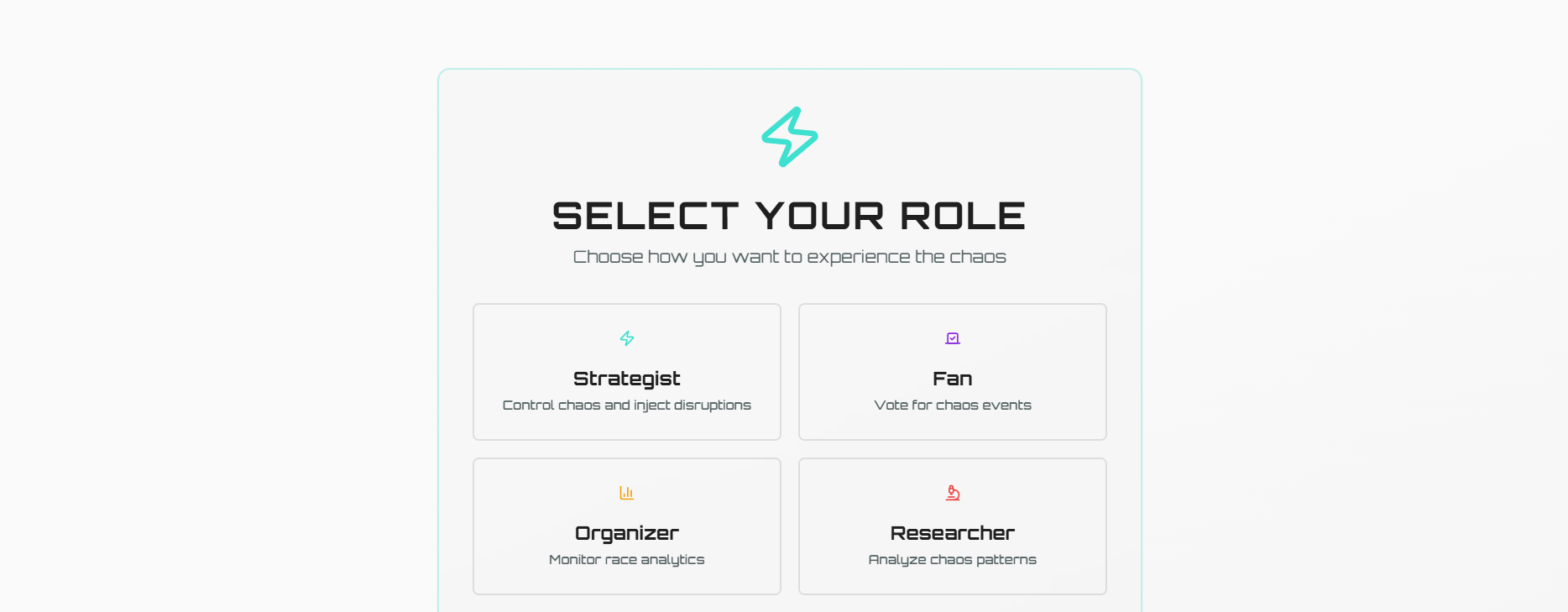
Flux Arena is a Formula E-focused simulation engine that blends real-time physics, AI behavior, and machine-learning prediction into one ecosystem. It enables users to test strategies, validate components, train officials, and engage audiences — all within a single dynamic environment.
Core Innovations
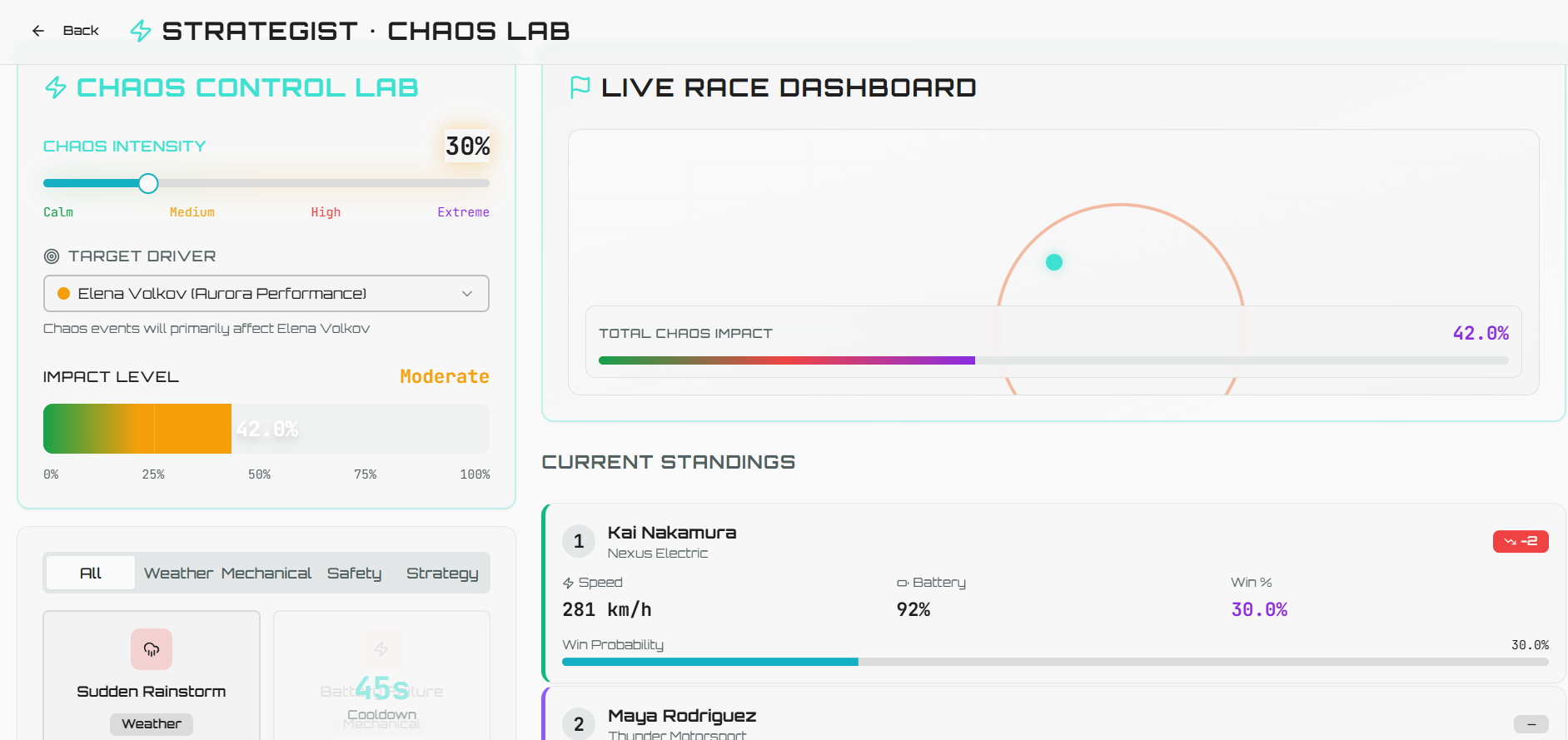
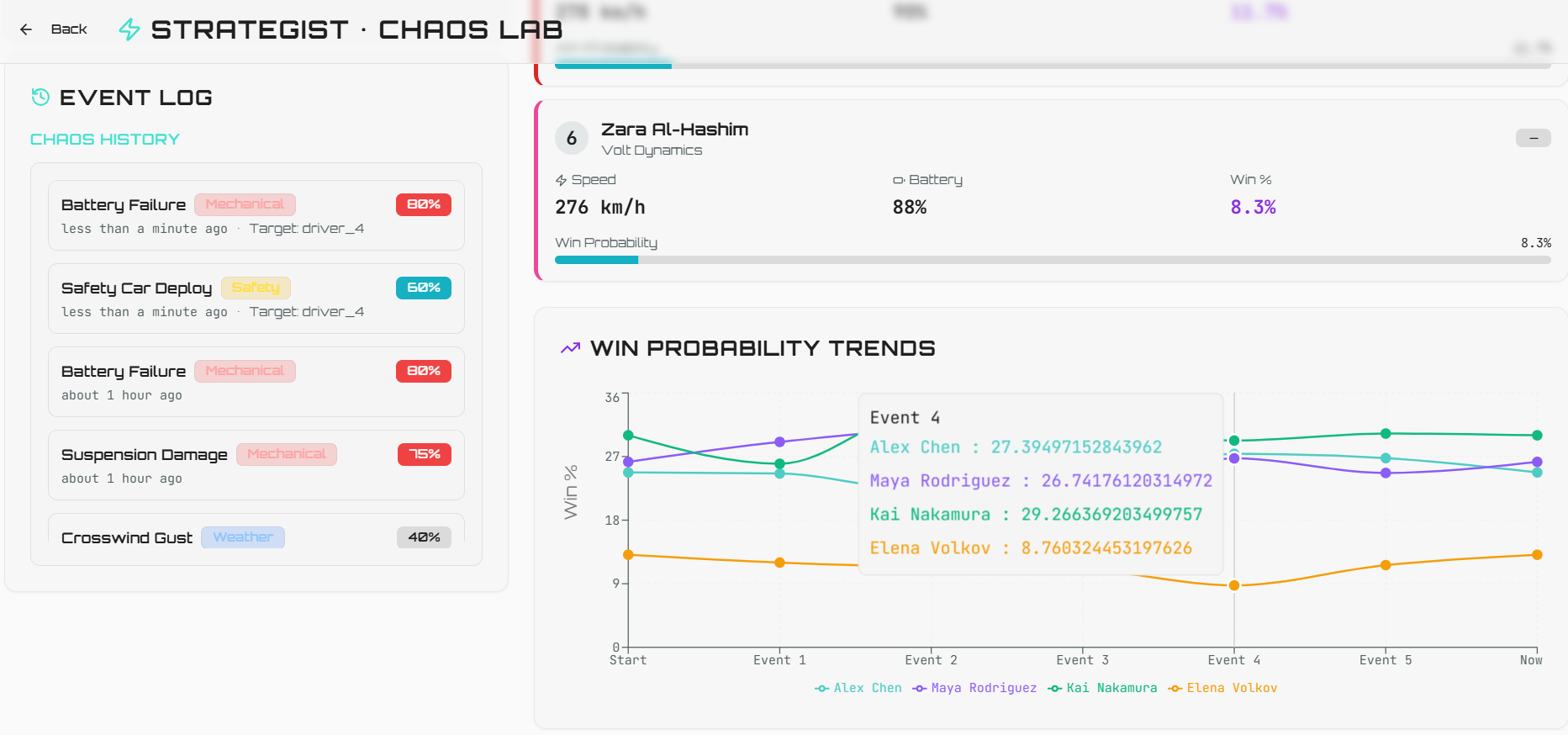
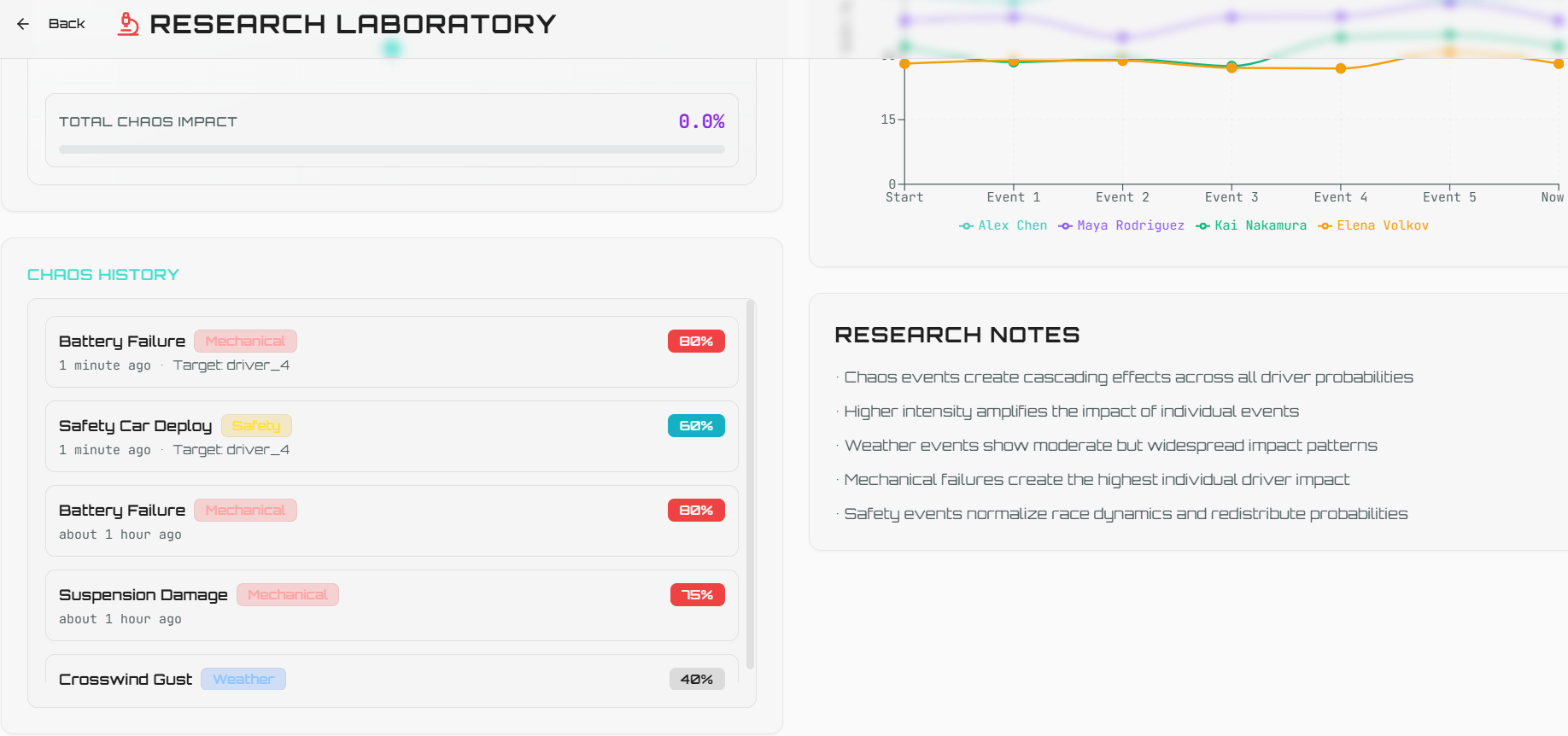
Chaos Injection System: Introduces unpredictable events such as rain, mechanical faults, or debris with seeded randomness for reproducibility.
Swarm Intelligence Racing: AI drivers exhibit distinct traits like aggression, energy management, and defensive ability, producing emergent race dynamics.
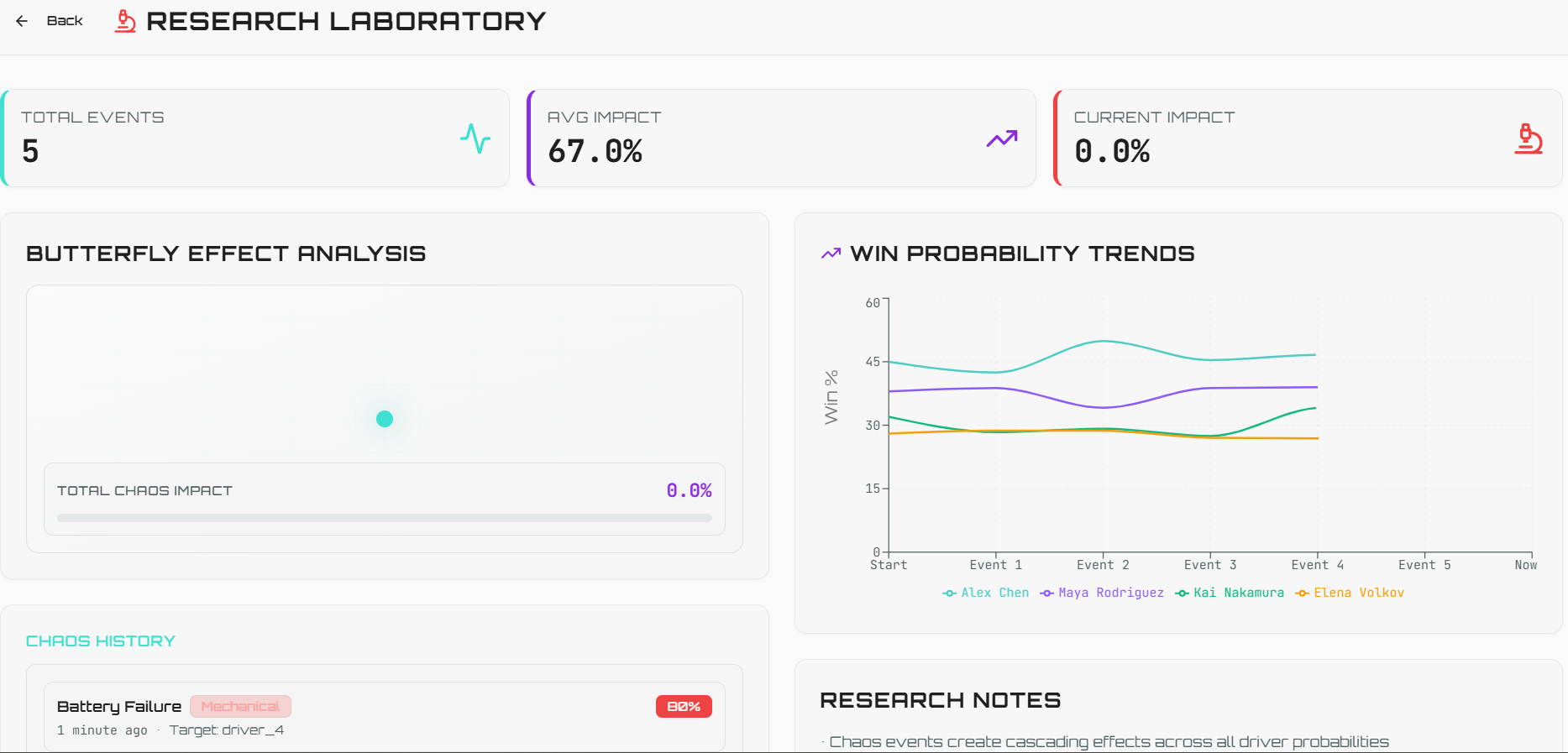
Predictive Analytics Dashboard: LSTM-based forecasting updates win probabilities, pit-stop efficiency, and battery performance in real time.
Time-Travel Debug Mode: Rewind and alter any moment — pit earlier, change tires — to evaluate alternate race outcomes.
Butterfly Effect Visualizer: Demonstrates how a single parameter change cascades through the race, aiding strategy and engineering analysis.
Flux Arena transforms traditional simulation into a predictive and analytical twin, where every run becomes actionable insight.
How We Built It
The simulation core uses Rust (WebAssembly) for deterministic physics with an Entity-Component-System architecture. A Node.js + Express orchestrator streams state and chaos events through WebSockets/WebRTC. The React + TypeScript + Three.js frontend renders 3D visuals and telemetry dashboards. TensorFlow.js provides live prediction inference, while Redis manages fast-changing race states and PostgreSQL/TimescaleDB stores telemetry and replay data. All components are containerized with Docker and deployed on Vercel (frontend) and Railway (backend).
What We Learned
We learned how to balance deterministic physics with controlled randomness, integrate AI decision loops within real-time constraints, and apply predictive models for live strategy optimization. Building for multiple stakeholders—teams, engineers, and fans—taught us the importance of modular, adaptive design.
Challenges
Maintaining synchronized simulation across many AI agents, achieving real-time prediction without latency, and ensuring replay accuracy were major technical hurdles. Each challenge refined Flux Arena into a faster, smarter, and more reliable platform.
Flux Arena redefines racing simulation—merging chaos, intelligence, and analytics into a digital twin that helps Formula E teams test, predict, and perfect performance.
Built With
- framer-motion
- frontend:-react-18-+-typescript-(vite)
- postgresql-/-timescaledb
- recharts-backend:-node.js-+-express-(typescript)
- socket.io-+-redis
- socket.io-client
- tailwind-css
- tensorflow.js
- three.js-/-react-three-fiber
- zustand
