-
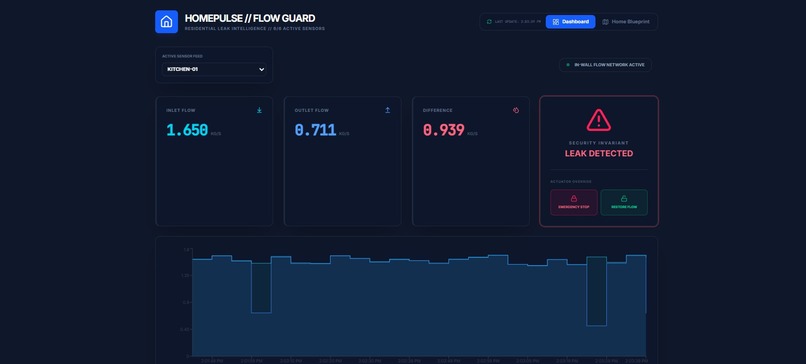
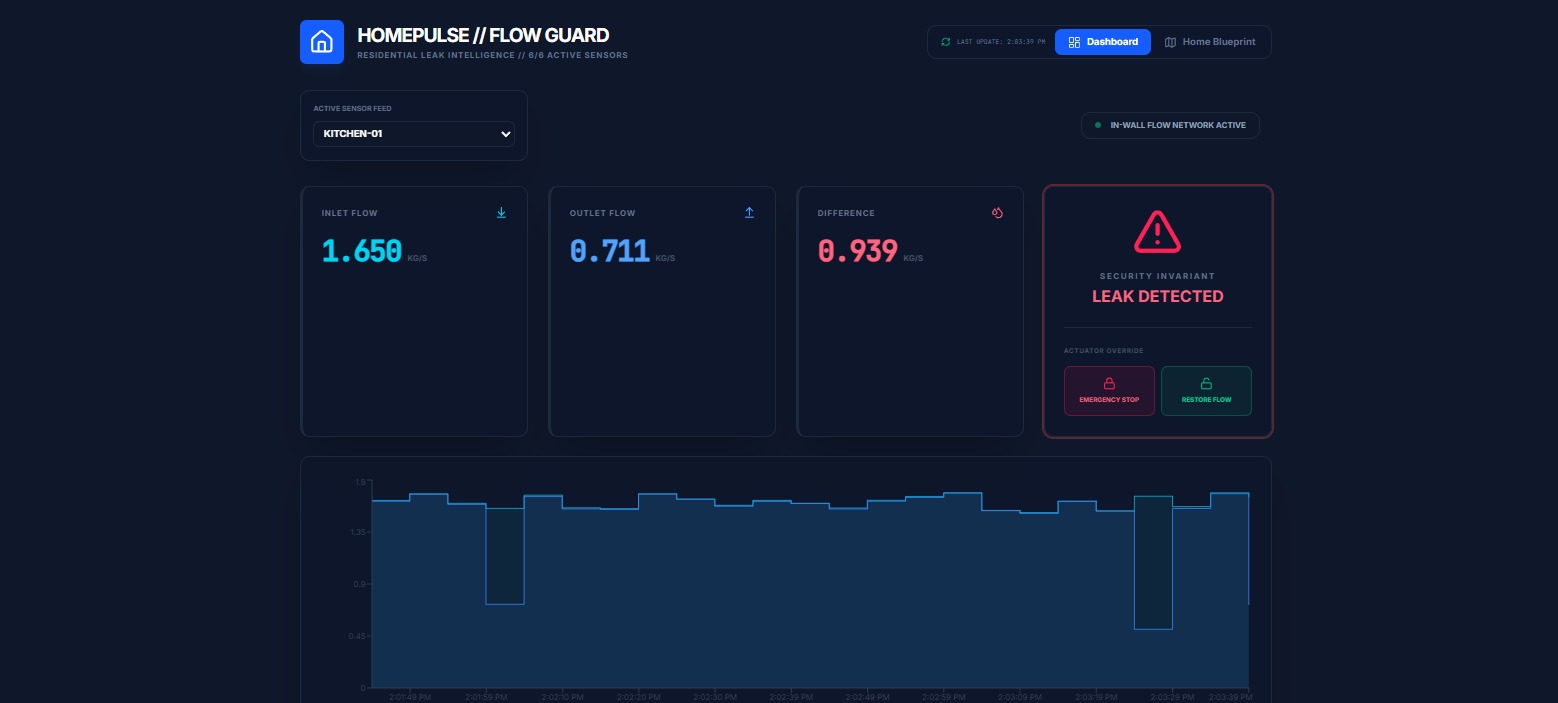
Real-time leak detection dashboard showing inlet, outlet, flow difference, and an active leak alert
-
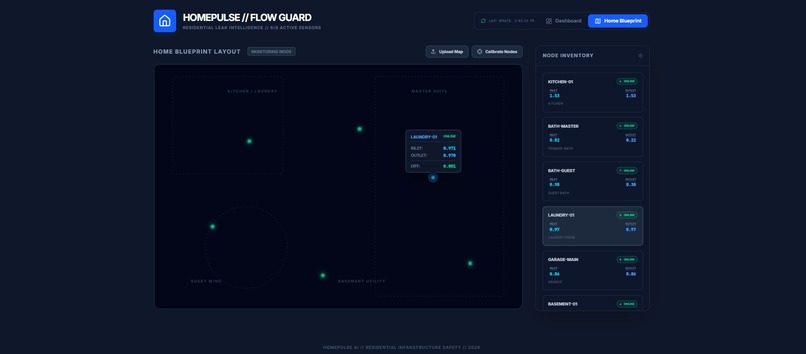
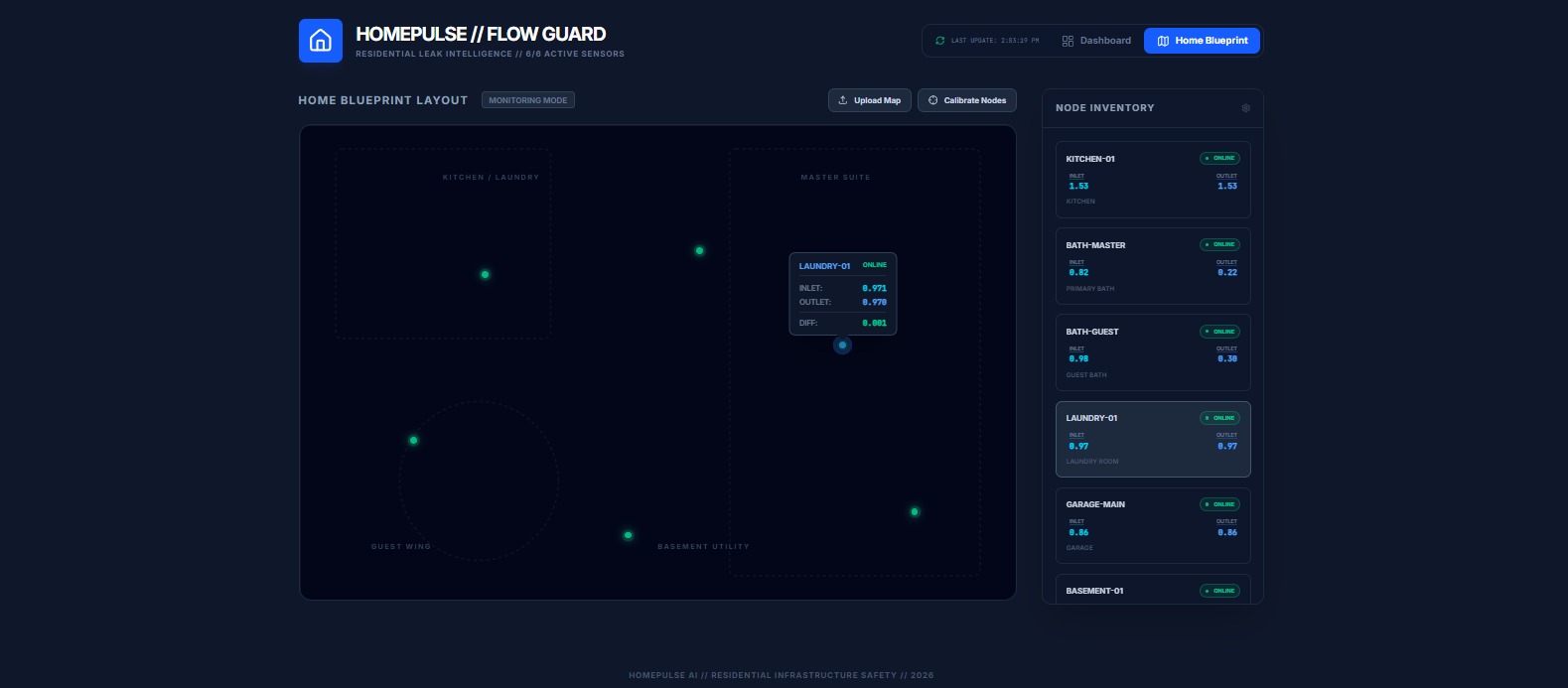
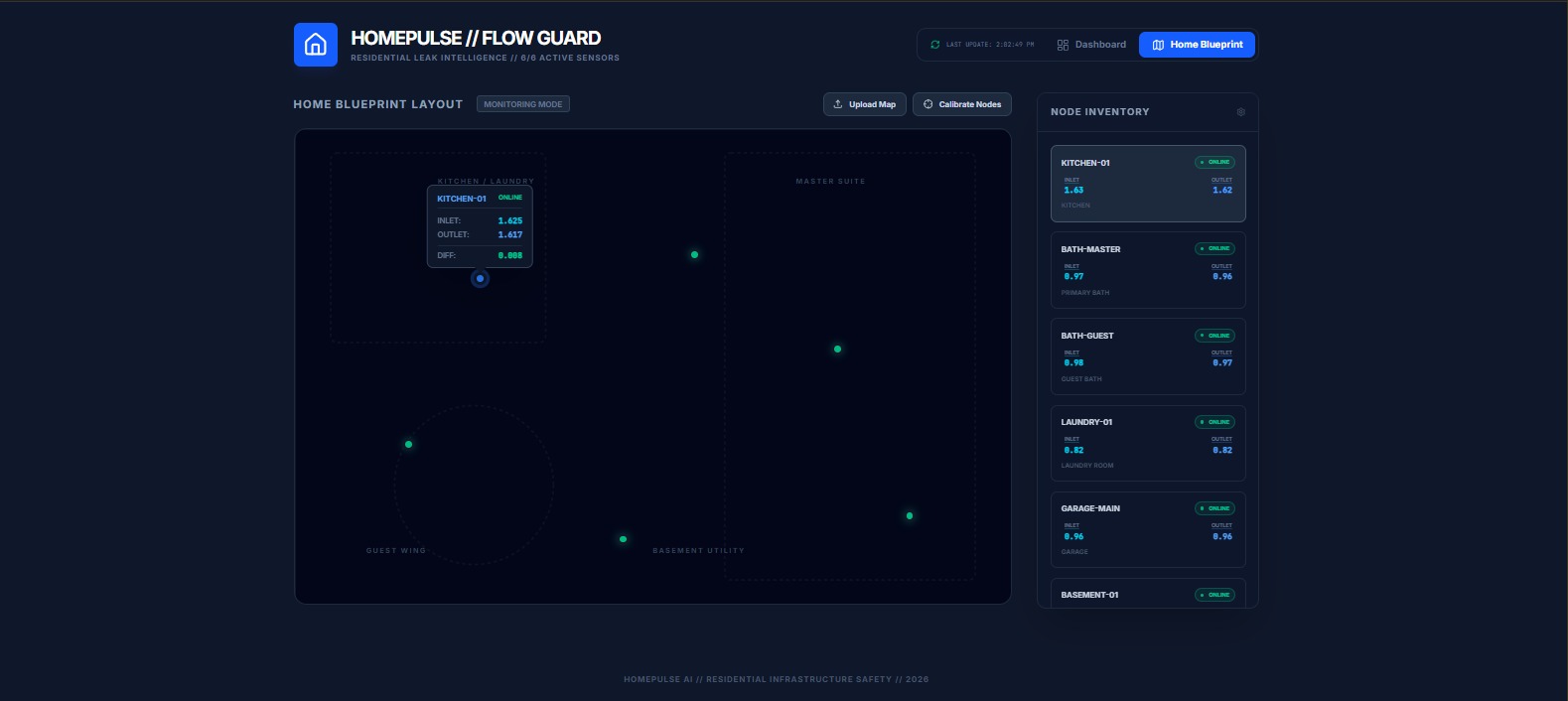
Home blueprint view displaying sensor locations, live flow readings, and the residential pipeline node inventory
-
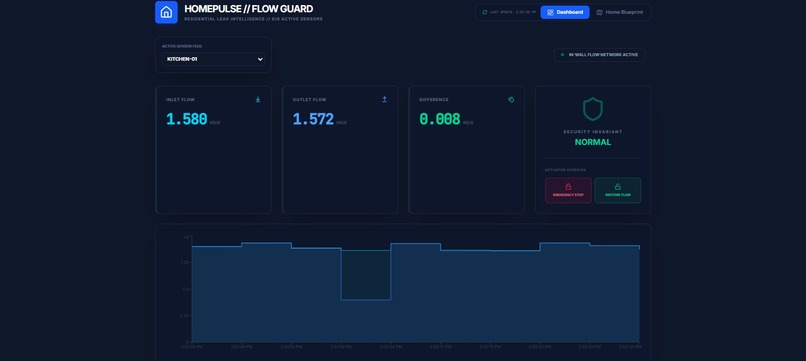
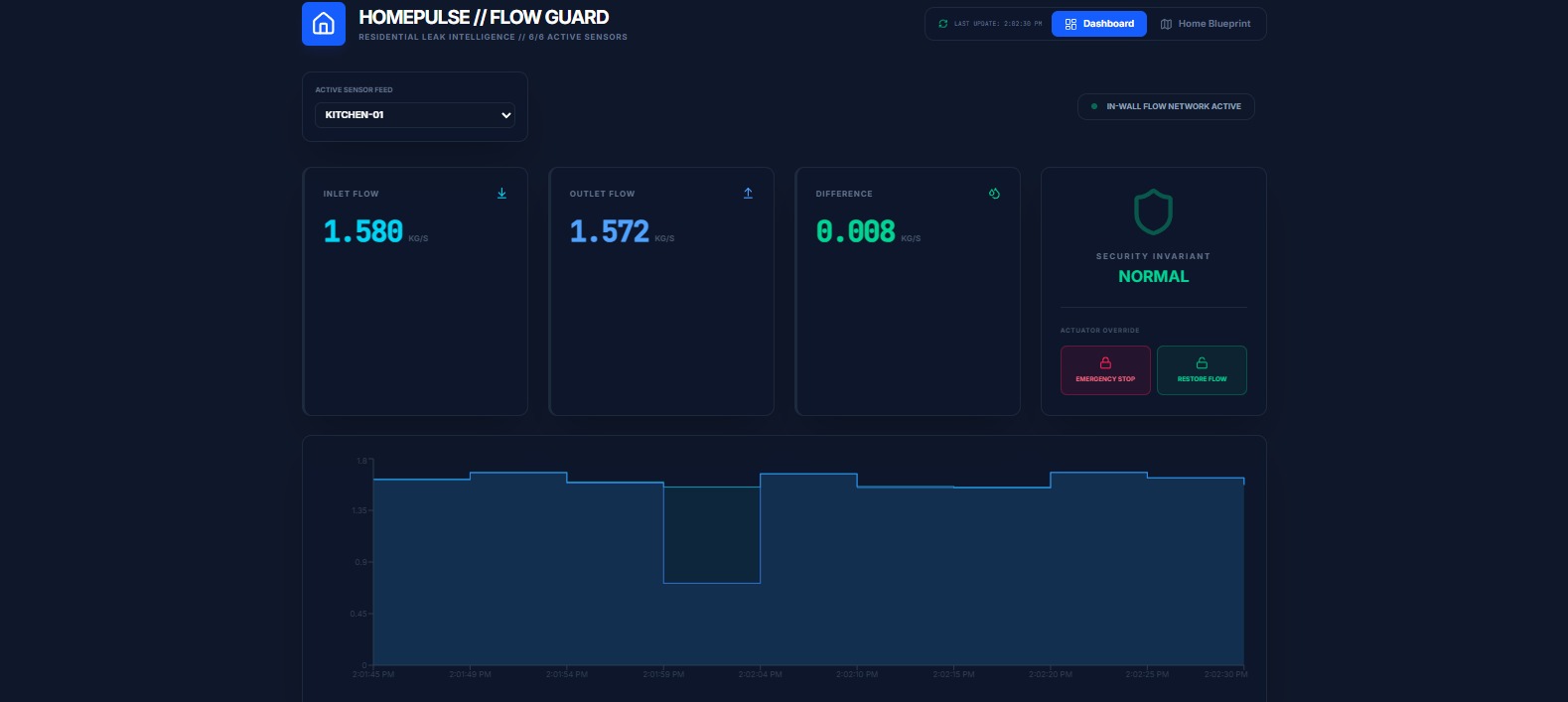
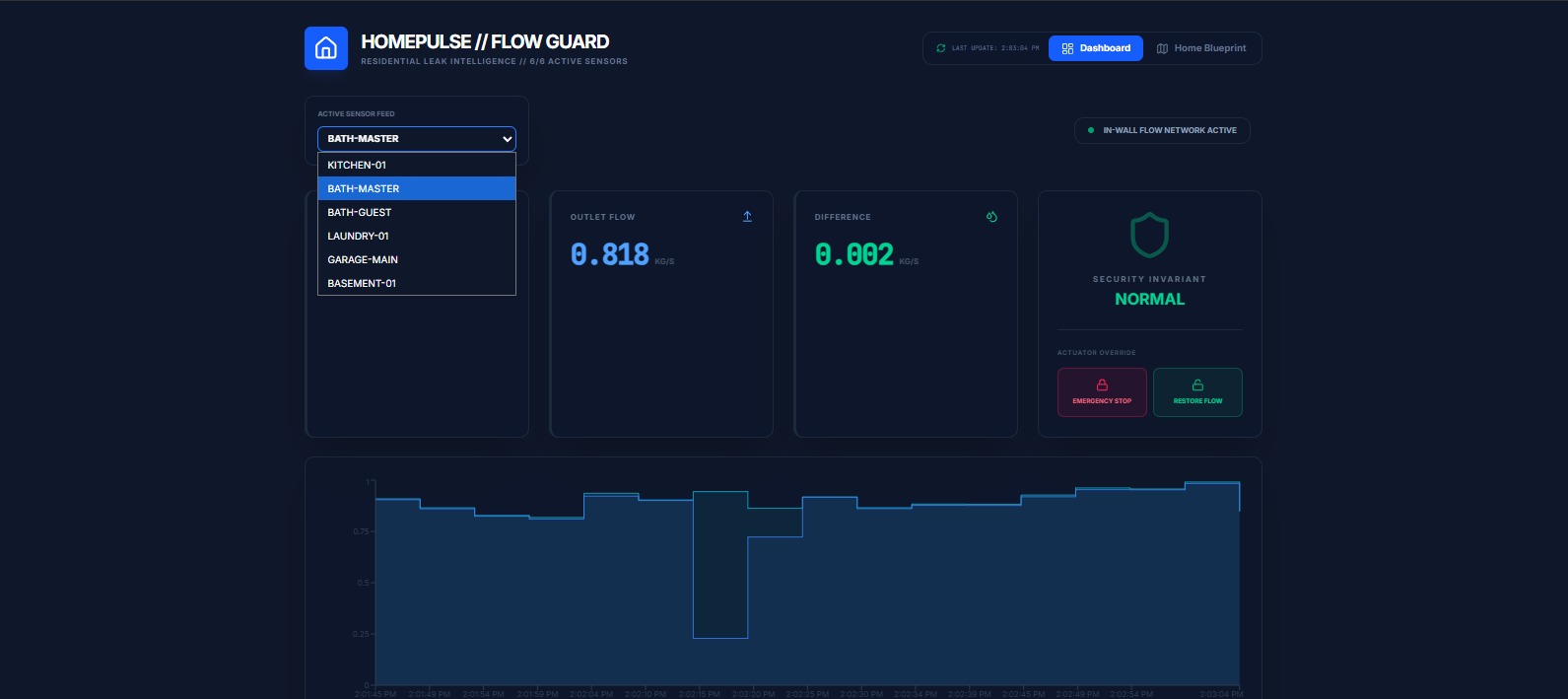
Normal flow monitoring dashboard showing balanced inlet and outlet readings with no detected leakage
-
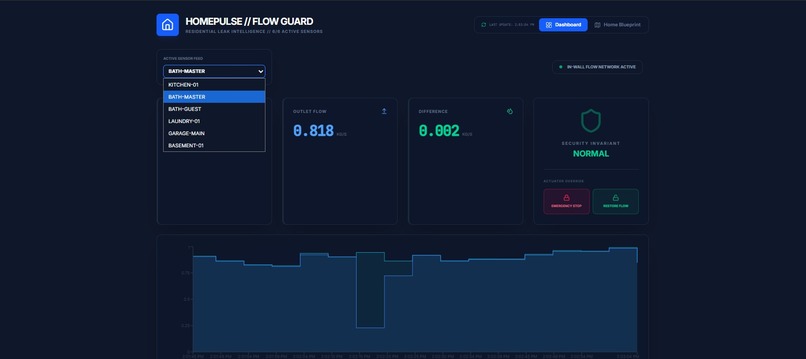
Sensor selection interface showing multiple monitored zones and real-time flow status for the Bath-Master node
-
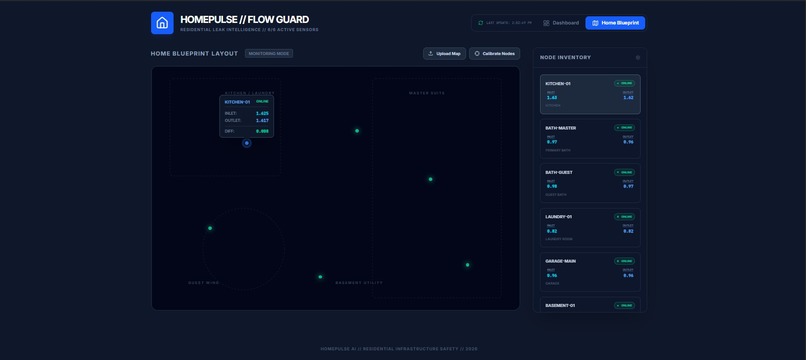
Home blueprint with mapped sensor nodes and live inlet, outlet, and difference readings for Kitchen-01
FLUVIA
Invisible Leaks. Visible Insights.
Overview
FLUVIA is an IoT-based water leakage detection system for residential pipeline networks. Using two Hall-effect flow sensors and an ESP32 microcontroller, it continuously compares inlet and outlet water flow to detect leaks in real time. When a leak is identified, the system instantly notifies users through a web-based dashboard, helping reduce water wastage, prevent property damage, and enable smarter water management.
Inspiration
Water leaks in residential pipelines often remain unnoticed until they cause significant water loss and structural damage. Existing solutions are either expensive or designed for large-scale industrial applications. We wanted to build an affordable, easy-to-deploy solution that enables homeowners to detect leaks early and conserve water.
What it does
- Continuously monitors water flow at the inlet and outlet of a pipeline.
- Detects abnormal flow differences using a threshold-based algorithm.
- Sends real-time leak alerts over Wi-Fi.
- Displays live sensor data and system status on a web dashboard.
- Helps minimize water wastage and maintenance costs.
How we built it
FLUVIA combines affordable hardware with IoT technologies:
- ESP32 for data processing and Wi-Fi connectivity.
- Two Hall-effect flow sensors for flow measurement.
- Arduino IDE for embedded firmware development.
- HTTP communication for transmitting sensor data.
- Web dashboard for real-time monitoring and visualization.
The ESP32 performs edge-level processing by comparing flow readings locally before transmitting only the required data, ensuring quick response times and efficient communication.
Challenges we ran into
Our biggest challenge was designing a reliable leak detection algorithm using low-cost sensors. Minor fluctuations in water flow could generate false alarms, so we refined the threshold logic to accurately distinguish between normal usage and actual leaks.
Another challenge was identifying a practical use case where the solution would have maximum impact. We ultimately focused on small-scale residential pipeline networks, where affordability and ease of deployment are key.
Accomplishments that we're proud of
- Developed a functional IoT-based leak detection prototype.
- Successfully implemented real-time flow comparison for leak detection.
- Built a live web dashboard for monitoring and alerts.
- Designed a scalable, low-cost architecture suitable for residential deployment.
- Created a solution that promotes water conservation and smarter resource management.
What we learned
This project gave us hands-on experience with:
- IoT system architecture
- ESP32 programming
- Sensor integration and calibration
- Real-time data acquisition
- Embedded systems
- HTTP-based communication
- Dashboard development
Most importantly, we learned that practical engineering solutions don't have to be complex—combining simple technologies effectively can solve meaningful real-world problems.
What's next for FLUVIA
Our future roadmap includes:
- AI-powered predictive leak detection.
- Pressure sensor integration for improved accuracy.
- Multi-zone pipeline monitoring and leak localization.
- Mobile application with instant notifications.
- Automatic water shut-off valve integration.
- Expansion to apartment complexes, commercial buildings, and smart city water infrastructure.
Tech Stack
ESP32 • Hall-Effect Flow Sensors • Arduino IDE • Embedded C/C++ • Wi-Fi • HTTP • Web Dashboard
FLUVIA — Invisible Leaks. Visible Insights.


Log in or sign up for Devpost to join the conversation.