-
-
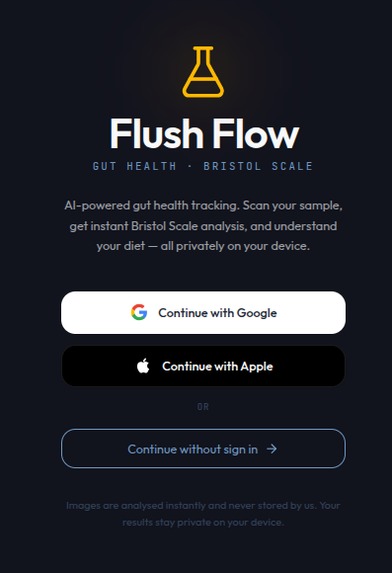
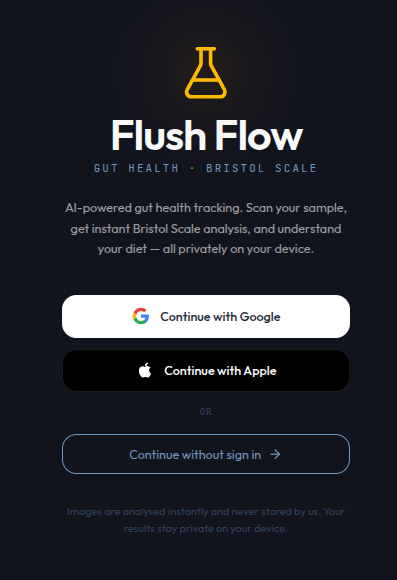
Login Page
-
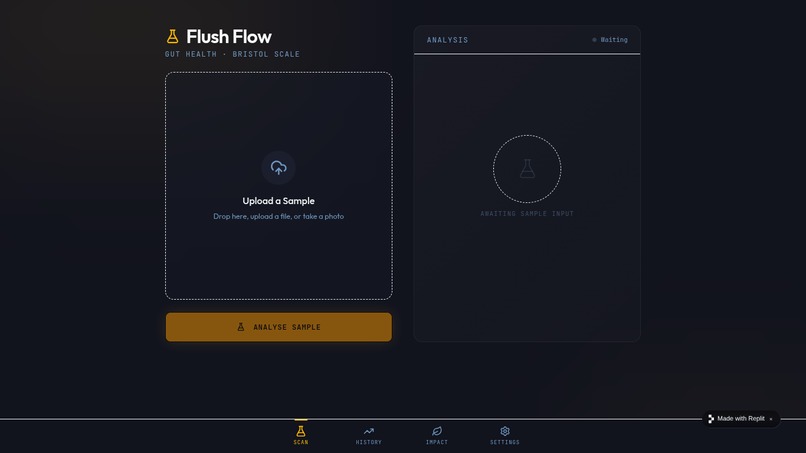
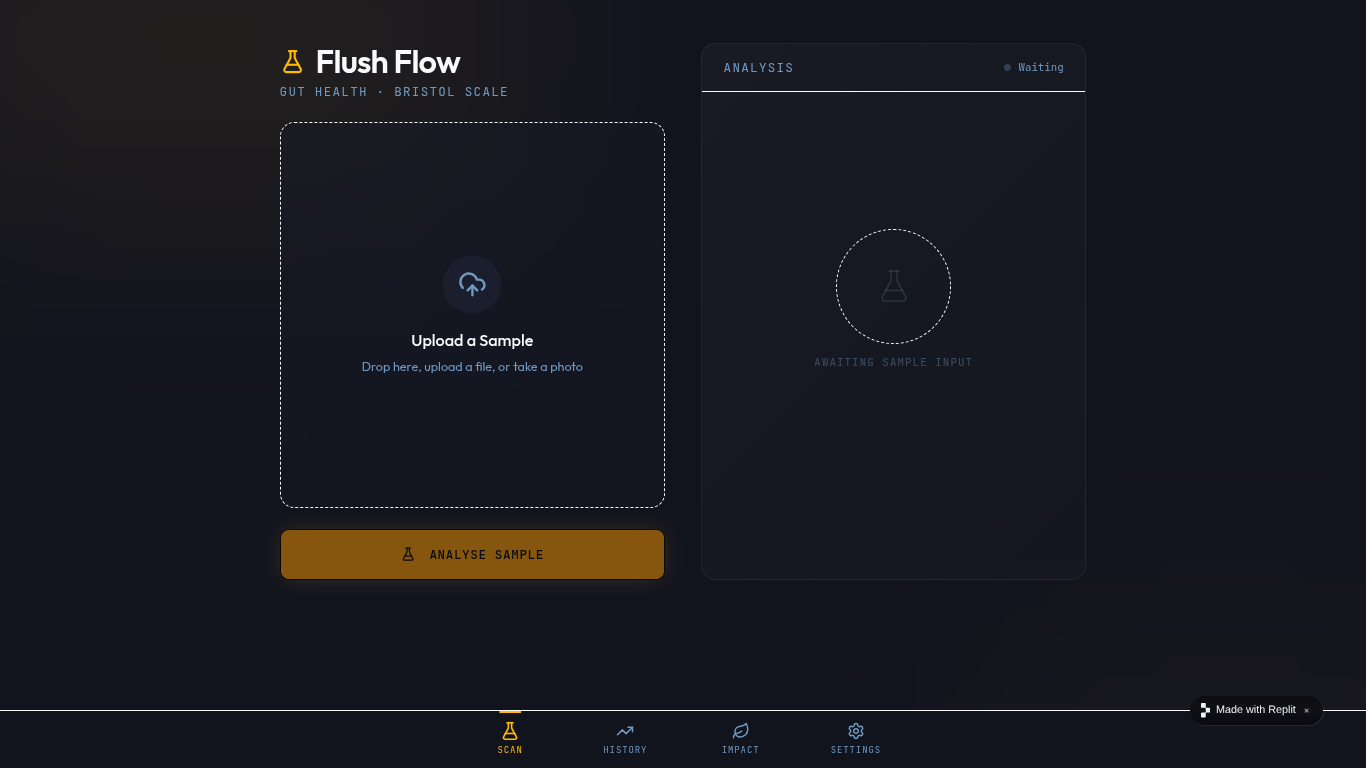
Main Scan Screen Before Analysis
-
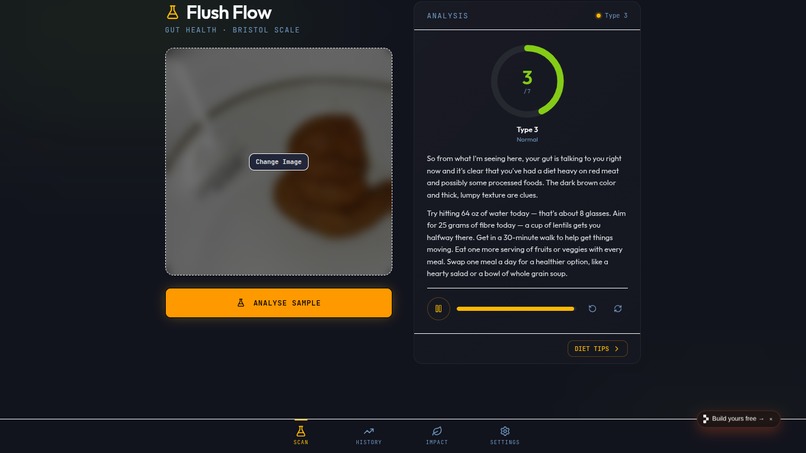
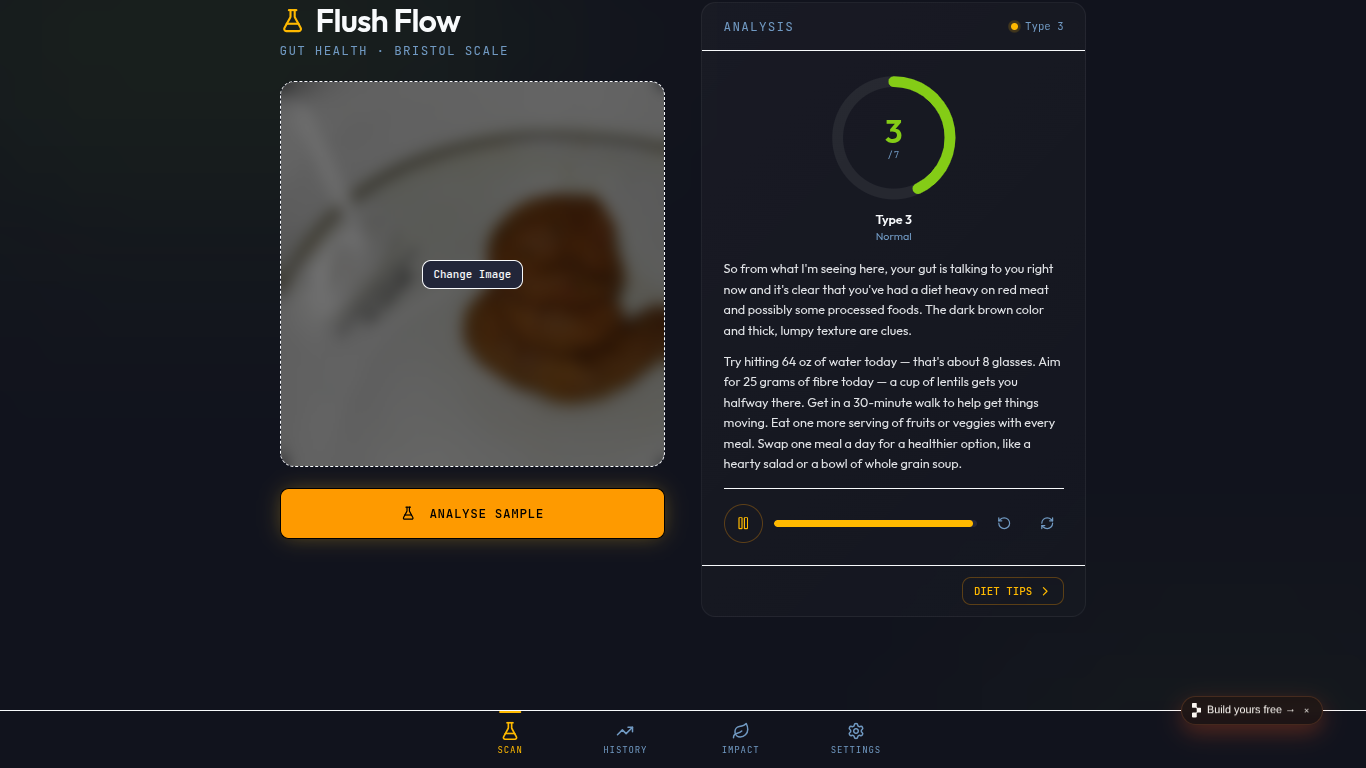
Main Scan Screen After Analysis
-
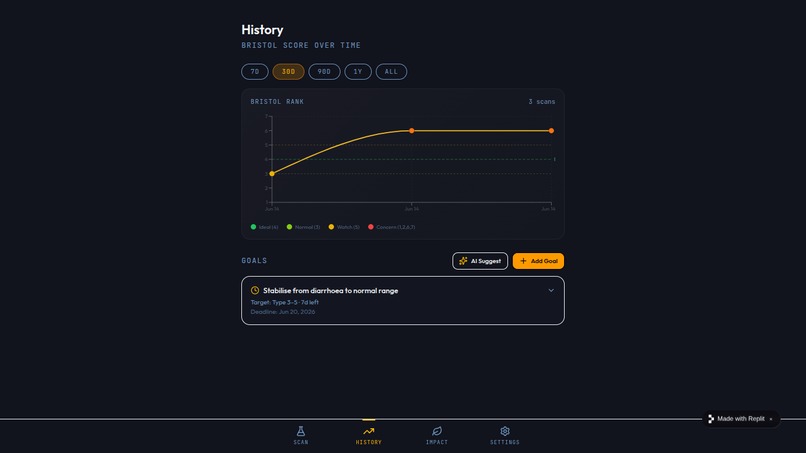
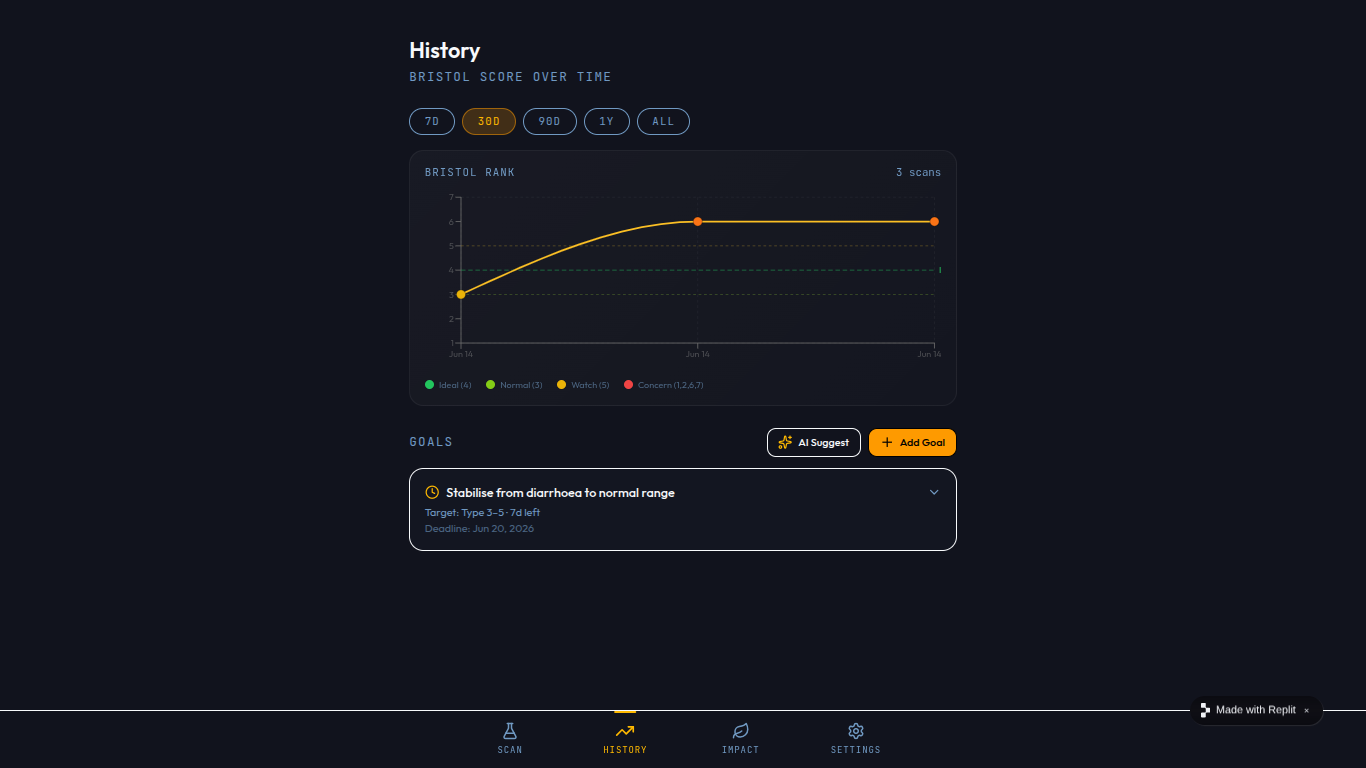
History and Tracking Page
-
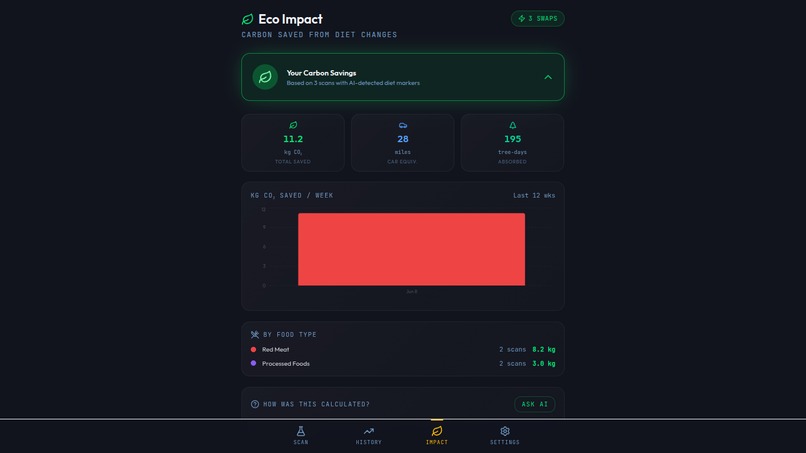
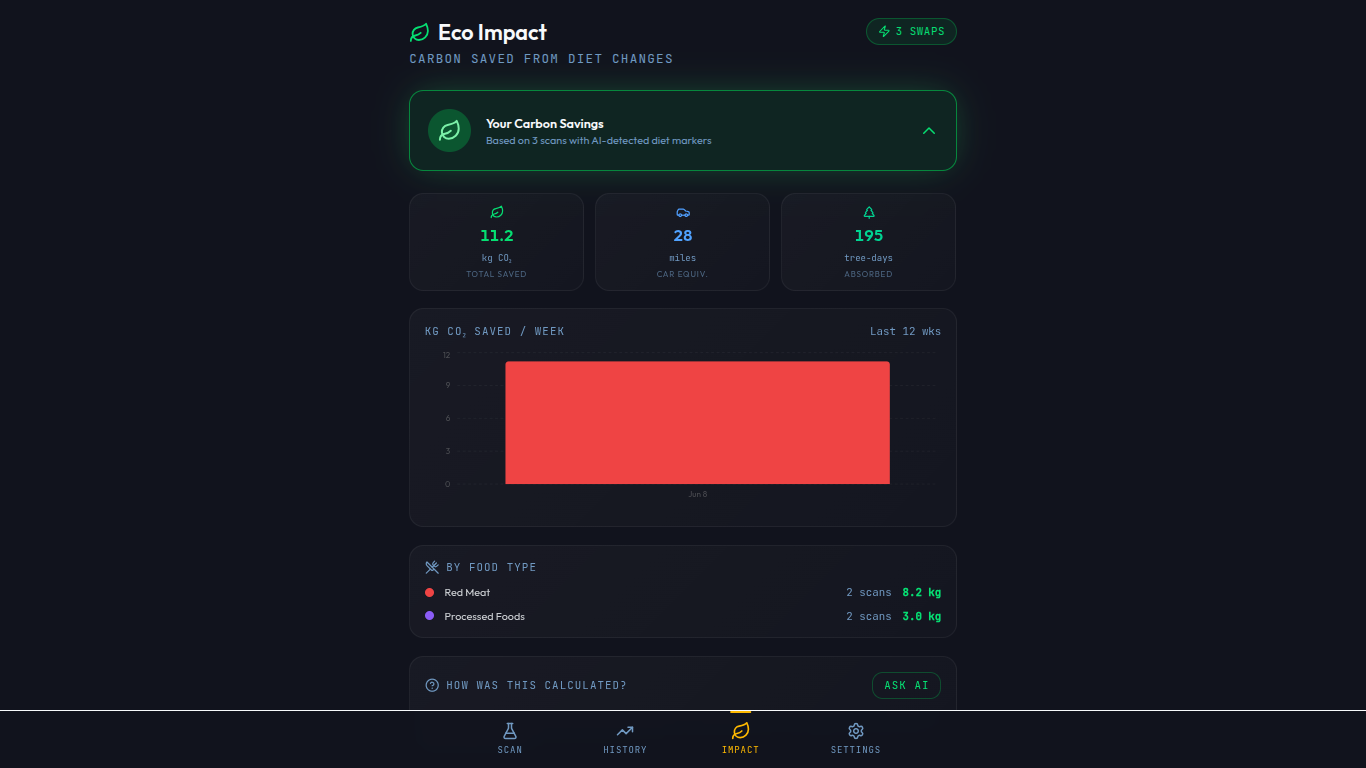
Ecological Impact Page
-
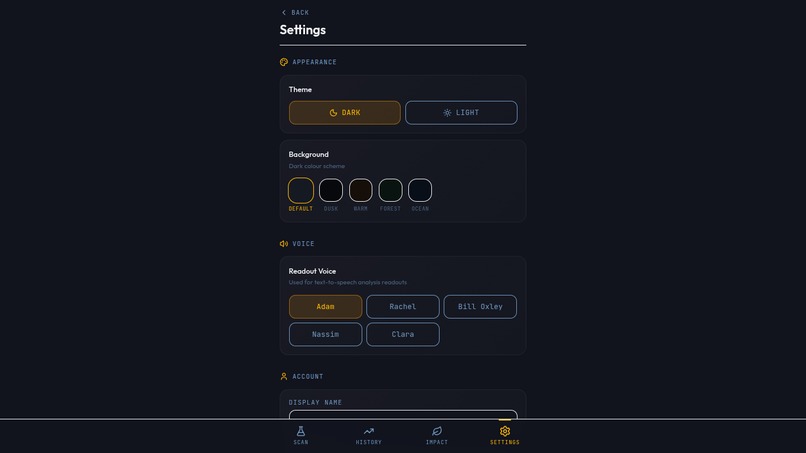
Settings Page
-
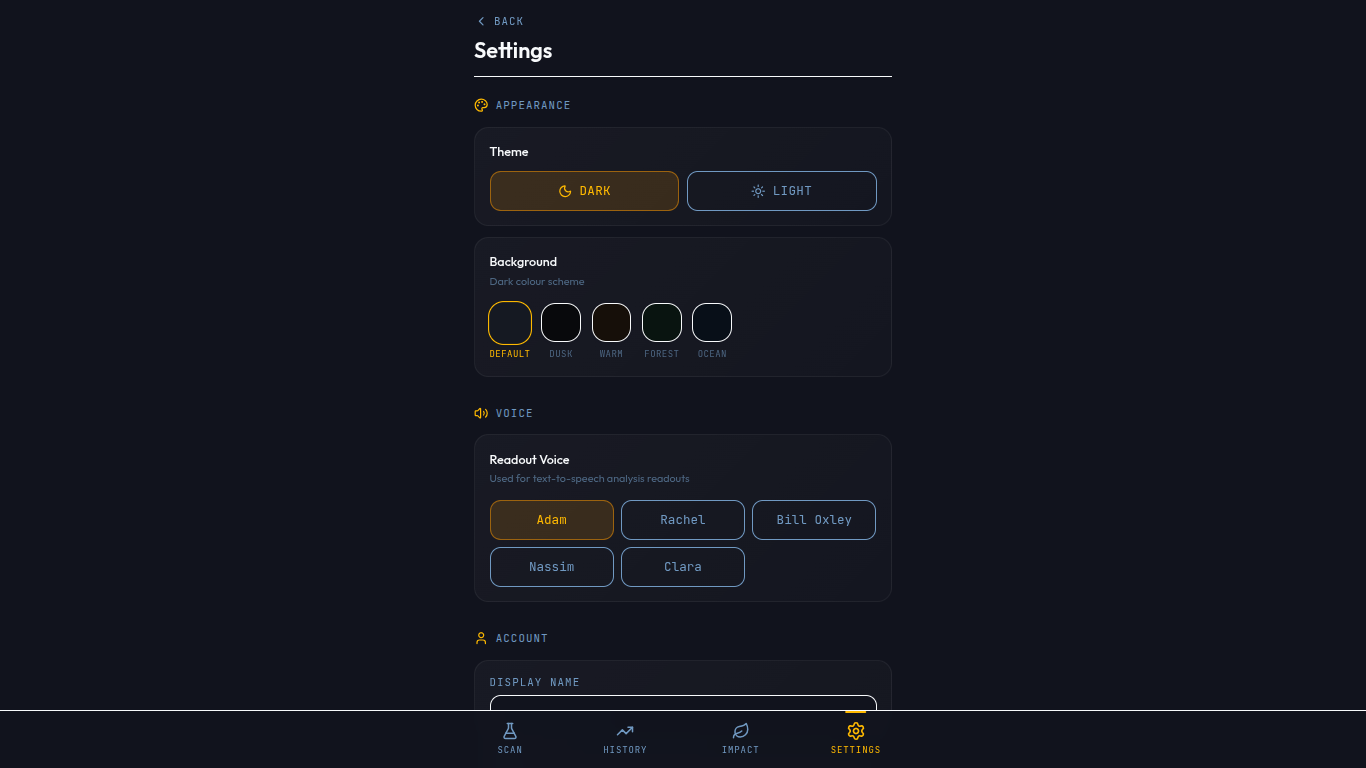
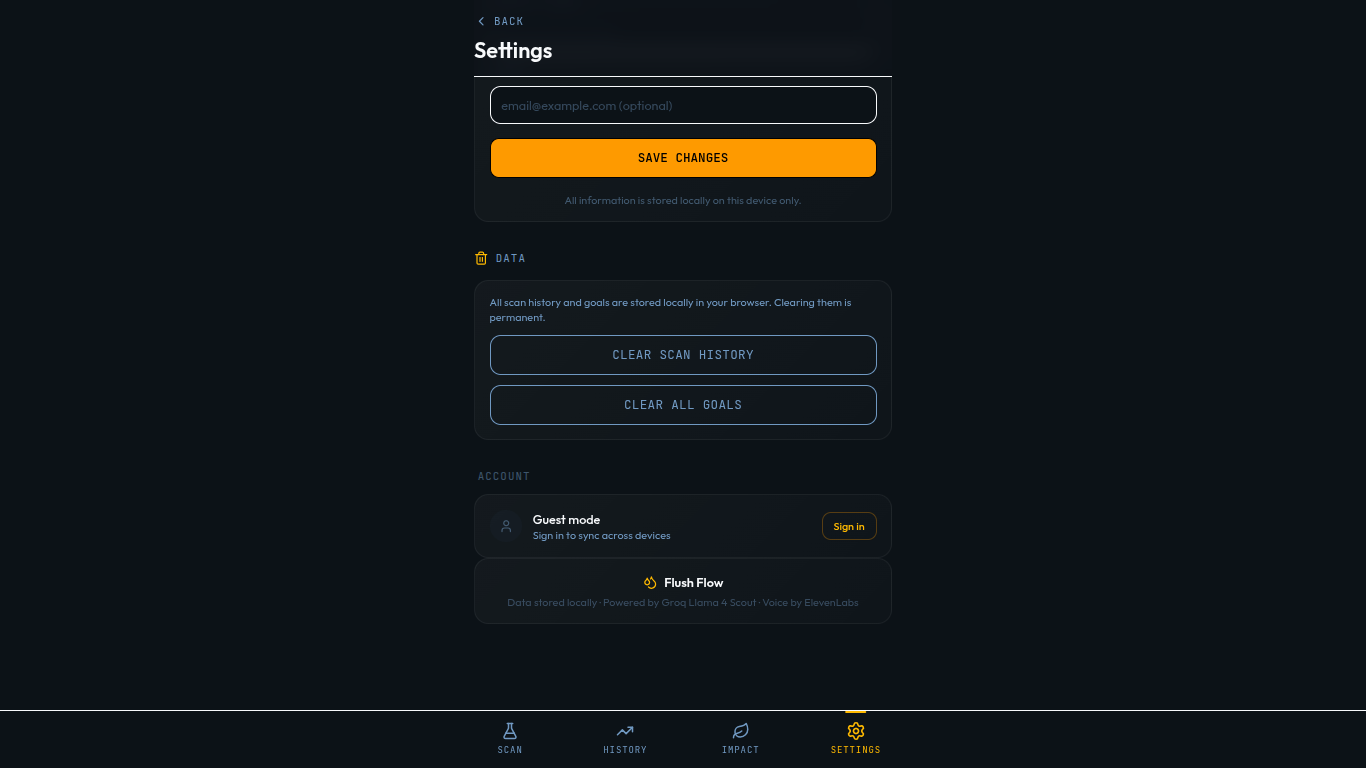
Inspiration
We’re here to talk about what everyone does, but nobody talks about. Let's be honest here - every single day, our body gives us a personalized, physical health report every single day. Most of us just flush it away without a second thought - well, other than the ones about smell.
To change this, we built FlushFlow to turn a bathroom break into a breakthrough find. Your stool is a natural and, importantly, immediate window into your gut microbiotics, hydration, and digestion. Gastrointestinal wellness isn't a joke, so we've replaced the grossness with accessible and data-driven insights.
What it does
By combining advanced technology with digestive science, we have turned the humble bathroom break into an effortless health checkup. Our meticulously trained AI will analyze the visual characteristics of your stool based on established medical standards, stripping away the confusing jargon. Instead of guesswork, you get instant, easy-to-understand insights alongside customized dietary and lifestyle tweaks to optimize your stomach health and balance your gut. It is sophisticated gastroenterology science, delivered with absolute privacy and zero awkwardness.
How we built it
Our development process was powered by cutting-edge, AI-assisted engineering. Instead of spending days writing foundational boilerplate code from scratch, we leveraged advanced AI tools like Github Copilot and Replit to dynamically generate core features and rapidly prototype our ideas. This allowed our team to act as high-level systems architects, focusing our energy on prompt engineering, iterative debugging, and seamless component integration. By using AI to accelerate our workflow, we were able to pivot quickly, focus heavily on the user experience, and build a sophisticated, functional platform in a fraction of the standard development time.
Challenges we ran into
As first-time GitHub users, we faced a steep technical learning curve right in the middle of a high-pressure hackathon. Navigating repository commands for the first time cost us hours of valuable development time in troubleshooting. To add to the challenge, our final project file exceeded GitHub’s standard file size limits, causing push failures. We had to quickly pivot, research alternative workflows, and implement creative workarounds to successfully sync and deploy our code. Although this was demanding, this hurdle forced us to master version control under pressure and drastically leveled up our team's technical adaptability.
Accomplishments that we're proud of
The fact that we as grade 9s were able to build a working website that effectively uses AI to analyze stools is an incredible milestone for our team, considering our prior technology and coding experience. Additionally, we tested our physical and emotional boundaries by pushing past our comfort zones, going long and sleepless hours, and seeing how much perseverance we were able to have when troubleshooting under immense time constraints.
What we learned
From this hackathon, we've learned so much about github and how to code well. We've learned the importance of preparing and learning beforehand so as to have more time during the hackathon for actual coding, not losing valuable time having to learn a concept. Properly planning out your project seems to be so important as well, so when the coding itself starts you can instantly start making all those plans come to life. Additionally, github is so important and useful once you figure it out - that should be the first thing we do next time.
What's next for FlushFlow
""Full ecological reports** are coming soon! These will measure the true amount of carbon dioxide your eating has caused to be released into the air. A more precise AI is also coming soon to increase confidence that the AI is making the right dietary decisions for you.

Log in or sign up for Devpost to join the conversation.