Inspiration
Mrs. Ann Moriarty is a high school teacher from Davis, CA who teaches biotechnology. Many of her spectroscopes were breaking down, and they are too expensive to replace. This greatly hindered her lab's ability to quantitively measure things on a molecular level. I made this hack in response to Ann's need. It detects fluorescing quantities in the cell, counting molecular entities in a cheap, portable manner.
What it does
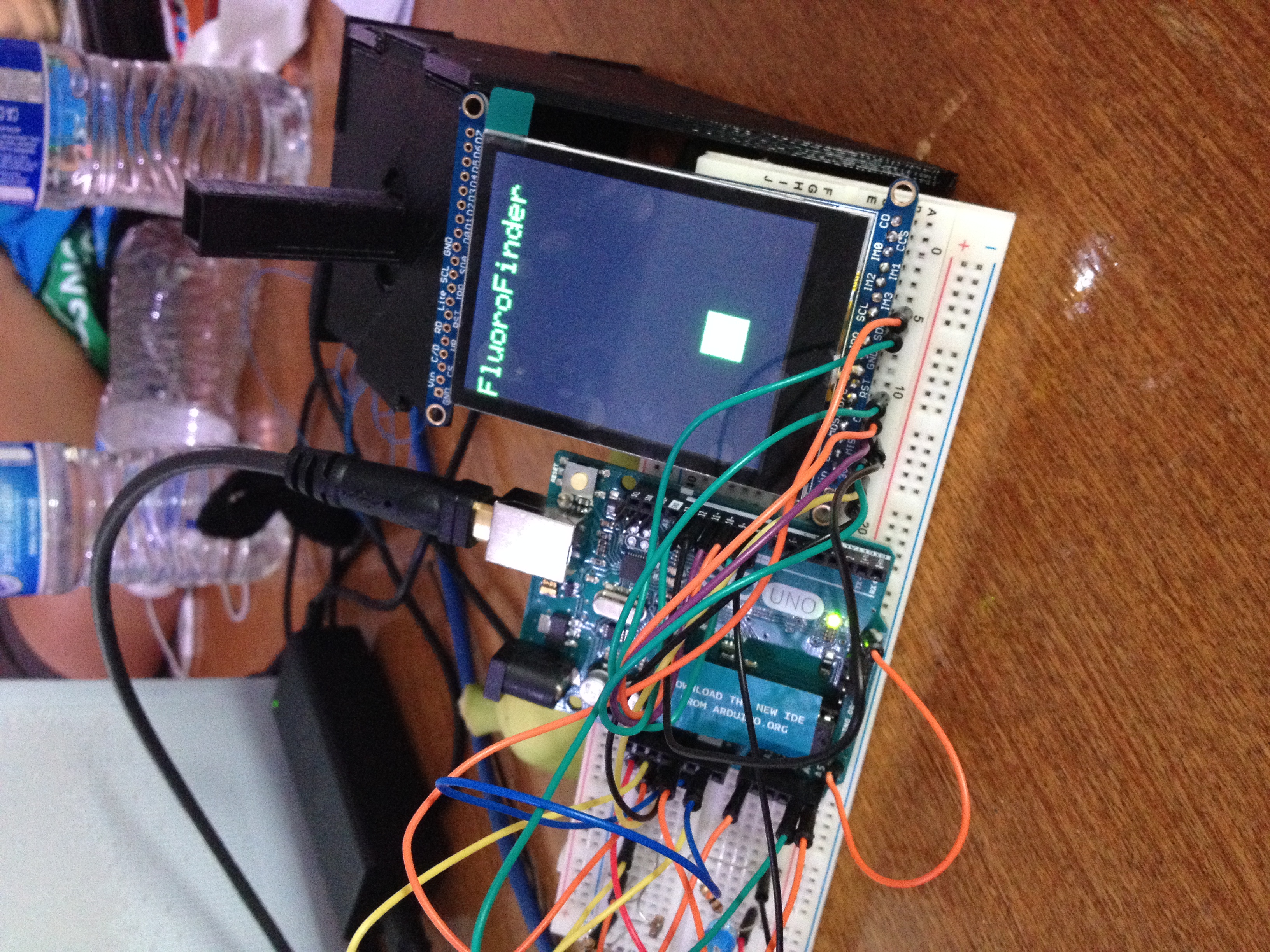
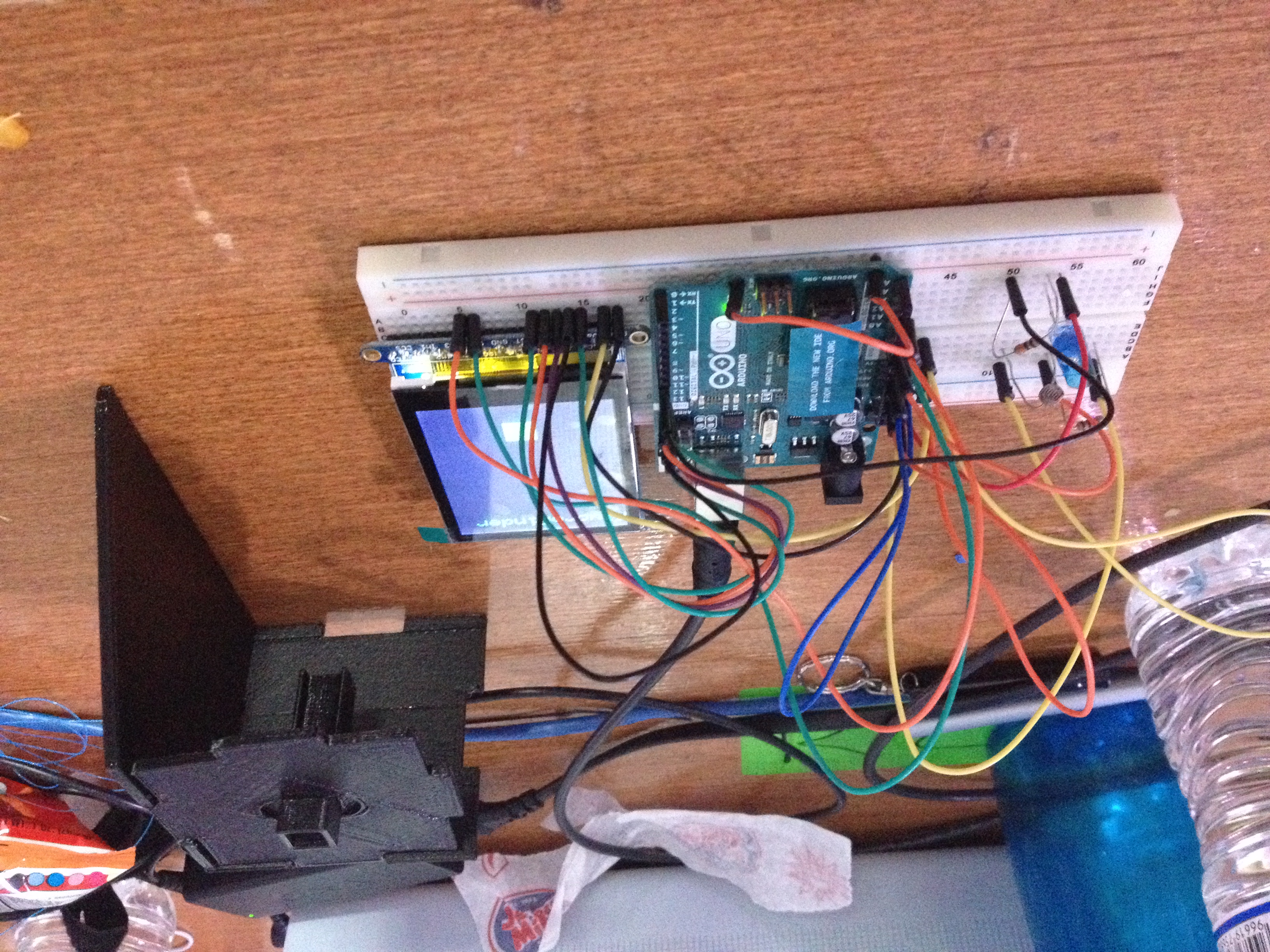
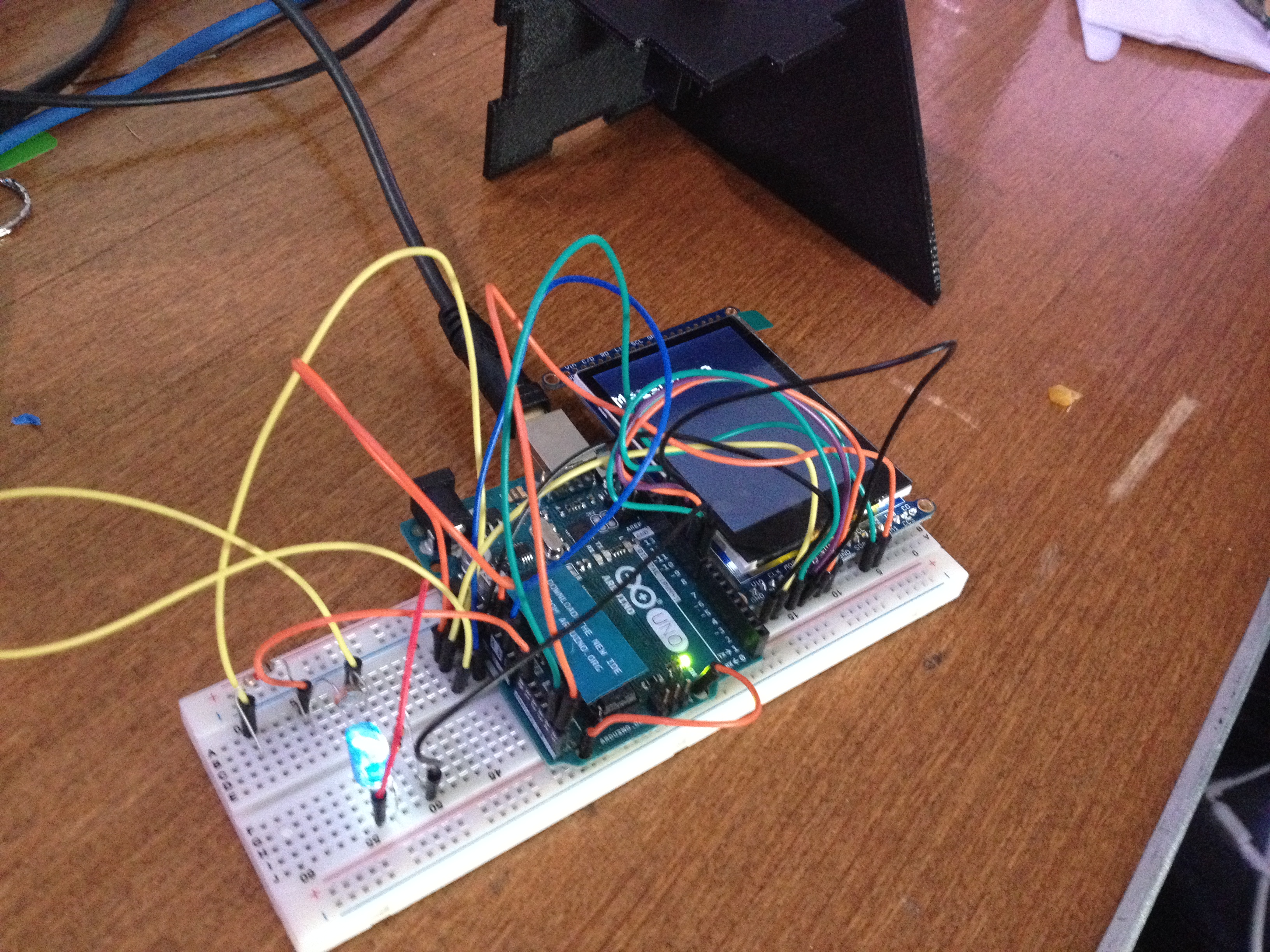
FluoroFinder finds the intensity of Green Fluorescent Proteins (GFP) in a given sample. It does this by first shining blue light into the sample. This excites the GFP, thereby causing them to emit their characteristic green light. This light then passes through a green filter, after which it is detected by a photo cell. The measurements made by the photo cell are then converted via python scripts into intensity readings that one would expect from an average fluoroscope.
How I built it
I built the FluroFinder using the parts generously loaned by TouchTiles, including an Arduino, a photo cell, and an Adafruit touch screen. I programmed the touch screen to allow the user to control when measurements take place. I also built a 3-D case that houses a removable cuvette for sample holding, while also keeping ambient light from exciting the sample.
Challenges I ran into
The biggest challenge is gathering fluorescing material for testing the device. In order to test if the device worked, it would be ideal to get cells that express GFP. To address this challenge, design specifications were inferred from previous research done on GFP.
Accomplishments that I'm proud of
I am proud that I picked up HTML 5 and CSS fairly quickly, and I am close to building a website for the device. I am also proud that I eventually got the Arduino code to coordinate the photo cell, LED, and touch screen, which was not an easy task. Designing the plastic housing in Fusion360 from scratch, and seeing the printing of each piece, was also fairly rewarding.
However, above all, I am most proud of the fact that this device will help high schoolers get a better education.
What I learned
Thanks to the SD Hacks workshops, I learned how to code in HTML 5 and CSS, and I now have access to a tutorial on how to build a web app full stack. I also learned how to interface the Adafruit with the Arduino, and I became acquainted with the precision of the 3D prints made by RoBo printers.
What's next for FluoroFinder
I would eventually like to build the "SmartPhone Lab," complete with attachments for microscopes, fluorometers, and scales. This would allow a Laboratory Information Management System (LIMS) to be as simple as plugging in your iPhone.

Log in or sign up for Devpost to join the conversation.