-
-
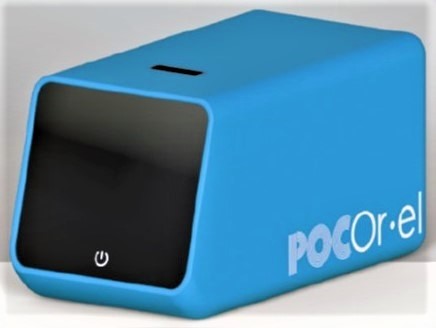
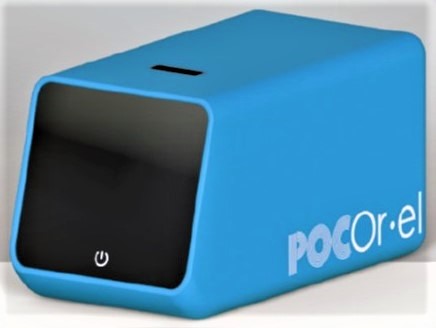
POCOREL cartridge reader. Design by A. Bosso
-

Our new logo. Designer: A. Bosso
-
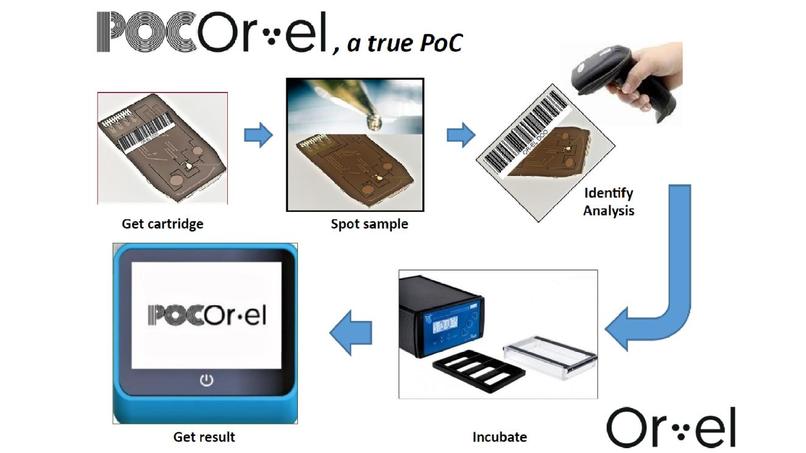
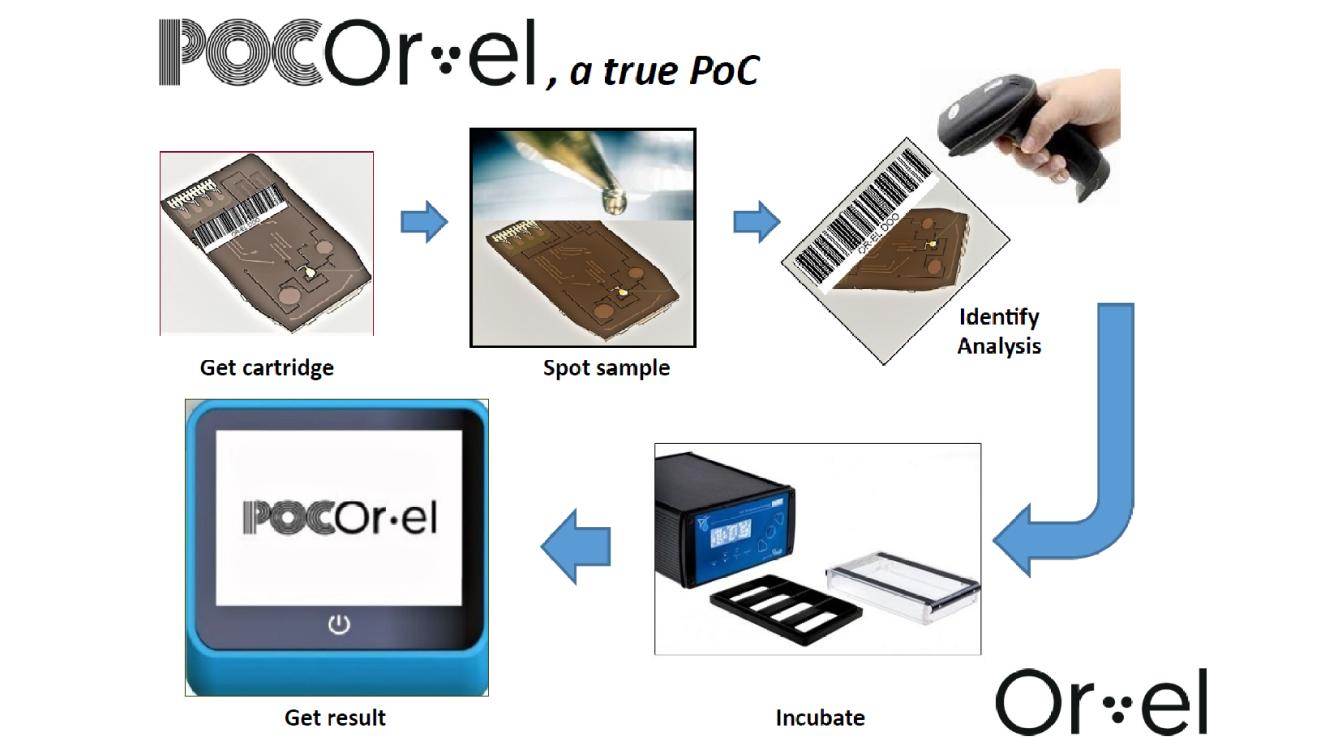
the workflow of our diagnostic platform
-
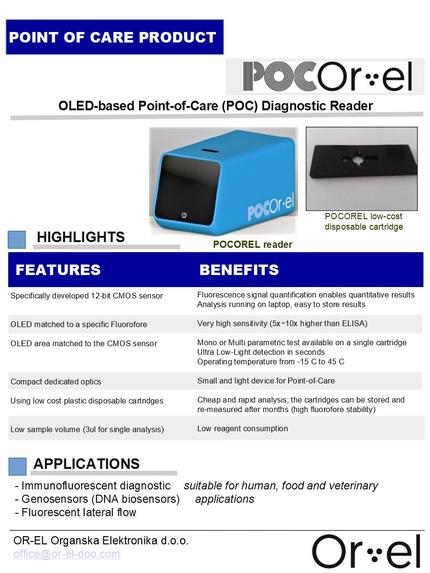
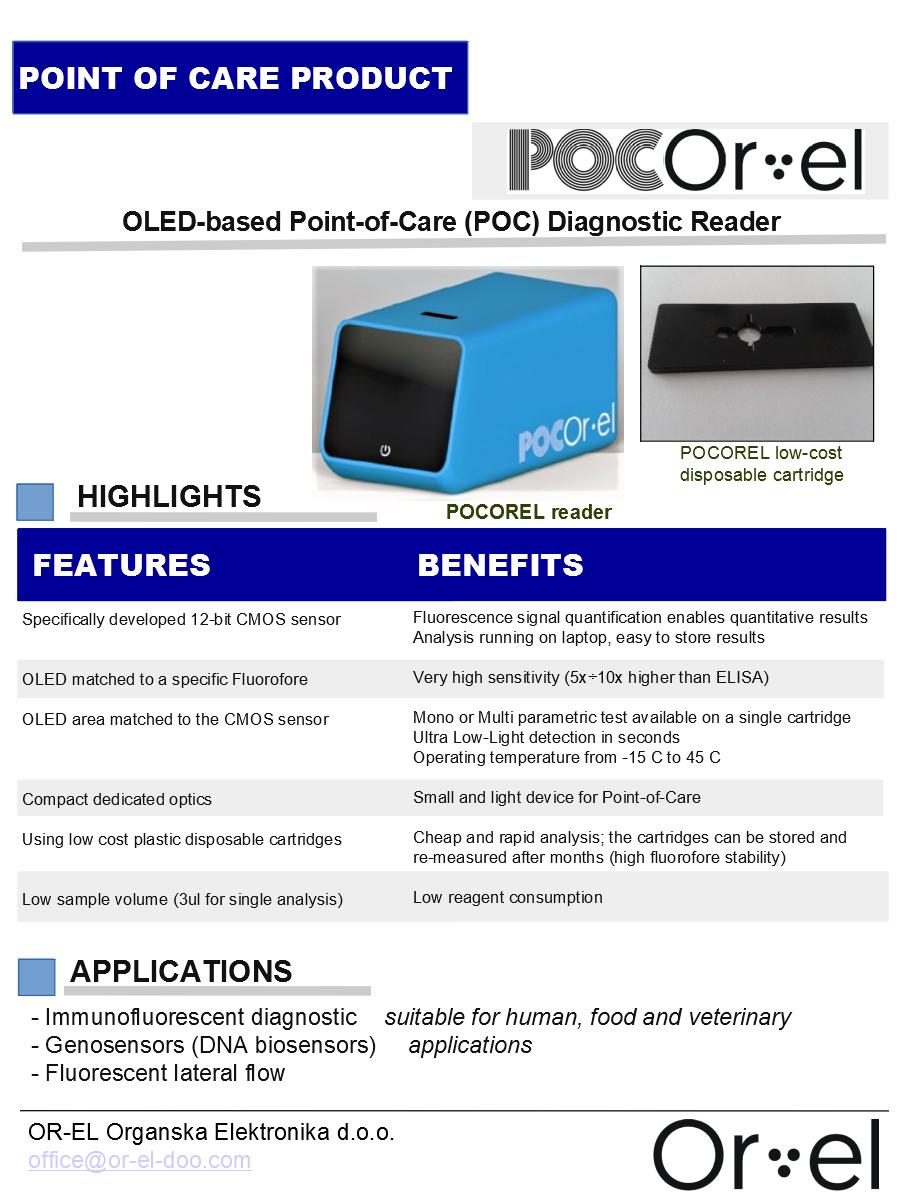
POCOREL flyer pg1
-
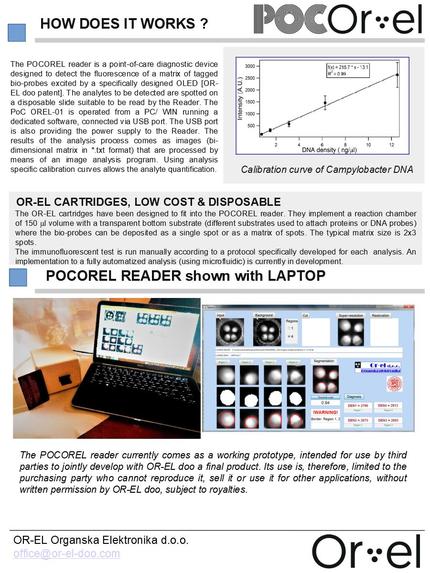
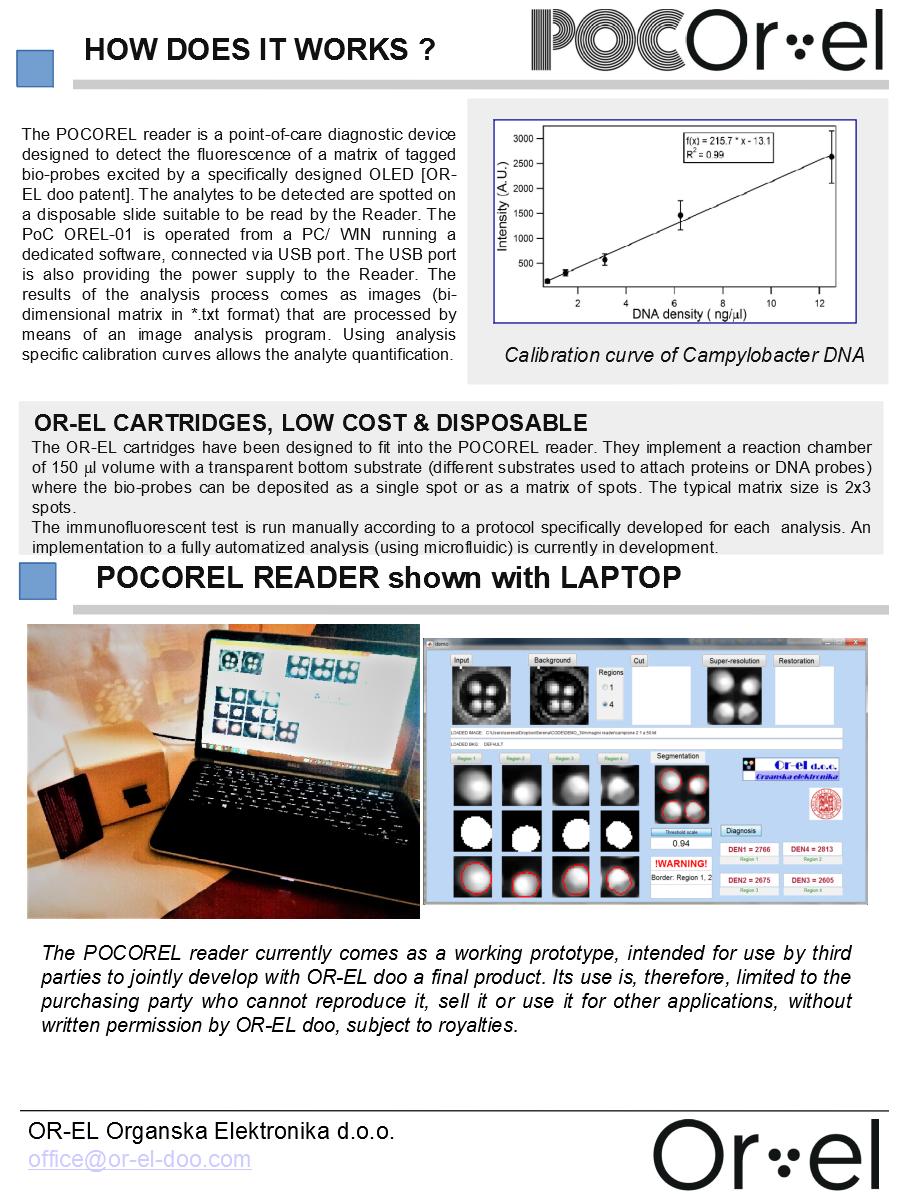
POCOREL flyer pg2

Inspiration
The recent outbreak of COVID-19 was really devastating, worldwide. A lot of elder people died in hospices, also due to a lack of affordable diagnostics allowing to rapidly check the status of patients, doctors and nurses to isolate the infected person, thus avoiding dangerous interaction with non-infected ones. It looks evident that the possibility to have a sensitive diagnostic tool, easy to use, with fast response and accurate to avoid false-negative, is extremely important to control and to limit the disease spread out in crowded environments, like hospices and hospitals. Such a diagnostic tool will be even more important in the COVID-19 Outbreak Phase II allowing an easy way to monitor the people in airports, train stations and in all that situations where possible contamination may occur. We are really convinced that a rapid and efficient diagnostic tool integrated with a real-time control system could help to reduce the disease spread and we are really motivated to develop such a diagnostic tool to help the worldwide community to avoid devastating situation like that we recently observed in different European Counties.
What it does
The proposed diagnostic tool enables an accurate and rapid detection of both the antibodies against Corona Virus and the SARS-COV-2 virus. The test relies on low cost disposable cartridges and the detection is quantitative with a high sensitivity. The complete test lasts less than 30 minutes. The test results are planned to be available on the Cloud according to the National Health systems standards. The used cartridges may be stored for long times allowing successive readouts.
How I built it
The developed diagnostic tool is based on immuno-fluorescence detection, excited by a custom designed Organic LED (OLED); it detects the presence of antibodies or antigens (like virus or bacteria) in a liquid matrix (like serum, saliva, urine, etc.). The system is composed of three devices, the first one being a disposable cartridge. The bio-probes (antigens or oligonucleotides probes) are deposited on a plastic substrate, while a simple fluidic circuit allows the reagents (extremely low amount/low cost) to interact with the biologic fluid under analysis. The cartridges are incubated for few minutes in a simple portable incubator. Finally, the cartridges are red out in few seconds using a portable reader device. A laptop PC is used to control the devices, to store the results and to made them available in the Cloud.
Challenges I ran into
Among the few issues we are facing with bio-probe adhesion onto the cartridge plastic substrate and, of course, getting all the required financial resources to finalise our Product.
Accomplishments that I'm proud of
During the so far carried out development, we succeeded in having three (USA, Italy and EU) Patents granted and two Seal of Excellence assigned, not to mention the publication of several refereed papers. Also, we participated to the MNT-ERA II Project OLED CHIP and won Slovene National grants. Currently we are running two H2020 Actions, namely the ACTPHAST 4.0 and KET4.0 CP.
What I learned
During the development we gained a lot of technical insights, which only may assure a working and robust Product. Among these, Artificial Intelligence algorithms have been developed and tested within our Team to improve the reliability of our diagnostics platform. Also, we have been in touch with Investors and Market players (potential customers) who supported us, allowing us to better understand market trends and needs.
What's next for FLUOPoC
Enter the Market of SARS-COV-2 PoC diagnostics, possibly in team with International Health Organisations.
The solution you bring to the table (including technical details, architecture, tools used)
The developed diagnostic tool is based on immuno-fluorescence detection, excited by a custom designed Organic LED (OLED); it detects the presence of antibodies or antigens (like virus or bacteria) in a liquid matrix (like serum, saliva, urine, etc.). The system is composed of three devices, the first one being a disposable cartridge. The bio-probes (antigens or oligonucleotides probes) are deposited on a plastic substrate, while a simple fluidic circuit allows the reagents (extremely low amount/low cost) to interact with the biologic fluid under analysis. The cartridges are incubated for few minutes in a simple portable incubator. Finally, the cartridges are red out in few seconds using a portable reader device. A laptop PC is used to control the devices, to store the results and to made them available in the Cloud.
What you have done during the weekend Definitely, teaming with our Partners and also with other HACKATON participants, we had the opportunity to dig into our solution finding way out to a rapid validation and market entry. Also, we learnt about the SLACK platform which gave us a clear demonstration on how it works: very impressive. Also talking with our Mentor and Manager was important to increase the efficiency of our two days, work.
The solution’s impact to the crisis The possibility to have a fast, low-cost and reliable test will allow to strongly increase the number of tests to screen a large amount of population. This possibility will allow to separate the early stage infected peoples to the non-infected ones reducing the risk of outbreak spread. Moreover, the serological test will allow to check the disease immunity developed by the recovered patients.
The necessities in order to continue the project In order to continue our project, we need to validate our test using pre-characterized COVID-19 patient sera or saliva (characterized using golden standard techniques like RT-PCT, IIF and ELISA tests). Few hundreds of samples are required. So, we are looking for an hospital (or different hospitals) or diagnostic laboratories that can give us access to these samples and will also host us to safely test our point-of-care disposable cartridges.
The value of your solution(s) after the crisis The impact of our solution after the crisis will be important. Having a fast and reliable system will allow to rapidly control potential infected peoples in crowded situation (like airport, train station…) to eventually detect infected person and immediately isolate them. Moreover, being this solution cheap and portable it can be conveniently used in under-developed Countries where the access to hospitals and laboratory analysis is difficult and can bring dangerous delay in the disease detection.
Built With
- english


Log in or sign up for Devpost to join the conversation.