Inspiration
In the context of preemtive health insurance, we see a business model of microservices that insurance offers to employers to improve the health of their employees. One of this microservices could be a flu service that includes ranking employees with respect to their need of vaccine, tracking the spread of the flu, warning when users need to take preventive actions, provide information for a quicker recovery, etc.
What it does
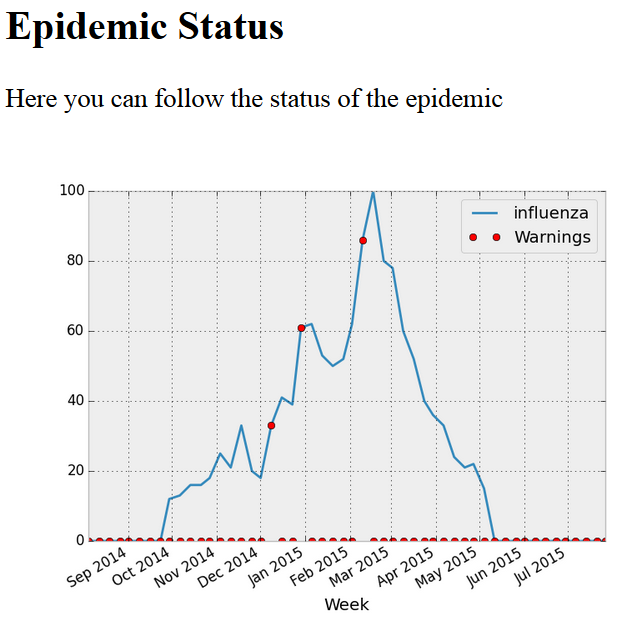
For this hackathon we have developed a demo where we have information about prevention, treatments, symptions and the status of the epidemic spread in Finland and warning generation.
How I built it
We have used Python Flask as web development framework, Google Trends as data source (data pipeline implemented manually), Python Pandas for data manipulation and analysis and Python Matplotlib for visualization.
Challenges I ran into
Nothing more than the time constraints of the hackathon
Accomplishments that I'm proud of
Being able to implement a data product in just a weekend! Also that the complete product is implemented with open source libraries.
What I learned
- How to acquire data from google trends
- How to integrate pandas dataframes and plots to a website. How to make a simple model to detect threshold taking into account the time series, the first and second derivative
What's next for Fluless
Improve the estimate of the epidemic spread and the timing of the warnings by:
- Using more data sources (for example weather data, real time tweets, biometrics, etc.)
- Implementing a smarter algorithm
Implement app for iOS and Android
Organize pilot with a population segment


Log in or sign up for Devpost to join the conversation.