-
-
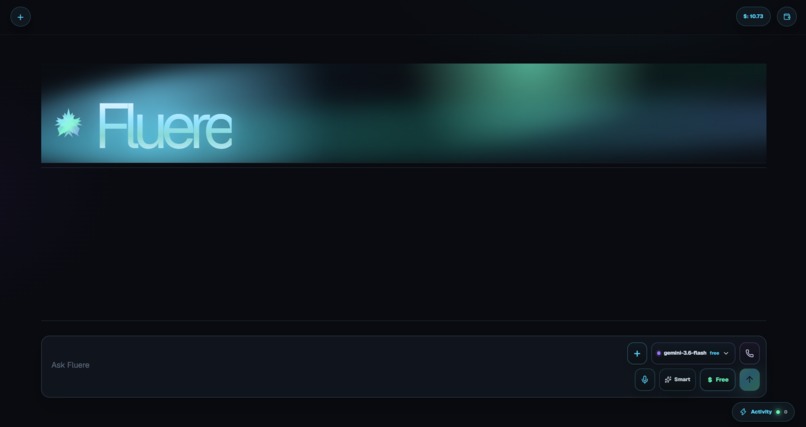
Home
-
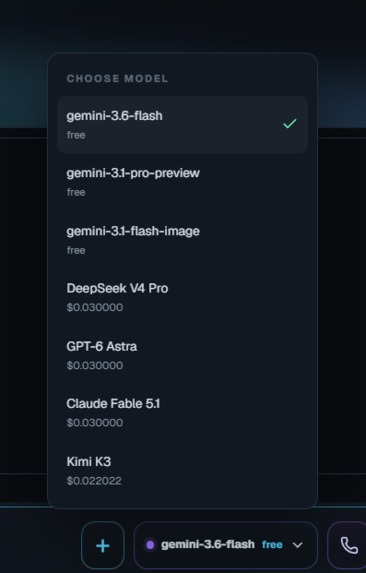
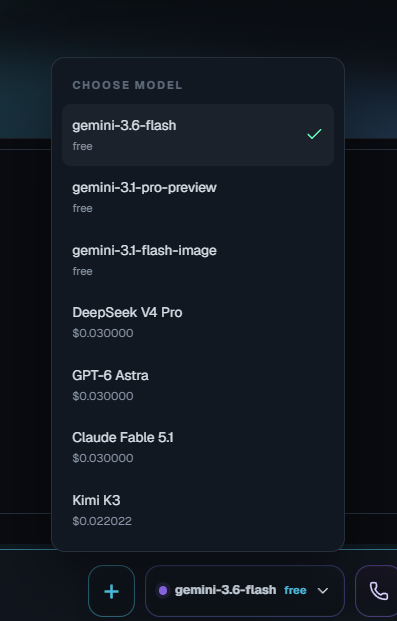
Model Selection
-
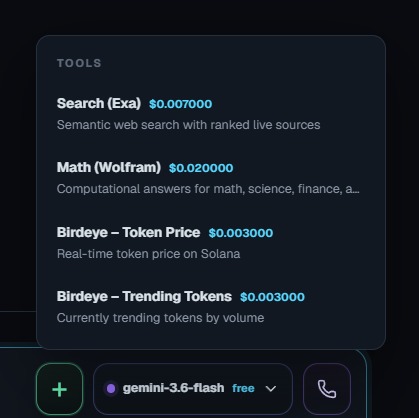
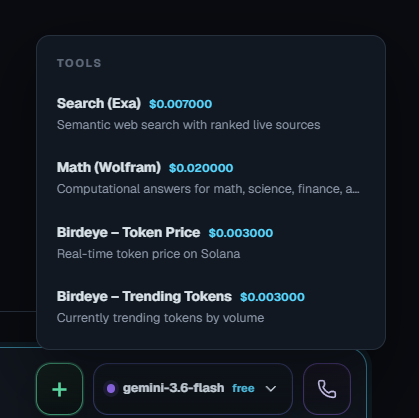
Tools
-
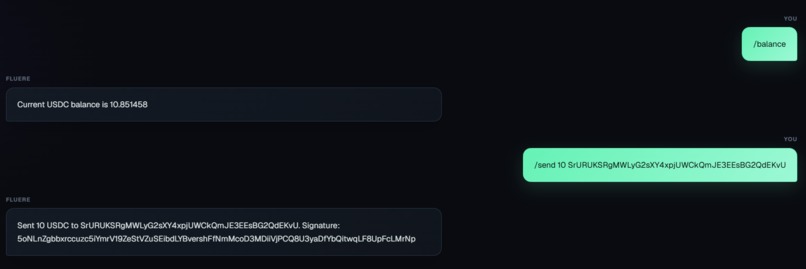
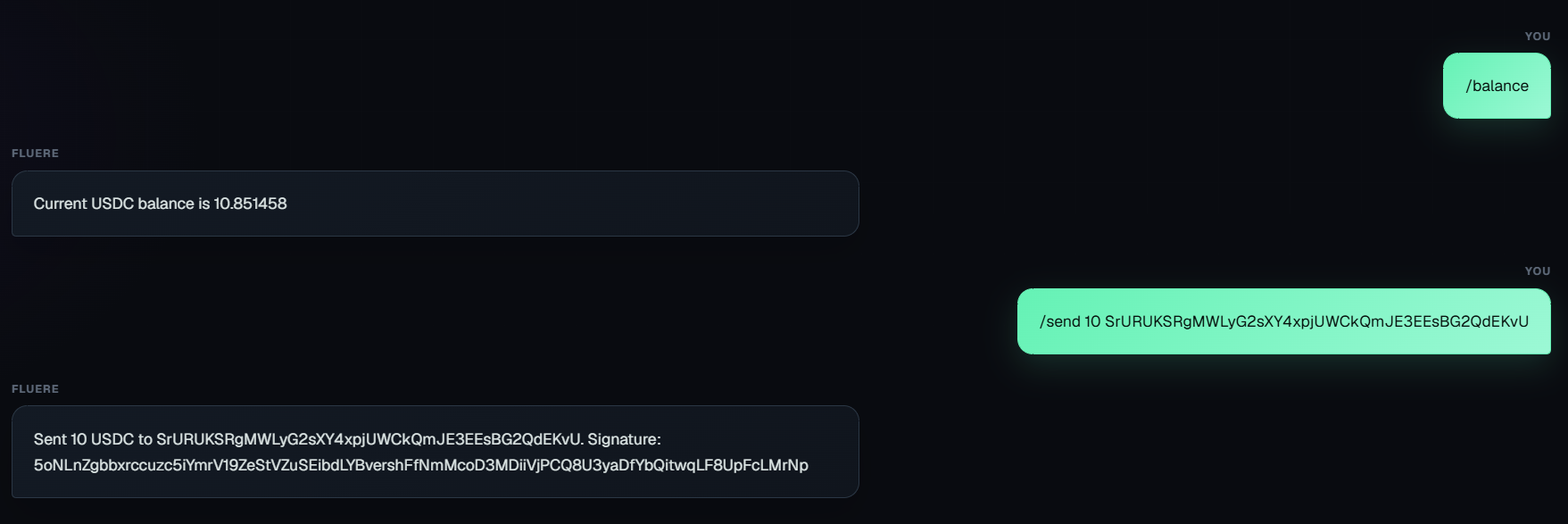
uSDC Transfers
-
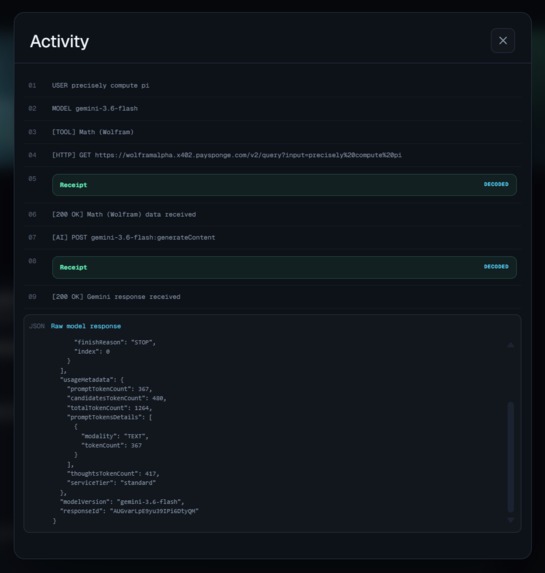
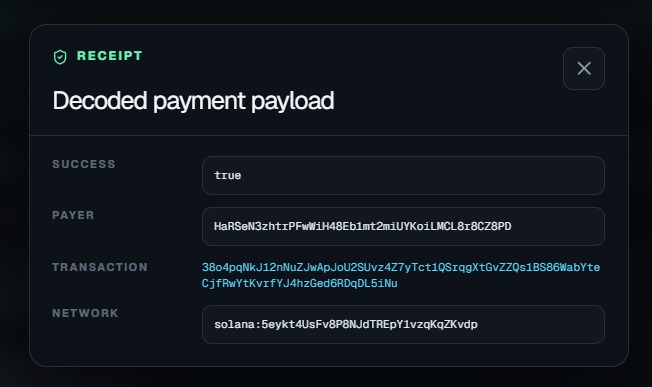
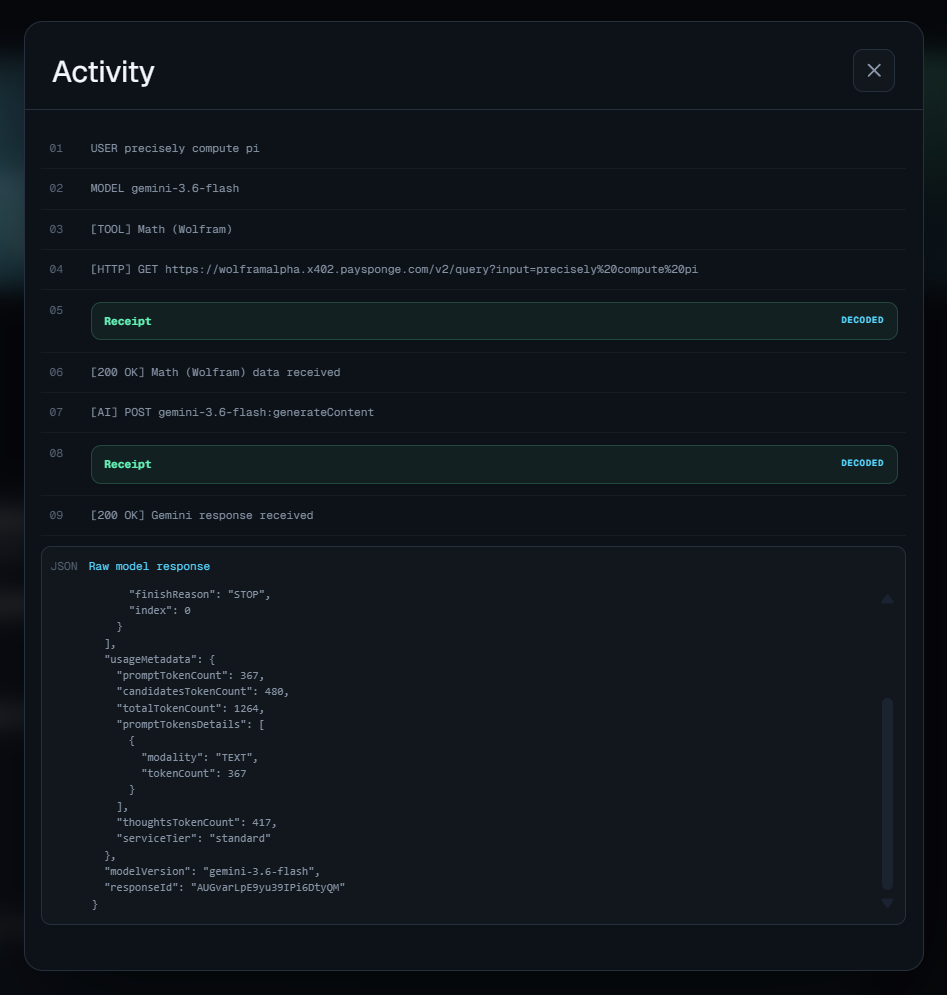
Activity Tab w/Receipts
-
-
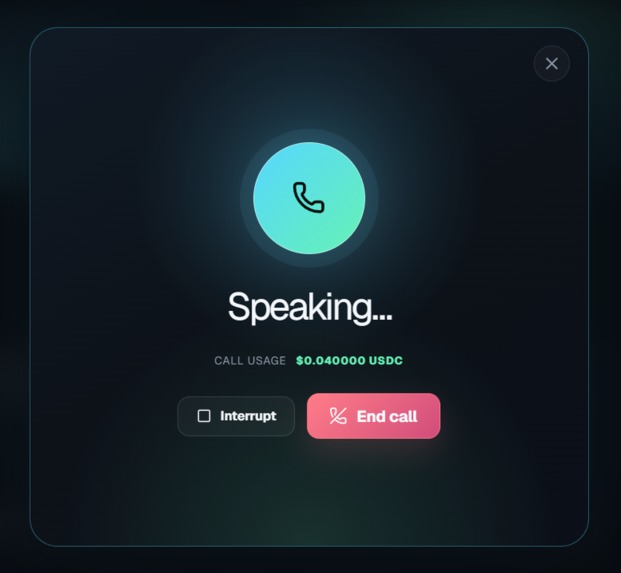
Call Fluere
Inspiration
If you want to access a a premium service, you usually need to pay a monthly subscription for it. But what if you only wanted to use that service once, or a couple times, without committing to an expensive plan? You should be able to pay just for what you need.
Fluere is what happens when AI can access paid models, data, and services at the moment it (and you!) needs them. Instead of managing separate API keys and subscriptions for every capability, Fluere uses x402 and Solana to make paid access part of a conversational workflow.
You can choose models on-demand and pay for extra tools only when you need to. Solana is utilized for all features and capabilities!
What it does
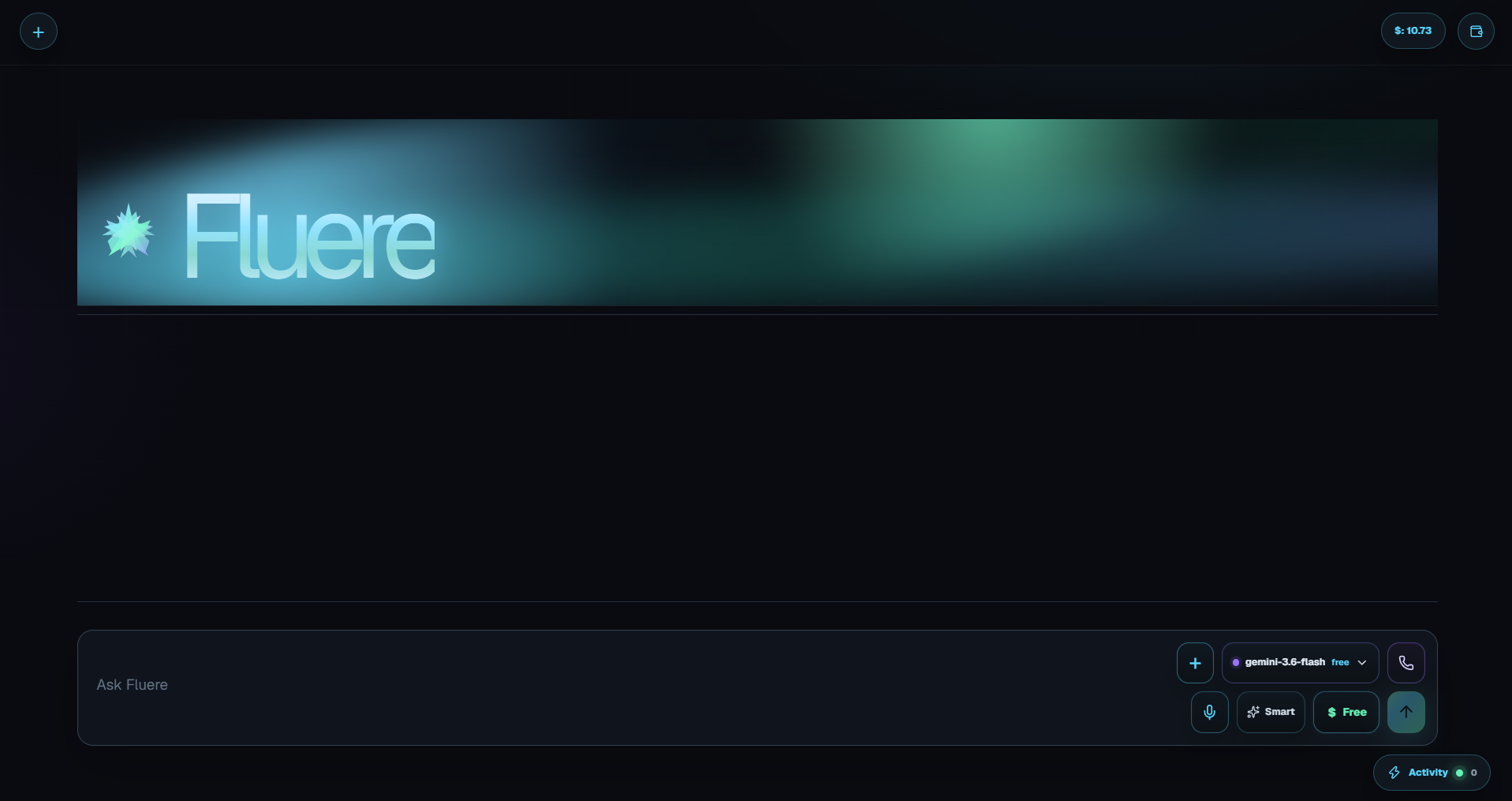
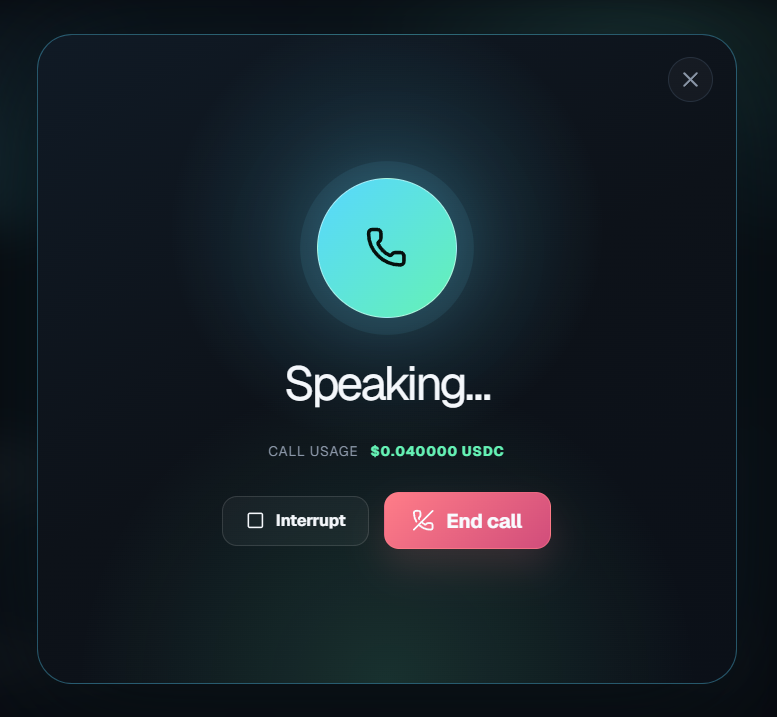
Fluere is an AI workspace for chat and voice interactions. Users can choose between multiple AI providers, request fresh information from paid tools, and view the activity and payment receipts generated during each request.
Available tools include Exa semantic web search, Wolfram computational queries, Birdeye Solana token prices, and trending-token data. Fluere can also suggest tools based on a prompt, transcribe microphone input, generate spoken responses, and receive, display, send USDC through Solana.
How we built it
Fluere is built with Next.js, React, Solana web3.js, SPL Token, Solana Kit, and the x402 SDK. Server-side API routes coordinate model requests, external tools, speech recognition, text-to-speech, wallet operations, and payment handling
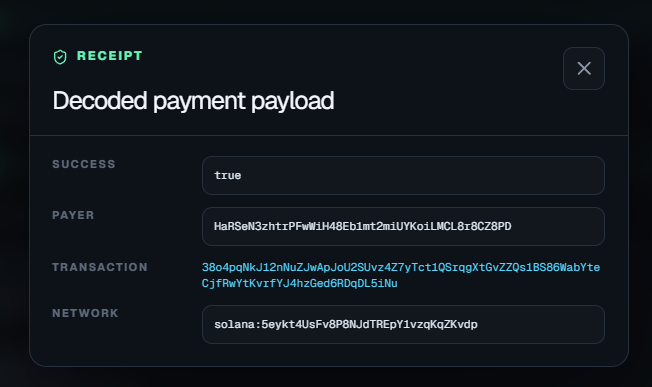
When a paid endpoint returns 402 Payment Required, Fluere creates and signs the required Solana payment payload, retries the request, and surfaces the resulting receipt and provider activity in the interface. Responses from Gemini-style, OpenAI-compatible, and x402engine providers are normalized into one chat experience.
Challenges we ran into
The hardest part was coordinating several systems with different protocols, response formats, pricing models, and failure modes. A single request can involve tool selection, a payment challenge, Solana signing, external API data, model inference, and audio generation.
I also had to handle payment verification failures, Solana payment-channel clock skew, provider outages, model fallbacks, microphone recording, silence detection, audio playback, interruptions, and browser speech fallback.
Accomplishments that we're proud of
A working end-to-end flow that connects conversational prompts to real paid AI and data services through x402 is super cool on its own. The application can execute real Solana payments, display payment receipts and transaction links, and use live tool results as context for AI responses.
I'm also proud of the unified activity view, Smart Mode tool suggestions, multi-provider model support, voice interaction, server wallet balance tracking, and USDC transfers.
What we learned
I learned that x402 requires more than simply sending a payment. Reliable implementation also involves payment negotiation, transaction signing, verification retries, receipts, spending controls, and handling protocol-specific edge cases.
We also learned that voice interaction is a full pipeline involving speech recognition, model inference, text-to-speech, playback, interruption handling, and fallbacks. Finally, payment experiences need to show both estimated costs and actual settlement information clearly, without turning every AI interaction into just a traditional checkout flow.
What's next for Fluere
Next, I want to expand the tool catalog, add much more payment-enabled APIs, improve model and tool selection, and provide better budgeting and spending controls.
I also plan to add real authentication, server-side chat and payment history, stronger authorization and rate limiting, improved provider monitoring, more automated tests, clearer wallet ownership boundaries, and more reliable voice conversations.
Built With
- next.js
- react
- solana
- typescript
- x402


Log in or sign up for Devpost to join the conversation.