-
-
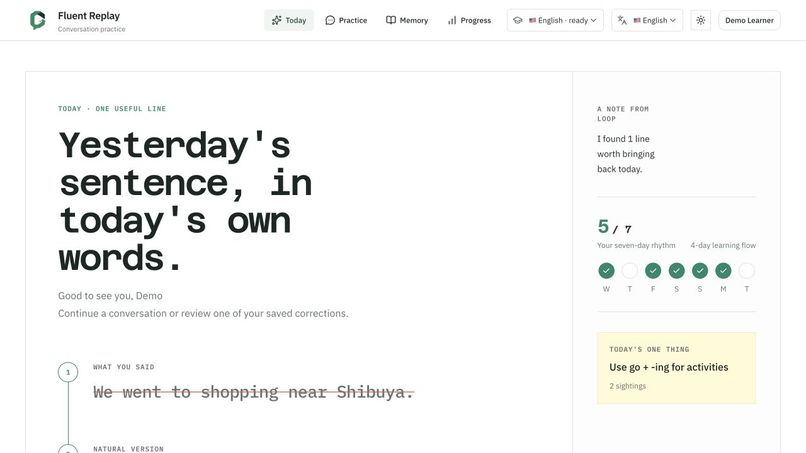
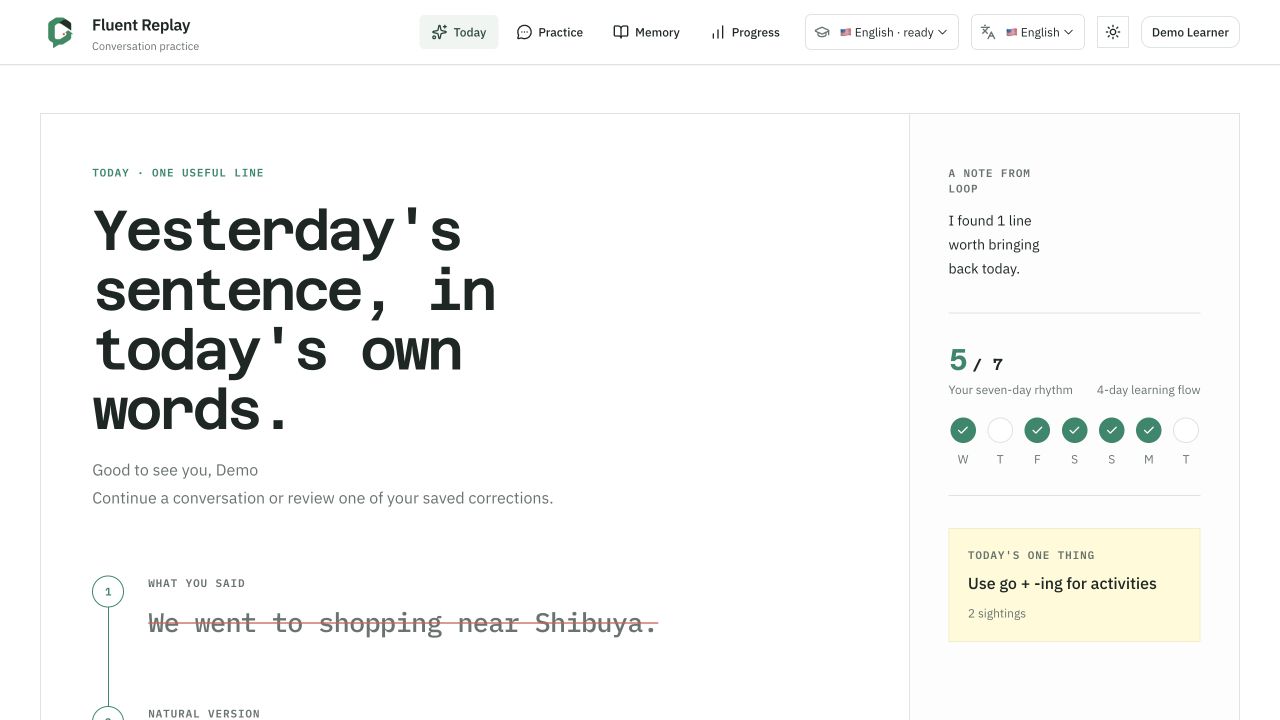
Dashboard surfaces one useful correction for today's practice.
-
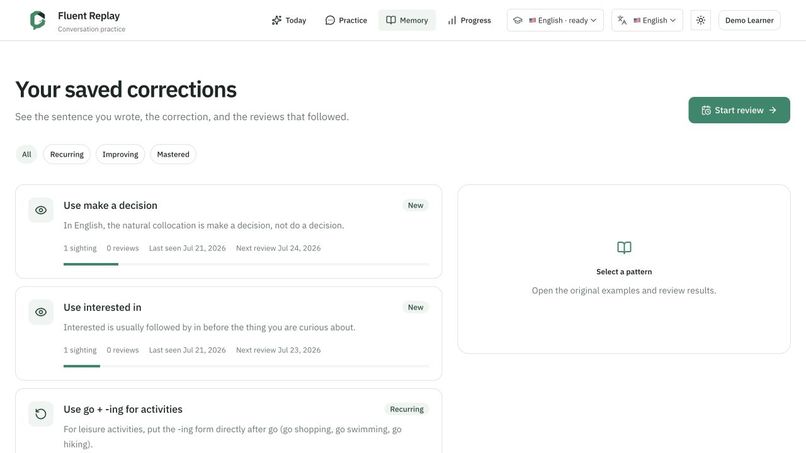
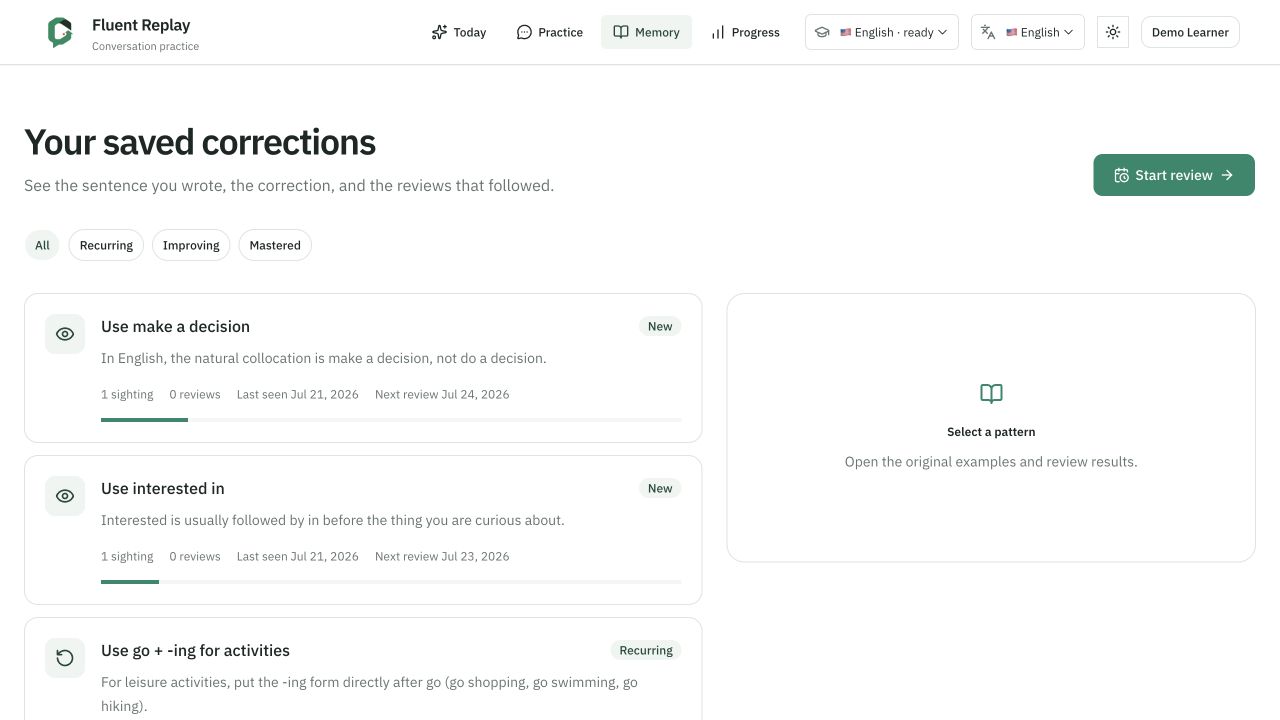
Memory keeps original evidence, corrections, and review status.
-
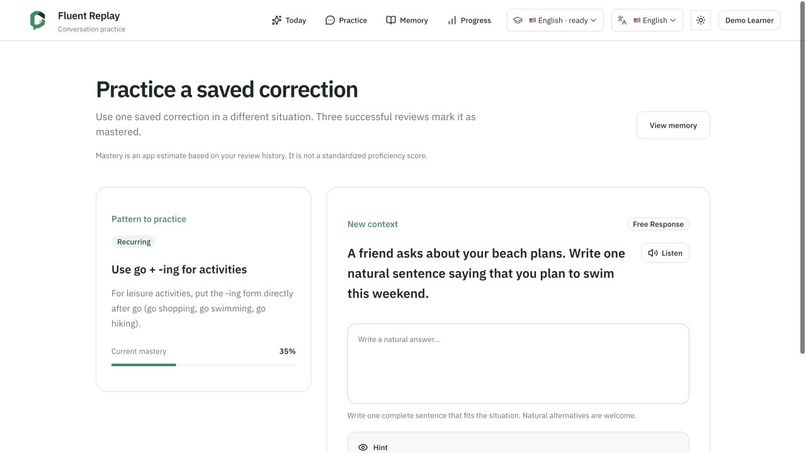
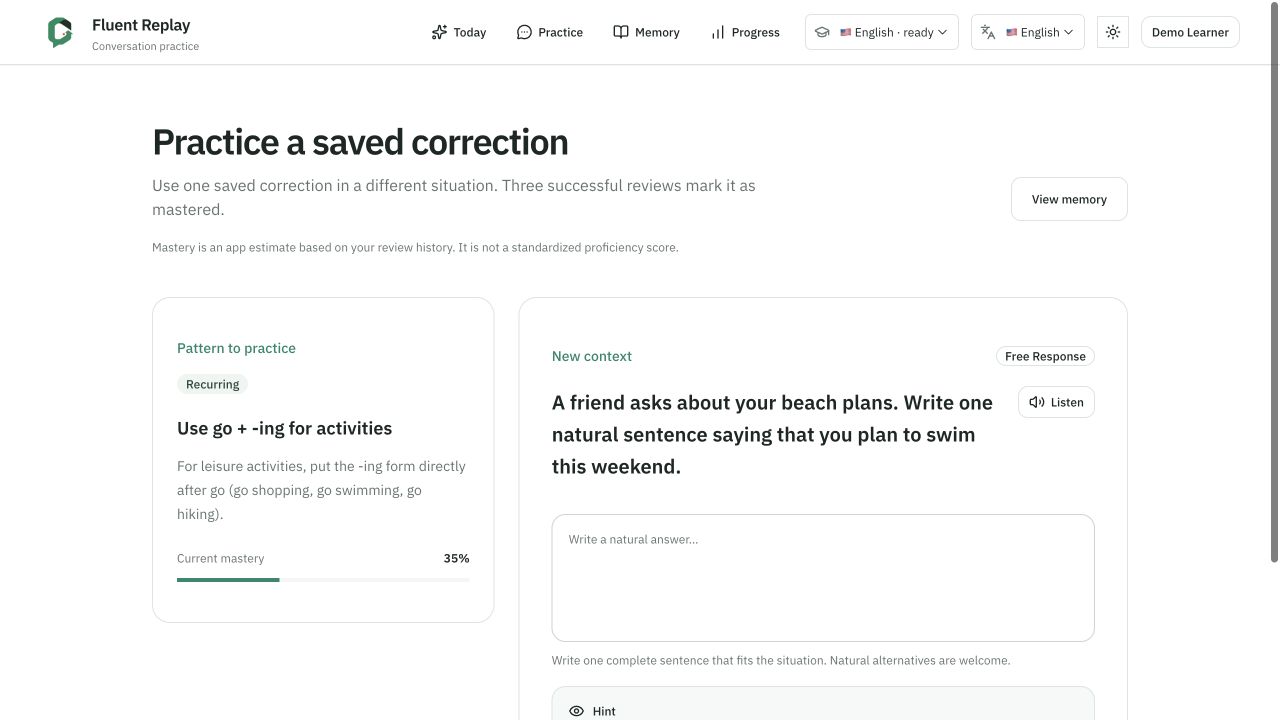
Review transfers a saved correction into a new context.
Inspiration
I built Fluent Replay because I kept running into a small but frustrating problem while using AI for language learning. I have used AI to practice English, and I am currently studying Chinese as well. ChatGPT can correct my sentences during a conversation, but later it can be hard to find those corrections again, review them, and turn them into something I can actually use.
What it does
Fluent Replay saves useful correction patterns from a learner's conversation as memory. Later, instead of only showing the same explanation again, it asks the learner to use that pattern in a new situation. The goal is not just to understand a correction once, but to make it reusable in real conversation. For the demo, I focused on English learning and made it demo-only so judges can try the full flow without creating an account.
How I built it
I built the app with Next.js, TypeScript, Hono, tRPC, Prisma, PostgreSQL, Tailwind CSS, Cloudflare, and better-t-stack as the full-stack starter. Codex and GPT-5.6 were a major part of the process. I started with a vague feeling, talked through the idea with GPT-5.6, asked Codex to turn rough concepts into a working demo, and then kept revising the design, copy, language settings, presets, and review flow when something felt unclear or too generic.
What I learned
AI is very fast at creating a first version, but the product only started to feel like my own after I kept pushing back on it. Fluent Replay is still a demo, but the core loop is working: conversation, correction, memory, and replay.
Built With
- api
- auth
- better
- cloudflare
- css
- gpt-5.6
- hono
- next.js
- openai
- playwright
- postgresql
- prisma
- react
- tailwind
- trpc
- turborepo
- typescript
- workers
- zod

Log in or sign up for Devpost to join the conversation.