-
-
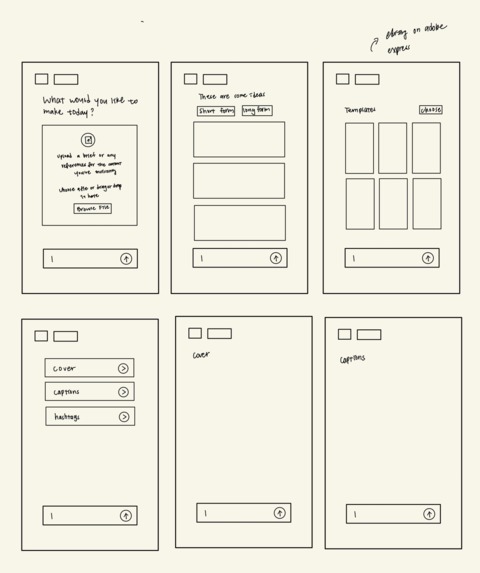
initial ideation sketches
-
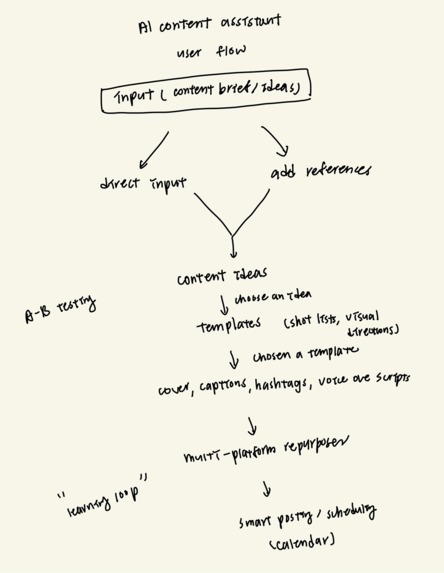
information architecture
-
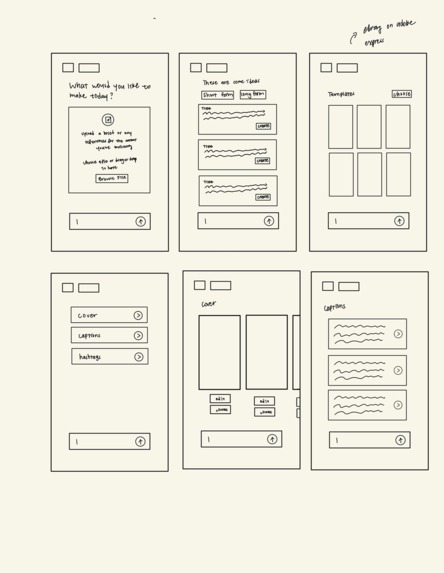
initial ideation sketches
-
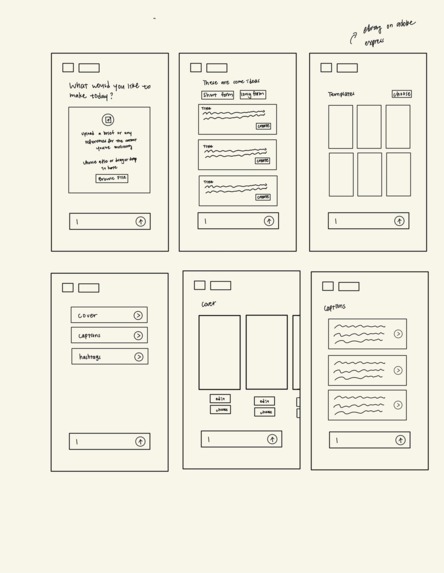
initial ideation sketches


Inspiration
I was inspired by the everyday struggles I face as a creator. As a content creator myself, I constantly switching between platforms, brainstorming ideas, and writing captions from scratch. Content creation is supposed to be creative and exciting, but it often becomes repetitive and exhausting. I built Flowzy to solve that problem: an AI-powered assistant inside Adobe Express that helps content creators like me generate, organize, and publish ideas without ever leaving the design workspace.
What it does
Flowzy is a smart assistant for content creators. Within Adobe Express, it allows users to: -Generate content ideas and topics -Create platform content generation (Instagram, TikTok, YouTube, etc.) -Write captions and copy with AI assistance -Seamlessly move through each step of the content workflow It’s designed to help creators work smarter and keep their creativity flowing.
How we built it
I started by brainstorming how to make the content creation process more intuitive and aligned with how creators actually think. From there, I mapped out the information architecture and drafted initial wireframes to clarify the user flow. These sketches helped me explore layout options before building the digital experience.
I designed the interactive prototype in Figma, layering in thoughtful UX decisions that reflect the entire Flowzy process—from generating content ideas to exporting assets. Originally, I was collaborating with an engineer to develop a working version of the tool. However, they unexpectedly dropped out just 3 days before the submission deadline.
Instead of giving up, I pivoted and doubled down on the design. I focused on crafting a detailed, clickable prototype that clearly tells the story of what Flowzy can do—even without a coded backend. It was a challenge, but also a chance to show how design thinking can carry a product vision forward, even when the path shifts unexpectedly.
Challenges we ran into
-Losing my engineer three days before the deadline was a major challenge. I had to rethink how to present Flowzy without code. -It was also difficult to distill such a large concept into something simple and visually communicative in a short time frame. -Deciding what features to prioritize in the prototype and what to leave for later iterations was another hurdle.
Accomplishments that we're proud of
-I created a high-fidelity, interactive prototype that captures the end-to-end vision of Flowzy. -I translated a complex idea into a clean, intuitive interface that creators can relate to. -I didn’t let the setback of losing a teammate stop the process—instead, I adapted and delivered a solid user-centered solution.
What we learned
-Pivoting quickly is a superpower in product design—when things change, there’s always another way to tell the story. -The power of design lies in its ability to communicate a vision, even without code. -I strengthened my skills in prototyping, storytelling, and thinking through user journeys in a compressed timeline.
What's next for Flowzy-Let your content flow smarter
-I’d love to connect with developers who are passionate about supporting creators to help build a working version. -I plan to refine the flows even more with usability testing and feedback from creators and marketers. -I’m also exploring AI integrations to help users generate content drafts and auto-fill post formats faster.
Built With
- adobe
- api
- chatgpt
- figjam
- figma
- notion
- spectrum


Log in or sign up for Devpost to join the conversation.