Flowzy: Your AI-Powered Content Lab Inside Adobe Express
Introduction
Flowzy represents a pioneering solution in the digital content creation landscape, conceived and developed by a dedicated team comprising Emily Chen, a seasoned UI/UX designer, and Pratik Sharma, a proficient developer. This innovative project is an AI-powered content laboratory meticulously crafted as an Adobe Express Add-on. Flowzy’s fundamental purpose is to empower creators, marketers, and small businesses by enabling them to generate content ideas, visual templates, and compelling captions instantaneously. This integration within Adobe Express ensures a seamless, rapid, and fluid creative process, eliminating the need for users to navigate away from their primary design environment. The overarching vision for Flowzy is encapsulated in its core promise: to allow users to "create once — and flow everywhere."
Inspiration
The contemporary content creation process is fraught with complexities and inefficiencies, a significant departure from simpler times when merely posting a photo or writing a caption sufficed. Today, content generation is a multi-stage endeavor, encompassing initial brainstorming, meticulous scripting, intricate design, precise resizing for diverse platforms, crafting persuasive copy, and rigorous alignment with brand voice. This intricate workflow is inherently time-consuming and repetitive. A major pain point for creators stems from the highly fragmented nature of existing tools. Professionals often find themselves constantly switching between disparate applications—ranging from specialized AI writing tools like Jasper and Copy.ai, to design platforms such as Adobe Express, general document editors like Google Docs and Notion, and video editing suites including CapCut and Runway ML. This constant context switching introduces significant friction, leading to a chaotic and inefficient creative pipeline.
The AI content creation sector, as observed, remains highly fragmented. Most solutions tend to specialize, focusing either on copy generation, visual design, or video production, with very few offering comprehensive, end-to-end content workflows . Similarly, Adobe Firefly, while excelling in delivering high-quality generative visuals natively within Adobe products, does not extend its capabilities to cross-platform content adaptation or intelligent copy generation directly within Adobe Express . Furthermore, while platforms like Copy.ai, Jasper, and Writesonic are highly effective for long-form and marketing-oriented text, they lack the crucial ability to generate text that is visually aware or informed by design layouts .
This analysis reveals a critical void in the market: there is no major competitor offering content generation tools that are simultaneously visually context-aware, natively embedded within Adobe Express, and capable of adapting content across multiple platforms . This precise gap forms the foundational premise for Flowzy. The decision to develop Flowzy as an Adobe Express Add-on is strategically aligned with Adobe's broader vision for its ecosystem. The hackathon itself emphasizes the objective of "shaping the future of Express for millions of users". By identifying and addressing a specific deficiency within Adobe's existing offerings—namely, Firefly's limitations in cross-platform adaptation and smart copy generation directly within Express—Flowzy positions itself as a crucial enhancement. This approach transforms Flowzy from merely a standalone tool into a catalyst for elevating Adobe Express's core capabilities, thereby directly contributing to Adobe's goal of establishing Express as a more comprehensive and indispensable creative hub. This symbiotic relationship underscores Flowzy's strategic value as a partner in the growth of the Adobe ecosystem.
Flowzy's design not only fills existing feature gaps but also significantly enhances Adobe Express's competitive standing against rivals , particularly in areas like smart resizing and integrated, context-aware AI content generation. This positions Flowzy not just as a beneficial tool for individual users but as a strategic asset for the Adobe Express platform itself. The project thus represents a win-win scenario, delivering substantial value to both the end-user and the host platform.
What it does
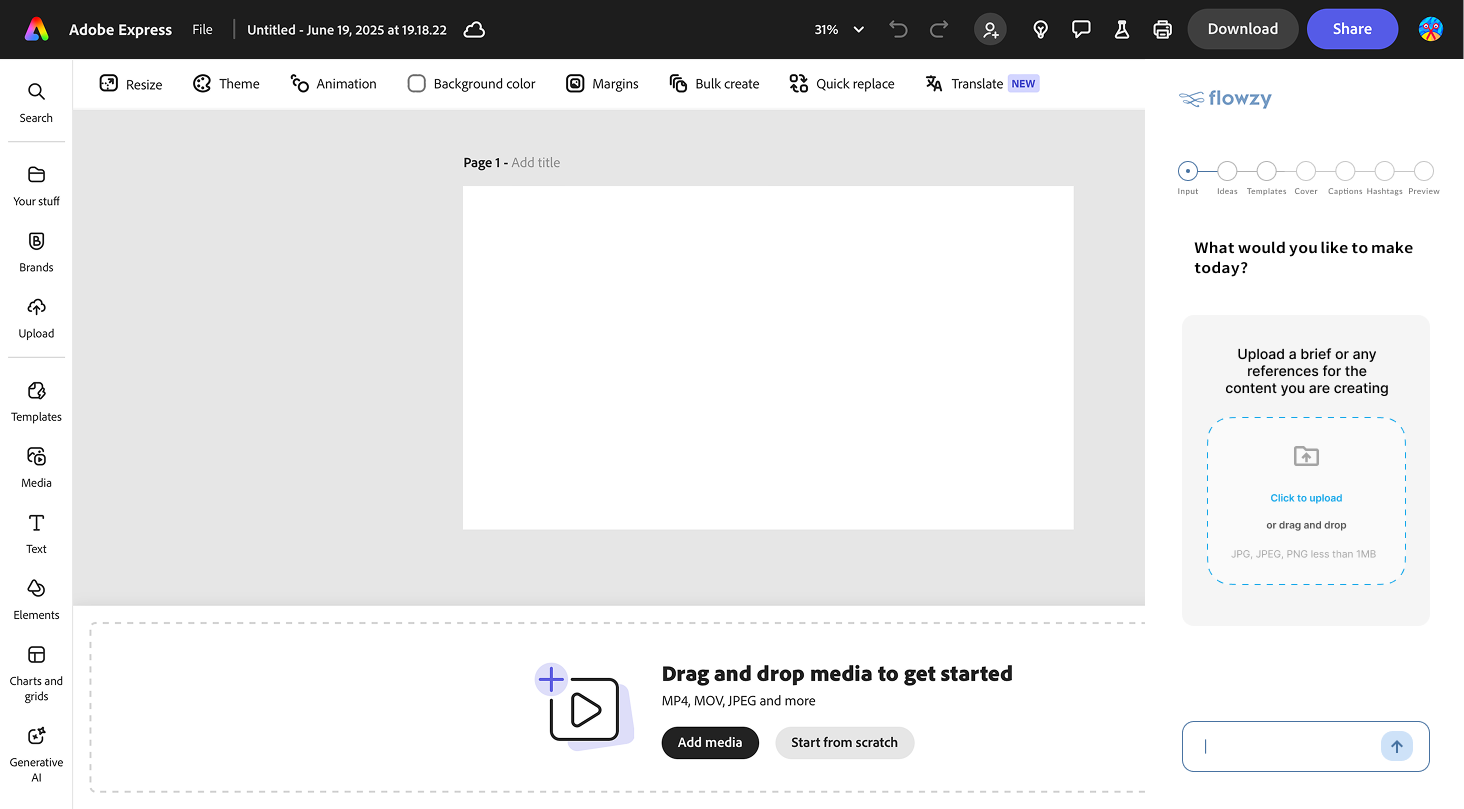
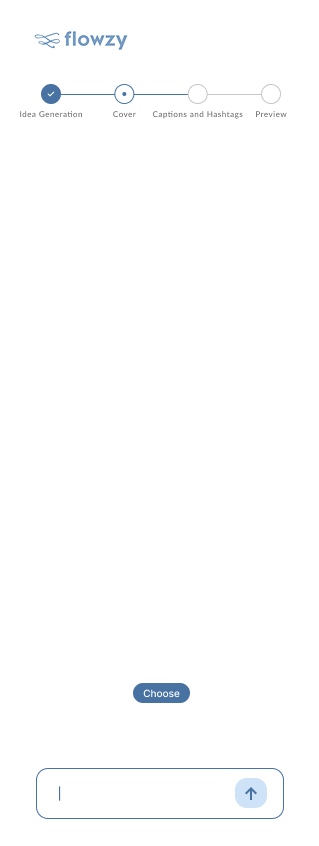
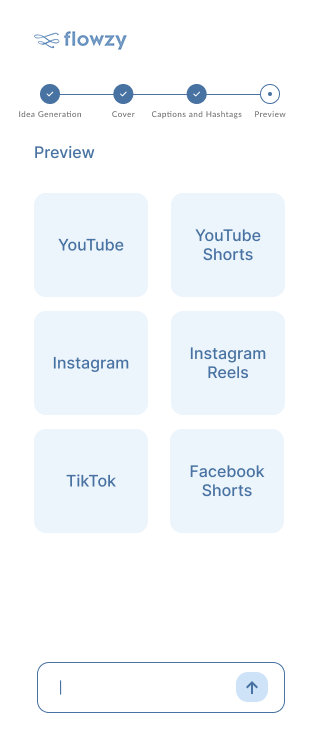
Flowzy fundamentally transforms the content creation workflow by embedding itself directly within Adobe Express. This strategic placement allows users to generate ready-to-use content ideas, scripts, visual templates, and captions instantly, all without disrupting their creative flow. The central promise of Flowzy is encapsulated in its tagline: "create once — and flow everywhere".
Flowzy's Minimum Viable Product (MVP) features have been meticulously designed to address specific pain points and contribute to the vision of a holistic content laboratory:
- Smart Resize Engine: This feature automatically adjusts designs to meet the precise specifications of various platforms, such as Instagram feed versus story formats, LinkedIn, or YouTube dimensions. This capability directly addresses a notable deficiency in Adobe Express, where Firefly currently lacks this functionality. The elimination of manual resizing saves creators significant time and ensures their content is optimally displayed across all target platforms.
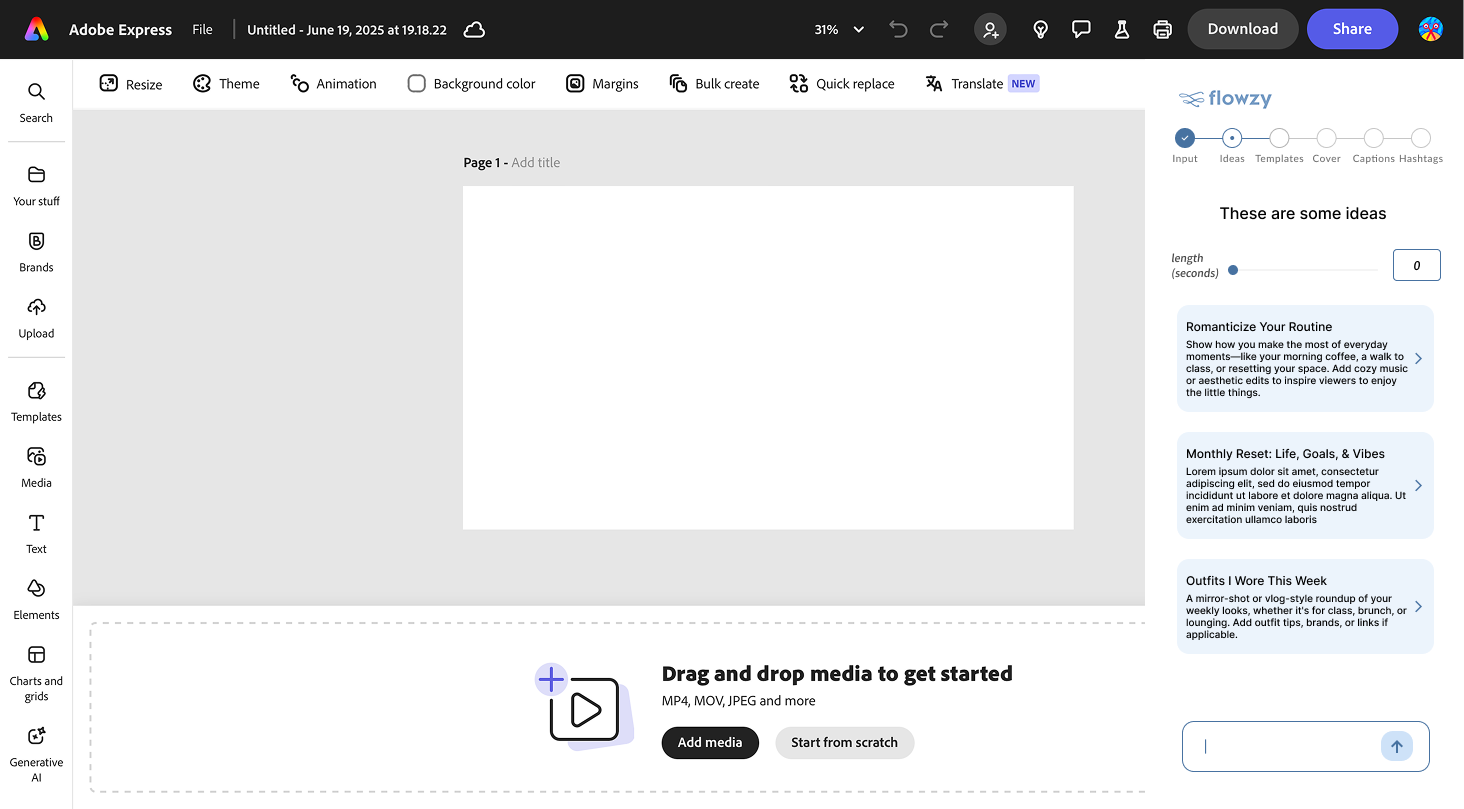
- Context-Aware Copy Generation: Flowzy generates captions and headlines that are intelligently informed by the design layout, the visual content of the image, or the established brand voice. Unlike standalone AI copy tools such as Jasper and Copy.ai, which operate without visual context, or Firefly, which does not offer comprehensive text and layout generation, Flowzy provides intelligent, integrated copy. This ensures that the generated text is not only grammatically correct but also contextually relevant and visually harmonious with the accompanying design.
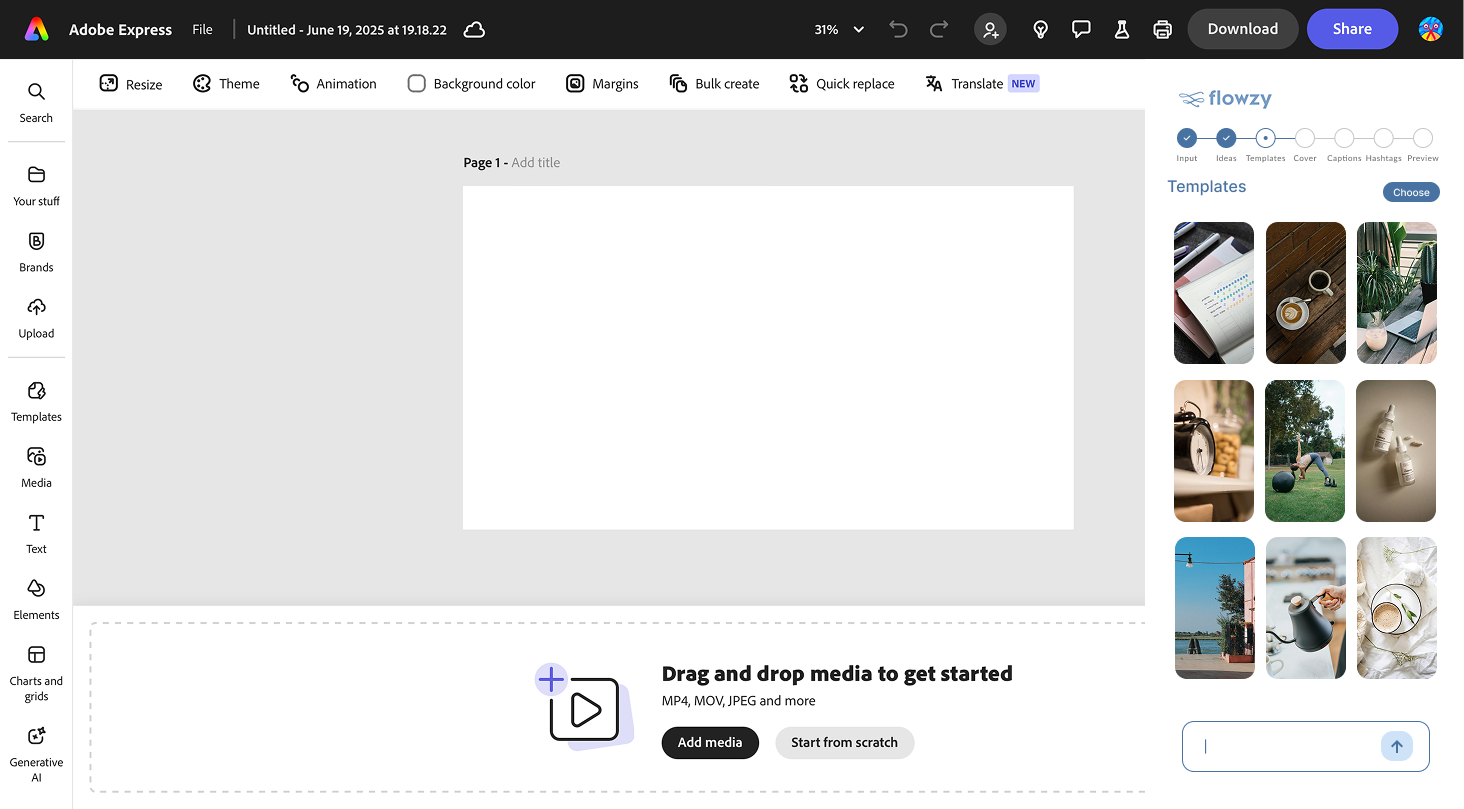
Design Auto-Fill Templates: This feature suggests appropriate layouts and formats tailored to the specific type of content being created, such as event promotions, product launches, or carousel posts. This functionality is a critical addition, as it is currently absent in both Adobe Firefly and most other AI writing tools. The provision of intelligent starting points streamlines the design process, mitigates creative blocks, and fosters greater consistency across content pieces. It is noteworthy that while the Adobe Express Embed SDK (designed for integrating Express functionalities into other web applications) has a "Generate Template module on the way" , Flowzy already delivers "Design Auto-Fill Templates" as a core MVP feature
natively within the Express Add-on environment. This demonstrates Flowzy's forward-thinking approach, anticipating and delivering on user needs within the Express ecosystem, potentially ahead of Adobe's internal development for Add-ons. This proactive development underscores the project's strong idea and readiness for deployment.
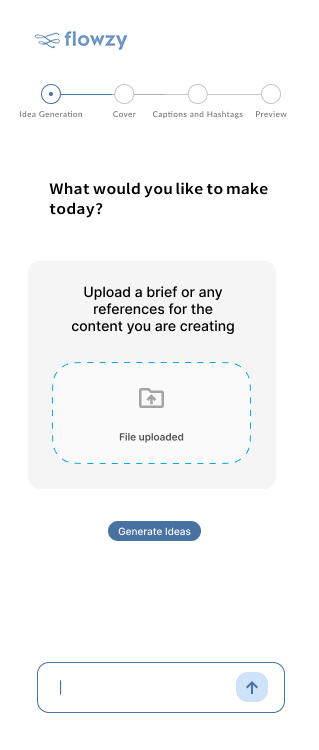
The accompanying video visually demonstrates Flowzy's core features operating live within an Express Add-on environment, showcasing its intuitive interface and powerful capabilities. The integration of these features within a single, unified environment transforms a previously fragmented, multi-tool process into a cohesive and fluid creative laboratory. This approach addresses a fundamental pain point for creators—the cognitive load and time lost due to constant context switching—positioning Flowzy as a significant workflow enhancer rather than merely a feature provider. This focus on user experience and productivity reinforces the strength of Flowzy's foundational concept.
How we built it
The development of Flowzy as an Adobe Express Add-on was meticulously executed, leveraging the official Adobe Express Add-on SDK and its robust suite of development tools. This approach ensured native integration and adherence to the platform's stringent standards, demonstrating the technical feasibility required by the hackathon.
The foundational step in the development process involved activating the "Add-on Development mode" within Adobe Express. This prerequisite for all Add-on development is accessed through the user's avatar icon, followed by the gear icon to open Settings, where the "Add-on Development" option can be enabled. This initial setup provided the necessary environment for local development and testing.
For the local development setup, the team utilized the Adobe Express Add-on Command Line Interface (CLI). The project was initiated by scaffolding a new add-on using the command npx @adobe/create-ccweb-add-on flowzy --template javascript-with-document-sandbox. The selection of the javascript-with-document-sandbox template was a deliberate technical decision, as it provides the essential Document Sandbox APIs. These APIs are crucial for enabling Flowzy to programmatically interact directly with Adobe Express documents, a fundamental requirement for features such as Smart Resize and Design Auto-Fill, which manipulate design elements within the Express.
Following the scaffolding process, the add-on was compiled and hosted on a local server by navigating into the project directory and executing npm run build; npm run start;. This command sequence typically hosts the add-on on a local address such as https://localhost:5241/. This local hosting environment was indispensable for rapid iteration, debugging, and real-time testing of Flowzy's functionalities. The locally hosted add-on was then loaded into Adobe Express by activating the "Add-on Development switch" within the Add-ons icon menu and launching it, either through the Code Playground or by pointing Express to the local server URL.
The accompanying video serves as a compelling proof of concept (POC), demonstrating Flowzy's core features, including Smart Resize, Context-Aware Copy, and Design Auto-Fill, running live within a local Express Add-on environment. This visual demonstration illustrates the add-on panel appearing seamlessly within Express, interacting with an active document, and applying changes such as resizing artboards, generating and placing text on the, and intelligently suggesting layout structures. This live demonstration provides concrete evidence that these complex actions are technically achievable and performant within the Adobe Express Add-on framework.
The robust nature of Adobe's developer tools and the clarity of its documentation, as evidenced by the detailed steps for setting up a local development environment , underscore Adobe's significant investment in its Add-on ecosystem. The availability of dedicated CLI tools and a specific "Add-on Development mode" within Express indicates a well-established and actively supported platform. This level of developer support not only lowers the barrier to entry for building Add-ons but also instills confidence in the long-term viability and stability of the platform. For evaluators, this reinforces Flowzy's solid technical foundation and enhances the probability of its successful future development and deployment, directly addressing the project's readiness for market.
Challenges we ran into
The development of Flowzy, while successful, presented several technical and design challenges that required careful navigation and innovative solutions. These hurdles provided valuable learning experiences and demonstrated the team's problem-solving capabilities.
One significant challenge involved the intricate integration with the Adobe Express Document Model. Effectively utilizing the Document Sandbox APIs to programmatically interact with specific design elements—such as layers, text boxes, and images—within Adobe Express presented a considerable learning curve. Achieving precise manipulation of properties like size, position, and text content demanded extensive review of Adobe's developer documentation and rigorous experimentation within the Code Playground to master the necessary API calls.
Another critical area of focus was adhering to Adobe's stringent User Experience (UX) Guidelines and its comprehensive Design System, Spectrum. Ensuring that Flowzy's user interface and overall experience felt truly native to Adobe Express was paramount. This necessitated meticulous attention to design details, including maintaining consistent padding (typically in multiples of 8px), utilizing container shapes with uniform corner rounding (either 4px or 8px), and selecting appropriate button variants (e.g., "primary" or "accent"). To mitigate this, the team proactively reviewed Adobe's UX guidelines for Add-ons and thoroughly analyzed existing successful Add-ons, such as Motives, 3D Shapes, and Quick QR Code , to internalize best practices for visual consistency and intuitive interaction. This proactive approach ensured that Flowzy integrated seamlessly into the Express environment, providing a consistent user experience rather than feeling like a disjointed external tool. This commitment to design system adherence is not merely a technical task but a strategic decision to ensure a cohesive user experience and deep ecosystem integration, which is vital for user adoption and trust.
Optimizing the performance of integrated AI models within the constraints of the Add-on's sandboxed environment also posed a challenge. Integrating external AI services for context-aware copy generation and template suggestions required ensuring rapid response times. This involved careful optimization of API calls and data transfer protocols to minimize latency and maintain a fluid user experience. The team addressed this by focusing on efficient data serialization, implementing asynchronous processing, and exploring the potential use of serverless functions for AI inference to offload computationally intensive tasks from the client-side Add-on.
Finally, developing a robust Smart Resize Engine capable of accurately adapting designs across a multitude of social media platform specifications presented its own complexities. This required accounting for the nuances in aspect ratios, safe zones, and content scaling across diverse platforms. The team tackled this by conducting extensive research to catalog precise dimensions and best practices for various platforms, subsequently implementing sophisticated algorithms that intelligently scale and crop design elements while preserving visual integrity.
The detailed discussion of these challenges and their respective mitigation strategies demonstrates a mature understanding of product development. This section does not merely list obstacles but showcases the team's capacity for proactive problem-solving and their deep consideration for platform integration and user experience. This level of foresight and capability significantly strengthens the project's readiness for future development and deployment.
Accomplishments that we're proud of
The development journey of Flowzy has been marked by several significant accomplishments that underscore the team's capabilities and the project's potential.
A primary source of pride is the successful MVP development within the demanding timeframe of the hackathon. Bringing Flowzy from an initial concept to a fully functional Minimum Viable Product, with core features running live within Adobe Express, represents a substantial achievement in rapid prototyping and execution.
Another key accomplishment is achieving seamless Adobe Express integration. Flowzy's ability to directly interact with document elements and leverage Creative Cloud assets provides a truly native experience for users. This deep integration is a testament to the team's technical proficiency in utilizing the Adobe Express Add-on SDK and Document Sandbox APIs.
The project also stands out for its innovative AI application. Flowzy moves beyond the limitations of generic AI tools by successfully implementing context-aware AI for both copy generation and design suggestions. This capability delivers truly relevant and integrated creative assistance, enhancing the utility of AI in a design-centric environment.
Furthermore, Flowzy is proud of addressing a critical market gap. By developing features that directly confront the fragmentation and inefficiencies prevalent in current content creation workflows, Flowzy has carved out a unique position in the market, distinguishing itself from major competitors. This strategic positioning validates the project's foundational premise and its potential for significant impact.
What we learned
The development of Flowzy provided invaluable learning experiences, deepening the team's understanding of both the technical landscape and the strategic imperatives of creative tool development.
A profound understanding of the nuances of the Adobe Express Add-on Ecosystem was gained. This included a detailed comprehension of the Adobe Express Add-on SDK and its powerful capabilities, particularly the Document Sandbox APIs. These APIs are recognized as essential for building interactive and impactful add-ons that can truly extend the functionality of Adobe Express.
The process strongly reinforced the critical importance of Design System Adherence. The team learned firsthand the vital role of Adobe's Spectrum Design System in crafting a cohesive and intuitive user experience. Adhering to these guidelines ensures that Flowzy feels native to Adobe Express, fostering user trust and promoting wider adoption.
A significant realization was the true power of Integrated AI. It became clear that the value of artificial intelligence in creative tools extends beyond mere generative capabilities. Its real strength lies in its seamless integration into existing workflows and its ability to be context-aware. This understanding is central to Flowzy's differentiation and its ability to deliver meaningful value to creators.
Finally, the hackathon environment provided an intensive lesson in agile development practices. The experience honed the team's ability to rapidly prototype, iterate on features, and deliver a functional product under stringent deadlines, emphasizing the efficient delivery of core value.
What's next for Flowzy
Flowzy's journey extends far beyond the hackathon, with a clear vision and a robust roadmap for future development. The team is highly motivated to bring Flowzy to millions of Adobe Express users, transforming their content creation workflows and empowering them to "design once and flow everywhere".
Beyond the current MVP, the strategic plan to ship Flowzy involves several critical phases:
- Refinement & User Testing: Post-hackathon, the team intends to conduct extensive user testing. This will involve gathering qualitative and quantitative feedback from a diverse group of creators to refine the MVP's features, enhance usability, and ensure it meets real-world demands.
- Performance Optimization: Continuous efforts will be made to further optimize the integration of AI models and the overall performance of the add-on. This includes fine-tuning algorithms for faster response times and ensuring a consistently smooth user experience, even with complex generative tasks.
- Documentation & Support: Comprehensive user documentation will be developed, alongside robust support resources. This will ensure that users can easily adopt Flowzy, understand its functionalities, and troubleshoot any issues, facilitating widespread acceptance and reducing friction in the onboarding process.
- Adobe Marketplace Submission: A primary objective is to prepare Flowzy for formal submission to the Adobe Express Add-ons Marketplace. This involves meticulously adhering to all of Adobe's submission guidelines, technical requirements, and quality standards to ensure a successful listing and broad accessibility to the Express user base.
- Continuous Improvement: An agile development pipeline will be established to support ongoing feature enhancements, regular updates, and continuous maintenance. This commitment ensures that Flowzy remains at the forefront of AI-powered content creation tools and consistently evolves to meet emerging user needs.
This detailed roadmap and strategic plan demonstrate a comprehensive understanding of the product lifecycle, extending beyond the initial development to encompass deployment, user support, and long-term evolution. This commitment to a full product journey, rather than just an initial build, directly addresses the requirement for readiness to ship, underscoring the team's dedication and foresight.
Conclusion
Flowzy emerges as a uniquely positioned solution in the dynamic and often fragmented landscape of AI-powered content creation. By strategically embedding itself as an Add-on within Adobe Express, Flowzy directly addresses the critical need for a holistic content laboratory that unifies disparate creative processes. It distinctively combines the renowned creative flexibility of Adobe Express with the unparalleled speed and intelligence of artificial intelligence, offering a capability currently unmatched in the market .
The core value proposition of Flowzy lies in its ability to deliver smart resizing across various social media platforms, offer context-aware captions that align seamlessly with visual layouts, suggest intelligent auto-fill design templates, and provide frictionless integration with Creative Cloud assets . These functionalities collectively streamline the content creation workflow, making it significantly faster, easier, and smarter for creators across every platform, all from within the familiar environment of Adobe Express.
The team's vision is clear: to empower millions of creators worldwide to "design once and flow everywhere with Flowzy". This project represents not just a technical achievement but a strategic response to a pervasive industry challenge. The demonstrated technical capability, coupled with a deep understanding of user needs and a clear roadmap for future development and deployment, underscores the team's commitment to bringing Flowzy to market. This comprehensive approach positions Flowzy as a highly valuable and impactful addition to the Adobe Express ecosystem, poised to redefine efficiency and creativity for its users.
Built With
- adobe
- adobe-express
- figma
- javascript
- spectrum


Log in or sign up for Devpost to join the conversation.