
Inspiration
Small and Medium Enterprises (SMEs) rarely fail because of poor sales—they fail because of delayed B2B receivables and unpredictable cash-flow gaps. Traditional bookkeeping tools only report past transactions, leaving business owners blind to which unpaid invoices are likely to default until a liquidity crunch has already hit. We built FlowSync to transform passive invoice tracking into an autonomous, AI-driven receivables recovery engine.
What it does
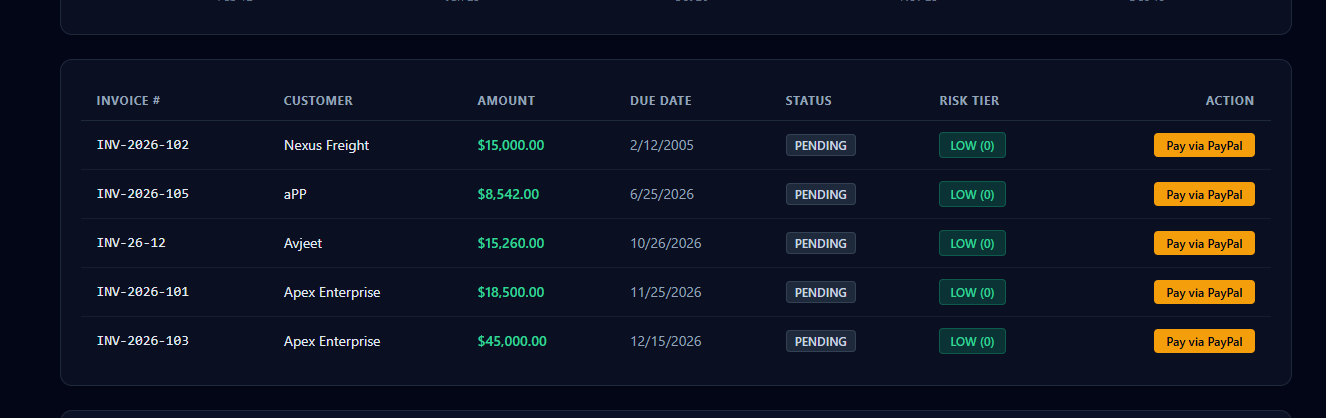
FlowSync combines deep-learning risk prediction with autonomous financial execution:
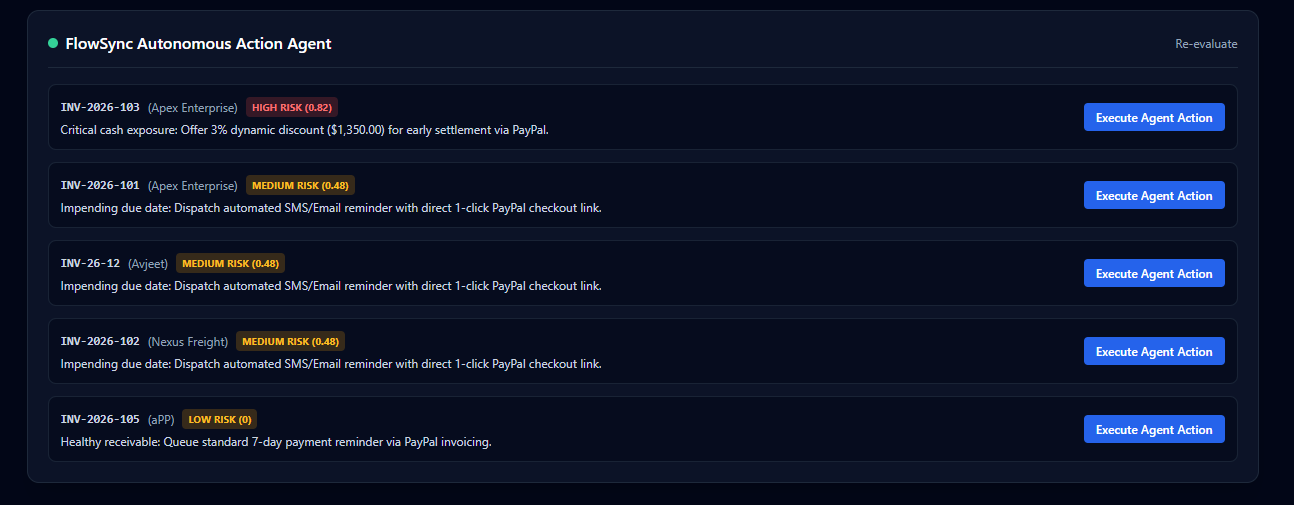
- Real-Time AI Default Risk Scoring: Evaluates every pending B2B invoice using a trained TensorFlow Artificial Neural Network (ANN) to calculate default probabilities and classify invoices into
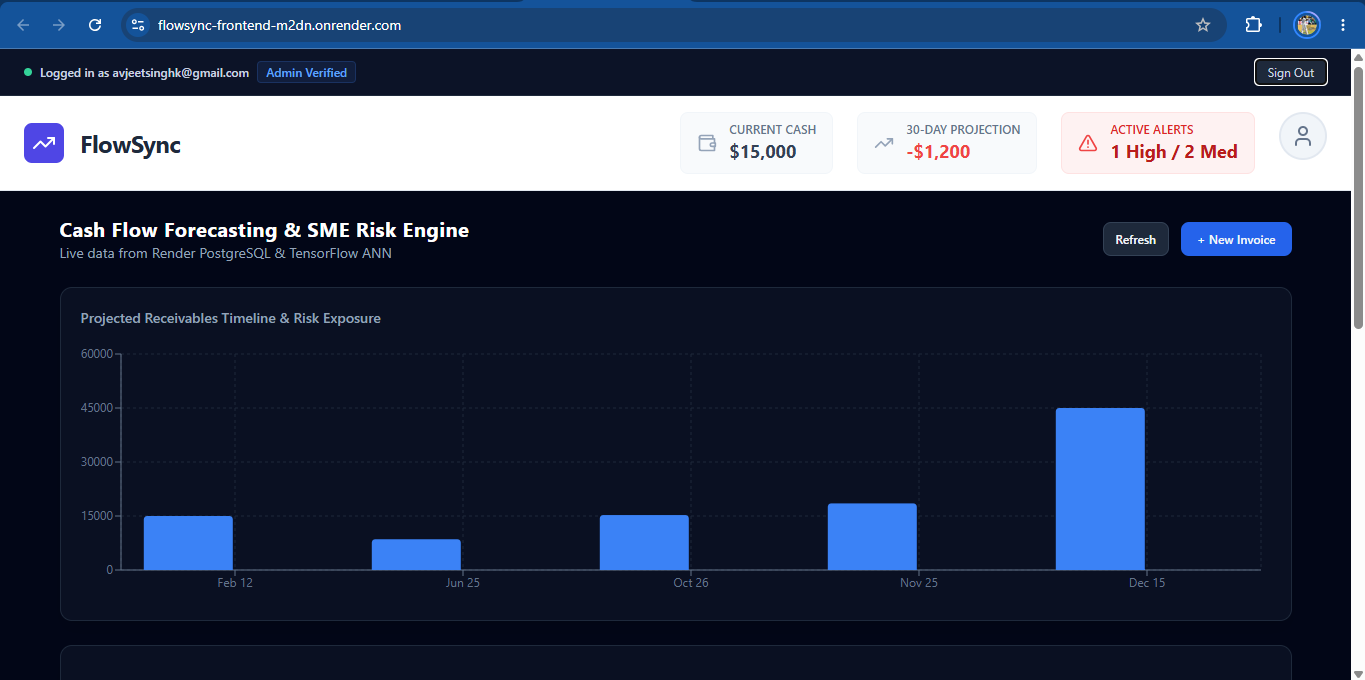
LOW,MEDIUM, andHIGHrisk tiers. - 30-Day Cash-Flow & Liquidity Forecasting: Projects net working capital over a rolling 30-day window by weighing scheduled receivables against predicted settlement delays.
- Autonomous Action Agent: Continuously scans open receivables, surfaces actionable recovery recommendations, and executes automated workflows—from dispatching payment reminders to generating instant PayPal checkout links with early-settlement incentives.
- Role-Verified Admin Access: Secures financial operations and agent executions behind Auth0 authentication.
How we built it
- Frontend: Built with React, TypeScript, Vite, and Tailwind CSS, featuring interactive cash-flow and risk exposure visualizations powered by Recharts and Lucide Icons.
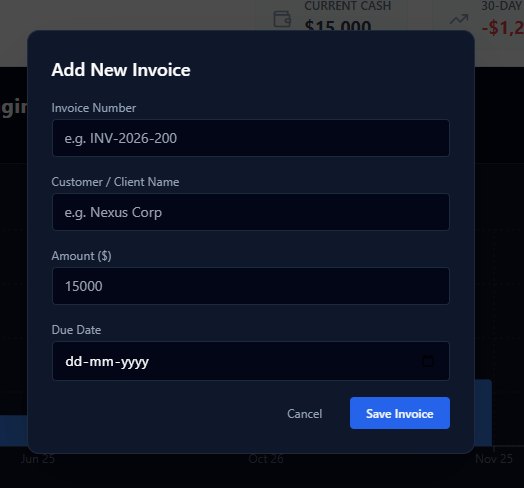
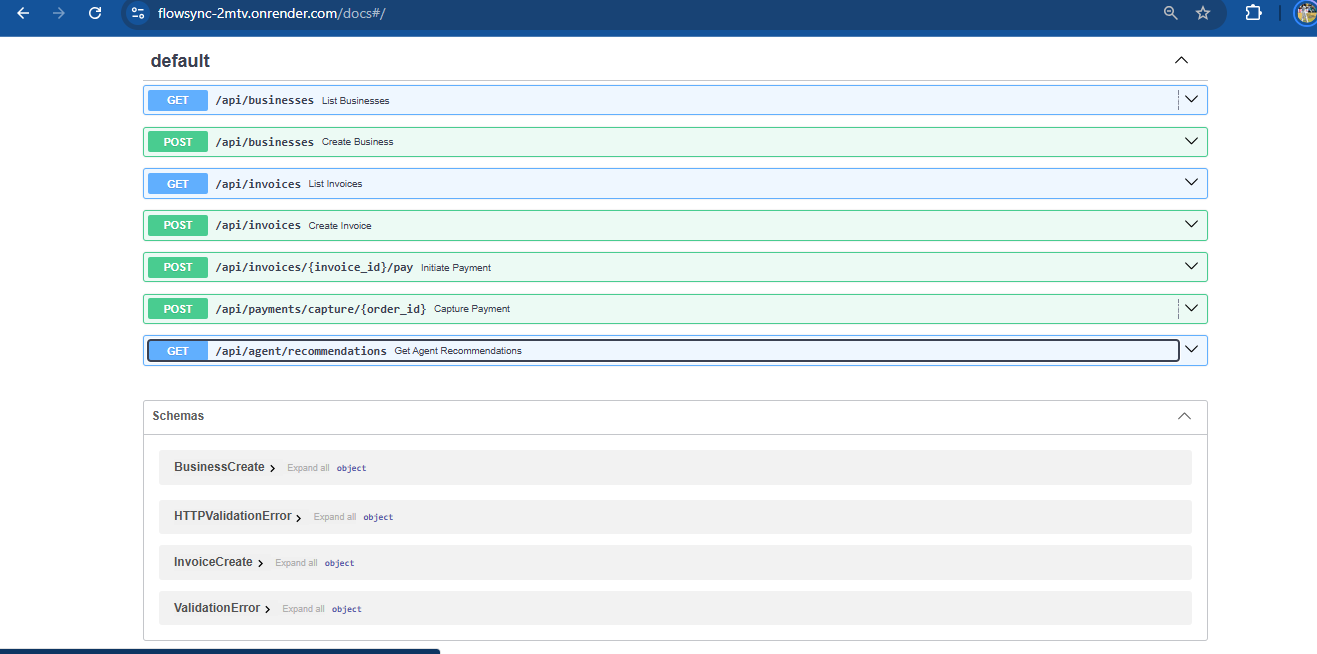
- Backend: Engineered an asynchronous Python FastAPI REST API with SQLAlchemy and Alembic migrations for high-throughput invoice ingestion and agent orchestration.
- Machine Learning Engine: Trained a TensorFlow neural network on the Global B2B Invoice and Payments dataset (
tharishreddy22/global-b2b-invoice-and-payments-dataset), using Scikit-Learn preprocessing pipelines to score invoice risk in real time. - Payments & Authentication: Integrated the PayPal Orders API for seamless checkout creation and payment capture, paired with Auth0 Single Page Application authentication.
- Cloud Infrastructure: Deployed end-to-end on Render using a Render Static Site for the React frontend, a Render Web Service for the FastAPI backend, and a managed Render PostgreSQL database.
Challenges we ran into
- Async Database & Timezone Synchronization: Aligning timezone-aware timestamps and asynchronous SQLAlchemy sessions between FastAPI and Render PostgreSQL without schema mismatches.
- Cross-Origin & Cloud Auth Routing: Configuring strict CORS policies, SPA rewrite rules (
/*to/index.html), and Auth0 callback origins across separate cloud-hosted frontend and backend services. - Production ML Packaging: Optimizing TensorFlow and Scikit-Learn inference inside a lightweight cloud container for fast cold-start responses.
Accomplishments that we're proud of
- Delivering a fully deployed, end-to-end cloud architecture (React + FastAPI + PostgreSQL + TensorFlow + PayPal + Auth0) rather than a local prototype.
- Bridging predictive AI (knowing which invoice will default) with agentic execution (immediately generating a PayPal settlement flow to recover the cash).
What we learned
- Designing resilient cloud deployments with environment-driven API routing, CORS security, and managed PostgreSQL migrations.
- Translating raw ML risk probabilities into concrete, user-friendly financial actions that SME operators can trigger with a single click.
What's next for FlowSync
- PayPal Webhooks & Auto-Reconciliation: Listening to live PayPal capture webhooks to automatically mark invoices as
PAIDand recalculate 30-day liquidity projections without manual refresh. - Multi-Currency Cross-Border Payouts: Expanding PayPal integration to support automated vendor payouts and multi-currency SME treasury management.
- ERP & Accounting Integrations: Adding one-click invoice sync from QuickBooks, Zoho Books, and Xero.
Built With
- auth0
- fastapi
- paypal
- postgresql
- python
- react
- render
- scikit-learn
- sqlalchemy
- tailwindcss
- tensorflow
- typescript
- vite
