Inspiration
I live near a park that was always empty. At the same time, I noticed people in my neighborhood struggling to find ways to connect casually. This contrast sparked the idea. After a bit of research online, I found out that parks, libraries, and other urban spaces often drain taxpayer money but sit mostly empty. On top of that, Digital isolation has gutted casual social bonds, leaving people lonelier than ever. Even finding a spot or planning a small meetup is absurdly difficult.
In a lot of cases, urban planning often treats public spaces as static infrastructure rather than places for real community life. Zoning and car-focused layouts isolate neighborhoods, making casual interaction harder. I wanted to build something that would make our shared spaces feel alive again.
What it does
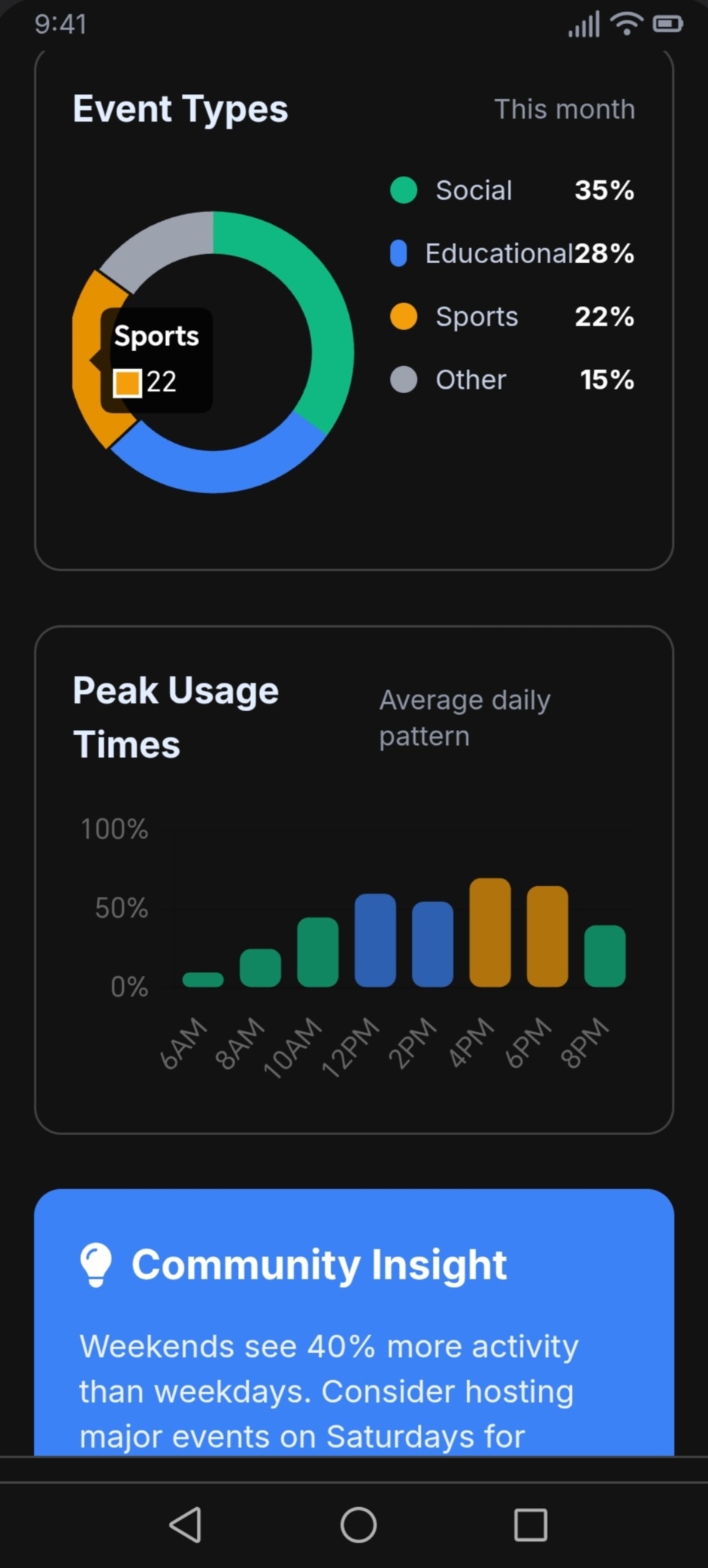
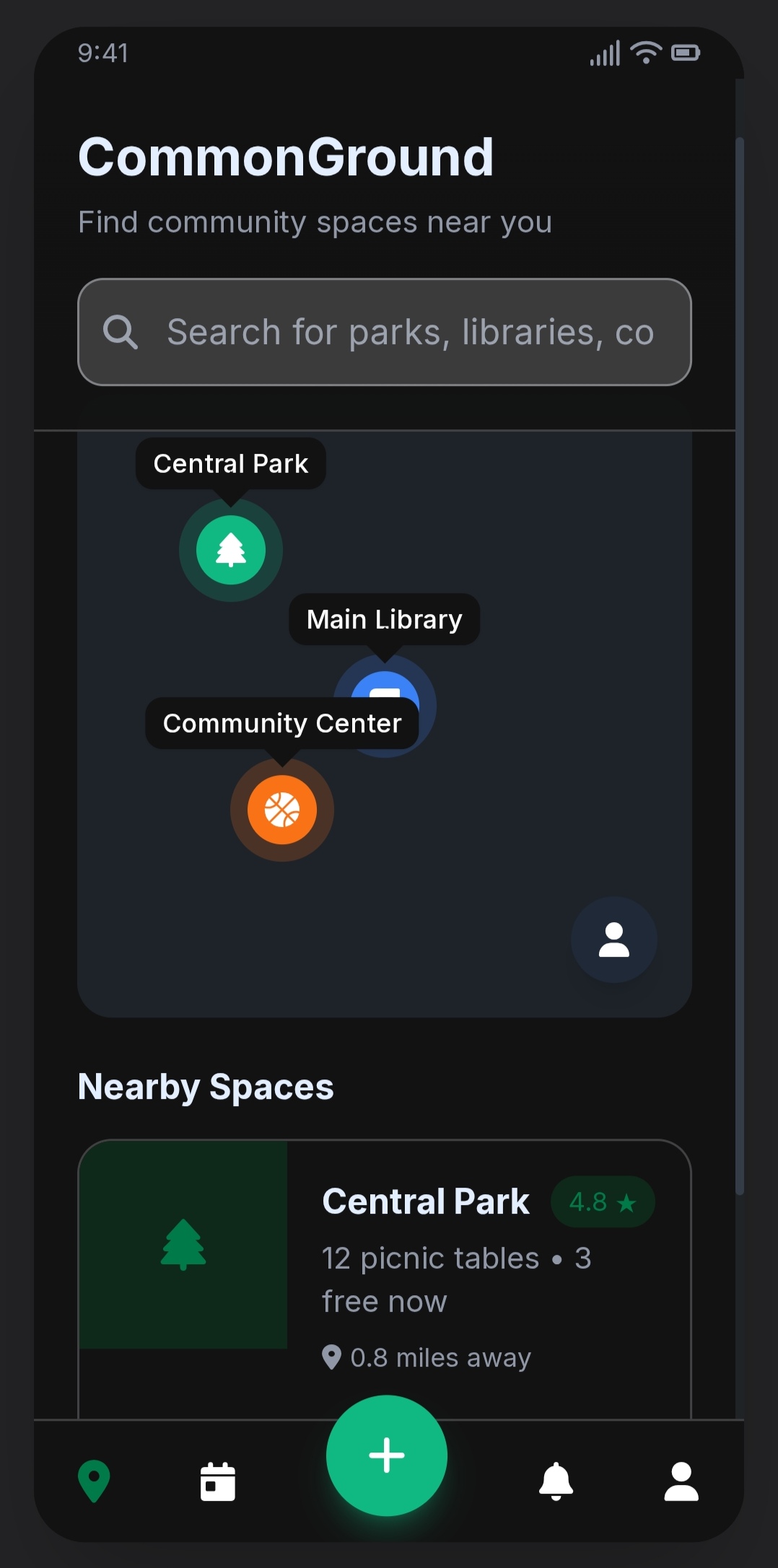
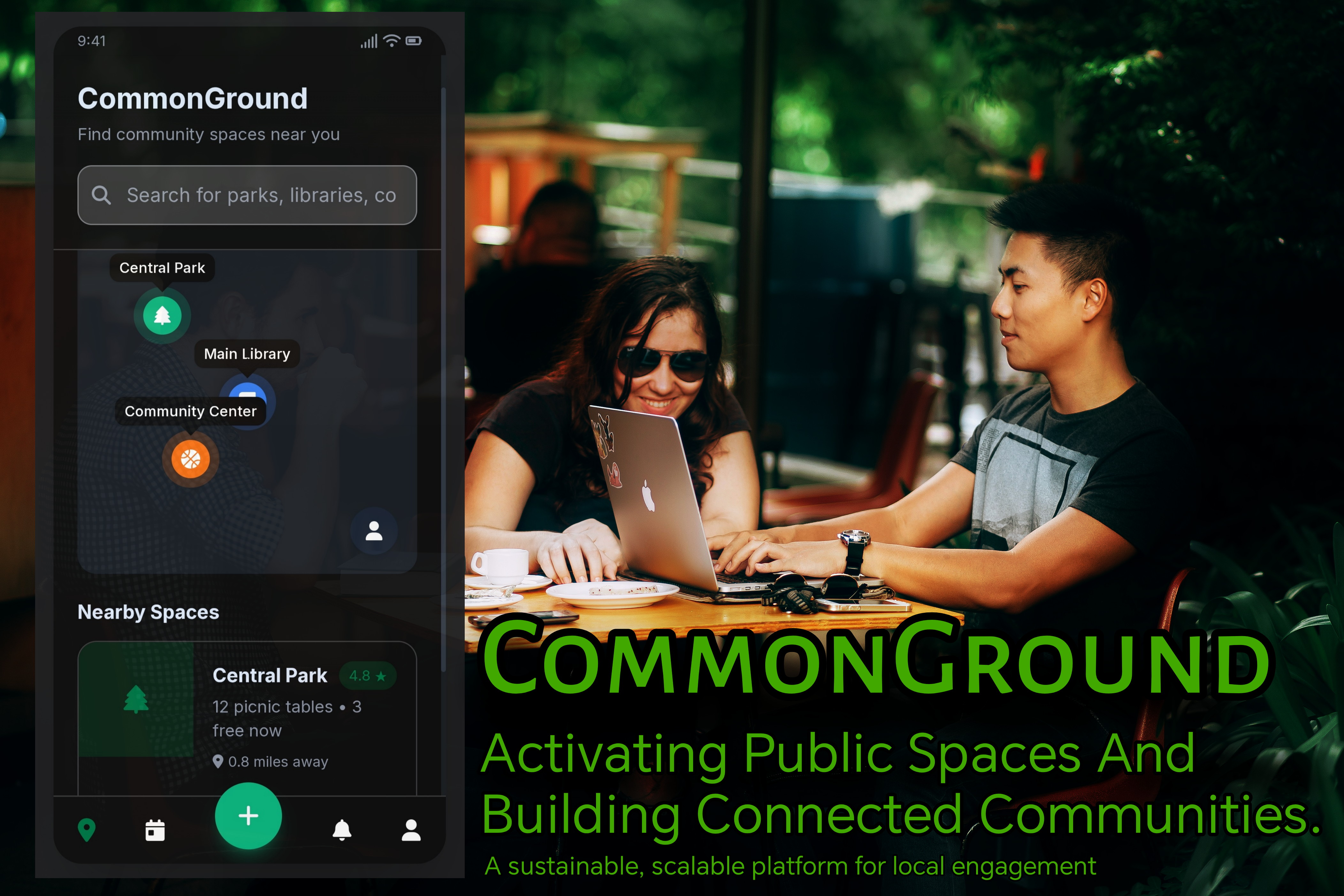
CommonGround© 2025 helps people find and use public spaces, parks and libraries in real-time. It shows what's available and makes it easy to organize casual meetups, events, etc turning empty spaces into community hubs.
Another Important thing it does is that the platform naturally creates value by driving more activity to public assets, which opens up natural opportunities like partnerships with cities for management tools and even local businesses wanting to reach engaged community members.
How I built it
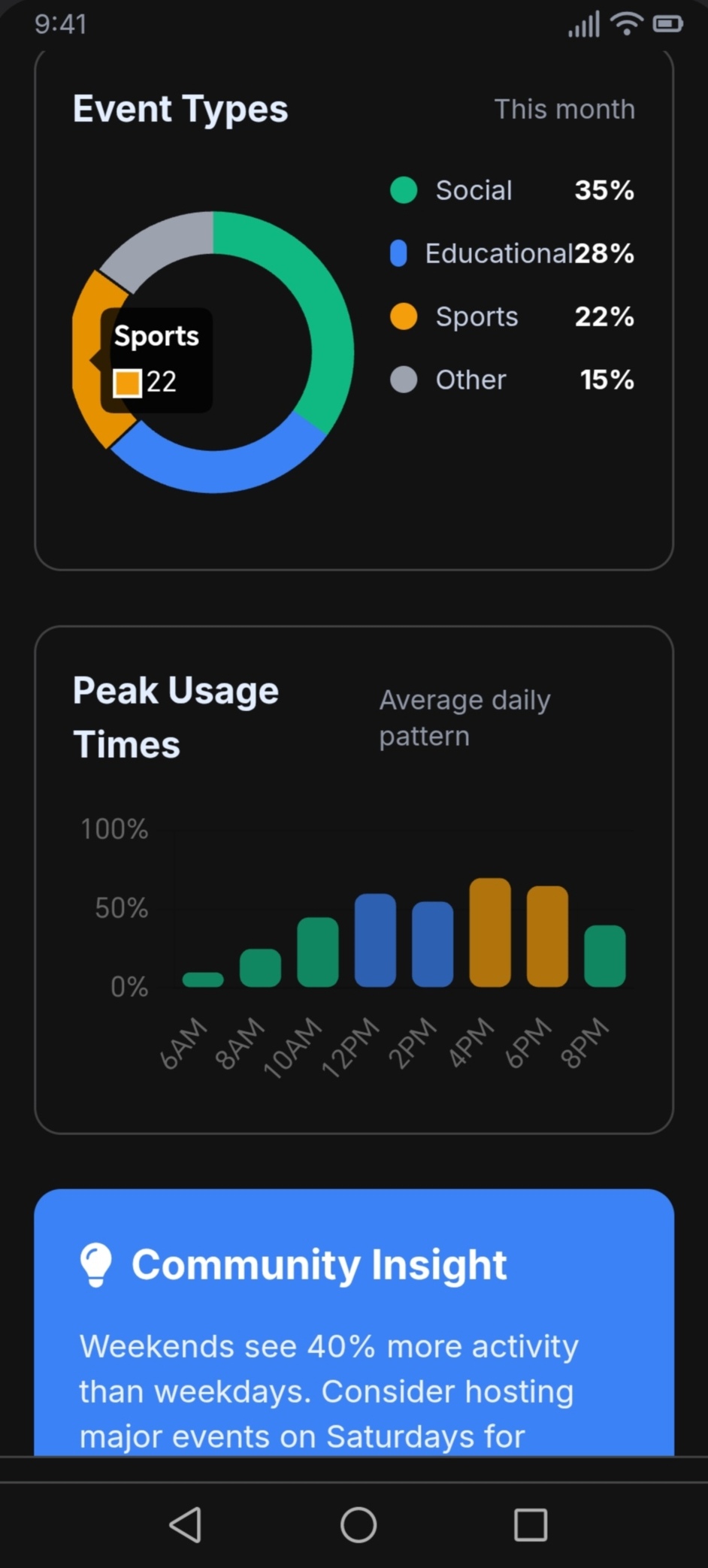
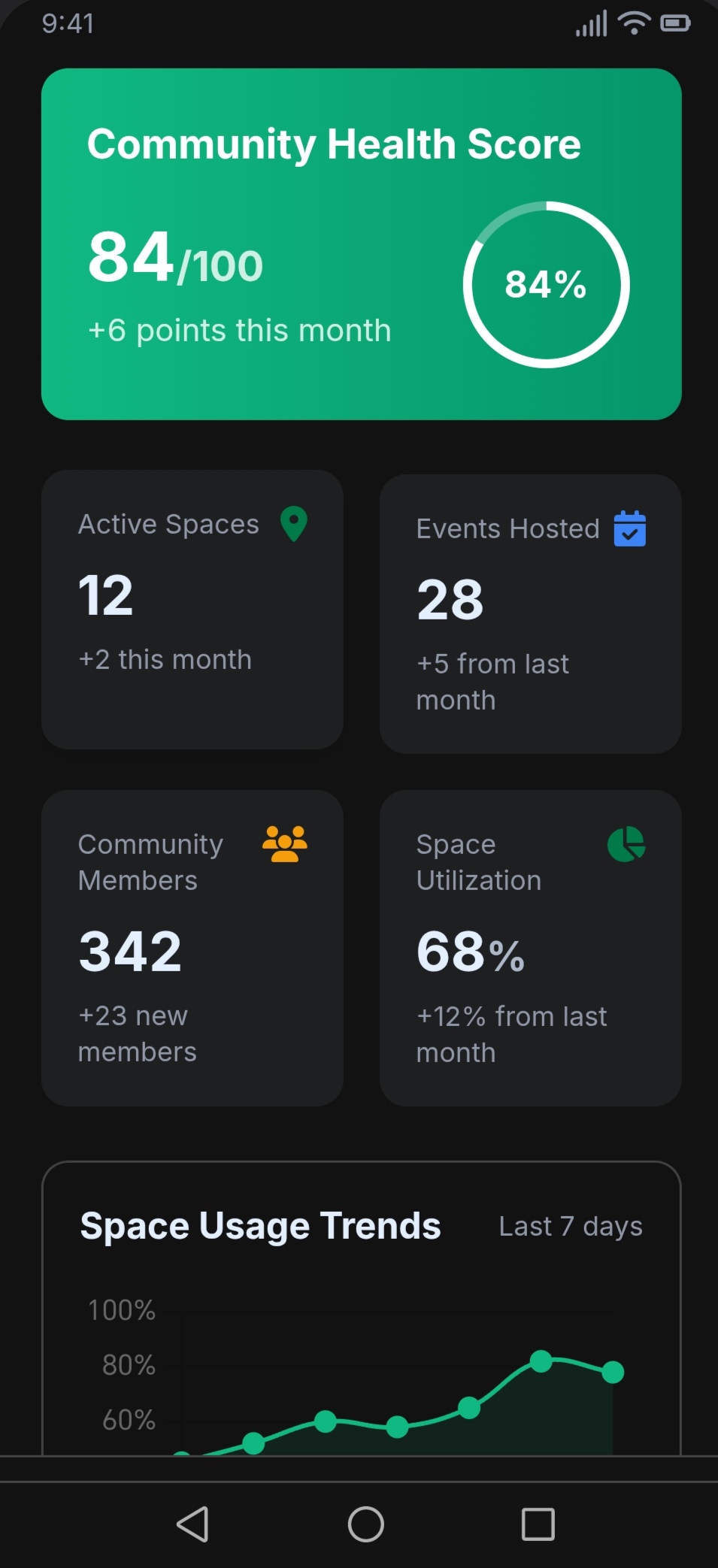
I started by sketching the app flow on paper, focusing on a map view, analytics, and a simple way to post gatherings. Then, I moved to digital prototypes using Tailwind CSS and HTML to create a clean interface. The entire process was iterative: I built a minimal mockup, tested it with a few friends, and refined based on their feedback. Then I made the presentation.
Challenges I ran into
The biggest challenge was ensuring the app felt intuitive without overcomplicating the design, but breaking them into smaller tasks helped.
Accomplishments that I'm proud of
Frankly, there are two things I'm very proud of :
The functional HTML mockup UI of CommonGround that demonstrates real-time space availability and makes organizing community gatherings simple, and future development plans for the backend prioritizing both simplicity and privacy.
The clear, investor-ready presentation outlining the problem, solution, and potential impact, including a business model with sustainable municipal and local partnerships.
Essentially, I’m proud I took this project from a vague idea scribbled on a napkin to a working prototype and investor-ready pitch :)
What I learned
Working on this prototype taught me several things. I gained practical skills in UI/UX design. More importantly and surprisingly, I learned about the importance of simplicity, like starting with a core feature that solves one problem well, rather than trying to do everything at once. I also realized that most community tools need to respect privacy from the ground up and that is not negotiable.
What's next for CommonGround
If I continue, I'd make this production ready and then I'd focus on engaging local communities early to shape its future.
Built With
- css3
- html5
- javascript
- powerpoint
- tailwind


Log in or sign up for Devpost to join the conversation.