

About
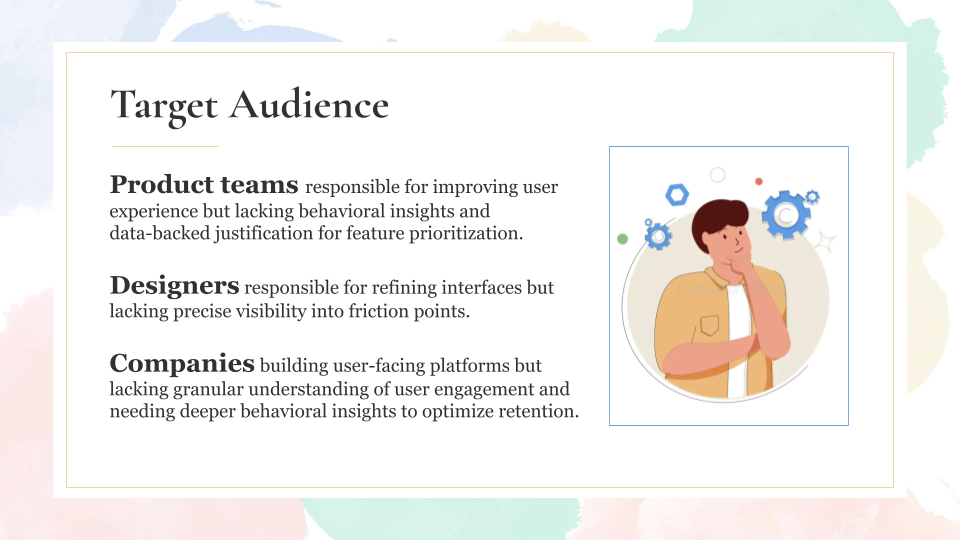
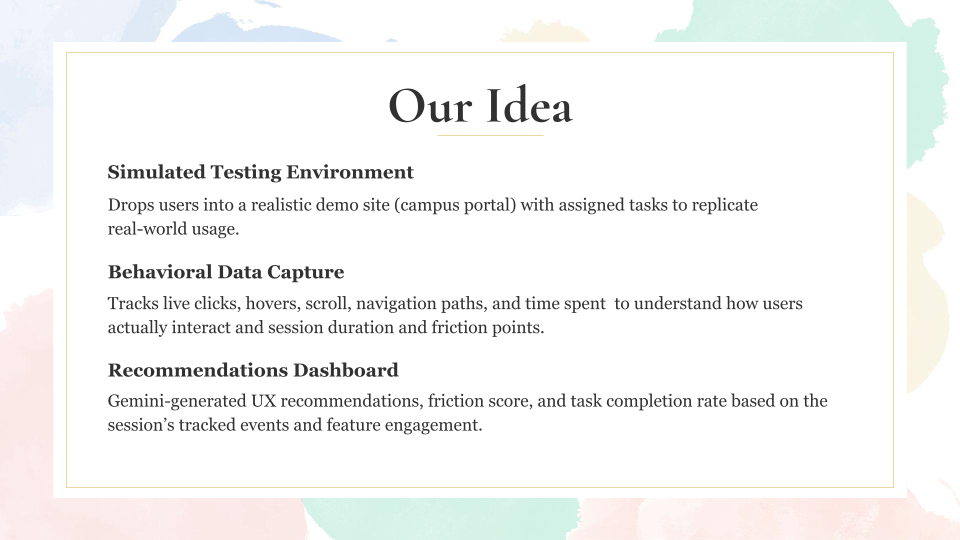
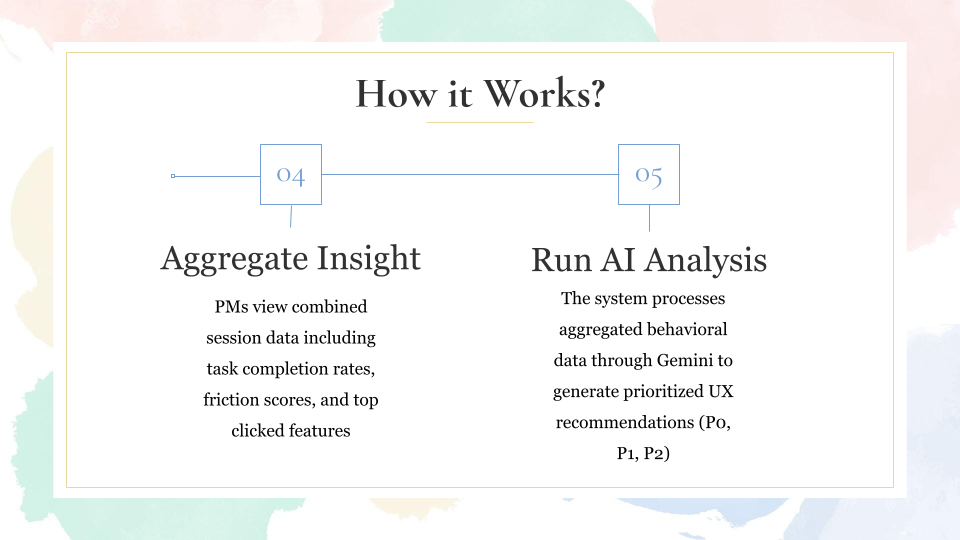
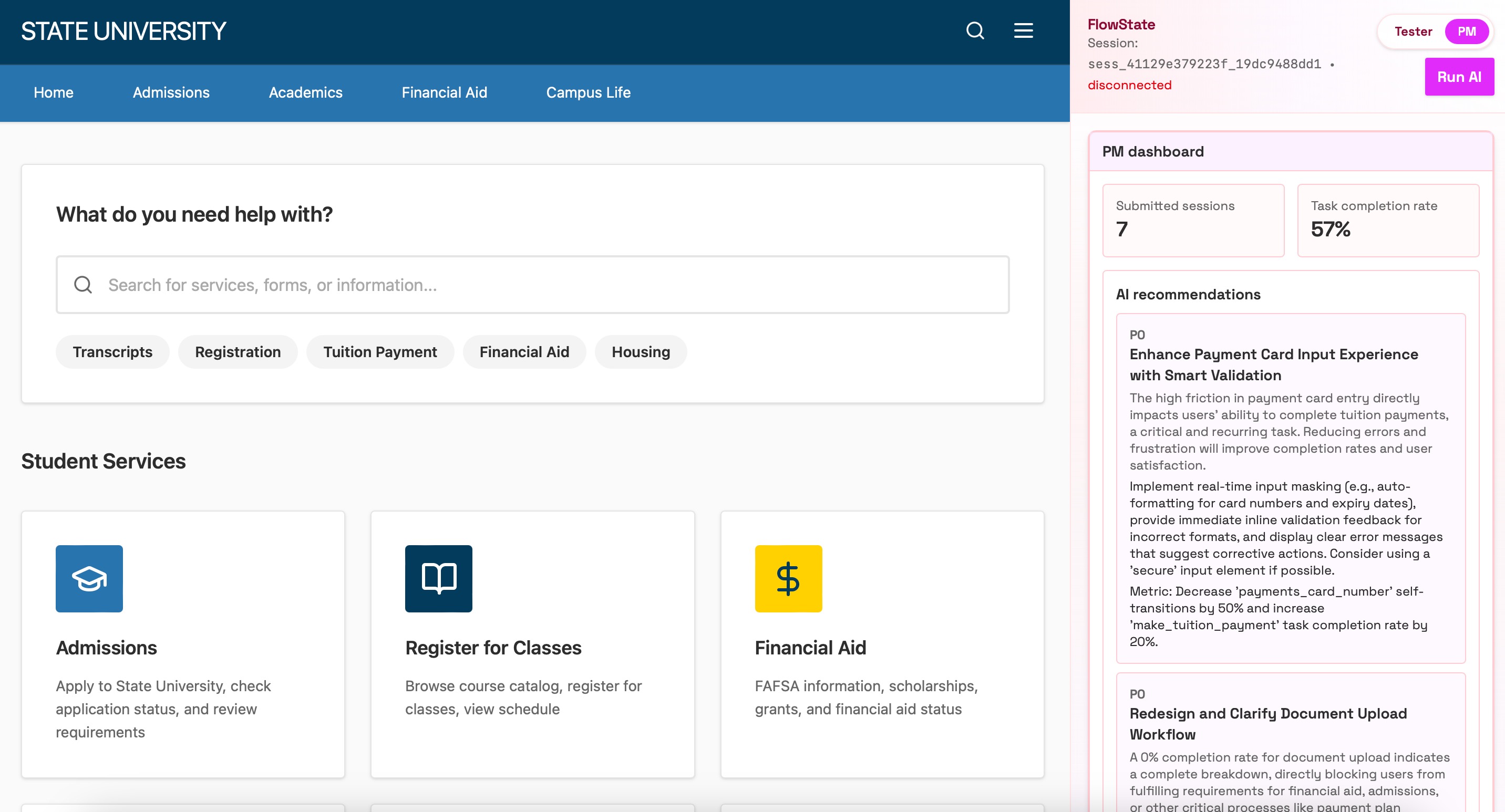
Our project is a behavioral beta-testing platform designed to help product teams move from assumption-driven decision making to engagement-based decision making. Instead of relying on high-level analytics, we simulate real user sessions in a controlled environment and capture granular interaction data such as clicks, navigation paths, hover behavior, scrolling, and time spent on different sections. This data is aggregated into a centralized dashboard that surfaces key metrics like task completion rate, friction score, top clicked features, and common user flows. With a single click, product managers can run AI-powered analysis to generate prioritized UX recommendations grounded in actual user behavior. Our project enables teams to quickly identify friction points and make targeted interface improvements.
Inspiration
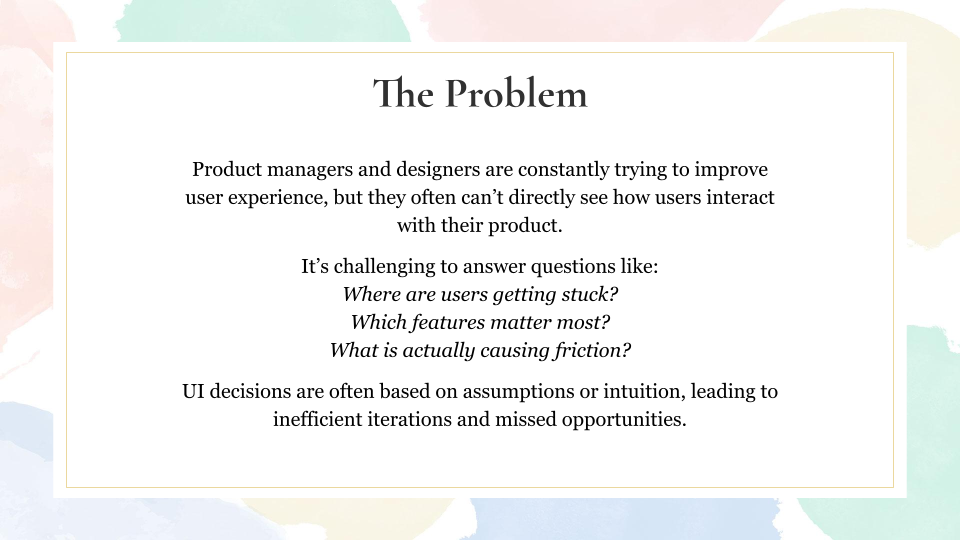
We were inspired by how difficult it is for product managers and designers to truly understand user behavior during the early stages of product development. While tools like Google Analytics provide large amounts of data, they often lack the context needed to explain why users behave a certain way. We realized that teams often rely on assumptions or intuition when making UI decisions, especially in beta stages where structured feedback is limited. This led us to ask: What if we could simulate real user tasks, capture their behavior in detail, and directly translate that into actionable design recommendations? That idea became the foundation of our project.
What we learned
Through building this project, we learned how to translate raw behavioral data into meaningful insights that product teams can actually use. We gained a deeper understanding of what signals truly indicate user friction, such as extended session duration, repeated actions, and inefficient navigation paths. We also learned the importance of balancing data collection with simplicity, tracking too many metrics can overwhelm users, while too few can miss important patterns. Additionally, integrating AI to generate structured recommendations taught us how to move beyond analytics and toward decision support systems that directly impact product design.
How we built it
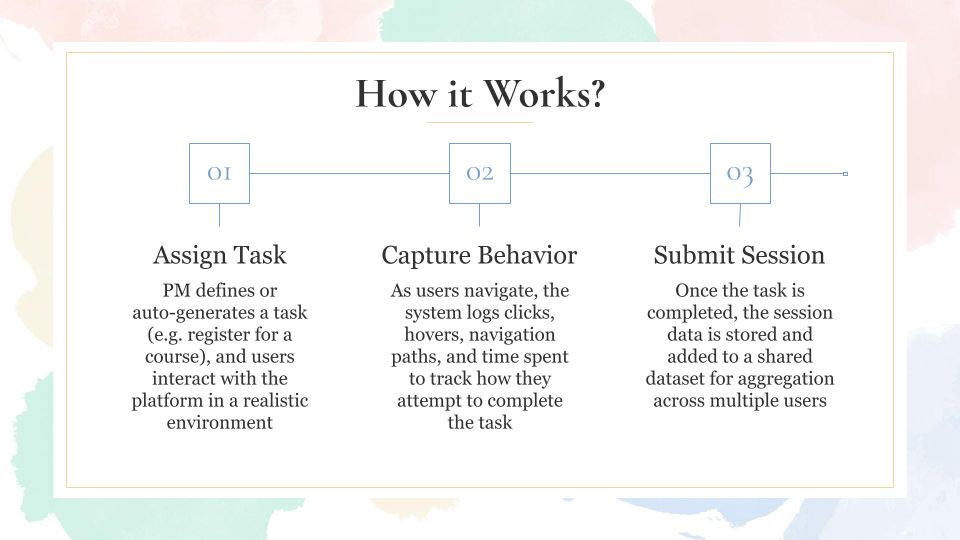
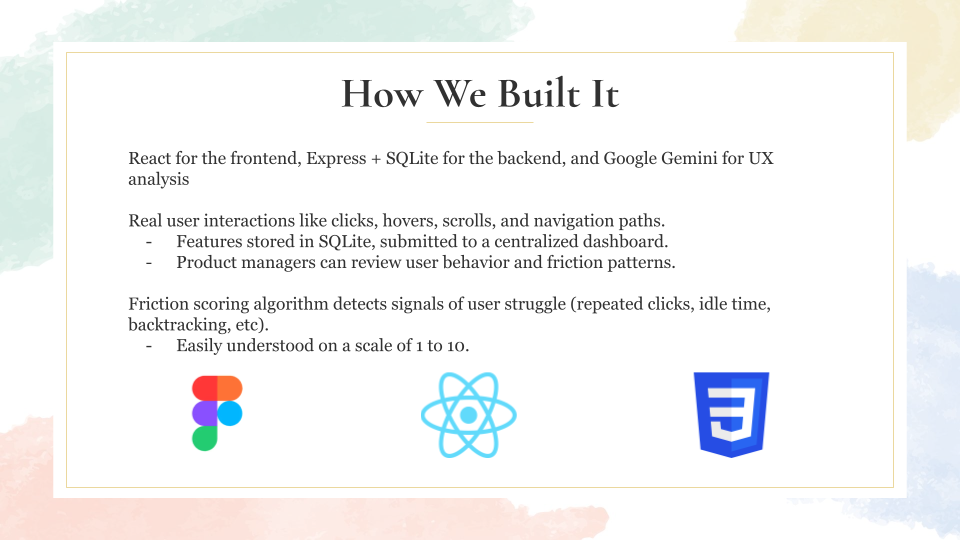
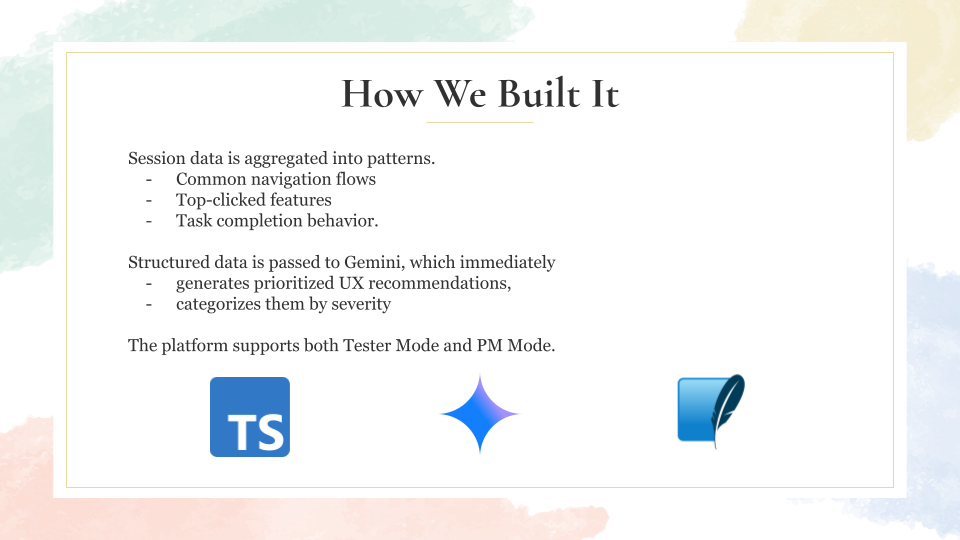
We built FlowState as a full-stack behavioral analytics platform using React for the frontend, Express + SQLite for the backend, and Google Gemini for AI-powered UX analysis. At the core is a custom feature-tracking system that captures real user interactions like clicks, hovers, scrolls, and navigation paths inside a realistic university portal demo. Features are sent asynchronously to the backend, stored in SQLite, and submitted to a centralized analytics dashboard where product managers can review user behavior, task progress, and friction patterns across sessions. On top of this, we built a friction scoring algorithm that detects signals of user struggle (such as repeated clicks, long idle time, backtracking, and slow task completion) and converts them into a simple 0–10 score. For product managers, session data is aggregated into patterns like common navigation flows, top-clicked features, and task completion behavior. This structured data is then passed to Gemini, which generates prioritized UX recommendations categorized by severity, helping teams move from raw analytics to immediate design improvements. The platform supports both Tester Mode and PM Mode, allowing teams to observe user behavior live and turn those insights into smarter product decisions.
Challenges we ran into
One of the biggest challenges we faced was defining which behavioral signals best represent user friction without introducing noise or overcomplicating the system. We had to carefully narrow our focus to a few meaningful metrics like clicks, hovers, scrolls, navigation flows, and time-to-action. Another challenge was transforming raw interaction data into insights that are clear and actionable, rather than overwhelming product teams with more analytics. We also had to design a demo environment that realistically simulates user behavior while still being controlled and consistent for testing. Finally, we considered the implications of tracking user behavior at scale, particularly around privacy and responsible data collection, which would be critical in real-world applications.
What's next for FlowState
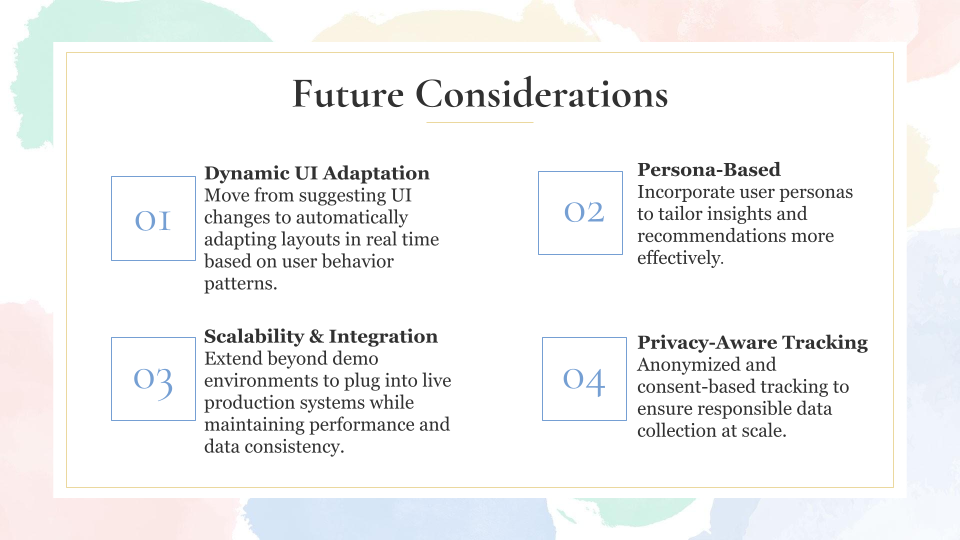
Looking ahead, we plan to extend the platform by enabling dynamic UI adaptation, where interfaces can automatically adjust in real time based on user behavior rather than just providing recommendations. Part of this is algorithmic optimization of website directories, leading to navigation flows with fewer pain points and less hesitation. We also aim to integrate more advanced A/B testing capabilities to evaluate different UI variations and measure their impact on engagement. In addition, we want to incorporate user personas to personalize insights and recommendations, and expand the system to integrate with real production environments. Ensuring privacy-first tracking and scalability will be key as we move toward making this a deployable solution for larger scale product teams.
Built With
- css
- figma
- gemini
- react
- sqlite
- tailwind
- typescript

Log in or sign up for Devpost to join the conversation.