-
-
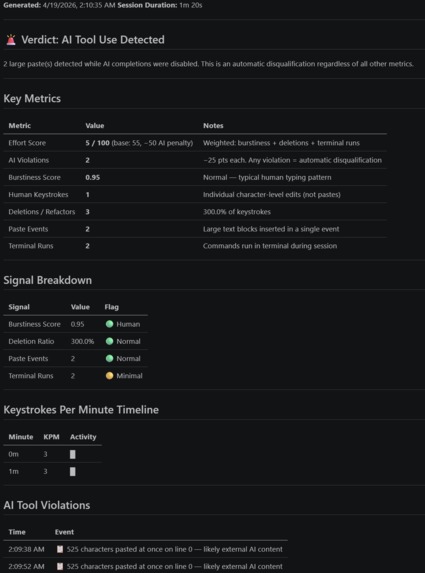
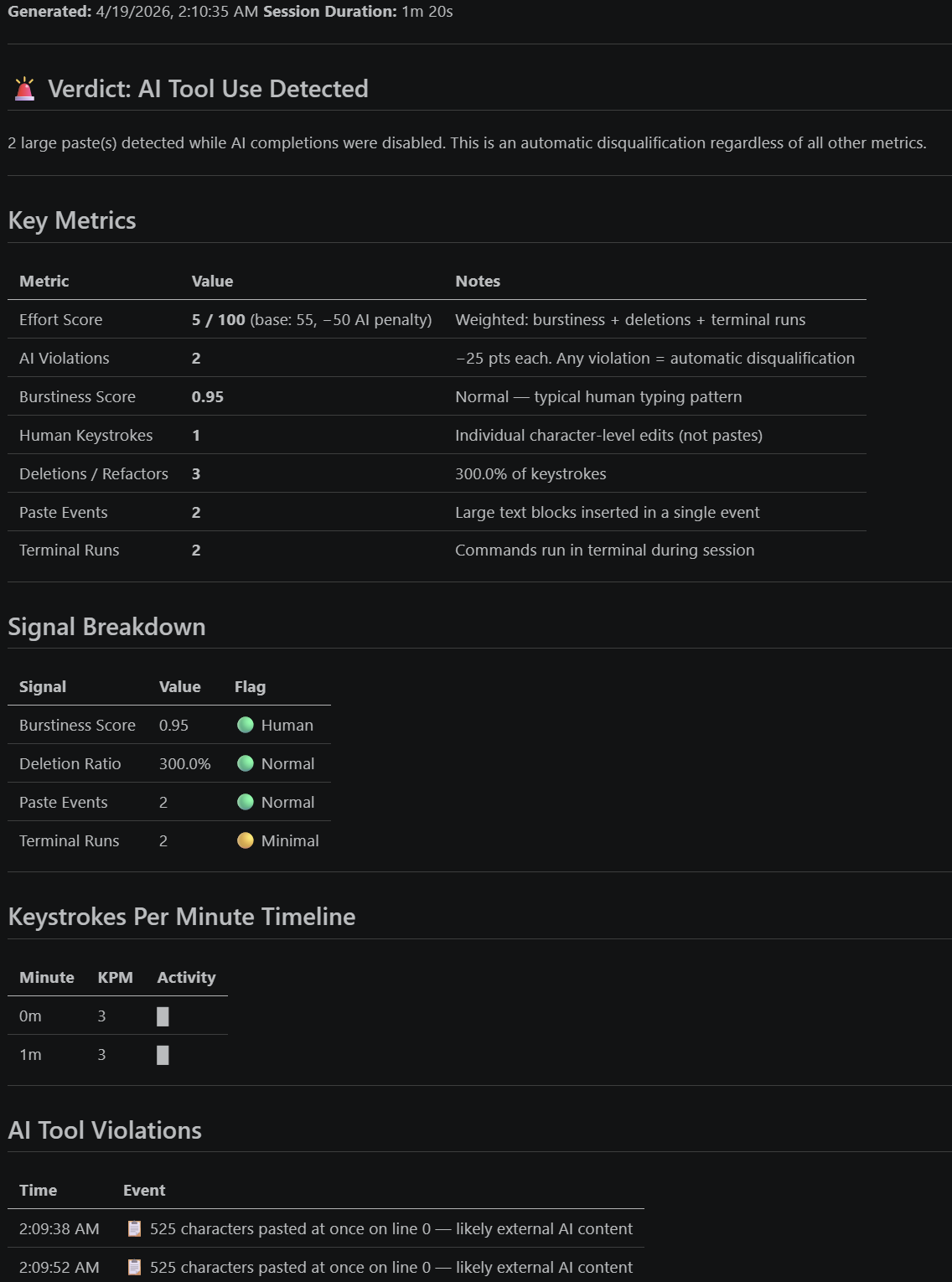
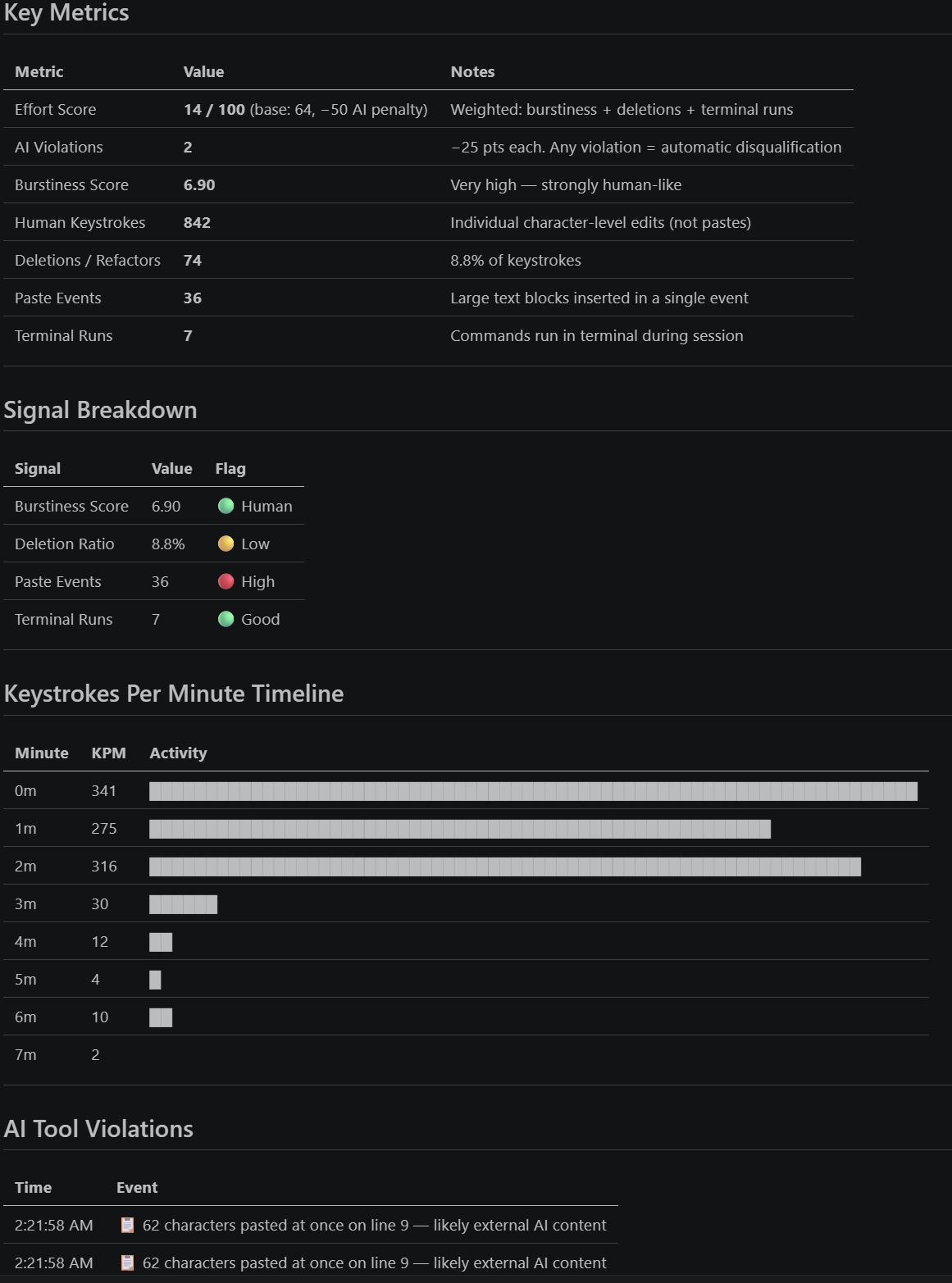
Instance where the student used full AI written code for the submission
-
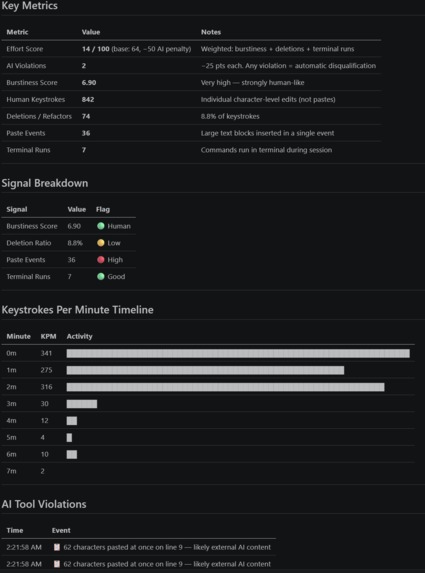
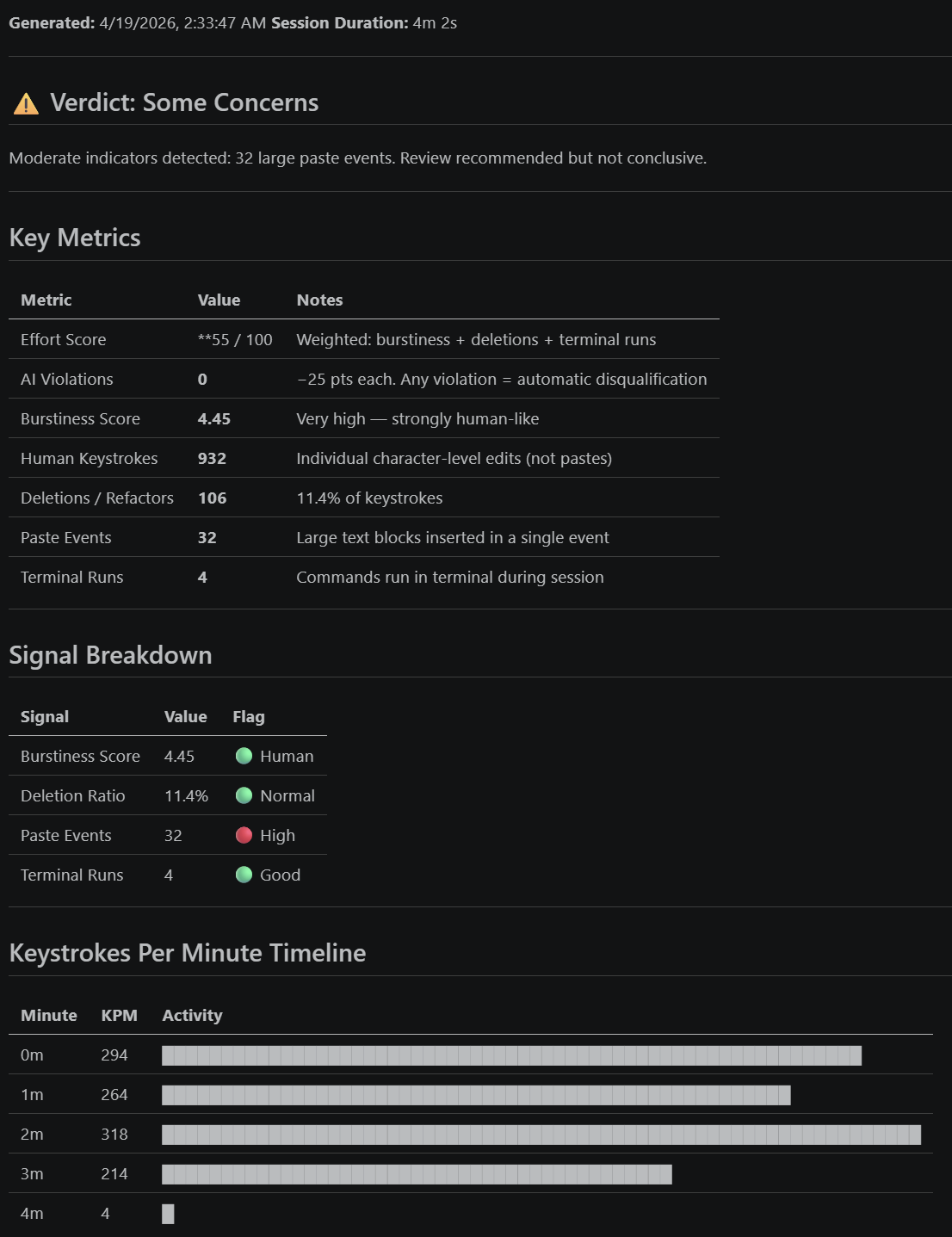
Instance where the student partially used AI written code for the submission
-
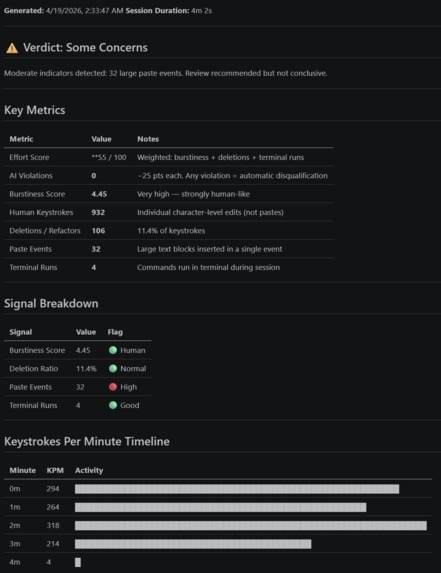
Instance where the student did not use any AI source to write the code for the submission
Inspiration
We are at a crossroads in education. In an era where a "perfect" final product can be generated in three seconds, the traditional homework model is broken. We saw our peers losing the incentive to struggle with hard problems because the "easy way out" was just a prompt away. We built FlowState to protect the integrity of the learner and to prove that human effort is still the most valuable thing a student can produce. True learning happens in the struggle.
What it does
FlowState is a VS Code extension that creates an immutable Proof-of-Thought trail. It acts like a "Black Box" flight recorder for coding. By monitoring the biometric "rhythm" of keystrokes, the frequency of terminal tests, and the volume of manual deletions, it generates a forensic report. It doesn't just guess if you used AI, it validates your effort by tracking the time, the errors, and the iterations that define the human learning process.
How we built it
We built FlowState as a VS Code extension in TypeScript using the VS Code Extension API. We implemented session lifecycle commands (Start Session, Stop Session, Show Dashboard, Verify Report) and attached low-level listeners for document edits, terminal command execution, and task runs. During a session, FlowState records keystroke deltas, deletions, paste behavior, and terminal activity, then computes analytics like burstiness, deletion ratio, KPM timeline, and suspicious zones. We also built an AI Guard module that disables inline suggestions and known AI assistants during the session, and logs violations if AI panels are opened or large pasted blocks are detected. At the end, we generate a signed markdown report + JSON payload, append a SHA-256 integrity hash, set files to read-only, and provide a verification command so instructors can detect tampering.
Challenges we ran into
- Capturing coding behavior in a way that is deterministic and forensically useful, not just heuristic.
- Reliably tracking terminal/test behavior across workflows (terminal commands, tasks, and manual fallbacks).
- Balancing strictness vs false positives when labeling suspicious patterns (paste size, burstiness thresholds, deletion ratios).
- Enforcing AI-tool blocking while safely restoring user settings afterward.
- Detecting AI usage signals from UI/tab behavior, including sidebar/panel edge cases.
Accomplishments that we're proud of
- Built an end-to-end Proof-of-Thought pipeline inside VS Code.
- Created an immutable-style report flow with cryptographic integrity verification.
- Implemented real-time analytics and a visual dashboard (KPM chart + suspicious zones).
- Added AI-use violation logging that is explicit and explainable.
- Kept the architecture lightweight and local-first (no backend required).
What we learned
We learned that code is a biography. Before this hackathon, we thought of code as just a static file. Now, we see it as a timeline of decisions. We learned how to manipulate the VS Code environment to listen to low-level events and, more importantly, we realized that the "Assessment Crisis" requires deterministic data, not just probabilistic AI detectors.
What's next for FlowState
This is just the beginning. Our vision is to evolve FlowState into a standalone, secure IDE designed for high-stakes academic environments. We aim to propose this "Proof-of-Thought" protocol to universities worldwide, integrating it directly into LMS platforms like Canvas and Blackboard. We want to move away from "AI Detectors" and toward a world where the Human Journey—the mistakes, the deletes, and the grit—is the gold standard for academic success.


Log in or sign up for Devpost to join the conversation.