Inspiration
What if factory technicians could understand what’s happening inside a production line without constantly switching between machines, dashboards, and maintenance instructions?
Coming from a background in architecture, spatial computing, and industrial product design, I wanted to explore how augmented reality could make complex manufacturing environments more intuitive.
Traditional dashboards tell us what is happening. I wanted to explore how spatial interfaces could show us where it's happening and what to do next.
That's how FlowSight started.
What it does
FlowSight is a spatial AR assistant for factory technicians, designed for Snap SPECS.
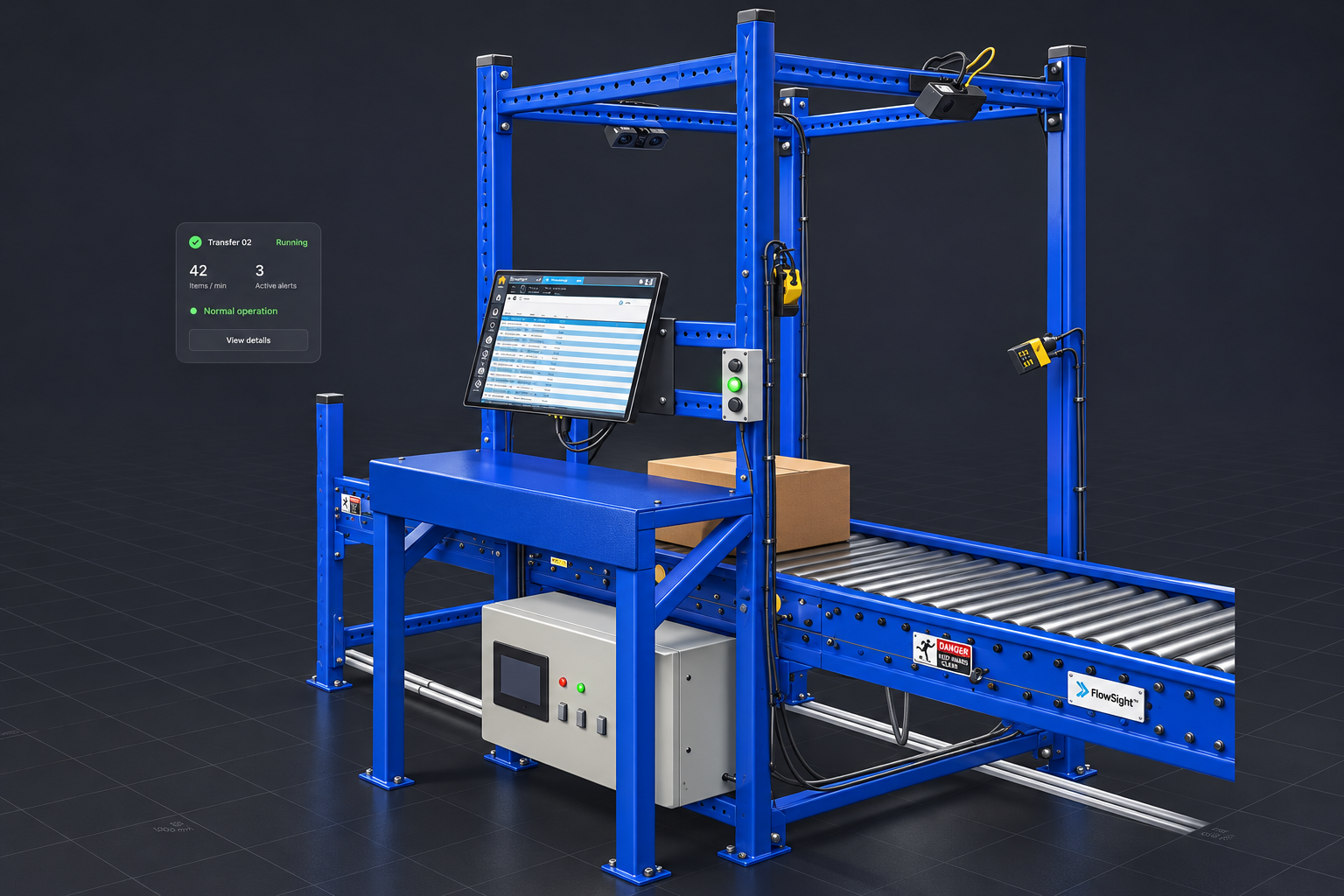
Using a conveyor transfer station as its primary scenario, FlowSight connects operational information to the physical equipment it describes.
The experience follows four states:
- Monitor: View contextual equipment status, conveyor speed, queue size, and throughput directly beside the machine.
- Detect: Experience a simulated congestion event that highlights the affected transfer zone and updates operational indicators.
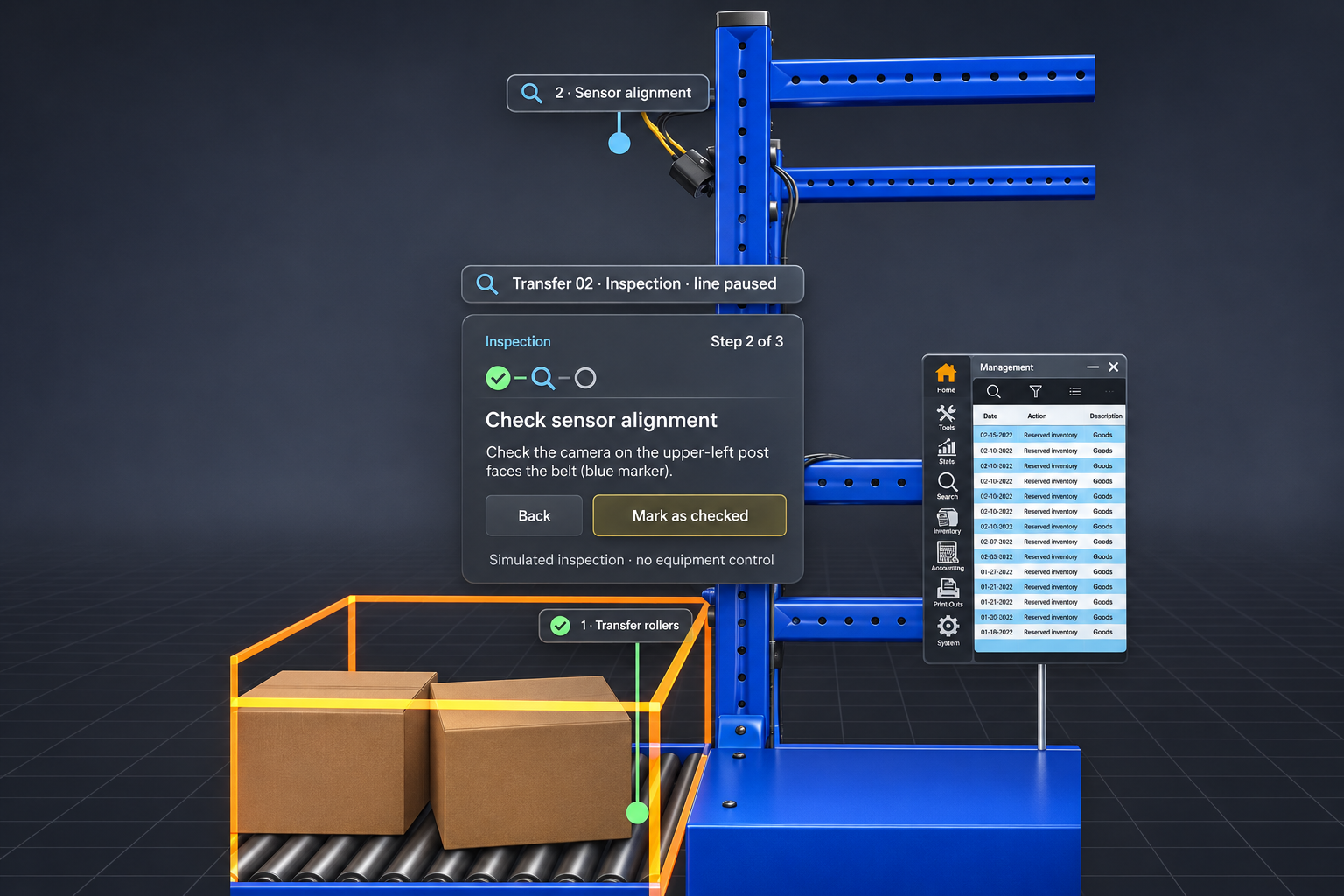
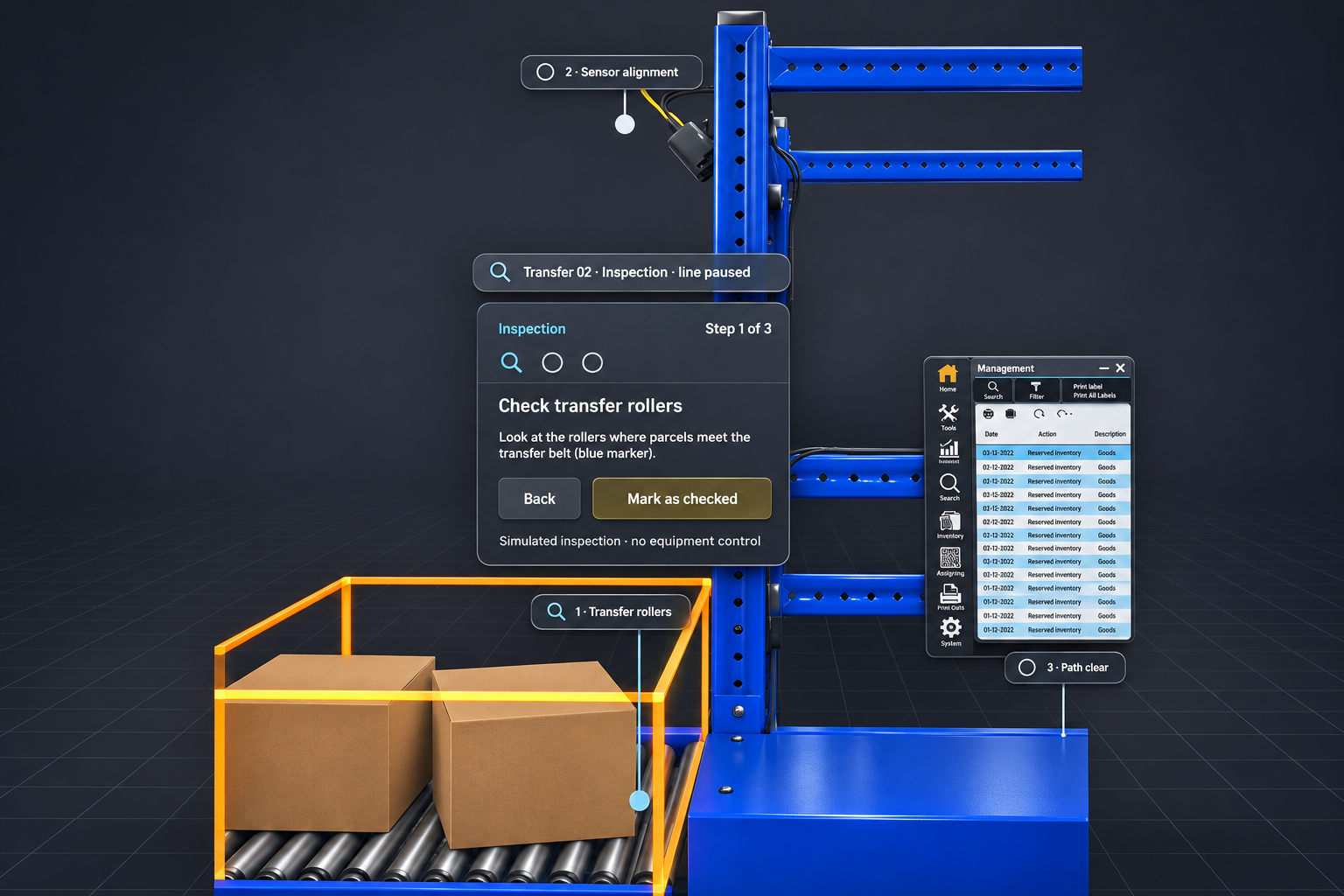
- Inspect: Follow a guided, three-step inspection workflow with contextual markers anchored to relevant machine components.
- Resolve: Complete the simulated inspection and visualize the production line returning to normal operation.
Rather than keeping a full dashboard visible, FlowSight prioritizes information according to the technician's current task.
All equipment telemetry, alerts, and resolution states are simulated. The prototype does not connect to or control real industrial machinery.
How I built it
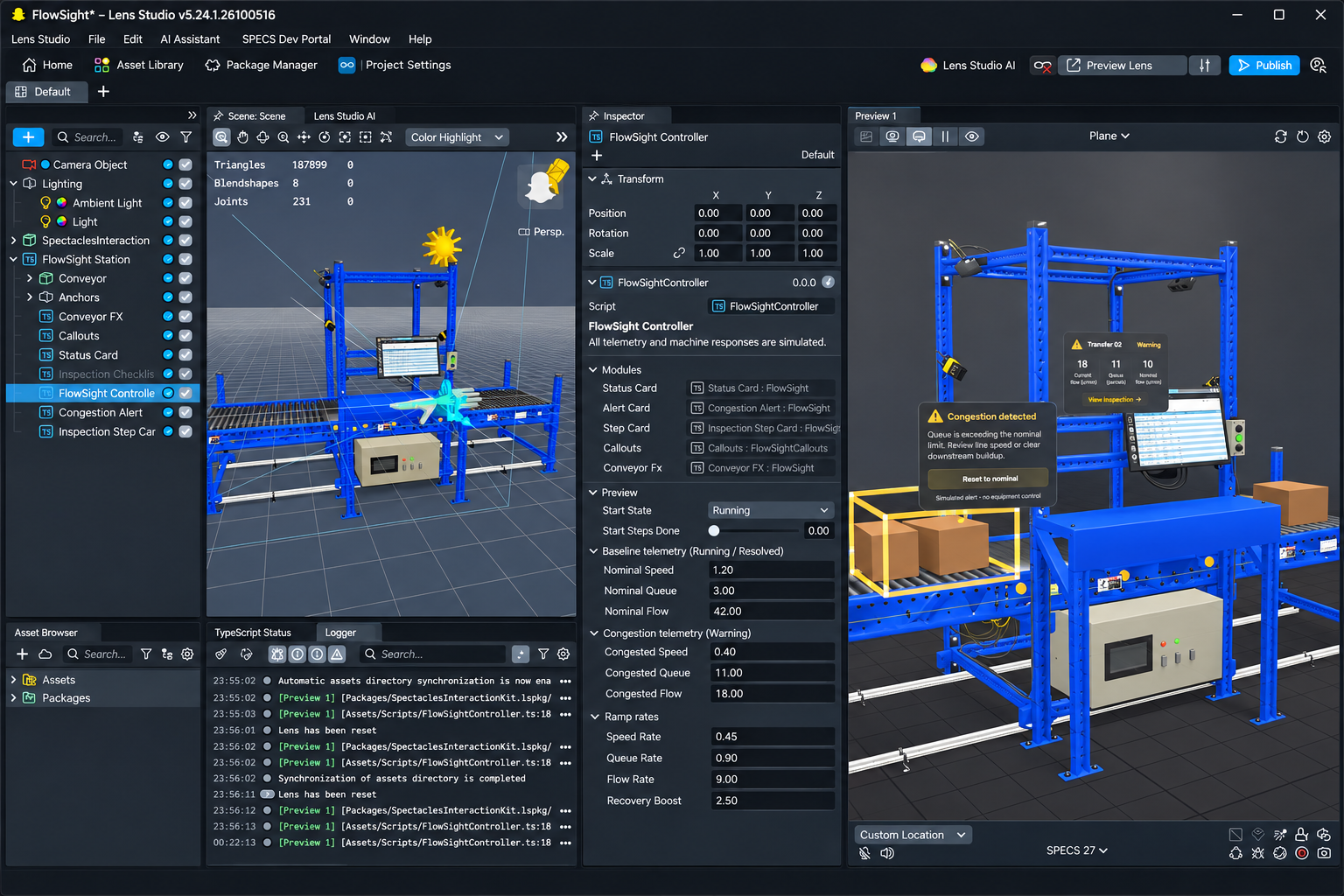
I developed FlowSight using Claude Code, CLAD, Lens Studio MCP, and Snap Lens Studio, targeting the SPECS platform.
The experience uses NVIDIA's SimReady conveyor_belt_a61 3D asset as its industrial environment. I integrated the conveyor into Lens Studio and built spatial UI components around its geometry.
Development focused on connecting four interaction states into one coherent workflow, including contextual monitoring panels, a localized congestion warning, inspection markers, and completion feedback.
I used Lens Studio's SPECS Preview to iterate on the experience, evaluate spatial placement, and test the interaction flow without requiring physical glasses.
Challenges
The biggest design challenge was balancing information visibility with spatial awareness.
Industrial interfaces can become information-heavy very quickly. In AR, large floating dashboards can obscure the very equipment users need to inspect.
I explored how to minimize persistent UI, maintain readable information, and use spatial highlights to direct attention toward the relevant machine components.
Another challenge was working with a detailed industrial 3D asset while keeping the experience responsive and the interface aligned with its geometry.
What I learned
Building FlowSight reinforced an important principle of spatial interaction design: context matters more than the amount of information displayed.
A useful AR interface doesn't simply move a dashboard into three-dimensional space. It connects information to objects, locations, and actions.
I also explored how AI-assisted development with CLAD and Lens Studio MCP can support rapid prototyping, making it possible to move from a spatial UX concept to an interactive Lens within a short development cycle.
What's next
FlowSight is currently a proof of concept built around a simulated conveyor inspection scenario.
Future possibilities include integration with actual industrial IoT data, equipment identification, maintenance histories, and adaptive instructions based on the technician's location and task.
The long-term vision is simple: make industrial information available where work actually happens.
Credits
- 3D asset: NVIDIA SimReady Assets —
conveyor_belt_a61, licensed under CC BY 4.0. - Development: Snap Lens Studio, CLAD, Lens Studio MCP, and Claude Code.
- Asset source: https://huggingface.co/datasets/nvidia/simready-assets
Built With
- augmented-reality
- clad
- claude-code
- hugging-face
- lens-studio
- lens-studio-mcp
- nvidia-simready
- snap-specs
- spatial-computing
- visualization
