
FlowSentrix: Building a System That Refuses to Panic
Most automation systems are impressive right up until the moment they fail. That moment was our starting point.
Inspiration
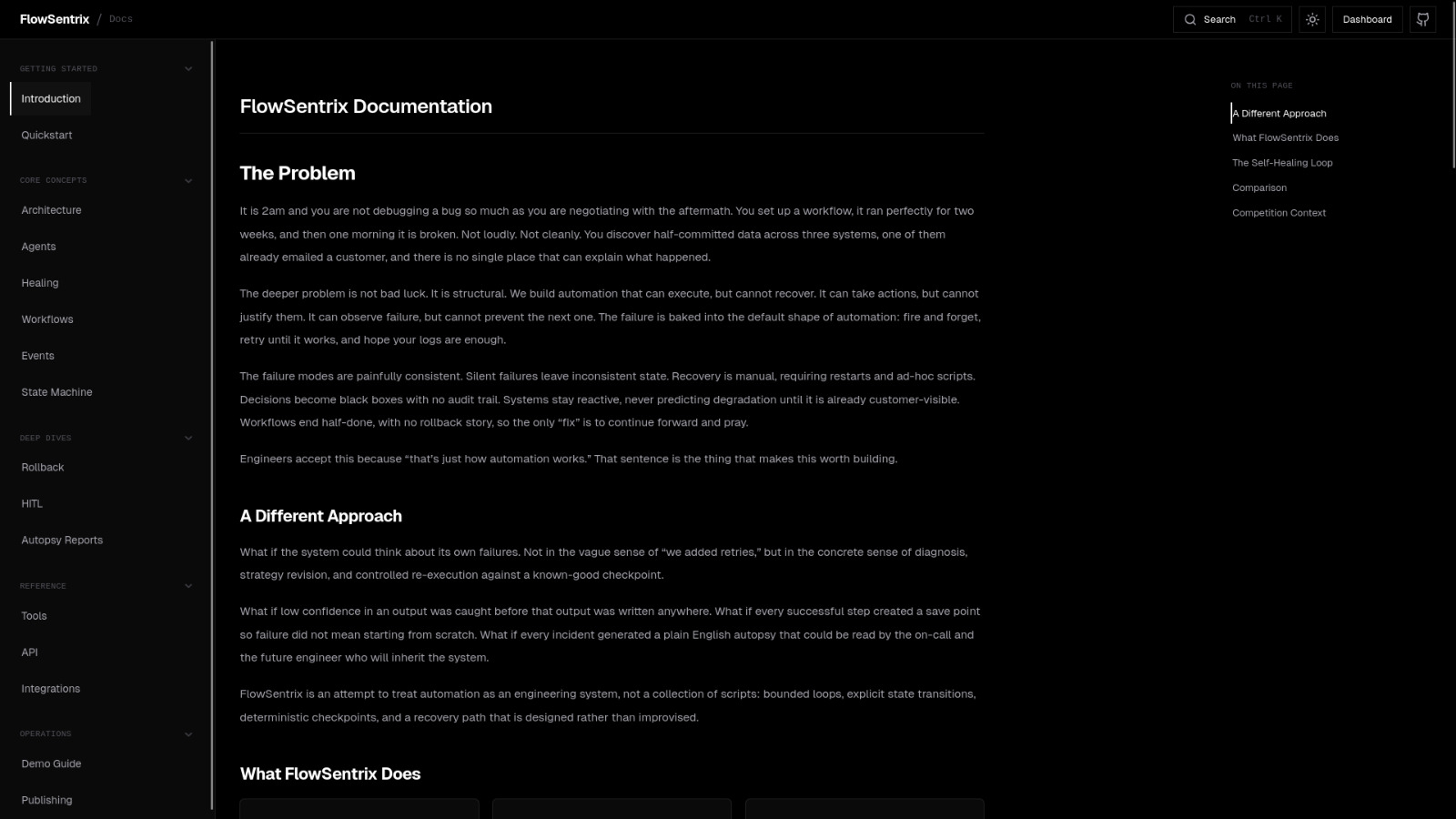
We were inspired by a simple but painful reality: in real teams, failures are not rare edge cases. They are part of normal operations. A single bad model output, flaky API call, or malformed payload can leave a workflow in a half-committed state and force humans into emergency cleanup mode.
We did not want another "AI can do tasks" demo. We wanted a system that behaves well under stress. The question that drove us was:
Can we design an agentic workflow system where failure is expected, modeled, and recoverable by default?
What It Does
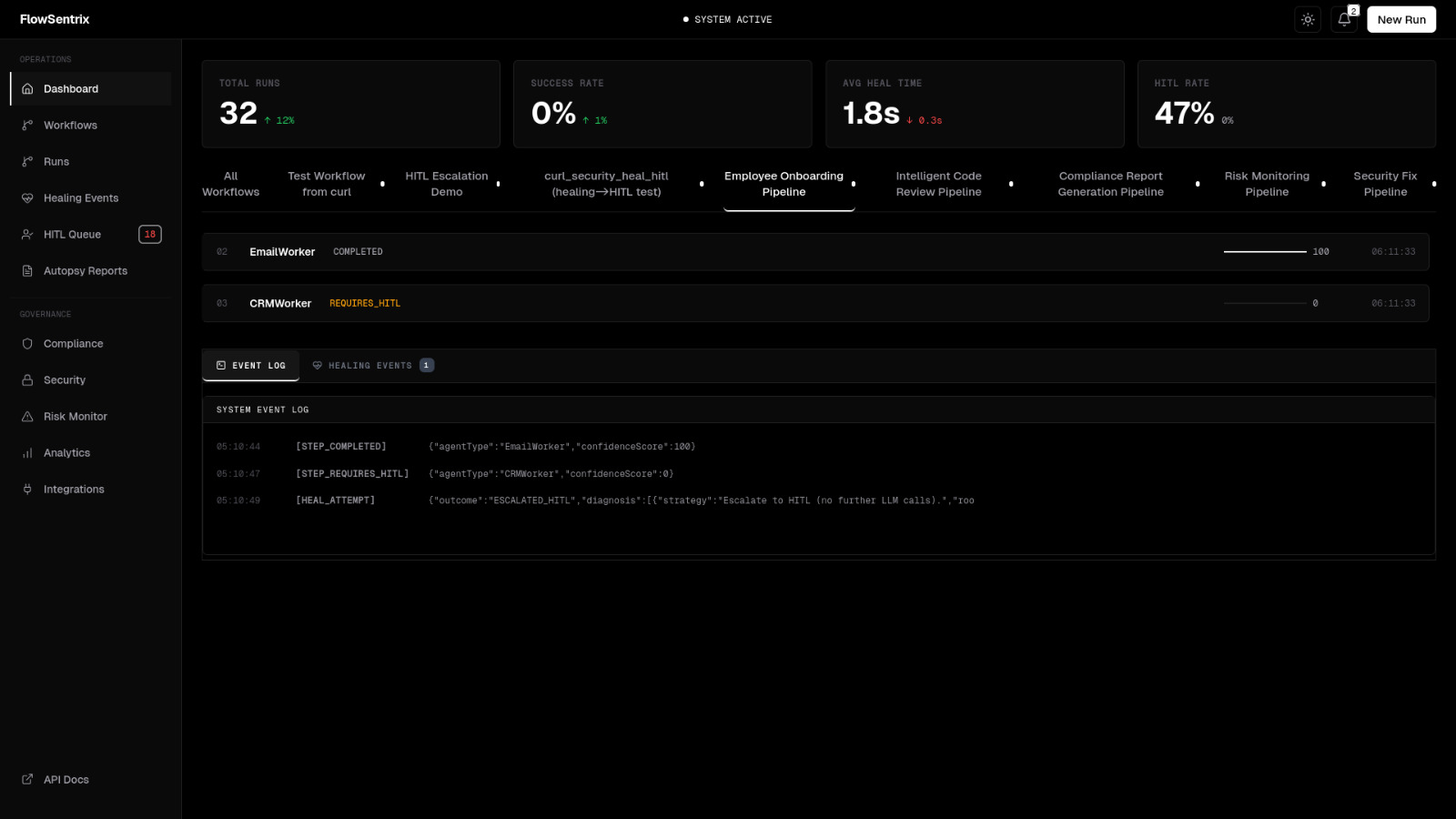
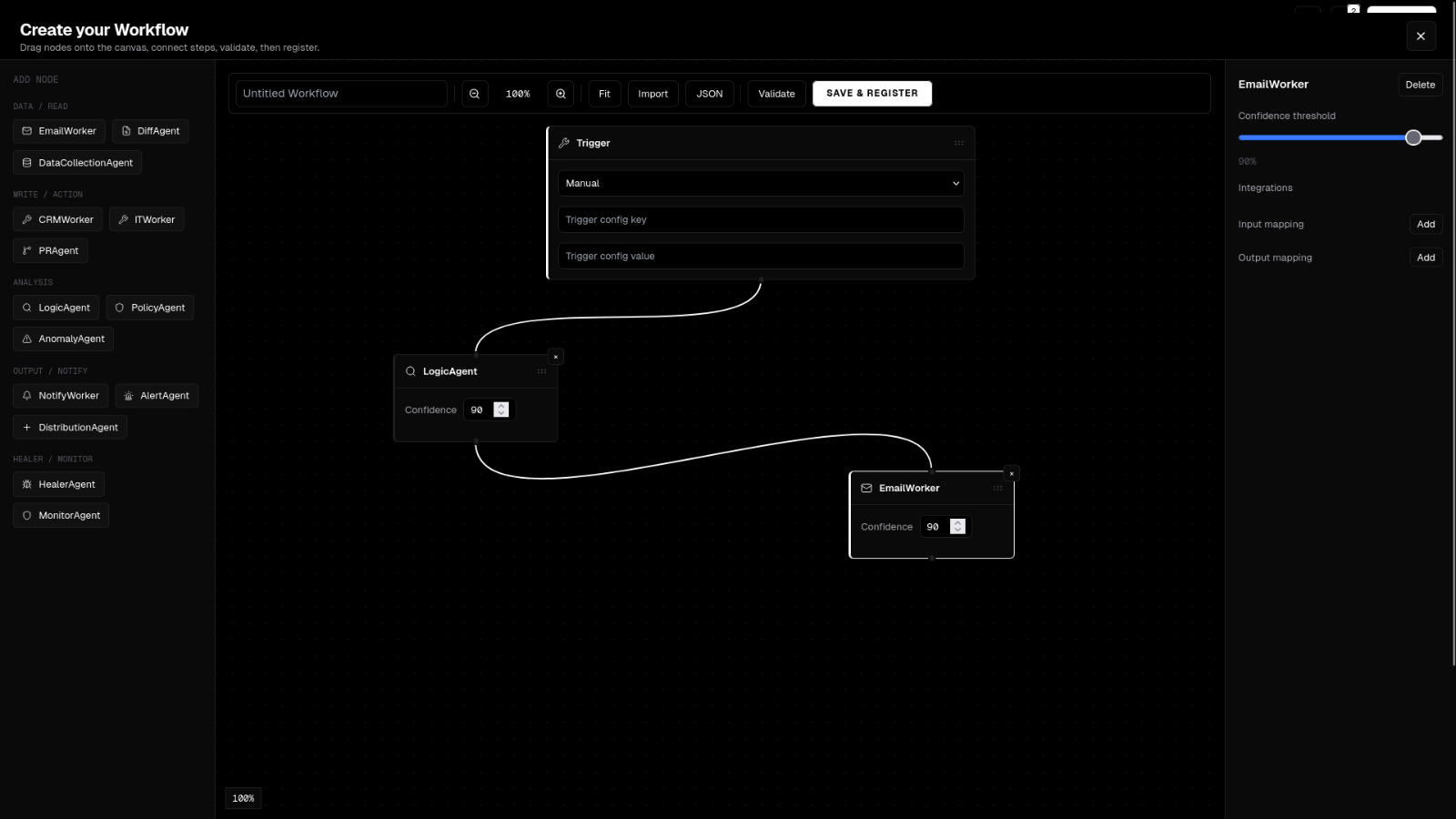
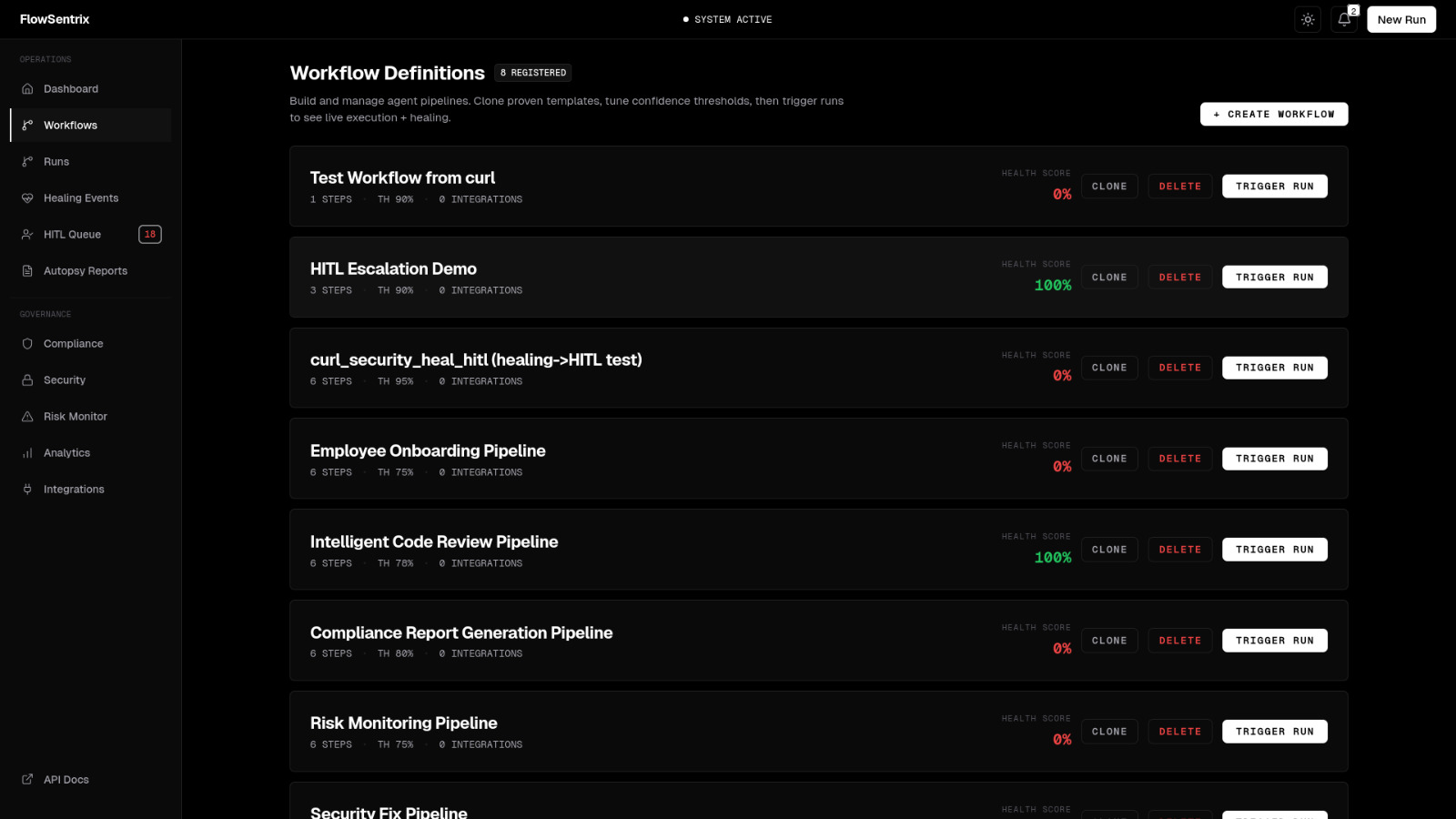
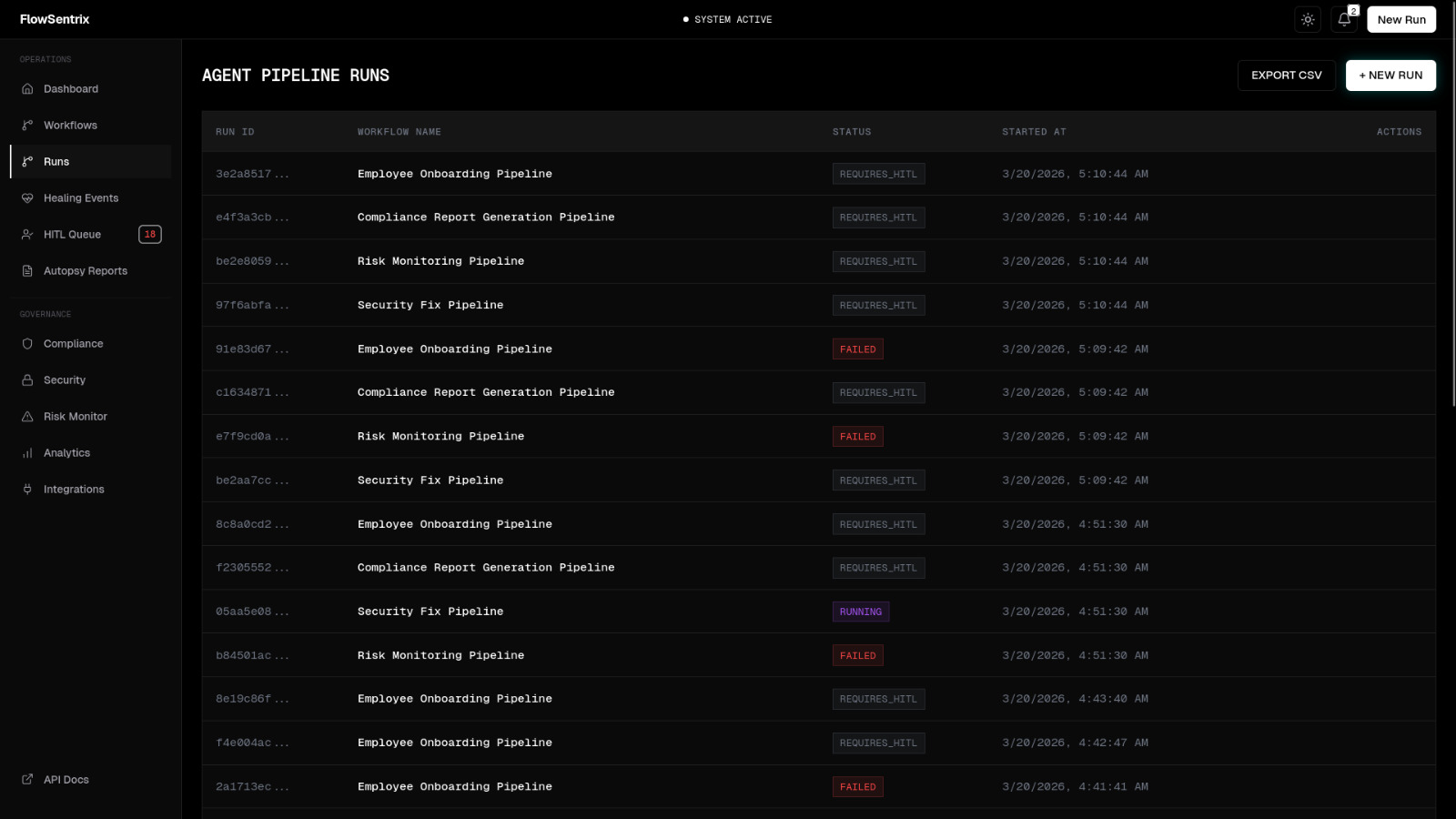
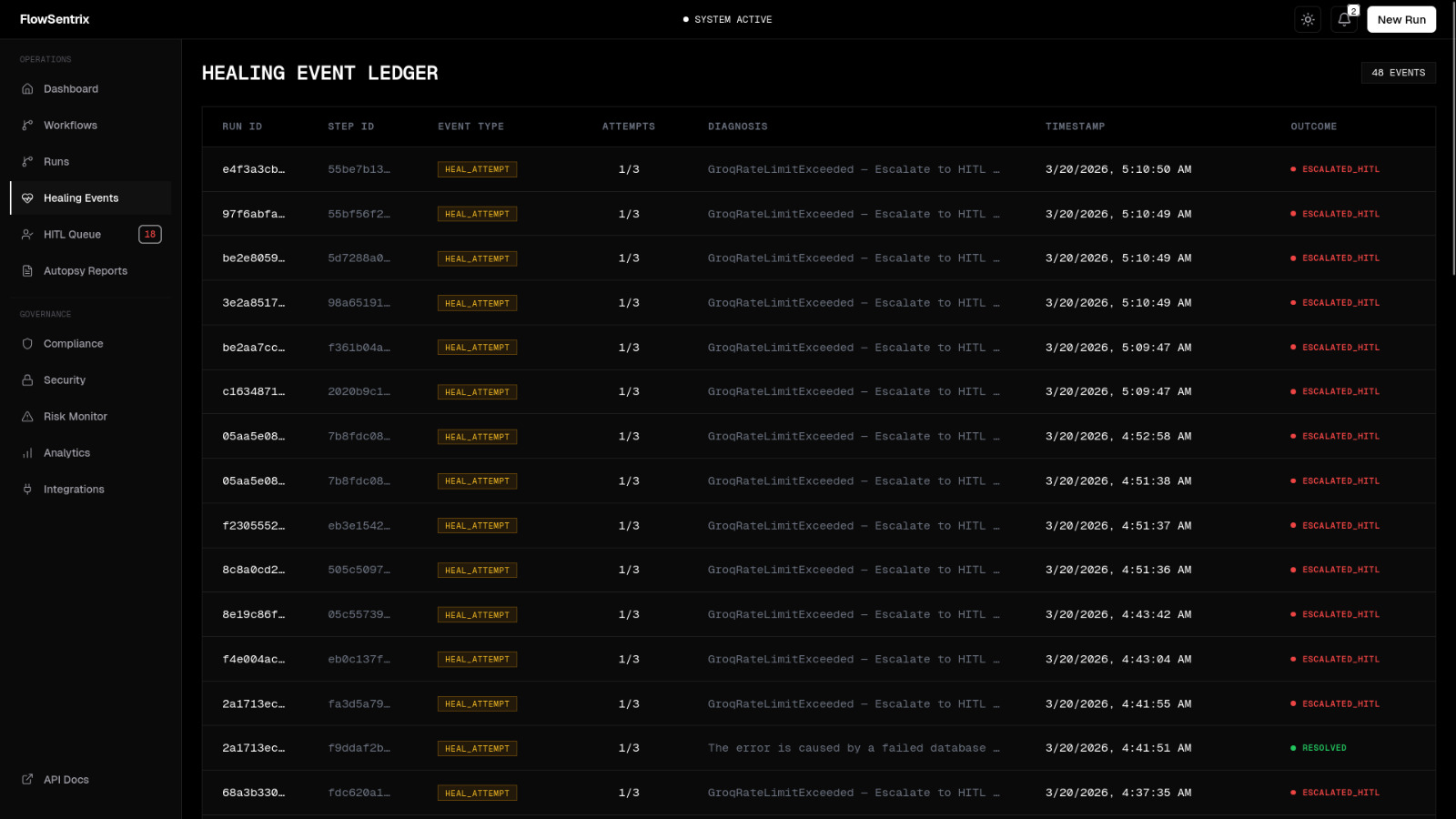
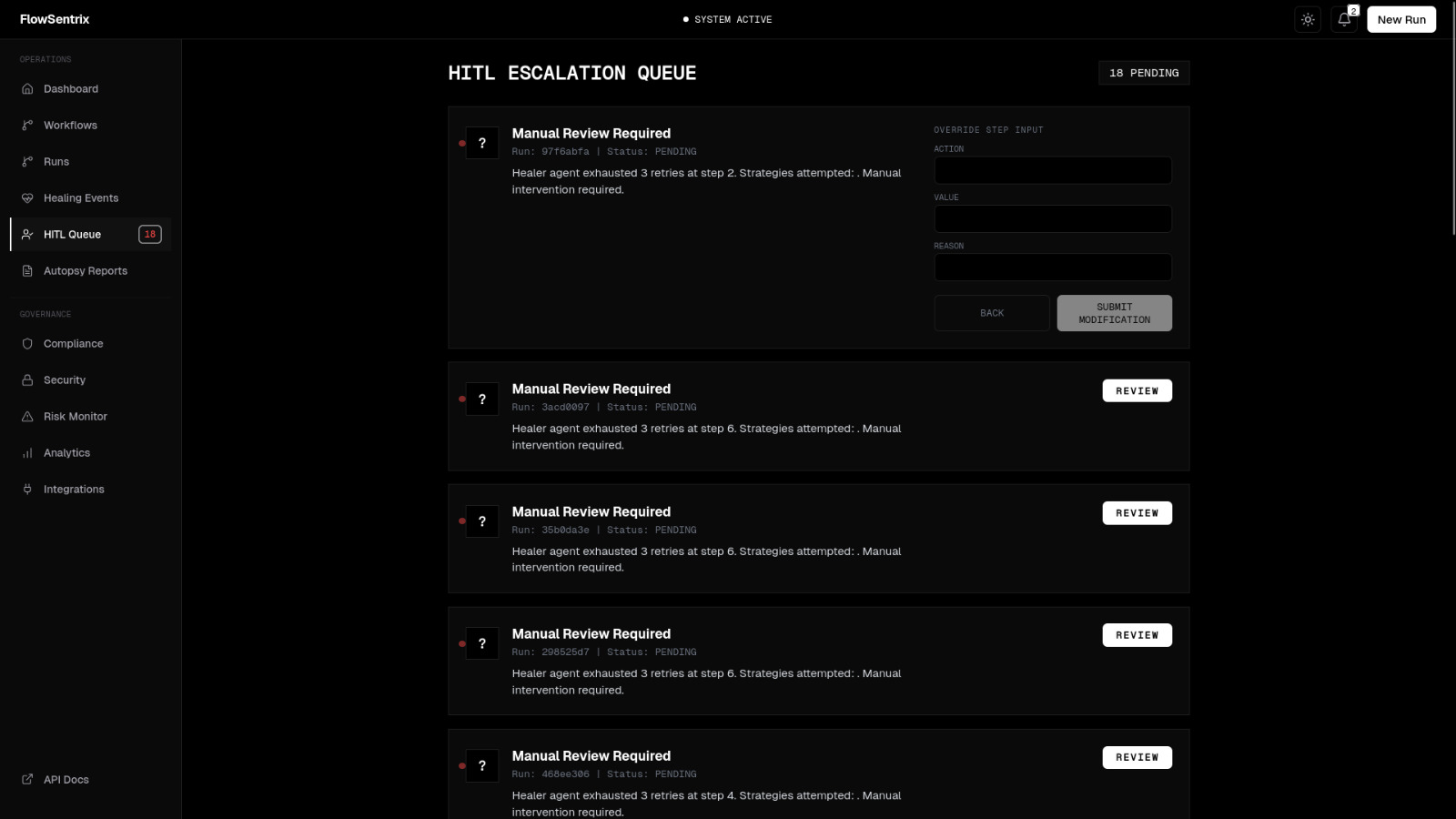
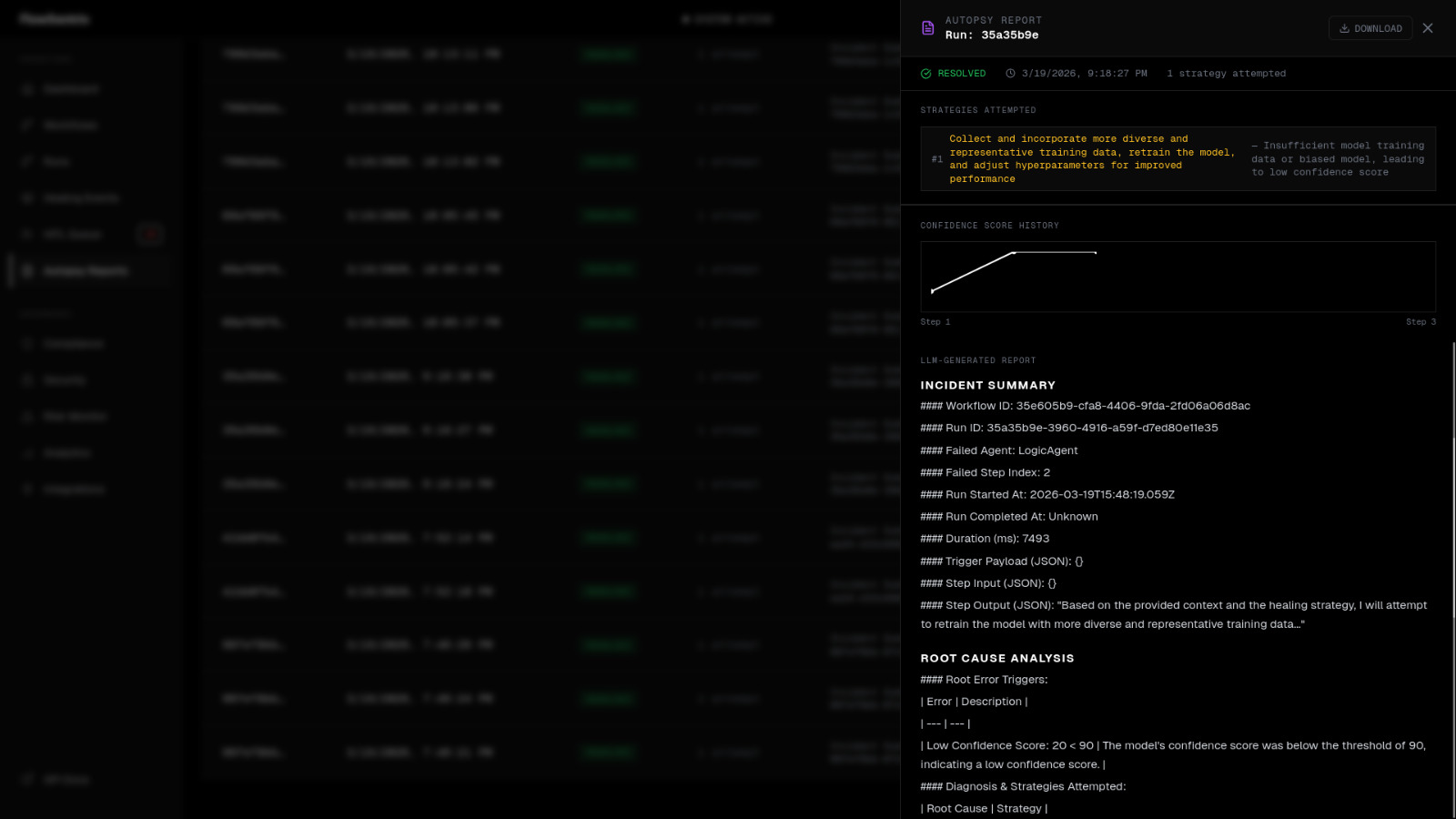
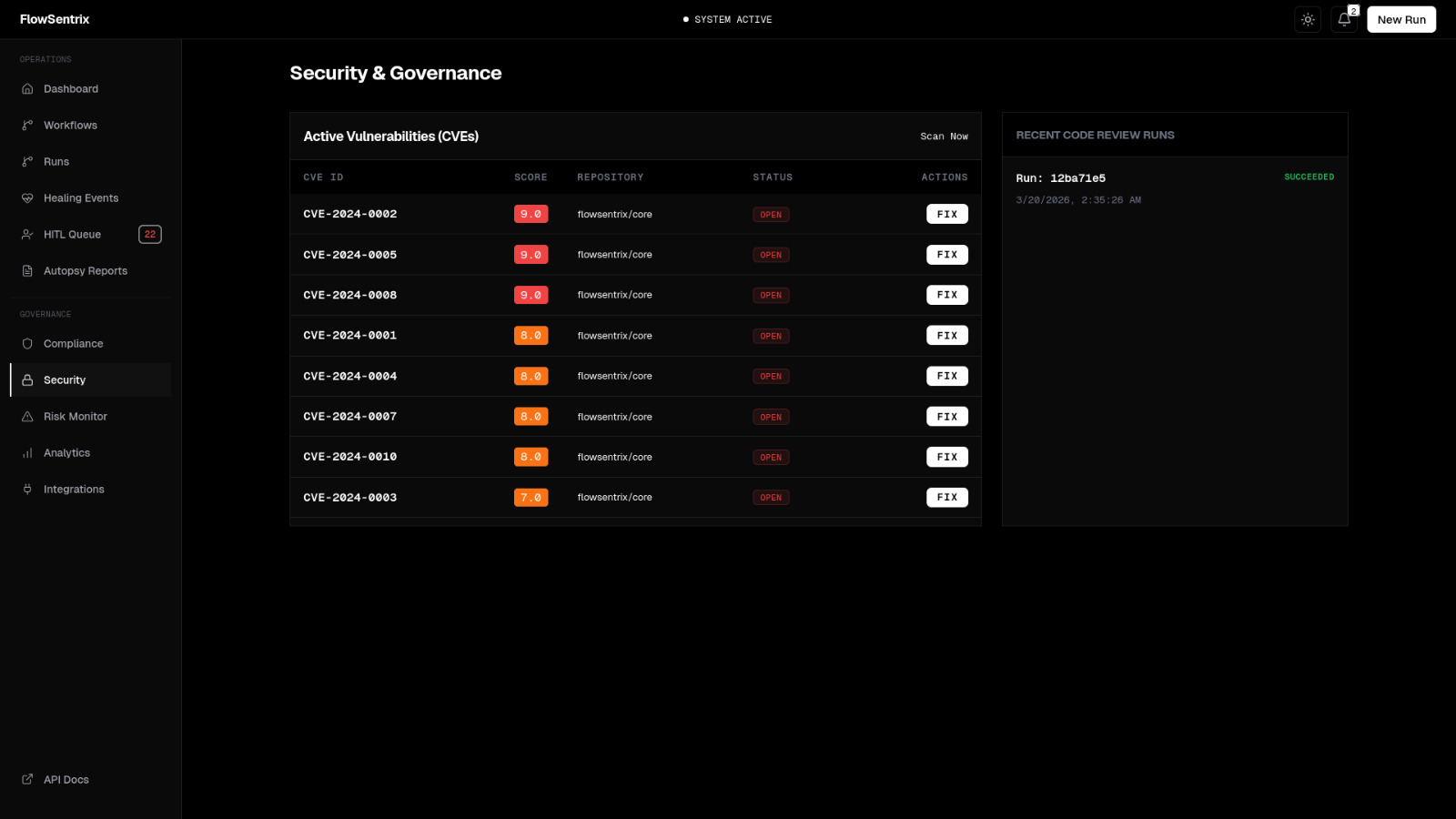
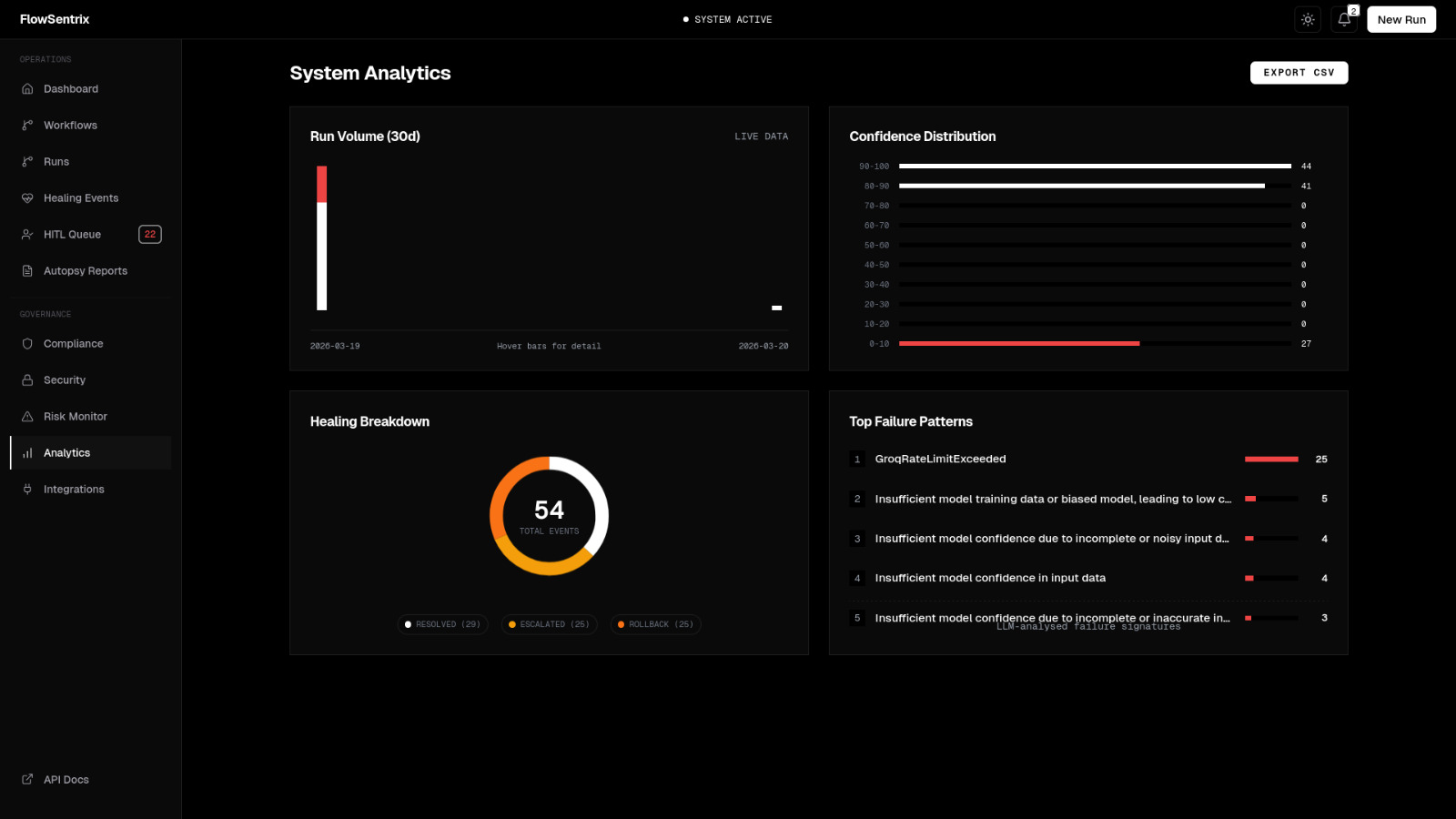
FlowSentrix is an agentic runtime system built to handle failure gracefully. It serves as a unified environment offering confidence-gated execution, autonomous healing, rollback and replay capabilities, Human-In-The-Loop (HITL) escalation, and autopsy reporting.
How We Built It
We designed FlowSentrix as a layered execution engine rather than a single monolithic "agent."
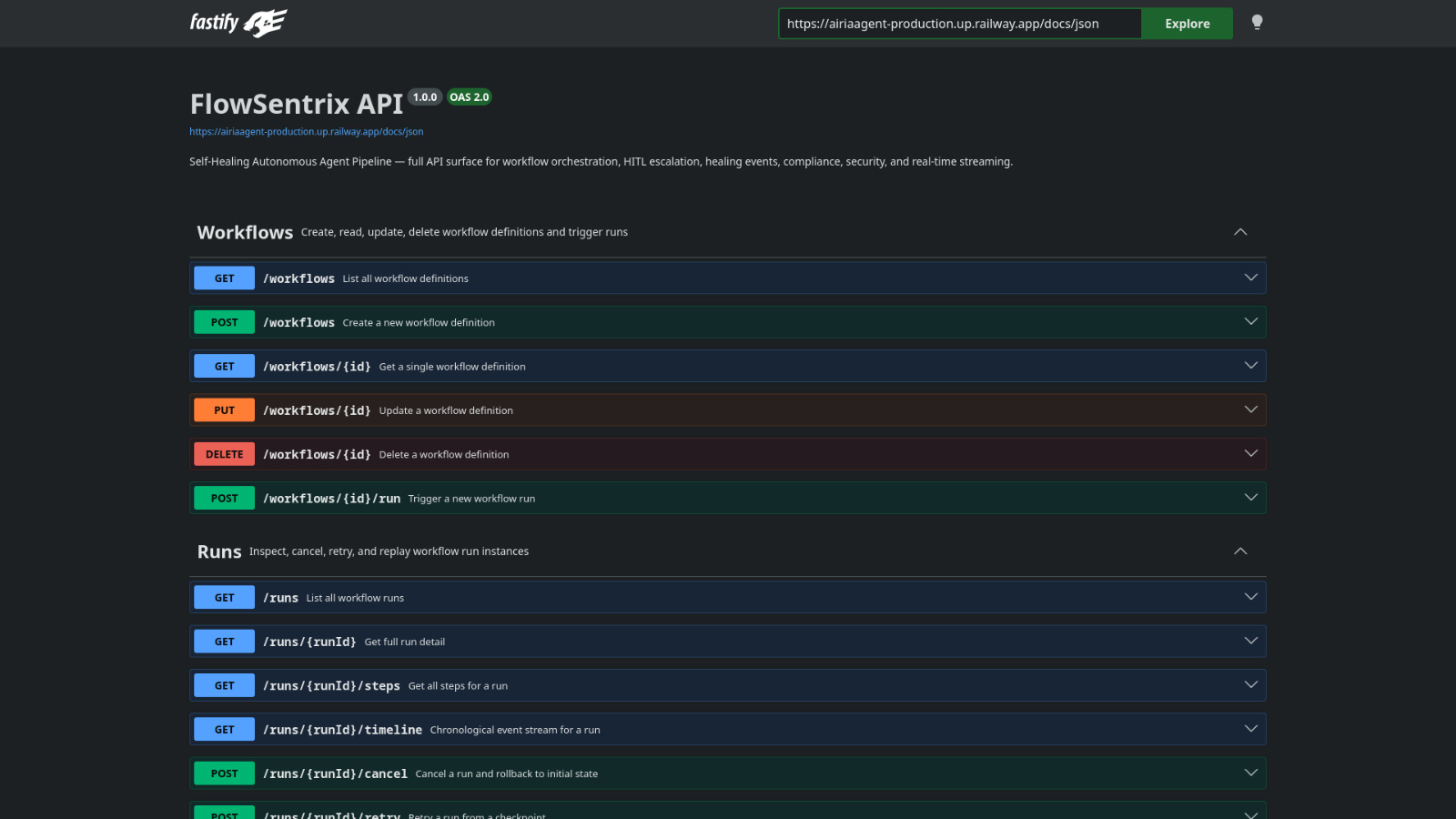
- Fastify backend as the control plane: We chose Fastify for predictable performance, low overhead, and clean plugin boundaries for APIs, Server-Sent Events (SSE) streaming, and integrations.
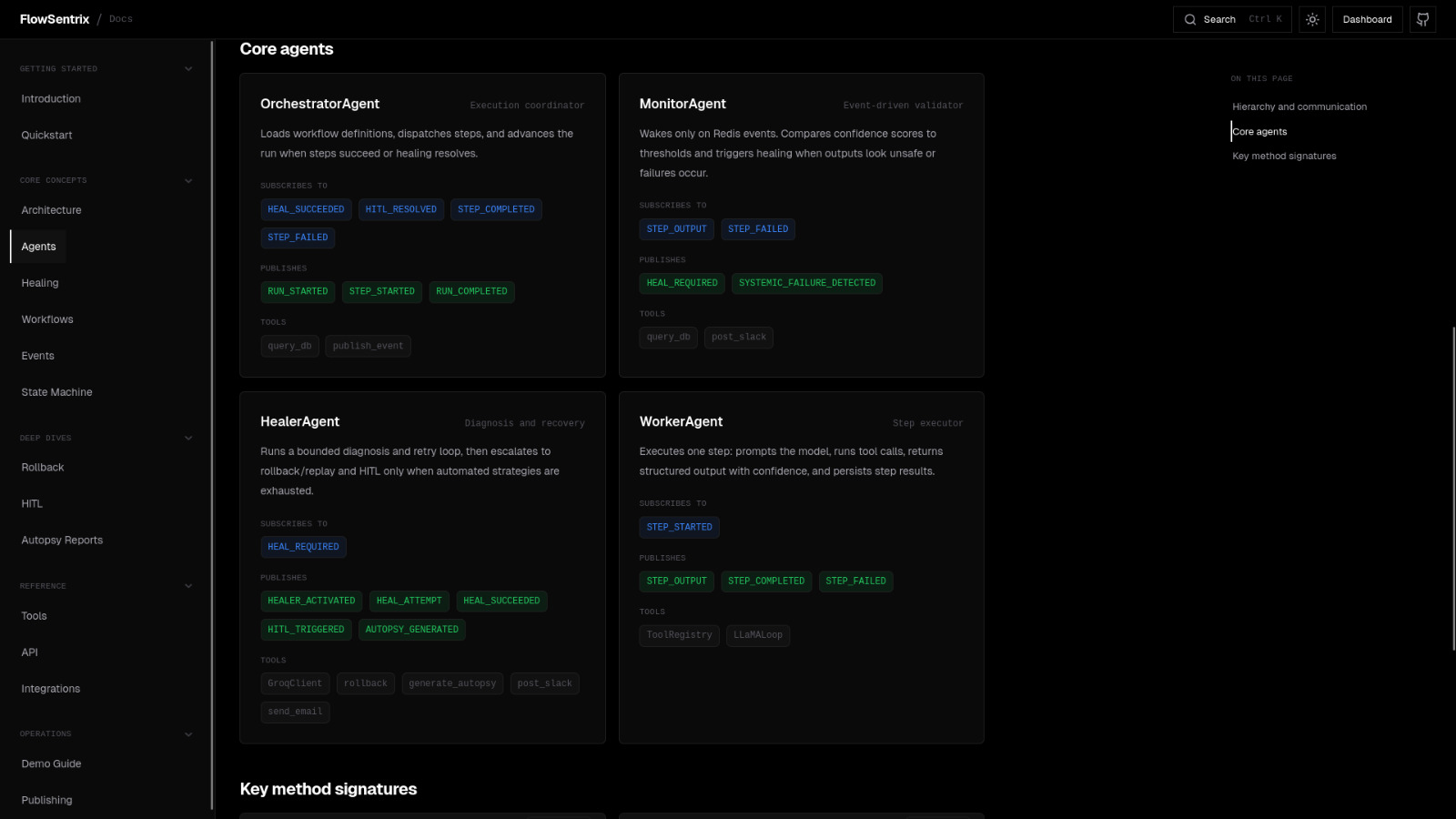
- Agent runtime with explicit responsibilities:
- Orchestrator: Owns the run lifecycle.
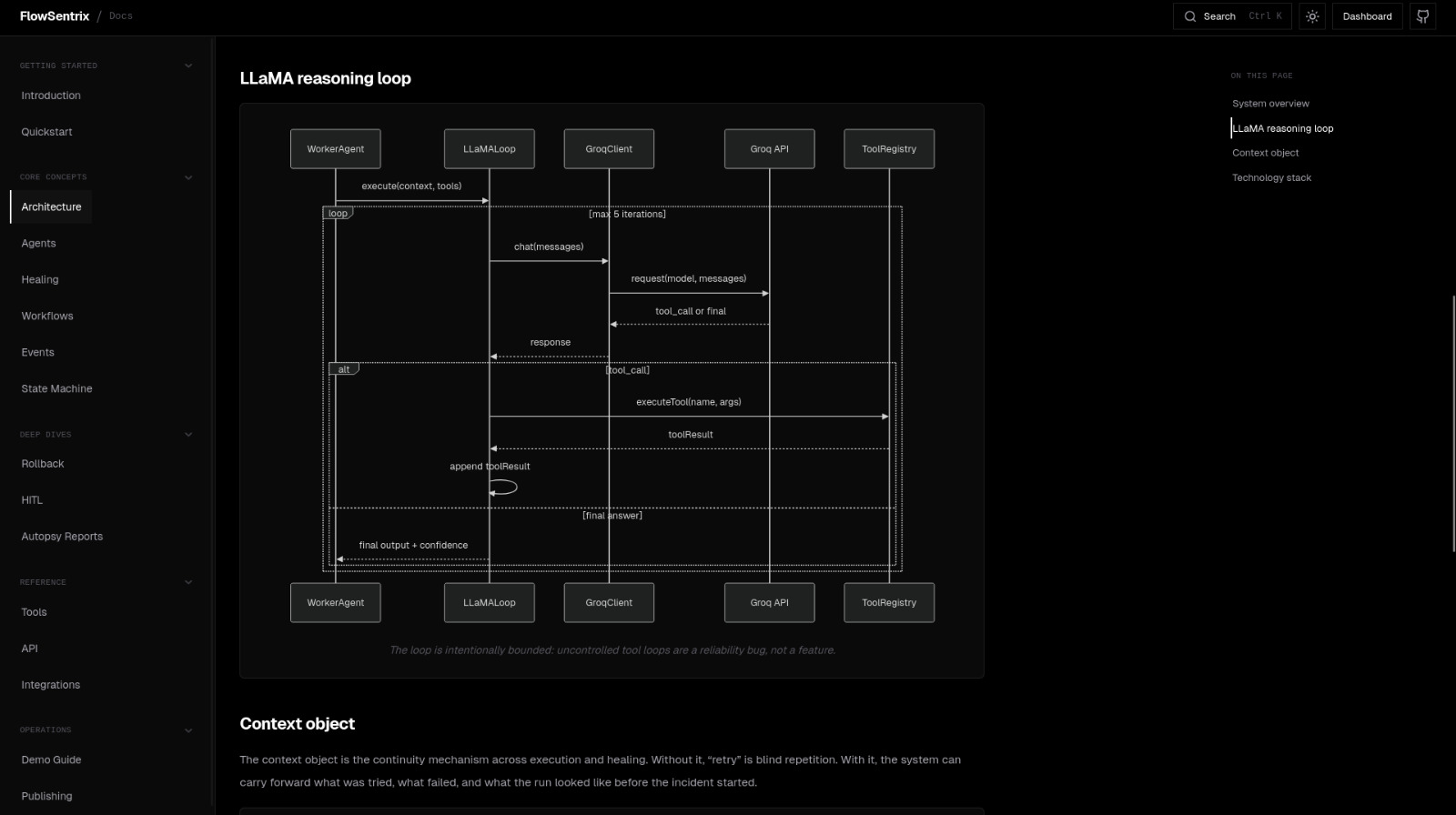
- Worker: Executes individual steps using tools.
- Monitor: Watches for low-confidence or systemic failures.
- Healer: Diagnoses, retries, and escalates issues.
- Confidence-gated write behavior: Every step output is scored before side effects occur. If confidence falls below a set threshold, writes are blocked and the healing process begins. We treat uncertainty as a first-class signal, not as noise to ignore.
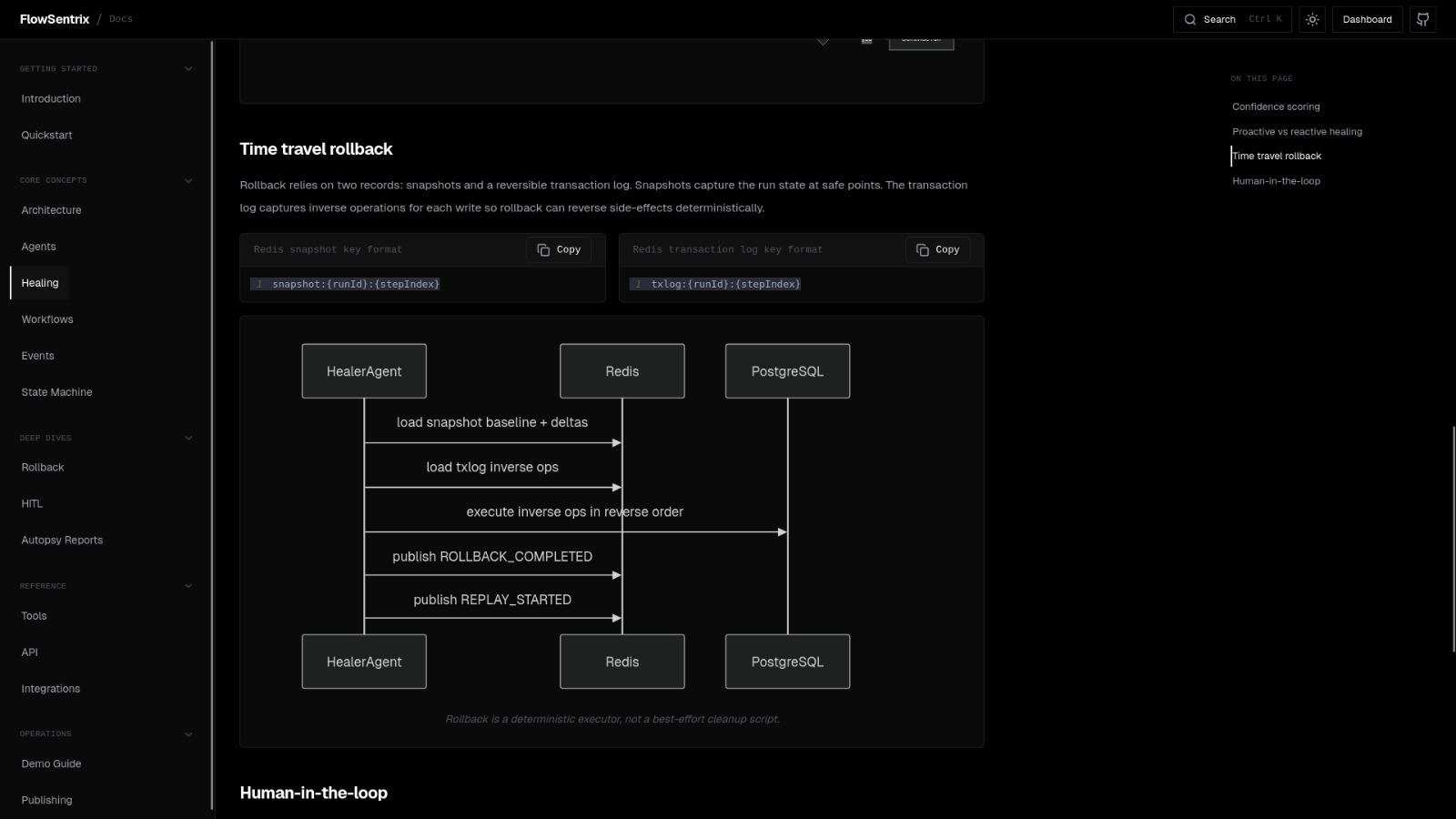
- Time-travel rollback mechanics: We store snapshots and reversible transaction logs so the system's state can be rewound and replayed with a corrected strategy.
- Real integrations with safe mock parity: Slack, GitHub, and Resend run in real mode or mock mode without changing the core orchestration logic.
- Production-minded inference strategy: LLaMA inference is served through Groq with random key-manager rotation, cooldown periods on rate-limited keys, automatic retries, and cached inference fallbacks for high-pressure windows.
Challenges We Faced
- Challenge 1: Half-committed workflows Early versions could fail after partial writes. We solved this with reversible transaction logs and rollback execution tied to snapshots.
- Challenge 2: Unreliable external dependencies Slack, GitHub, and email APIs all fail differently in production. We hardened adapters, improved error propagation, and made failures visible to the orchestration layer.
- Challenge 3: LLM rate limiting under burst load With one key, runs could bottleneck hard. We integrated key-manager based random rotation, added temporary cooldowns for throttled keys, and introduced similarity-based cached inference fallbacks during limit spikes.
- Challenge 4: Trust under pressure When a run fails, users ask: What happened? Can I trust this fix? We answered with explicit confidence gates, replayable state transitions, and autopsy artifacts that are human-readable and auditable.
What We Learned
1. Reliability is a product feature
In agent systems, correctness is not just about generating an answer. It is about controlling side effects. The core unit is not "response quality"; it is:
$$\text{Safe Output} = \text{Reasoning Quality} \times \text{Execution Guardrails}$$
2. Explainability must be operational, not theoretical
Logs are not explanations. Teams need narrative context: what failed, why it failed, what was attempted, and what finally worked. That is why we generate autopsy reports and stream state transitions in real time.
3. Latency and resilience must be balanced
Purely strict limits make systems brittle; purely loose limits create chaos. We learned to tune for graceful degradation:
$$\text{Throughput Stability} \approx f(\text{retry policy}, \text{key rotation}, \text{cache fallback}, \text{HITL gating})$$
4. Human-in-the-loop is not a failure mode
HITL is not a sign that the system failed. It is a safety valve for high-stakes decisions. The right design goal is to automate routine certainty and escalate exceptional uncertainty.
Why This Project Matters
FlowSentrix is our attempt to move agent systems from "impressive output generators" to "reliable operational infrastructure." It is built around a core belief: the best automation does not pretend failure will never happen. It is designed to recover when it does.
If this story resonates, that is intentional. We built FlowSentrix for teams who need AI systems that keep working when reality gets messy.
And reality always gets messy.


Log in or sign up for Devpost to join the conversation.