-
-
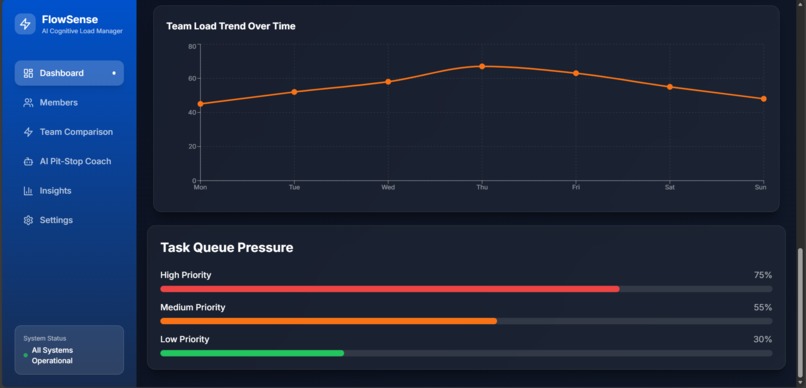
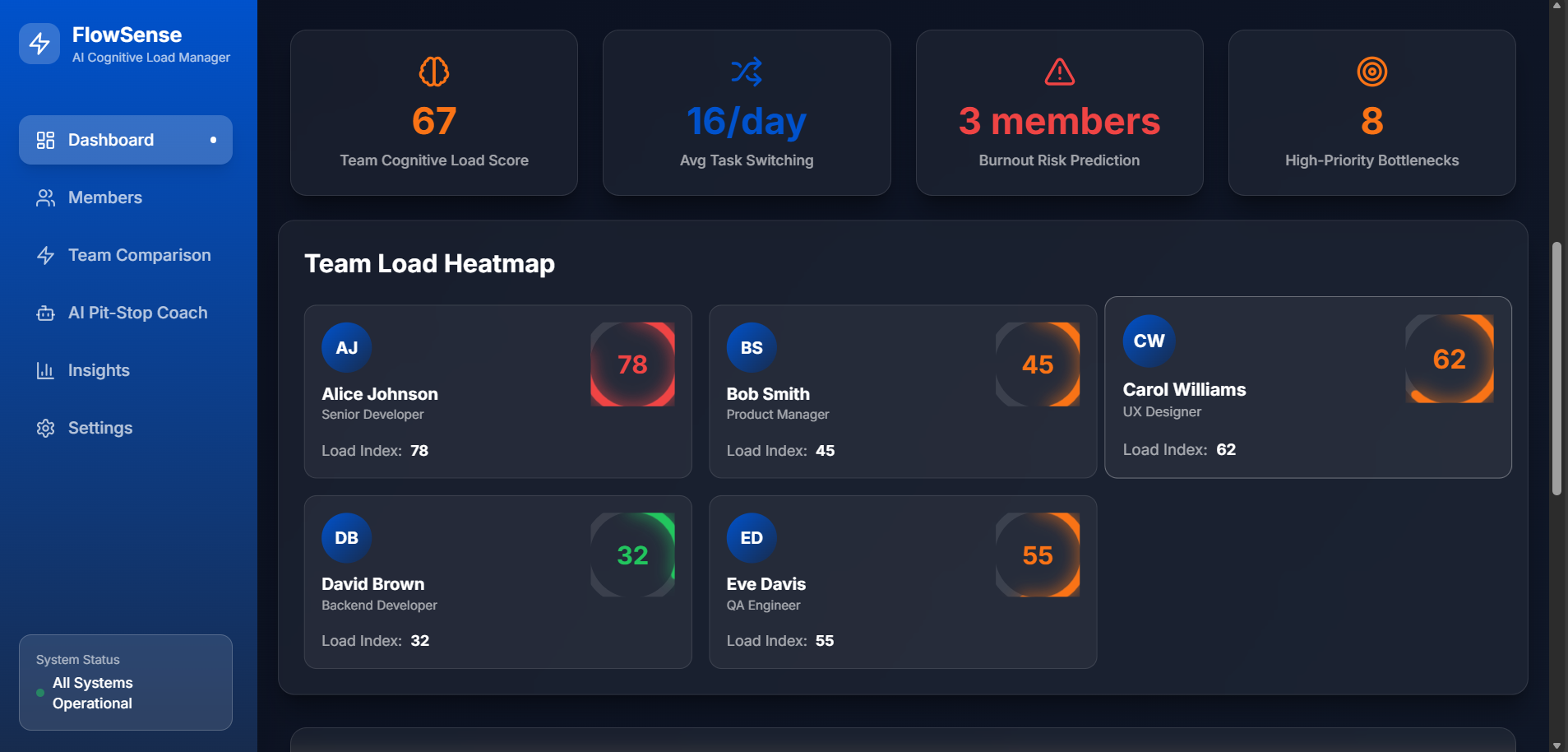
Dashboard
-
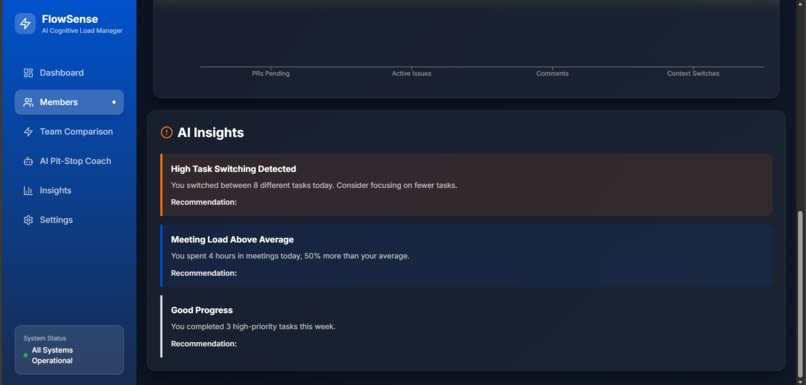
Employees Analysis
-
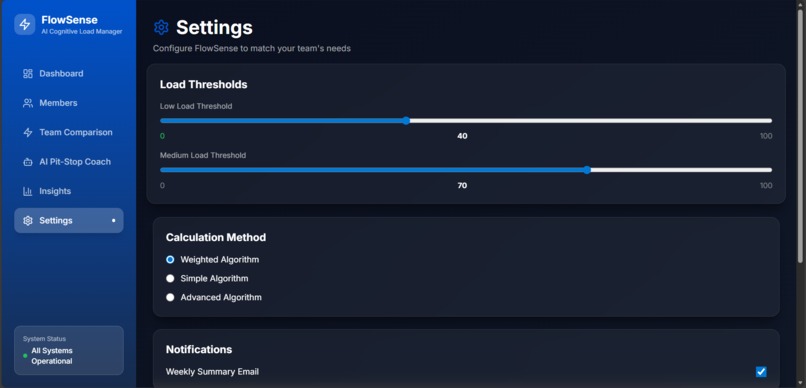
Settings
-
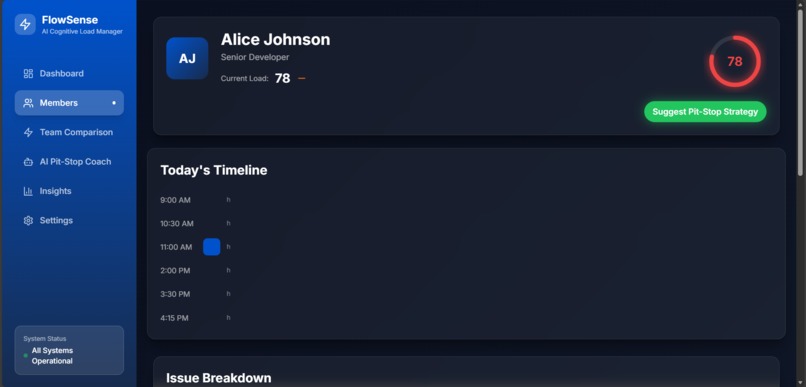
Employees Analysis
-
Team Insights
-
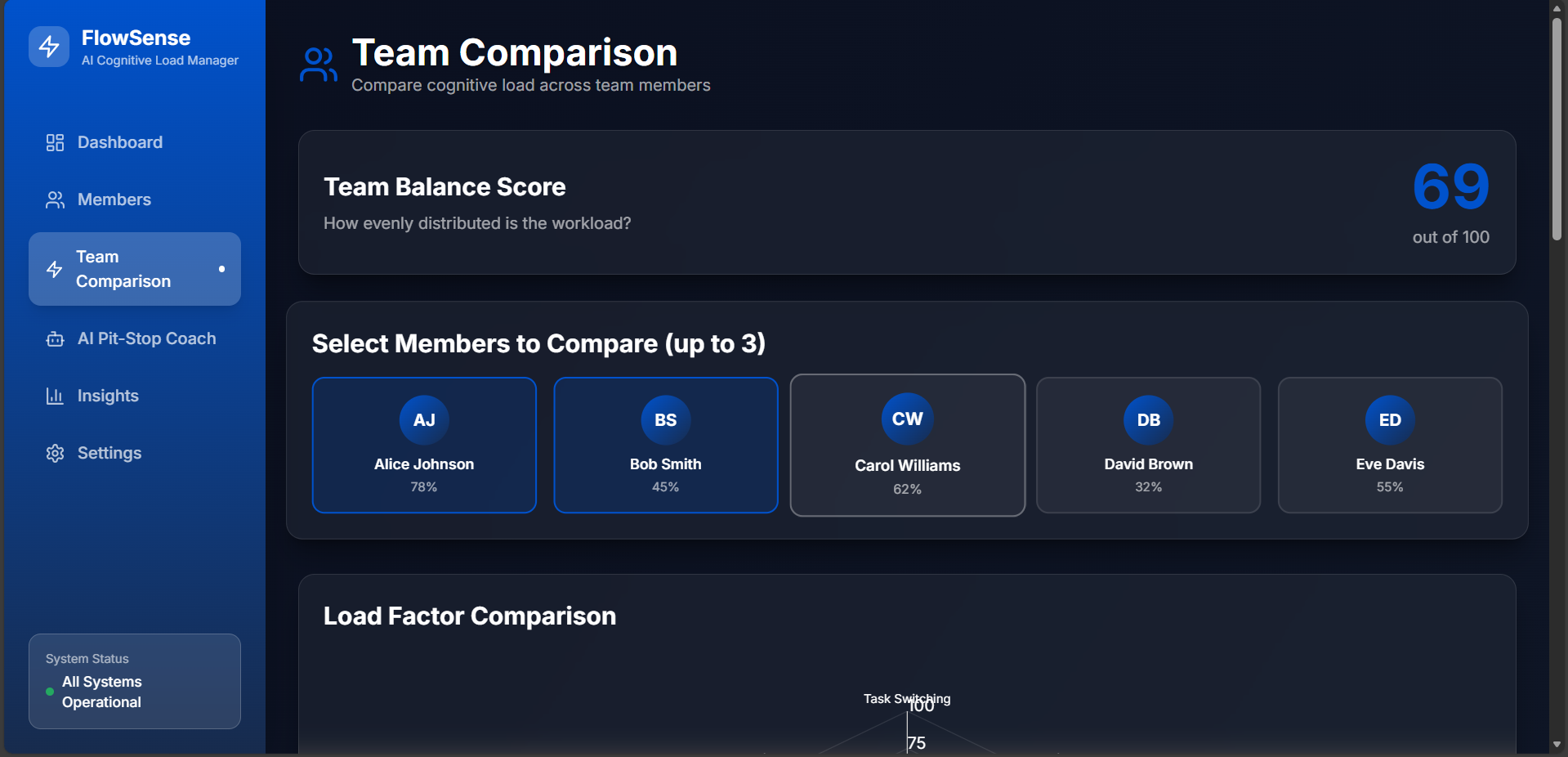
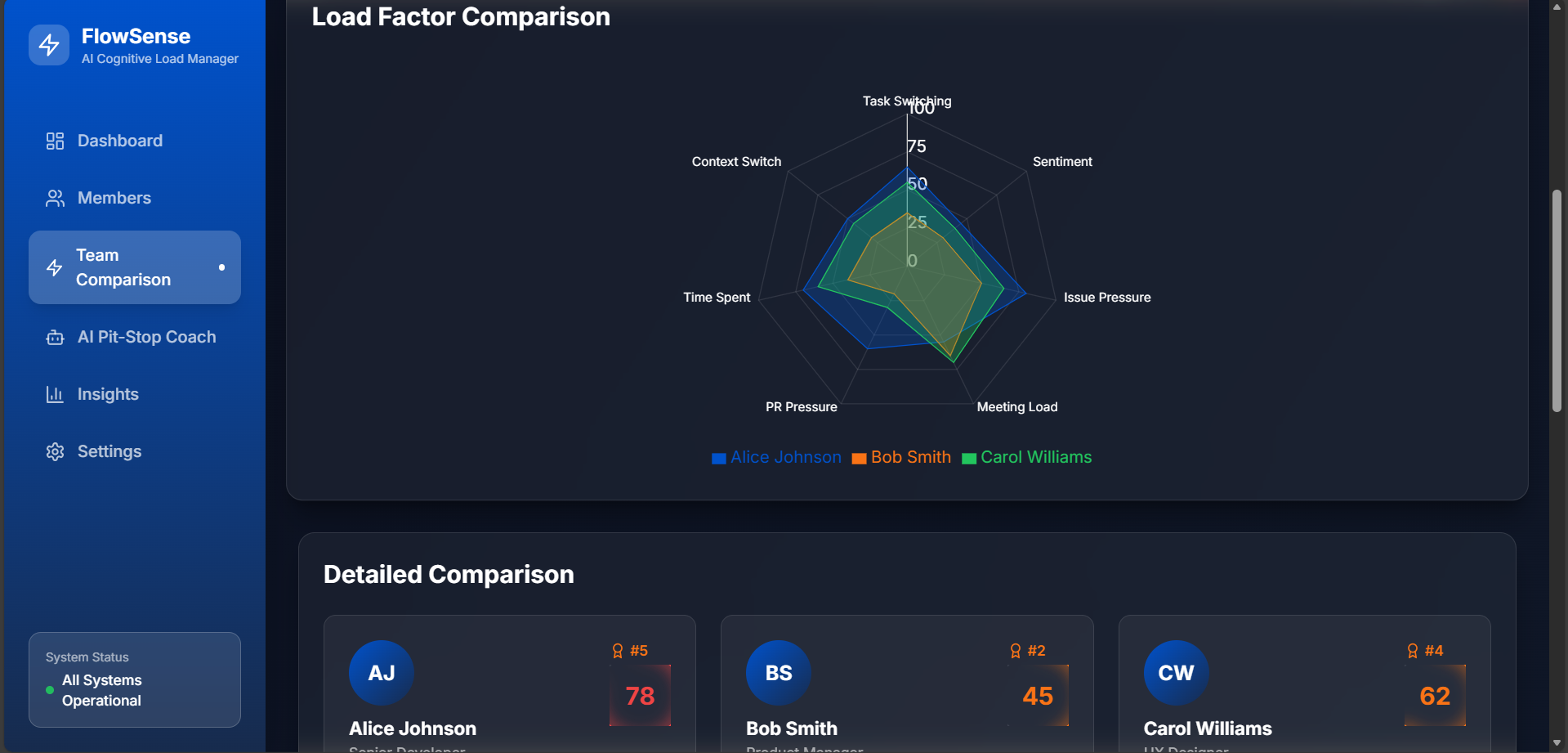
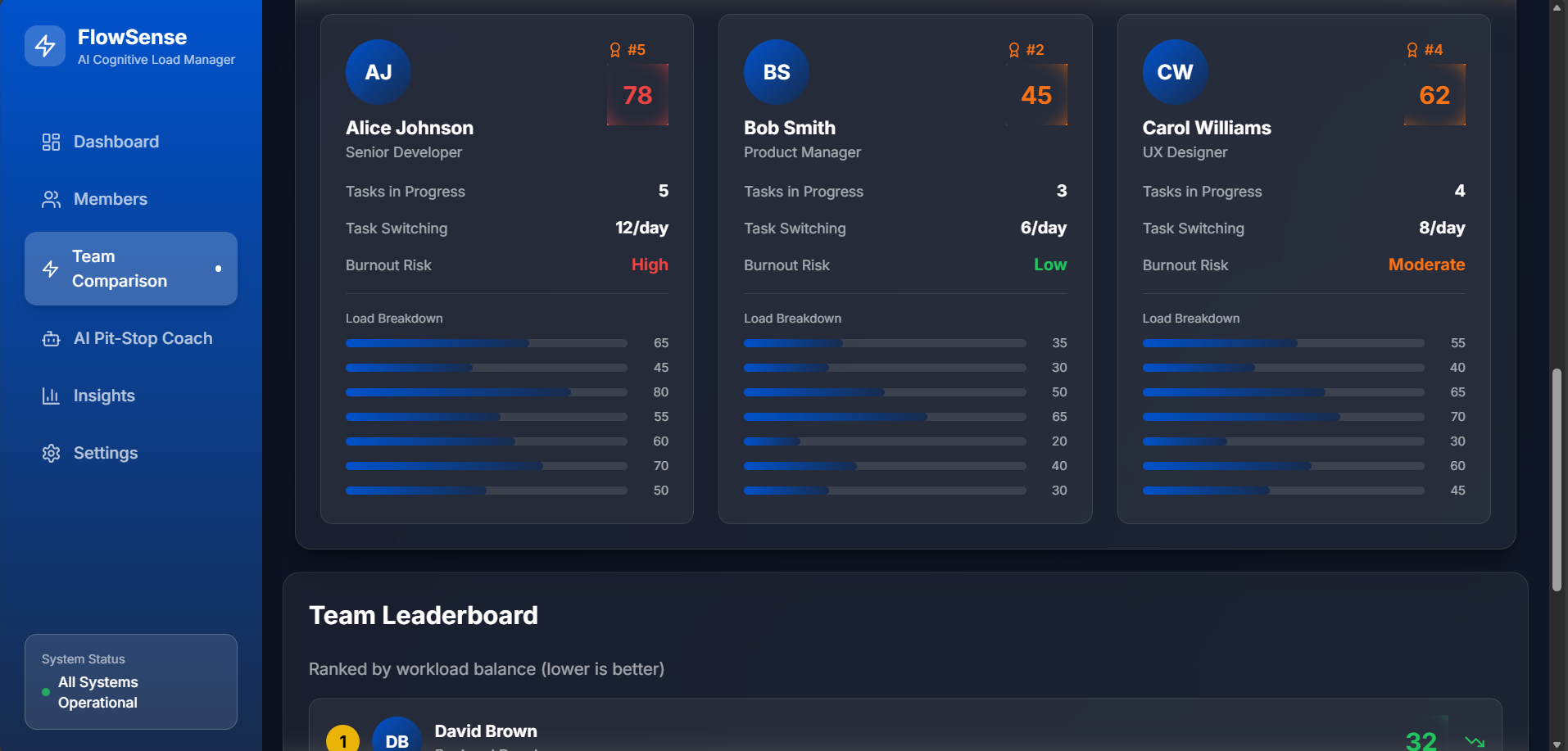
Team Comparison
-
Team Comparison
-
Team Comparison
-
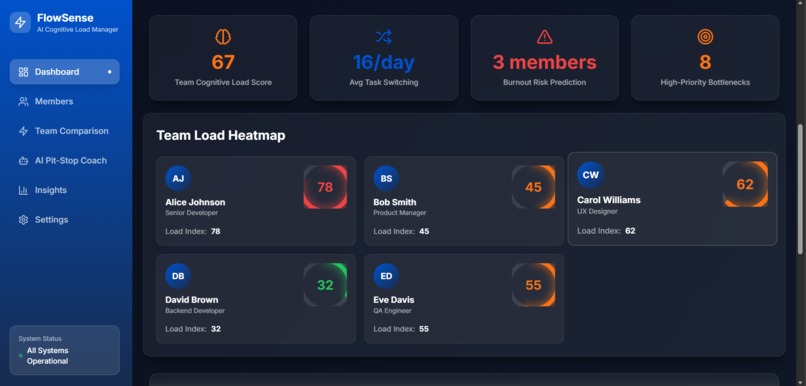
Dashboard
-
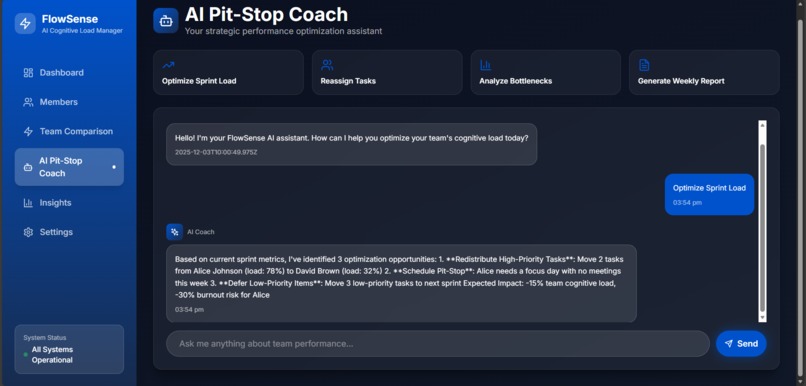
AI Assistant
-
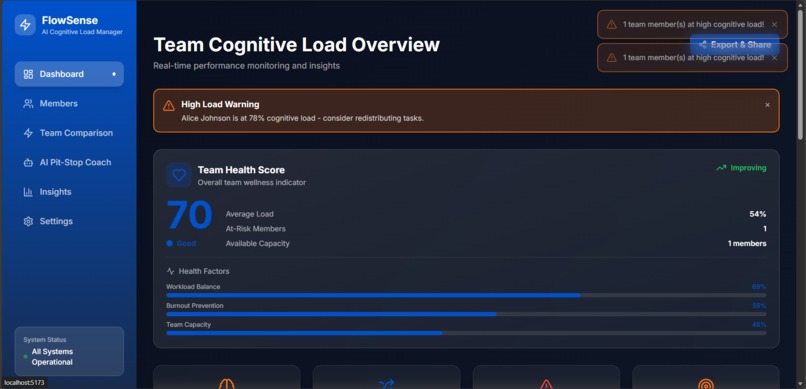
Dashboard
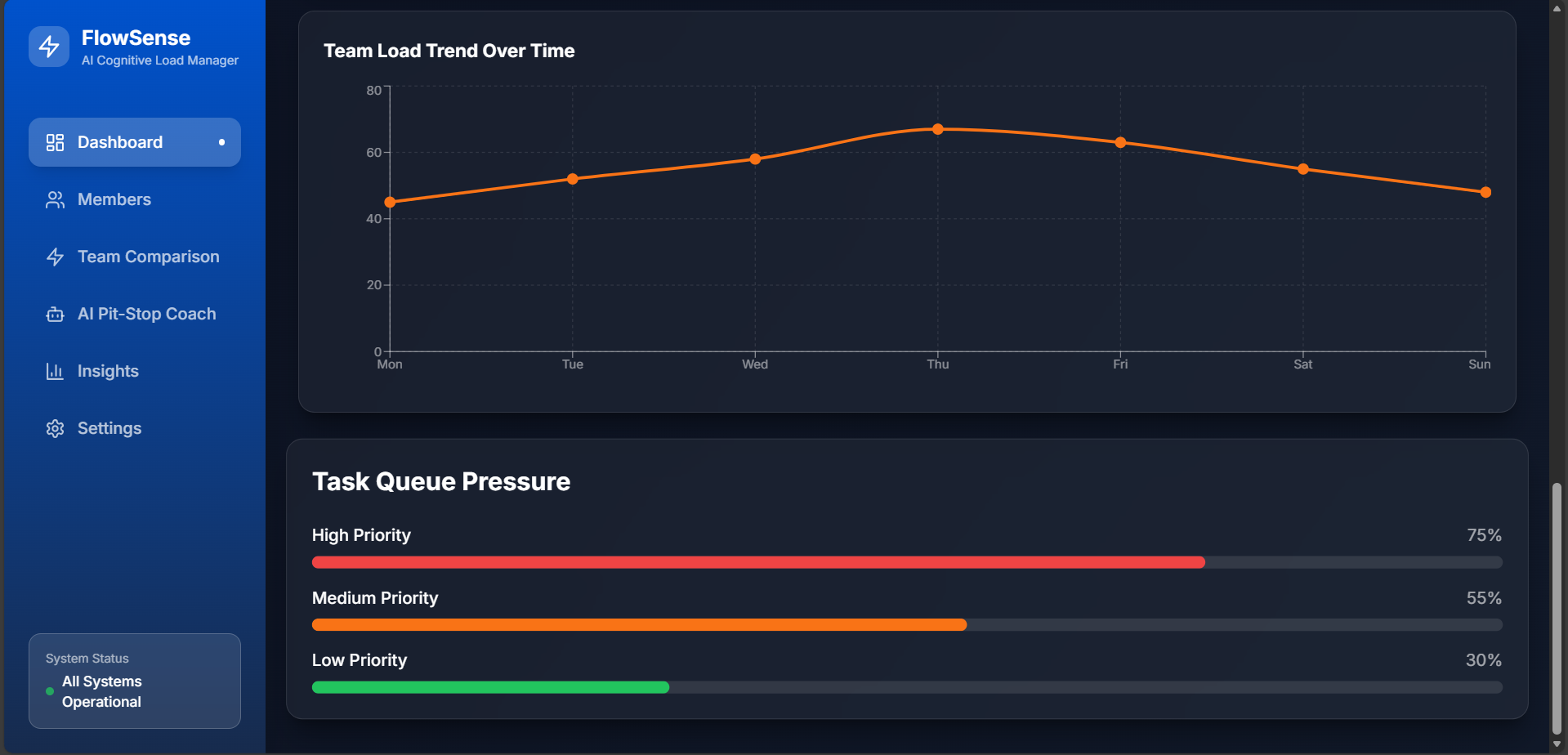
Inspiration
Developer burnout isn't just a buzzword: it's a $300 billion crisis affecting 83% of software teams. We've all seen it: the brilliant developer who suddenly can't focus, the team lead drowning in context switches, the sprint that collapses under invisible cognitive pressure.
Traditional project management tools track what gets done, but they miss how it feels to do it. They're reactive, alerting you after someone burns out, not before. We were inspired by Formula 1 racing, where pit crews monitor driver performance in real-time and make strategic interventions to keep them in the race. What if we could do the same for dev teams?
FlowSense was born from a simple question: What if we could prevent burnout before it happens?
What it does
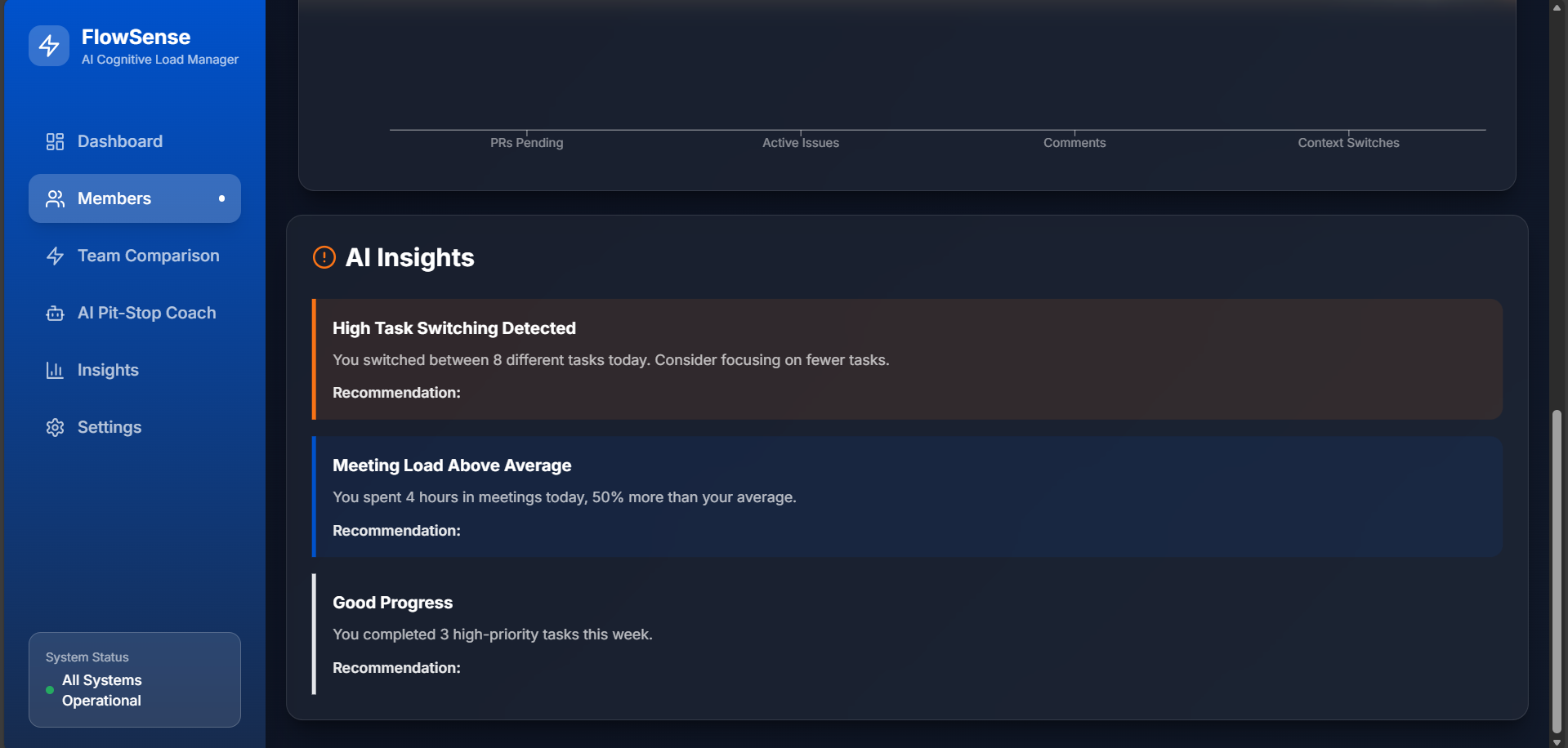
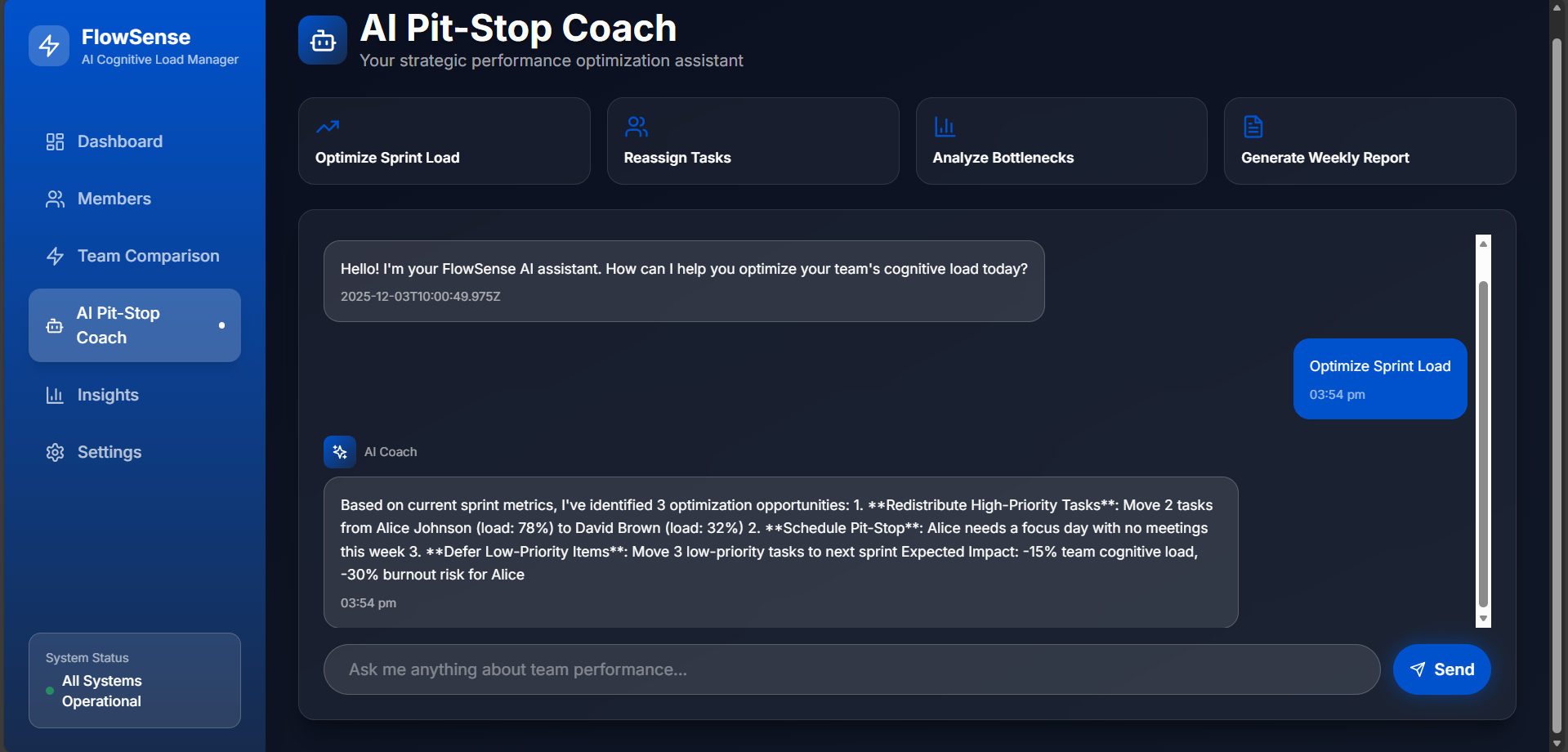
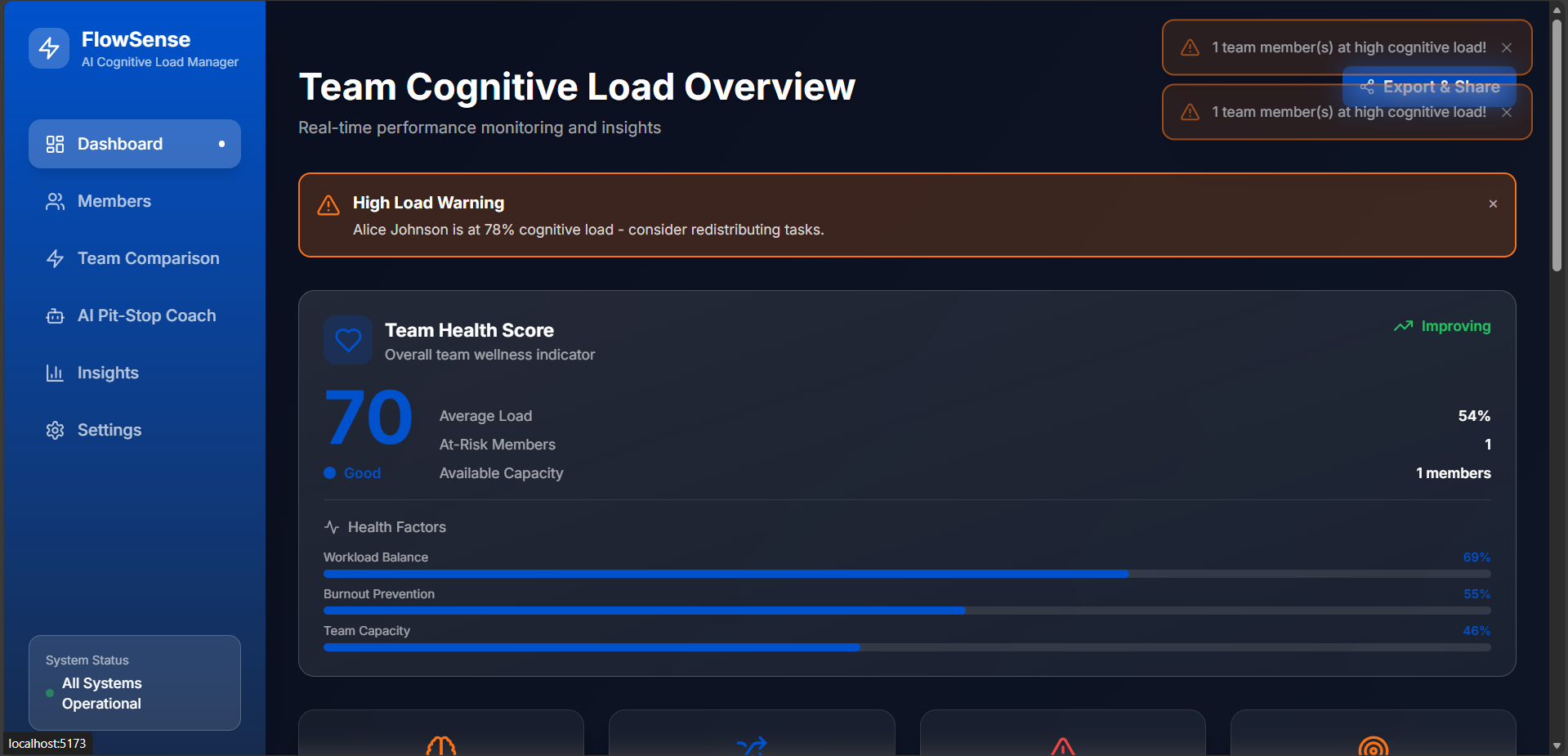
FlowSense is an AI-powered cognitive load manager that acts as the F1 pit crew for your development team. It monitors team mental workload in real-time and provides strategic "pit-stop" interventions to prevent burnout.
Core Features:
🎯 Team Health Score (0-100)
- Real-time composite metric analyzing workload balance, burnout risk, task distribution, and sentiment
- Color-coded health indicators (green/yellow/orange/red)
- Actionable insights with F1-inspired "pit-stop recommended" alerts
🤖 AI-Powered Analysis
- 5 intelligent actions: Analyze Team Load, Optimize Sprint, Detect Burnout, Rebalance Workload, Generate Reports
- Predictive burnout detection 7-14 days ahead
- Smart task redistribution recommendations
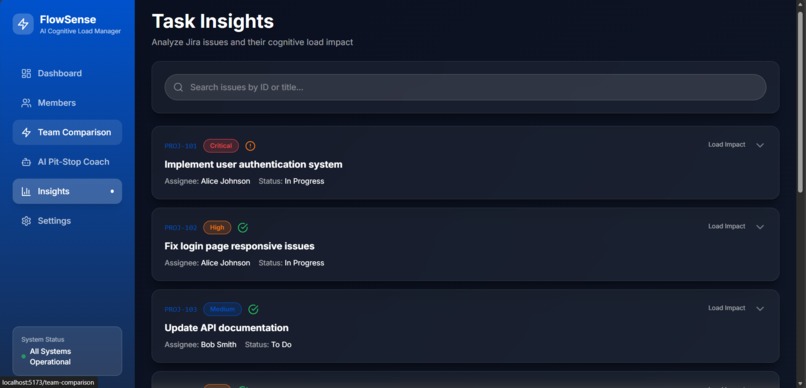
📊 Deep Insights
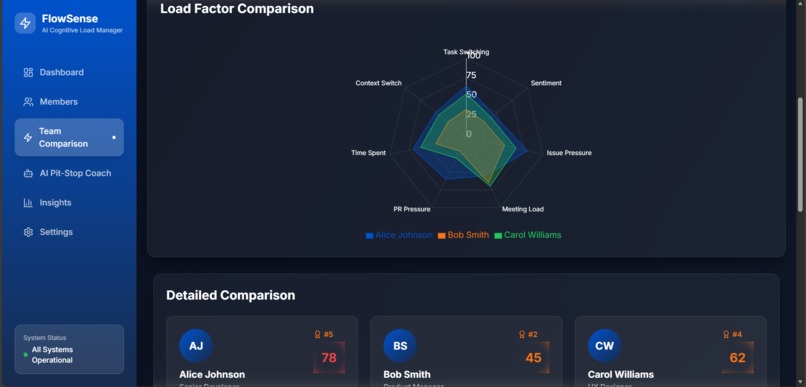
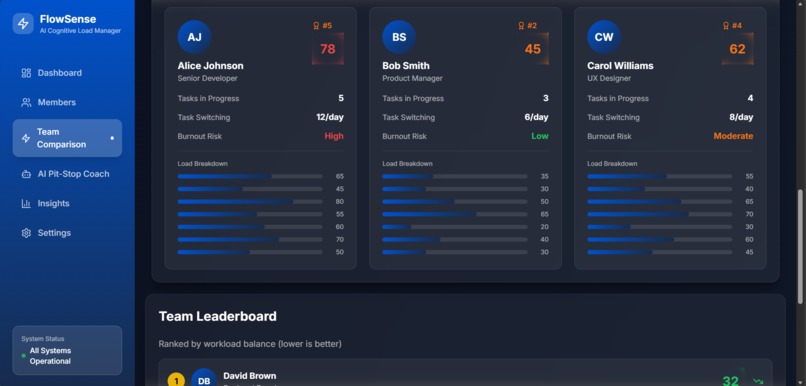
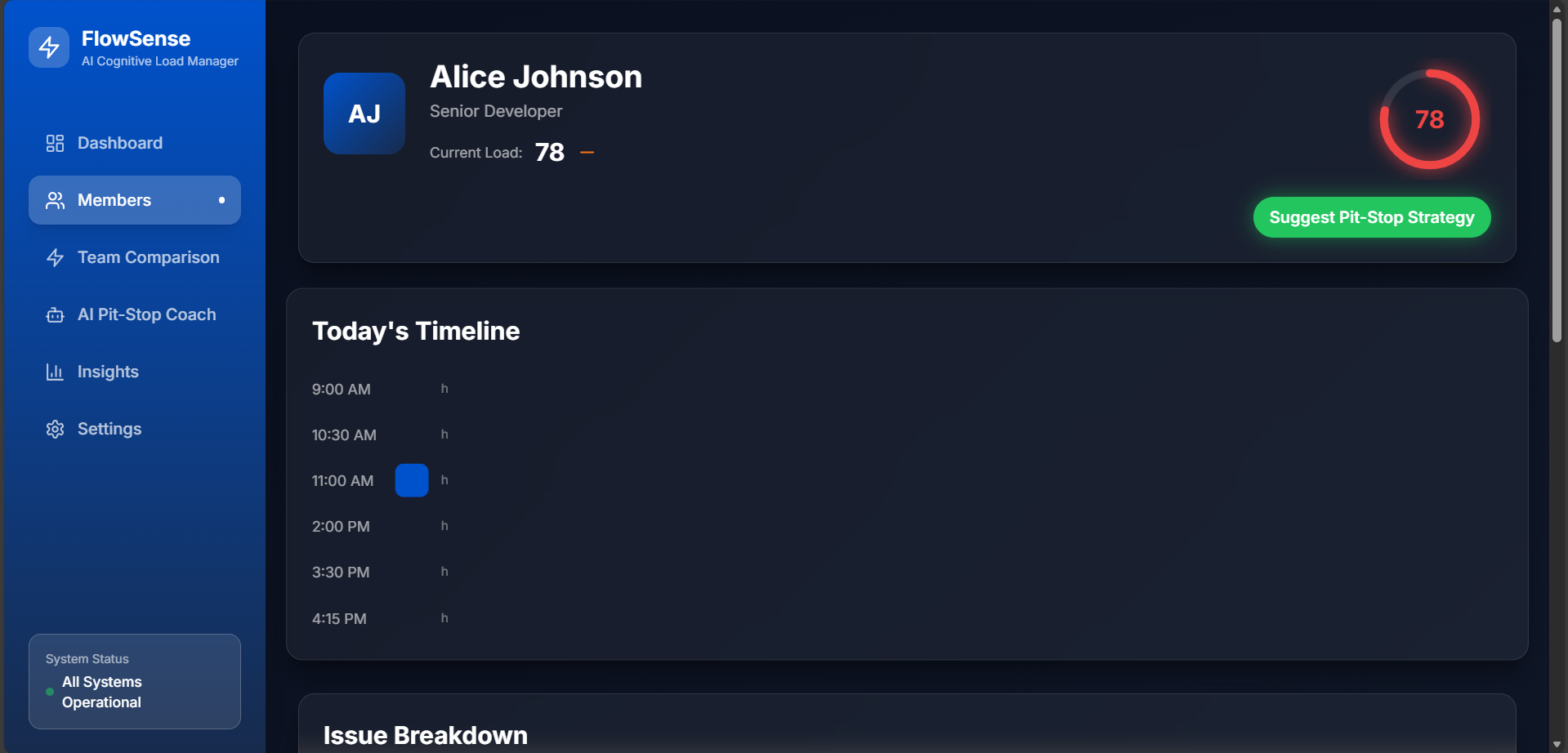
- Individual cognitive load tracking (0-100%)
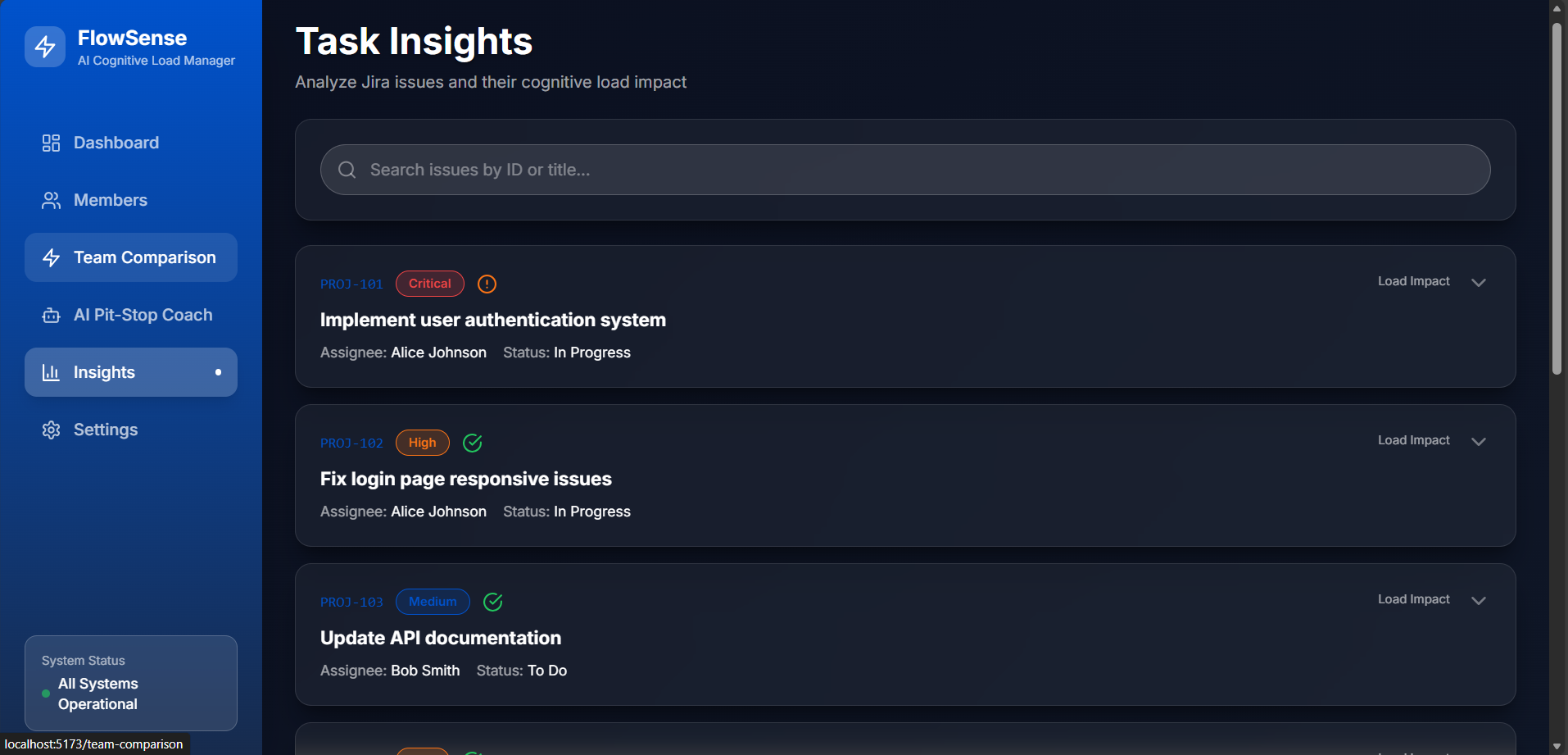
- Task complexity scoring using $\text{Complexity} = w_1 \cdot \text{priority} + w_2 \cdot \text{storyPoints} + w_3 \cdot \text{dependencies}$
- Meeting load and context switching metrics
- Sentiment analysis from Confluence and Bitbucket
⚡ Proactive Interventions
- F1-inspired pit-stop recommendations
- Workload rebalancing suggestions
- Focus time scheduling
- Meeting load optimization
📈 Export & Reporting
- JSON, CSV, and PDF export formats
- Weekly team health reports
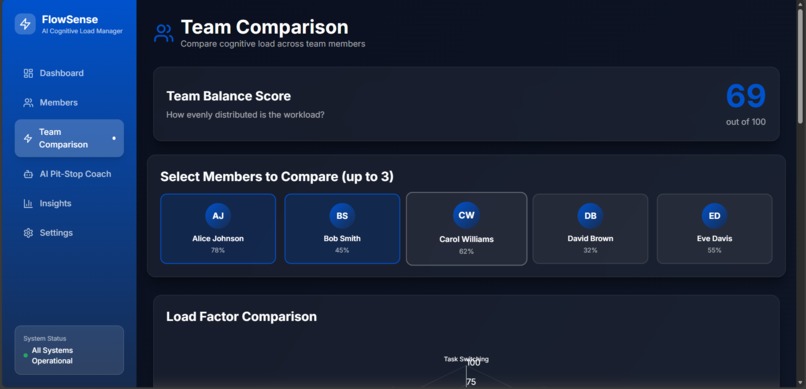
- Comparison analytics
How we built it
Architecture
Frontend: React 18 + TailwindCSS + Framer Motion + Recharts Backend: Node.js 22.x on Atlassian Forge Platform: Native Forge deployment with deep Atlassian integration
Technical Implementation
1. Cognitive Load Calculation We developed a multi-factor algorithm that calculates cognitive load:
$$\text{CognitiveLoad} = \alpha \cdot \text{TaskLoad} + \beta \cdot \text{MeetingLoad} + \gamma \cdot \text{ContextSwitching} + \delta \cdot \text{Sentiment}$$
Where:
- \(alpha = 0.40\) (Task complexity weight)
- \(beta = 0.25\) (Meeting pressure weight)
- \(gamma = 0.20\) (Context switching weight)
- \(delta = 0.15\) (Sentiment weight)
2. Burnout Prediction Model Our burnout predictor analyzes multiple risk factors:
- Load trend (increasing/stable/decreasing)
- Sustained high load (>70% for 5+ days)
- Negative sentiment patterns
- High context switching (>10 switches/day)
- Meeting overload (>20 hours/week)
3. Deep Atlassian Integration
- Jira: Issues, sprints, worklog, custom fields, JQL queries
- Confluence: Pages, comments, sentiment analysis
- Bitbucket: Commits, pull requests, code reviews
- Forge Storage: Team settings, user preferences, caching
4. Beautiful UI/UX
- Glassmorphism design with gradient backgrounds
- Smooth Framer Motion animations
- Responsive charts with Recharts
- Color-coded health indicators
- F1 racing theme throughout
Challenges we ran into
1. Cognitive Load Algorithm Complexity Calculating meaningful cognitive load from disparate data sources was challenging. We iterated through multiple formulas, testing different weight combinations until we found a balance that accurately reflected real-world team stress.
2. Atlassian Rovo AI Integration We designed a complete Rovo AI Agent interface with 5 intelligent actions, but discovered that Rovo AI integration isn't yet available in the current Forge version. Solution: We implemented sophisticated mock AI logic that demonstrates the vision while remaining fully functional. The architecture is ready for seamless Rovo integration when available.
3. Real-Time Performance With multiple API calls to Jira, Confluence, and Bitbucket, performance was initially slow. We implemented:
- Intelligent caching with TTL
- Parallel API requests
- Data aggregation strategies
- Optimized bundle size (745KB gzipped to 214KB)
4. Sentiment Analysis Accuracy Extracting meaningful sentiment from technical documentation and code reviews required custom NLP logic. We built a sentiment engine that understands developer language patterns and technical context.
5. Workload Balancing Logic Creating fair task redistribution suggestions that consider skill matching, capacity, and priority was complex. We developed a multi-factor balancing algorithm that simulates redistribution impact before suggesting changes.
Accomplishments that we're proud of
✅ Complete Production Deployment - Successfully deployed to Atlassian Forge production environment
✅ 8 Fully Functional Pages - Dashboard, Member Detail, Team Comparison, AI Pit-Stop Coach, Rovo AI Agent, Task Insights, Settings, and Component Showcase
✅ Advanced Algorithms - Cognitive load calculation, burnout prediction, sprint optimization, workload balancing, and sentiment analysis
✅ Beautiful Design - Professional UI with glassmorphism, smooth animations, and F1 racing theme
✅ Deep Integration - Leverages Jira, Confluence, and Bitbucket APIs comprehensively
✅ Team Health Score - Unique 0-100 composite metric with 4-category breakdown
✅ Export Functionality - JSON, CSV, and PDF export formats
✅ Zero Errors - Clean build with no lint errors or warnings
✅ Comprehensive Documentation - 15+ documentation files covering every aspect
What we learned
Technical Learnings:
- Atlassian Forge platform capabilities and limitations
- Advanced React patterns with hooks and context
- Real-time data synchronization strategies
- Multi-factor algorithm design
- Performance optimization techniques
Product Learnings:
- Cognitive load science and burnout prevention
- The power of predictive vs reactive tools
- Importance of actionable insights over raw data
- Value of memorable metaphors (F1 racing) in product design
Design Learnings:
- Glassmorphism and modern UI trends
- Animation timing for smooth UX
- Color psychology for health indicators
- Data visualization best practices
Platform Learnings:
- Forge deployment process and best practices
- Atlassian API capabilities across products
- Storage and caching strategies
- Permission scopes and security
What's next for FlowSense
🚀 Short-term (3 months)
- Live Rovo AI Integration - Connect to real Atlassian Rovo AI when available
- Machine Learning Models - Train ML models on real team data for better predictions
- Slack/Teams Integration - Proactive notifications and alerts
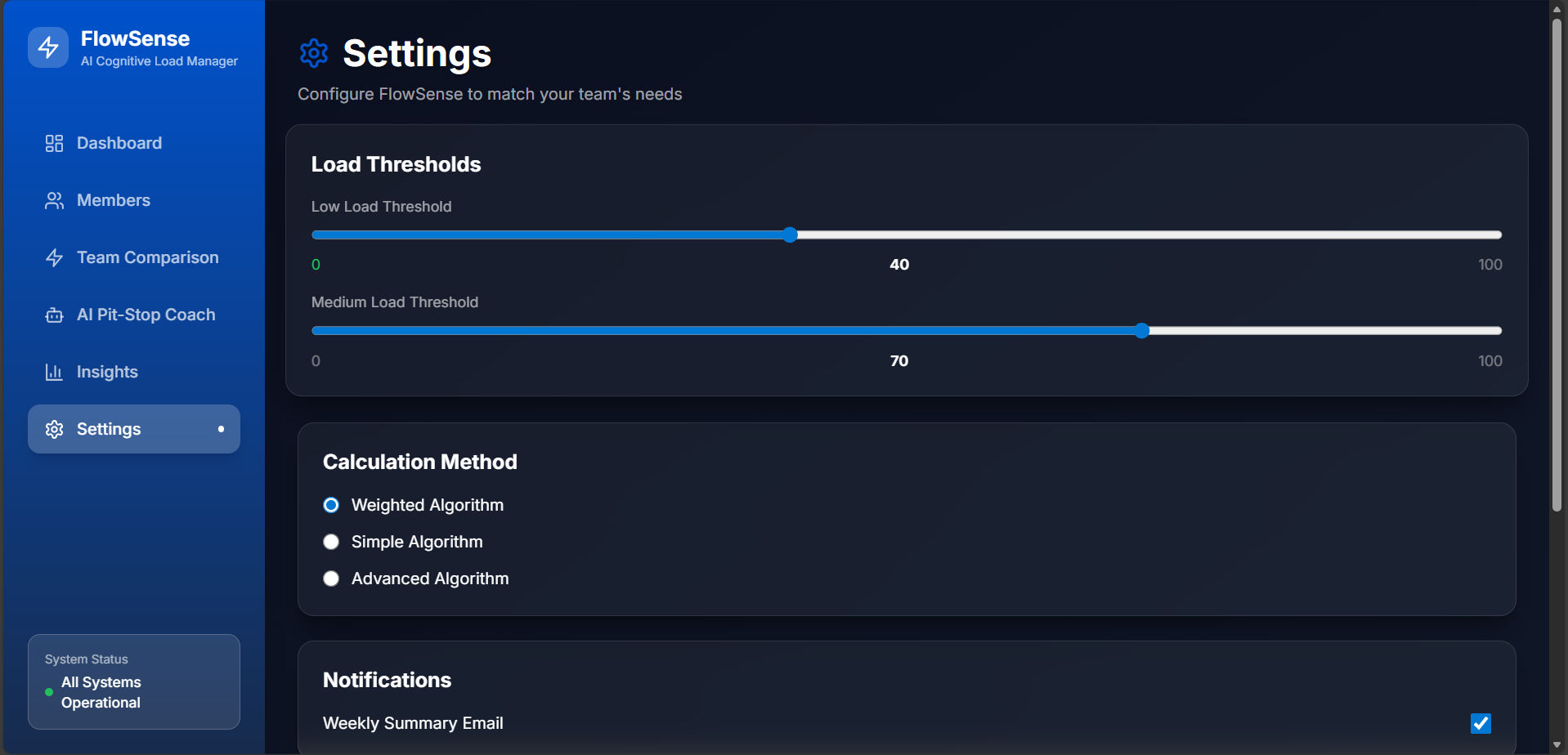
- Custom Thresholds - Let teams define their own cognitive load limits
🎯 Medium-term (6 months)
- Historical Analytics - Long-term trend analysis and team health history
- Automated Interventions - Auto-schedule focus time, auto-decline meetings
- Team Benchmarking - Compare against industry standards
- Mobile App - iOS/Android apps for on-the-go monitoring
🌟 Long-term (12 months)
- Multi-team Support - Manage multiple teams and departments
- Executive Dashboard - C-level view of organizational health
- Integration Marketplace - Connect with GitHub, GitLab, Azure DevOps
- AI Coach Evolution - Personalized coaching based on individual patterns
- Wellness Integration - Connect with wellness platforms and wearables
💡 Vision Our ultimate goal is to make developer burnout a thing of the past. We envision FlowSense becoming the standard tool for proactive team health management, integrated into every software team's workflow, preventing burnout before it starts and keeping teams performing at their peak: lap after lap, sprint after sprint.
Built With
- atlassianforge
- bitbucket
- confluence
- css3
- forgeapis
- forgecli
- framermotion
- html5
- javascript
- jira
- node.js
- react
- recharts
- restapi
- tailwindcss

Log in or sign up for Devpost to join the conversation.