Inspiration
FlowPR was inspired by how much time developers spend managing pull requests instead of actually improving code. In most teams, opening a PR is only the beginning: someone has to summarize the change, label it, decide who should review it, check whether it touches risky parts of the codebase, and keep the review moving. Those steps are important, but they are also repetitive and easy to forget.
We wanted to build something that makes the pull request process feel smoother and more intelligent. FlowPR was inspired by the idea that code review should have better flow: less context switching, fewer manual steps, and clearer communication between contributors and reviewers.
What it does
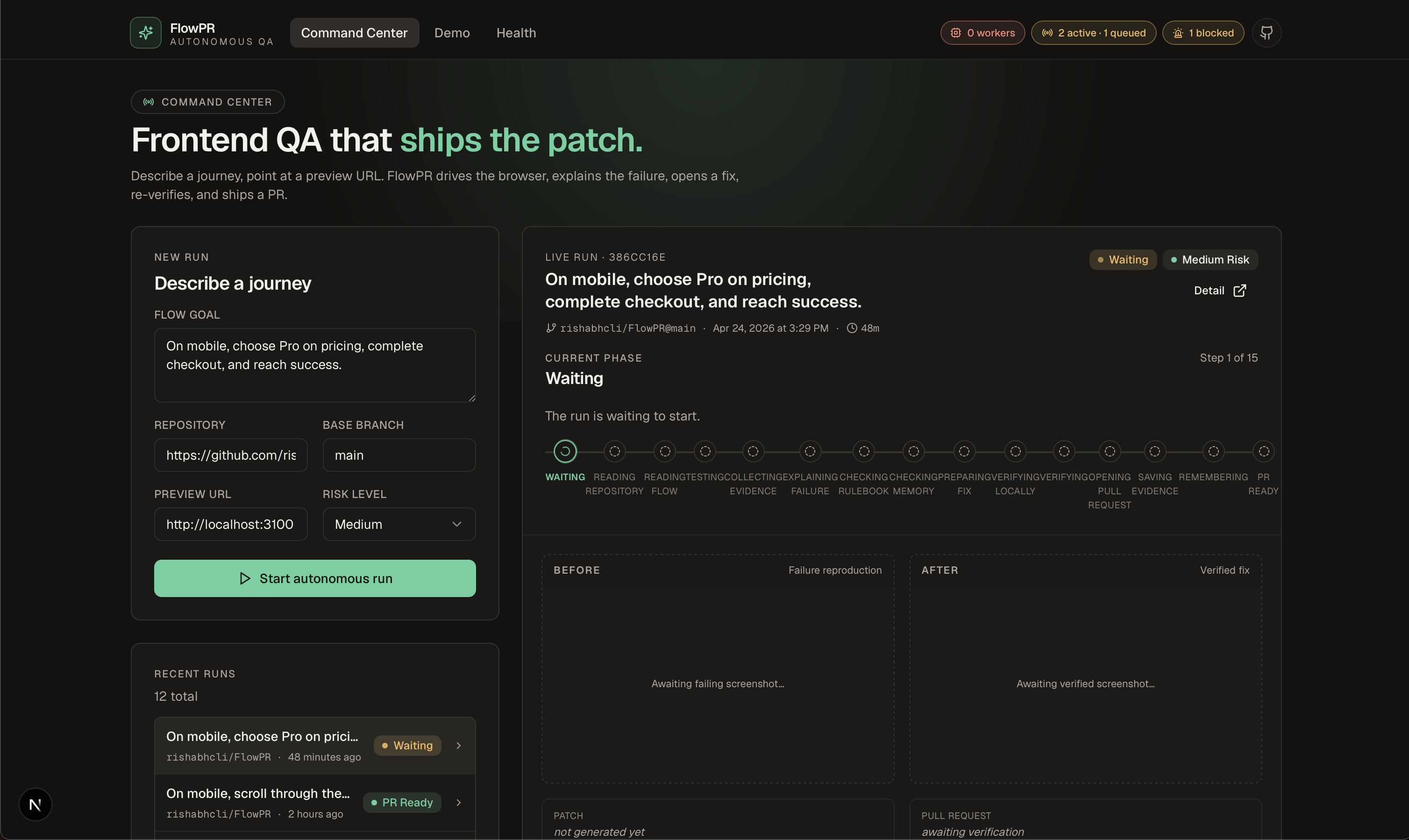
FlowPR is a smart pull request assistant that helps automate and streamline the PR review workflow.
When a pull request is created, FlowPR can analyze the PR, generate a useful summary, suggest labels, recommend reviewers, and surface important context about the change. Instead of forcing reviewers to manually inspect every detail before understanding the purpose of the PR, FlowPR gives them a clear starting point.
At a high level, FlowPR helps answer questions like:
- What changed?
- Why does this PR matter?
- Who should review it?
- What areas of the codebase are affected?
- Are there any obvious risks or follow-up tasks?
We also thought about FlowPR as a way to reduce review friction. If a PR can be represented as a workflow with tasks, signals, and decisions, then FlowPR helps optimize that workflow. Conceptually, we can think of the review burden as:
[ \text{Review Friction} = \text{Context Missing} + \text{Manual Triage} + \text{Unclear Ownership} ]
FlowPR tries to reduce each part of that equation by giving developers better context, automating repetitive steps, and making ownership clearer.
How we built it
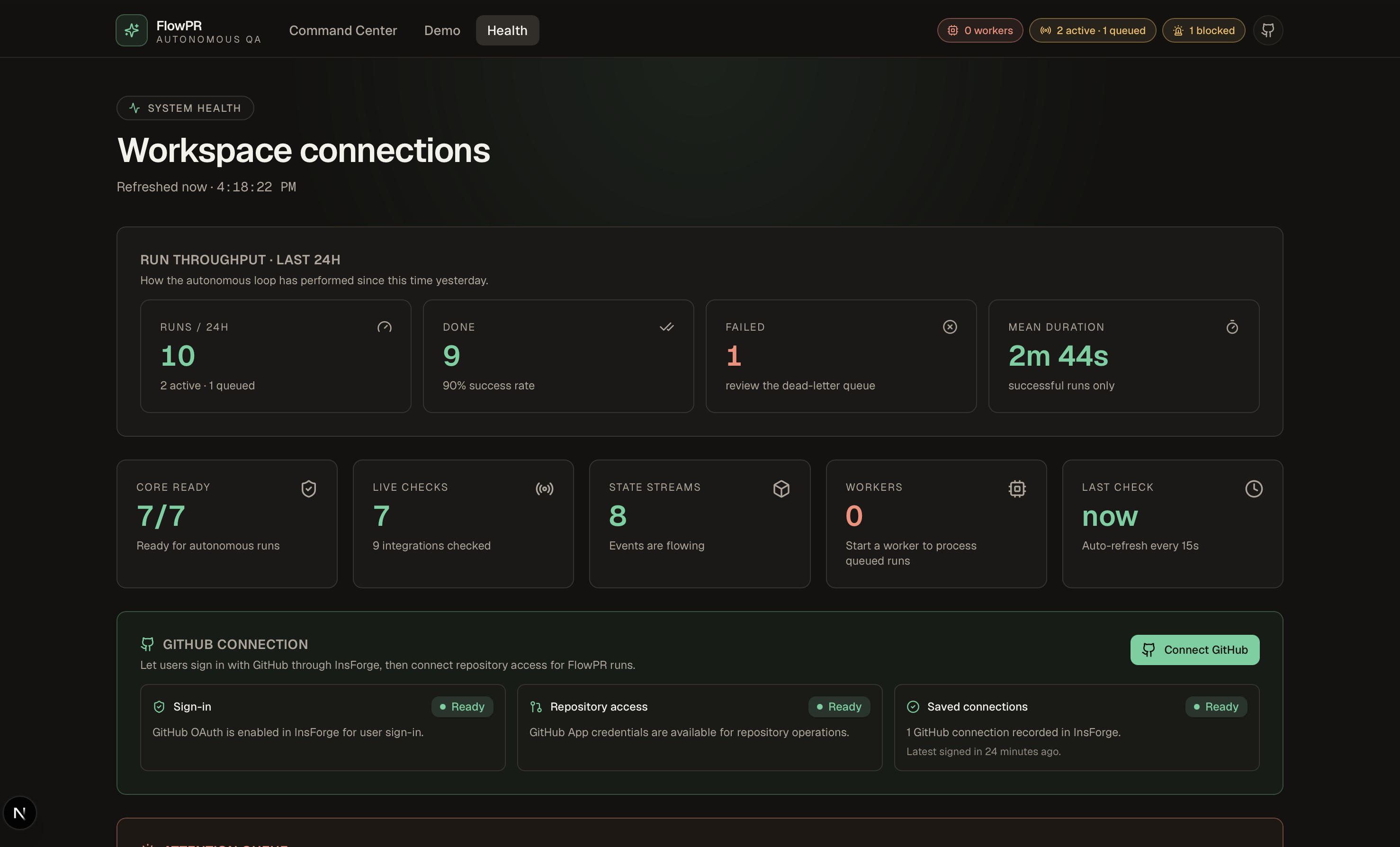
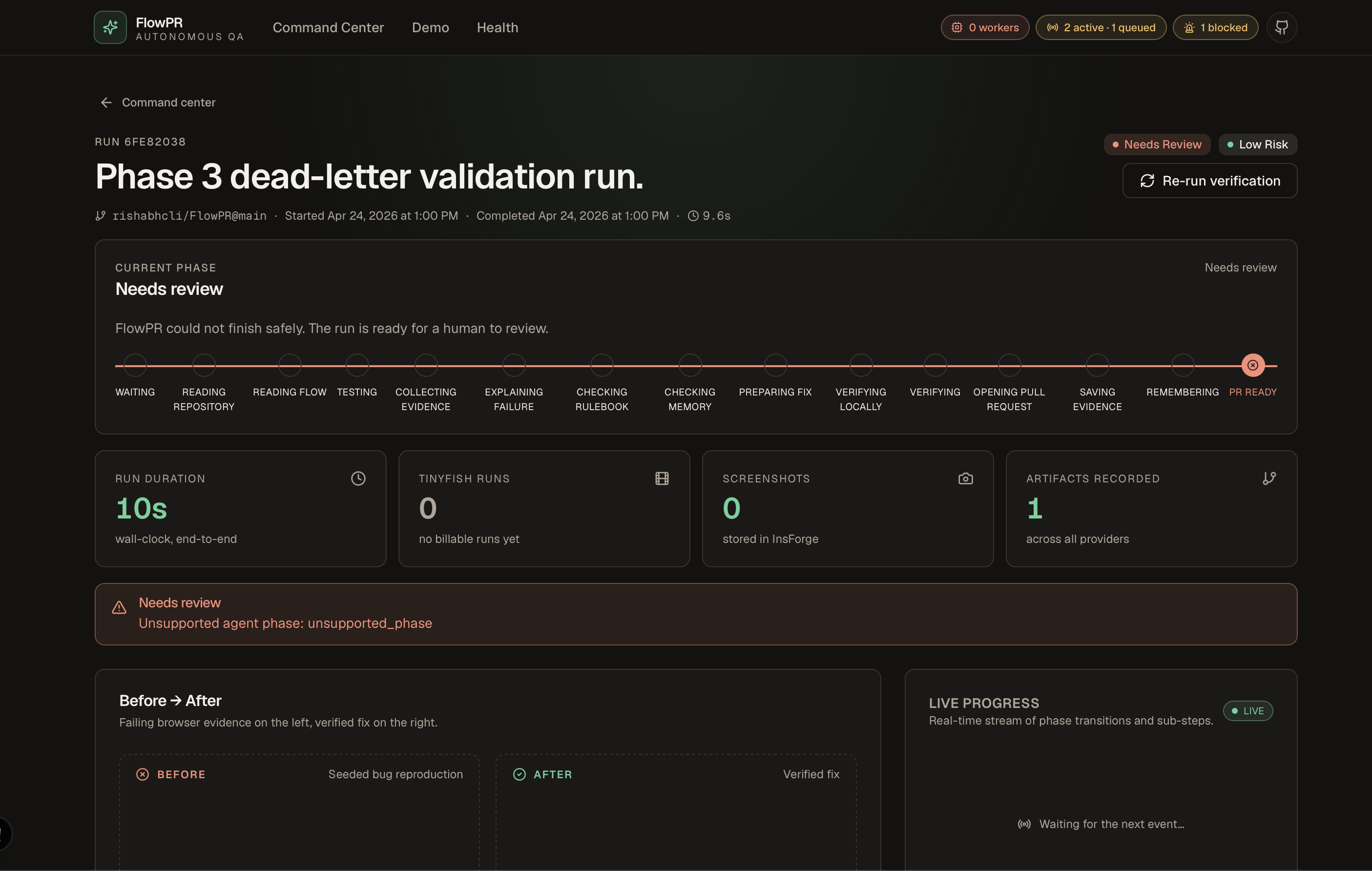
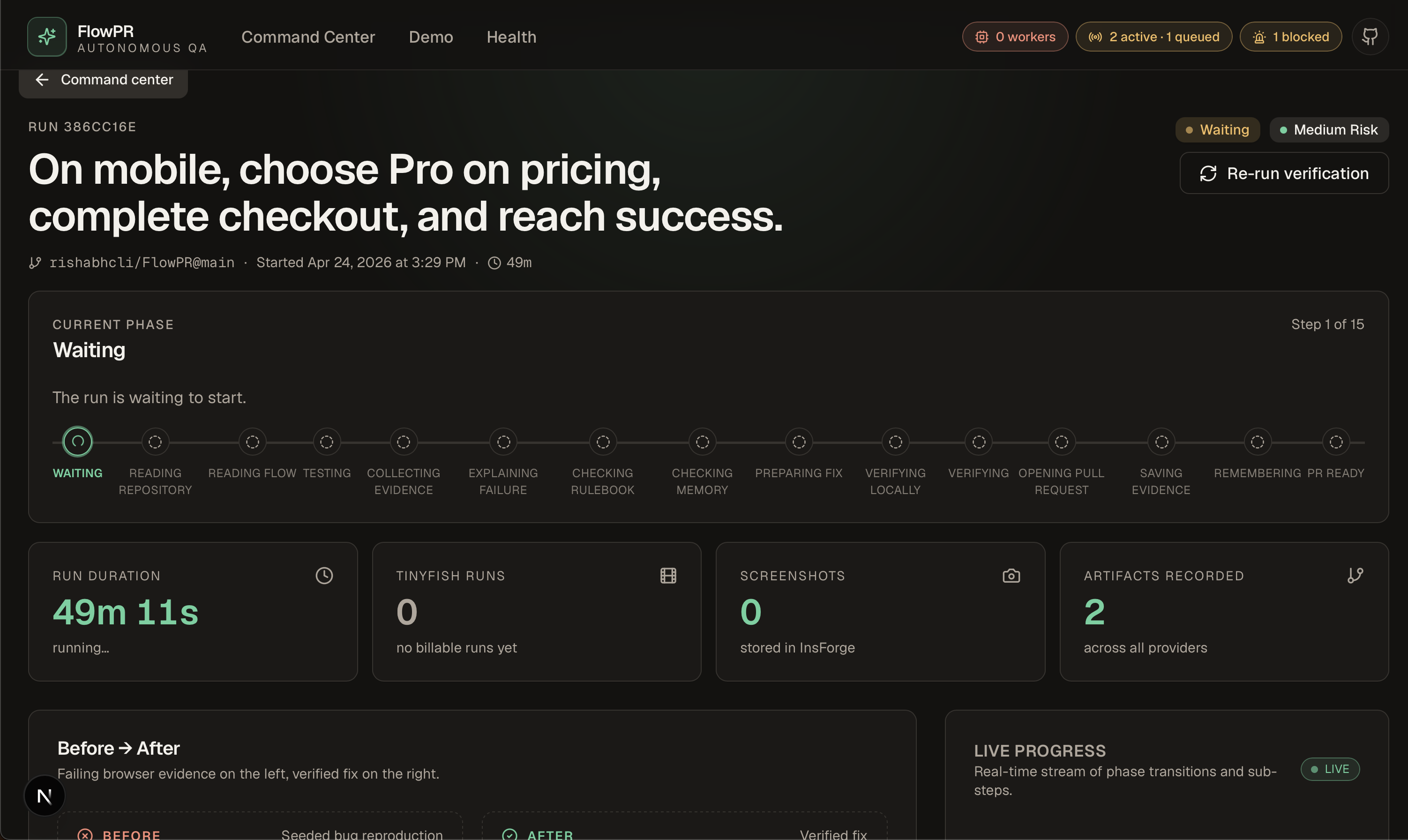
We built FlowPR around the GitHub pull request workflow. The backend connects to GitHub APIs to retrieve pull request metadata, changed files, commit information, comments, and other useful signals. From there, FlowPR analyzes the PR and generates structured insights such as summaries, labels, and reviewer recommendations.
The frontend provides a clean interface where developers can view the PR analysis, understand the reasoning behind suggestions, and quickly act on FlowPR’s recommendations. We focused on making the experience simple and useful rather than overwhelming developers with too much information.
Our build process included:
- Designing the core PR workflow we wanted to improve.
- Connecting to GitHub’s API to fetch pull request data.
- Creating backend logic to analyze PRs and generate recommendations.
- Building a React interface to display summaries, labels, reviewers, and insights.
- Testing FlowPR on sample pull requests to refine the quality of its suggestions.
The goal was to make FlowPR feel like a practical assistant that fits naturally into how developers already work.
Challenges we ran into
One challenge was deciding what information is actually useful during code review. Pull requests can contain a lot of data, but not all of it helps reviewers make decisions. We had to think carefully about what FlowPR should surface and what it should leave out.
Another challenge was making the recommendations feel trustworthy. Automatically suggesting reviewers or labels is only helpful if the suggestions make sense. We had to balance automation with transparency so that developers could understand why FlowPR made a recommendation.
We also ran into the challenge of summarizing technical changes clearly. A good PR summary should be concise, but it also needs to capture the important details. We had to think about how to turn raw PR data into something that would actually help a reviewer.
Finally, integrating with GitHub meant handling API responses, repository metadata, and different PR structures. Every PR is different, so FlowPR needed to be flexible enough to work across a variety of changes.
Accomplishments that we're proud of
We are proud that FlowPR turns a messy, manual workflow into something more structured and approachable. Instead of asking developers to start every review from scratch, FlowPR gives them a useful first layer of context.
We are also proud of building a project that solves a real developer pain point. Pull requests are central to modern software development, and even small improvements to the review process can save teams a lot of time.
Another accomplishment was combining automation with collaboration. FlowPR is not meant to replace human reviewers. It is meant to help them move faster, understand changes better, and focus their attention where it matters most.
Most importantly, we are proud that FlowPR creates a smoother developer experience. It helps teams spend less time managing the process around code review and more time improving the code itself.
What we learned
We learned that building developer tools requires more than just automation. The tool has to fit into existing workflows, respect how developers already collaborate, and provide value without adding extra complexity.
We also learned a lot about pull request metadata and how much information is hidden inside a PR. Changed files, commit messages, authorship, labels, comments, and review history can all provide useful signals when interpreted correctly.
Another major lesson was the importance of clarity. A long or overly technical summary is not always helpful. The best output is short, accurate, and actionable. FlowPR taught us that good developer tooling should reduce cognitive load, not add to it.
We also learned how important trust is in AI-assisted or automation-heavy workflows. Developers need to understand why a tool is making a suggestion before they rely on it. That shaped how we thought about FlowPR’s summaries, labels, and reviewer recommendations.
What's next for FlowPR
Next, we want to make FlowPR more deeply integrated into the pull request lifecycle. That could include automatically posting PR summaries as GitHub comments, adding smarter reviewer assignment, detecting risky changes, and tracking whether PRs are blocked.
We also want to improve FlowPR’s understanding of repositories over time. For example, it could learn which reviewers are most familiar with certain files, which labels are commonly used for different types of changes, and which parts of the codebase are most sensitive.
Future versions of FlowPR could include:
- Deeper GitHub integration.
- Better reviewer recommendation logic.
- Risk scoring for pull requests.
- Team-level analytics for review bottlenecks.
- Support for larger repositories and multi-repo projects.
- More customizable rules for different engineering teams.
Ultimately, we want FlowPR to become a reliable assistant for pull request collaboration, helping teams move from code changes to approved, well-reviewed code with less friction.
Built With
- chainguard
- docker
- guild.ai
- insforge
- javascript
- next.js
- radixui
- react
- redis
- senso
- sql
- tinyfish
- typescript
- wundergraph

Log in or sign up for Devpost to join the conversation.