-
-
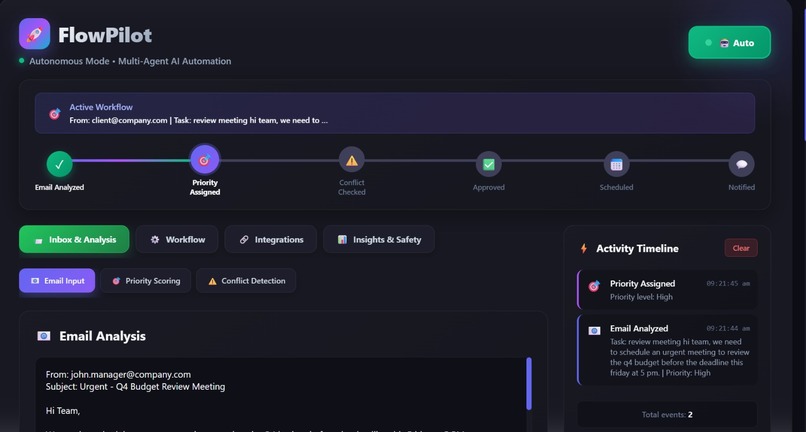
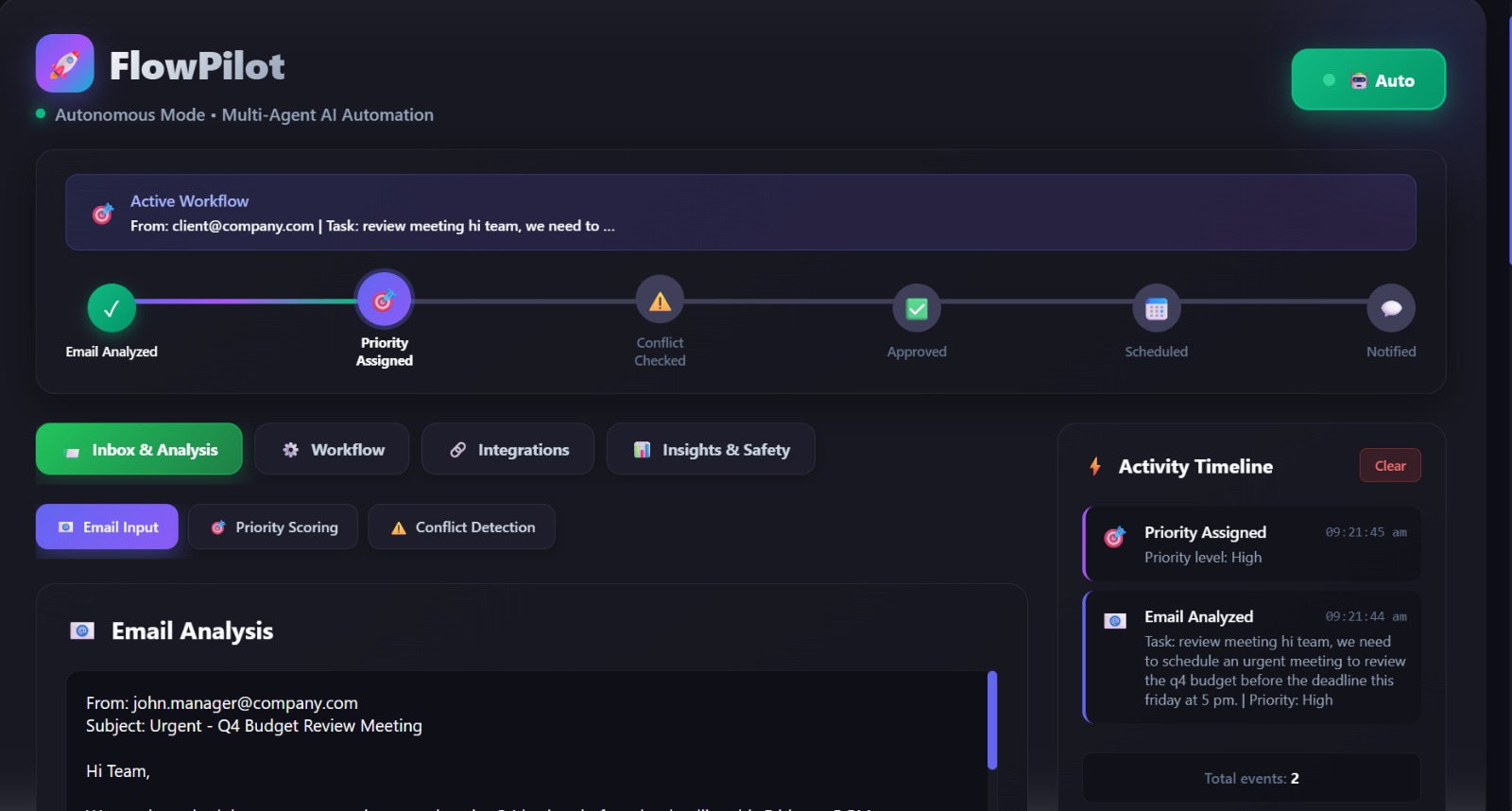
Dashboard
-
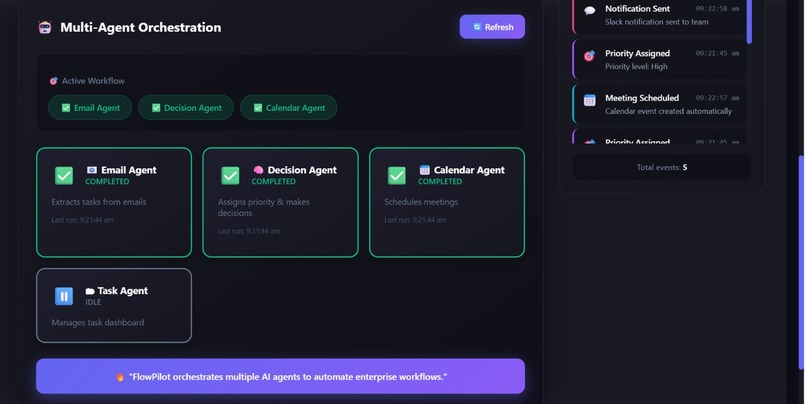
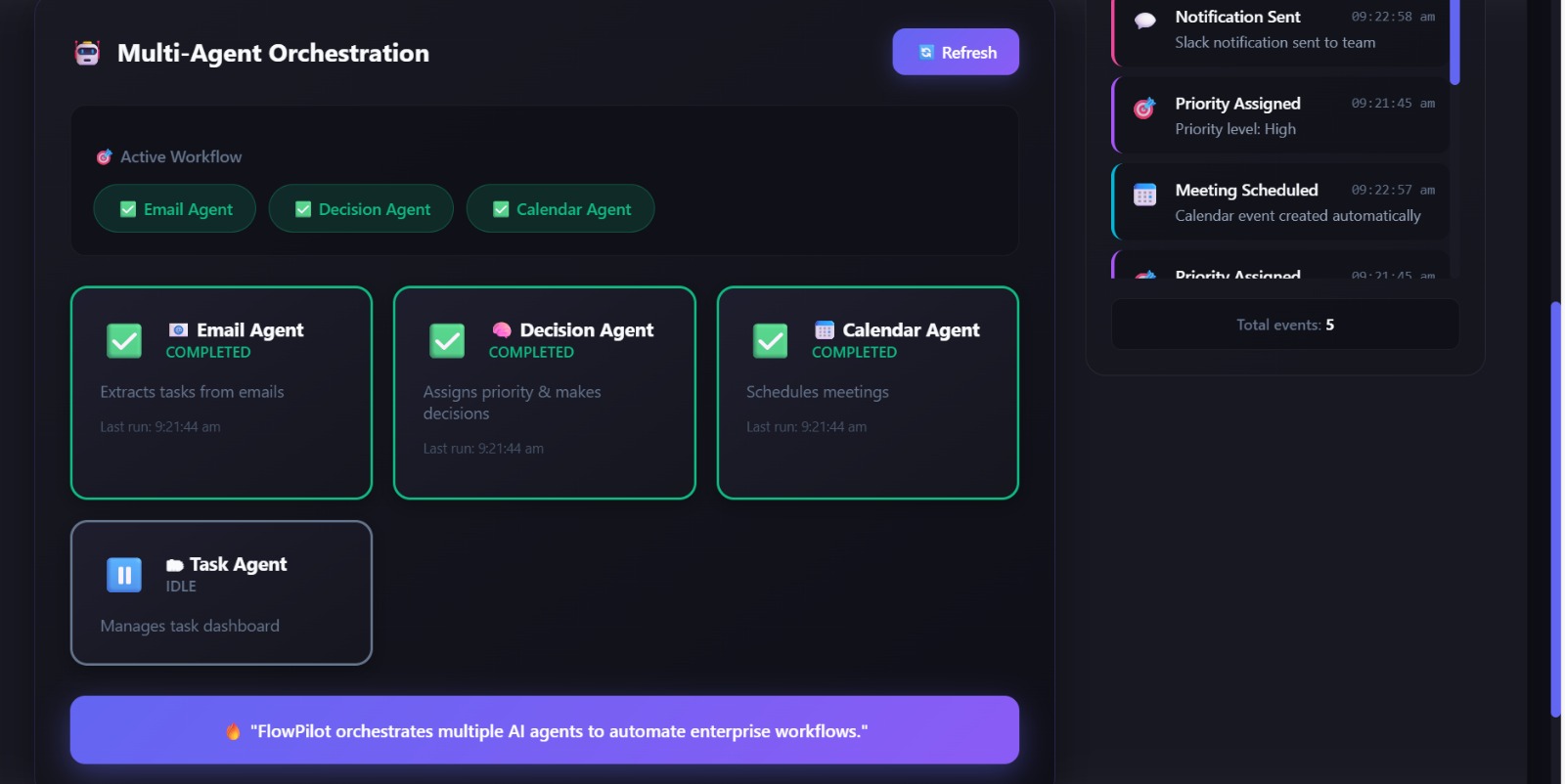
Multi Agent Orchestration
-
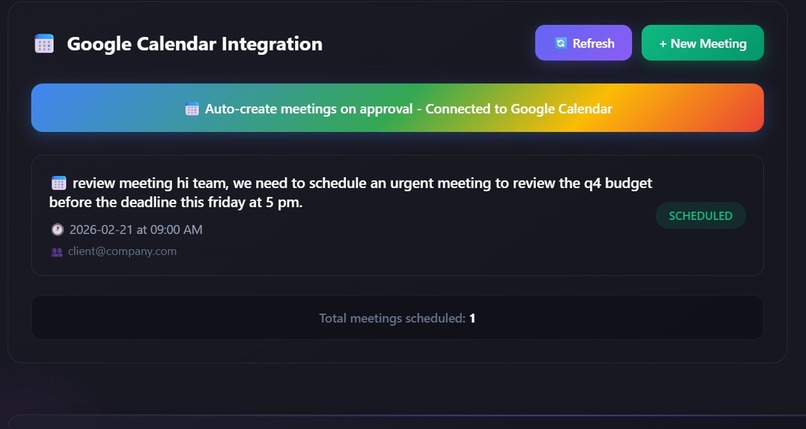
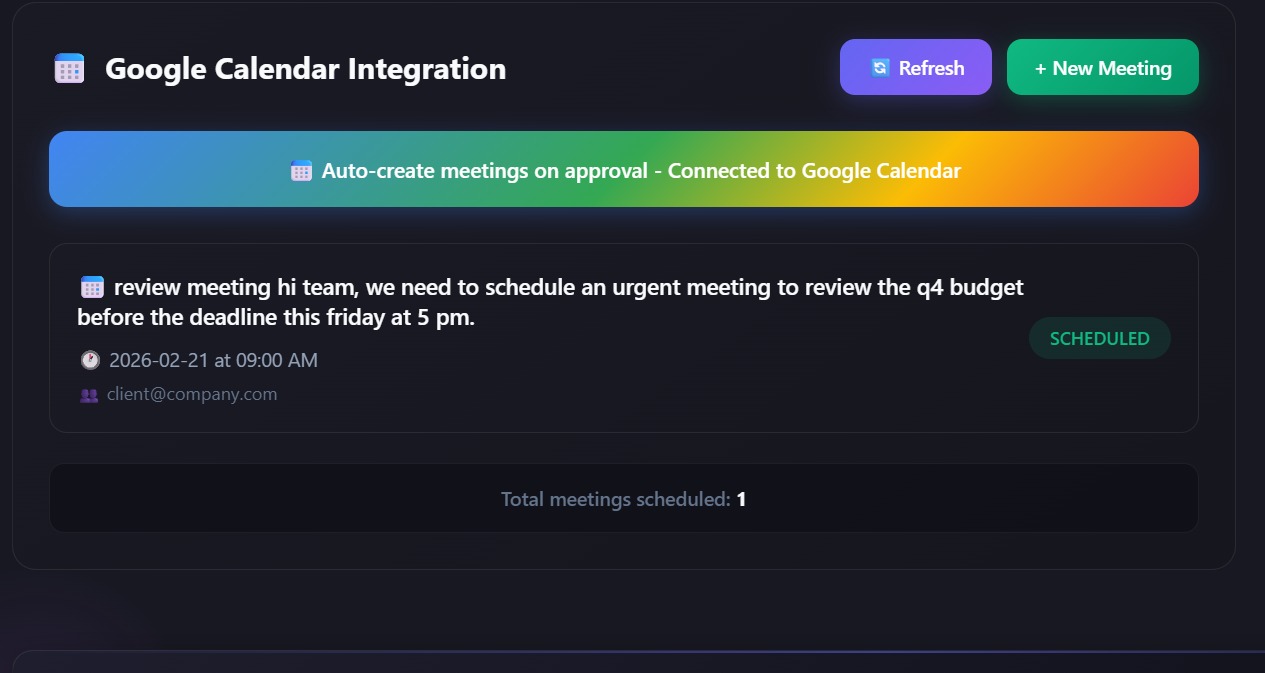
Google Calender Integration
-
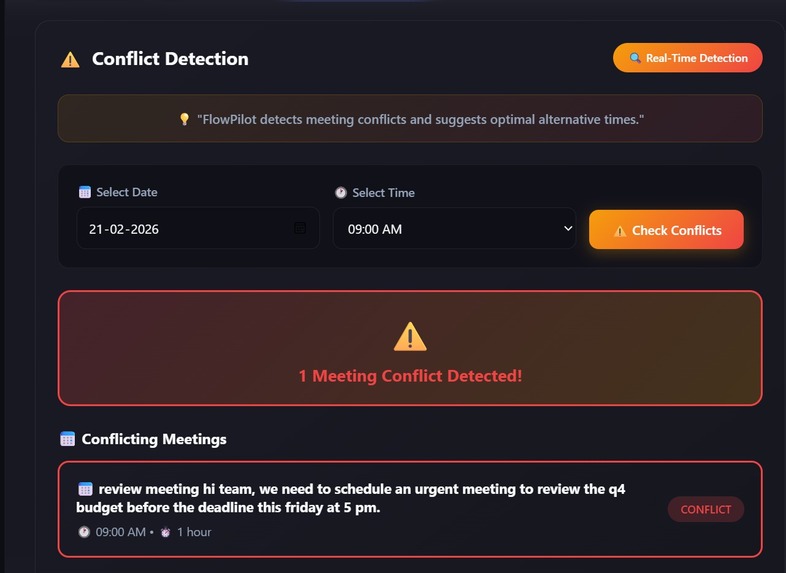
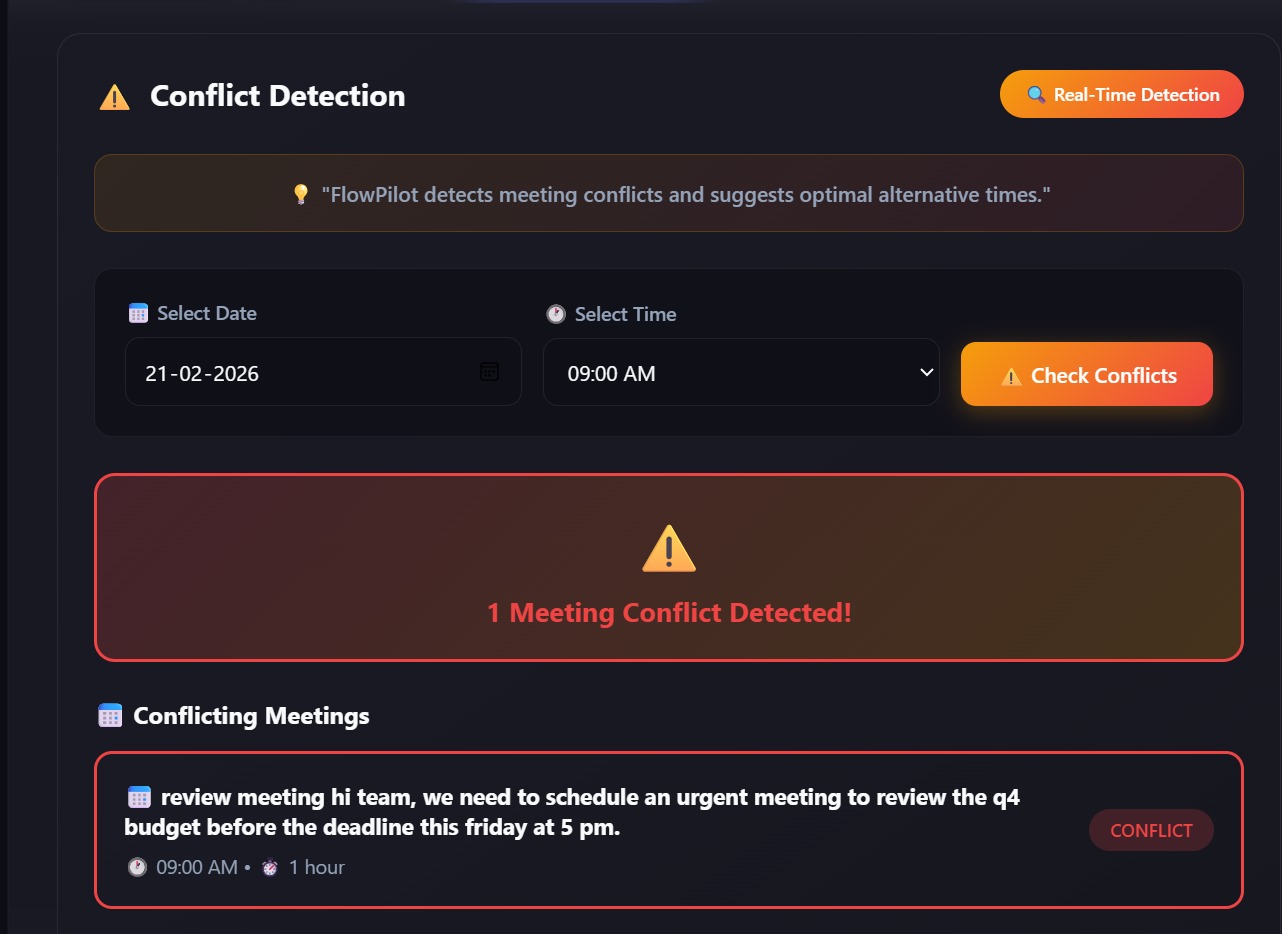
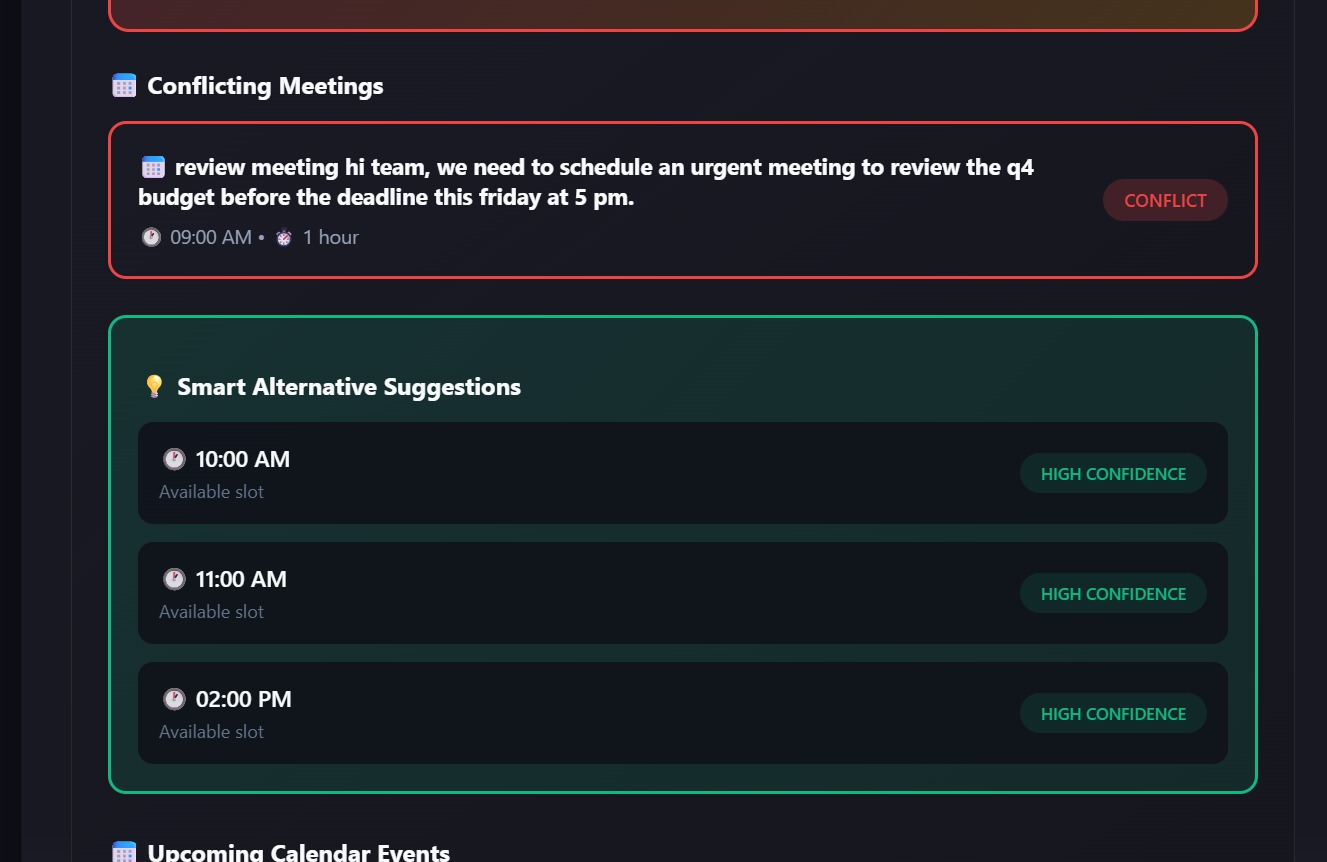
Conflict Detection
-
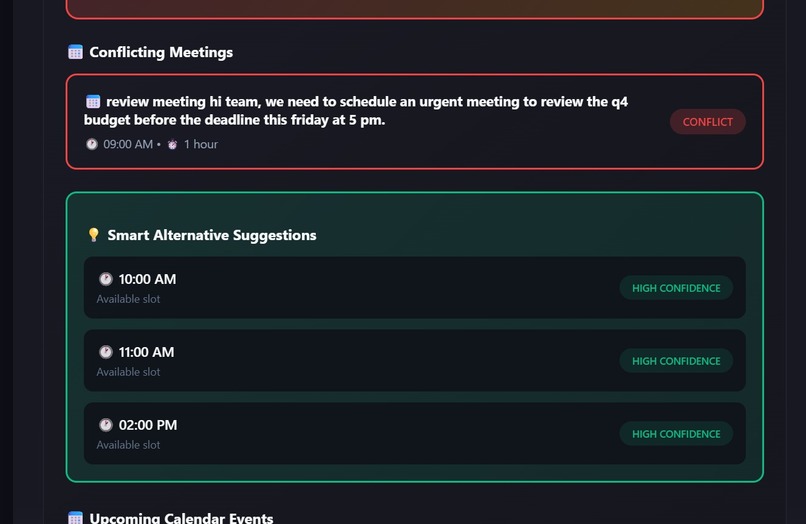
Smart Alternate Suggestions
-
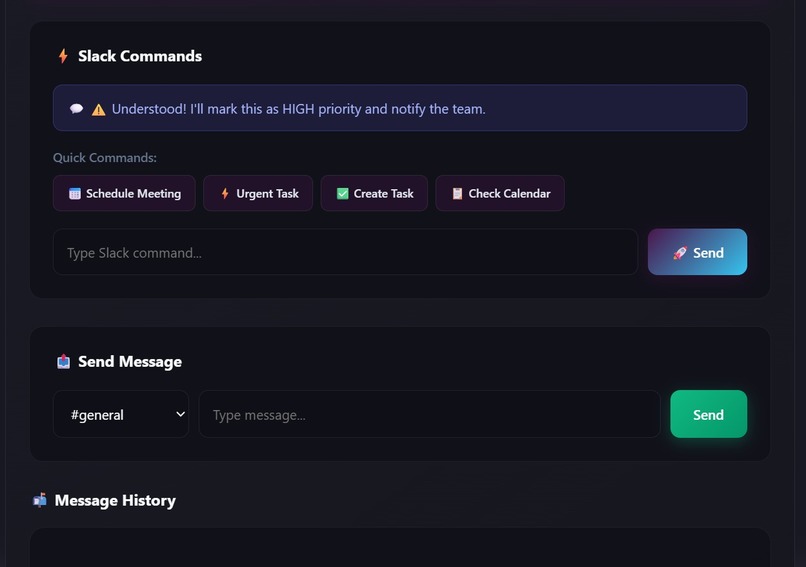
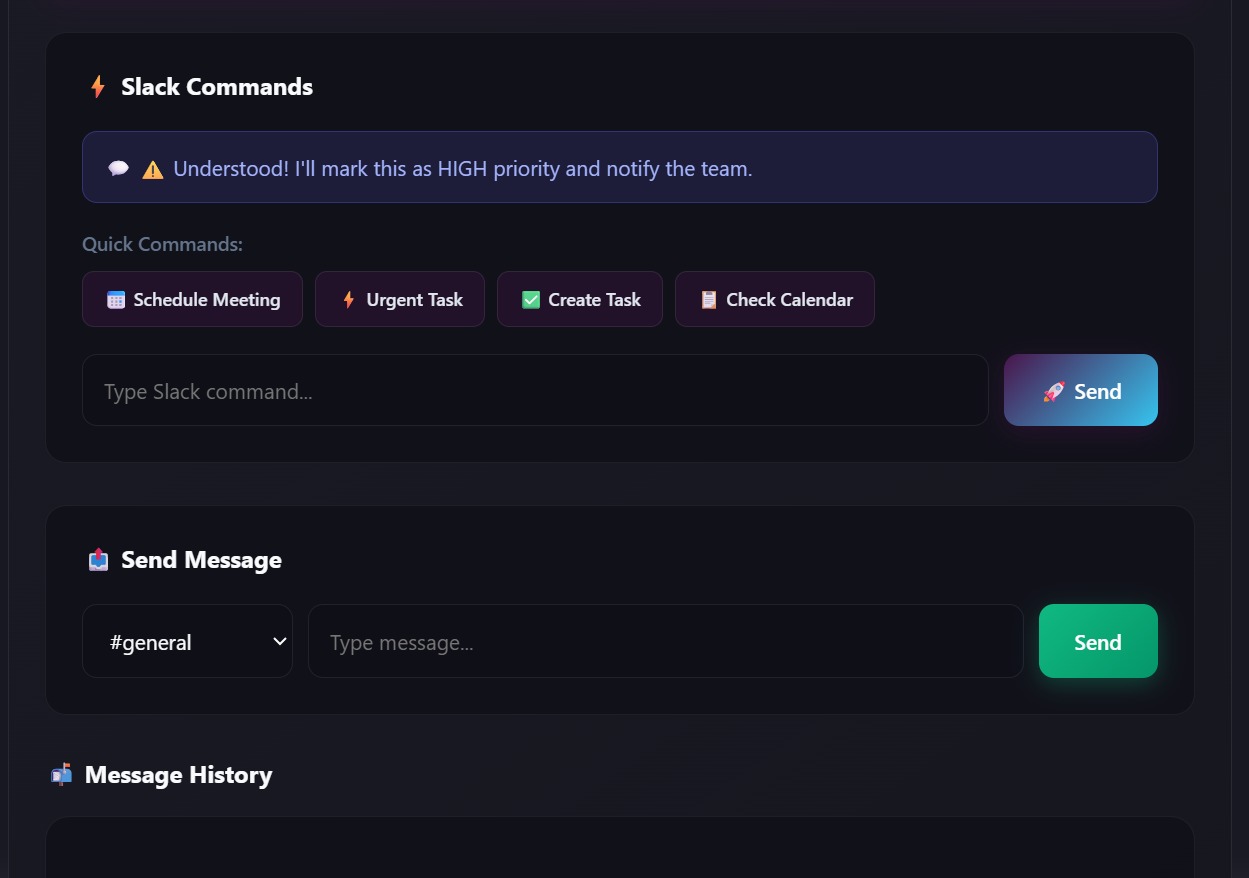
Slack Commands
-
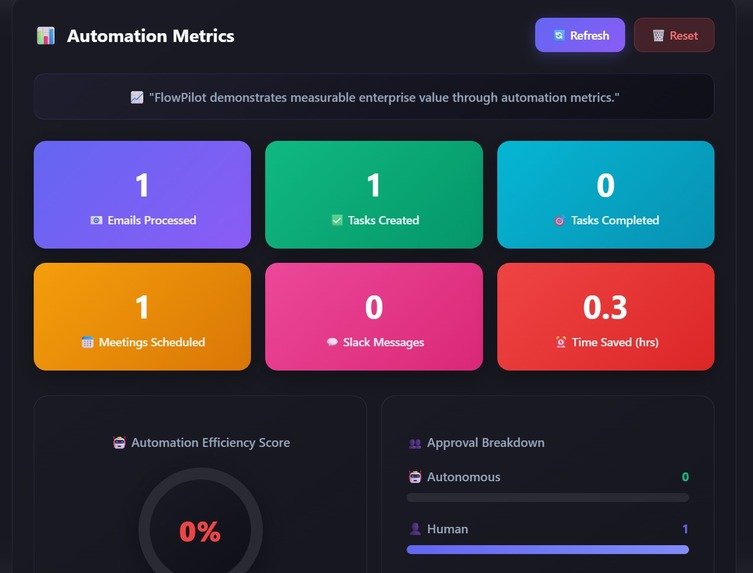
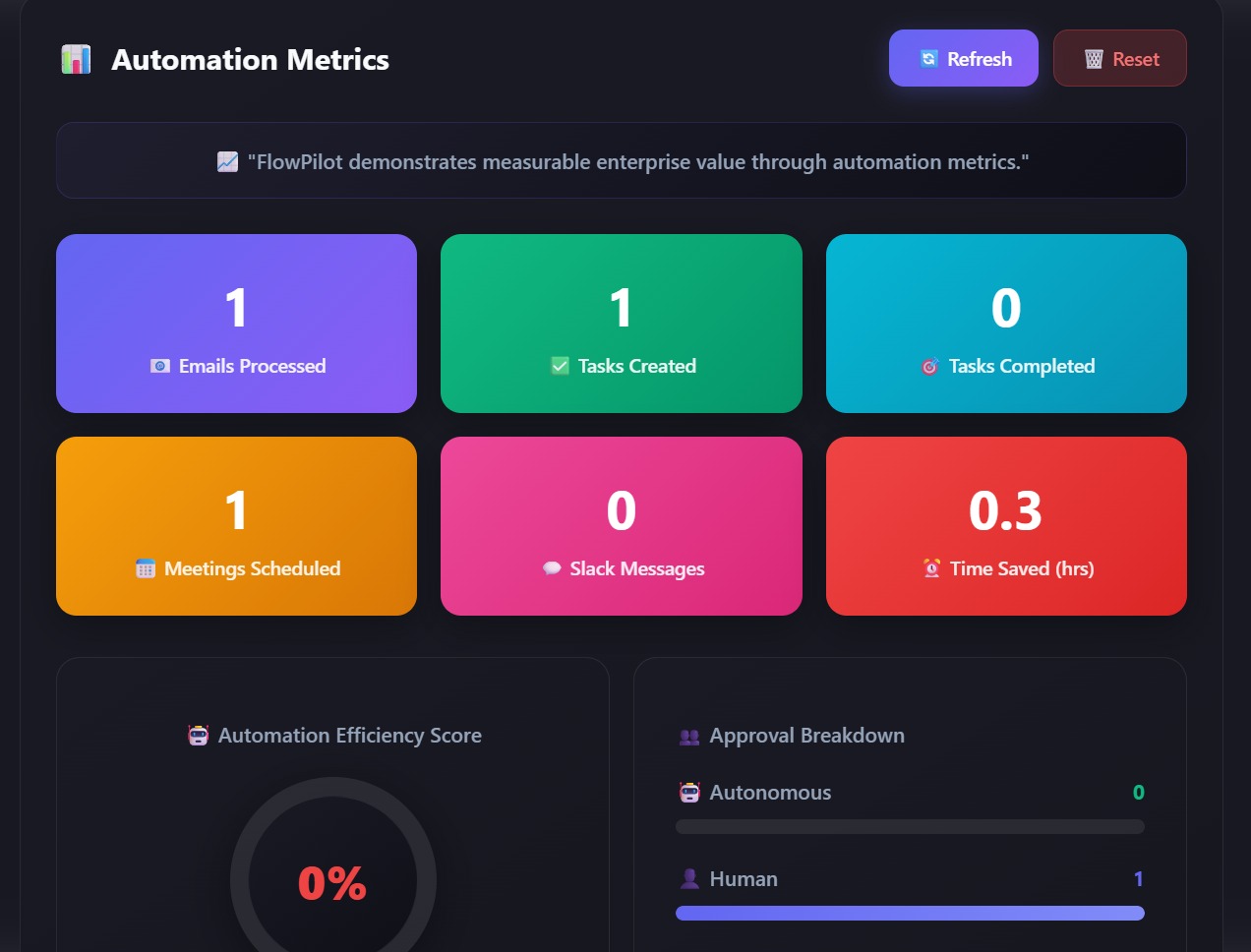
Automation Metrics
-
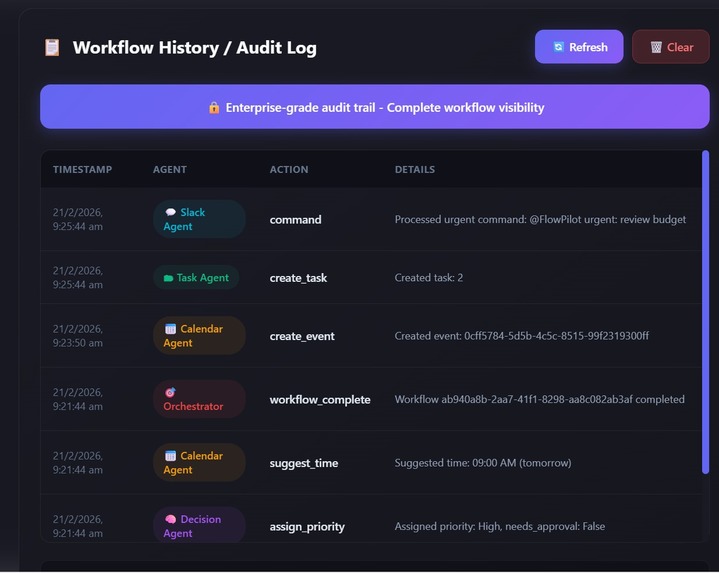
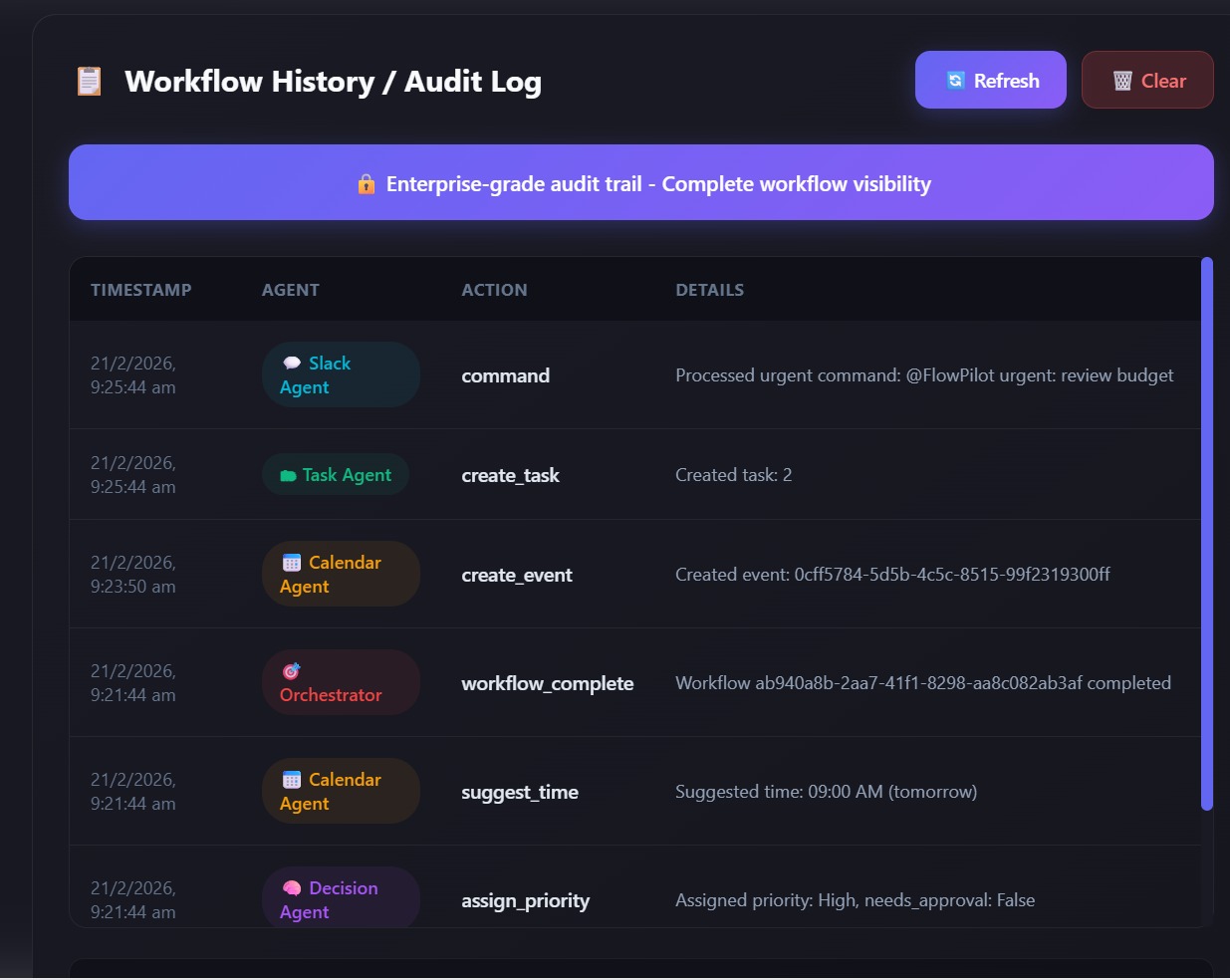
Audit Log
-
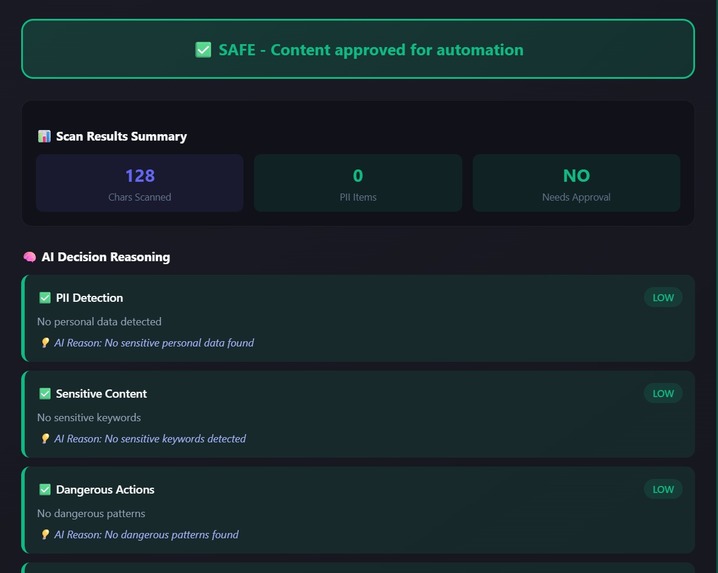
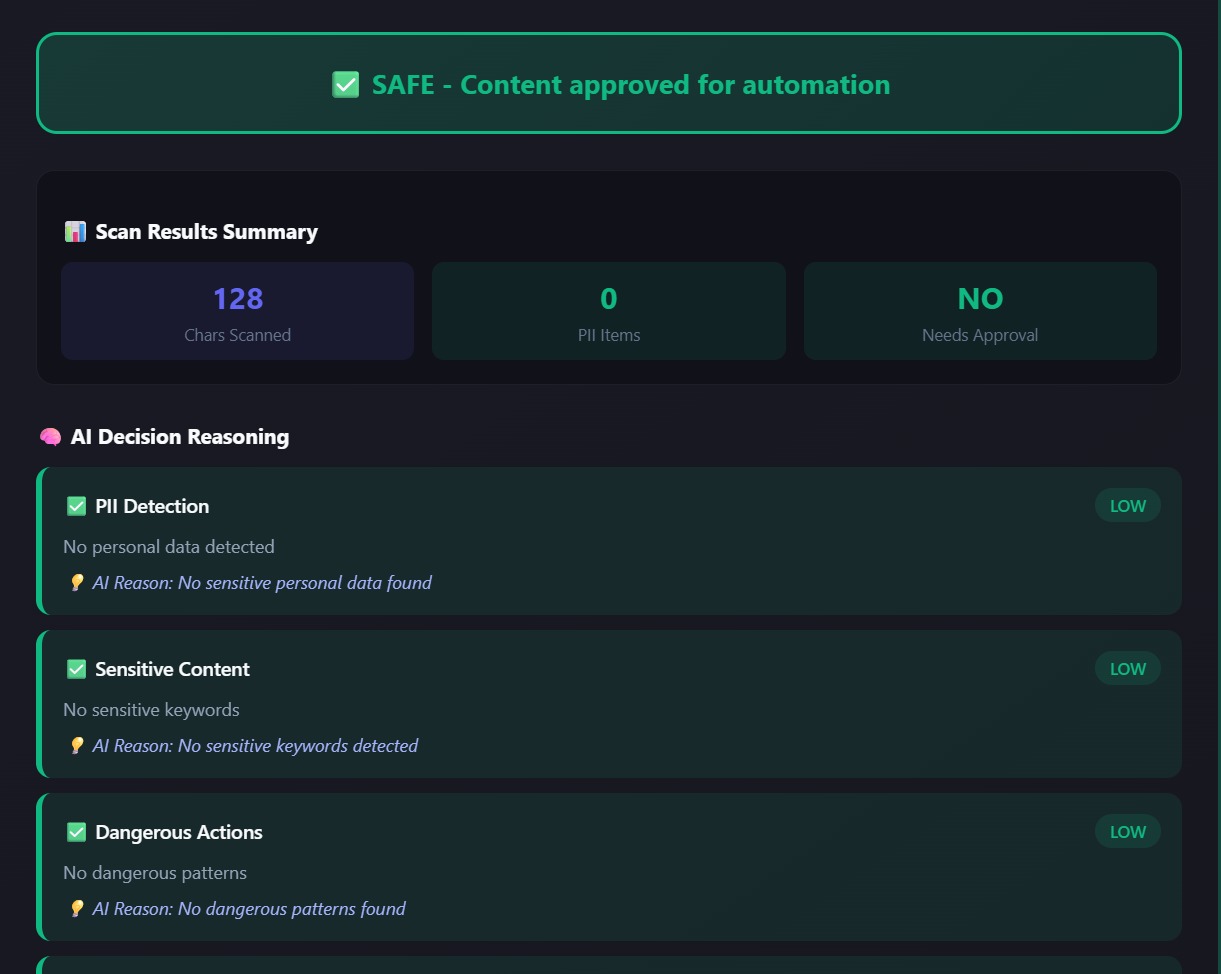
Safety Detection
🚩 Inspiration
Teams waste hours manually triaging emails, coordinating schedules, and resolving conflicts across tools. Most AI assistants stop at suggestions — they don’t take action.
FlowPilot was built to change that.
🧠 What It Does
FlowPilot is an Active AI Agent built on Airia that transforms incoming emails into structured, prioritized, and executable workflows.
Instead of stopping at classification, FlowPilot:
Extracts intent from scheduling emails Calculates a weighted priority score Detects calendar conflicts Applies approval logic (Human-in-the-Loop when necessary) Executes actions across integrated systems (e.g., Slack, Calendar) Tracks automation metrics and ROI Each decision is transparent and traceable through a detailed AI scoring breakdown.
⚙️ How It Works
FlowPilot uses a multi-agent orchestration model:
Email Input ↓ Parsing Agent ↓ Priority Scoring Agent ↓ Conflict Detection Agent ↓ Approval Agent (HITL if needed) ↓ Execution Agent (Calendar / Slack) 📊 Priority Scoring Model
Priority is calculated using weighted decision factors: Priority Score=(w1⋅U)+(w2⋅I)+(w3⋅D)+(w4⋅S)
Where: U = Urgency score I = Importance score D = Deadline proximity S = Sender role impact 𝑤n= Configurable weight values The system outputs:
Final score (0–100) Priority level (Low / Medium / High) Transparent reasoning breakdown Confidence indicator
This ensures explainability — a key requirement for enterprise AI systems.
🏗️ How We Built It
FlowPilot was developed using:
Airia for agent orchestration and publishing
A modular backend for decision logic
API integrations for Slack and calendar systems
A React-based dashboard for real-time visibility
Airia acts as the orchestrator layer, managing the agent workflow and tool invocation, while the execution modules handle decision scoring and automation tasks.
The dashboard provides: Decision explainability panel Automation efficiency metrics Time saved calculations ROI estimation System uptime tracking
📈 Measurable Impact
FlowPilot does more than automate — it quantifies efficiency.
It tracks: Emails processed per day Tasks automated Automation rate Time saved Estimated operational value
For example: Estimated ROI=Time Saved×Avg Hourly Coordination Cost This allows teams to see tangible productivity gains from AI automation.
⚡ Challenges We Faced 1️⃣ Balancing Autonomy with Control
Fully autonomous systems can be risky. We implemented Human-in-the-Loop safeguards for high-impact decisions to maintain oversight.
2️⃣ Ensuring Explainability
Many AI systems operate as black boxes. We prioritized transparent scoring to build trust and enterprise readiness.
3️⃣ Multi-System Coordination
Synchronizing actions across email, calendar, and messaging systems required careful workflow orchestration and error handling.
4️⃣ Avoiding Over-Engineering
Hackathon time constraints forced us to focus on core intelligence rather than feature overload. We prioritized clarity, robustness, and measurable impact.
📚 What We Learned
Multi-agent systems are far more powerful than single-response AI assistants.
Explainability is critical for real-world AI adoption.
Automation must be measurable to demonstrate value.
Good architecture matters as much as model capability.
Most importantly, we learned that intelligent orchestration — not just text generation — is the future of enterprise AI.
🚀 Future Vision
FlowPilot can evolve into:
Adaptive weight learning from user behavior
Cross-department workflow expansion
Predictive scheduling optimization
Enterprise-grade analytics dashboards
Fully autonomous coordination across 10+ systems
Our long-term vision is simple:
AI agents that don’t just assist — they operate.
Built With
- and-executes-tasks-automatically-across-tools-like-google-calendar-and-slack.-modern-teams-waste-hours-triaging-emails
- decides
- fastapi
- pydantic
- python
- react
- scheduling-meetings
- typescript
- vite

Log in or sign up for Devpost to join the conversation.