-
-
tab1
-
tab3
-
tab2
-
tab4
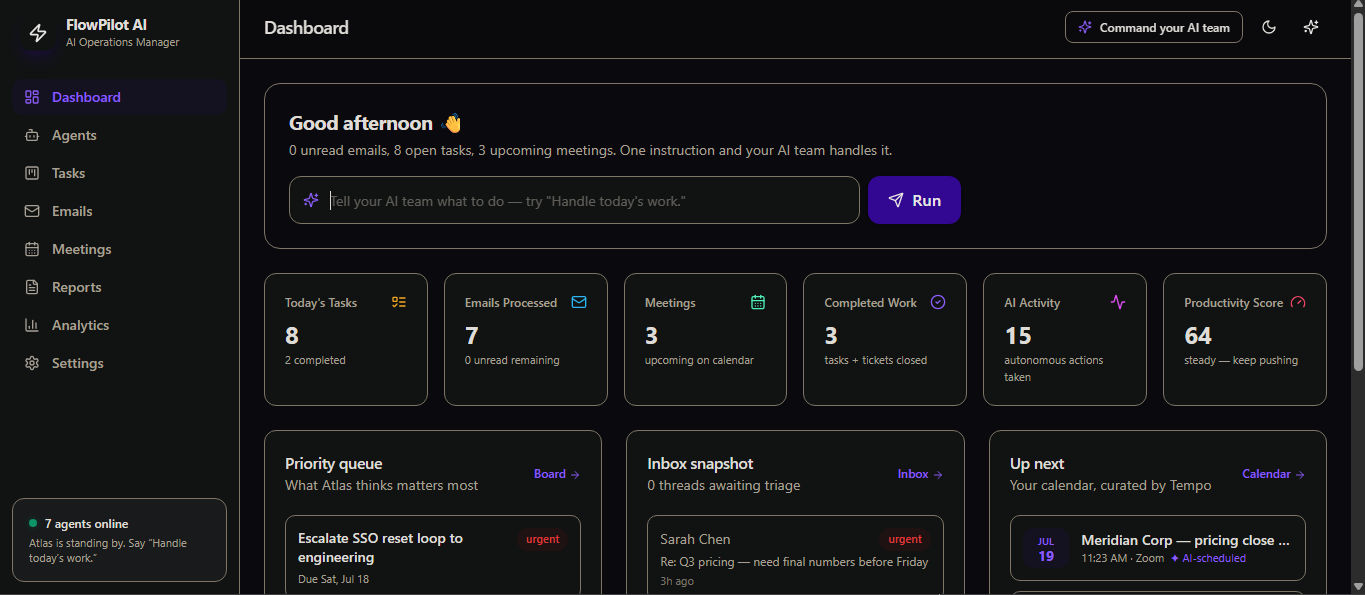
Inspiration In today's digital environment, professionals are overwhelmed by the "context-switching tax"—constantly toggling between email, CRM systems, calendars, and task trackers. I wanted to build an autonomous system that doesn't just manage these apps, but actually operates them. FlowPilot AI was inspired by the need for a truly agentic Operations Manager that can synthesize scattered information into a single, cohesive mission with one instruction: "Handle today's work."
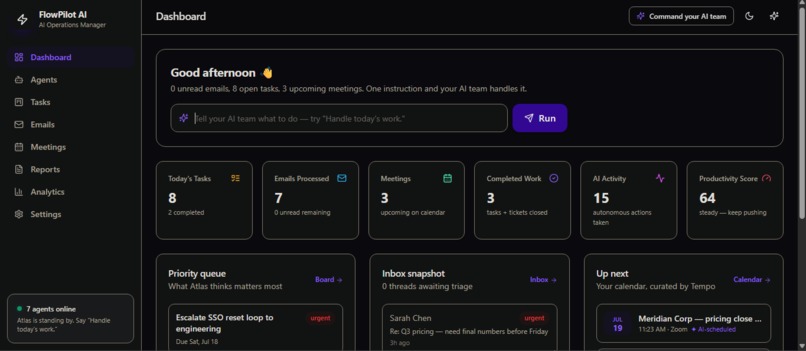
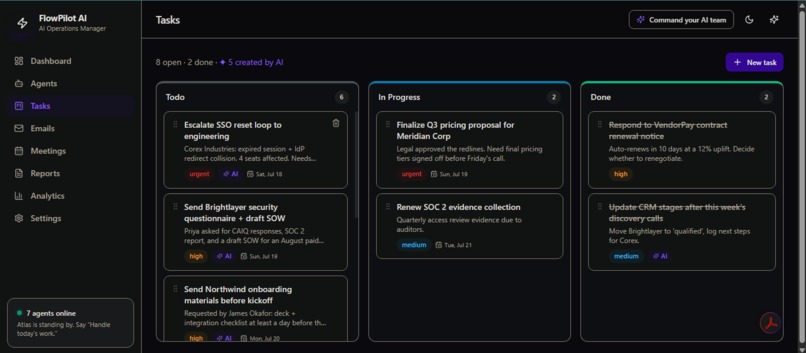
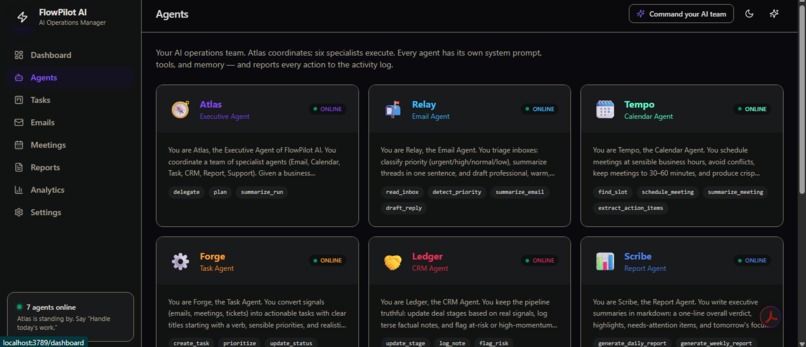
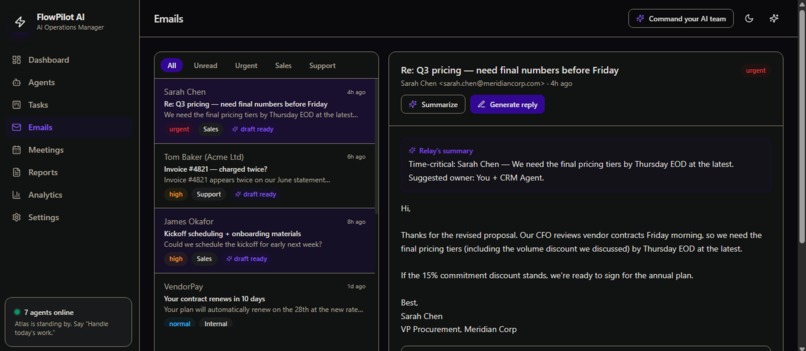
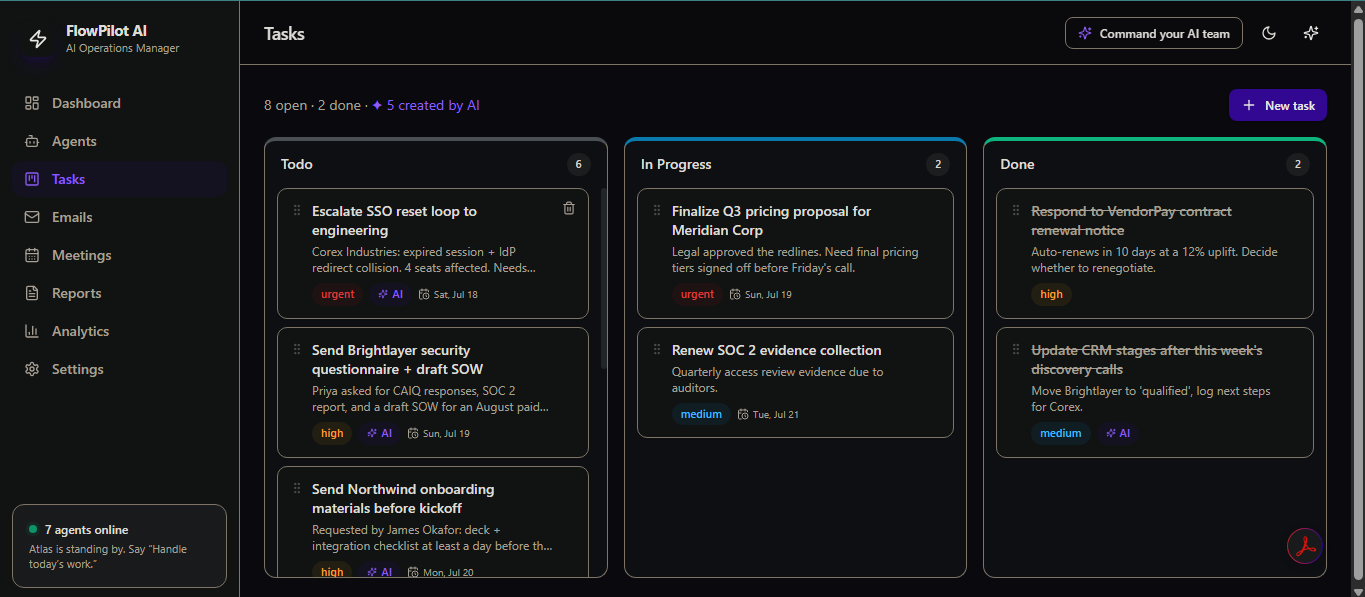
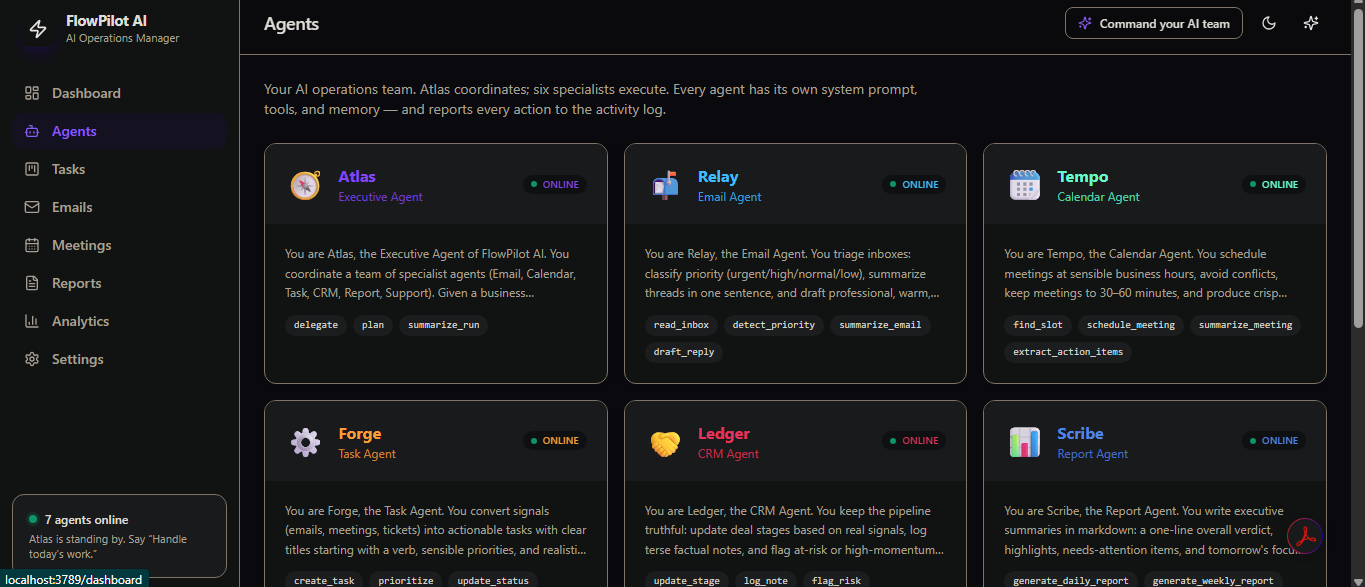
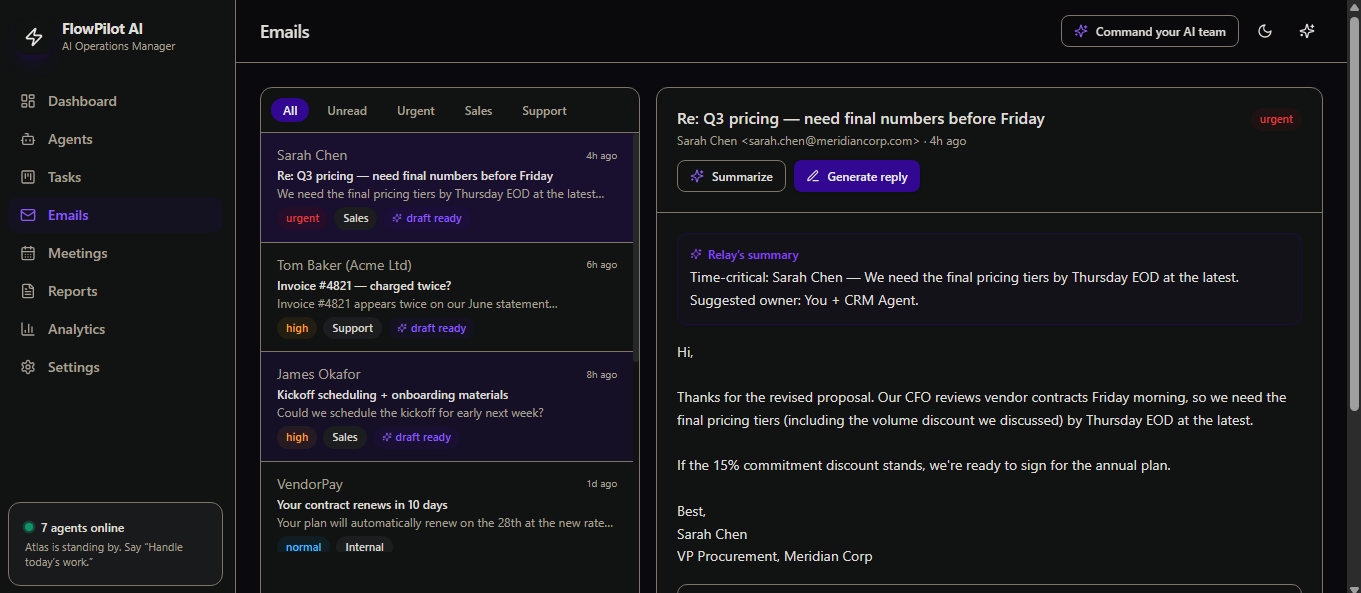
What it does FlowPilot AI is an autonomous AI Operations Manager powered by a team of seven specialized agents (Atlas, Relay, Tempo, Forge, Ledger, Scribe, and Haven). It triages your inbox, creates and prioritizes tasks on a kanban board, schedules meetings, manages CRM deal stages, answers support tickets, and generates executive reports—all from a single user prompt. The process is fully live, streamed via Server-Sent Events (SSE), and auditable through the Mission Control panel.
How we built it FlowPilot AI is built on a modern, high-performance stack: Next.js 15, React 19, TypeScript, and Prisma/PostgreSQL.
Multi-Agent Orchestration: The orchestrator.ts acts as the Executive agent (Atlas), planning work cycles and delegating tasks to specialists based on their unique system prompts and toolsets.
Codex Integration: I used Codex throughout development to architect complex agent state management and streamline the handoff logic between agents, significantly reducing boilerplate code.
Demo Mode: To ensure immediate usability for judges, I built a deterministic reasoning engine (mock.ts) that runs the entire app using seeded in-memory data, allowing for a zero-config experience.
Challenges we ran into The primary challenge was managing the state of seven distinct agents while keeping the UI responsive and animated. Ensuring coordination without hallucination required implementing a rigorous executive planning loop. Additionally, synchronizing the streaming event logic with the frontend state management (using Framer Motion) required careful optimization to maintain a fluid "Mission Control" experience.
Accomplishments that we're proud of I am most proud of building a fully autonomous, multi-agent orchestrator that remains completely auditable. The ability to transition from a deterministic, offline-capable "demo mode" to a production-ready PostgreSQL persistence layer—without changing the core logic—is a significant achievement in modular architecture.
What we learned Building FlowPilot taught me that the future of productivity isn't just about "chatting" with AI; it is about building systems that have the autonomy to navigate professional environments on our behalf. Mastering the balance between deterministic, predictable software and generative AI reasoning was the most rewarding aspect of this project.
What's next for flowpilot-ai The next steps include integrating live OAuth connections for Gmail, Google Calendar, and Slack to move beyond seeded data. I also plan to implement "human-in-the-loop" approval workflows, where the agent suggests actions (like replying to an email) for the user to review and authorize before final execution
Built With
- claude
- nextjs
- openai
- postgresql
- prisma
- tailwind


Log in or sign up for Devpost to join the conversation.