Inspiration
We were inspired by a common problem: people and organizations use many tools to manage work, yet they still spend significant time figuring out what is urgent, what is blocking progress, and what action should come next. We wanted to build something that goes beyond tracking tasks and actually understands how work flows, identifies problems, and helps solve them.
What it does
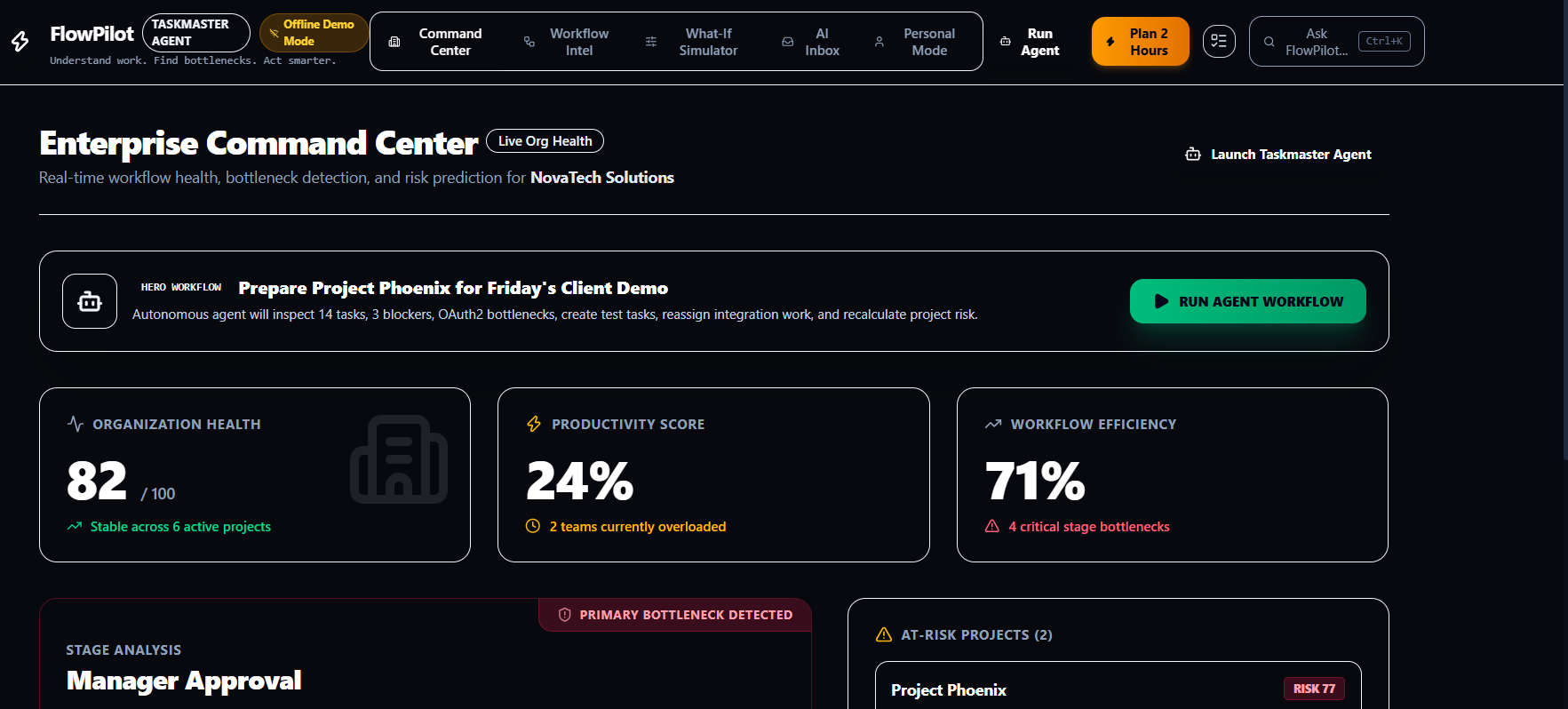
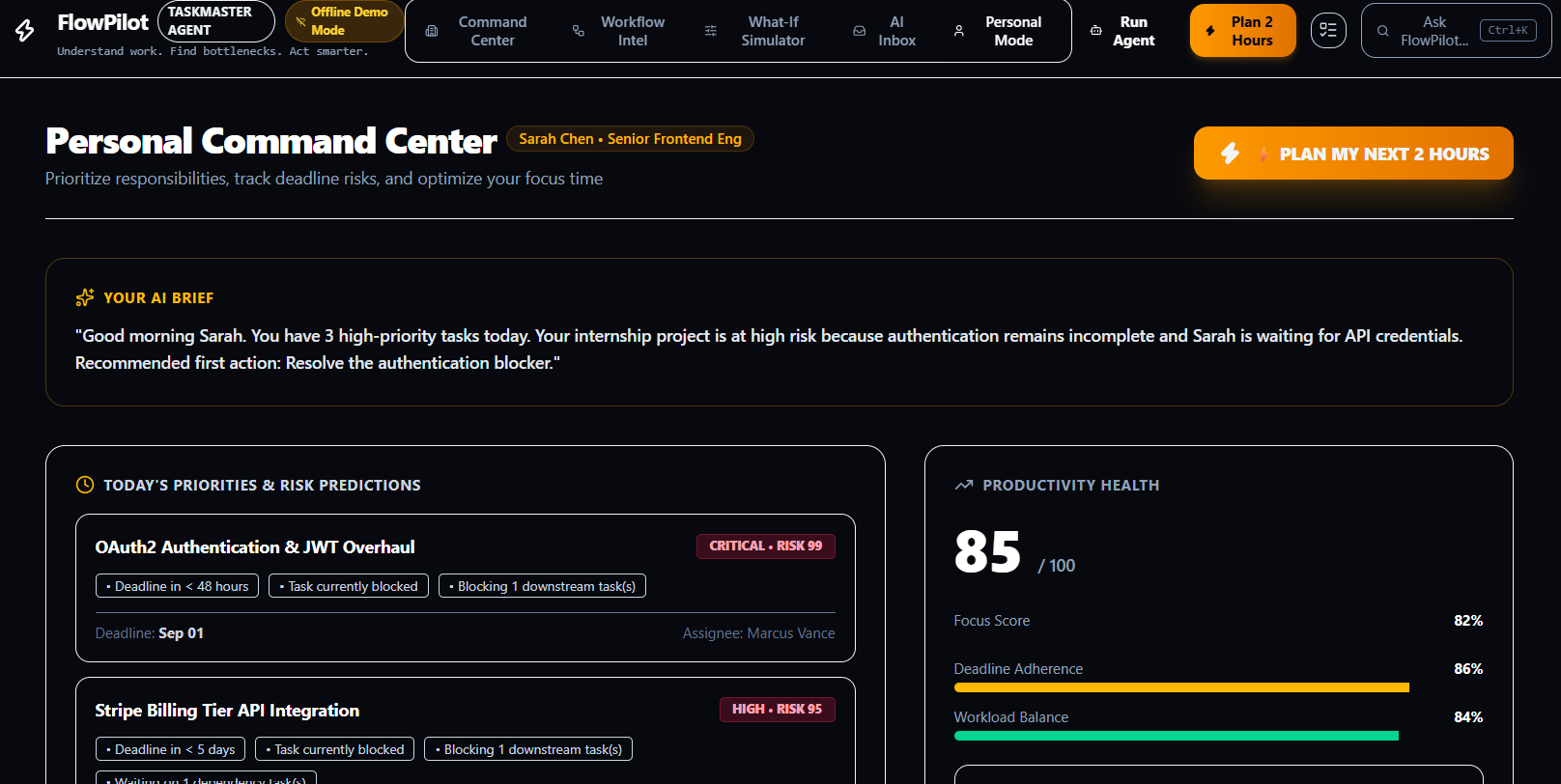
FlowPilot AI is an agentic workflow and productivity platform. Users can give it a goal, such as preparing a project for an upcoming deadline. It analyzes tasks, deadlines, dependencies, workloads, risks, and workflow history using ML and Gemini AI. The agent identifies bottlenecks, creates a structured action plan, requests human approval, executes approved actions through tools, verifies the results, and measures the resulting impact. It can also help individuals prioritize their responsibilities and plan their next few hours, while organizations can use it to understand workflow inefficiencies and explore process improvements.
How we built it
We built FlowPilot AI using a React and Vite frontend with Tailwind CSS, Framer Motion, Recharts, and React Flow. The backend uses Python, FastAPI, SQLite, and modular services for workflow analytics, risk intelligence, productivity analysis, and agent execution. We integrated Google's GenAI SDK with Gemini for reasoning, structured planning, natural-language understanding, and recommendations. The agent uses explicit tools for tasks, workflows, analytics, dependencies, and verification, with a human-in-the-loop approval system and audit trail. The architecture is designed for deployment on Google Cloud.
Challenges we ran into
The biggest challenge was making the system genuinely agentic rather than building a chatbot with an AI interface. We had to design a reliable flow for understanding a goal, retrieving the right context, generating structured actions, validating those actions, executing them safely, and verifying the result. We also had to balance ambitious enterprise functionality with a realistic hackathon development timeline and ensure that AI predictions and productivity metrics remained explainable.
Accomplishments that we're proud of
We are proud of creating a single platform that connects Enterprise workflow intelligence, Machine Learning/AI, and Productivity instead of treating them as separate features. FlowPilot can identify workflow bottlenecks, reason about project risks, propose multi-step actions, execute approved changes, and verify them. The What-If simulator and Agent Activity interface also make the agent's reasoning and operational impact easier to understand.
What we learned
We learned that effective agentic systems require more than a powerful language model. Reliable tools, structured outputs, clear state management, validation, human approval, verification, and good data are equally important. We also learned that deterministic analytics and ML can provide trustworthy evidence, while Gemini can use that evidence for higher-level reasoning and action planning.
What's next for FlowPilot AI
We plan to connect FlowPilot with real enterprise productivity platforms such as Google Workspace, Calendar, Drive, and communication systems. We also want to improve its learning from historical workflows, support more organizations and industries, strengthen agent memory and observability, and expand its ability to safely execute repetitive operational workflows. Our long-term vision is for FlowPilot to become an intelligent operational layer that helps people and organizations continuously understand, optimize, and improve how work gets done.
Built With
- artificial-intelligence
- axios
- docker
- fastapi
- google-cloud
- google-cloud-run
- google-firestore
- google-gemini
- javascript
- lucide-react
- numpy
- pandas
- powershell
- pydantic
- pytest
- python
- react
- rest-api
- scikit-learn
- sqlalchemy
- sqlite
- tailwindcss
- uvicorn
- vite


Log in or sign up for Devpost to join the conversation.