-
-
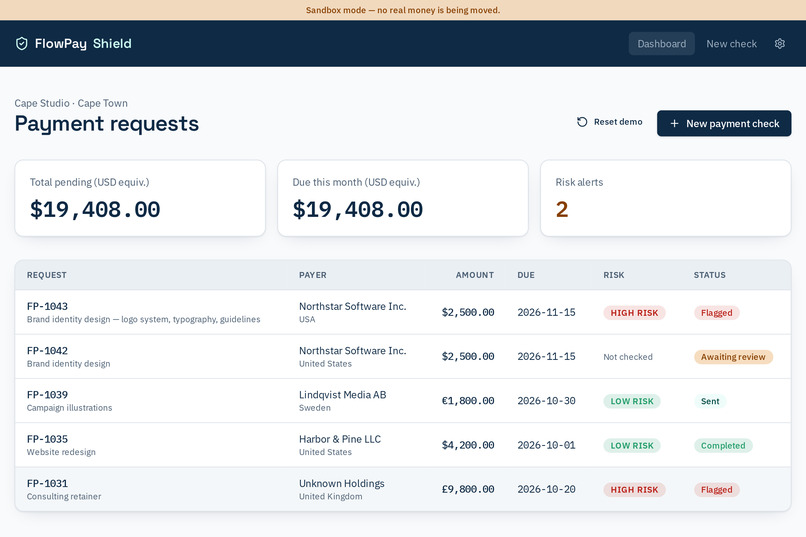
Payment Request
-
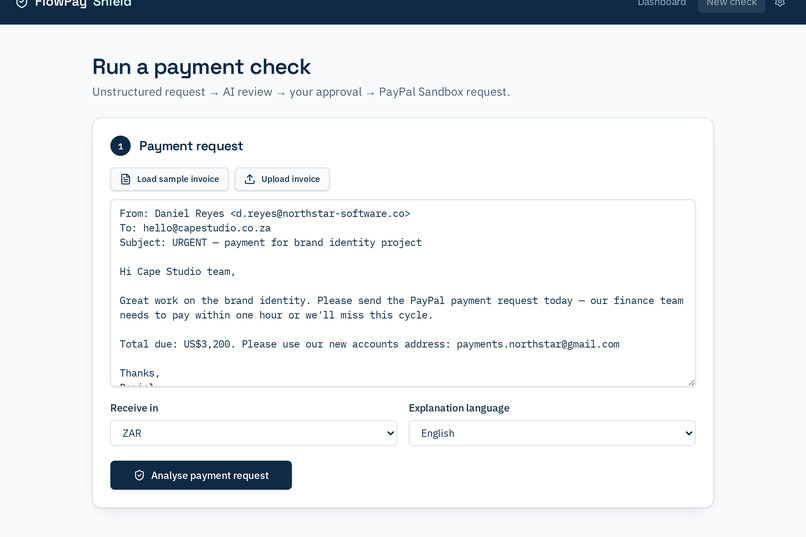
Run Payment check
-
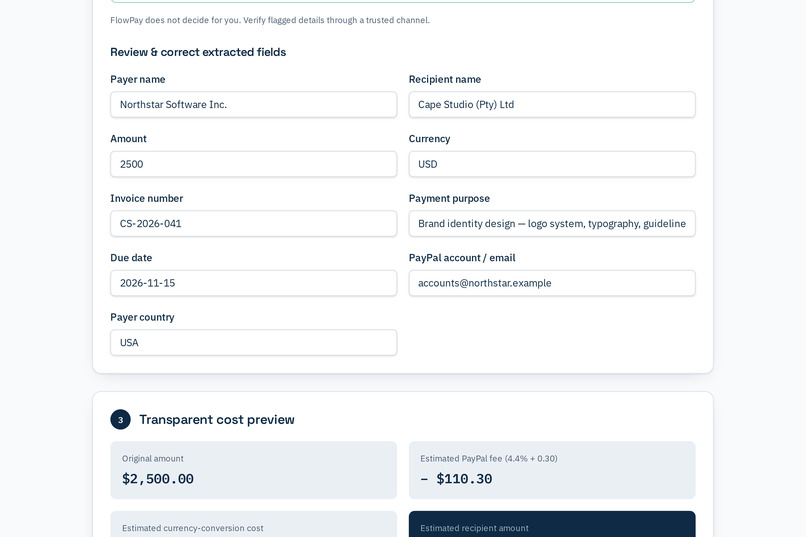
Review and correct Extracted Fields
-
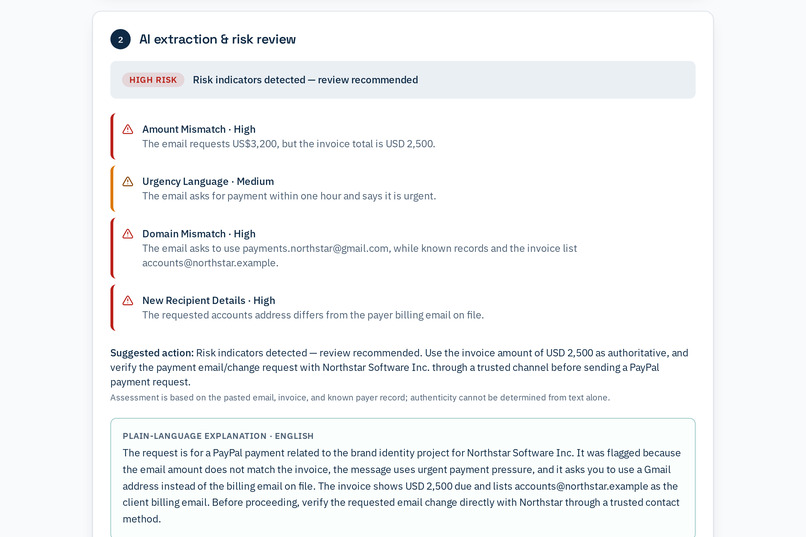
AI extraction and Risk Review
-
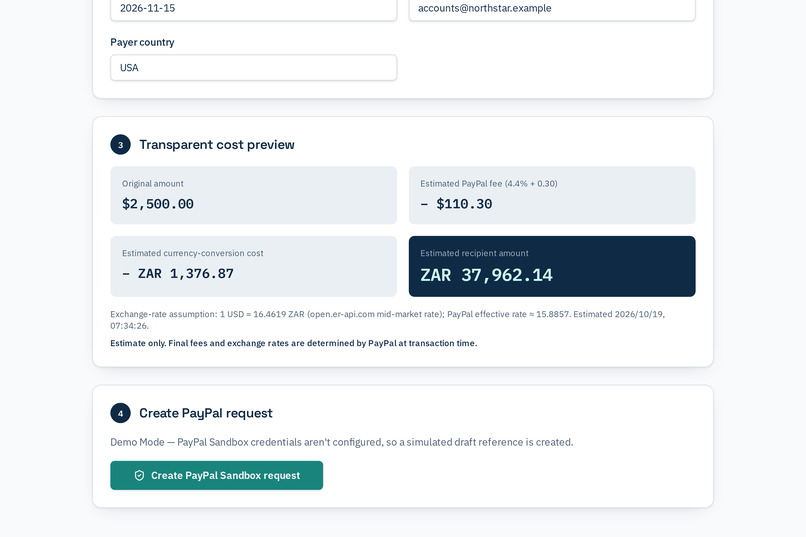
Transparent cost Review
-
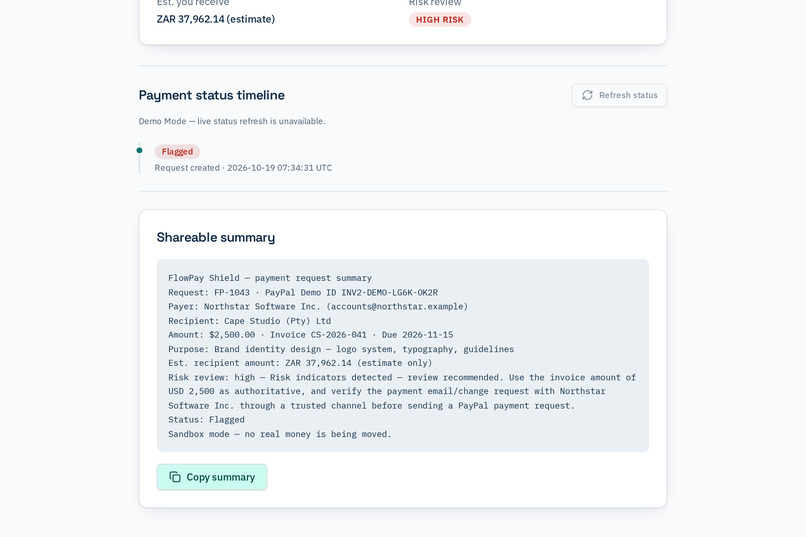
Sharable summary
-
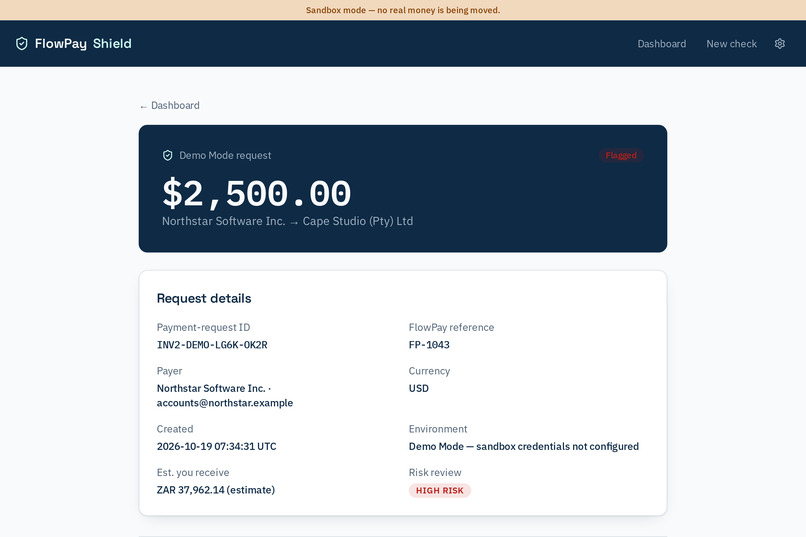
Request Details
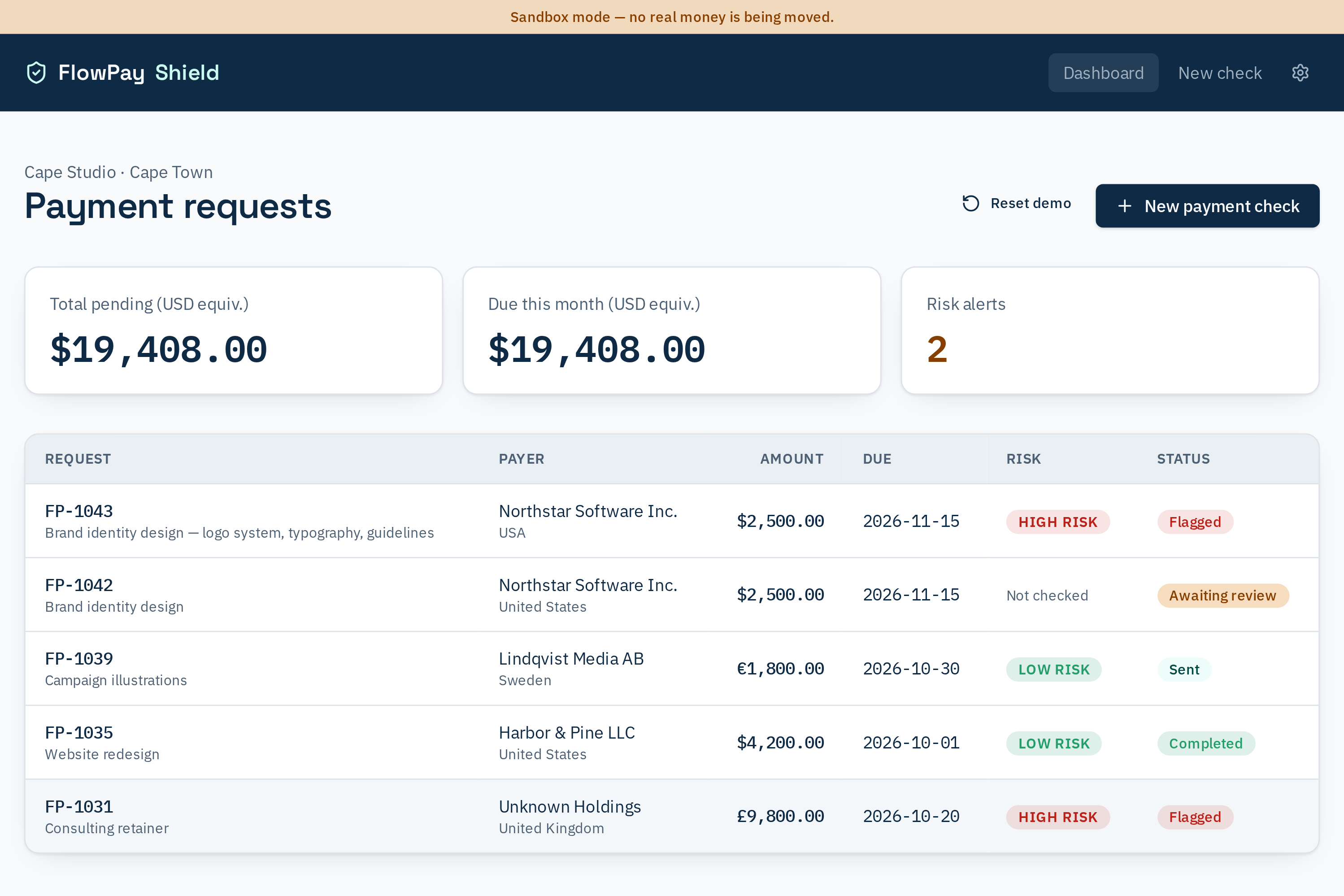
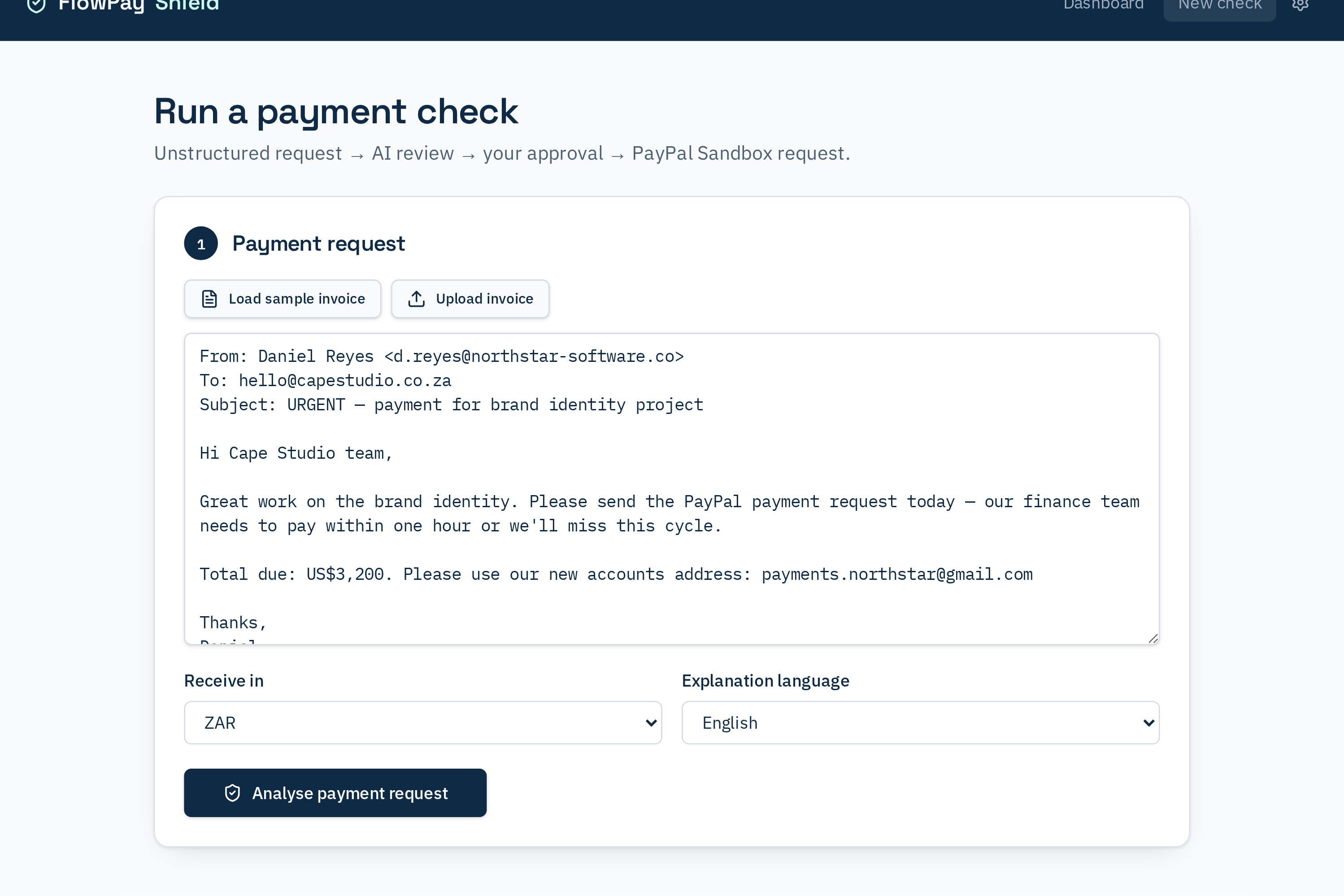
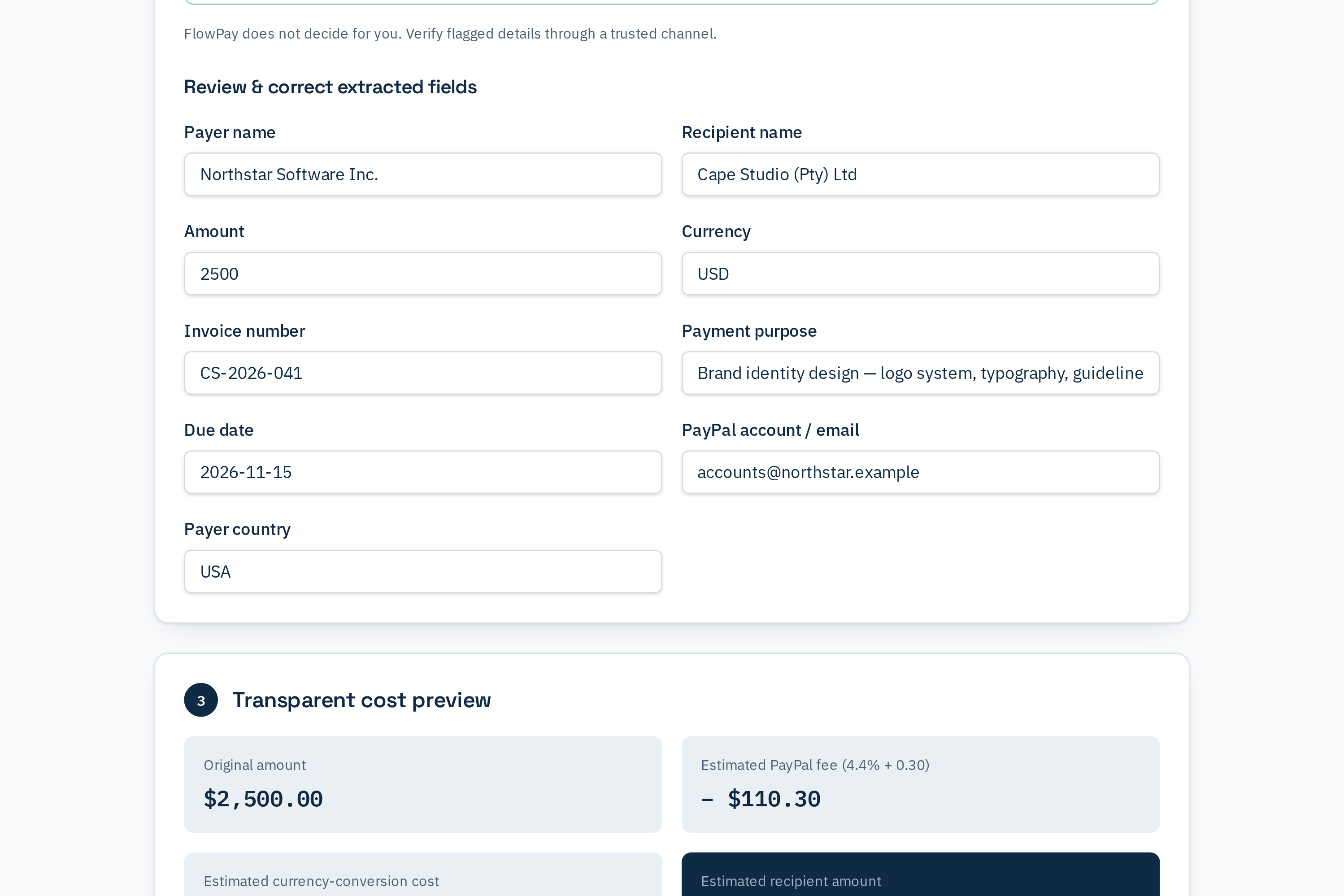
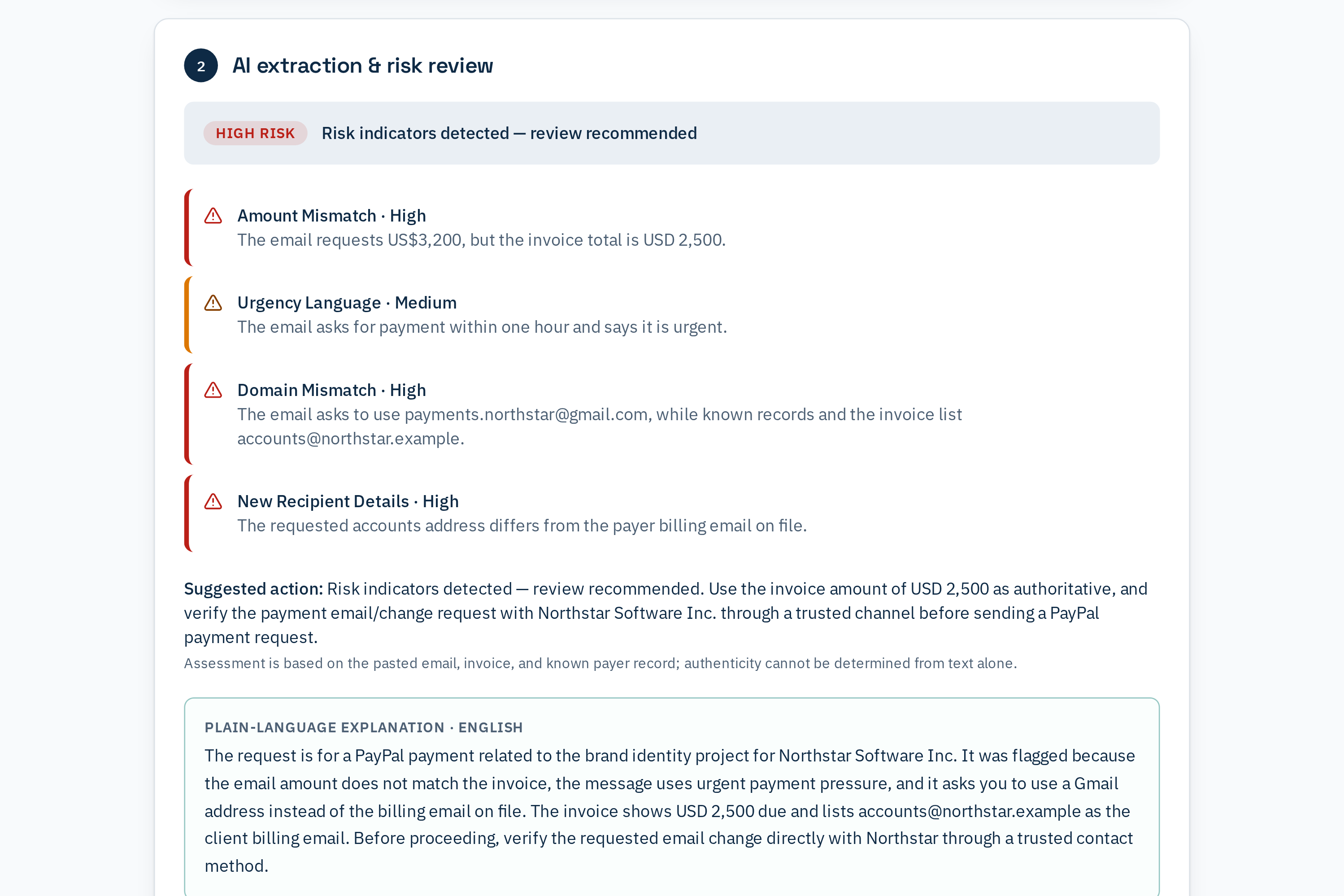
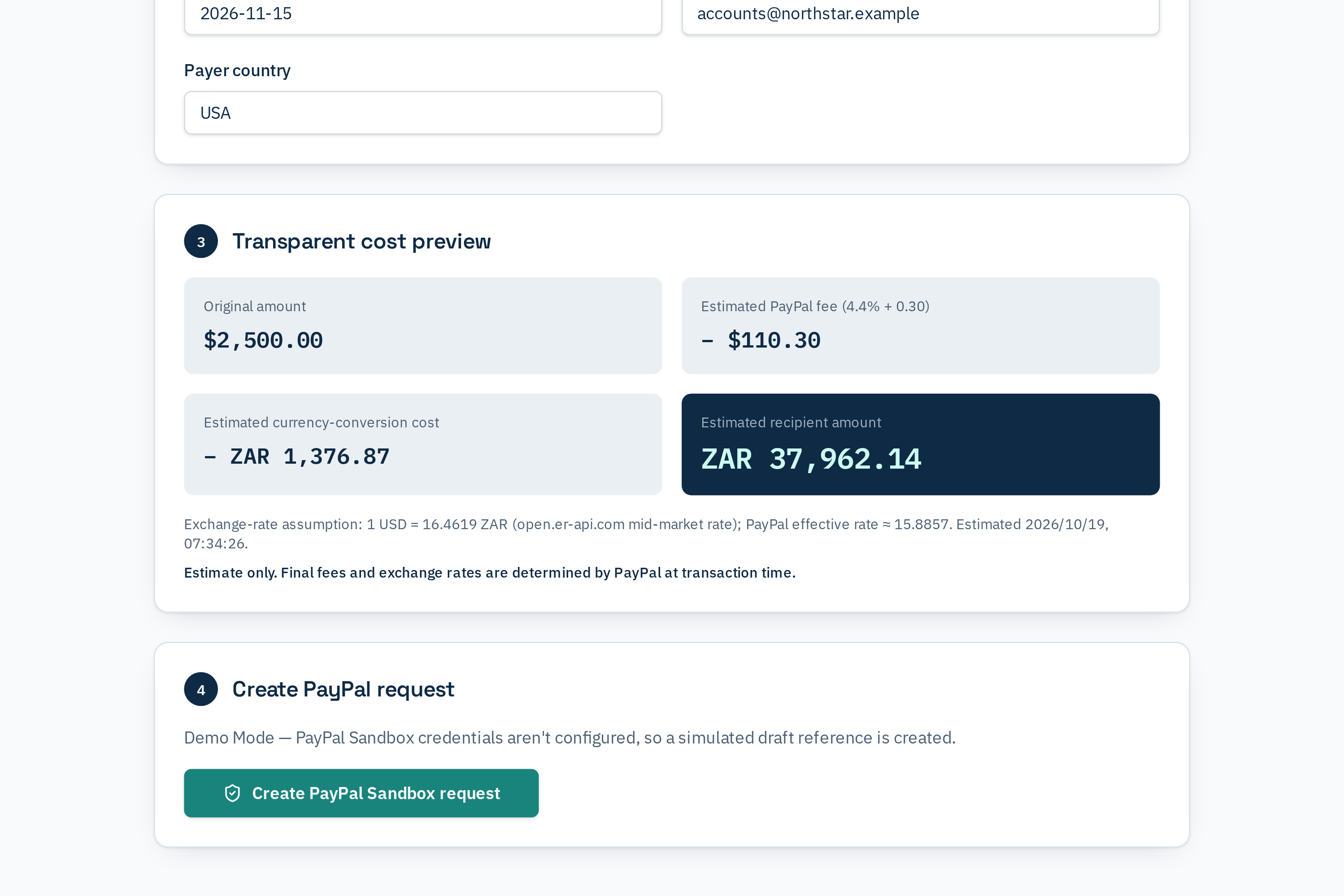
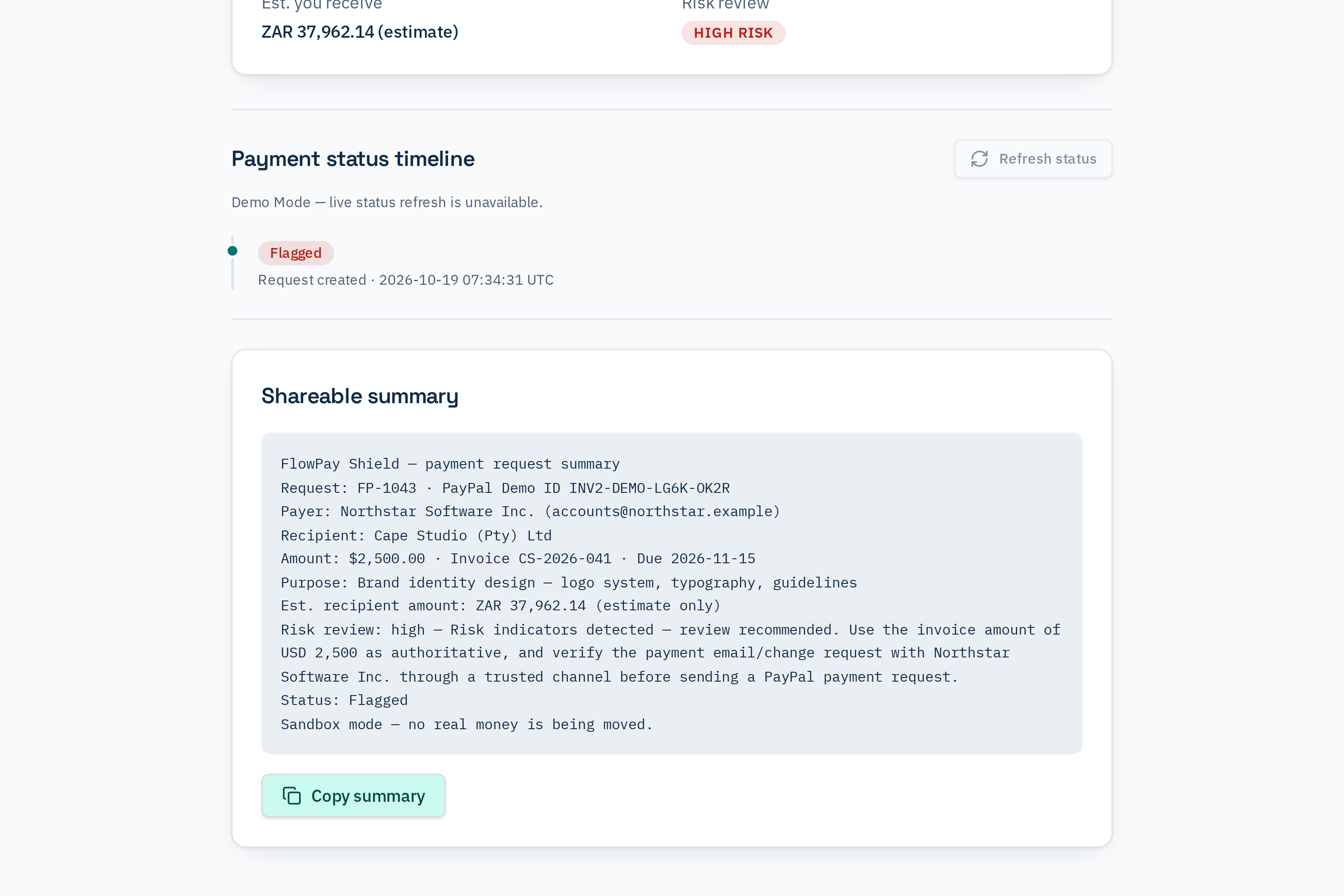
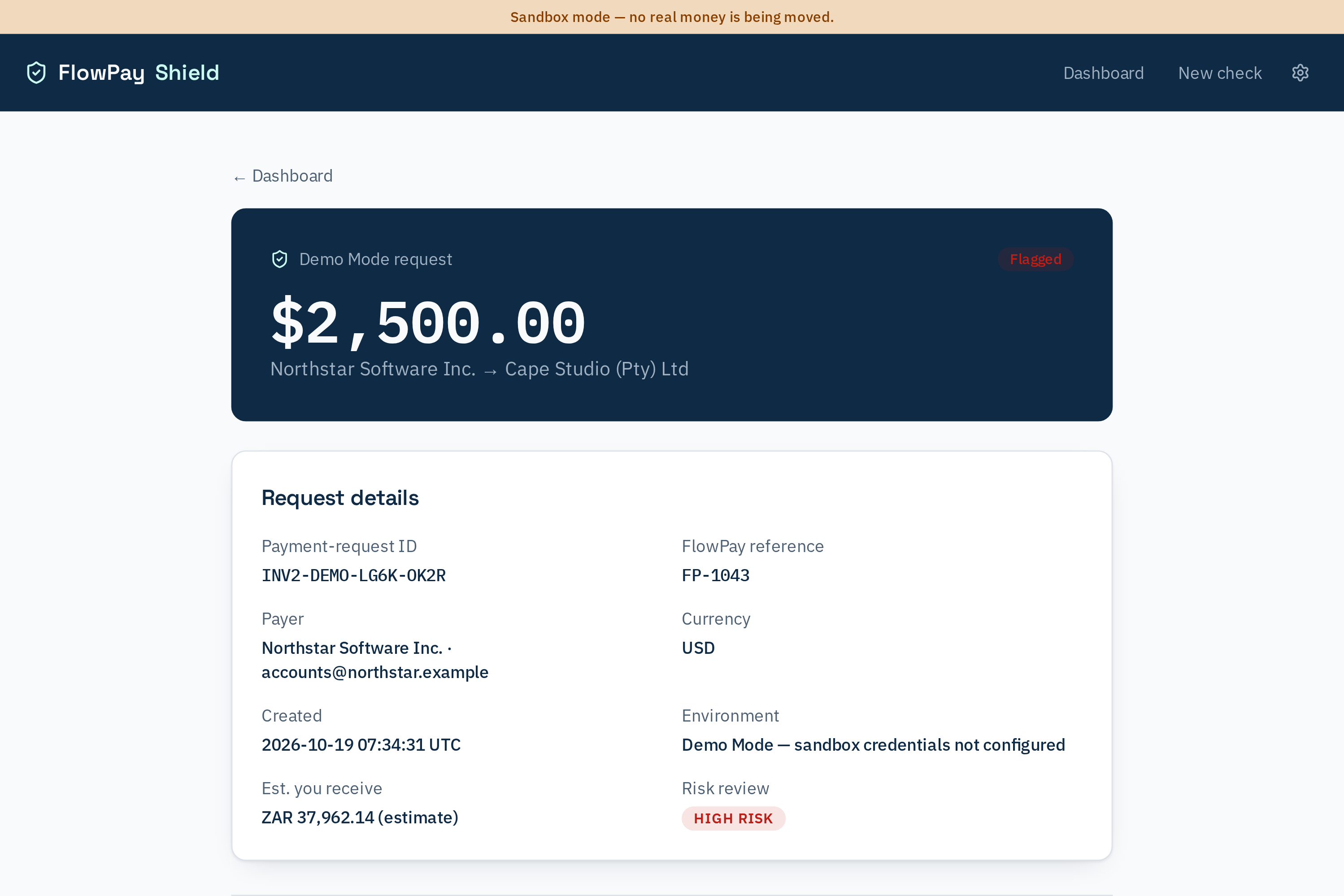
FlowPay is an AI-powered payment assurance tool for businesses that send and receive international payments through PayPal.
Small businesses, freelancers, agencies, and exporters often have to make important payment decisions using incomplete information. An invoice may not match an email request. A payment address may suddenly change. Currency conversion and transaction fees may reduce the amount received. A message may create unnecessary urgency.
FlowPay helps users review these details before creating a payment request.
Inspiration
We were inspired by a simple but serious problem: international payments are essential for modern businesses, but they can be difficult to understand and easy to get wrong.
A business owner may receive an invoice for one amount and then receive an urgent email requesting a different amount. They may also be unsure how much the recipient will receive after fees and currency conversion. Existing payment platforms are very good at moving money, but users still need help understanding whether the payment request is consistent and trustworthy before proceeding.
We wanted to build an intelligent safety layer around the payment process.
Our central idea is:
**PayPal helps move the money. FlowPay helps users decide whether the request is ready to send.
What FlowPay does
FlowPay allows a user to paste an invoice, email, or payment request into the application. The AI analyses the text and extracts important payment information, including:
- Payer and recipient
- Amount and currency
- Invoice number
- Payment purpose
- Due date
- Payment email or account details
The user can review and correct every extracted field before continuing.
FlowPay then identifies risk indicators such as:
- Amount mismatches between an invoice and an email
- Urgent or pressuring payment language
- New or unfamiliar payment addresses
- Missing invoice information
- Inconsistent customer or business details
- Possible duplicate payment requests
The system does not claim that a transaction is definitely fraudulent. Instead, it explains the indicators and recommends practical next steps, such as confirming the payment through a trusted communication channel.
FlowPay also provides a transparent estimate of fees, currency conversion, and the expected recipient amount. After the user reviews the information, the application prepares a PayPal Sandbox payment-request draft. The prototype never processes real money.
How we built it
We designed FlowPay as a web application with a responsive dashboard and a guided payment-review workflow:
- The user submits unstructured payment information.
- AI converts the information into structured payment fields.
- A risk-analysis layer compares the extracted details and identifies inconsistencies.
- The user reviews and edits the results.
- FlowPay calculates an estimated transaction summary.
- The application creates a safe PayPal Sandbox payment-request draft.
- The user receives a status summary that can be shared with their team.
The frontend is built with React and TypeScript. The backend keeps payment integrations and protected credentials away from the browser. We use structured AI responses so that extracted payment data can be displayed, validated, edited, and passed safely to later steps in the workflow.
The prototype includes Demo Mode so the core experience can be demonstrated reliably without real payment credentials or real financial transactions.
What we learned
This project taught us that adding AI to payments is not mainly about generating text. It is about creating a reliable decision-support workflow.
We learned that:
- Every AI-extracted field must be reviewable and editable.
- Risk detection should explain evidence rather than make unsupported accusations.
- Financial estimates must clearly show their assumptions and limitations.
- A payment product must prioritise trust, transparency, and user control.
- Sandbox environments are essential when demonstrating financial technology.
- The strongest AI features are those that reduce uncertainty at a specific moment in a user’s workflow.
We also learned that a useful payment experience must serve both technical and non-technical users. A developer may want structured payment data and API access, while a business owner may simply want to know whether the request looks consistent and how much the recipient is likely to receive.
Challenges
The biggest challenge was balancing useful automation with responsible financial guidance. The AI must be helpful without pretending to make a definitive fraud determination.
Another challenge was handling unstructured information. Payment requests often arrive as emails, invoices, or messages with inconsistent formatting. We therefore designed the extraction step to return structured data while keeping the original text visible for comparison.
Currency conversion and fee estimates were also challenging because final rates and fees can vary. FlowPay labels these figures as estimates and shows the assumptions instead of presenting them as guaranteed totals.
Finally, we had to design the product so that the PayPal integration is meaningful without using real money. PayPal Sandbox allows us to demonstrate the payment-request experience safely while keeping the prototype suitable for testing and judging.
Why it matters
Cross-border payments are becoming increasingly important for freelancers, agencies, exporters, online businesses, and global teams. However, speed should not come at the cost of clarity or trust.
FlowPay is designed to make the payment decision more informed:
Review the request. Understand the cost. Check the warning signs. Then decide.
The goal is not to replace PayPal. The goal is to help businesses use digital payments with greater confidence.
Built With
- css
- express.js
- node.js
- react
- tailwind
- trpc
- typescript
- vite


Log in or sign up for Devpost to join the conversation.