-
-
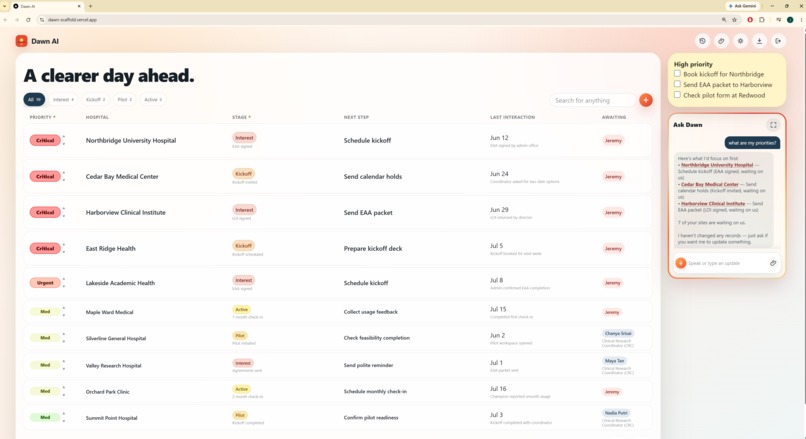
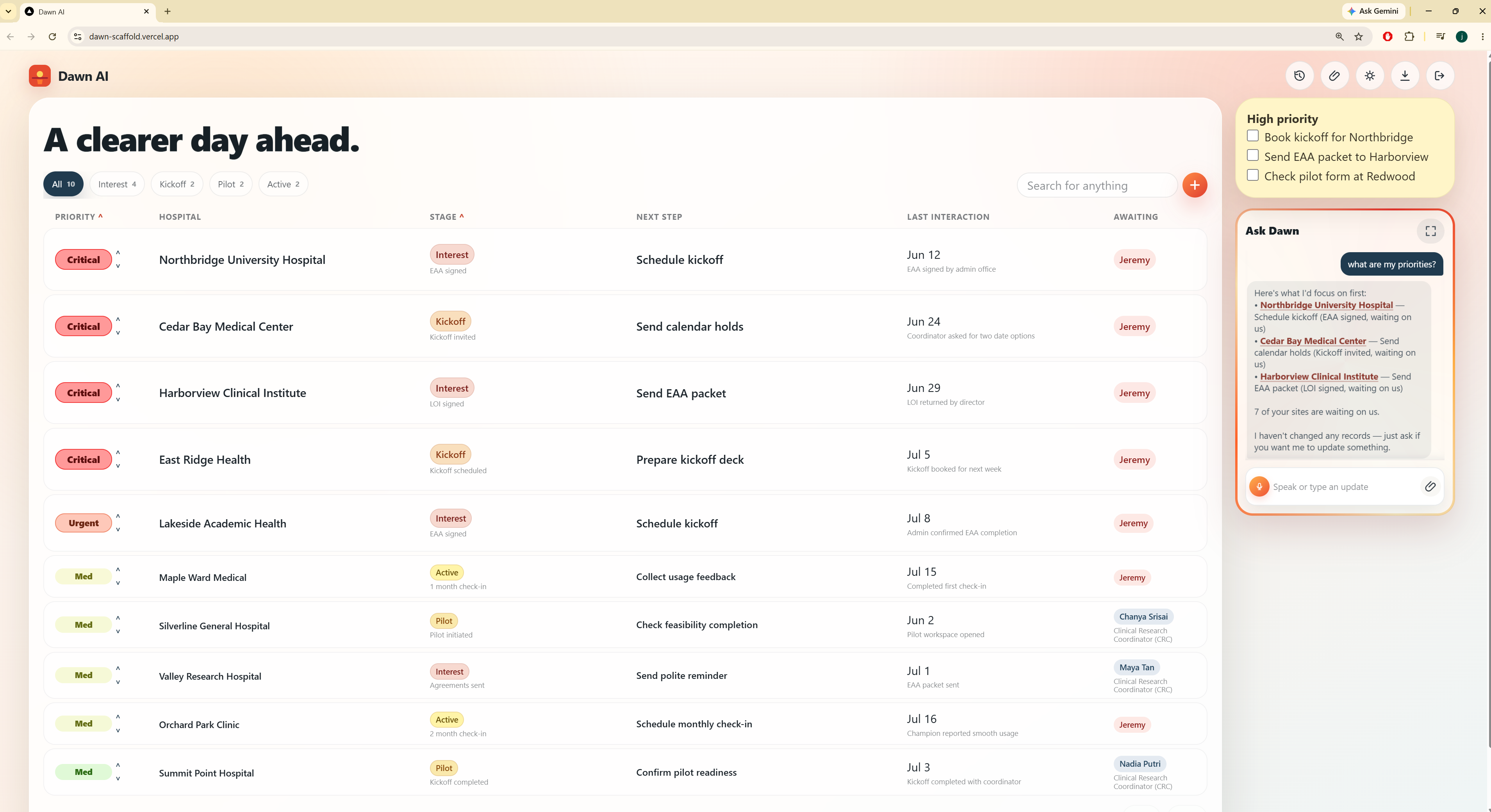
Dawn AI Homepage
-
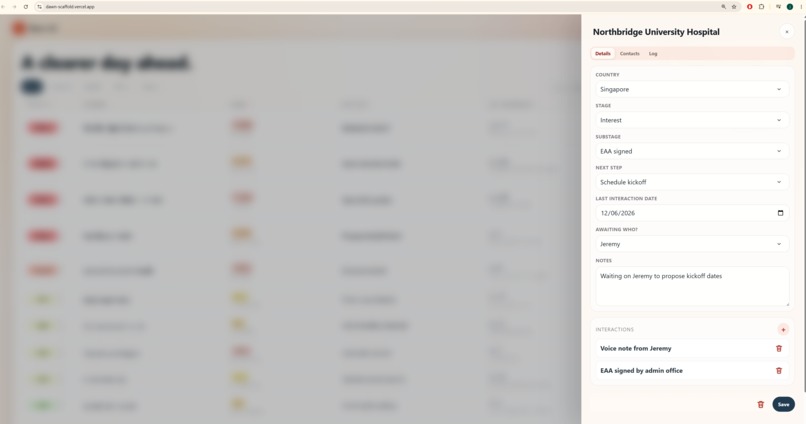
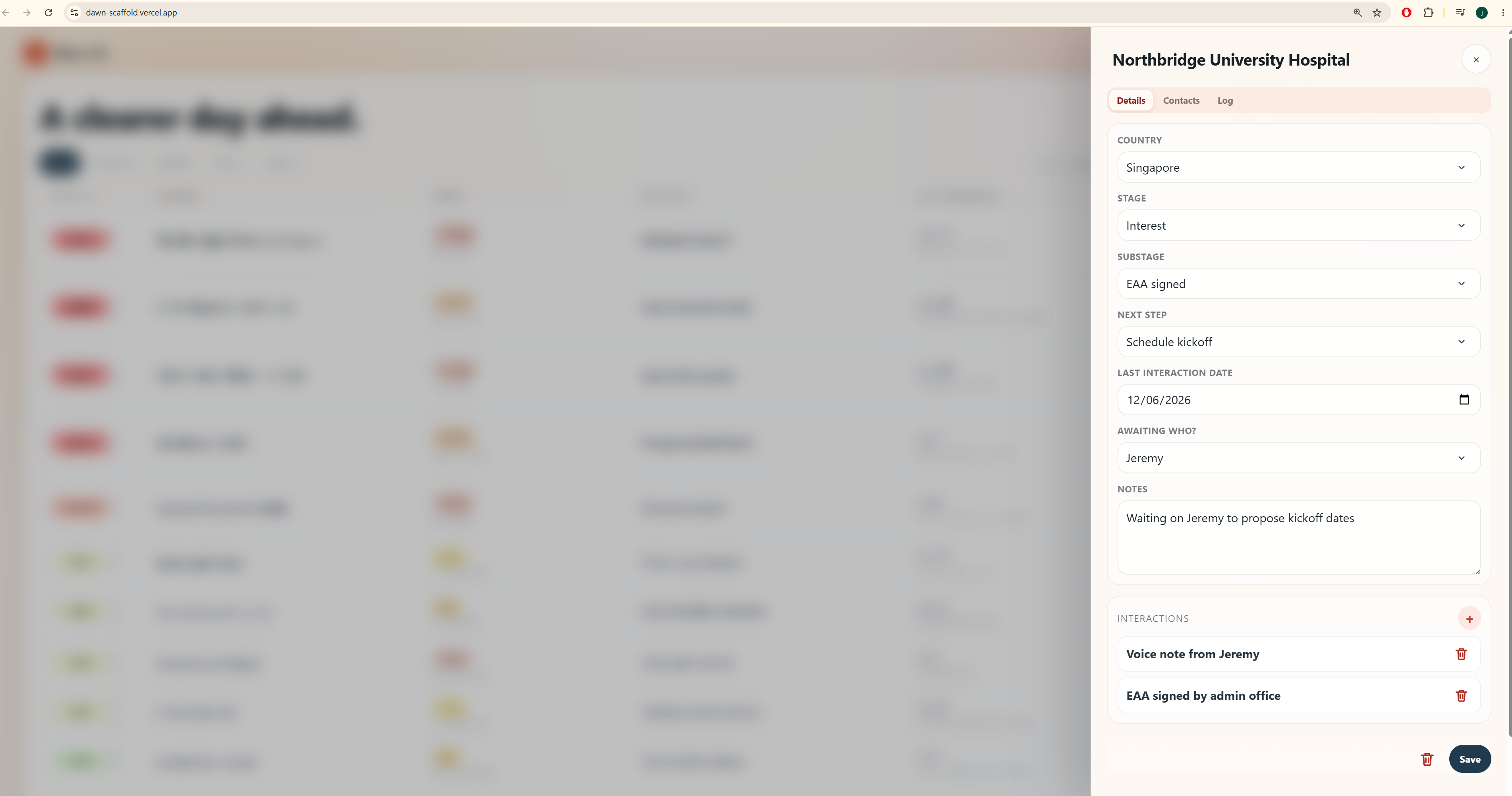
Dawn AI Hospital Profile
-
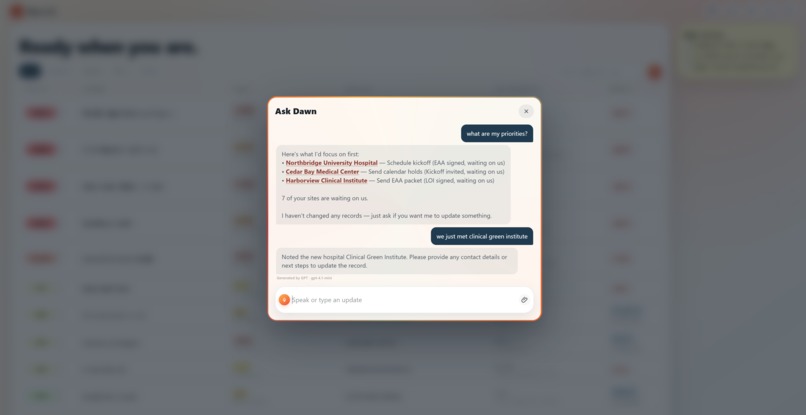
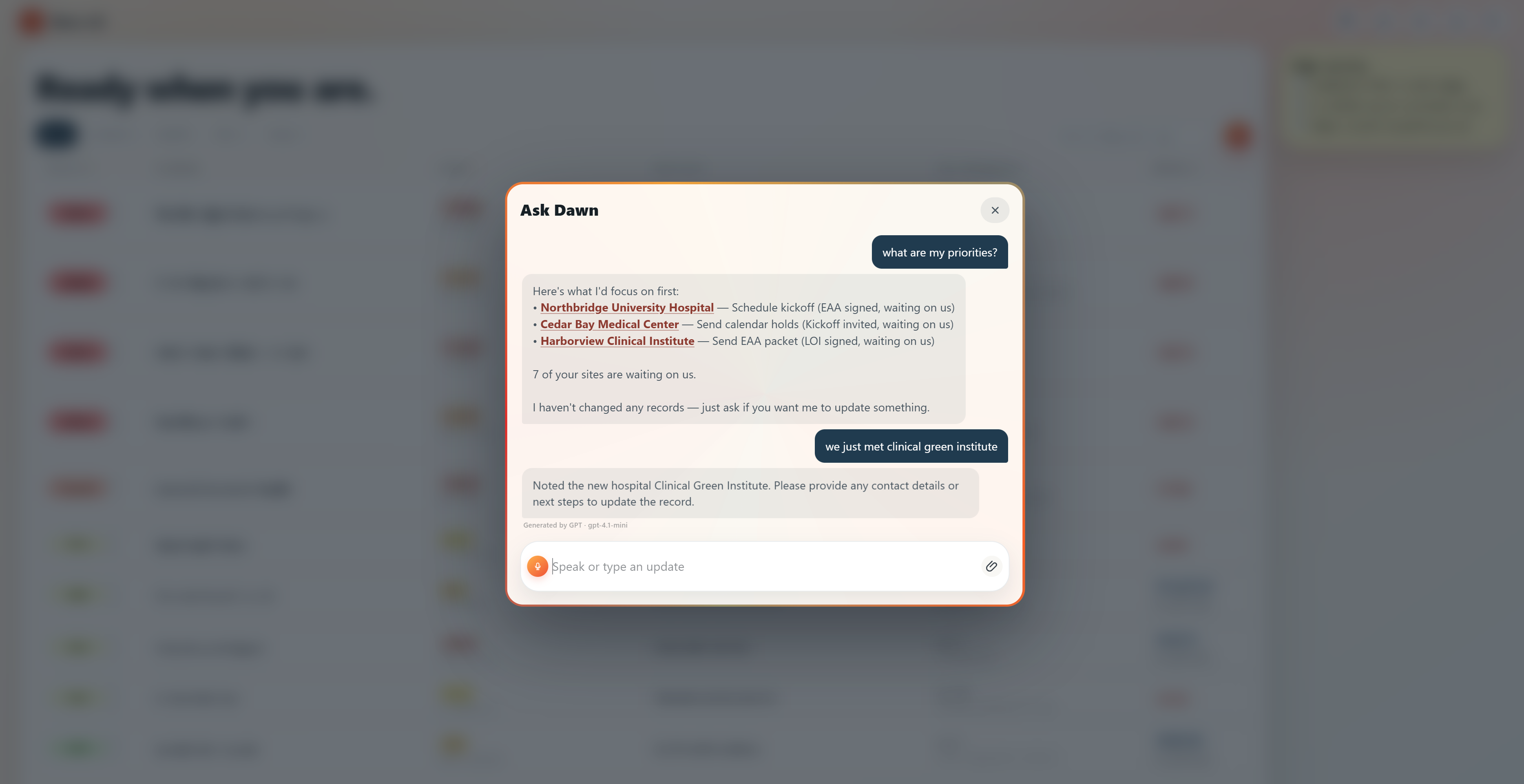
GPT Agent Guiding an update with information requests
-
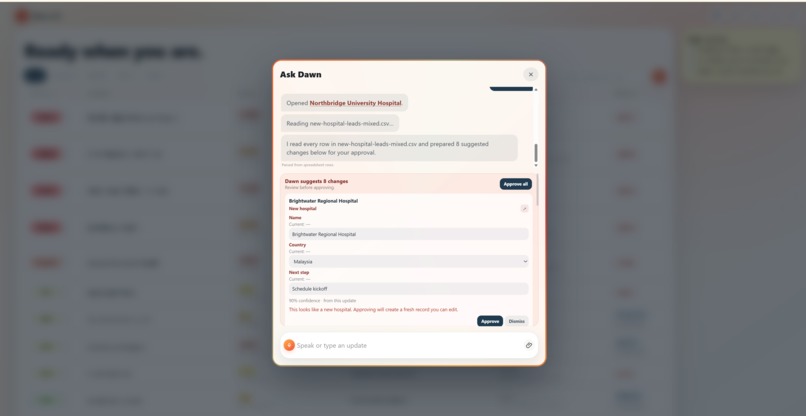
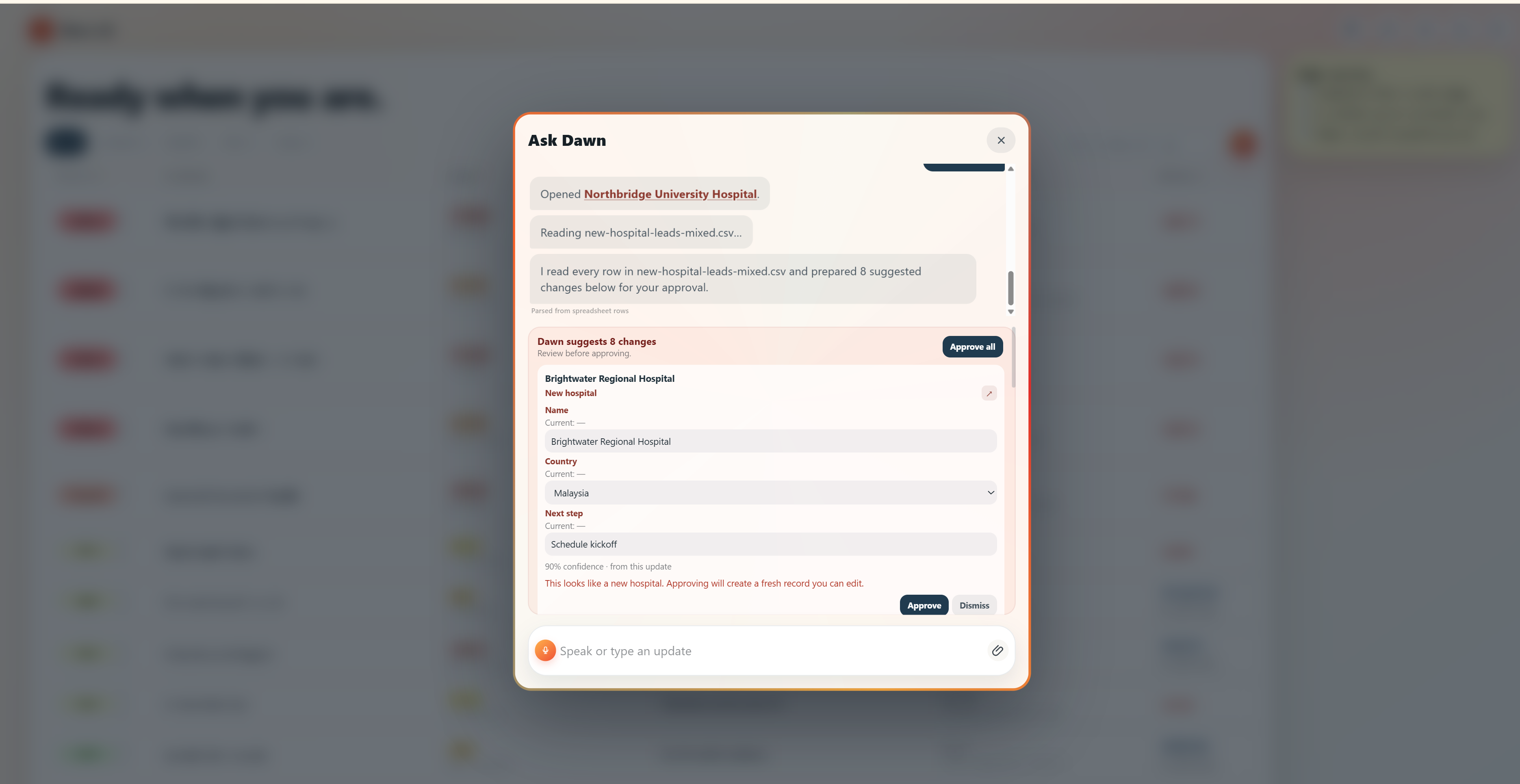
Dawn AI GPT Parsing a spreadsheet and extracting information for user-approved JSON mapping in system
Inspiration
I work at a lean startup with a small team and tight budget. We cannot afford enterprise CRM or custom task tools and Excel is simply unscalable long term. This is especially hard when onboarding and activating hospitals. With multi-year sales cycles and a hundred decision makers per hospital, emails, contacts and interactions easily get missed amongst the infinite other problems a startup deals with every day.
That is the issue Dawn AI was built to prevent. Messy voice notes, quick emails, spreadsheets. Dawn AI gets this ingested fast and tracked clearly so every hospital gets the best onboarding experience they deserve.
What it does
Dawn AI gives you one calm dashboard: who is at what stage (Interest → Kickoff → Pilot → Active), what the next step is, and who the ball is with.
You can: Chat with it! Say "hi!" Ask “what are my priorities today?” and get the top items immediately suggested Drop in messy CSV and txt files or type and speak to it and Dawn AI does the rest. Get AI suggestions but nothing changes without your approval Ask for details about any hospital or contact by name (even by voice) and immediately get information about them. See a full audit trail of what changed and when
How we built it
I used Codex GPT 5.6 Sol to design and build the app in a spec-driven way. I started from my actual domain specific hospital onboarding plan so the product matched how my team actually works, how the leads would typically be captured and titled in a hospital setting. No generic templates were used since this solves a real targeted painpoint faced by startups in the healthtech industry. I also used GPT for debugging and building of the platform.
GPT API powers the “Ask Dawn” chat and file parsing: it reads messy notes and files, then suggests updates to hospital records, contacts, and next steps.
However, AI suggests only; humans approve. Local rules back up GPT when responses are flaky, so core flows (priorities, CSV drops) still work.
Stack: Next.js, deployed on Vercel. Demo data lives in the browser for the hackatho.
Codex session ID: 019f7a05-eae8-7851-993f-013d83357327
Challenges we ran into
Messy real-world input. Partner CSVs and call notes had decoy rows, duplicate names, and hospital names wrongly picked up as contacts. I added filtering rules, debugged and checked for repeated parsing errors using harness engineering steering principles. Rules were built specifically for parsing, reading and understanding data based on the type of input. GPT sometimes confused LOI vs EAA or picked the wrong hospital from noisy text. I layered local parsing on top and always require human approval before anything saves.
PDF and PowerPoint parsing was unreliable under time pressure, so I focused the demo on CSV and text since they are the most practical and urgent formats my team uses most often.
Wireframing, designing, Ui, ux, aesthetic looks as well as designing fit for purpose were challegning on a deadline. Layout bugs, TypeScript build errors, and deploy fixes all had to be completed alongside testing and the demo script.
Accomplishments that we're proud of
Shipped a working end-to-end MVP in hackathon time — from messy input to approved updates to audit trail
Built a sunrise-themed UI that makes activation progress feel clear, not like admin homework
Easy to use, clear interface with beautiful interface - warm and welcoming to the user.
AI driven voice, chat, and file ingestion tool for smart onboarding management to lighten the load but also speed up onboarding - so startups AND hospitals benefit greatly from improved efficiency.
Deployed live so judges can try it without installing anything: https://dawn-scaffold.vercel.app
What we learned
For a lean team, clarity beats features. One screen that answers “what’s urgent?” is worth more than a dense CRM.
Building with AI for the first time - understanding the dos and don'ts. As well as token management and time-focused prioritization of feature testing and spec-driven buildout.
Spec-driven development with Codex let one person move fast while keeping the product aligned to real business process.
AI works best as a copilot, not an autopilot. Approve-first built trust and prevented bad updates from messy files.
Real onboarding data is messy. The product had to handle noise, not assume perfect spreadsheets.
What's next for Dawn AI
Real database and login so records persist across devices and team members Richer file support — PDF, Word, Excel — with the same approve-first flow Email and calendar and telegram hooks so follow-ups do not depend on someone remembering or logging in to key in - ideally. Multi-user views so each person sees their waiting-on-us queue Polish for production — Singapore timezone, notifications, and a path off demo data Improved analytics and priority focus so the CRM becomes a backend , reliably connected to by Dawn AI's agent.
Built With
- codex
- sol

Log in or sign up for Devpost to join the conversation.