Inspiration
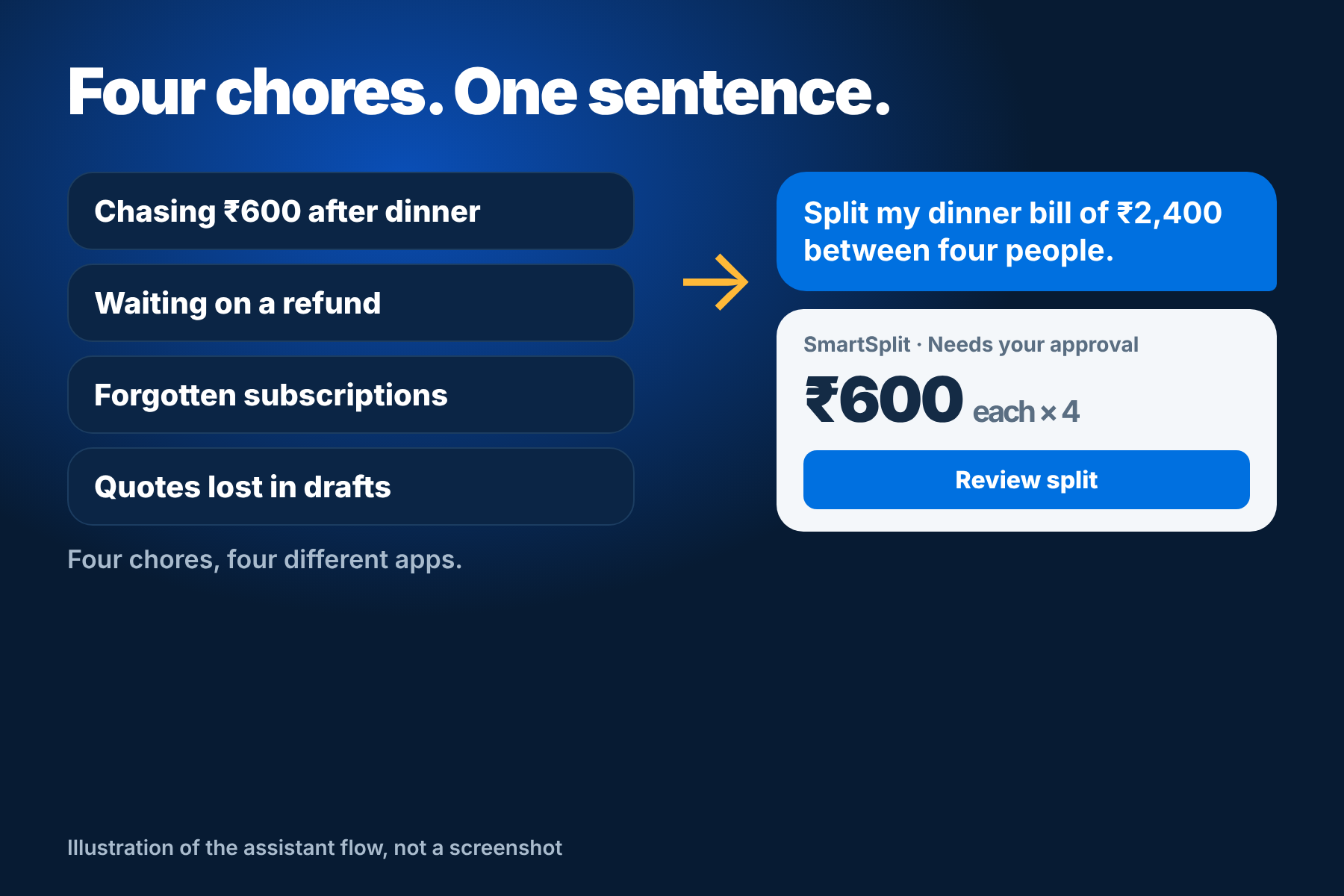
A ₹2,400 dinner. Four friends. Nine days later, you're still chasing ₹600. Splitting a bill is one money chore; add refunds, subscriptions and client quotes and it's four chores in four different apps. We wanted one assistant that handles all of them, but never touches your money without you.
What it does
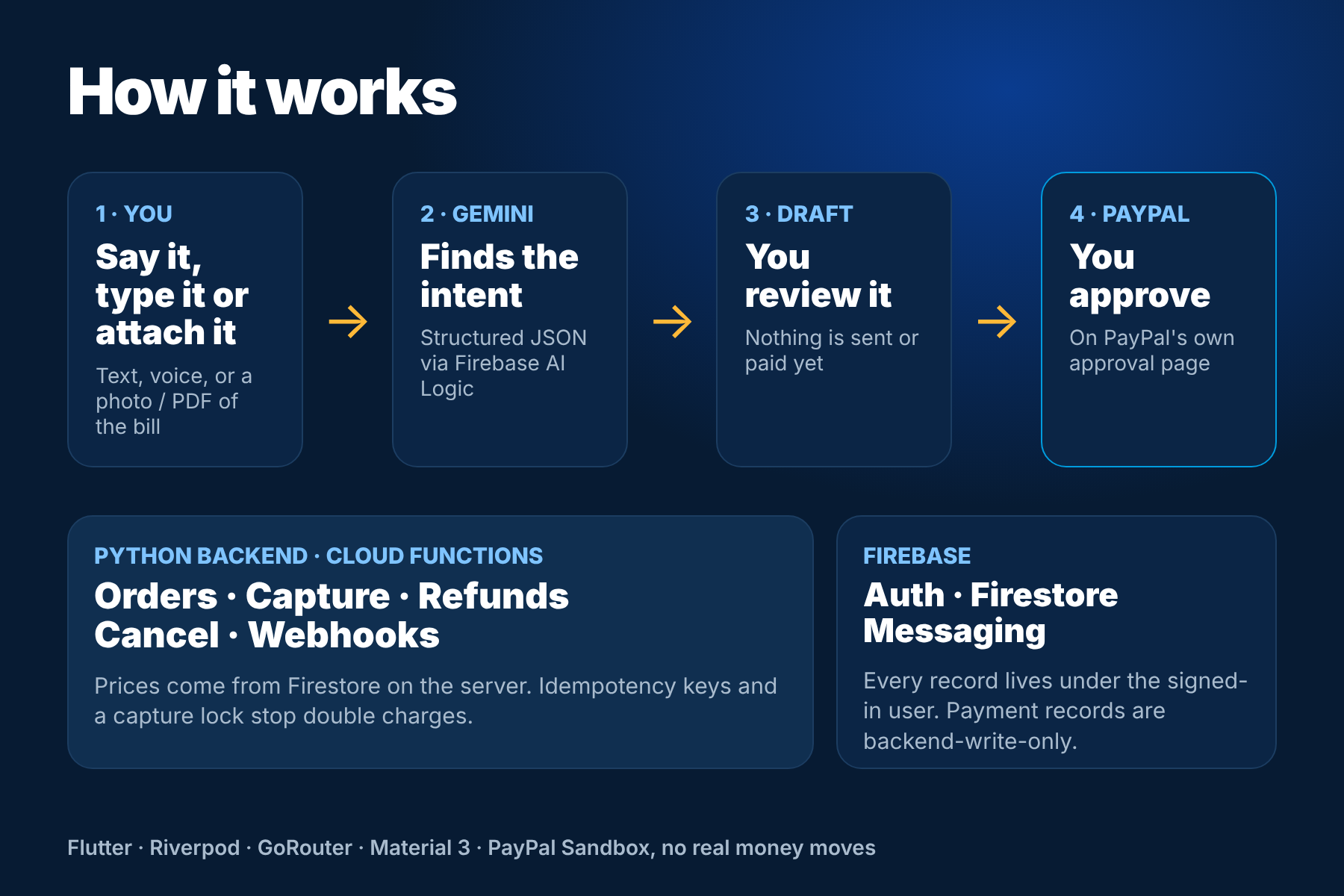
FLOWMINT AI turns plain words into the right financial workflow. Type, speak, or attach a photo or PDF, and Gemini identifies the intent, pulls out the details and hands you a ready-to-review action. It never makes a payment on its own.
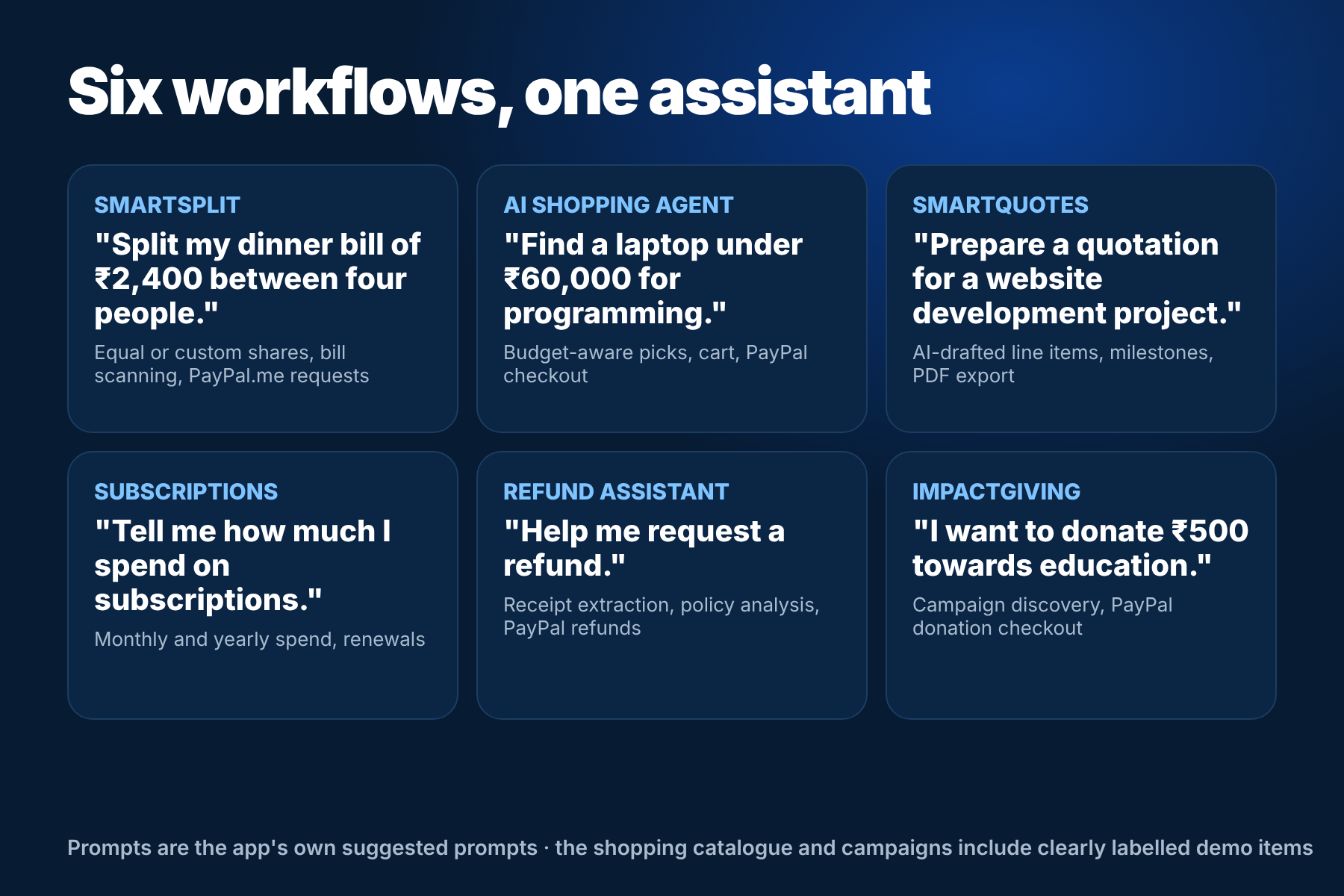
- SmartSplit: equal or custom splits, tax/tip/discount, bill scanning, PayPal.me requests, settlement tracking
- AI Shopping Agent: natural-language search, budget-aware picks from catalogue data, cart, PayPal checkout
- SmartQuotes: AI-drafted quotations, milestones, PDF export
- Subscriptions: spend by month and year, categories, renewals
- Refund Assistant: receipt extraction, policy analysis, drafted requests, PayPal refunds for FLOWMINT orders
- ImpactGiving: campaign discovery and PayPal donation checkout
The shopping catalogue and giving campaigns include clearly labelled demo items. Demo items can never be paid for.
How PayPal and AI work together
- AI: Gemini (via Firebase AI Logic) returns structured JSON for intent and parameters, reads bills, receipts and PDFs in memory, picks products within a budget, analyses refund policies and drafts quotations.
- PayPal (Sandbox): a Python backend creates and captures Orders, issues Refunds, cancels orders and validates Webhooks. Every payment is approved by the user on PayPal's own approval page.
How we built it
Flutter (Riverpod, GoRouter, Material 3) on the front, Firebase Auth, Firestore, Cloud Messaging and AI Logic behind it, and a Python callable-functions backend for PayPal. The AI proposes; deterministic code validates every AI response before anything is shown.
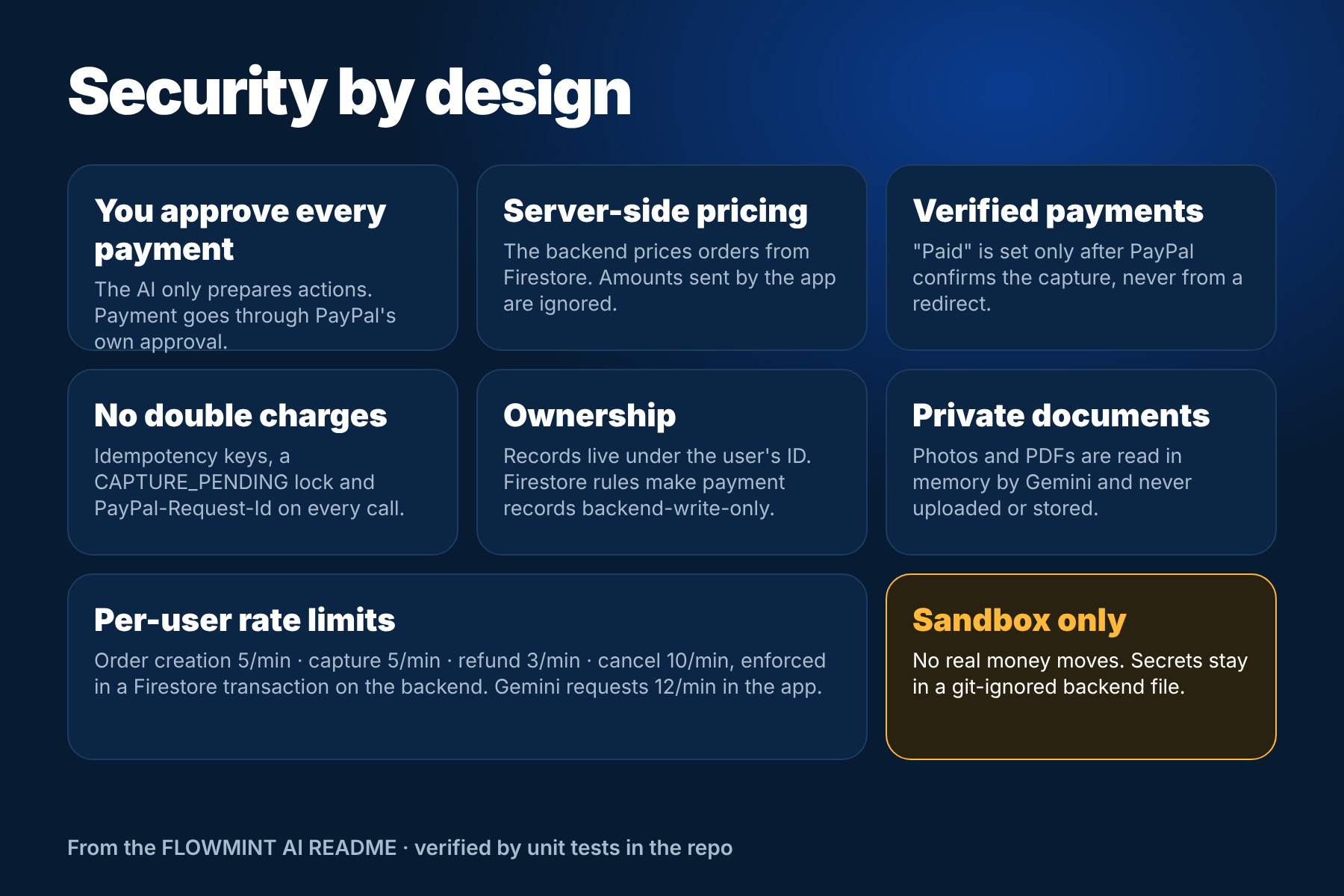
Security by design
- Server-side pricing: the backend prices orders from Firestore and ignores amounts sent by the app
- "Paid" is set only after PayPal confirms the capture, never from a redirect
- Idempotency keys, a CAPTURE_PENDING lock and PayPal-Request-Id on every call prevent double charges
- Per-user rate limits (order 5/min, capture 5/min, refund 3/min, cancel 10/min)
- Firestore rules make payment records backend-write-only; documents are never uploaded or stored
- Unit tests cover money maths, AI-response validation, rate limits, idempotency and webhook validation
Challenges
- Making AI safe around money: we split "understand" from "act", so the model can only prepare a draft.
- Retries and double charges: idempotency keys and a capture lock, checked by tests.
- Sideloaded APKs can't pass Play Integrity, so we unenforced App Check for Firebase AI Logic and added a per-user limit.
- Free tiers: we built everything to run on Firebase Spark and the PayPal Sandbox. On Blaze, the same backend deploys unchanged.
What we learned
Treating the model as an untrusted narrator, not a decision-maker, made the whole system simpler to secure.
Built during the hackathon
[FILL IN: the date you started and 3–5 things you built between 1 Oct and 12 Nov. The rules require an existing project to explain how it was significantly updated.]
Try it
- Code and setup: see the README (Flutter 3.41+, Firebase Spark, PayPal Sandbox)
- [FILL IN: Android APK link from a GitHub Release]
- [FILL IN: test login and PayPal Sandbox buyer login, sandbox only]
- [FILL IN: name of one real, payable item]
Team: Ankur Pathak, Rajeev Tiwari, Manas Yadu. PayPal Sandbox only; no real money moves.
