Inspiration## Inspiration
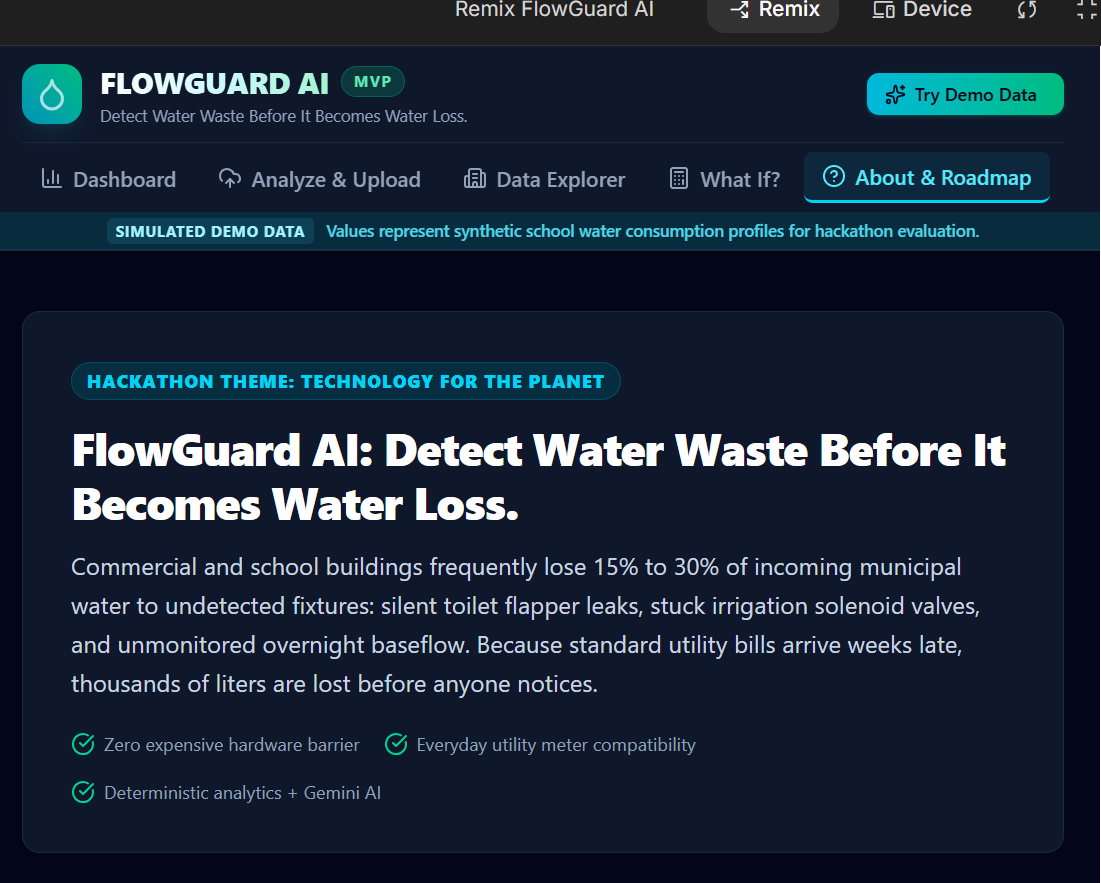
Water is one of the most important resources on the planet, yet a lot of water can be lost through leaks, abnormal usage, and small problems that are difficult to notice early. We were inspired by the idea that technology should help people detect this waste before it becomes a bigger environmental and financial problem.
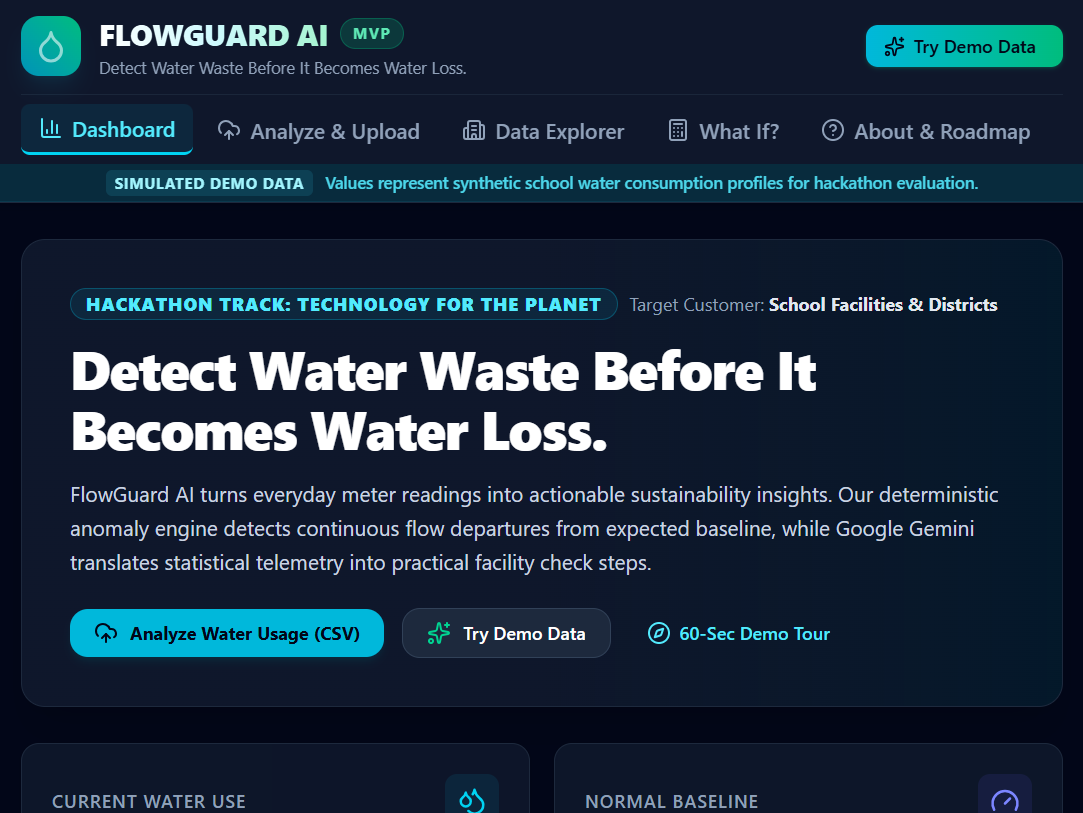
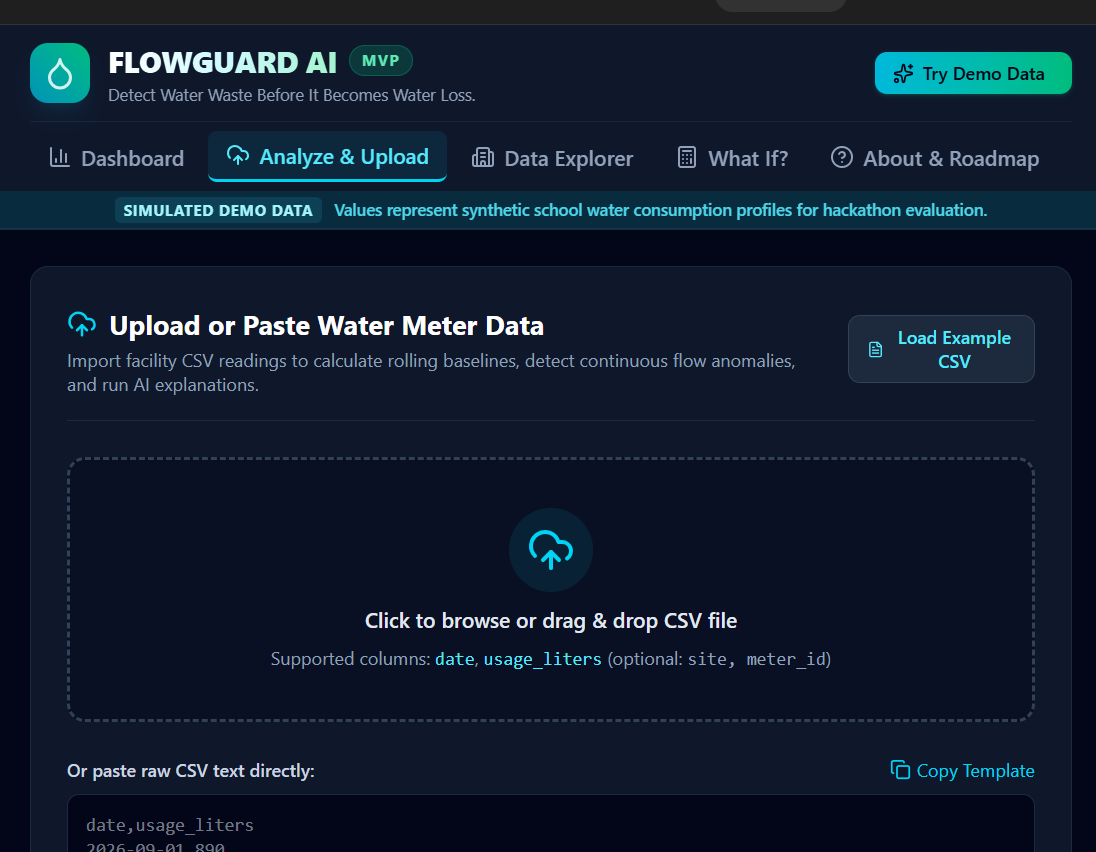
We wanted to build a solution that does not require expensive smart-meter hardware to get started. Instead, FlowGuard AI uses everyday water-meter readings and AI-powered analysis to identify unusual usage patterns and highlight possible water loss.
What We Learned
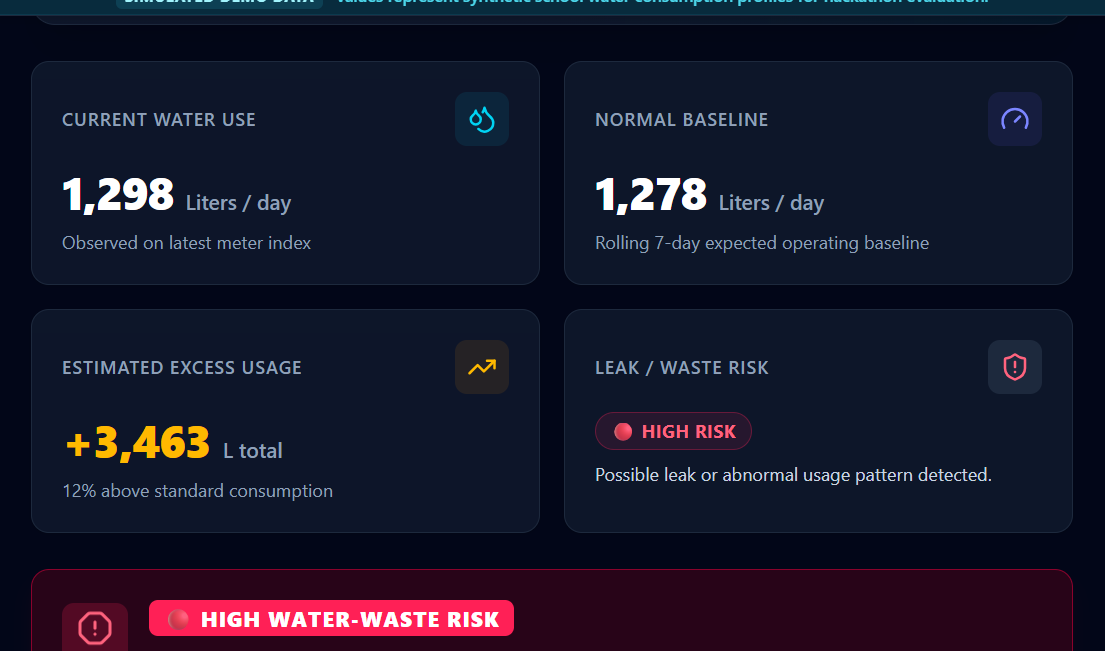
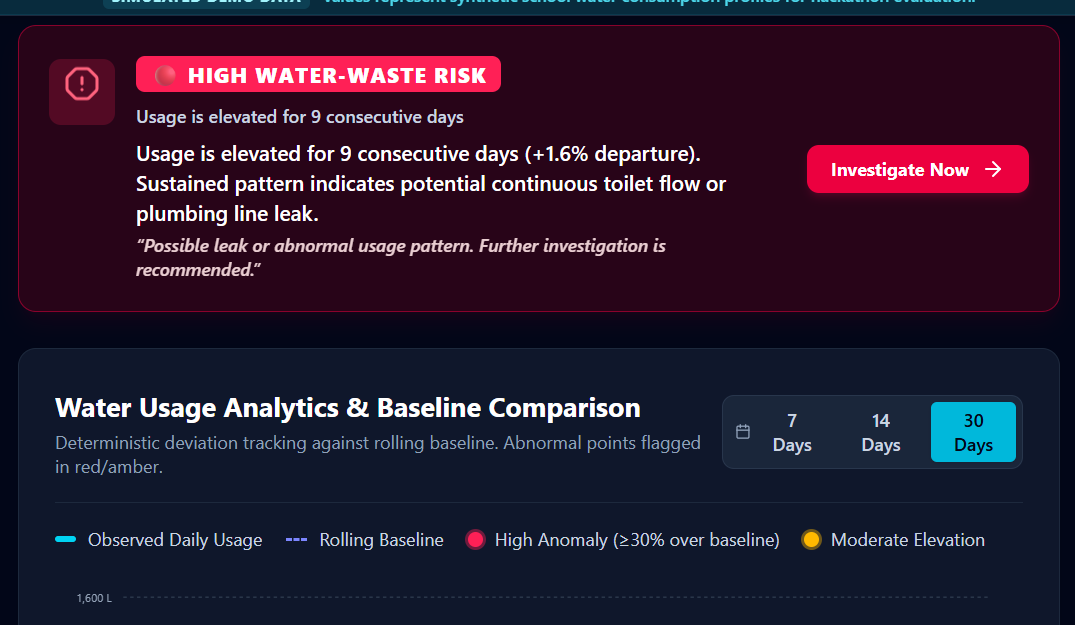
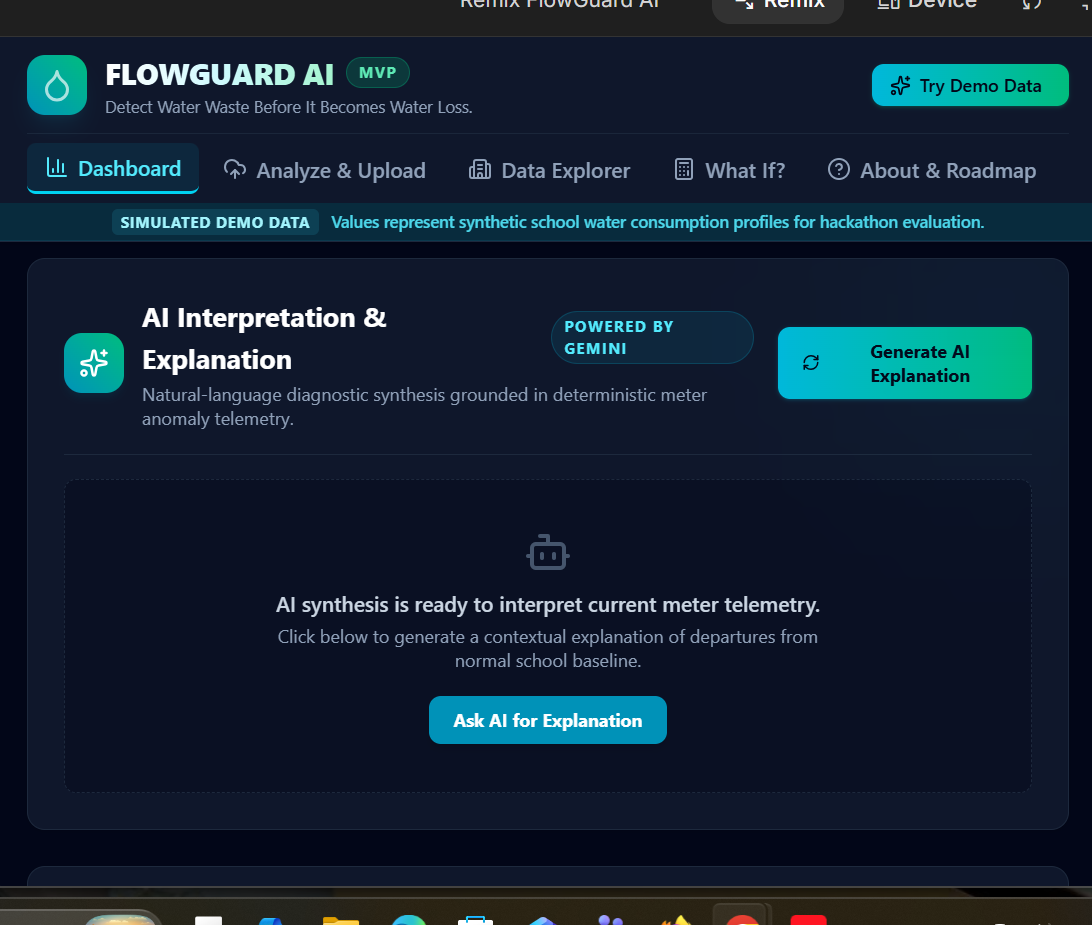
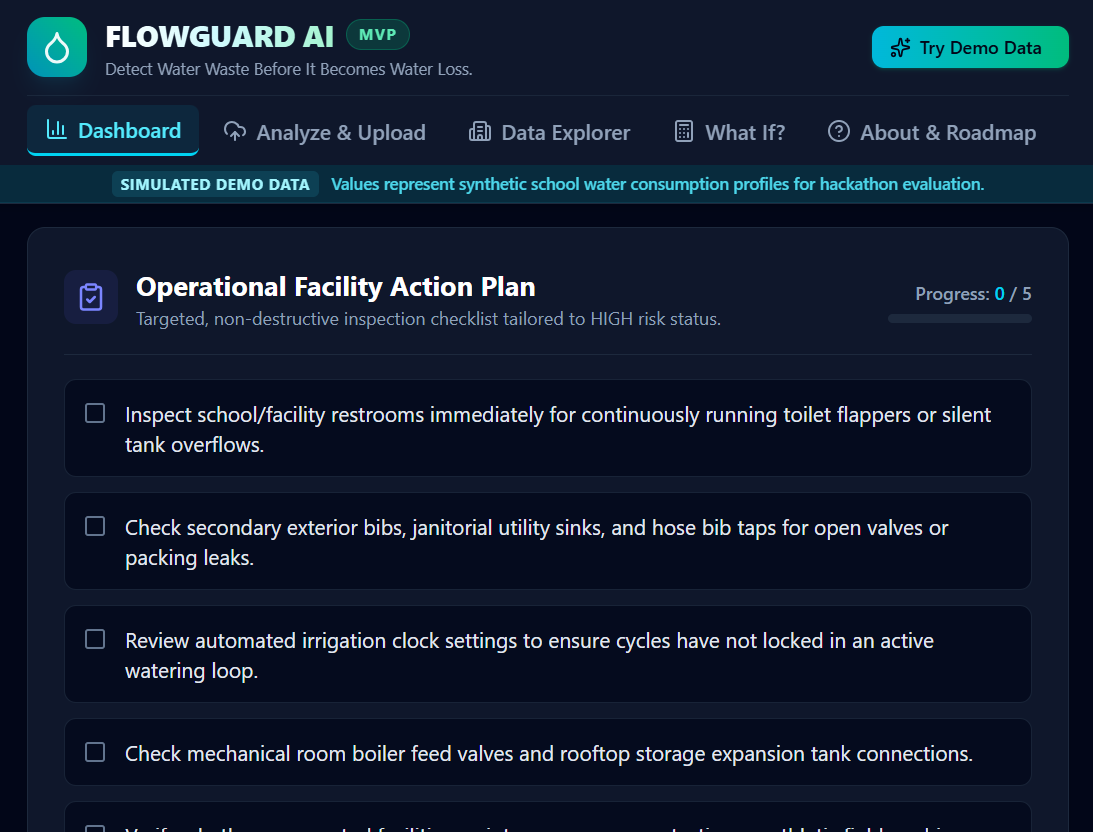
During the project, we learned how to turn a sustainability problem into a practical technology workflow. We focused on making the system understandable to non-technical users: instead of only showing raw water-usage data, the application explains what changed, why it may matter, and what action a user could take.
We also learned that a useful AI system needs more than a model. The data pipeline, anomaly detection, clear visualizations, and user experience are equally important for turning an AI idea into a practical product.
How We Built It
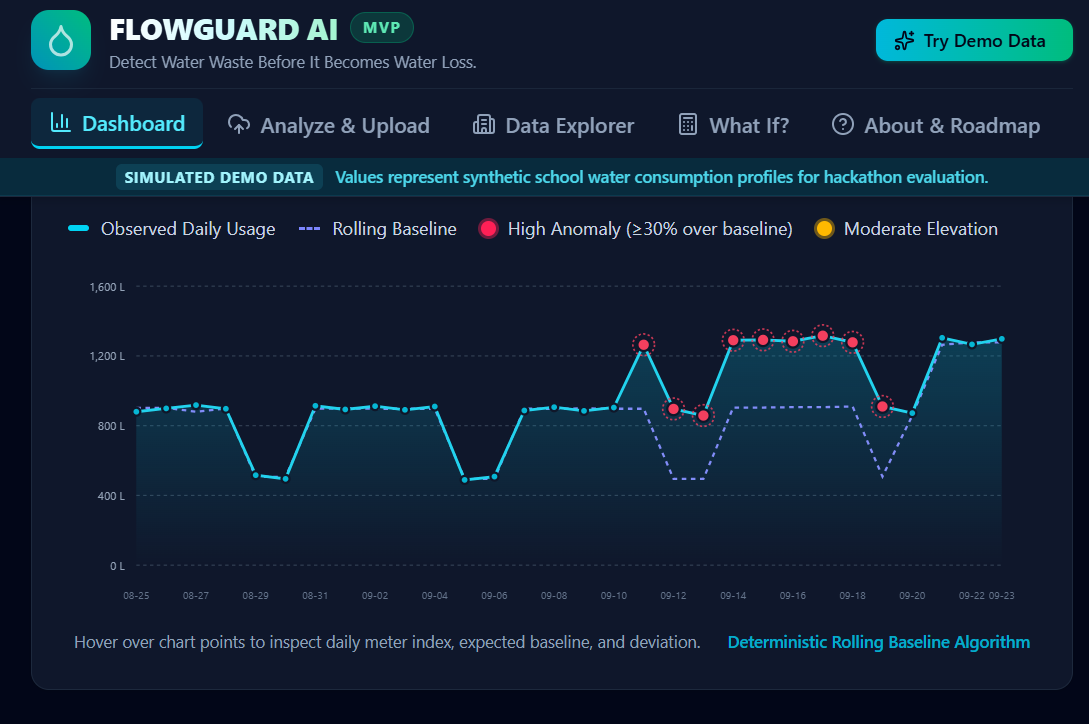
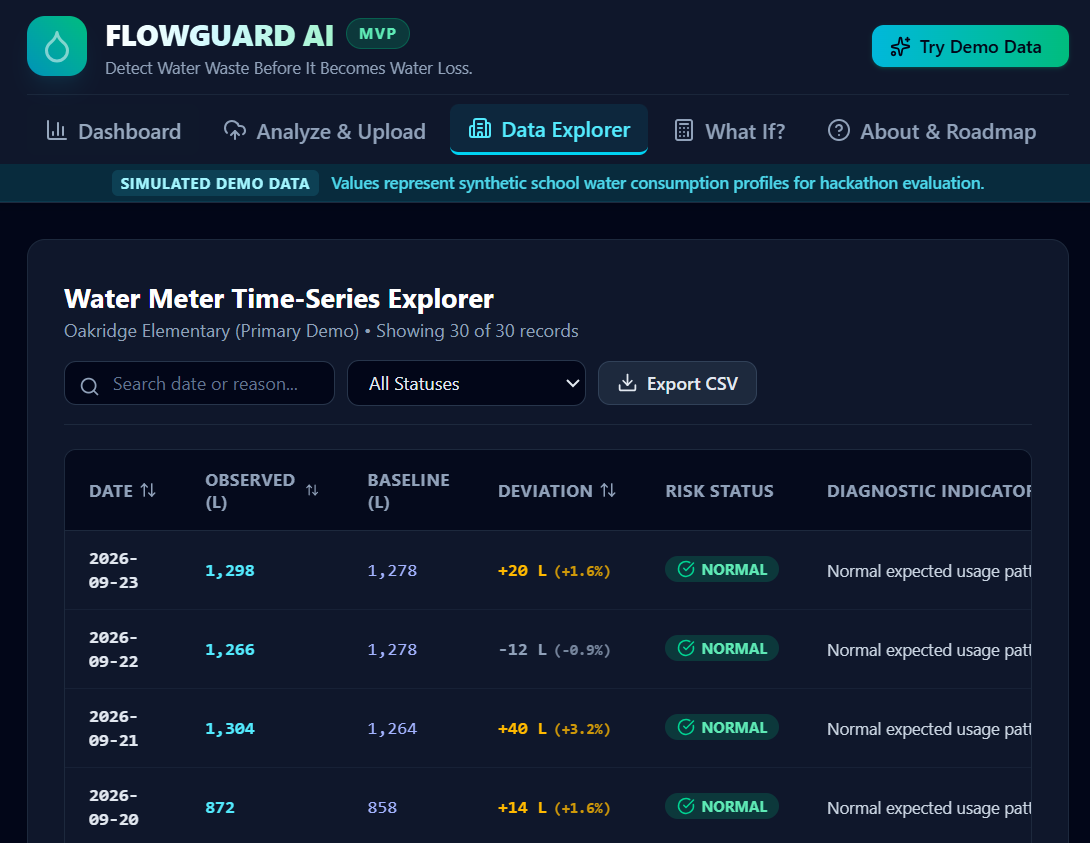
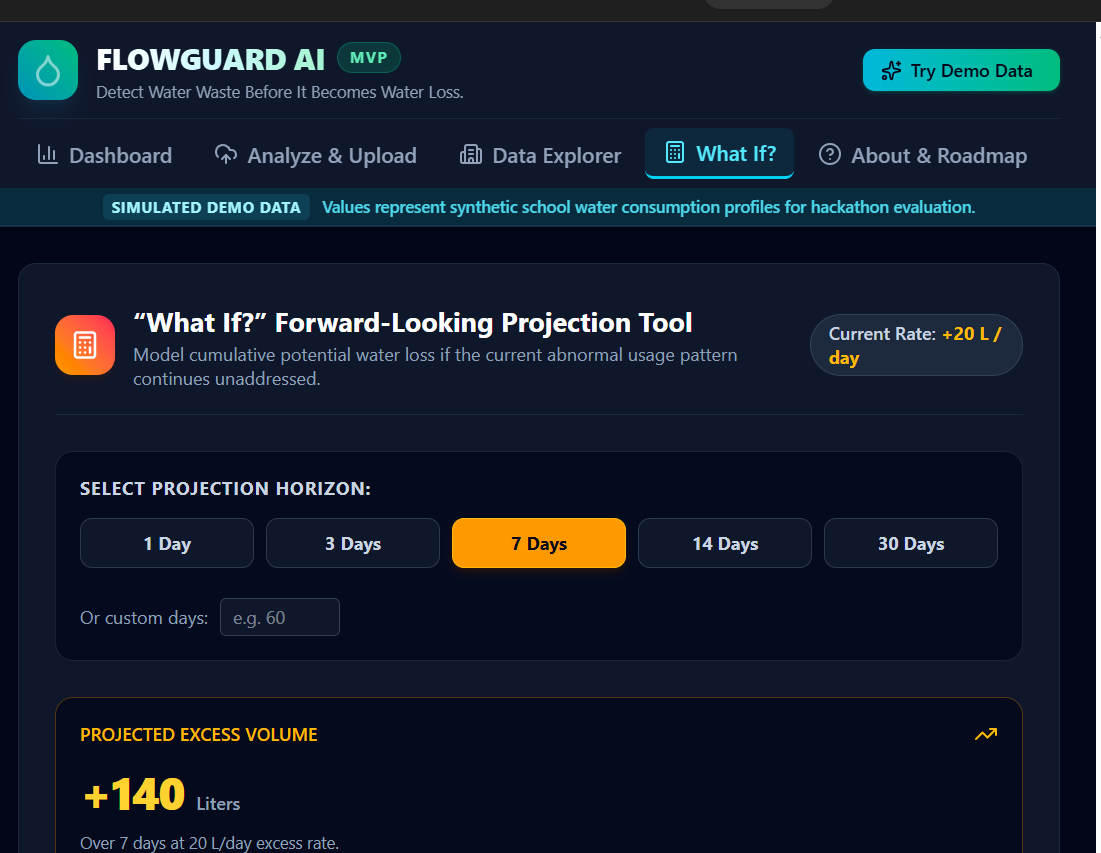
FlowGuard AI is designed as a web-based MVP. Users can provide water-meter readings, and the system analyzes usage patterns to identify unusual changes.
The workflow is:
Water Meter Data → Usage Baseline → Anomaly Detection → Water-Loss Risk → AI Explanation → Recommended Action
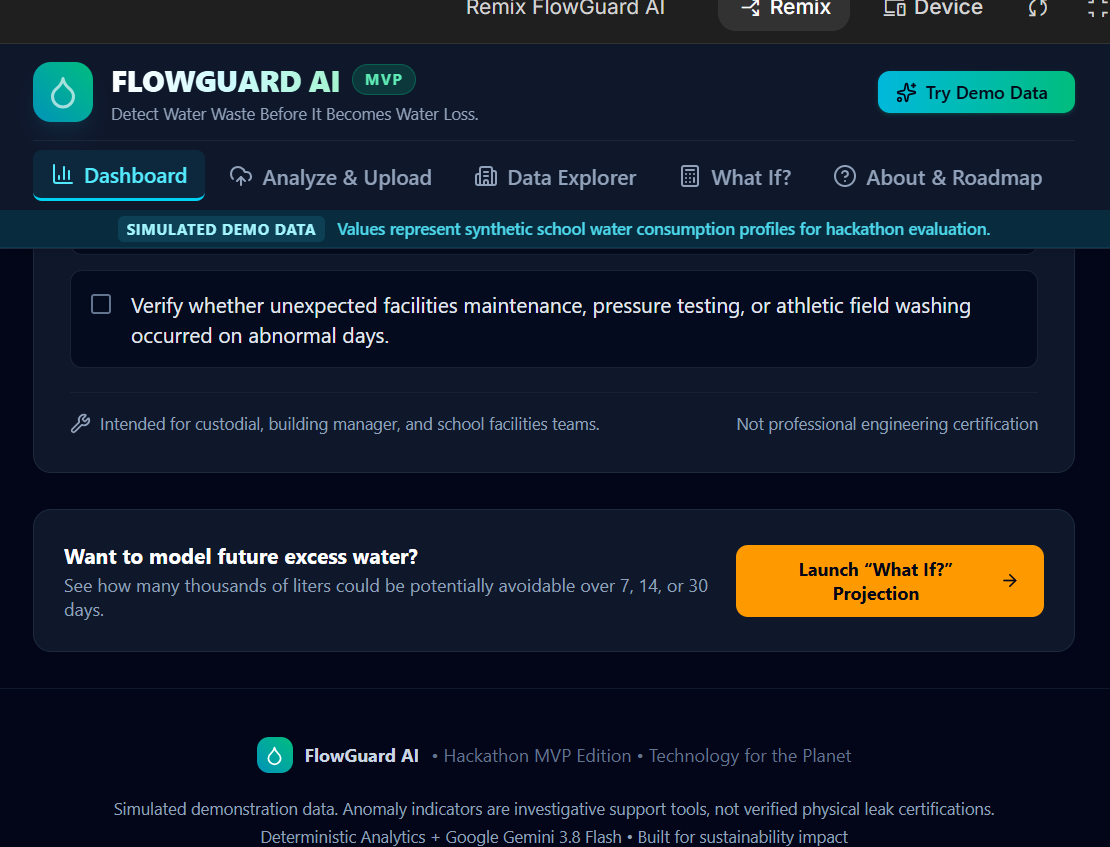
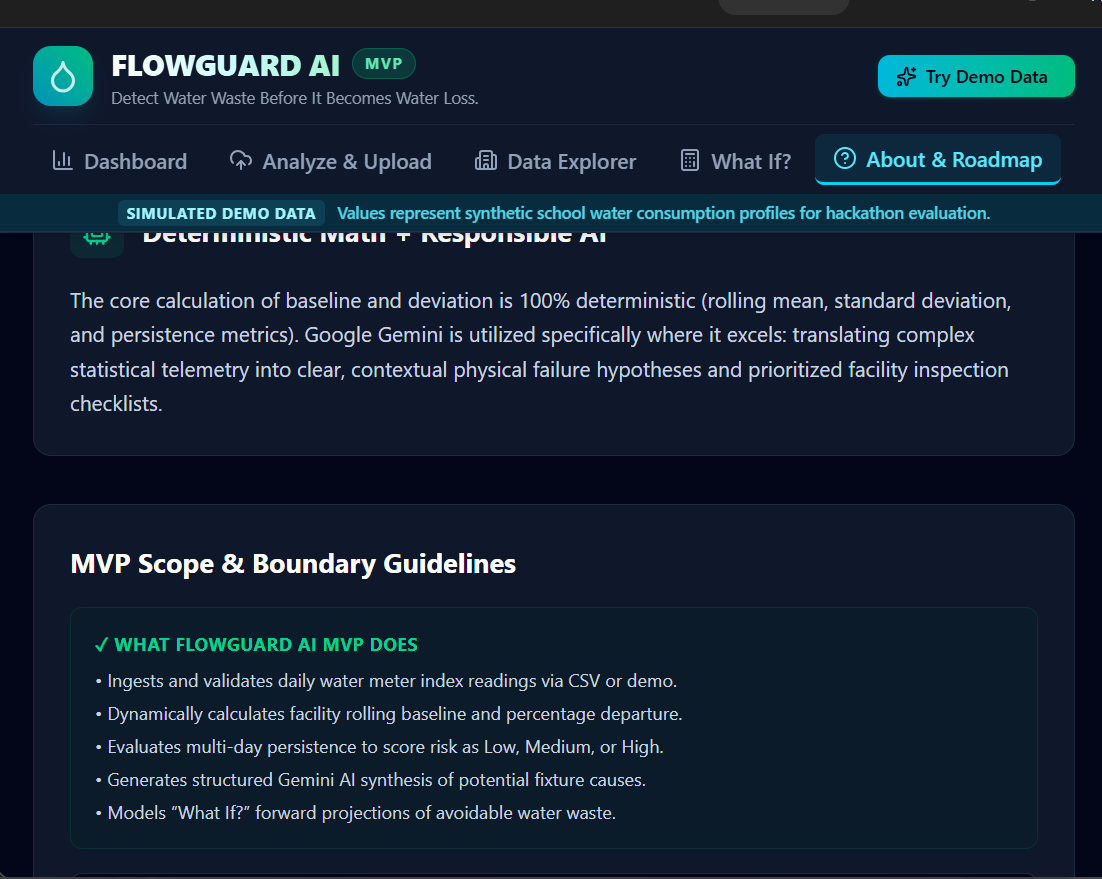
The MVP combines data analysis, visualization, and AI-generated explanations in a simple sustainability dashboard. The architecture is designed so that future versions could connect directly to smart meters and IoT devices.
Challenges We Faced
One of our biggest challenges was designing a useful solution that could realistically be prototyped within a limited hackathon timeframe. We focused on an MVP instead of trying to build a complete smart-water infrastructure.
Another challenge was making AI useful without allowing it to turn uncertain patterns into false conclusions. We therefore designed the system to present detected anomalies as possible risks that should be investigated, rather than claiming that every anomaly is definitely a leak.
What's Next
With more time, we would validate the system using real-world water-usage data, test it with schools and other buildings, improve anomaly detection, and integrate real-time smart-meter or IoT data.
Our long-term goal is to make water conservation more measurable, accessible, and proactive.
What it does
How we built it
Challenges we ran into
Accomplishments that we're proud of
What we learned
What's next for FlowGuard AI
Built With
- ai
- gemini
- react
- studio
- tailwind
- typescript
- vite


Log in or sign up for Devpost to join the conversation.