-
-
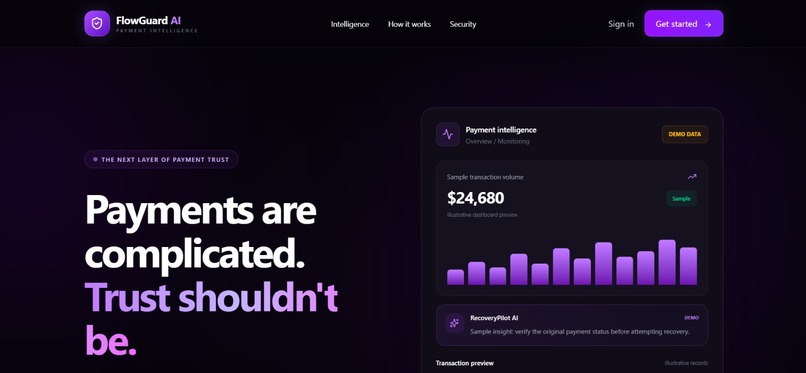
landing page 1
-

landing page 2
-
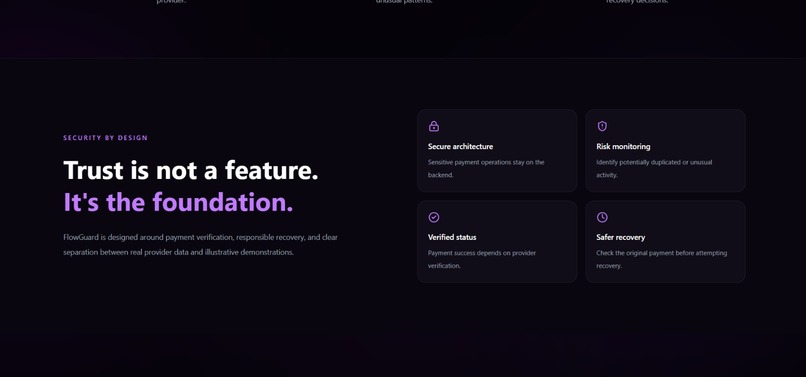
landing page 3
-
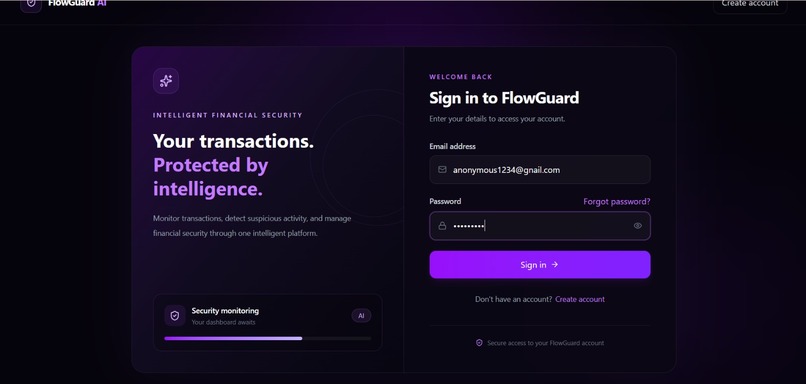
log in page
-
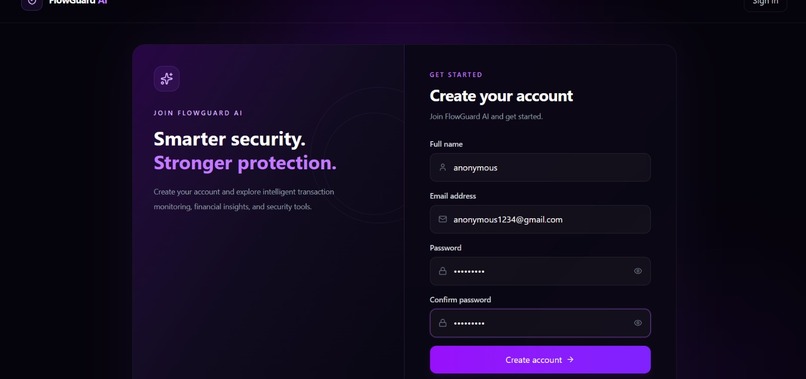
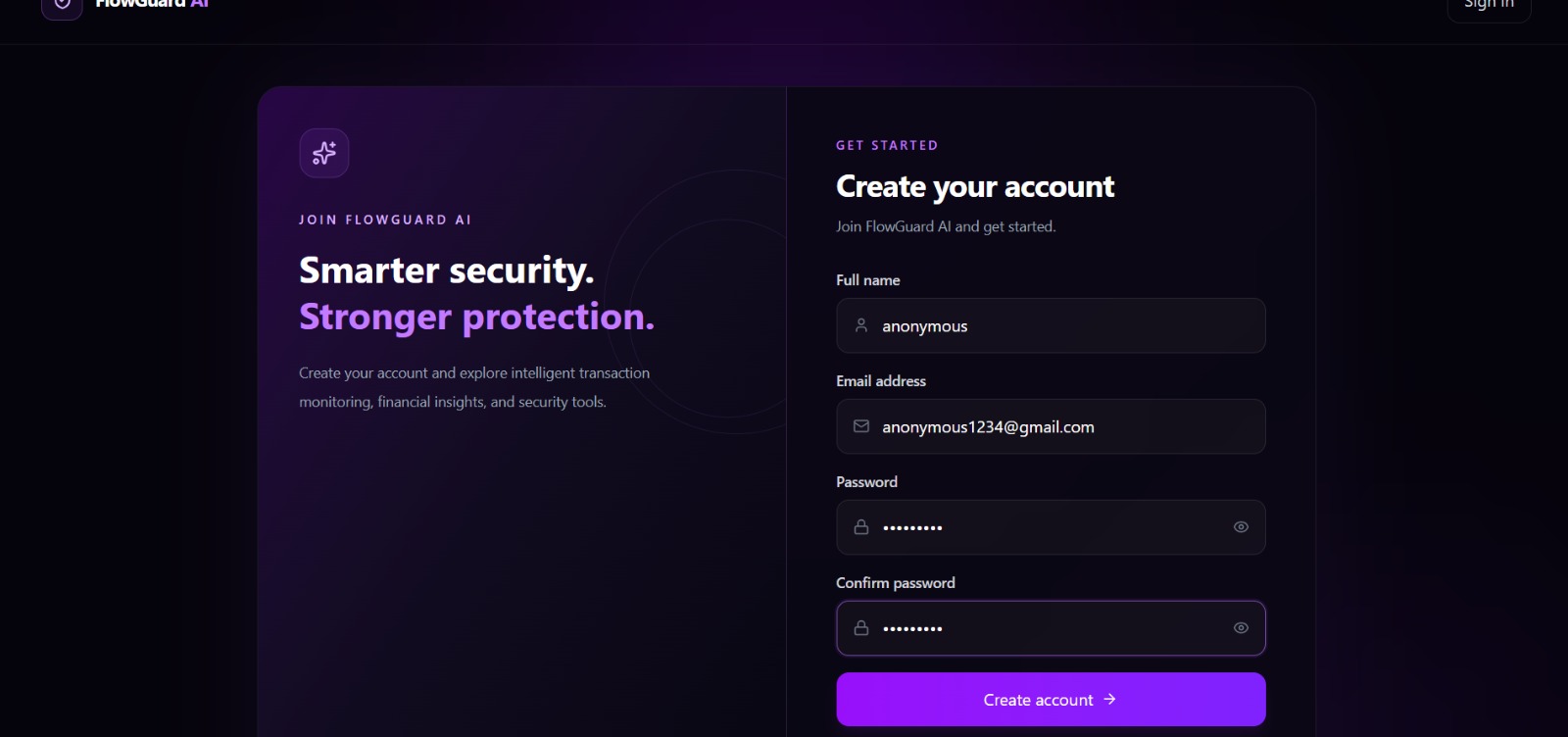
create account page
-
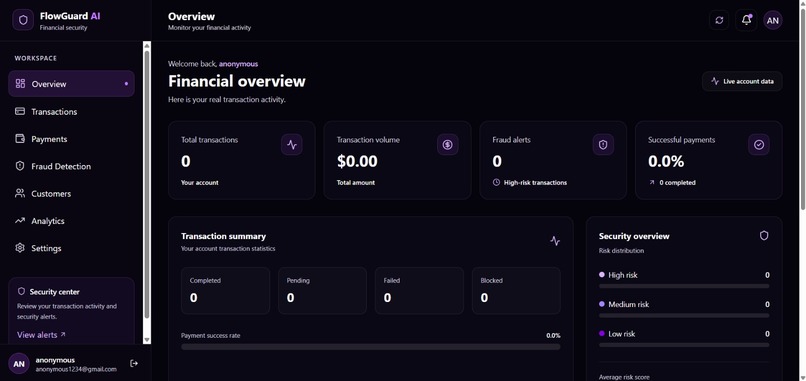
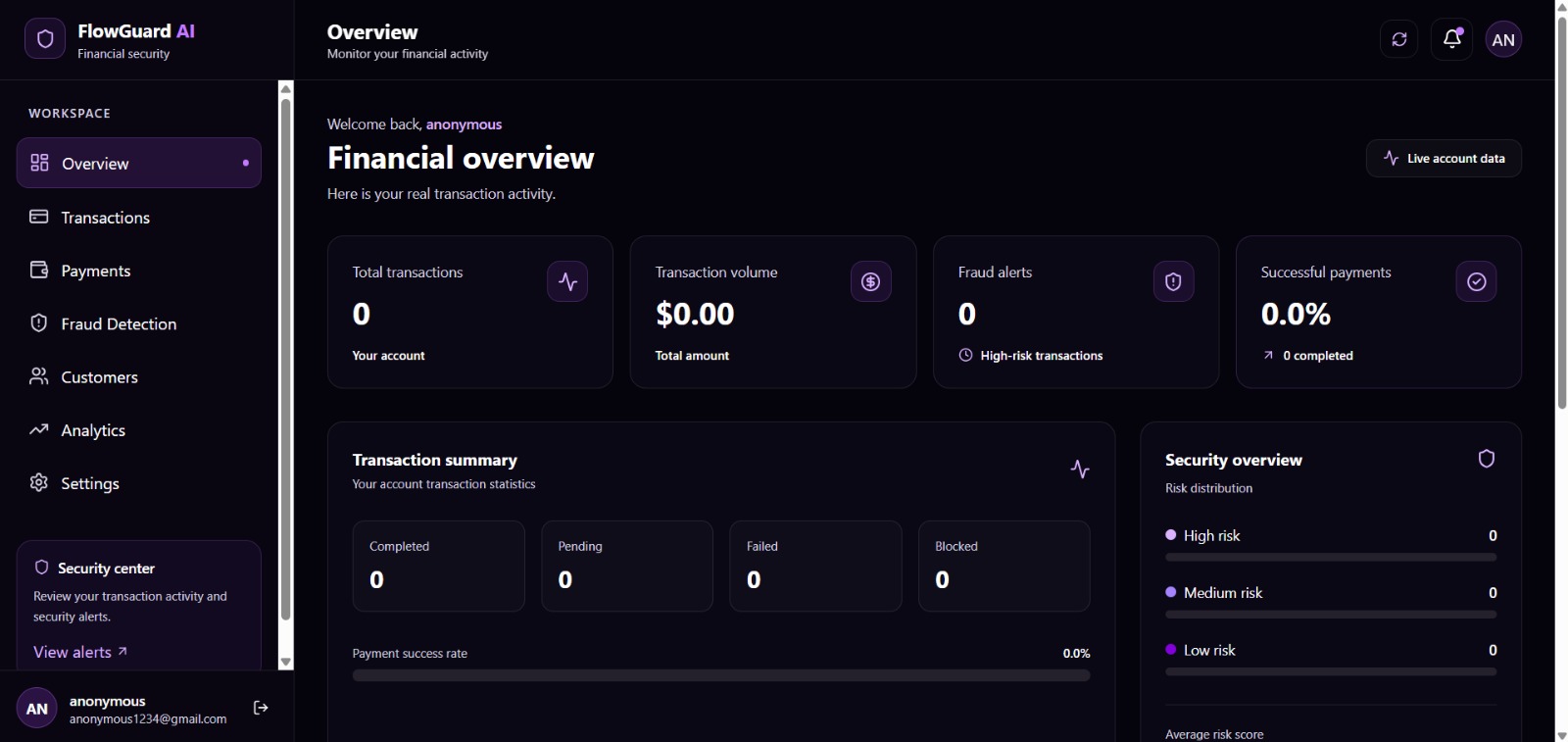
dashboard page
-
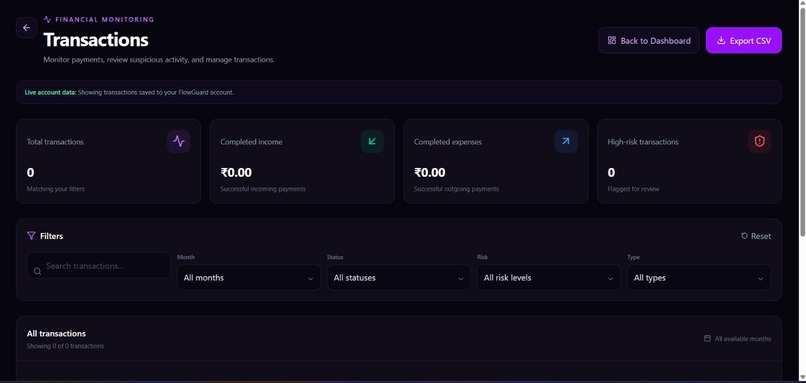
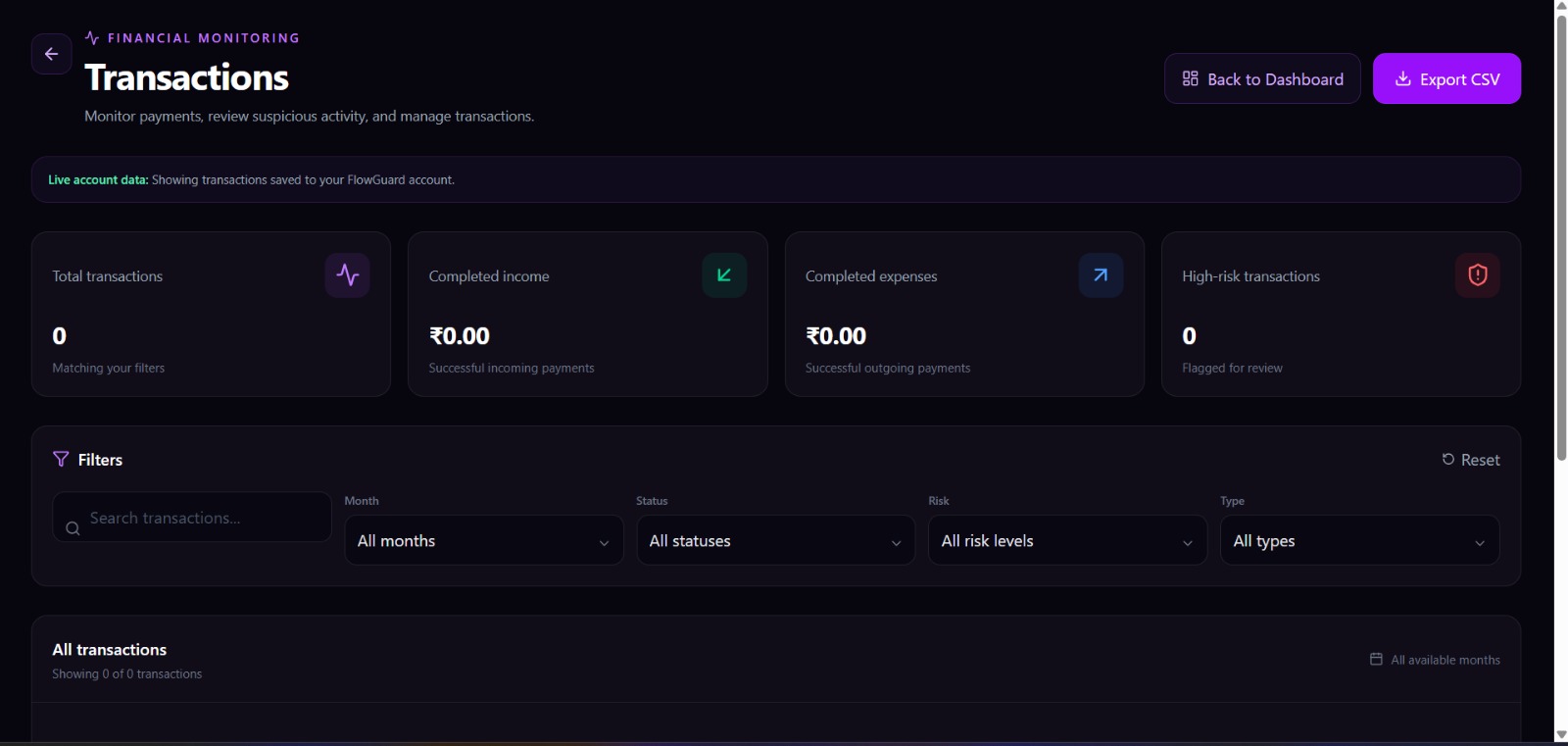
transaction page
-
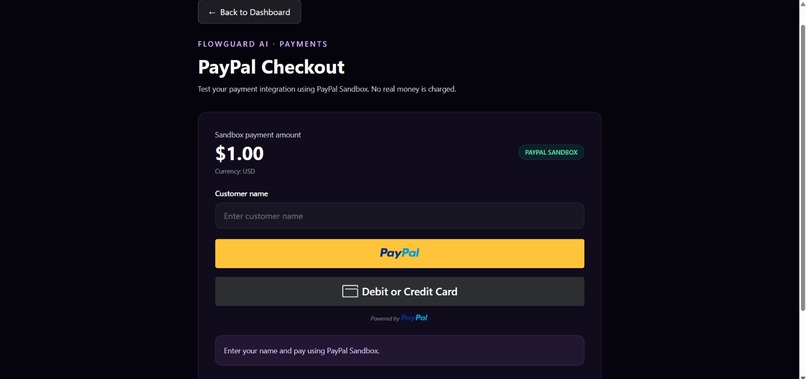
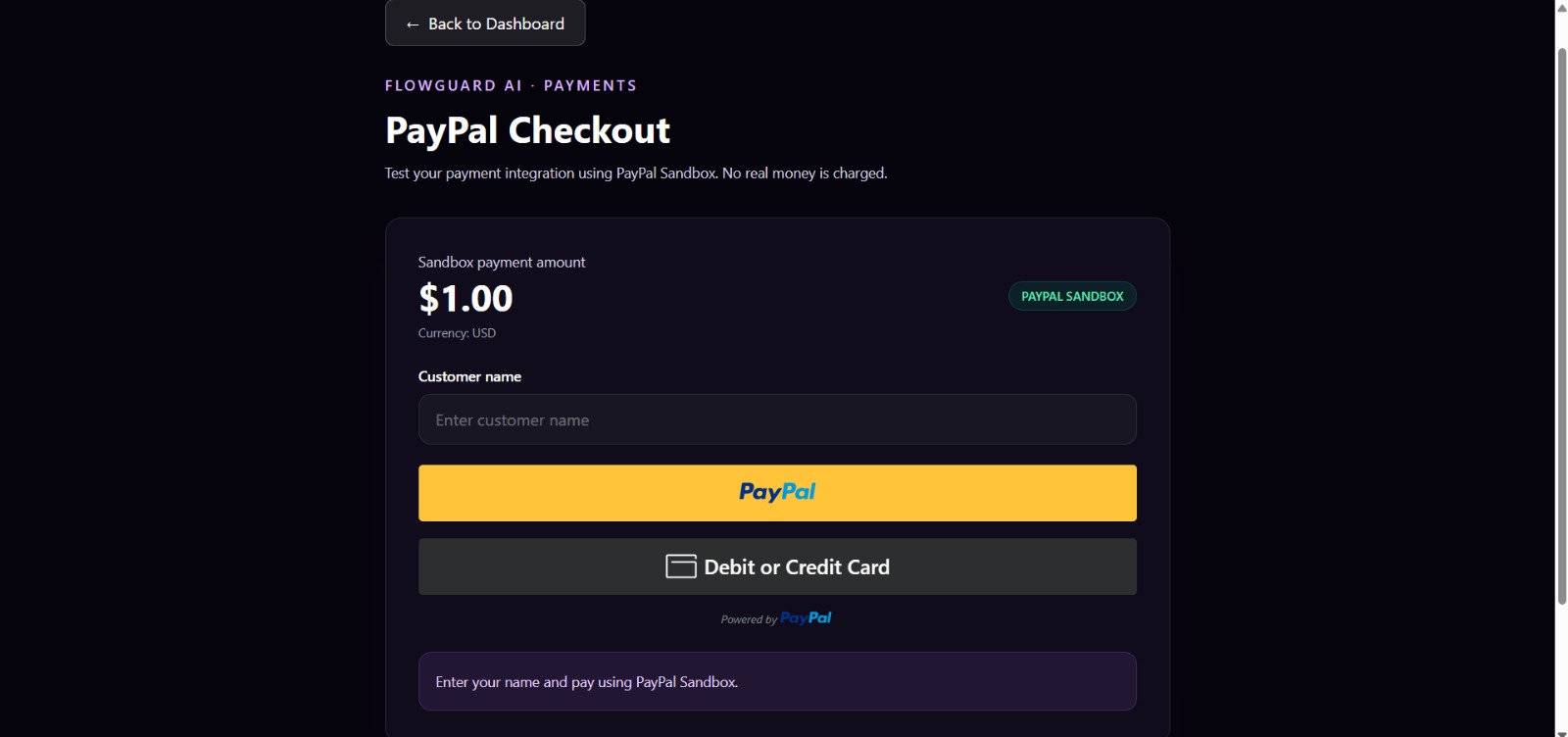
payment page
-
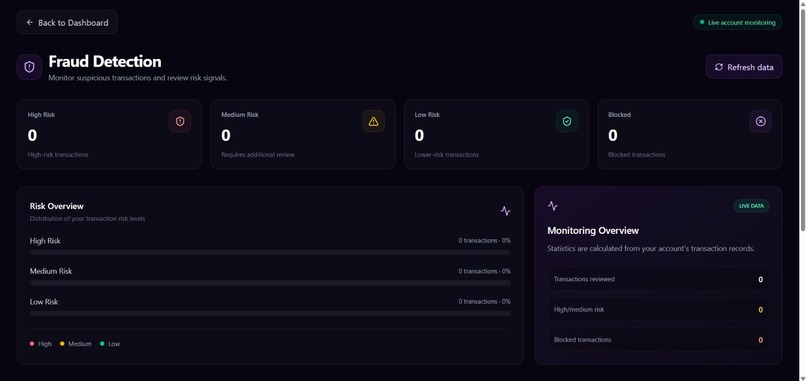
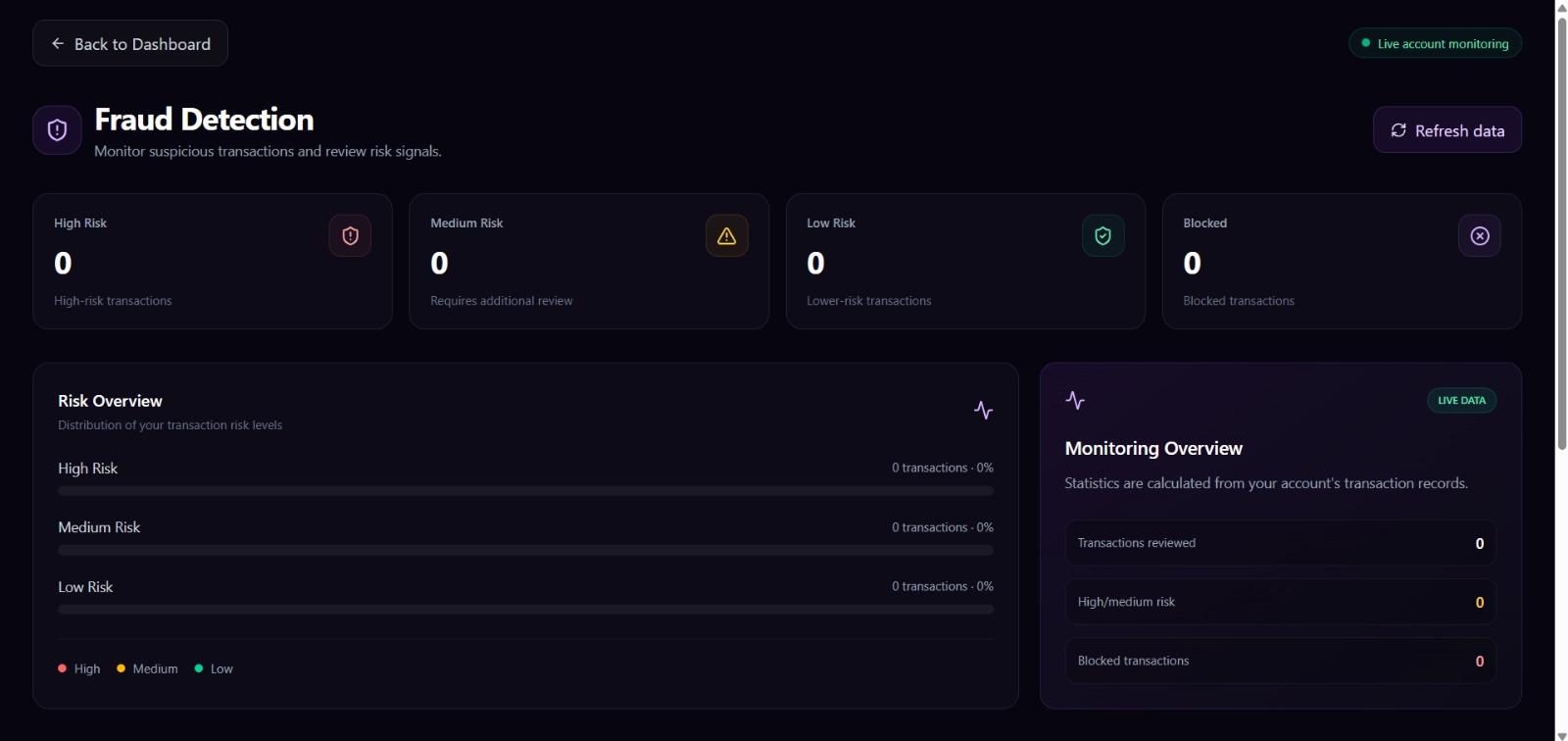
fraud detection page
-
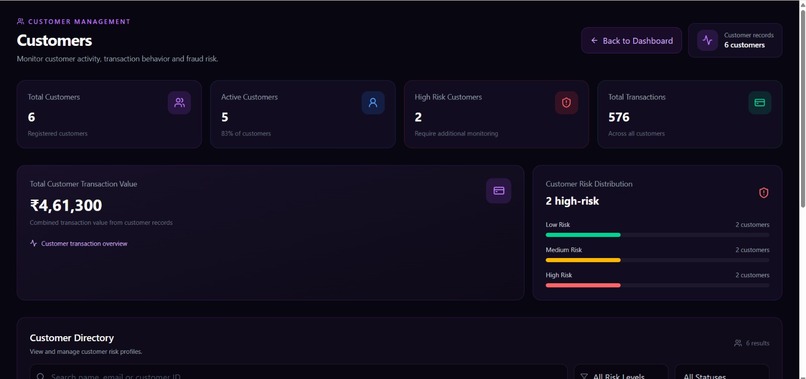
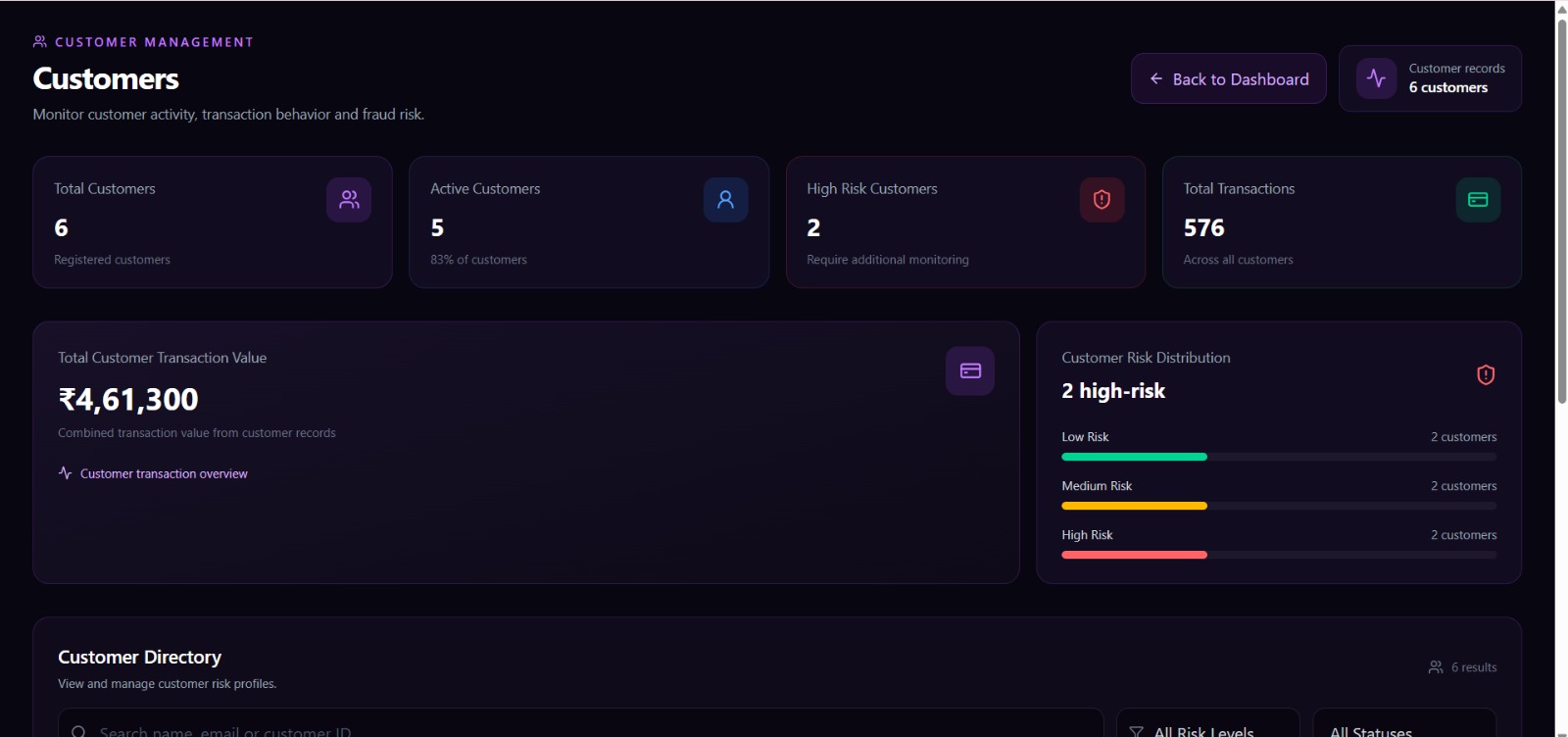
customer page
-
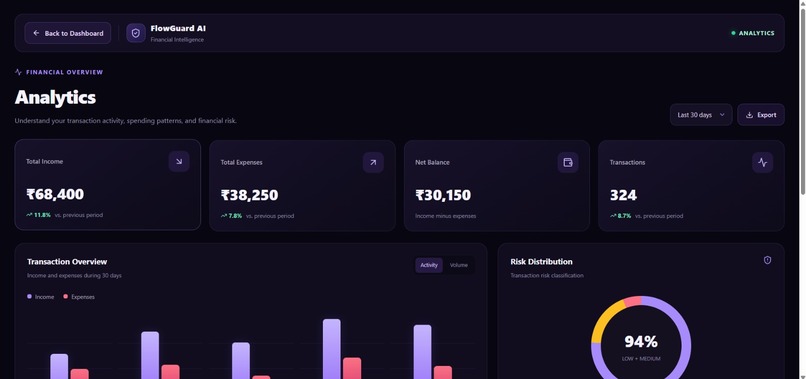
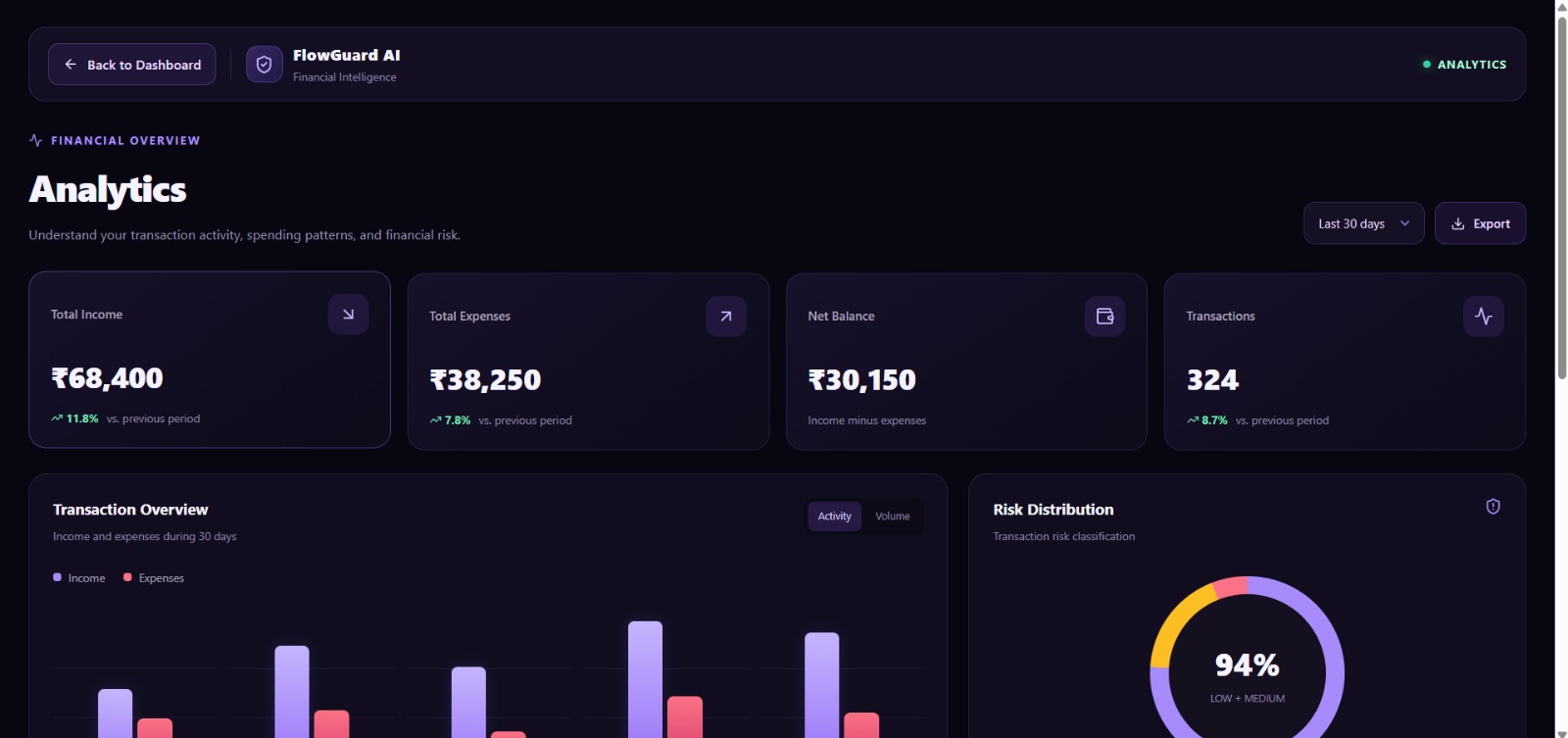
analytics page
-
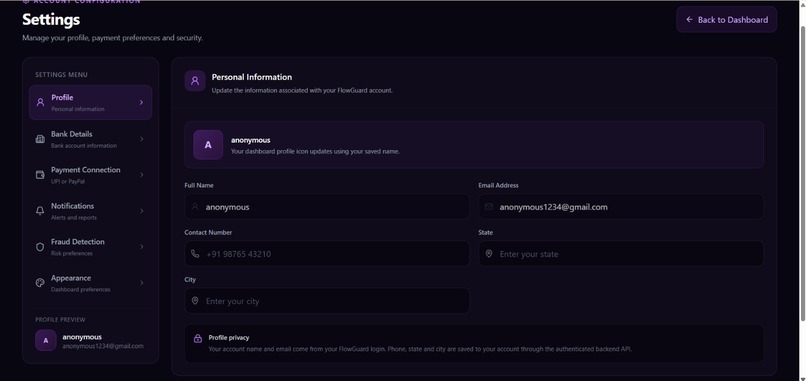
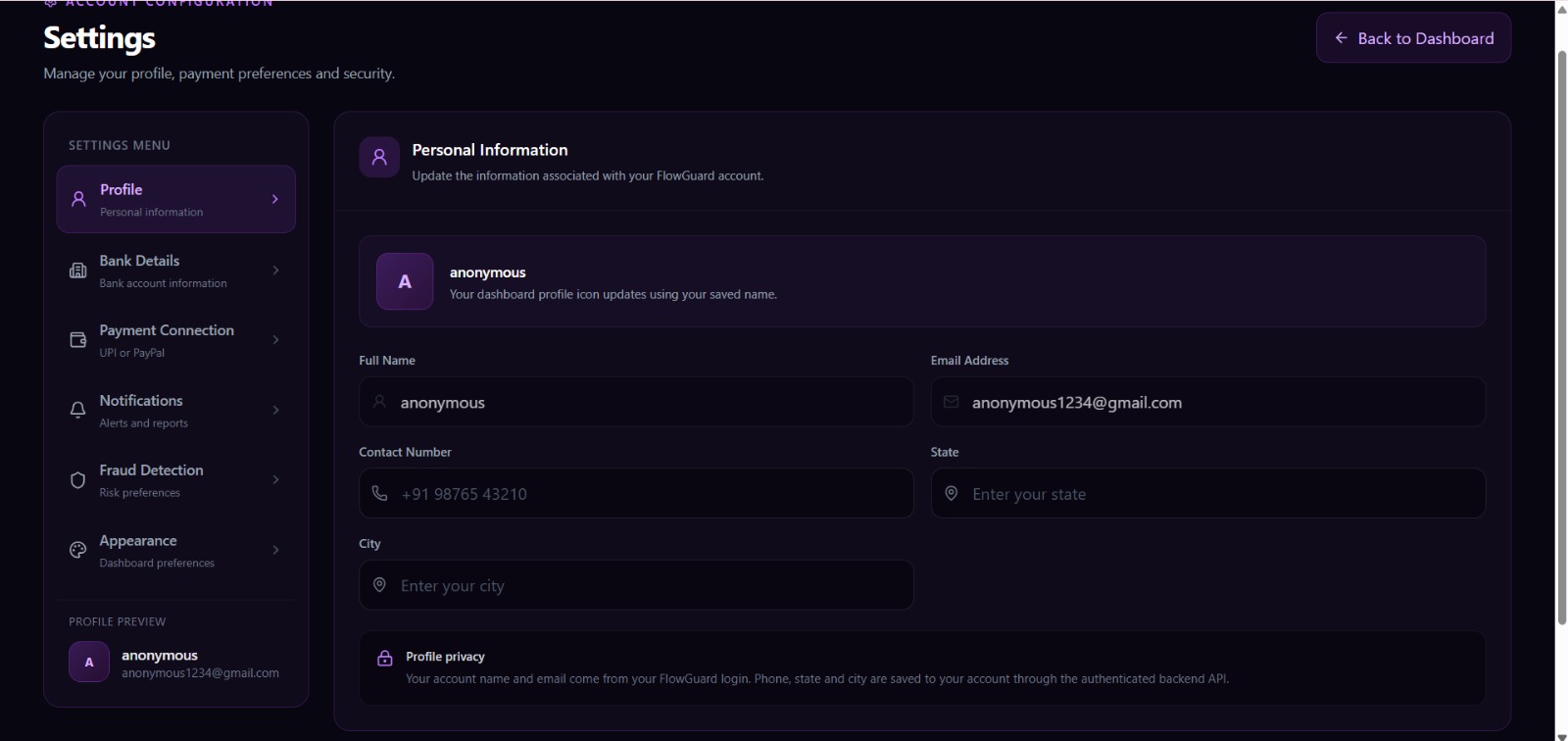
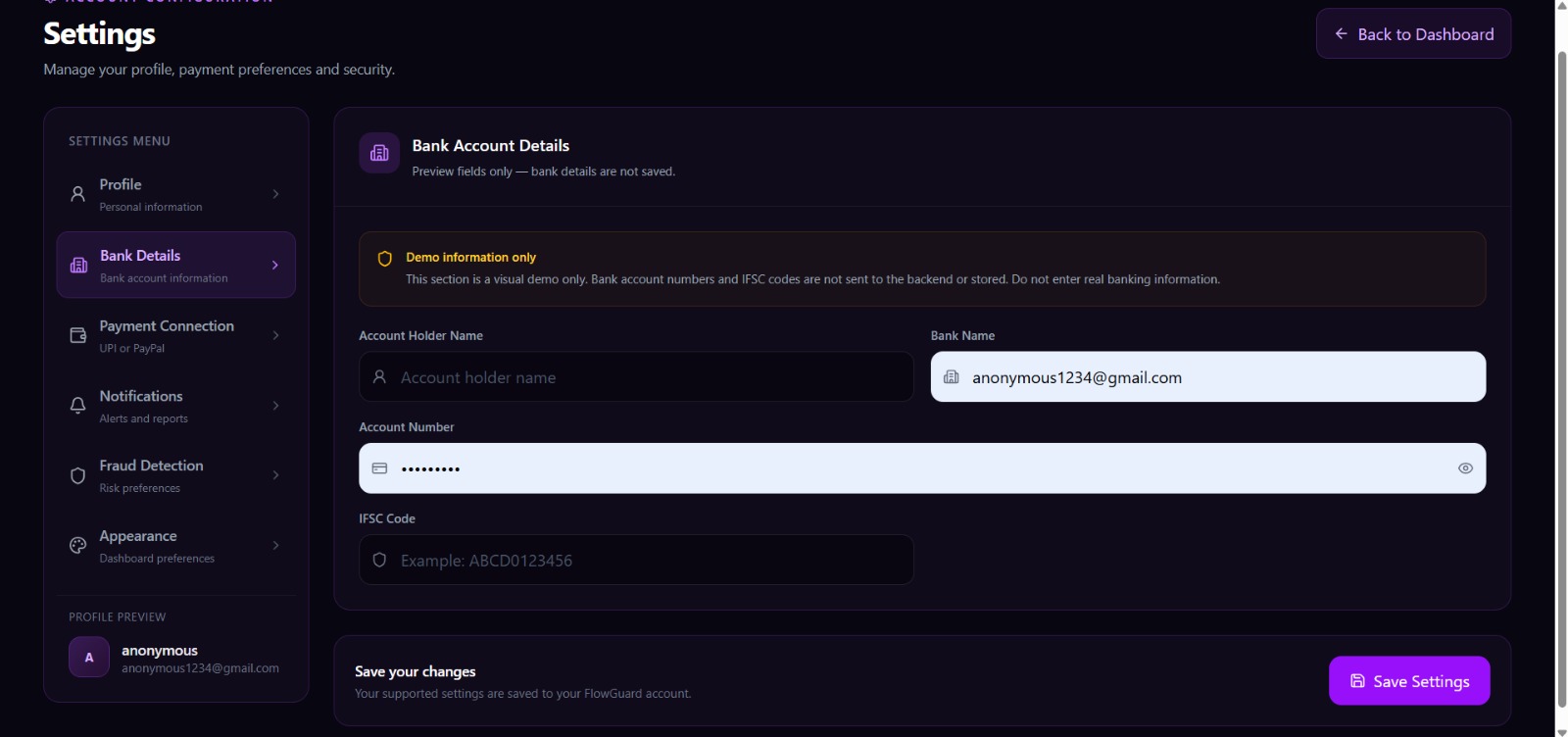
settings page 1
-
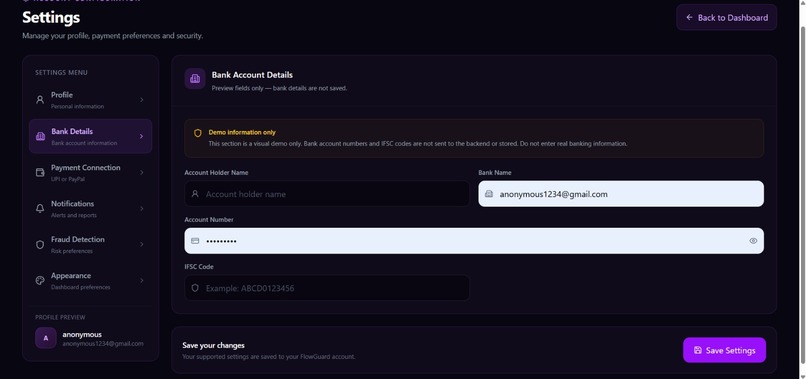
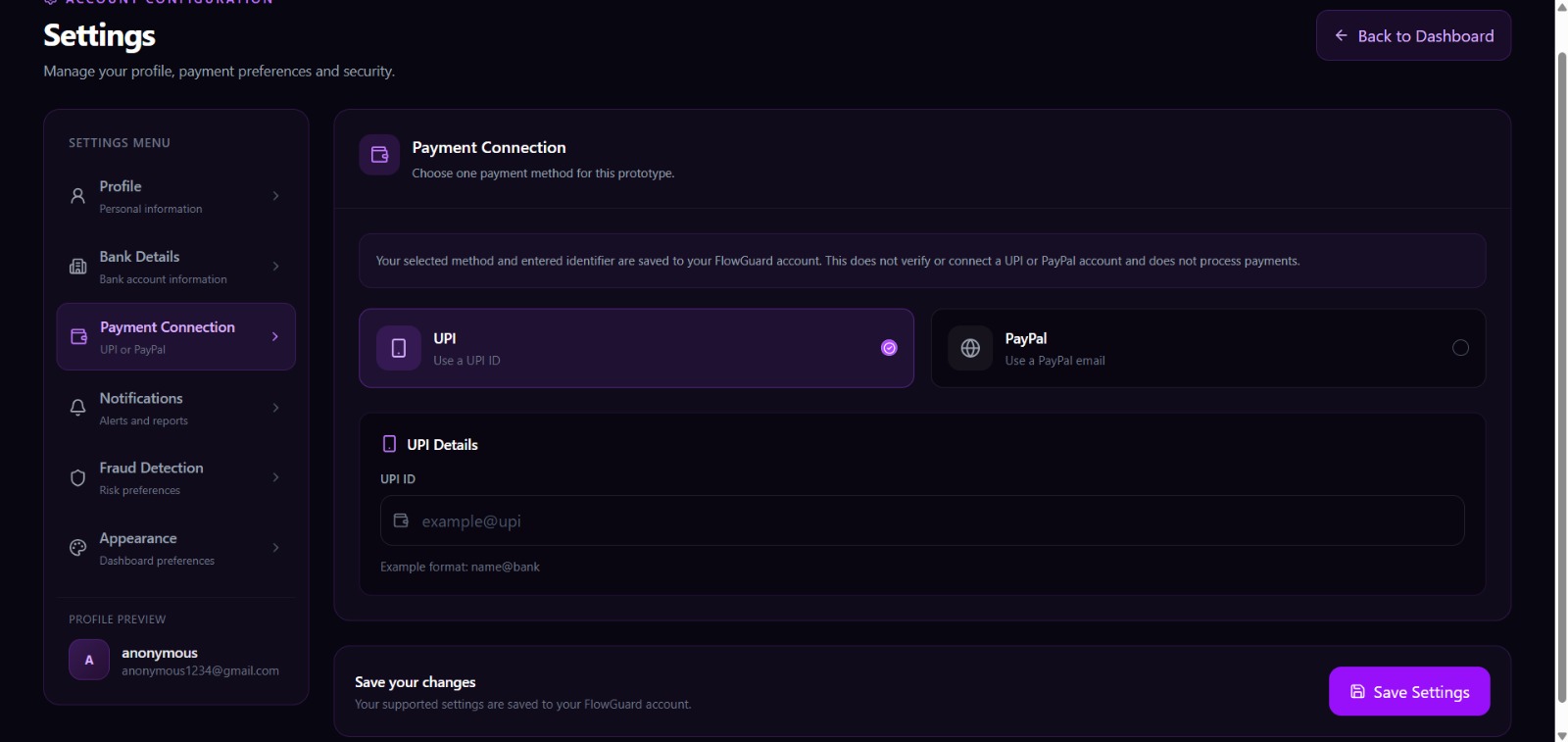
settings page 2
-
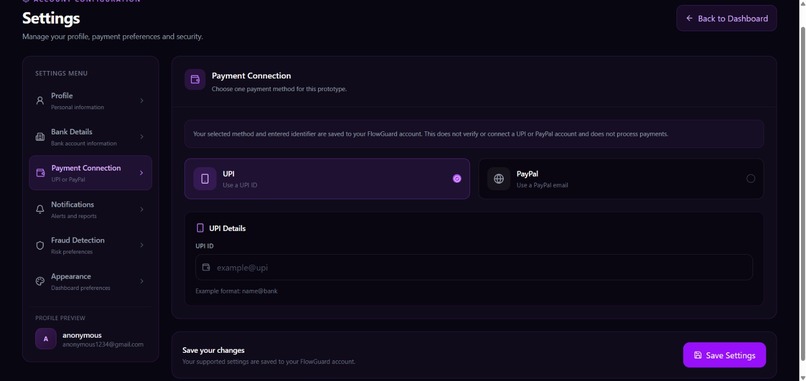
settings page 3
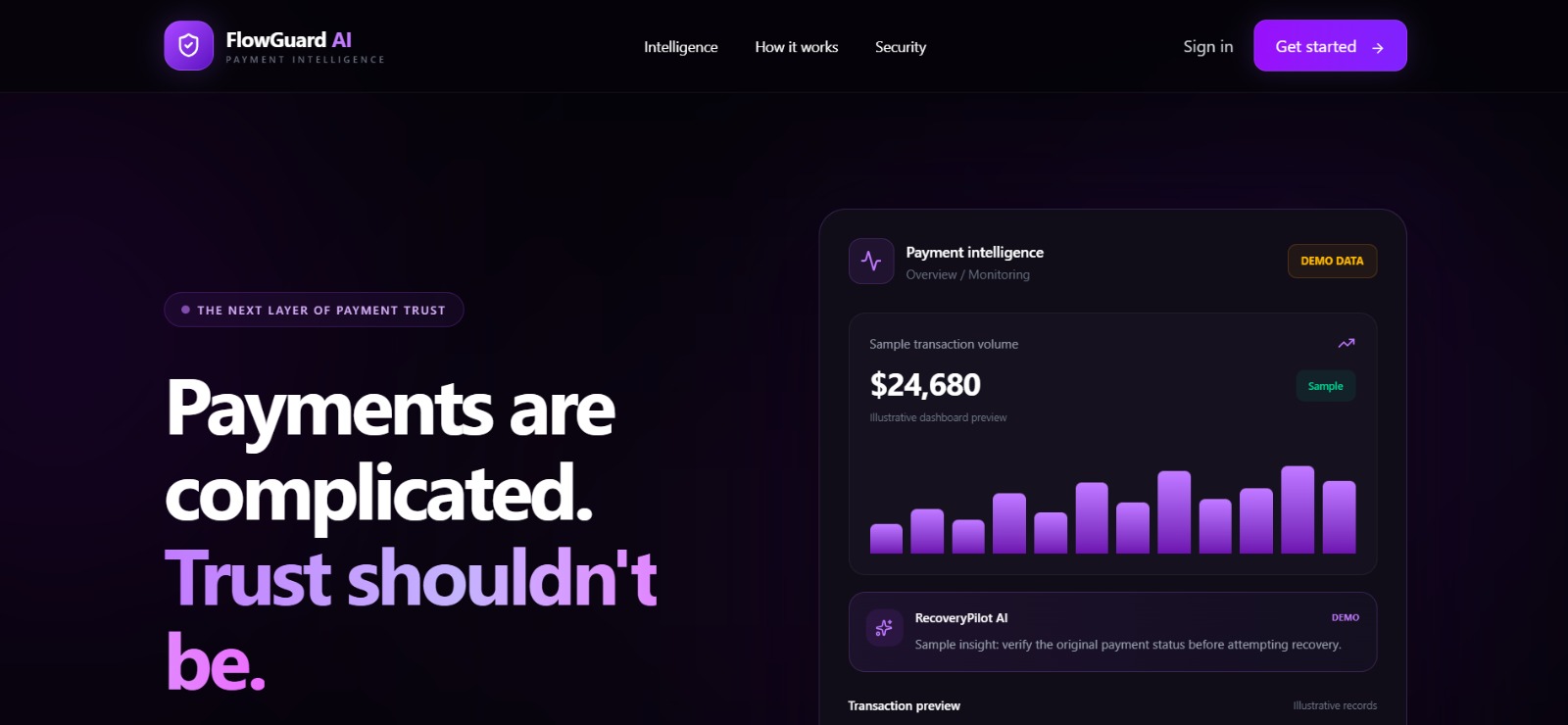

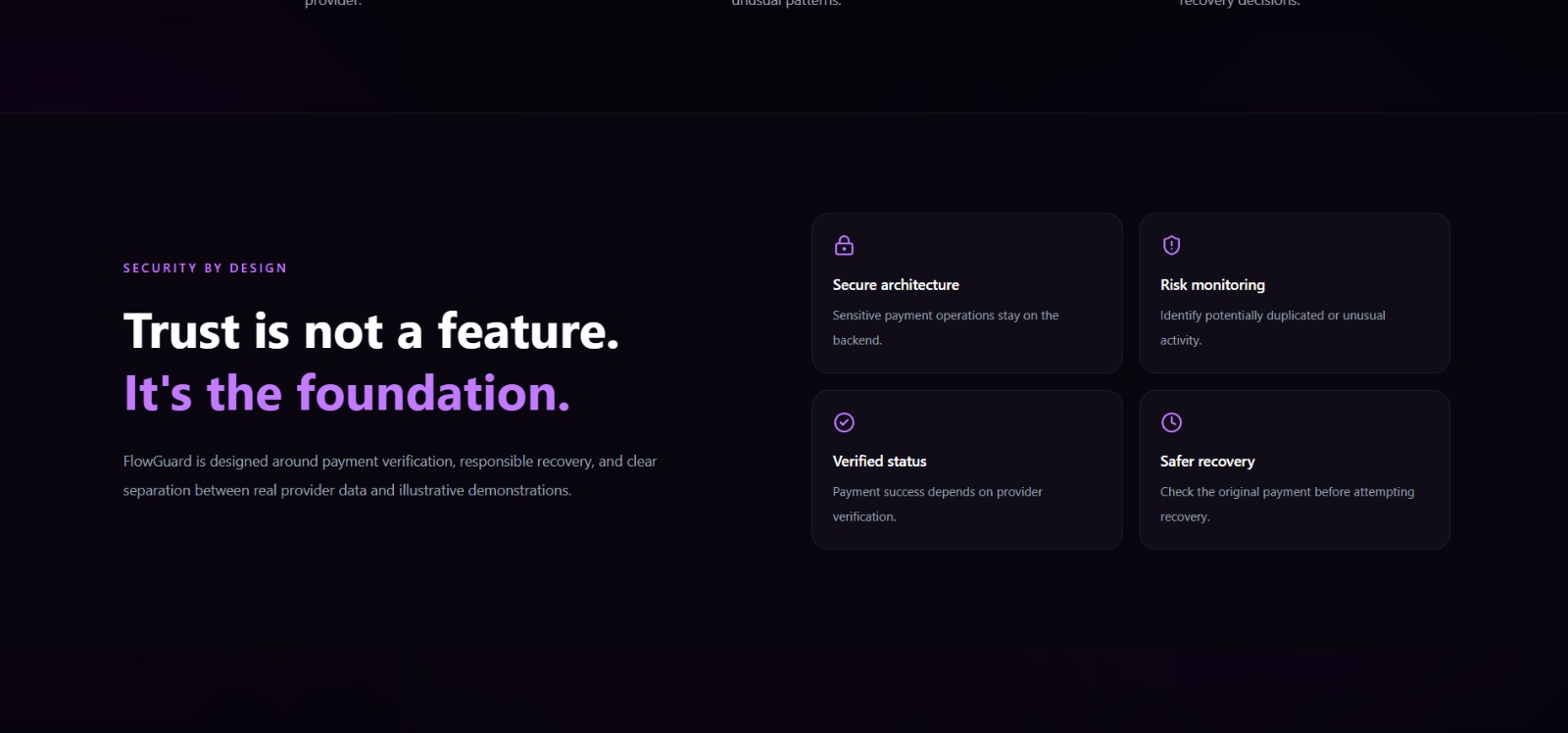
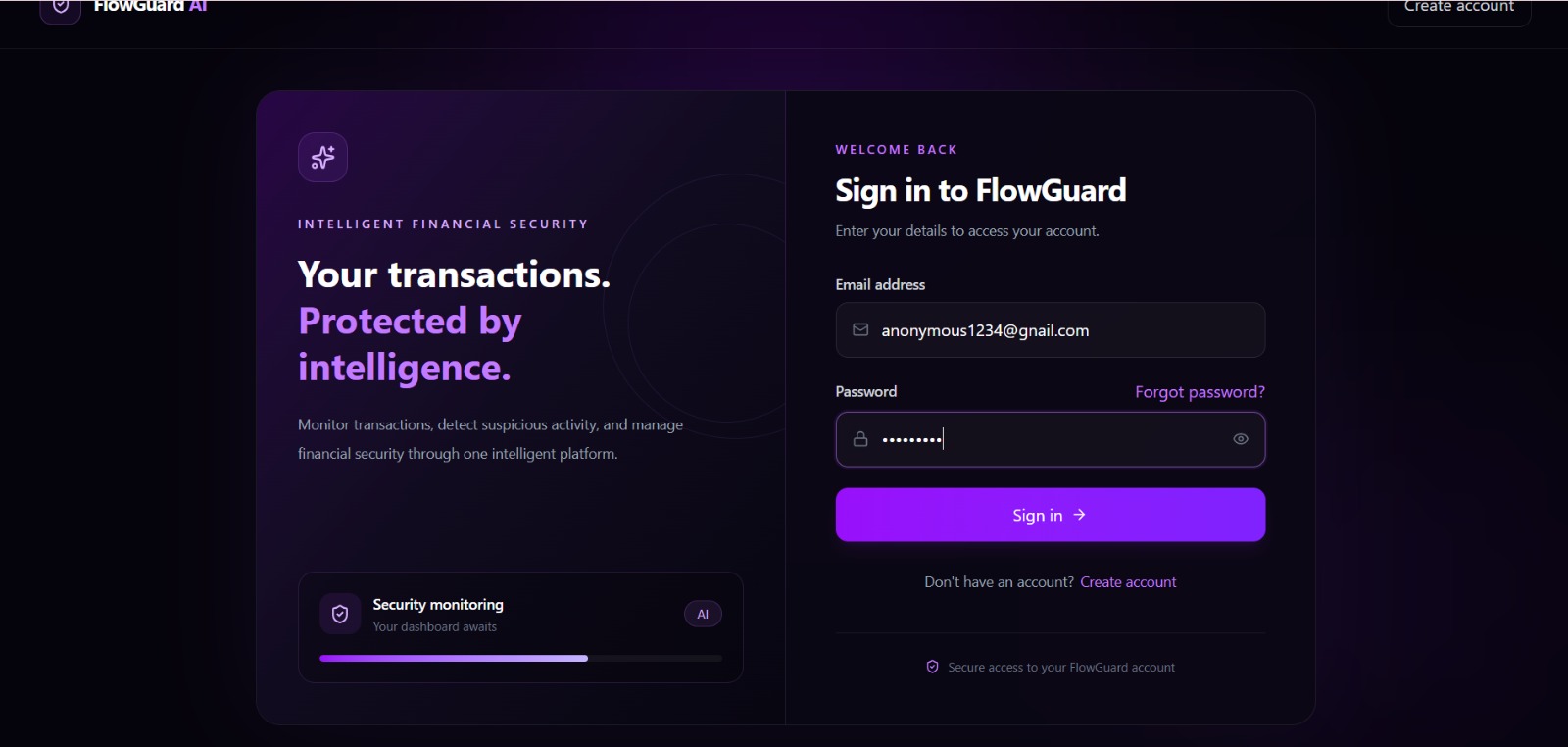
FlowGuard AI
Every Transaction. Smarter. Safer. Seamless.
Inspiration
Digital payments have transformed the way people and businesses manage money. From online shopping to digital banking and instant payments, financial transactions happen every second. However, this convenience also creates opportunities for fraudulent activities and suspicious transactions.
We wanted to build a platform that makes financial transaction monitoring more intelligent, accessible, and transparent. This inspired us to create FlowGuard AI, a financial intelligence platform designed to help users monitor transactions, understand financial activity, and identify potentially risky behavior.
Our vision is simple: make every transaction smarter, safer, and more seamless.
What It Does
FlowGuard AI brings financial transaction management, analytics, and fraud-risk monitoring together in one platform.
Its key features include:
- Financial Dashboard: Provides an overview of transaction volume, completed transactions, pending payments, and financial activity.
- Transaction Management: Allows users to create, view, search, filter, and monitor transaction records.
- Fraud Risk Analysis: Evaluates transaction-related risk factors and assigns Low, Medium, or High risk classifications with a numerical risk score.
- Analytics: Presents transaction trends, financial summaries, and risk distributions through interactive charts.
- Customer Management: Provides a centralized interface for viewing customer-related transaction information.
- Secure Authentication: Supports user registration, login, password hashing, and JWT-based authentication.
- PayPal Sandbox Integration: Demonstrates payment order creation and capture through PayPal's sandbox environment.
- User Settings: Allows users to manage their profile and application preferences.
How We Built It
We developed FlowGuard AI using a full-stack architecture.
Frontend: React.js and TypeScript power the interactive application. Tailwind CSS helps with styling, Vite provides the development environment, Lucide React supplies icons, and Recharts is used for data visualization.
Backend: Python and FastAPI provide REST APIs for authentication, transaction management, analytics, risk evaluation, and user settings.
Database: SQLite stores user and transaction records, with SQLAlchemy handling database operations and ORM models.
Authentication and Security: Password hashing and JWT-based authentication help protect user accounts and restrict access to authenticated application features.
Fraud Risk Engine: Our initial risk evaluation engine uses configurable rule-based checks, considering transaction amount, transaction frequency, repeated failed attempts, and unfamiliar devices. It generates a risk score, risk category, and recommended action.
Payment Integration: PayPal Sandbox is integrated to demonstrate payment order creation, approval, and server-side capture verification in a test environment.
The frontend communicates with the backend through REST APIs, allowing transaction and account information to be retrieved and managed through the application.
Challenges We Faced
One of our biggest challenges was connecting multiple frontend modules with backend APIs while maintaining a consistent user experience.
We also worked through challenges involving:
- Implementing authentication and protected application routes.
- Managing transaction records and their different payment statuses.
- Connecting analytics components to actual backend data.
- Designing a risk evaluation system with understandable classifications.
- Integrating PayPal Sandbox order creation and payment verification.
- Handling API errors, application state, and database operations.
- Maintaining a responsive and visually consistent financial dashboard.
We addressed these challenges through continuous development, testing, debugging, and improvements to our application architecture.
What We Learned
Building FlowGuard AI strengthened our understanding of full-stack development, API integration, database management, authentication, payment workflows, and financial data visualization.
We learned how to connect a React frontend with a Python backend, manage user-specific transaction data, implement authentication, and transform financial records into meaningful dashboard insights.
We also learned that fraud monitoring requires careful risk evaluation, reliable data handling, and clear explanations rather than simply displaying a risk score.
What's Next
FlowGuard AI is an evolving project, and we envision taking it further through:
- Machine-learning-based fraud detection trained on relevant transaction datasets.
- More advanced behavioral analysis and adaptive risk scoring.
- Real-time transaction monitoring and automated alerts.
- Additional payment gateway integrations.
- Improved fraud investigation and reporting tools.
- Scalable deployment and stronger production-grade security.
Our long-term goal is to build a reliable financial intelligence platform that helps businesses and financial teams monitor transactions, understand potential risks, and make better-informed decisions.
FlowGuard AI — Every Transaction. Smarter. Safer. Seamless.spiration
Team Contributions and Roles
FlowGuard AI was developed through the collaborative efforts of six team members, each contributing their technical knowledge, creativity, and problem-solving skills to different aspects of the project.
Our team responsibilities were distributed as follows:
Pratyusha Biswas – Frontend UI/UX Developer: Designed and developed the interactive user interface, responsive dashboard, transaction management pages, analytics visualizations, and frontend-backend API integration using React.
Prayash Mondal – Backend Developer: Worked on backend architecture and REST API development using Python and FastAPI, including authentication and transaction management.
Shaubhagya Roy – Database Developer: Contributed to database design, SQLAlchemy ORM models, data storage, and transaction record management using SQLite.
Indrani Ghosh – AI/ML Developer: Contributed to fraud-risk evaluation logic, transaction analysis, risk scoring, and the planned integration of machine-learning-based fraud detection.
Arya Patra – Payment Integration Developer: Worked on PayPal Sandbox integration, payment order creation, approval workflows, and server-side payment capture verification.
Sampurna Saha – Testing and Documentation: Contributed to application testing, debugging, API validation, technical documentation, and project presentation.
Through teamwork, coordination, and continuous development, our six-member team combined different technical skills to bring FlowGuard AI to life as a functional financial intelligence prototype.
Team FlowGuard AI — Every Transaction. Smarter. Safer. Seamless.
Built With
- fastapi
- javascript
- jwt
- paypal-sandbox
- python
- react
- recharts
- rest-api
- sqlalchemy
- sqlite
- tailwind-css
- typescript
- vite
