Inspiration
Modern software teams use powerful tools like Jira, Bitbucket, Compass, and Confluence—but delivery failures still happen far too often. In our experience, the problem isn’t a lack of data, but fragmentation. Planning risks live in Jira, code bottlenecks in Bitbucket, ownership in Compass, and explanations in Confluence. No single system connects these signals early enough to prevent failure.
We were inspired by Formula 1 pit walls, where engineers combine real-time telemetry, predictive insights, and rapid intervention to win races. We asked a simple question: what if software delivery had a pit wall too? That idea became FlowGuard AI.
What it does
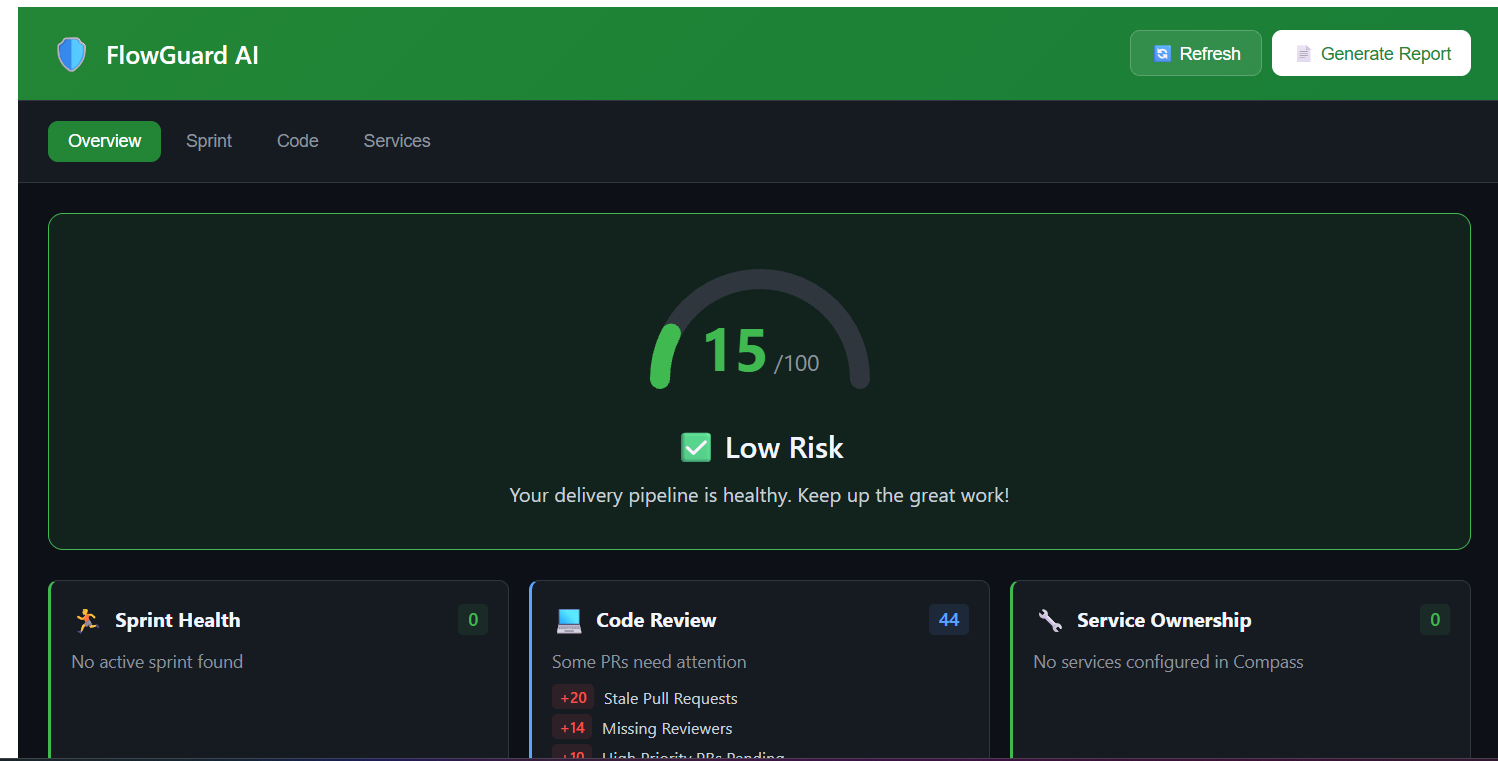
FlowGuard AI is an AI-powered delivery governance app built on Atlassian Forge that predicts, explains, and mitigates delivery risk across the entire software lifecycle.
It:
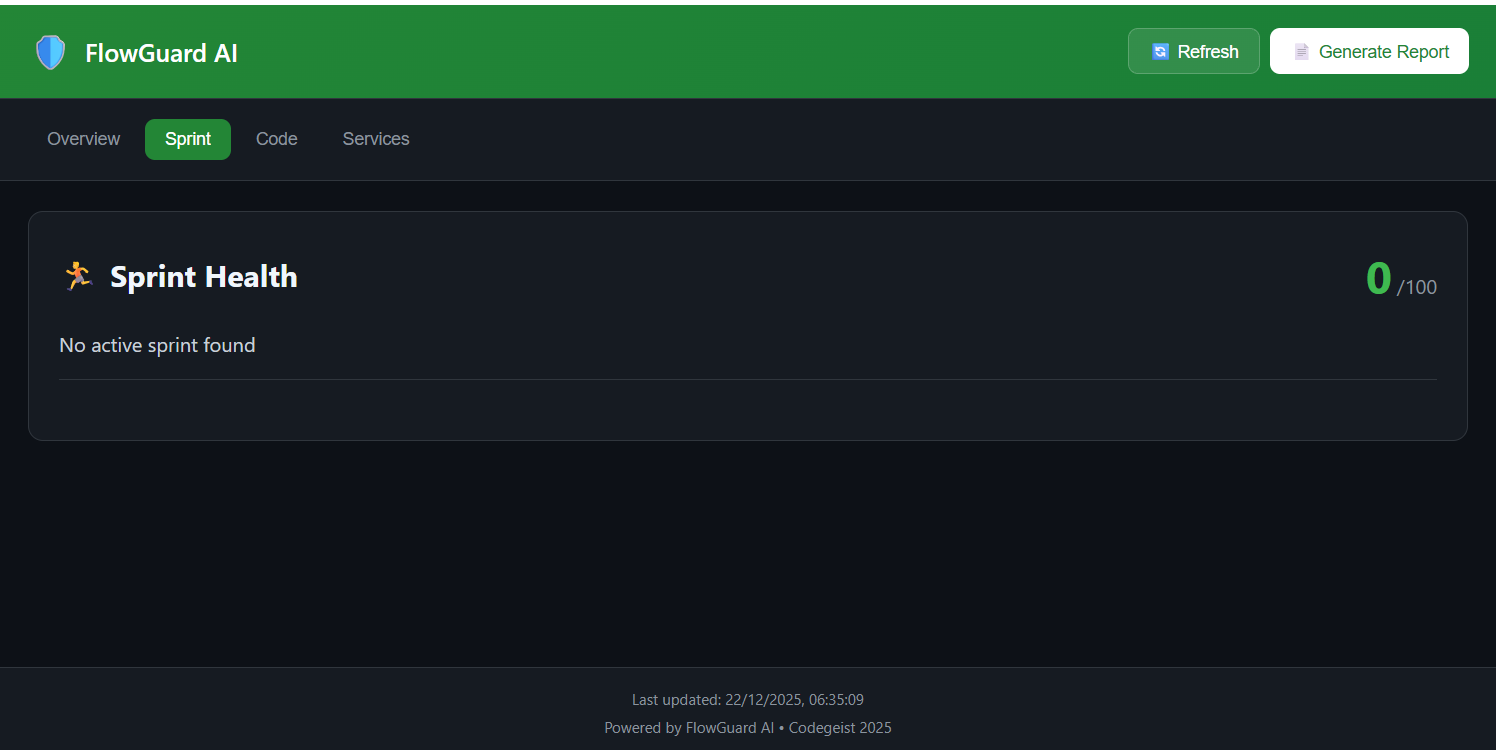
Analyzes Jira sprint data to detect planning and execution risks
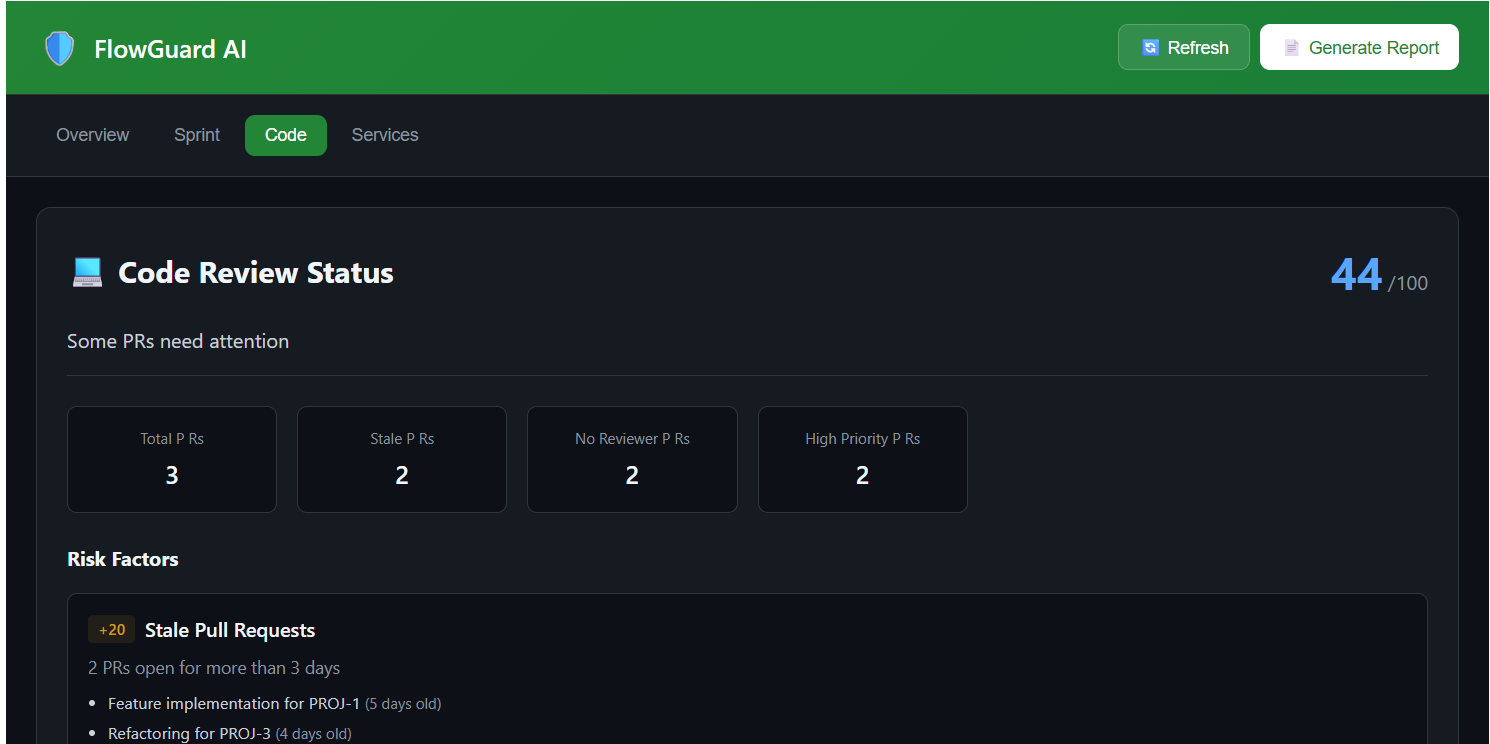
Monitors Bitbucket pull requests to identify code flow bottlenecks
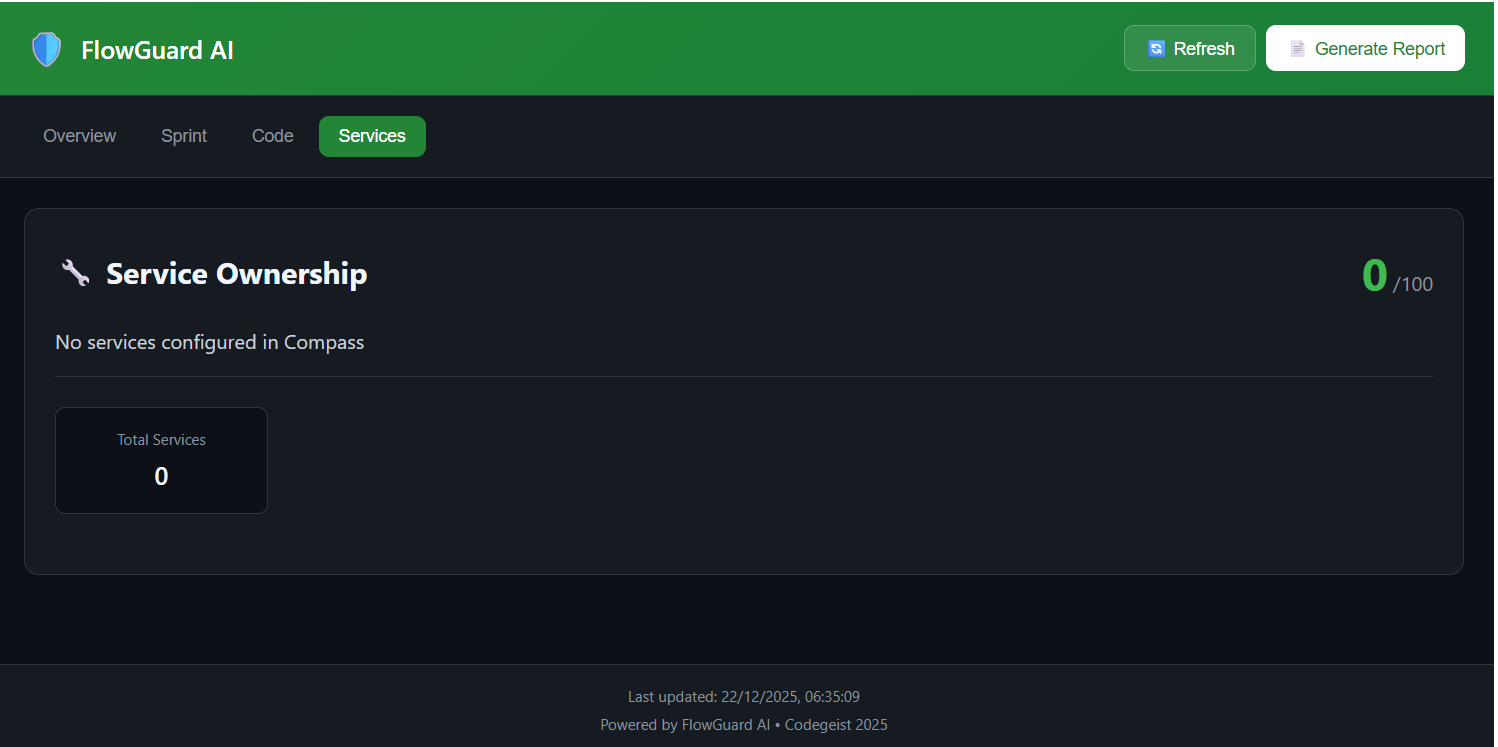
Uses Compass to map risks to services and uncover ownership gaps
Automatically generates Confluence release readiness reports with linked evidence
FlowGuard AI also includes a Rovo agent that can take action—reassigning reviewers, flagging risky issues, escalating ownership gaps, and keeping documentation up to date.
How we built it
We built FlowGuard AI entirely on Atlassian Forge using a modular, serverless architecture.
Data ingestion: Forge resolvers fetch live data from Jira, Bitbucket, Compass, and Confluence APIs
Risk engine: A rule-based scoring system computes sprint, code, and service risk scores and aggregates them into a delivery risk signal
UI: A Forge Custom UI embedded in Jira presents risk scores, explanations, and recommended actions
Automation: Forge Rovo agent modules enable agentic actions such as reviewer reassignment and risk escalation
Governance: Confluence pages are created and updated automatically to ensure explainability and audit readiness
We intentionally focused on clarity and integration depth rather than complex machine learning, prioritizing real-world usability.
Challenges we ran into
Cross-product data correlation: Mapping Jira issues and Bitbucket PRs to Compass services required careful handling of metadata and conventions
Scope discipline: With four Atlassian products involved, it was critical to avoid overbuilding and focus on a minimal, high-impact feature set
Agent design: Designing Rovo agent actions that were genuinely useful—not disruptive—required multiple iterations
Each challenge ultimately improved the product’s reliability and usability.
Accomplishments that we're proud of
Meaningful integration across four Atlassian products, not superficial connections
A working agentic AI system that takes action, not just screenshots or dashboards
Automatically generated, living Confluence documentation tied directly to delivery risk
A solution that feels enterprise-ready, not hackathon-only
Most importantly, FlowGuard AI demonstrates how Atlassian tools can operate as a single intelligent system.
What we learned
Delivery risk is best understood systemically, not tool by tool
Judges and users value explainability more than black-box AI
Agentic automation is most effective when it augments teams instead of overriding them
Forge enables rapid, production-grade integrations when used with clear boundaries
These lessons shaped both our architecture and our product decisions.
What's next for FlowGuard AI
Next, we plan to:
Add adaptive learning to improve risk scoring over time
Expand agent capabilities to suggest scope adjustments and dependency sequencing
Support additional Atlassian products like Jira Service Management
Pursue Runs on Atlassian certification for enterprise adoption
Our long-term vision is to make FlowGuard AI the default delivery control system for high-performing teams.
Built With
- atlassianforge
- atlassianoauth
- bitbucketcloudapi
- compassapi
- confluencecloudapi
- devopsautomation
- forgecustomui
- javascript
- jiracloudapi
- node.js
- rovoagents
- rulebasedai
- serverlessarchitecture
- typescript

Log in or sign up for Devpost to join the conversation.