Inspiration
What it does
How we built it
Challenges we ran into
Accomplishments that we're proud of
What we learned
What's next for FlowGrid MemoryAgent
Inspiration
Long-running AI projects do not just lose context. They lose the boundary between what was discussed, what was proposed, and what was actually authorized.
What it does
FlowGrid MemoryAgent turns a user turn into candidate memories with Qwen. It keeps confirmed judgments durable, while proposed revisions stay pending until an owner explicitly authorizes the change or qualifying evidence supports it.
In a later session, the agent retrieves authorized memory only. It can explain why a confirmed direction still applies instead of silently overwriting it with a newer request.
How we built it
We built a browser demo and a serverless runtime on Alibaba Cloud Function Compute. The runtime uses Qwen3.7-Plus for candidate-memory extraction and persists sources, judgments, revisions, evidence, handoffs, and audit events as a queryable lifecycle.
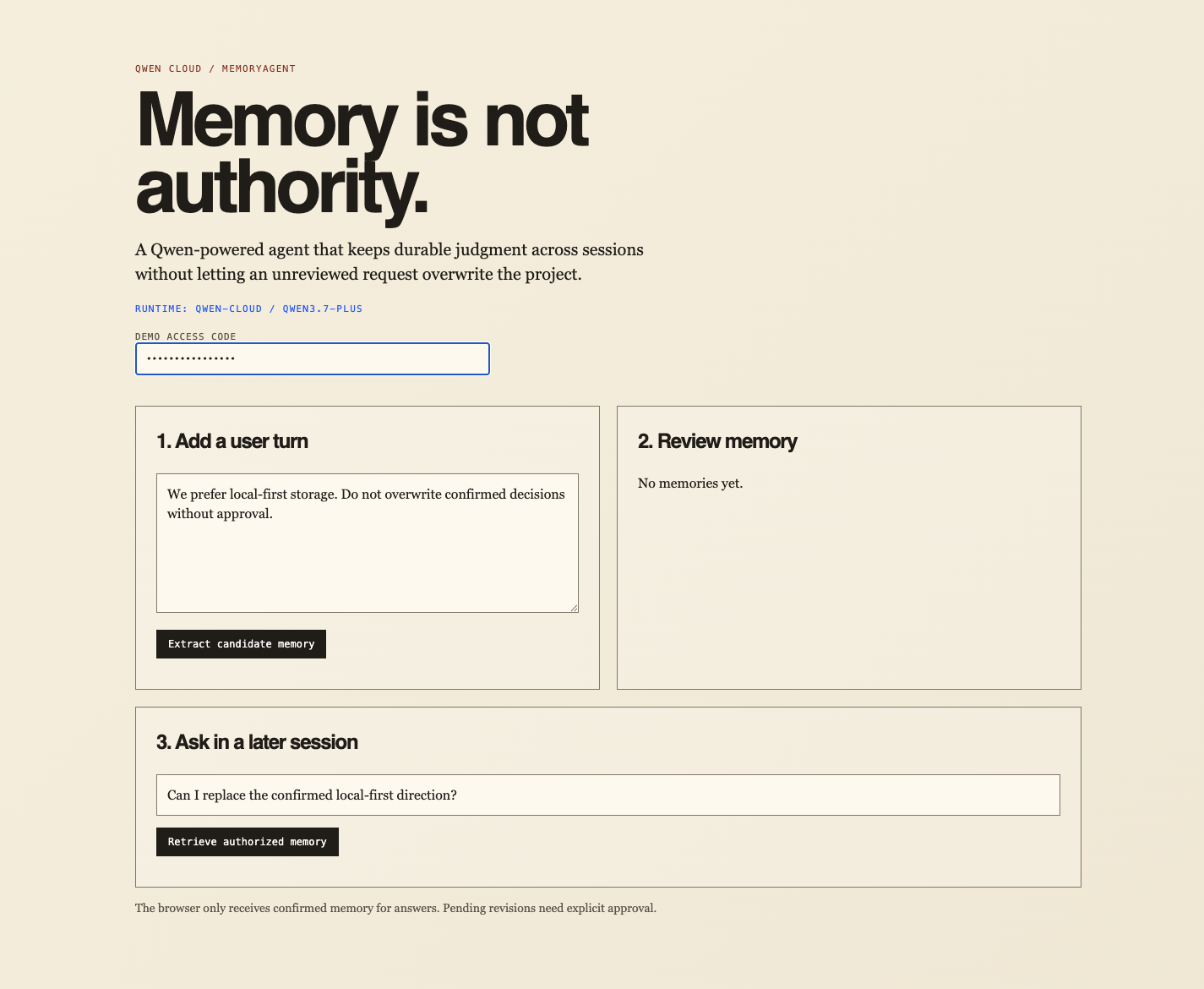
The demo shows the complete loop:
- Add a user turn.
- Extract a confirmed preference and a pending judgment.
- Authorize the pending memory when appropriate.
- Ask in a later session whether the confirmed direction can be replaced.
Challenges we ran into
The main challenge was making AI memory useful without treating every fluent extraction as authority. The runtime separates extraction from authorization and preserves the audit trail behind changes.
Accomplishments that we're proud of
We deployed a working Qwen-powered runtime, connected it to a live browser demo, and recorded the full candidate-to-authorized-memory loop.
What we learned
For project memory, extraction and authorization are different operations. A fluent new request should not automatically erase a confirmed decision.
What's next for FlowGrid MemoryAgent
We are extending the lifecycle with stronger provenance, evidence-aware revisions, and cross-agent handoffs.
Built With
- alibaba


Log in or sign up for Devpost to join the conversation.