-
-
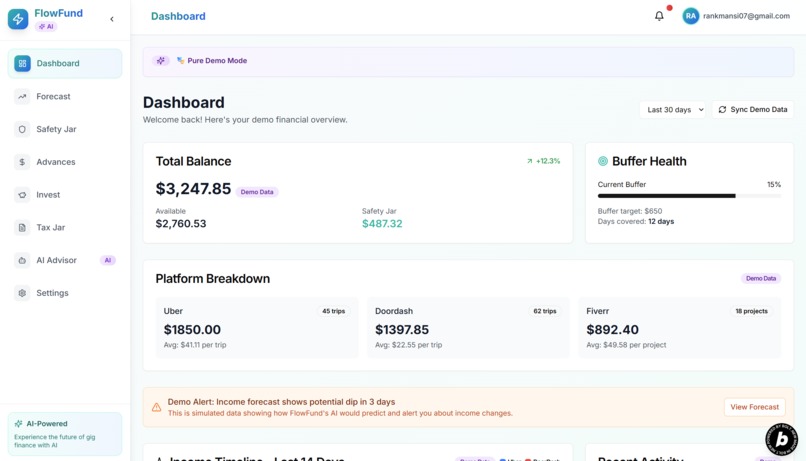
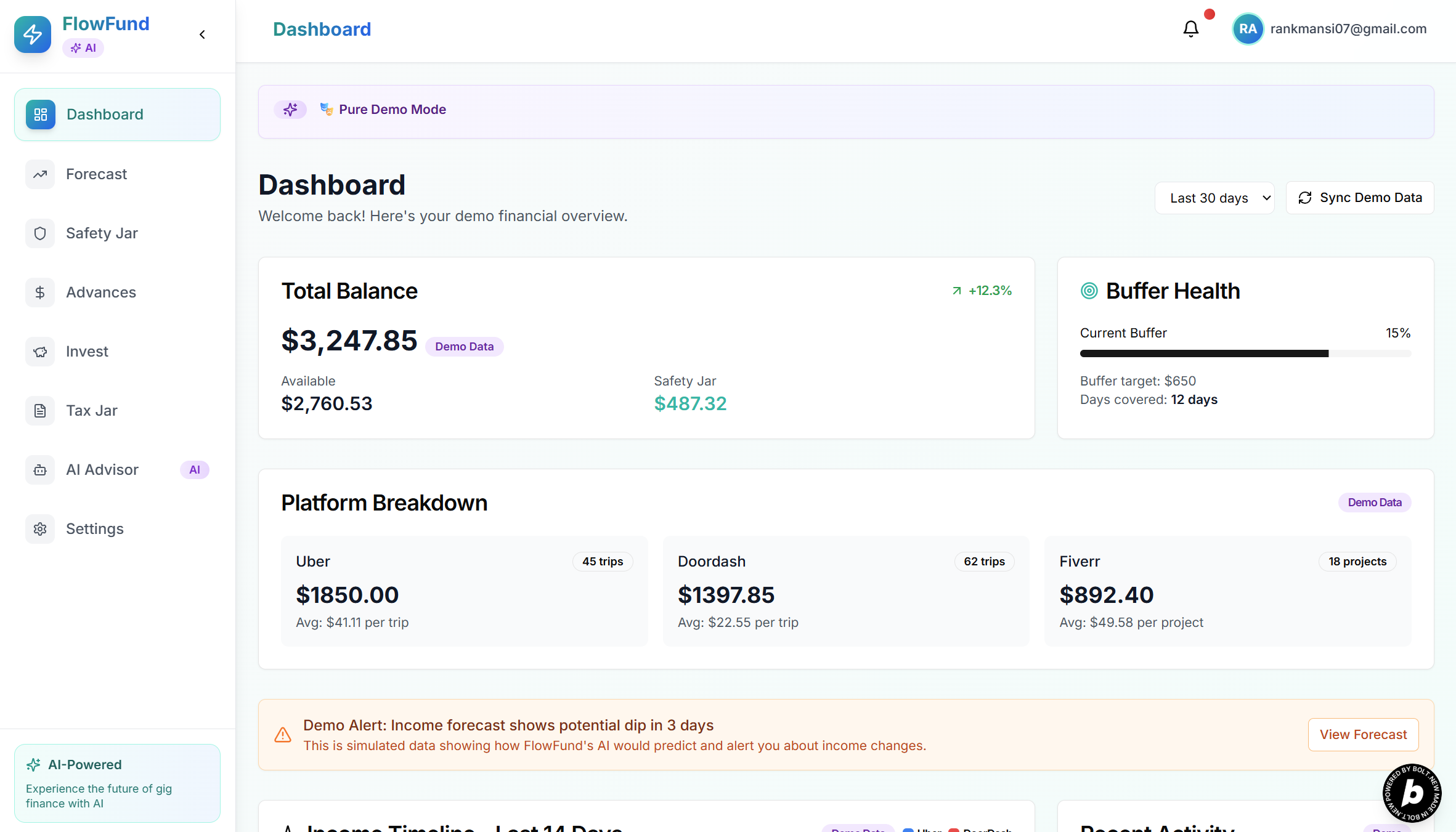
Dashboard
-
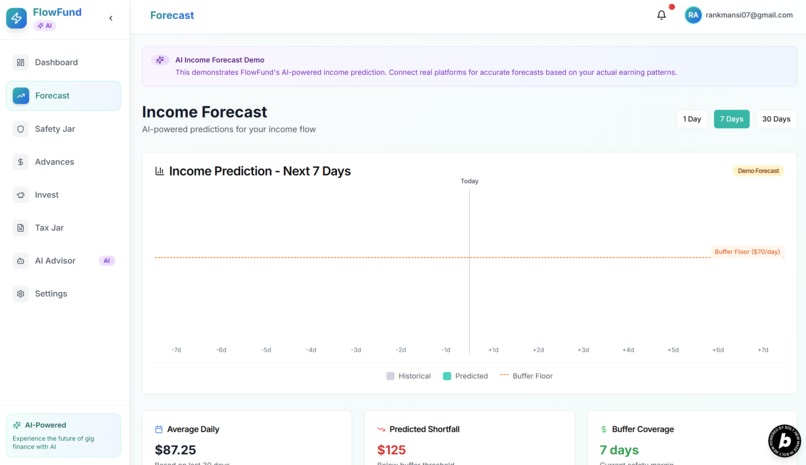
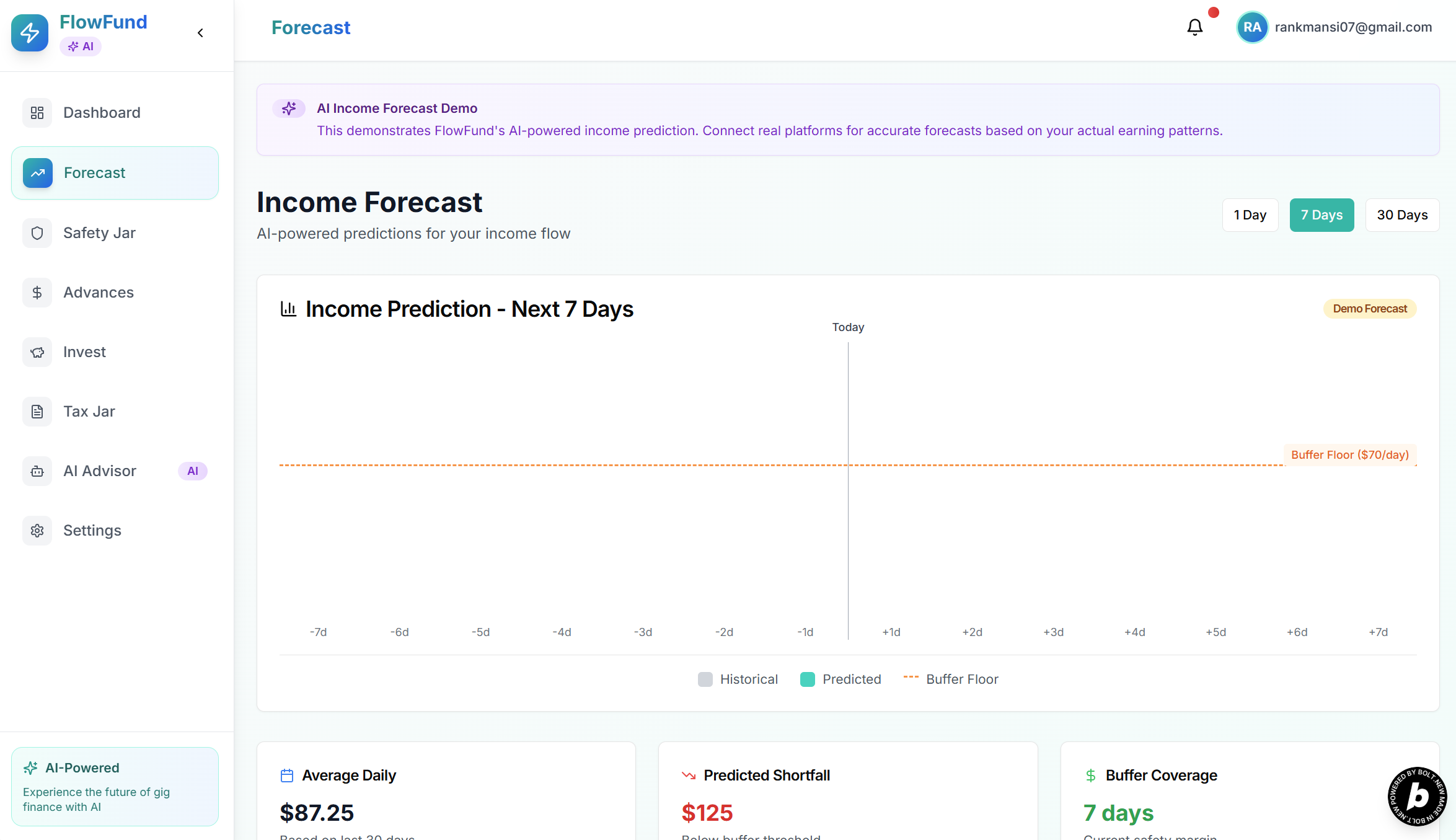
Income Forecast - AI-powered predictions for your income flow
-
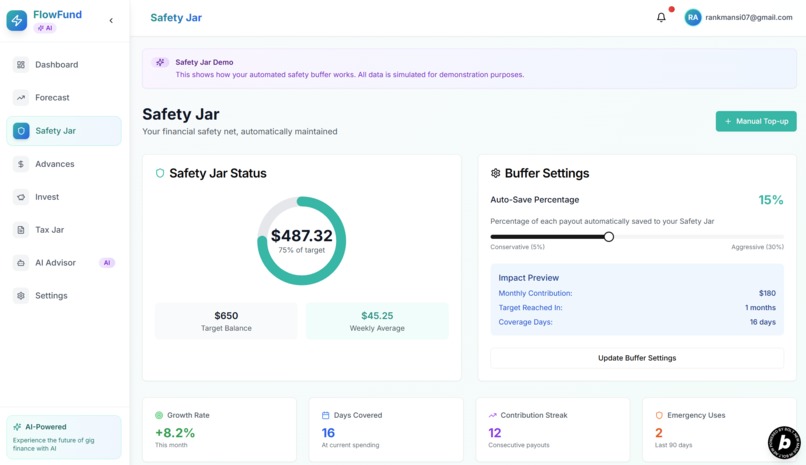
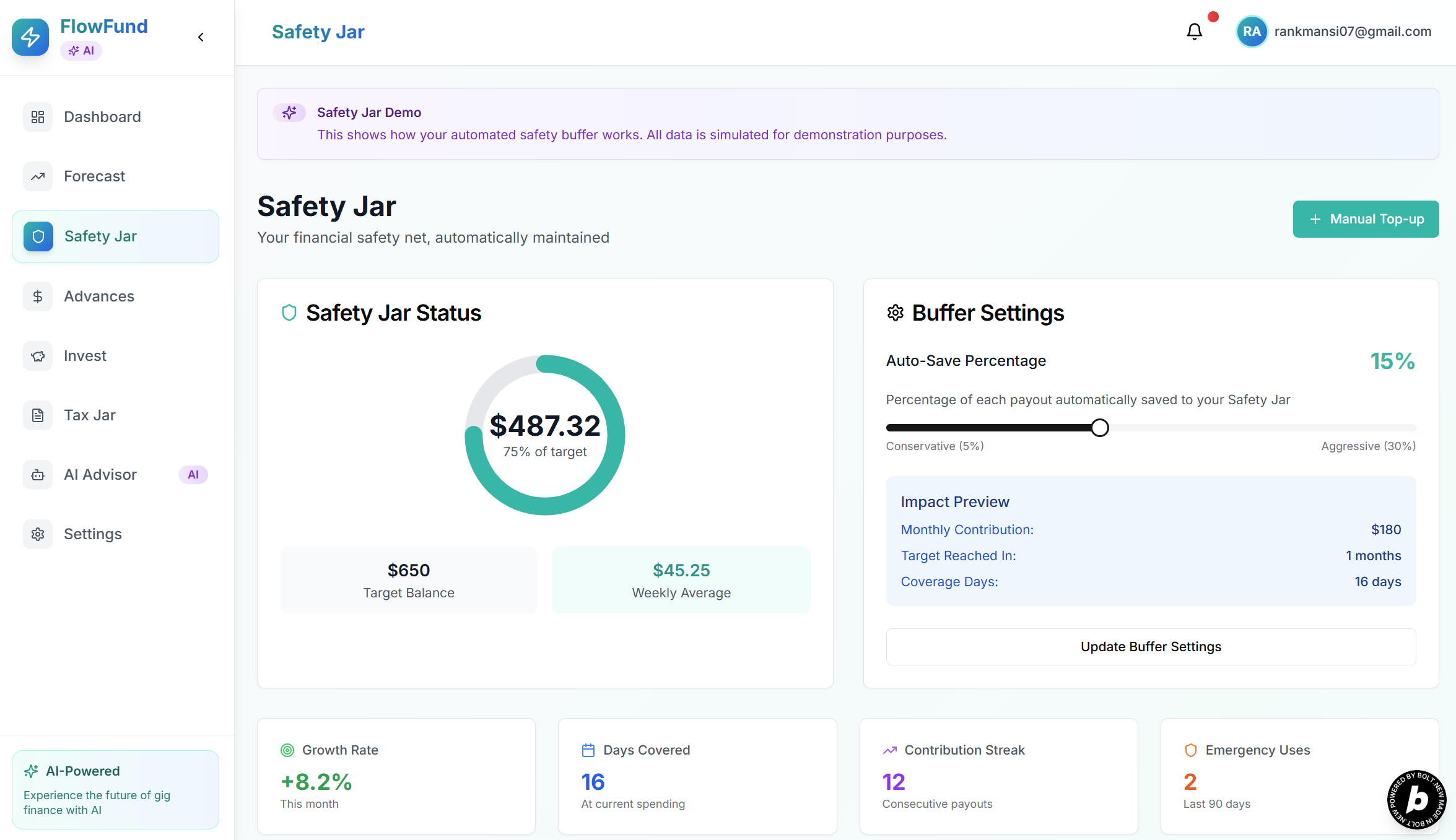
Safety Jar - Your financial safety net, automatically maintained
-
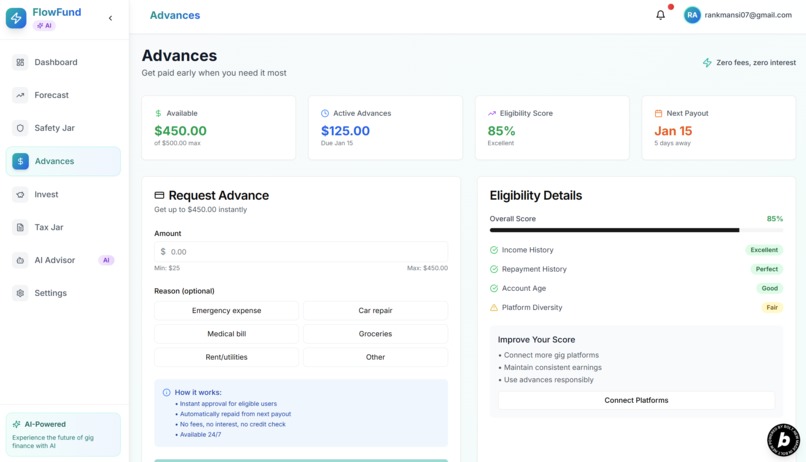
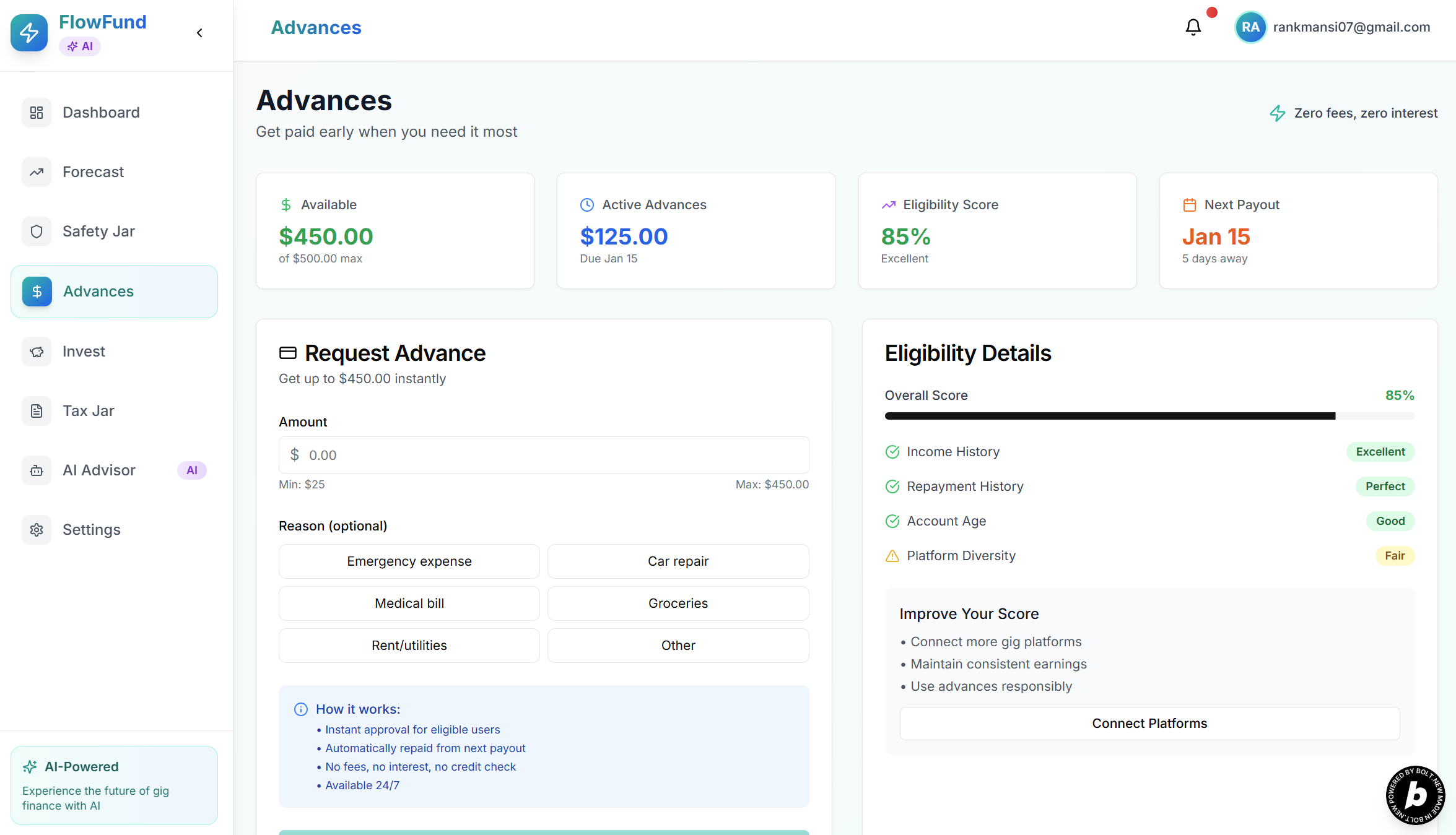
Advances - Get paid early when you need the most
-
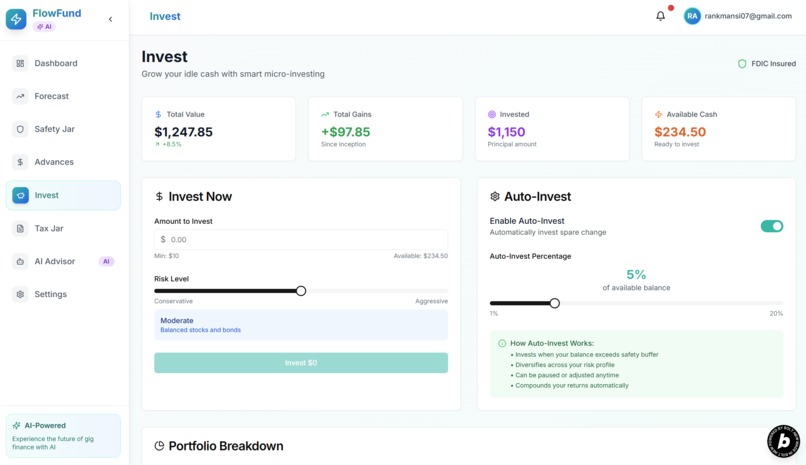
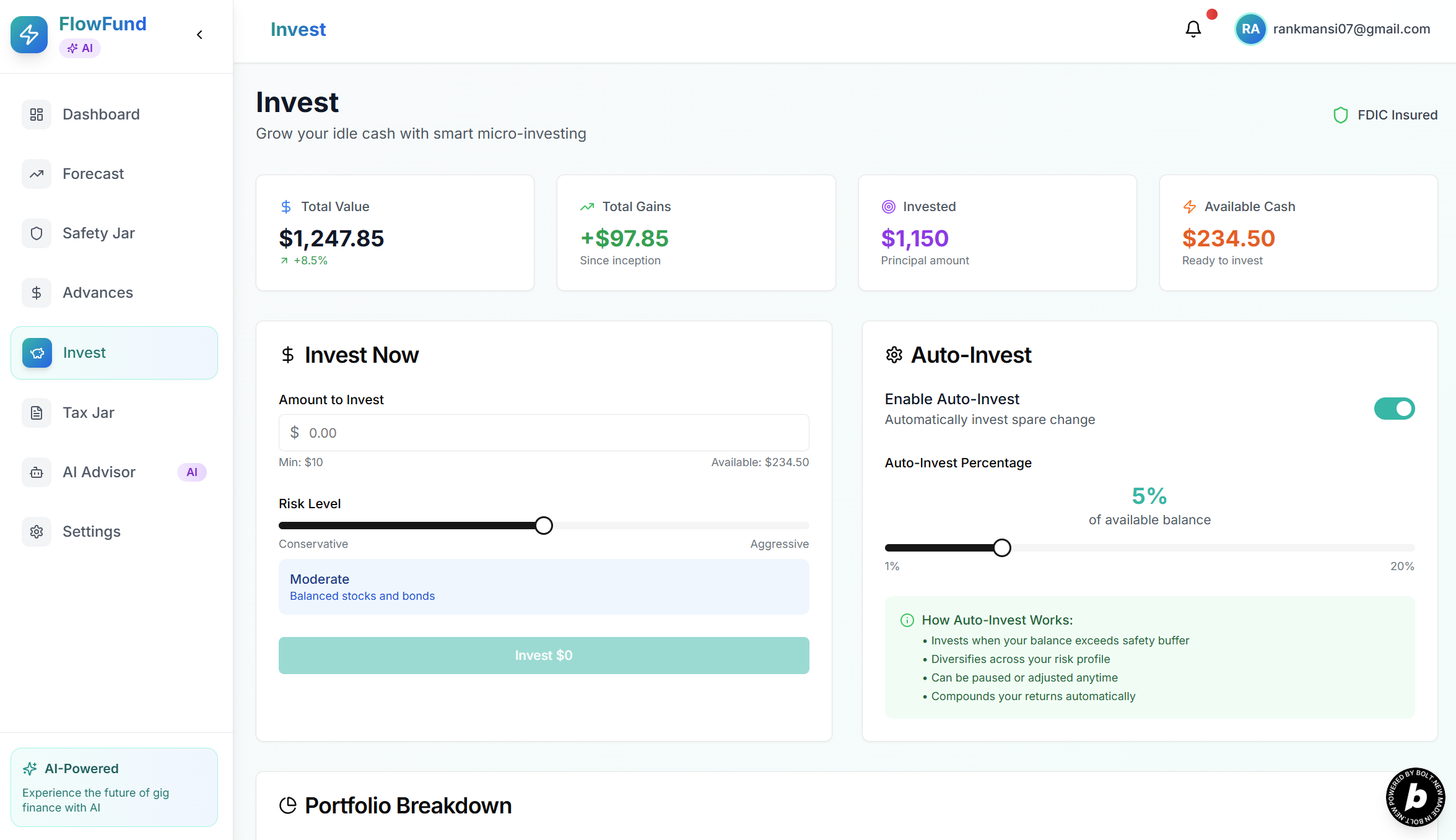
Invest - Grow your idle cash with smart micro-investing
-
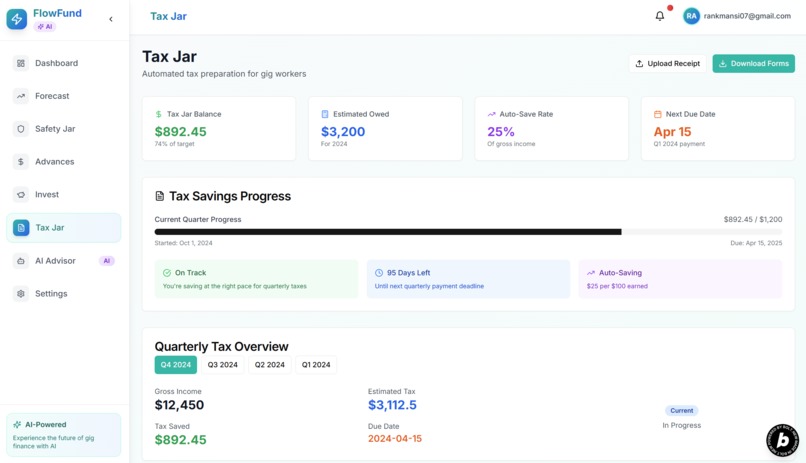
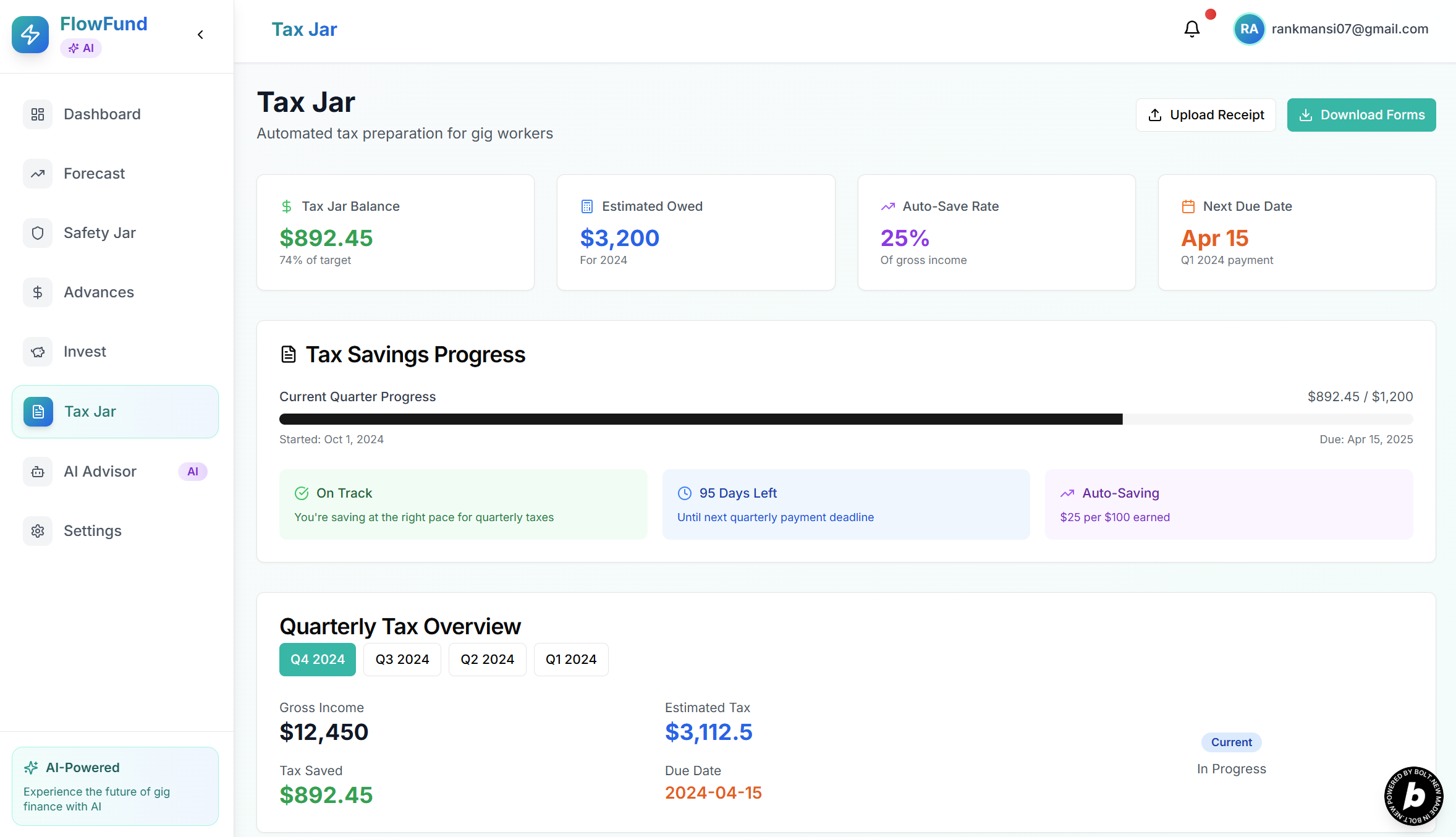
Tax Jar - Autonomous tax preparation for gig workers
-
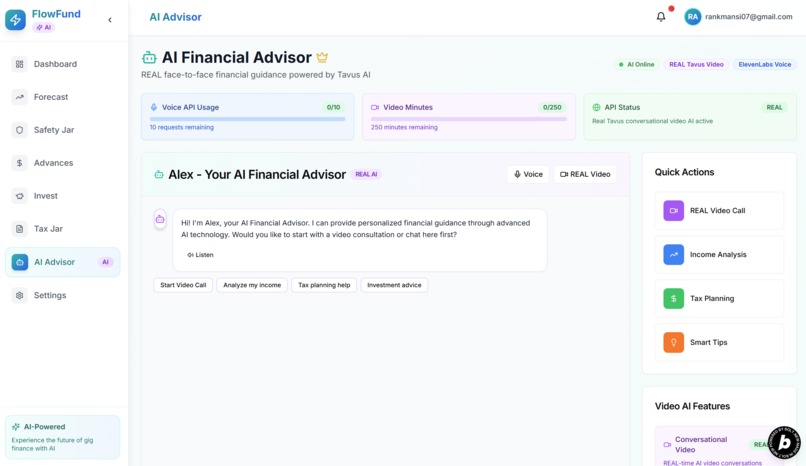
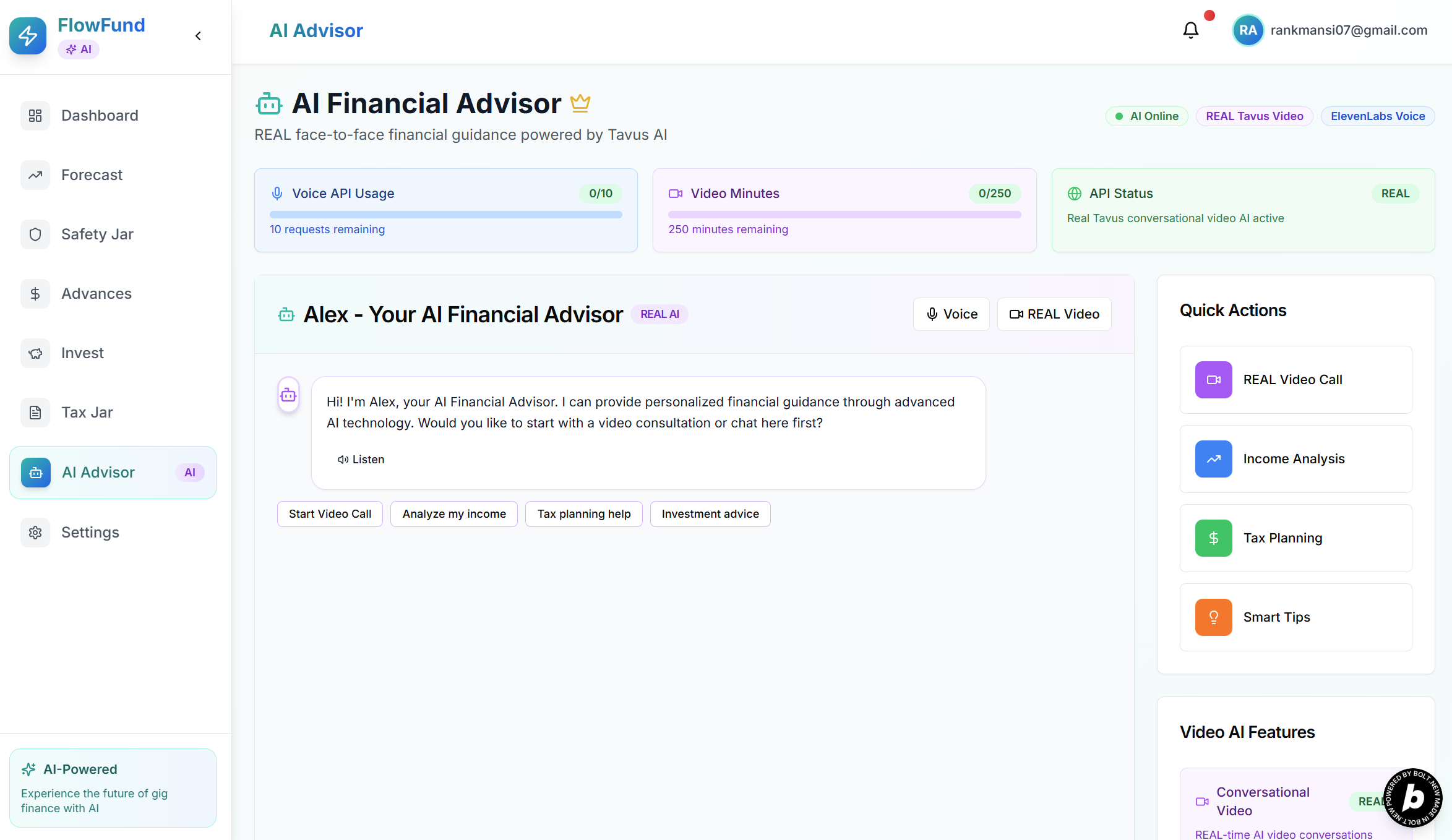
AI Financial Advisor - ElevenLabs and Tavus integration for Voice and Video Consultations
Inspiration
As I scrolled through endless news of gig workers juggling inconsistent incomes - from late-night Uber rides to back-to-back DoorDash orders - a thought hit me: "How do they even plan their month?"
They don’t.
Because they can’t.
FlowFund became my way of designing a smarter support system - something that could think, forecast, and guide on their behalf. And thanks to Bolt’s free API pack/token for ElevenLabs, Tavus, Supabase and more, what started as a weekend prototype quickly evolved into a solution that felt real - conversational, visual, and genuinely helpful.
That API pack wasn’t just helpful -
It was a launchpad.
It enabled me to validate real AI integrations under actual usage conditions, not just theory.
What it does
FlowFund is a smart financial co-pilot for gig economy workers.
It simulates what it should feel like to have a personal finance manager - one who keeps tabs on your income patterns, recommends how much to save, forecasts dry spells, and even preps you for taxes.
All of this - wrapped inside a voice-first, visually polished experience.
Here’s a peek into its key capabilities:
- 📊 Aggregated Gig Income Simulation: Realistic multi-platform earnings (Uber, DoorDash, Fiverr, and more)
- 🔮 AI-Based Forecasting: Predicts upcoming income patterns using demo data
- 💡 Smart Savings Buffering: Recommends weekly savings to absorb dry periods
- 🧾 Tax & Investment Simulation: Encourages smarter financial planning without complexity
- 🗣️ Voice-Based Assistant: ElevenLabs integration for natural voice interactions
- 📹 Tavus Video Advisor: Personalized video insights that feel one-on-one
- 🔐 Secure Auth Flow: Supabase handles sessions and Google OAuth seamlessly
Even with simulated data, FlowFund functions as a high-fidelity prototype with real-world interactions - built to feel complete from the moment you land.
How I built it
I built FlowFund entirely on bolt.new - using structured prompts to design, connect, and deploy the application. It was an experiment in how far thoughtful prompting can go when paired with powerful APIs and strong UX intuition.
Here's the stack I worked with:
- ⚛️ Frontend: Next.js 13 (App Router), Tailwind CSS, TypeScript
- 🧠 Voice AI: ElevenLabs (Text-to-Speech with graceful fallbacks)
- 🎥 Video AI: Tavus (Real conversational video advisor)
- 🔐 Authentication: Supabase for secure OAuth and session handling
- 🎨 UI Layer: shadcn/ui, Radix UI
- 💾 Data Strategy: Demo-first architecture with realistic gig worker patterns
- 🚀 Deployment: Netlify with static export optimization
Instead of building a complex backend with live data integrations, I designed a demo-first prototype that showcases the full user experience using realistic simulated data. This approach made onboarding instant, eliminated API rate limit concerns during judging, and perfectly fit the rapid-iteration nature of a hackathon while still demonstrating real AI integrations where they matter most.
The financial data patterns were carefully crafted to reflect real gig worker scenarios - weekend earning spikes, platform-specific trip patterns, and seasonal variations that make the demo feel authentic.
Challenges I ran into
- 🧠 Prompting as a Development Discipline: Getting the AI to understand intent clearly - without overcomplicating the response - took finesse and dozens of iterations.
- 📉 Financial Data Simulation: Creating believable patterns (without access to real gig income APIs) required modeling real-world variance and uncertainty.
- 🔄 Voice & Video API Design: The integrations were smooth, but designing fallback behavior for API limits was a must to ensure consistent UX.
- 📱 UX for Conversation: Making voice and video feel natural - not gimmicky - demanded thoughtful copywriting, pacing, and responsiveness across breakpoints.
Accomplishments that I'm proud of
- 🧠 Built a fully working AI-based financial planner - without a traditional backend, but with smart design patterns and real APIs.
- 🎤 Voice + Video Interface: Integrated ElevenLabs and Tavus into a unified experience that feels assistive, not robotic.
- 🚀 Deploys instantly, feels complete: Judges, users, anyone can spin it up and explore full functionality in minutes.
- 🎨 Beautiful & Accessible: Apple-inspired design language using Tailwind, Radix UI, and WCAG compliance.
- 💡 Proved that AI prompting can deliver production-quality results - not just MVP experiments.
What I learned
- 🎯 AI prompting is fast, but clarity is everything. I learned that vague prompts often lead to generic or bloated outputs. Being specific - about user flows, layout intentions, or component logic - made the AI 10x more helpful. Prompting became less about asking and more about instructing clearly.
- 🔁 Rapid iteration beats pixel perfection. Because I could build in minutes using Bolt, I ended up testing multiple UI flows and user journeys - and noticed that even small copy or layout changes drastically improved usability. Getting something functional fast helped me improve faster.
- 🎤 Voice UX is powerful but fragile. ElevenLabs made voice interaction feel magical - but designing when to talk, how long to speak, and what tone to use taught me how important timing and pacing are for natural AI experiences.
- 📹 Video AI like Tavus adds trust, not just flash. Watching a face deliver financial tips made the whole product feel more personal and less robotic. But syncing messaging with visuals (like "your income dipped this week") had to be carefully framed - vague video advice felt confusing.
- 🔐 Auth without DB is possible - but needs intent. Using Supabase Auth-only worked perfectly for a hackathon, but I had to make sure every feature (forecasts, buffer, savings) worked without storing state - which forced me to design everything to feel stateful even when it wasn’t.
- 🧪 Simulated data can feel real - if it reflects emotion, not just numbers. I spent time mapping patterns like weekend surges, holiday dips, and dry spells to reflect the emotional reality of gig work. That extra layer made even fake data feel relatable.
- ⚡ Free API packs unlock speed - and ambition. Without Bolt’s 1-month credits for ElevenLabs and Tavus, I wouldn’t have dared to go this deep into voice/video AI. The cost buffer gave me the confidence to experiment big - and ship something bold.
- 🤯 Explaining “I built this with prompts” still surprises people. Even technical peers were shocked that the platform wasn’t hand-coded - which made me realize how much potential there still is in low-code + AI tooling when used with real product thinking.
What's next for FlowFund
- 🔗 Real-time integrations with gig economy platforms (Uber, Swiggy, Fiverr) via OAuth and open APIs
- 💼 Automated tax planning using APIs like QuickBooks or ClearTax
- 📈 Smarter AI that learns from behavior to offer personalized savings and investment nudges
- 📱 Mobile-first Progressive Web App for offline access and voice mode
- 🤝 Peer-powered community layer - crowd-sourced financial tips and safety net contributions
- 💸 Platform partnerships - where companies co-sponsor emergency savings jars for workers
FlowFund started with a single prompt -
and evolved into a working product with voice, video, intelligence, and intent.
And if you’re still asking if AI + no-code tools can ship something real...
I suggest you give Bolt a try. 😉
P.S. FlowFund runs best on Chrome.
Built With
- elevenlabs-api
- lucide-react
- netlify
- next.js-13
- shadcn/ui
- supabase
- tailwind-css
- tavus-api
- typescript


Log in or sign up for Devpost to join the conversation.