-
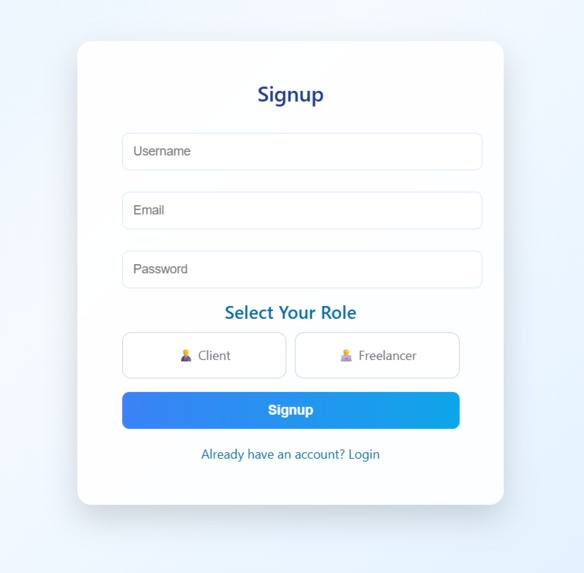
SignIn And Authorization
-
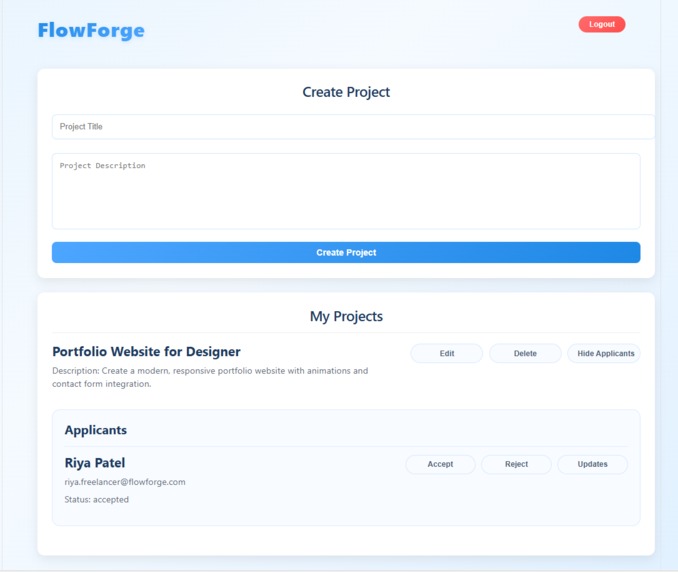
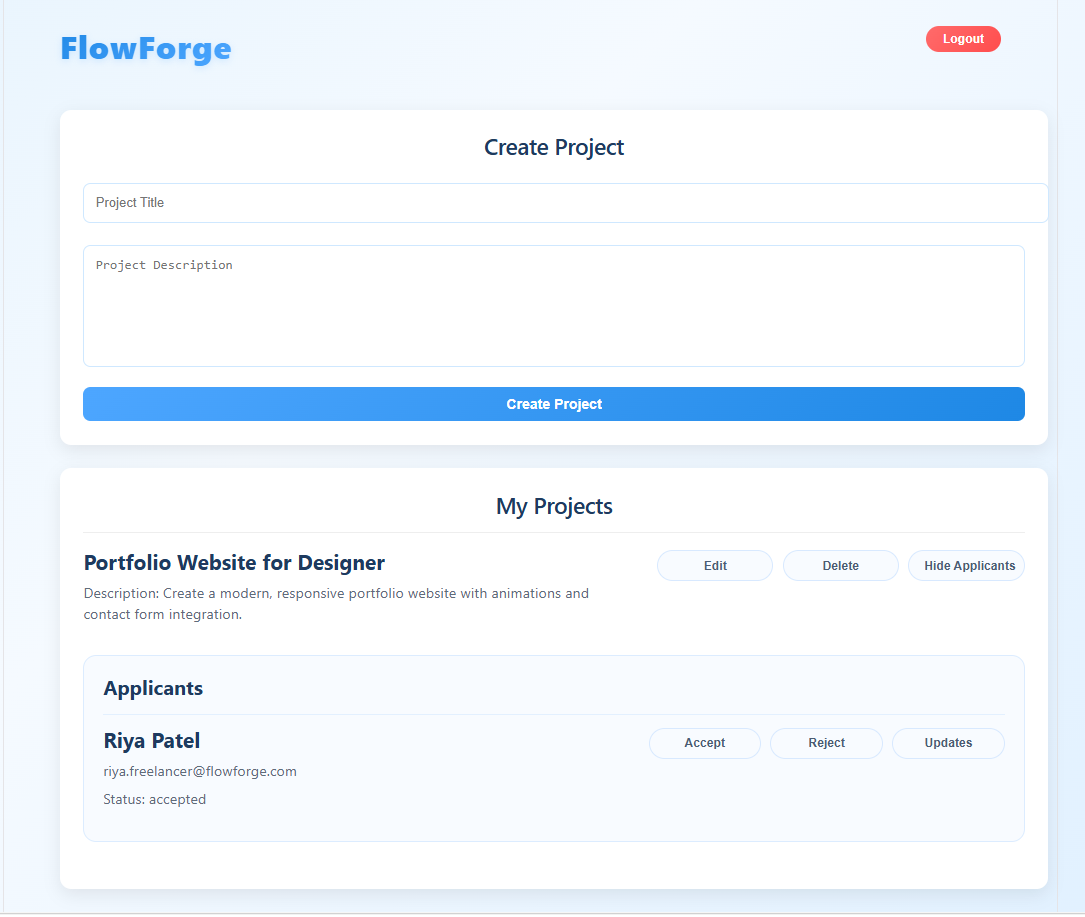
Client Dashboard
-
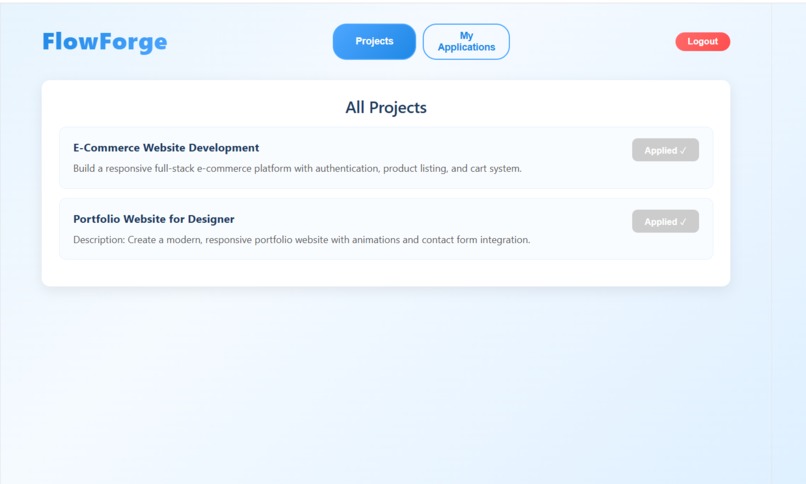
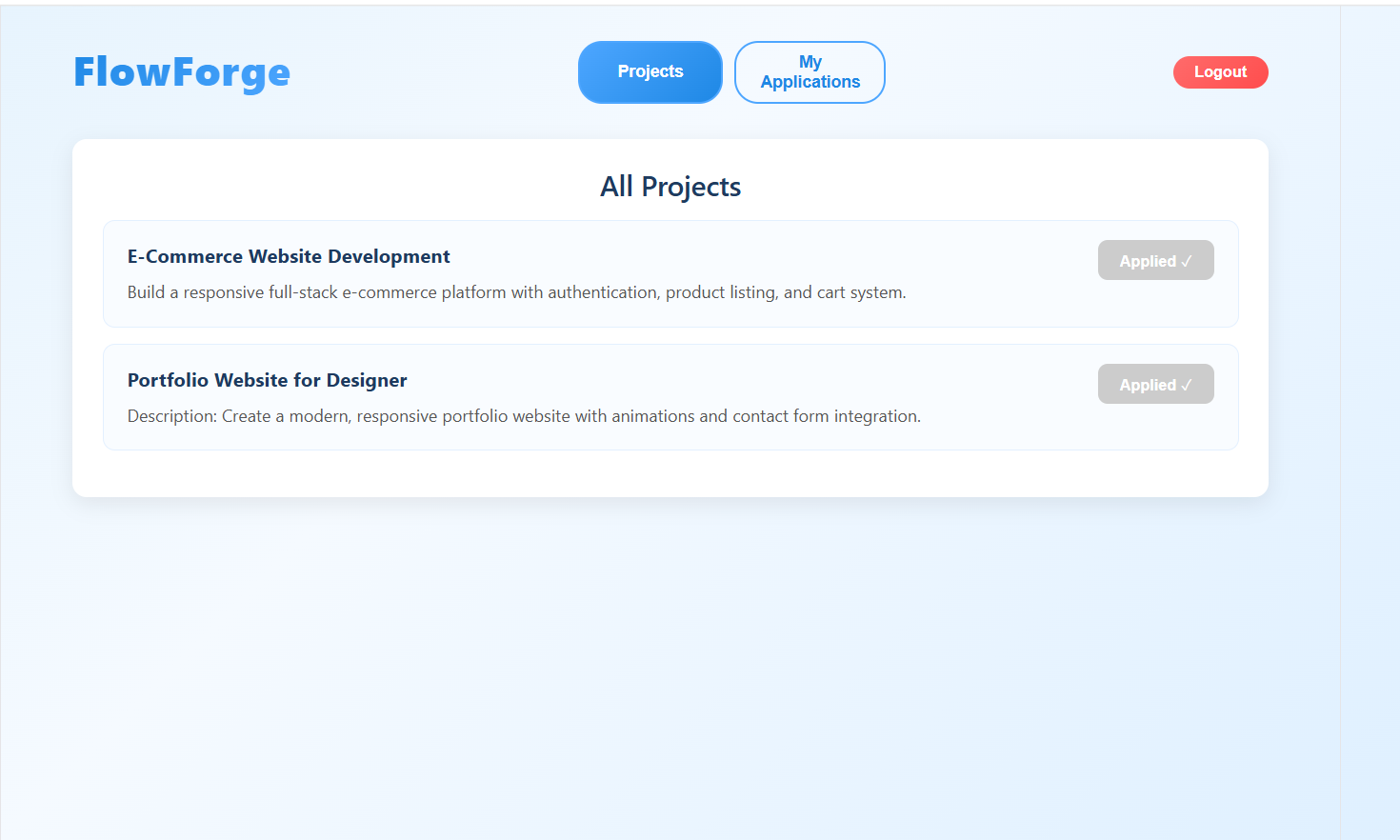
Freelancer Dashboard
-
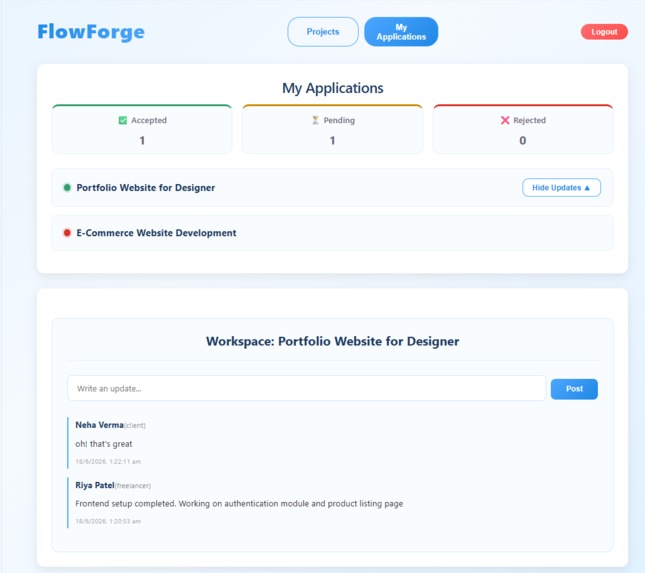
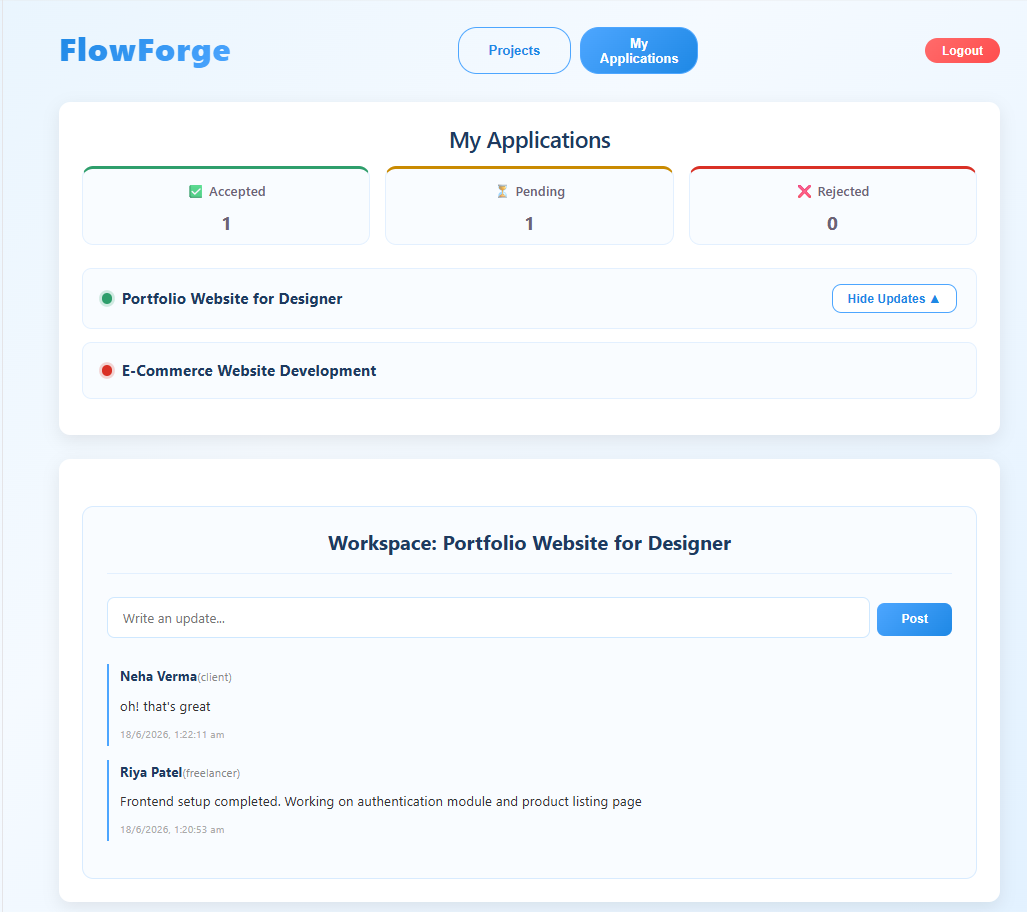
Colloboration using Updates

Inspiration
What it does
🟣 FlowForge
FlowForge simplifies freelance collaboration by replacing scattered communication with a structured workflow system that helps clients and freelancers work together efficiently.
🟣 Inspiration
Freelancers often struggle with messy communication, unclear project requirements, and lack of structured collaboration. Clients also face difficulty tracking applications and progress.
FlowForge was built to solve this by creating a structured workflow between clients and freelancers from project creation to delivery.
🟣 What it does
FlowForge provides a full collaboration system:
- Clients create and manage projects
- Freelancers browse and apply
- Clients review applications and select candidates
- Accepted freelancers get workspace access
- Real-time updates keep everyone aligned
🟣 How it is built
Frontend: React (Vite), Axios, CSS
Backend: Node.js + Express.js
Database: MongoDB (Mongoose)
Auth: JWT-based authentication
Architecture: Role-based access control system
🟣 Challenges I ran into
- Designing role-based workflows (client vs freelancer)
- Handling authentication securely using JWT
- Structuring project–application relationships in MongoDB
🟣 Accomplishments we're proud of
- Fully functional role-based system
- End-to-end workflow from project creation → collaboration
- Clean architecture and modular backend design
🟣 What we learned
- Real-world authentication and authorization patterns
- Designing scalable backend APIs
- Building role-based user experiences
🟣 What's next
- Chat system between clients and freelancers
- File sharing + milestone tracking
- Payment integration
- AI matching system for freelancers and projects
Built With
- axios
- css3
- express.js
- javascript
- jwt
- mongodb
- node.js
- react(vite)
- render


Log in or sign up for Devpost to join the conversation.