-
-
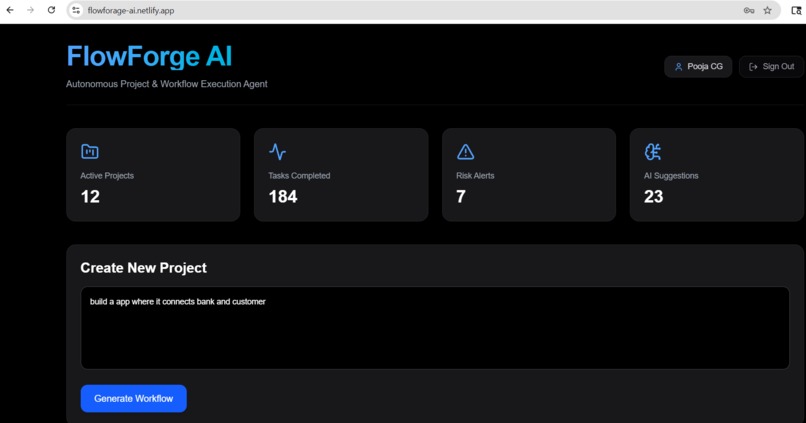
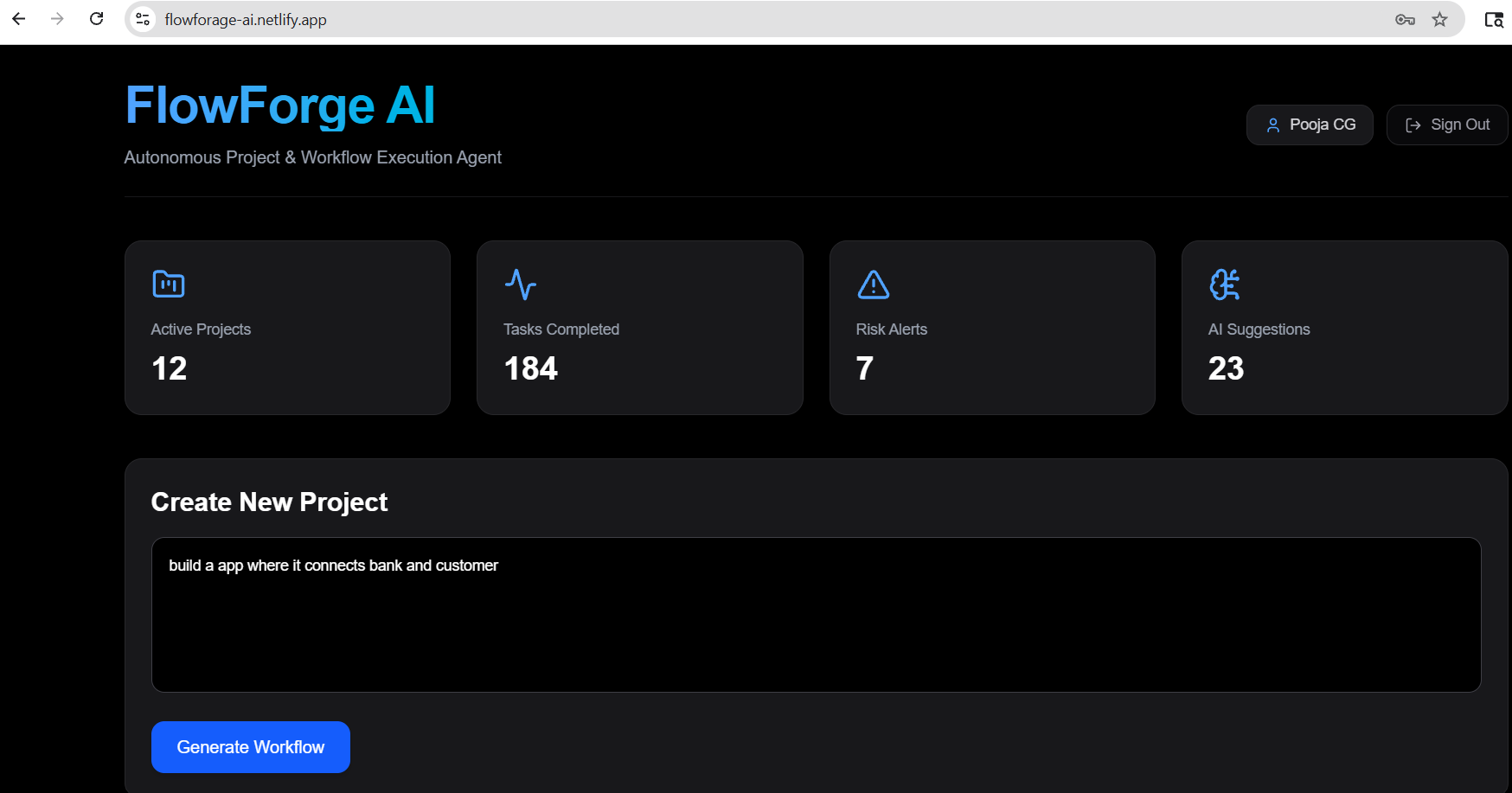
dashboard
-
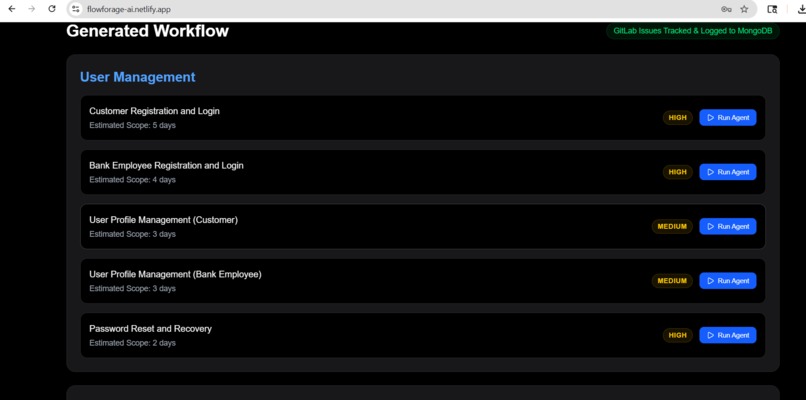
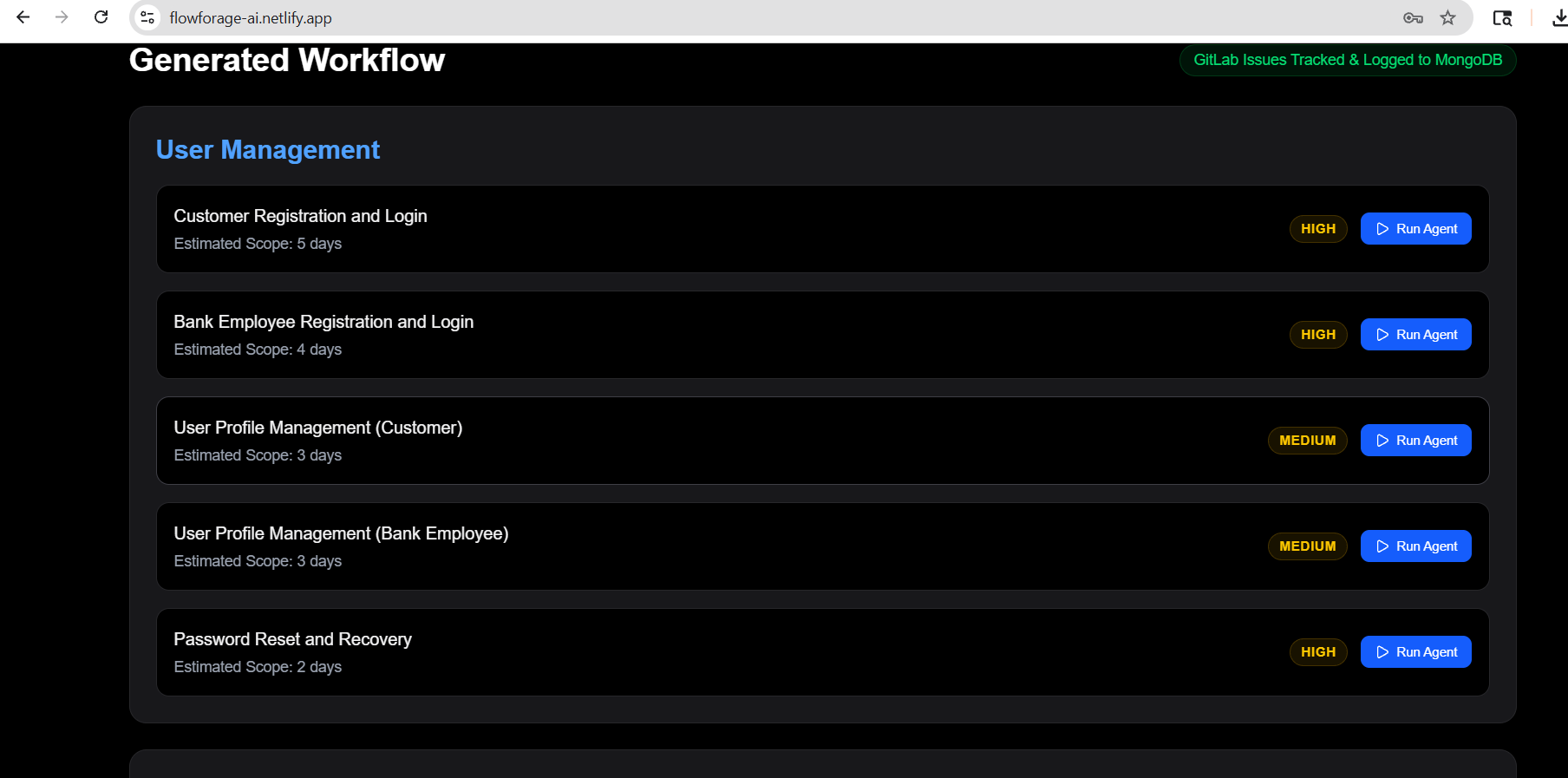
generated worlflow
-
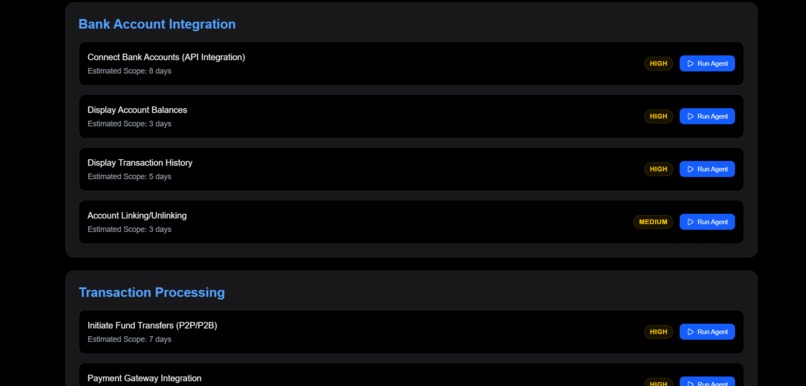
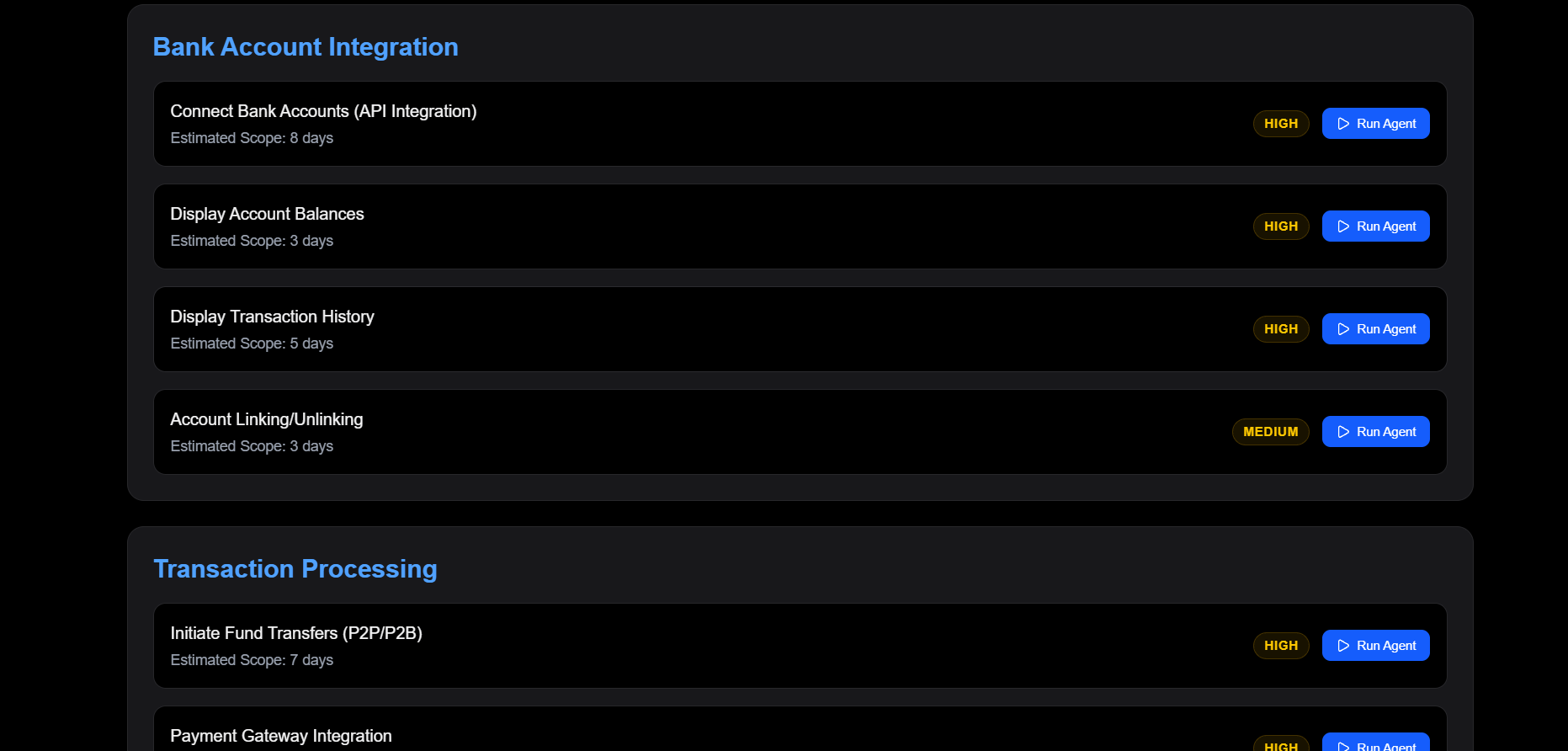
bank account integration workflow
-
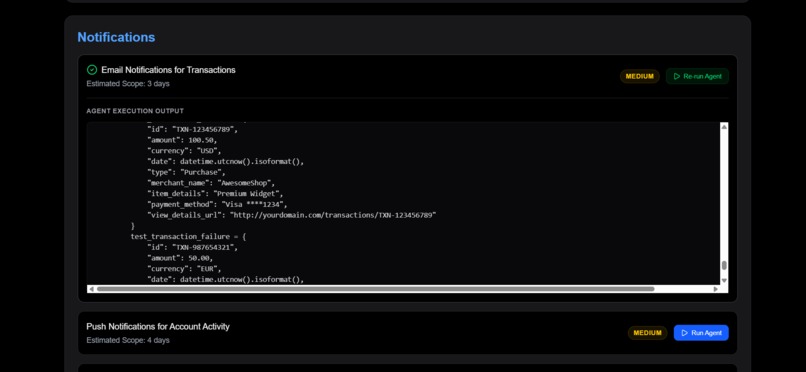
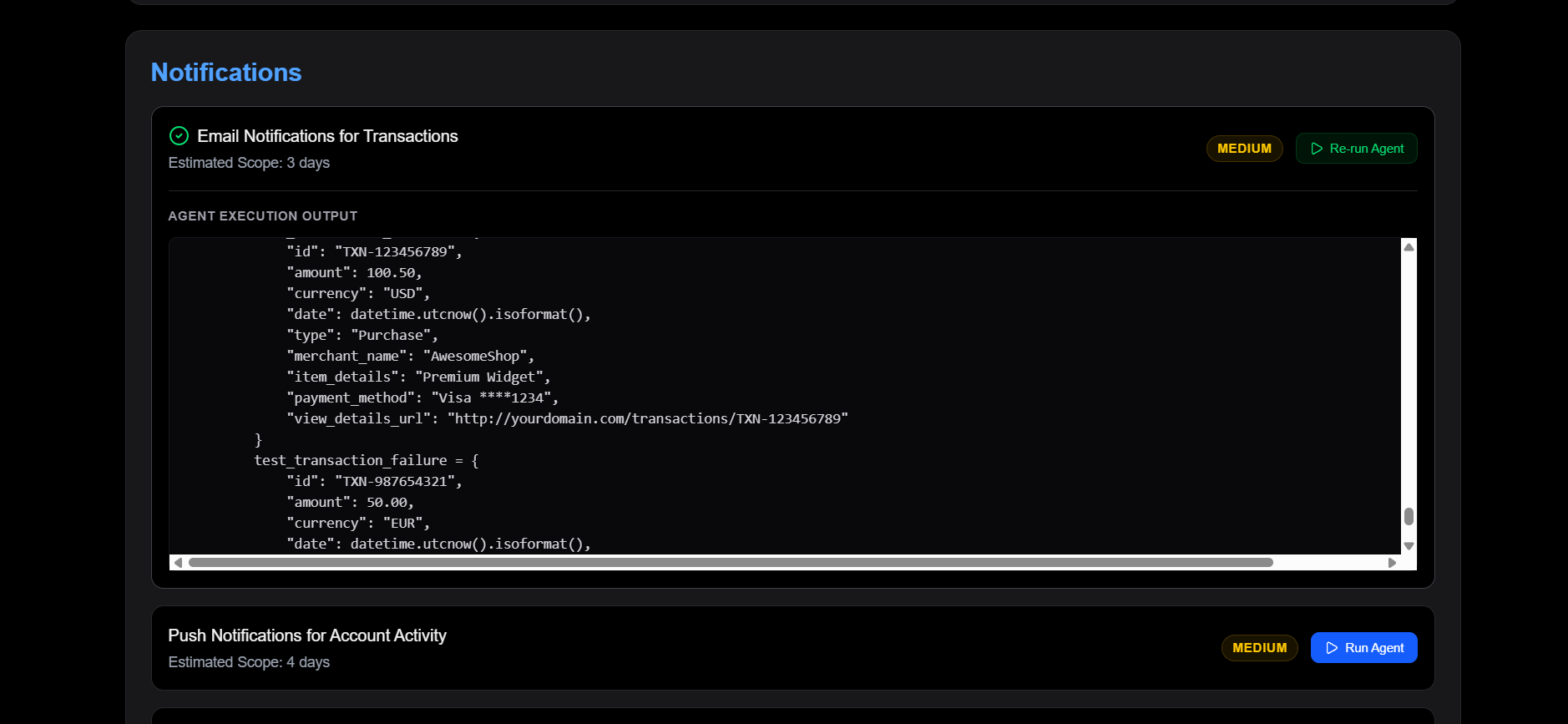
running agent for notification
-
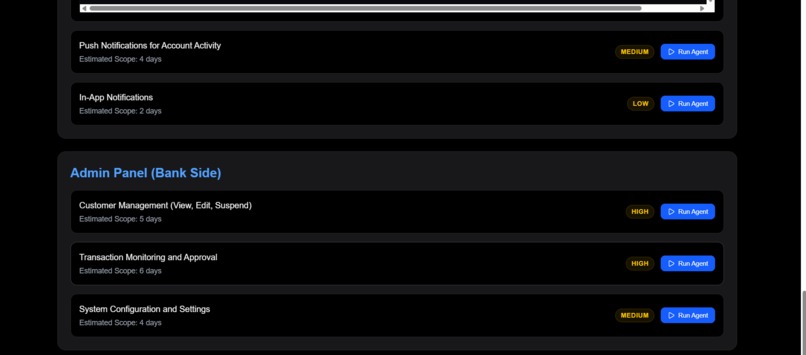
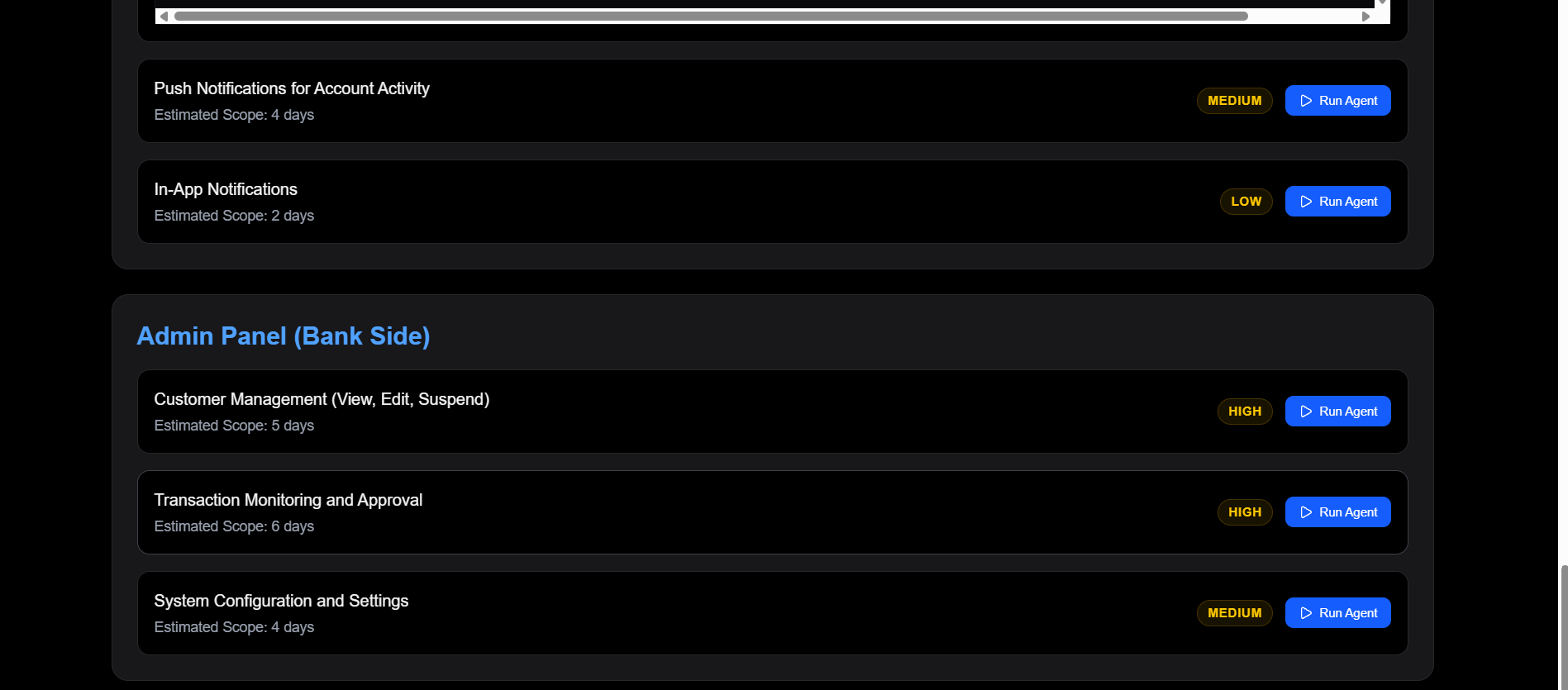
admin panel workflow
FlowForge AI — Autonomous Multi-Agent Software Engineering Workspace 💡 Inspiration Traditional AI multi-agent workflows often operate within a hidden backend "black box." This leaves developers entirely blind when a complex step in a multi-layered software sprint encounters a logical deadlock, fails an integration check, or drops an API execution frame.
FlowForge AI was engineered to eliminate this critical visibility gap. Our vision was to design a highly intuitive, beautifully transparent analytics command deck where developers can visualize, trace, and interact with an autonomous AI workforce in real time, turning abstract prompts into fully observable production realities.
⚙️ What It Does FlowForge AI allows users to break down abstract, high-level project concepts into fully mapped, actionable engineering blueprints.
Dynamic Sprint Blueprinting: Instantly parses user-defined constraints—such as "Build a food delivery app in 7 days"—and automatically provisions structured software modules, timeline estimates, and priority-ranked task backlogs.
Autonomous Code Synthesis: Developers can trigger specialized backend workers to execute precise code plans on a per-task basis (such as generating user management endpoints or automated transaction notifications).
Ecosystem Tool Superpowers: Moves entirely beyond basic chat. FlowForge monitors global task lifecycles, maps real-time execution states, tracks project logs natively inside persistent MongoDB collections, and bridges developer handoffs by synchronizing task states straight to your GitLab project repository tracking layer.
🛠️ How We Built It The Brains: Powered by Google Gemini for high-level core orchestration, systemic planning, and multi-step module blueprinting, backed by the Google Cloud ecosystem.
Frontend Core: Built utilizing Next.js 15 (App Router) and TypeScript to achieve an enterprise-grade, highly scalable client-side architecture.
UI/UX Framework: Styled using Tailwind CSS with a custom, ultra-clean, high-contrast dark-mode theme emphasizing immediate data scannability.
Backend Architecture: Driven by a concurrent FastAPI (Python) server pipeline to handle seamless backend task execution and data routing.
Deployment Infrastructure: Configured as a unified monorepo deployed on cloud distribution networks, leveraging customized root-level routing configurations to optimize serverless runtimes.
🛑 Challenges We Ran Into Orchestrating multi-model API layers concurrently introduced distinct synchronization hurdles. Managing rate-limiting thresholds dynamically while updating multi-step loading indicators required engineering incredibly tight, predictable React frontend execution states.
Additionally, fine-tuning the monorepo build configuration to ensure cloud deployment pipelines seamlessly mapped, compiled, and hosted our deeply nested directory targets required extensive terminal debugging.
🎉 Accomplishments That We're Proud Of Overcoming complex monorepo directory bottlenecks to establish a seamless, lightning-fast Next.js continuous deployment pipeline.
Successfully engineering a functional, state-preserved data pipeline that writes, updates, and reads live agent execution logs instantly into local MongoDB Compass storage.
Designing a highly interactive workspace UI that balances beautiful dark-mode aesthetics with real-world developer tracking efficiency.
🧠 What We Learned Building FlowForge AI provided invaluable insights into state management for composite AI architectures, teaching us how to:
Safely parse, clean, and render complex asynchronous markdown code generation streams within nested component structures.
Architect strict atomic layout spaces that provide a natural, elegant feel without sacrificing dense data visibility.
Handle database schemas effectively to map fluid, AI-generated JSON task trees into rigid, reliable document structures.
🔮 What's Next for FlowForge AI We plan to scale FlowForge AI from a robust hackathon prototype into an enterprise-grade agent suite by introducing:
Advanced Multi-Agent Collaboration: Enabling direct inter-agent messaging pipelines so specialized backend workers can autonomously peer-review code structures before submission.
Persistent WebSocket Streaming: Upgrading our API layers to persistent WebSockets to achieve true, live-streaming code generation blocks inside your active dashboard view.
Isolated Sandbox Execution: Integrating secure container environments where the agent's generated scripts can be safely compiled, run, and benchmarked live in front of the developer.

Log in or sign up for Devpost to join the conversation.