-
-
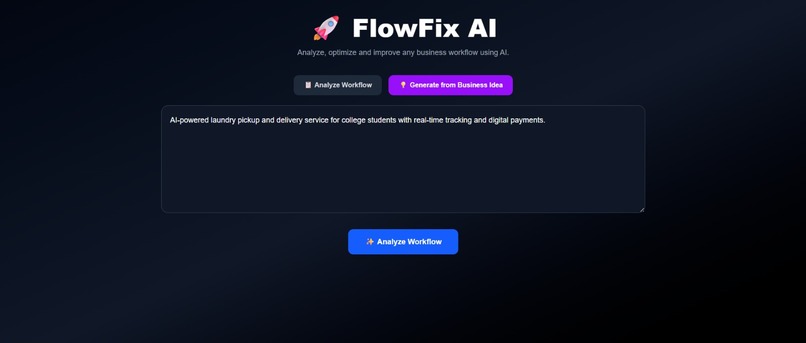
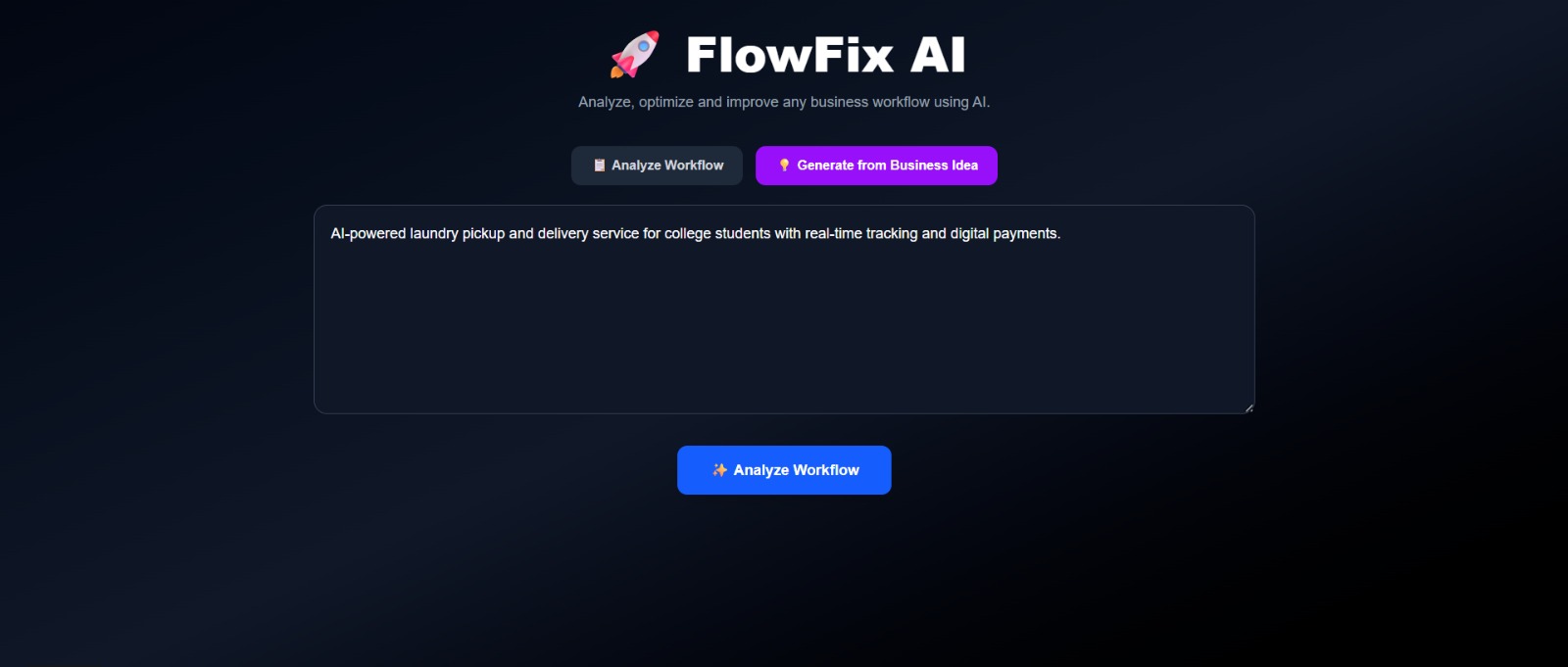
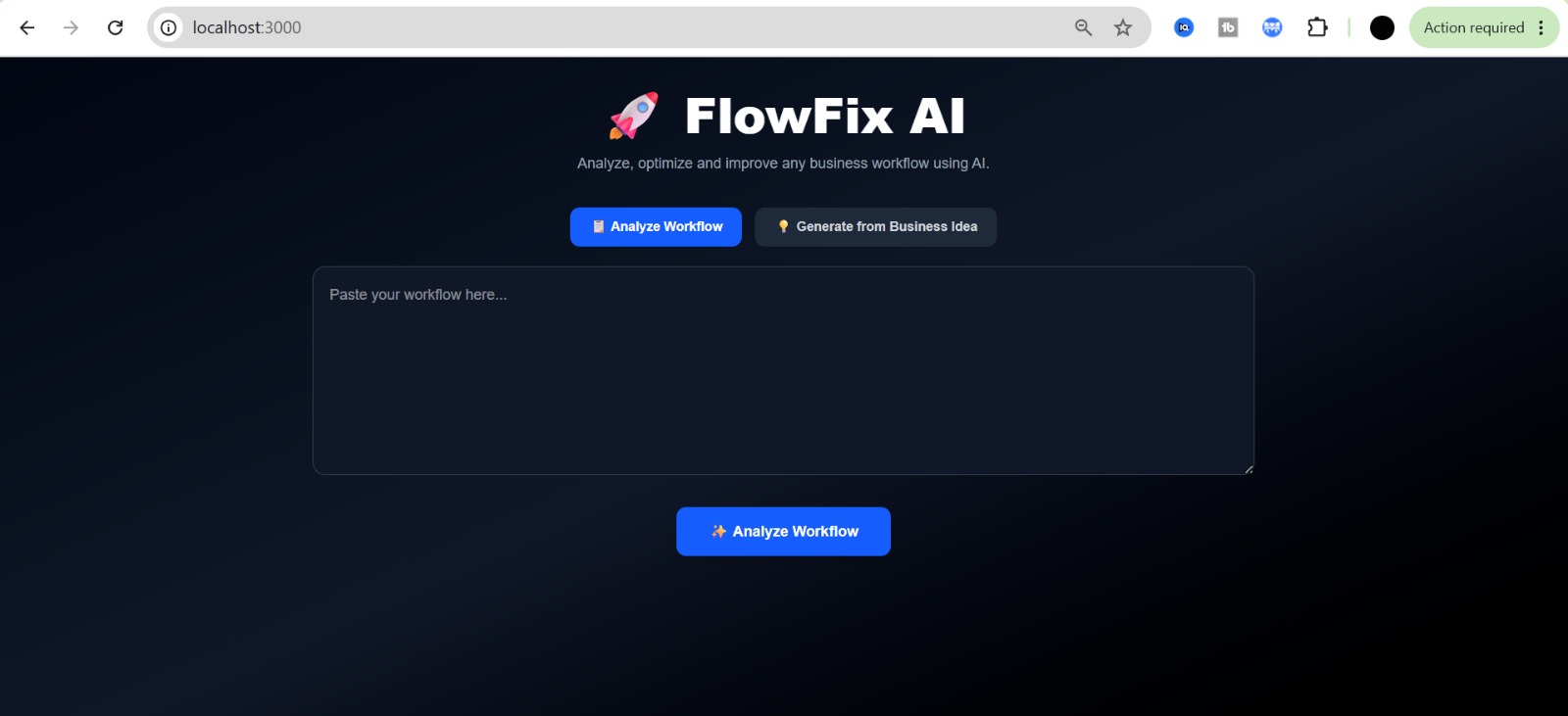
Modern user interface for analyzing existing workflows or generating workflows from business ideas.
-
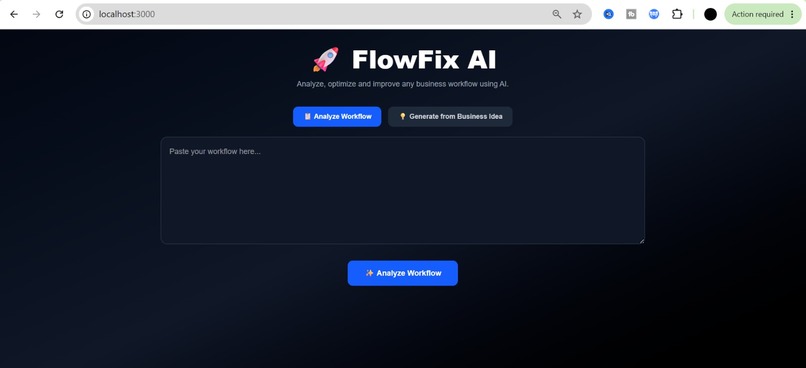
FlowFix AI homepage with Workflow Analysis and Business Idea generation modes.
-
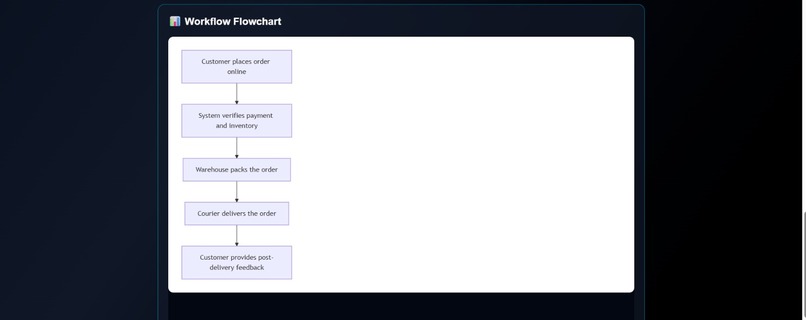
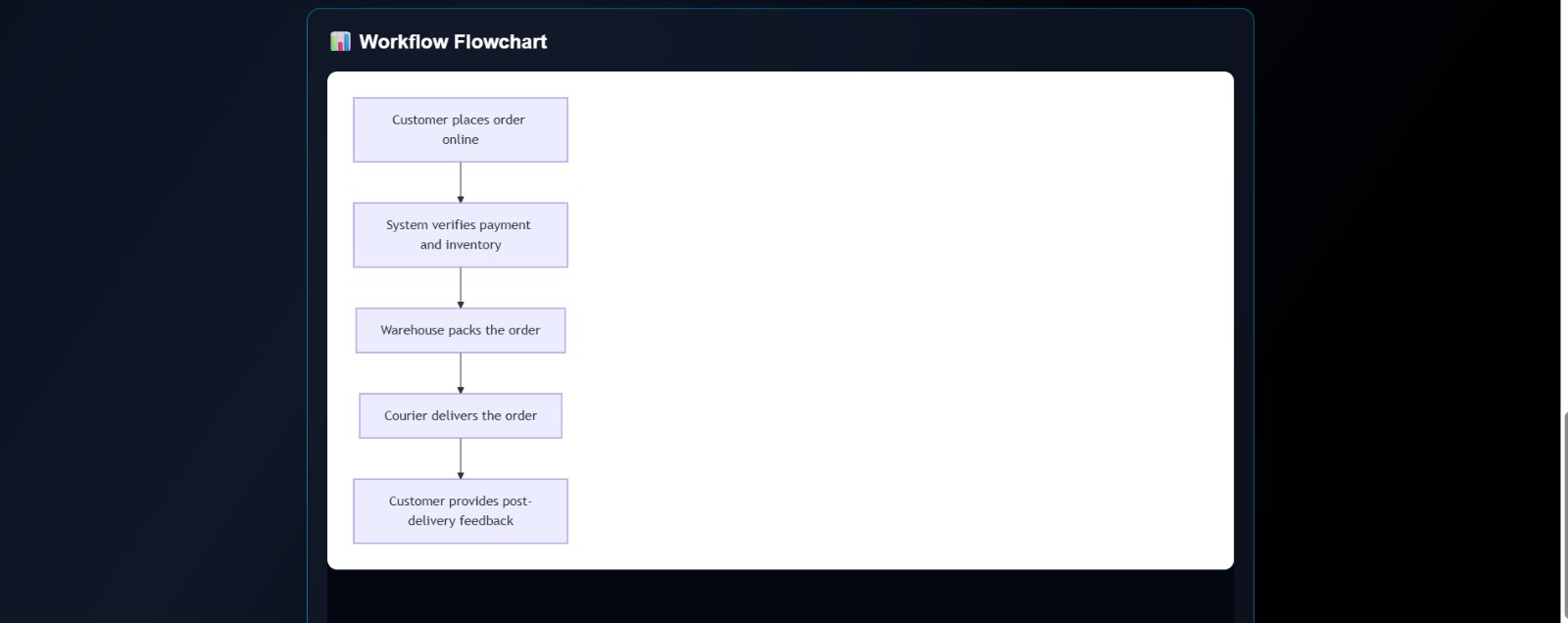
Automatically generated flowchart visualizing the optimized workflow.
-
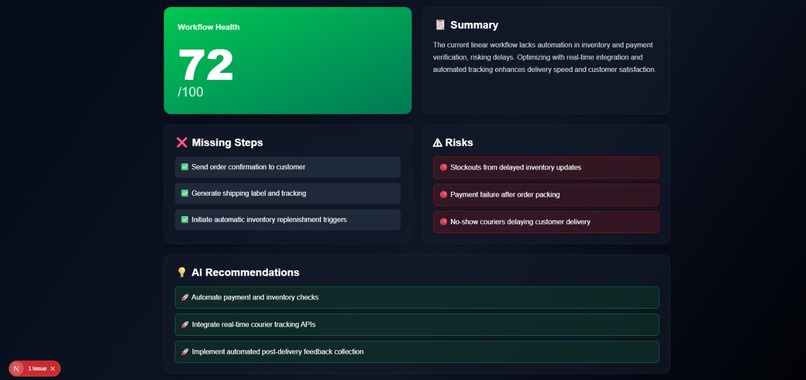
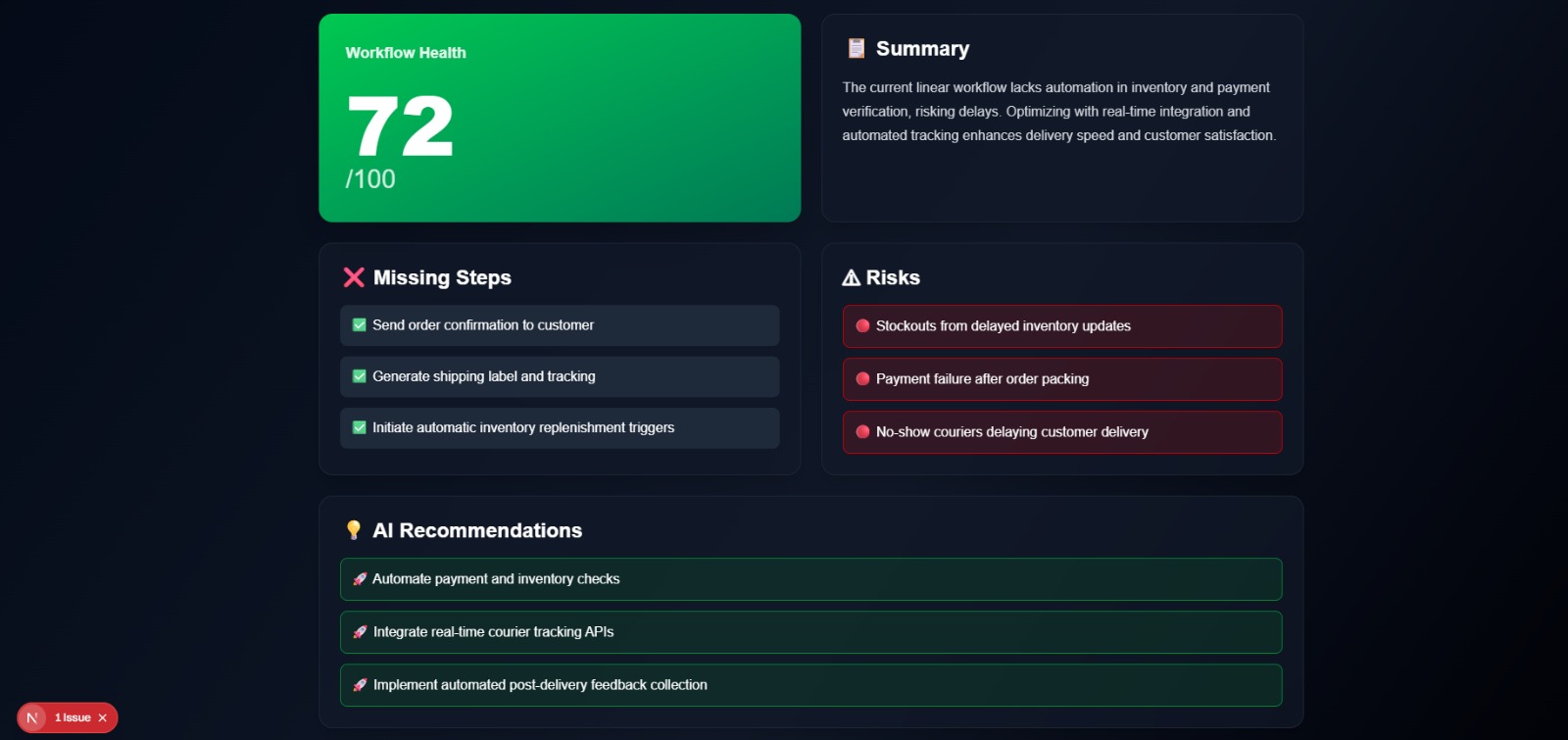
Comprehensive workflow analysis including health score, summary, risks, and recommendations.
-
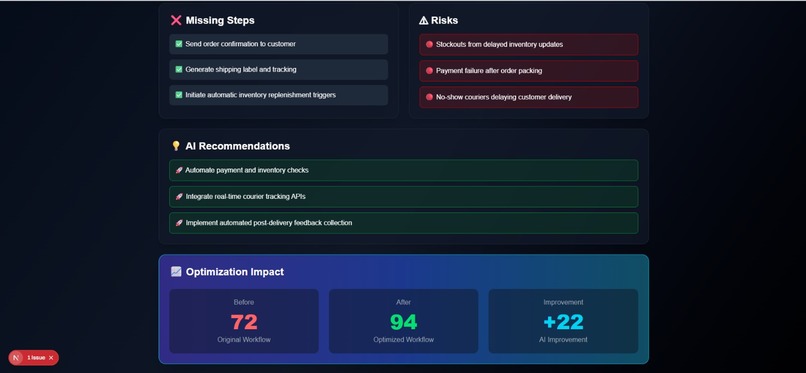
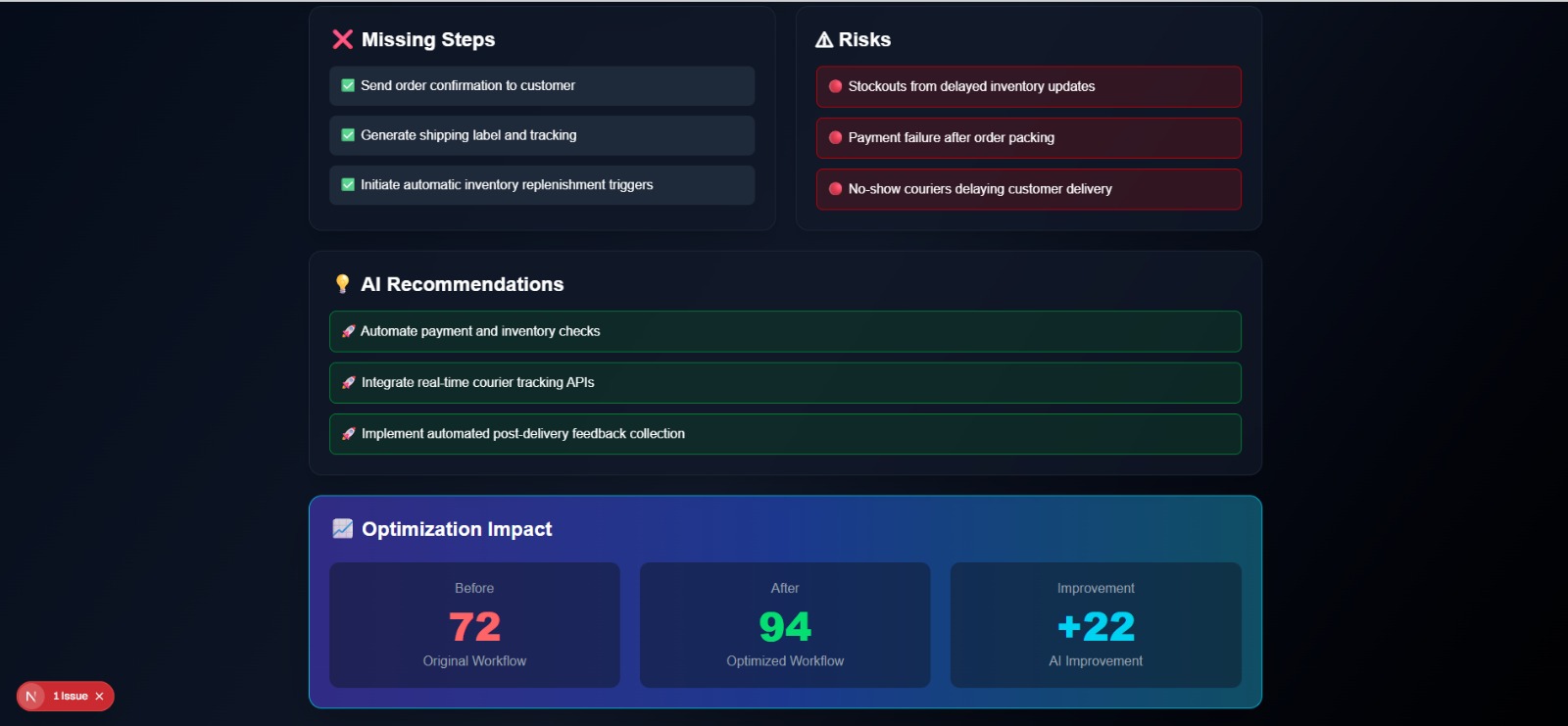
AI identifies missing steps, risks, recommendations, and workflow improvement impact.
-
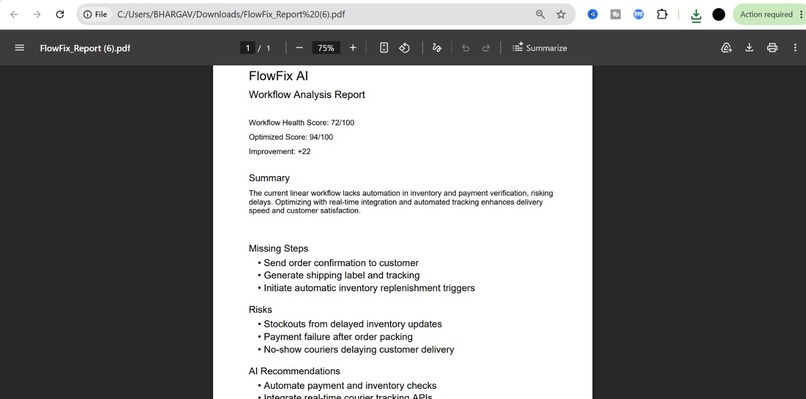
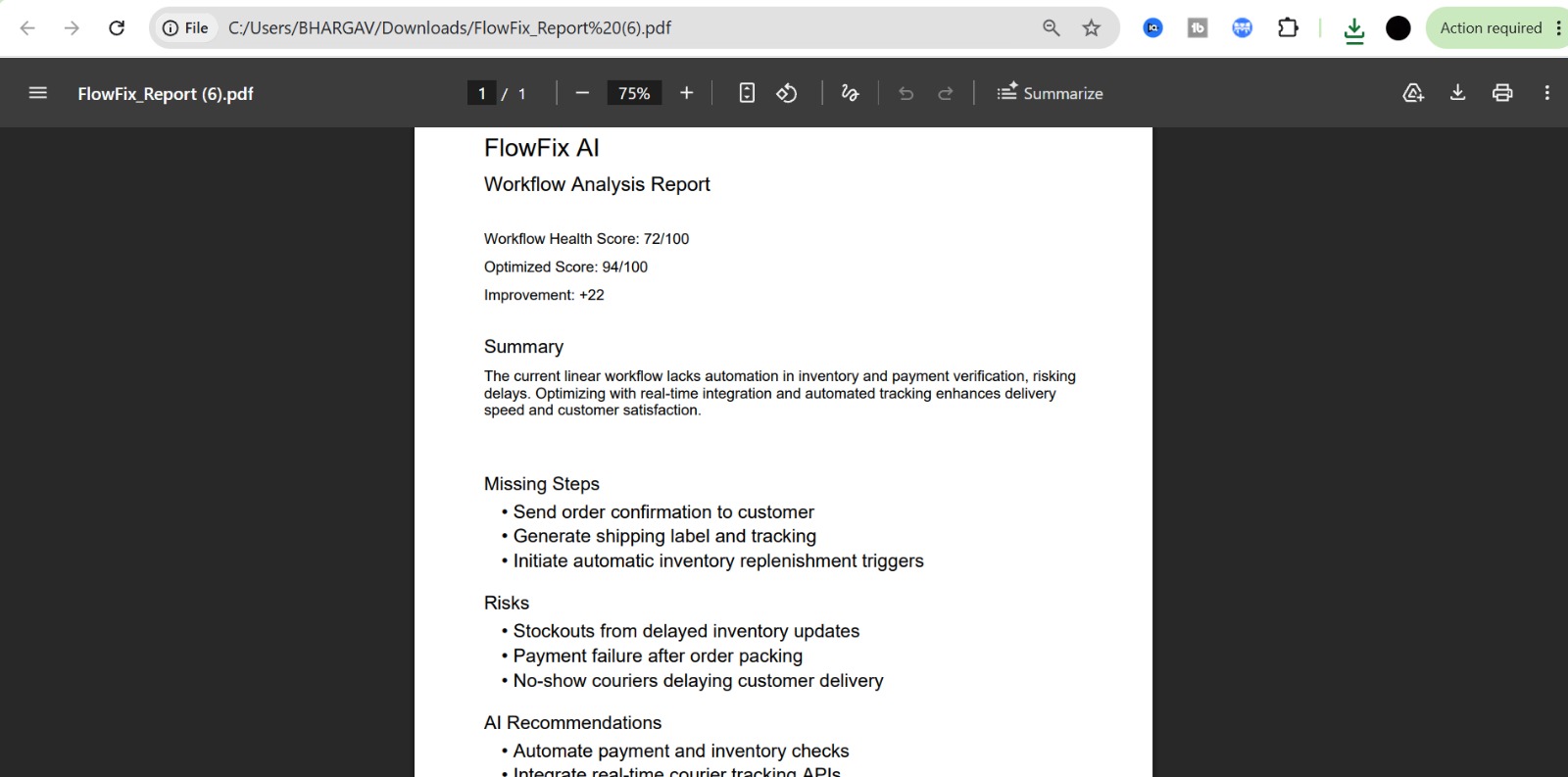
Automatically generated PDF report containing AI analysis and workflow insights.
Inspiration
Businesses often struggle with inefficient workflows, missing process steps, and operational risks. Many small businesses and startups do not have the resources to hire process consultants or manually document and optimize their workflows. We wanted to build a solution that could instantly analyze a workflow, identify bottlenecks, and provide AI-powered recommendations in an easy-to-understand format.
This idea led to the development of FlowFix AI.
What it does
FlowFix AI is an AI-powered business workflow optimization platform.
Users can either:
- Analyze an existing business workflow, or
- Generate a complete workflow from a business idea.
The application then:
- Calculates a Workflow Health Score
- Generates a concise workflow summary
- Identifies missing process steps
- Detects potential risks
- Provides AI-powered recommendations
- Creates an optimized workflow
- Visualizes the workflow using a Mermaid flowchart
- Generates a downloadable PDF report for documentation and sharing
How we built it
FlowFix AI was built using:
- Next.js
- TypeScript
- Tailwind CSS
- Google Gemini API
- Mermaid.js
- jsPDF
The frontend provides a clean and interactive interface for workflow analysis, while the backend communicates with the Gemini API to generate structured workflow insights. Mermaid.js is used to automatically visualize optimized workflows, and jsPDF is used to generate downloadable reports.
During development, we also used AI coding assistants to accelerate coding, debugging, and prompt refinement.
Challenges we ran into
One of the biggest challenges was ensuring that the AI consistently returned structured JSON instead of unstructured text. We refined our prompts and added validation to make the responses reliable.
Another challenge was generating Mermaid diagrams that accurately represented the optimized workflow while keeping them simple and readable.
We also worked on producing PDF reports that summarized the analysis in a clean and user-friendly format.
Accomplishments that we're proud of
- Successfully built an end-to-end AI workflow optimization platform.
- Integrated AI analysis with workflow visualization.
- Implemented automated PDF report generation.
- Created a clean and intuitive user interface.
- Designed a system that supports both workflow analysis and business idea generation.
What we learned
This project helped us gain hands-on experience with prompt engineering, API integration, frontend-backend communication, AI-assisted software development, workflow visualization, and building reliable AI-powered applications.
We also learned how important structured prompts and proper validation are when working with large language models.
What's next for FlowFix AI
Future improvements include:
- User authentication
- Saving workflow history
- Collaboration features for teams
- Cloud deployment
- Exporting workflow diagrams as images
- Industry-specific workflow templates
- Advanced workflow analytics and performance metrics
We believe FlowFix AI can evolve into a comprehensive platform for helping businesses continuously improve their operational processes.

Log in or sign up for Devpost to join the conversation.