-
-
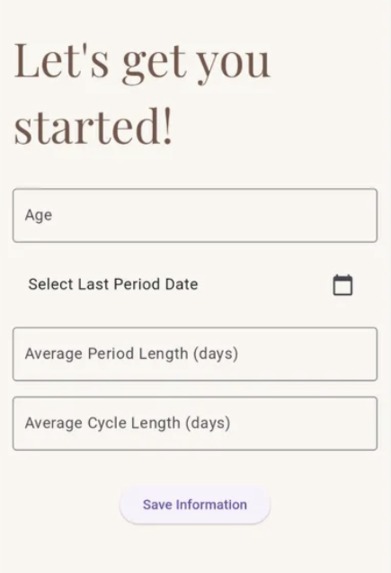
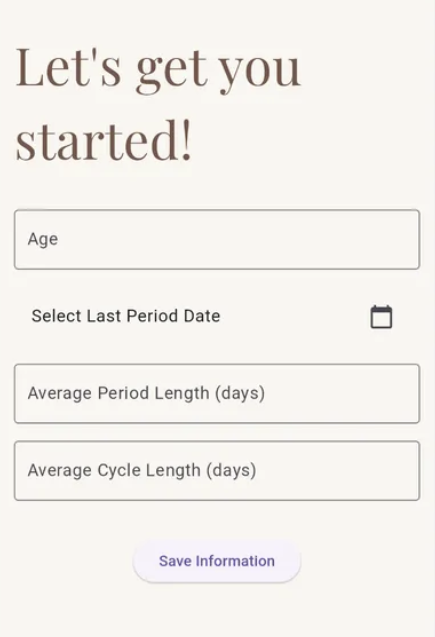
Login/User Input Page
-

Logo/Front Page
-
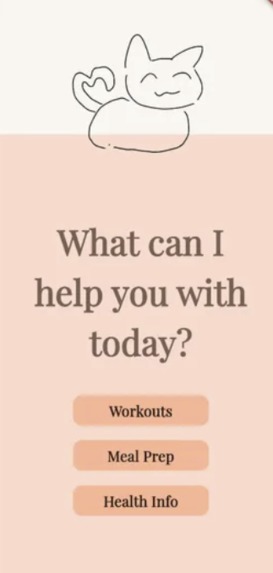
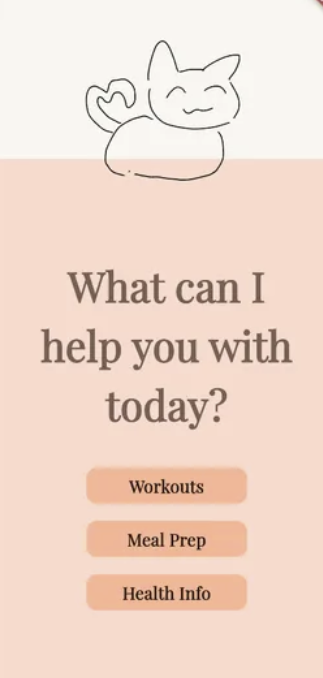
Menu
-
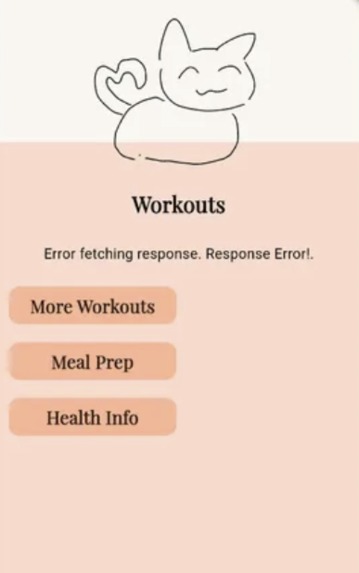
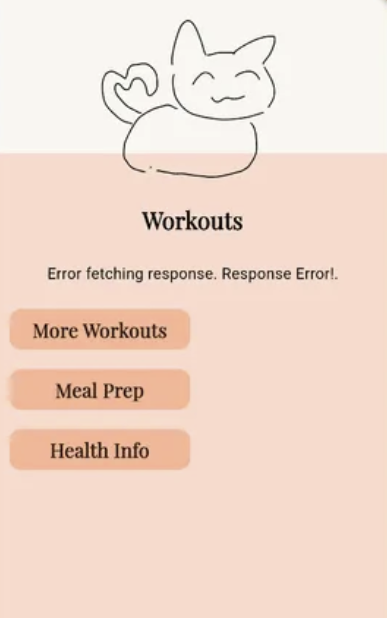
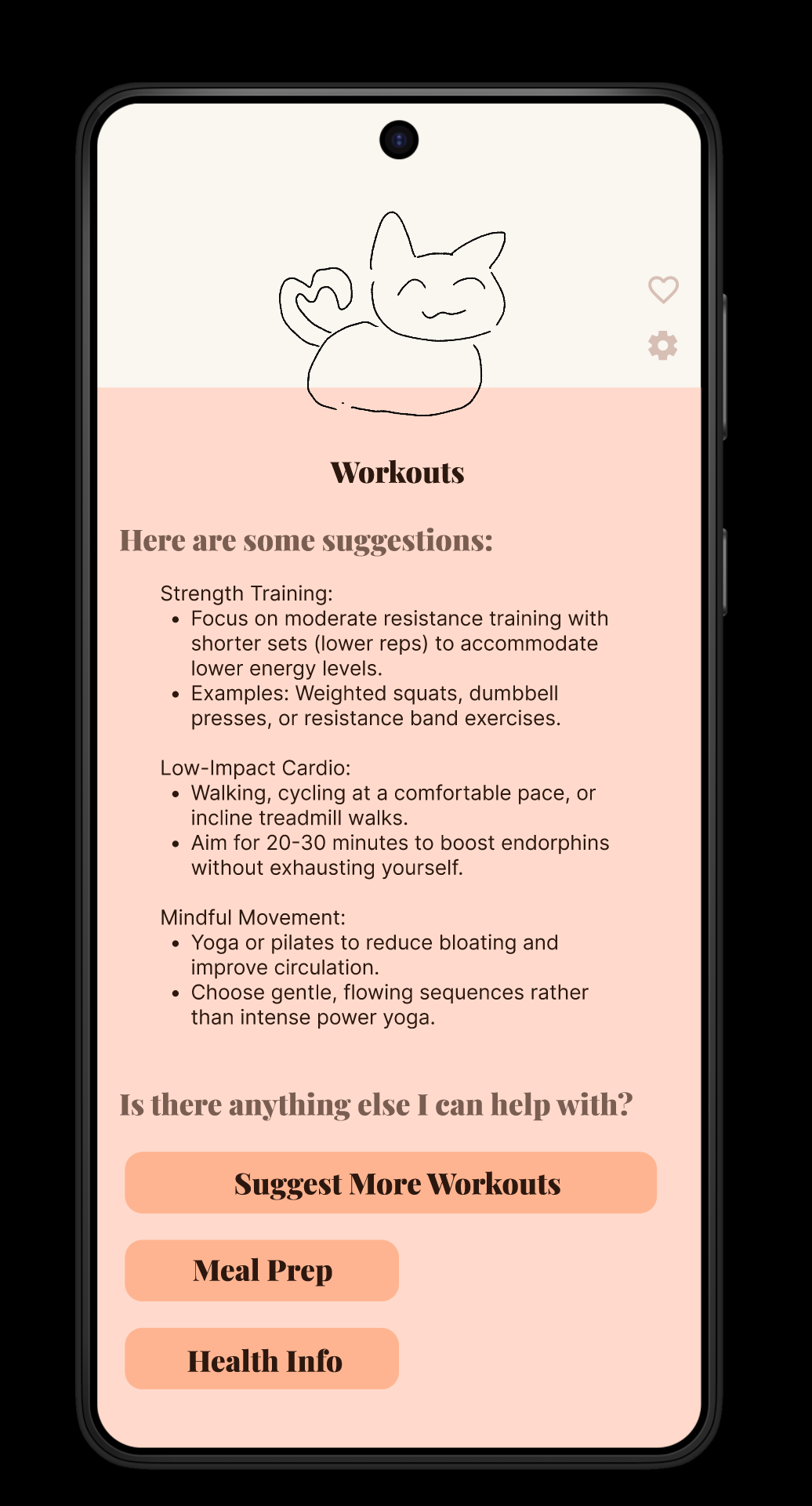
Workout Page
-
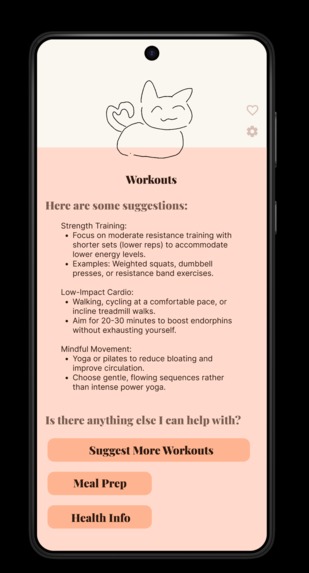
Figma Workout Screen
-
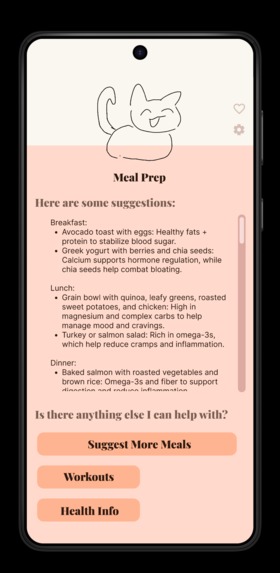
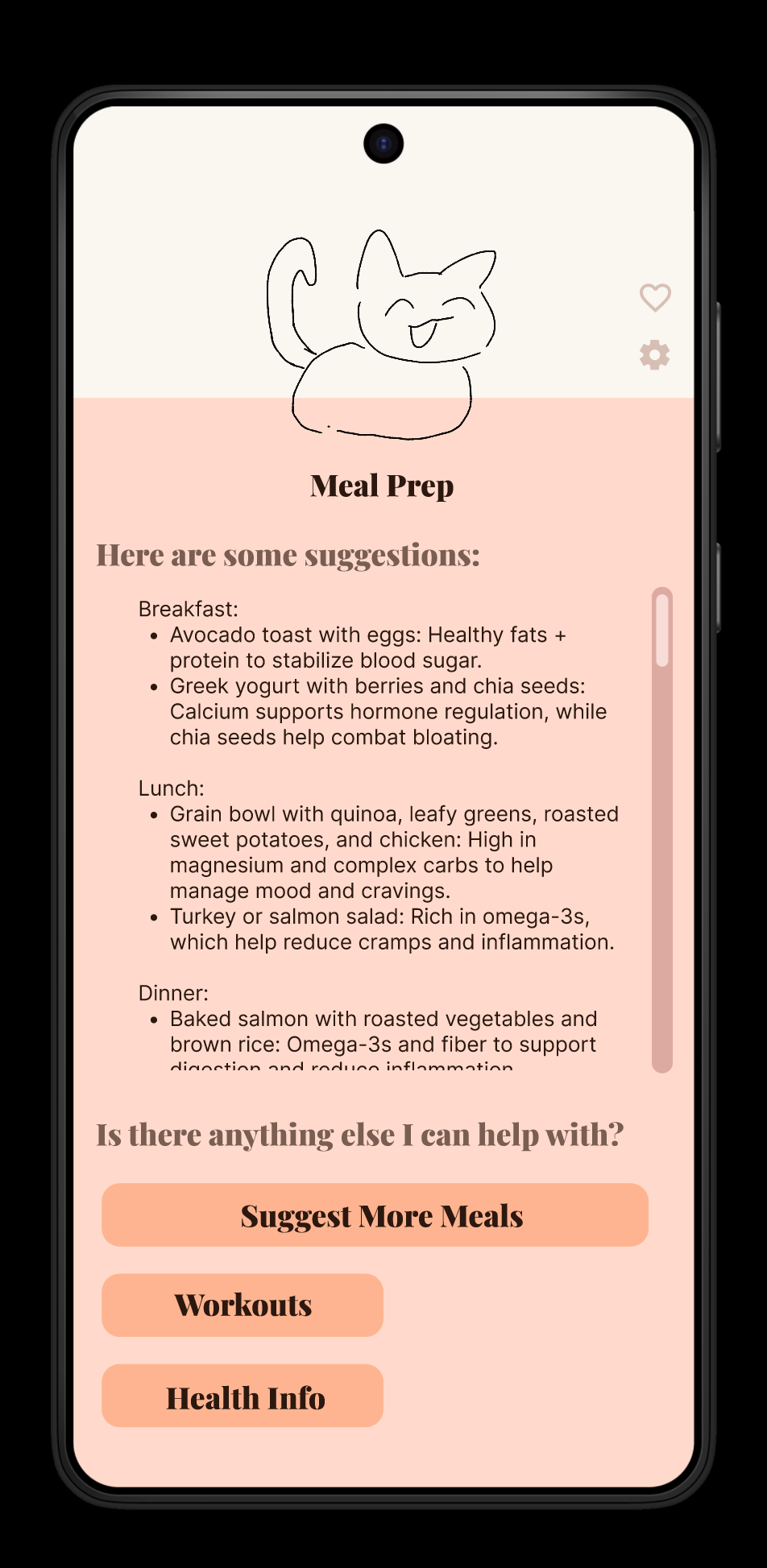
Figma Meal Prep Screen
-
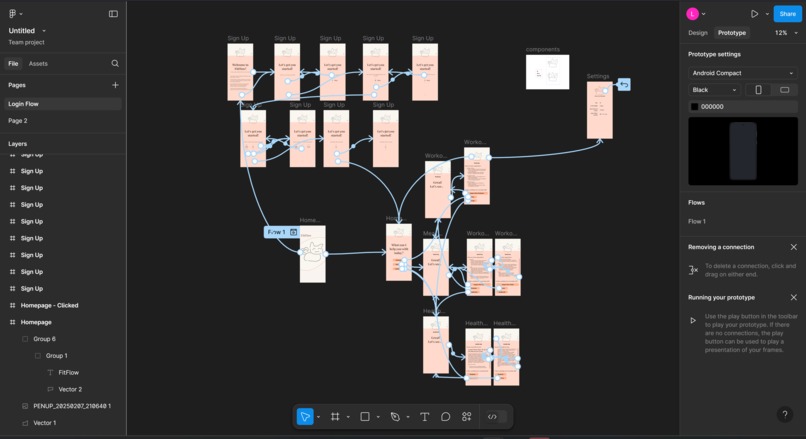
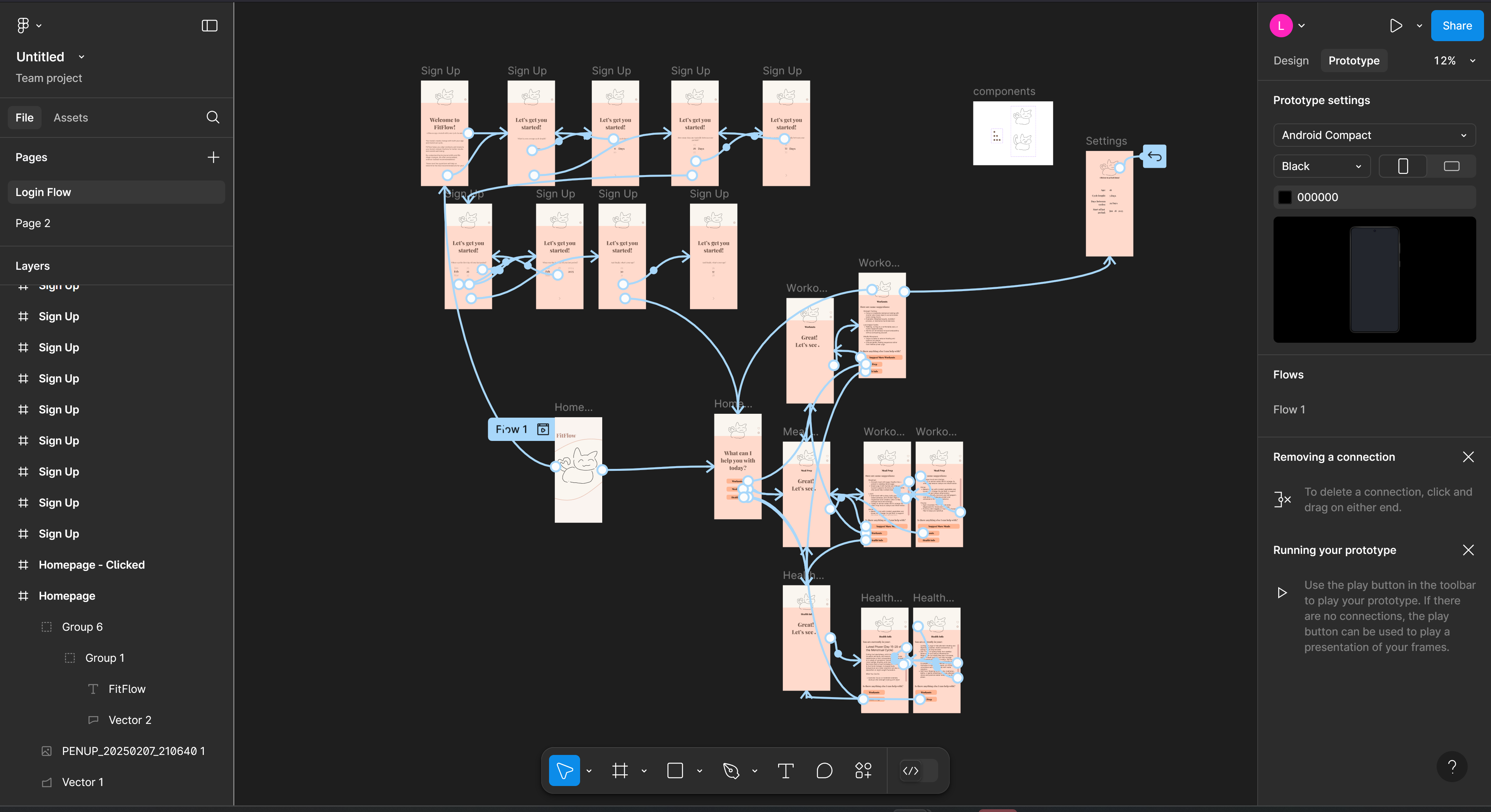
Figma Prototype

Inspiration
The idea for FitFlow came from our own experiences with menstrual cycles and how difficult it can be to maintain a healthy lifestyle within different phases. We realized that existing health and fitness apps don’t take hormonal fluctuations into account, which led us to create an app that adapts to women's changing needs.
What it does
FitFlow is a period-aware health/fitness app designed to:
- Provide AI-powered workout and diet recommendations based on hormonal changes.
- Track menstrual cycles and adjust fitness plans accordingly.
- Offer science-backed nutrition advice to help with energy levels, cravings, and recovery
How we built it
Frontend and Backend: These were both largely built using Flutter for cross-platform usability. An Android emulator was used through Android Studio to view our code during development, and Figma was used to draft out the wireframe/prototype. AI Integration: Used generative AI (ChatGPT-4 Model) to provide customized fitness and nutrition suggestions.
Challenges we ran into
- Setting up Flutter, Firebase, and Android Studio took longer than expected. We spent a few hours troubleshooting emulator synchronization issues.
- Initially, we planned to integrate Firebase into our tech stack, but encountered setup complexities, so due to time constraints, we omitted it.
- We had some trouble figuring out how to integrate the GPT-4 API, and ran into some issues accessing the API Key and implementing it.
Accomplishments that we're proud of
- We are proud of FitFlow's innovative solution to customized fitness recommendations, as hormonal changes are rarely addressed in current fitness apps.
- The UI of FitFlow is also something we worked hard on, from drafting the initial wireframe on Figma to implementing design features through Flutter.
What we learned
- We explored multiple ways to edit and launch the application, including Command Prompt, VS Code, and Android Studio, to find the most efficient workflow.
- No one in our group had previous experience with flutter, Android Studio, or mobile app development in general, so this project taught us the framework for developing and viewing mobile apps.
What's next for FitFlow
- Working out the OpenAI API implementation to integrate the AI-powered health suggestion feature
- Adding Firebase to the stack for optimal data storage, data syncing, and user authentication.
- Adding wearable device integration (e.g., Fitbit, Apple Health) for more accurate tracking.
- Refining AI recommendations using machine learning to improve personalization.
Built With
- android-studio
- dart
- figma
- flutter
- gpt-4
- openai


Log in or sign up for Devpost to join the conversation.