Inspiration
Creating software automation still takes too much effort. Even simple workflows require choosing tools, wiring steps together, and understanding execution logic. Existing solutions often hide how decisions are made or require heavy configuration before anything actually works.
We were inspired by a simple question: What if you could describe what you want in plain English, and an AI agent could plan, build, and execute the automation for you — transparently and reliably?
Flowcraft was born from the idea of turning human intent into executable systems, without forcing users to think in terms of tools, integrations, or code.
What it does
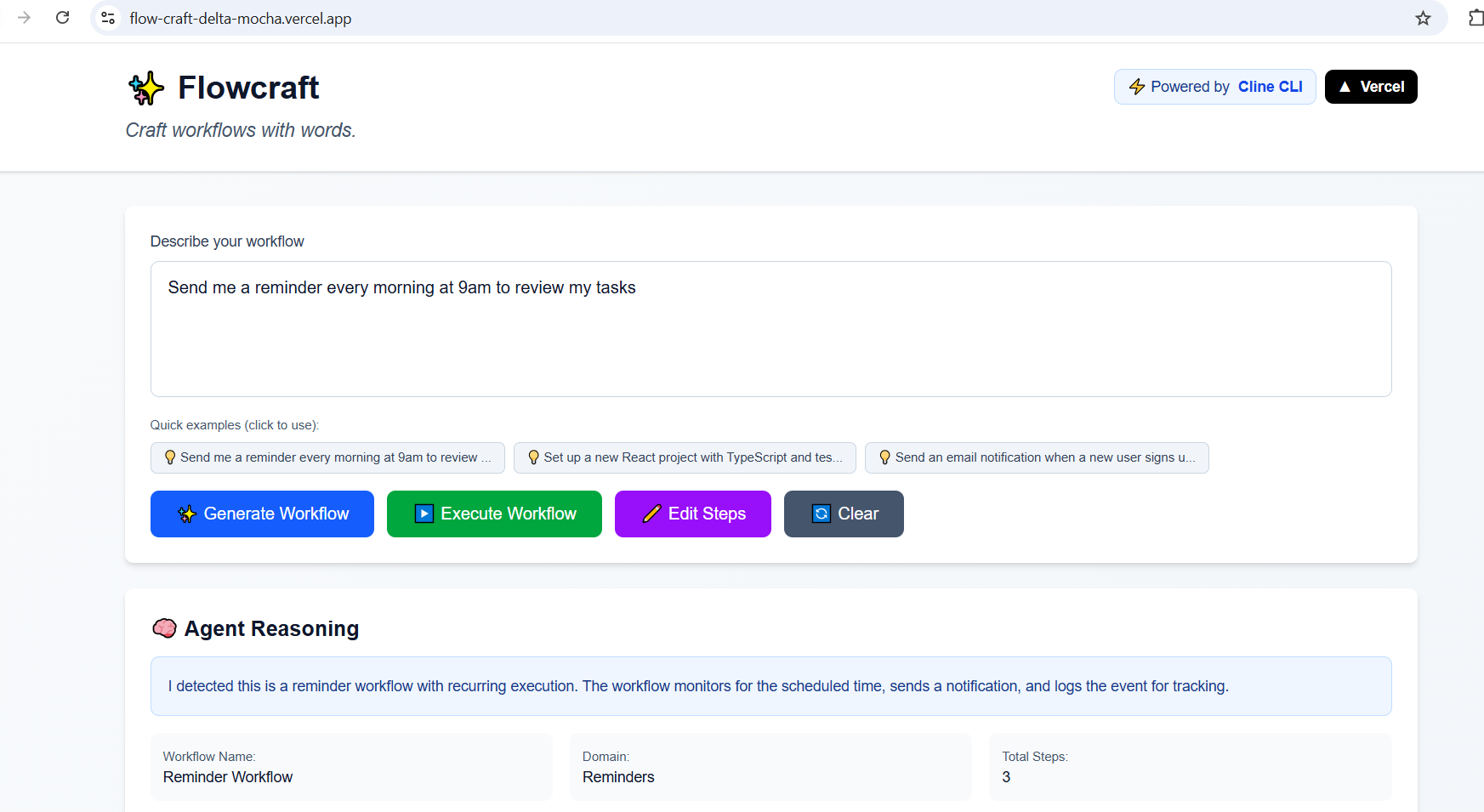
Flowcraft is an AI-powered automation platform that converts natural-language intent into structured, executable workflows.
Users describe what they want to automate in plain English. Flowcraft’s agent:
Interprets the intent
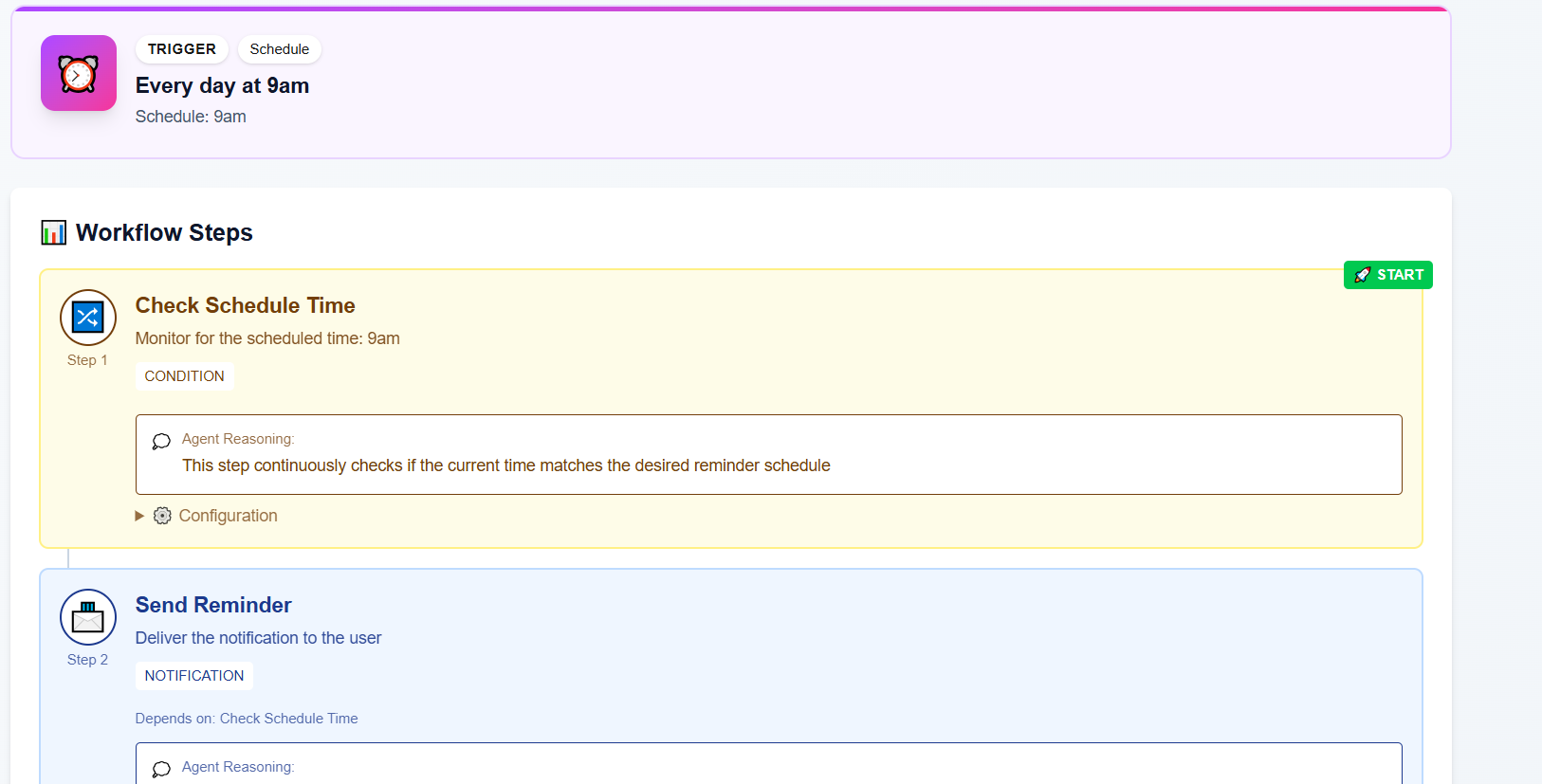
Generates a step-by-step workflow
Explains why each step exists
Executes the workflow sequentially
Displays real execution status, logs, and results
Flowcraft works for both software workflows and everyday automation, making automation understandable, transparent, and easy to trust.
How we built it
Flowcraft was built end-to-end using the Cline CLI as an autonomous coding agent.
Instead of manually wiring the system, we used Cline to:
Design the overall architecture
Generate the workflow schema and execution engine
Implement agent reasoning and transparency
Iteratively refine UX and execution reliability
Build a complete, production-ready automation system
The application is built with Next.js and TypeScript, and is fully deployed on Vercel with a live public URL.
Cline was used not as a code assistant, but as a self-directed builder, making Flowcraft itself the result of an autonomous coding workflow.
Challenges we ran into
One of the biggest challenges was designing a workflow execution model that was deterministic and explainable, rather than opaque or “magic.”
We also had to carefully balance:
Agent intelligence vs. predictability
Feature richness vs. demo clarity
Execution realism vs. hackathon time constraints
Another challenge was making the automation feel real — ensuring that workflows didn’t just render on screen, but actually executed with visible side effects and meaningful feedback.
Accomplishments that we're proud of
Built a complete, working automation system in a short time
Demonstrated real agent reasoning and orchestration
Used Cline CLI to autonomously design and build the entire platform
Delivered a live, production deployment on Vercel
Created a system that is transparent, explainable, and user-friendly
Most importantly, Flowcraft shows that AI agents can build systems, not just generate code snippets.
What we learned
-We learned that the most valuable AI systems are not the ones that generate the most output, but the ones that:
Explain their decisions
Allow controlled iteration
Build trust through transparency
We also learned that autonomous coding agents like Cline can significantly change how software is built — moving from manual implementation to intent-driven system creation.
What's next for FlowCraft
- LLM integration (OpenAI/Anthropic API)
- Drag-and-drop workflow editor -Real workflow execution (not simulated)
- Workflow templates library
- User authentication and saved workflows
- Export workflows to code
- Integration with external APIs
- Complex DAG support with parallel execution
Built With
- claude
- cline
- nextjs
- react
- vercel

Log in or sign up for Devpost to join the conversation.