Inspiration
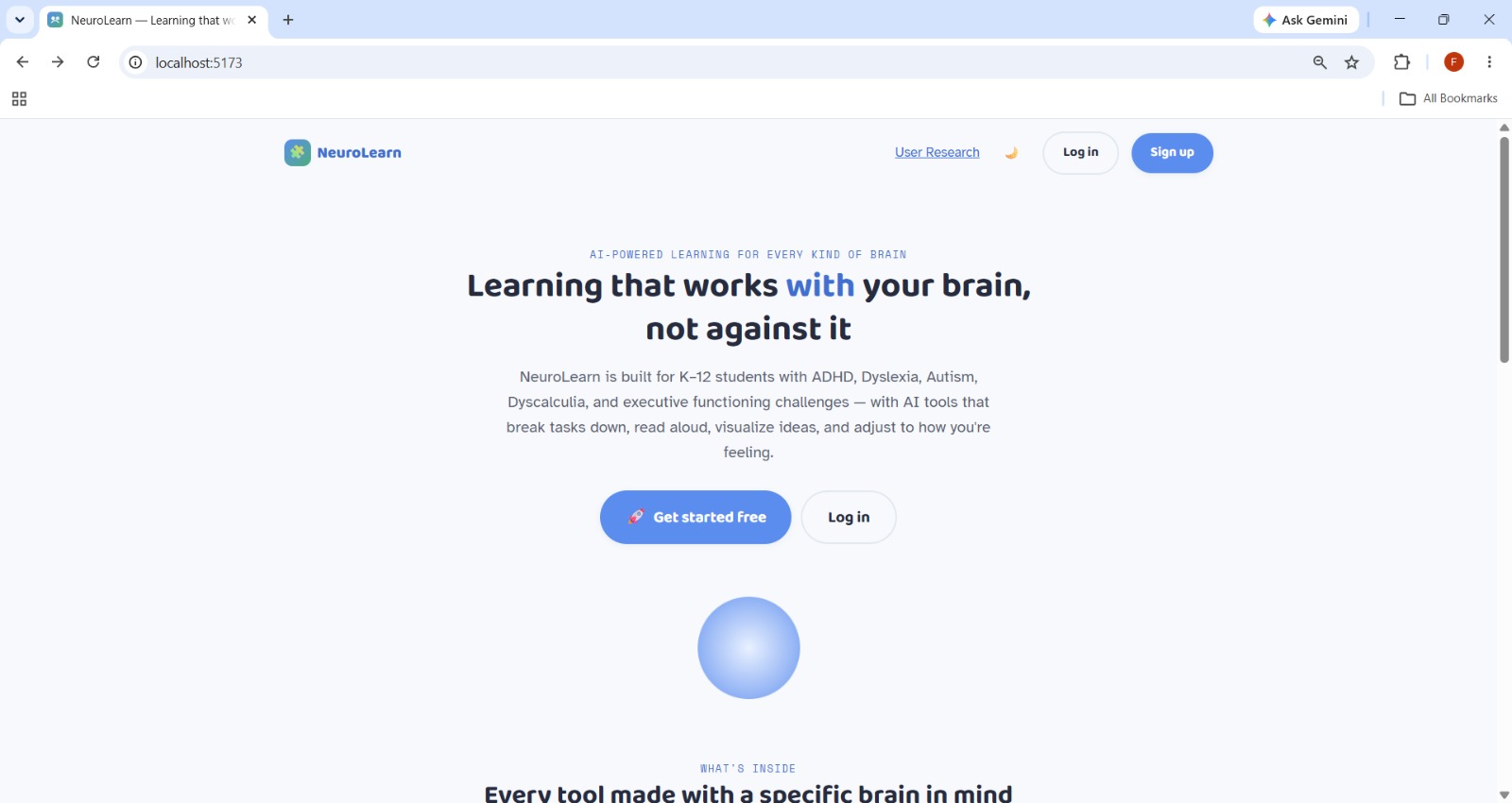
Traditional study tools often assume that every student learns and focuses in the same way. For students with ADHD or dyslexia, a large assignment, long paragraph, or unclear study plan can feel overwhelming and make it difficult to know where to start. We wanted to build something that doesn't simply tell students to "focus harder," but instead changes the way the task is presented. That idea inspired NeuroLearn AI — an AI-powered study companion designed to make learning more manageable, structured, and encouraging.
What it does
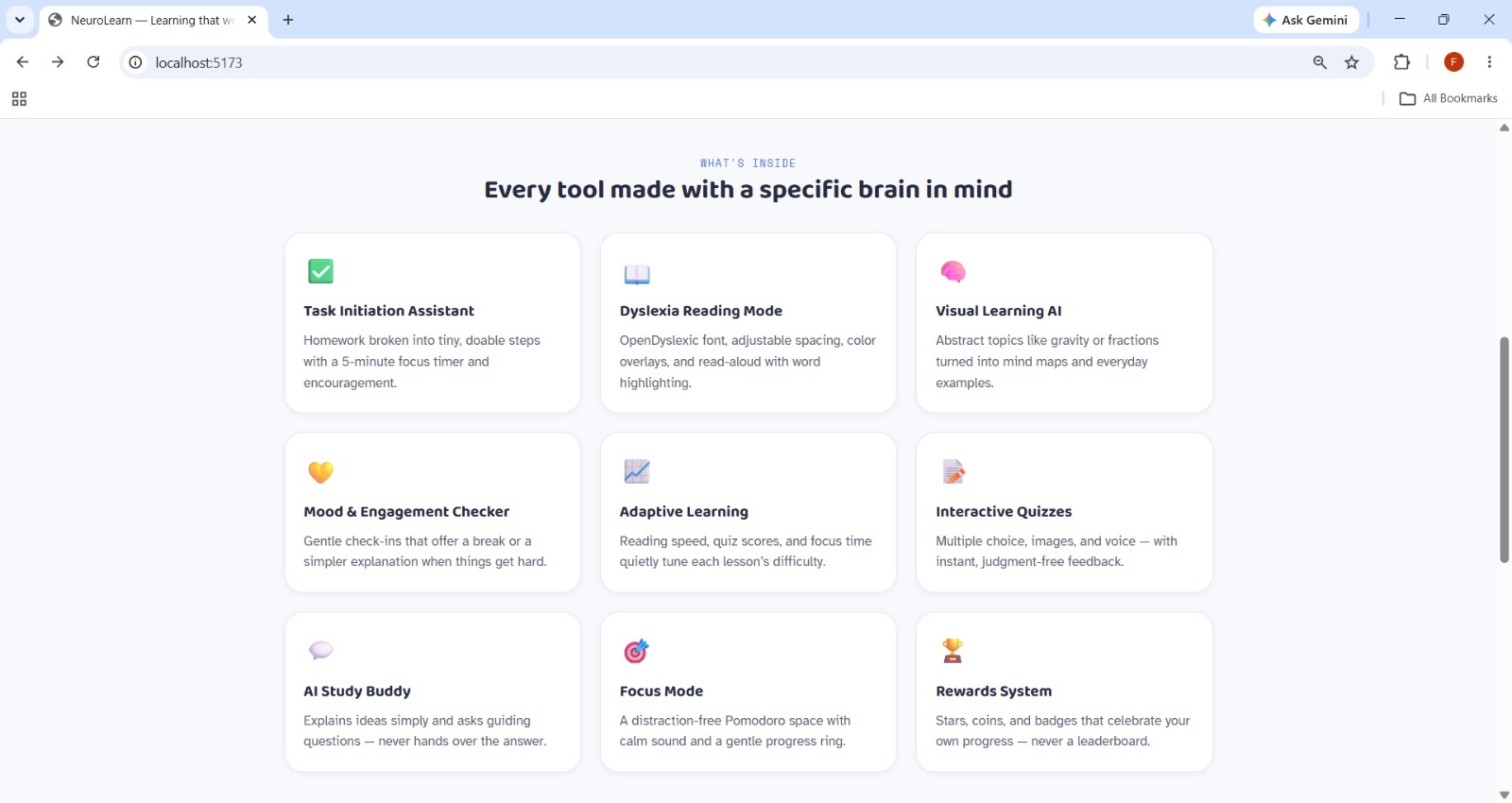
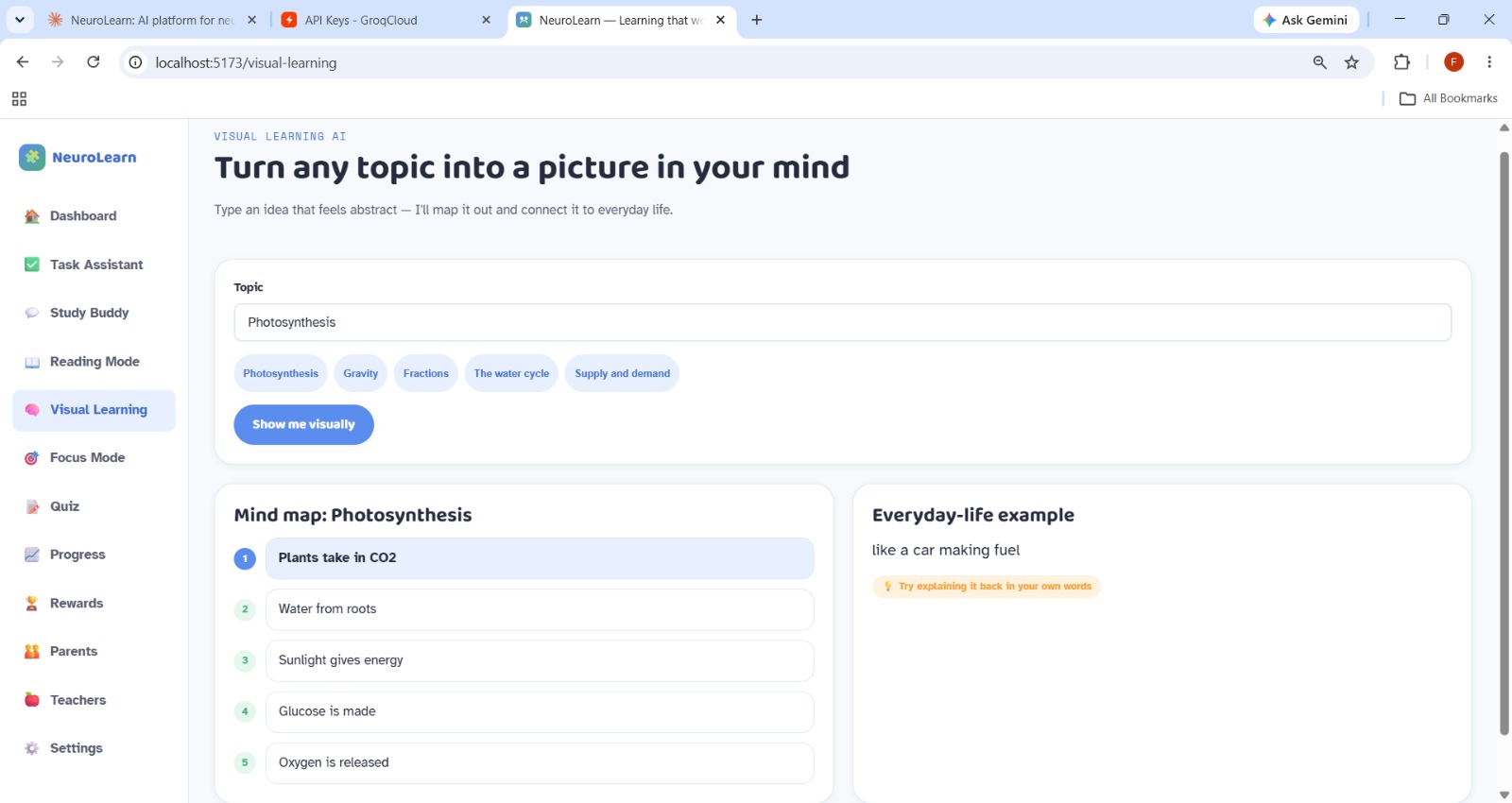
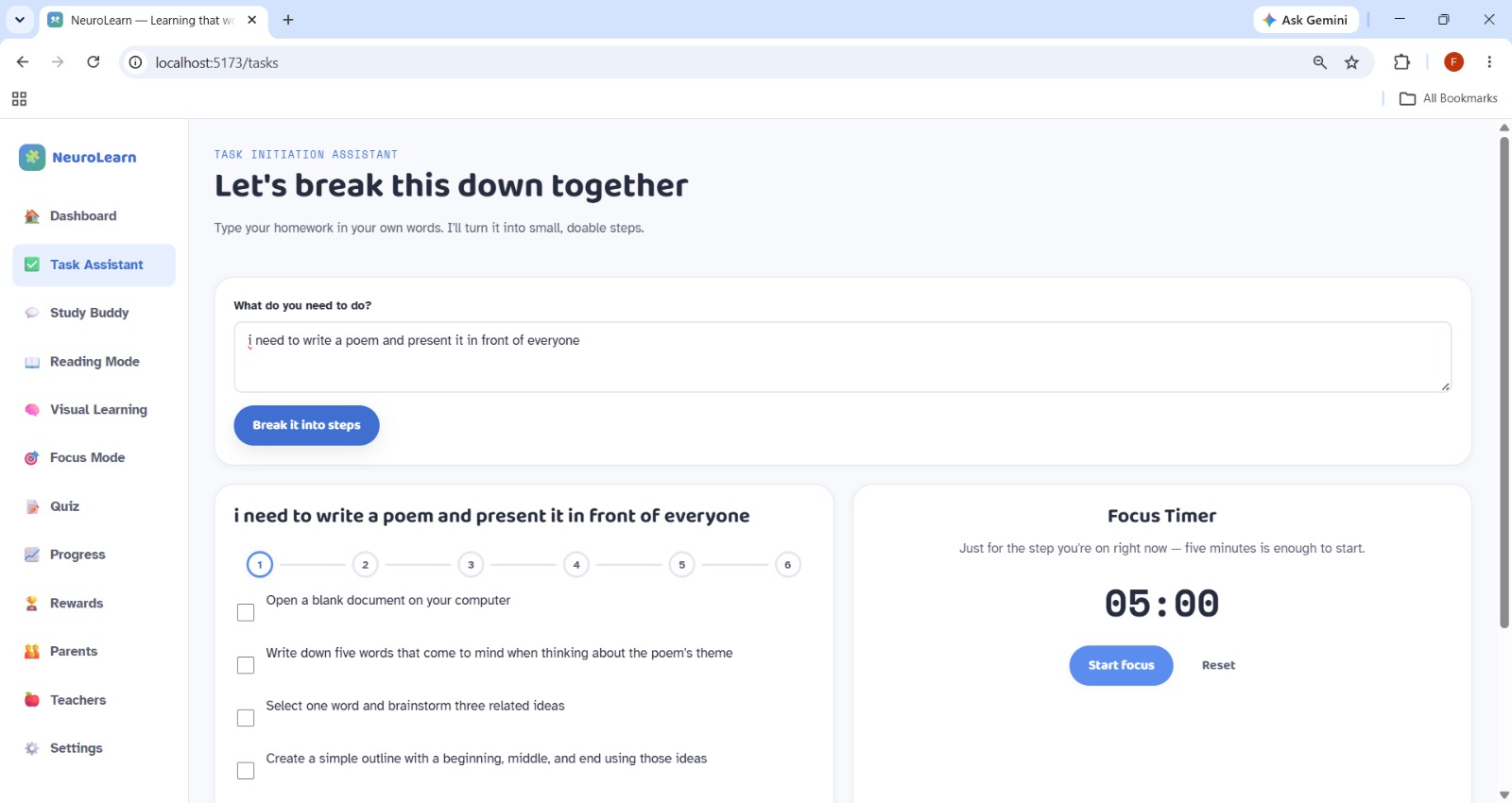
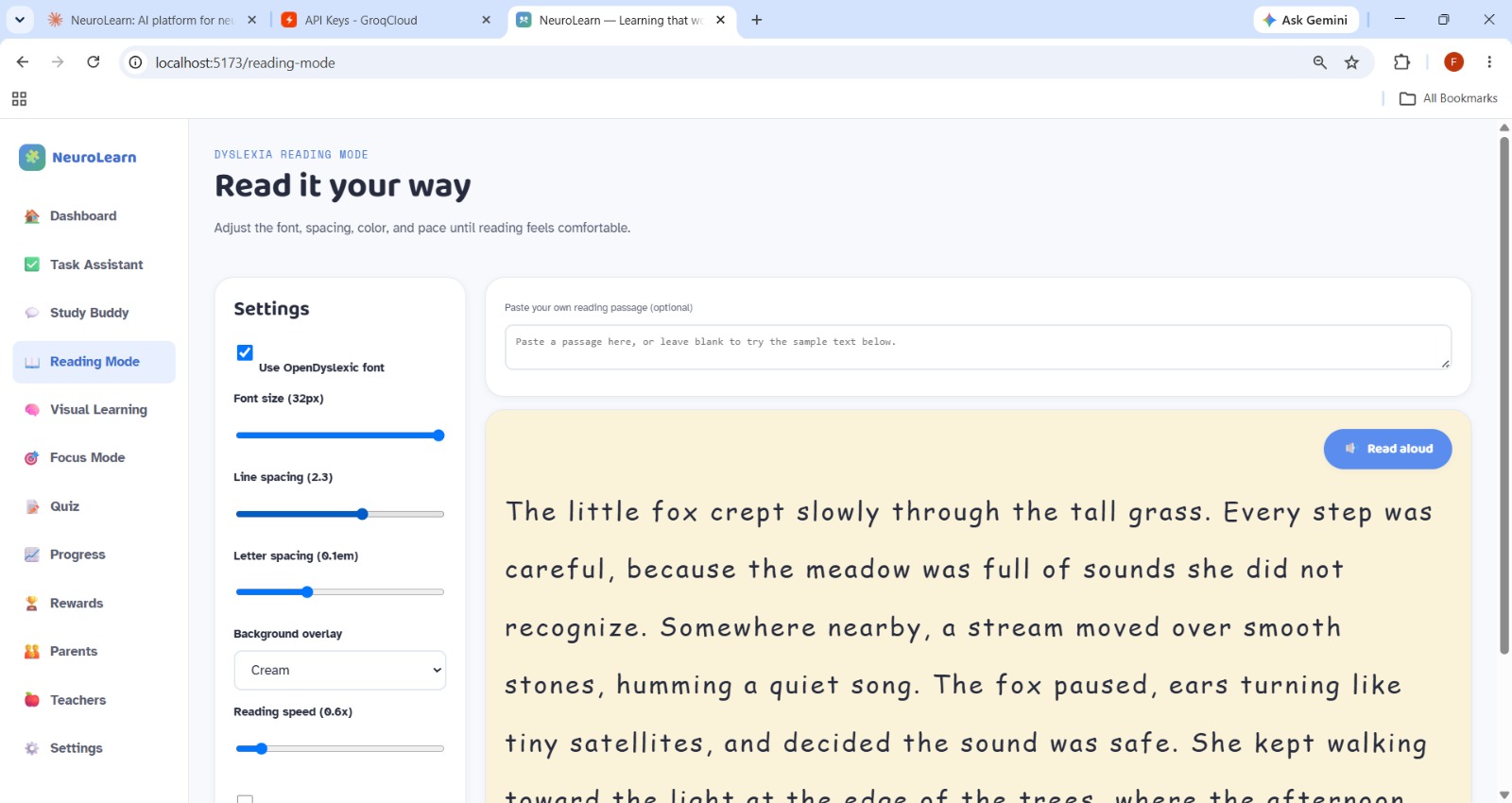
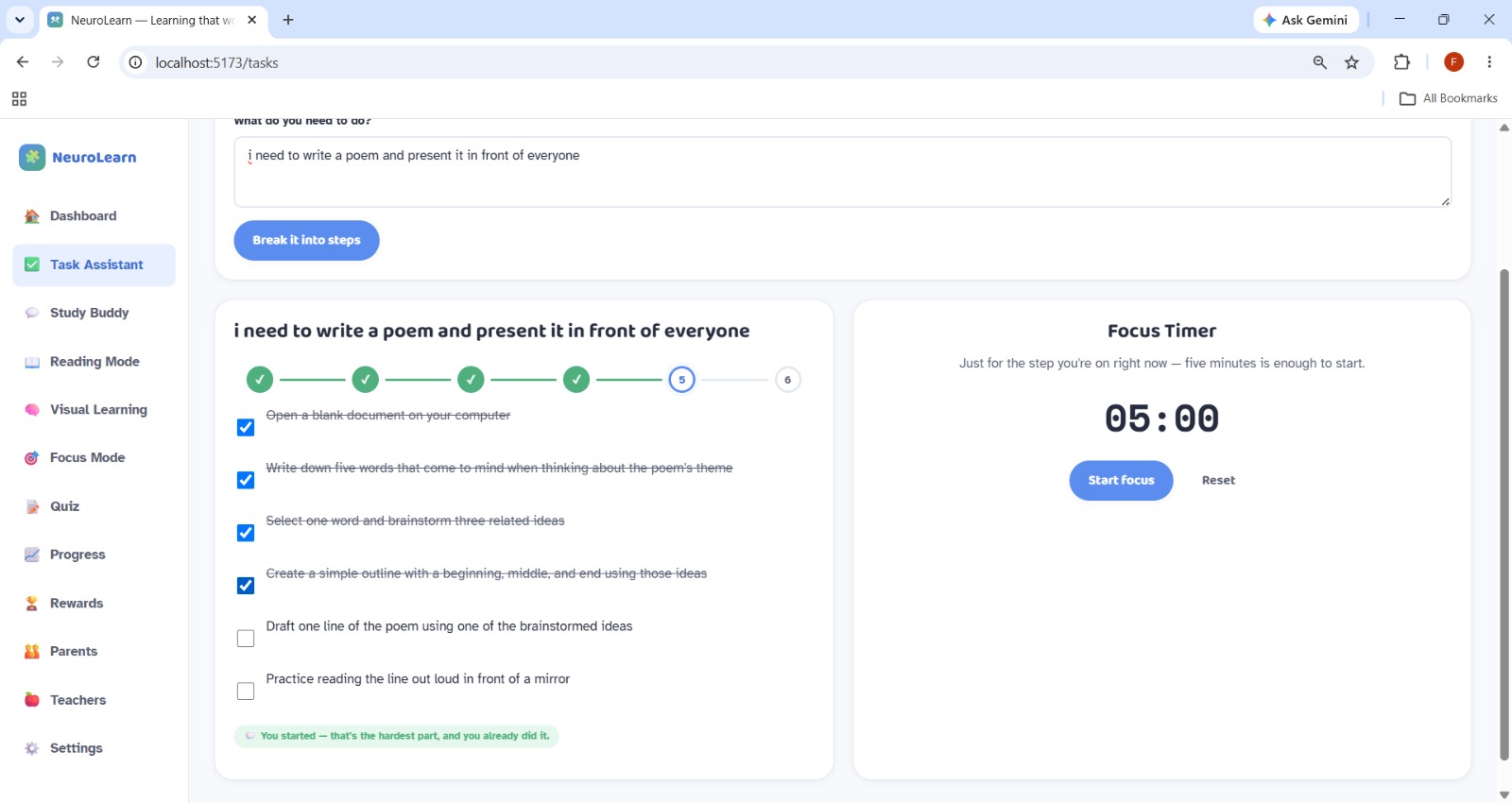
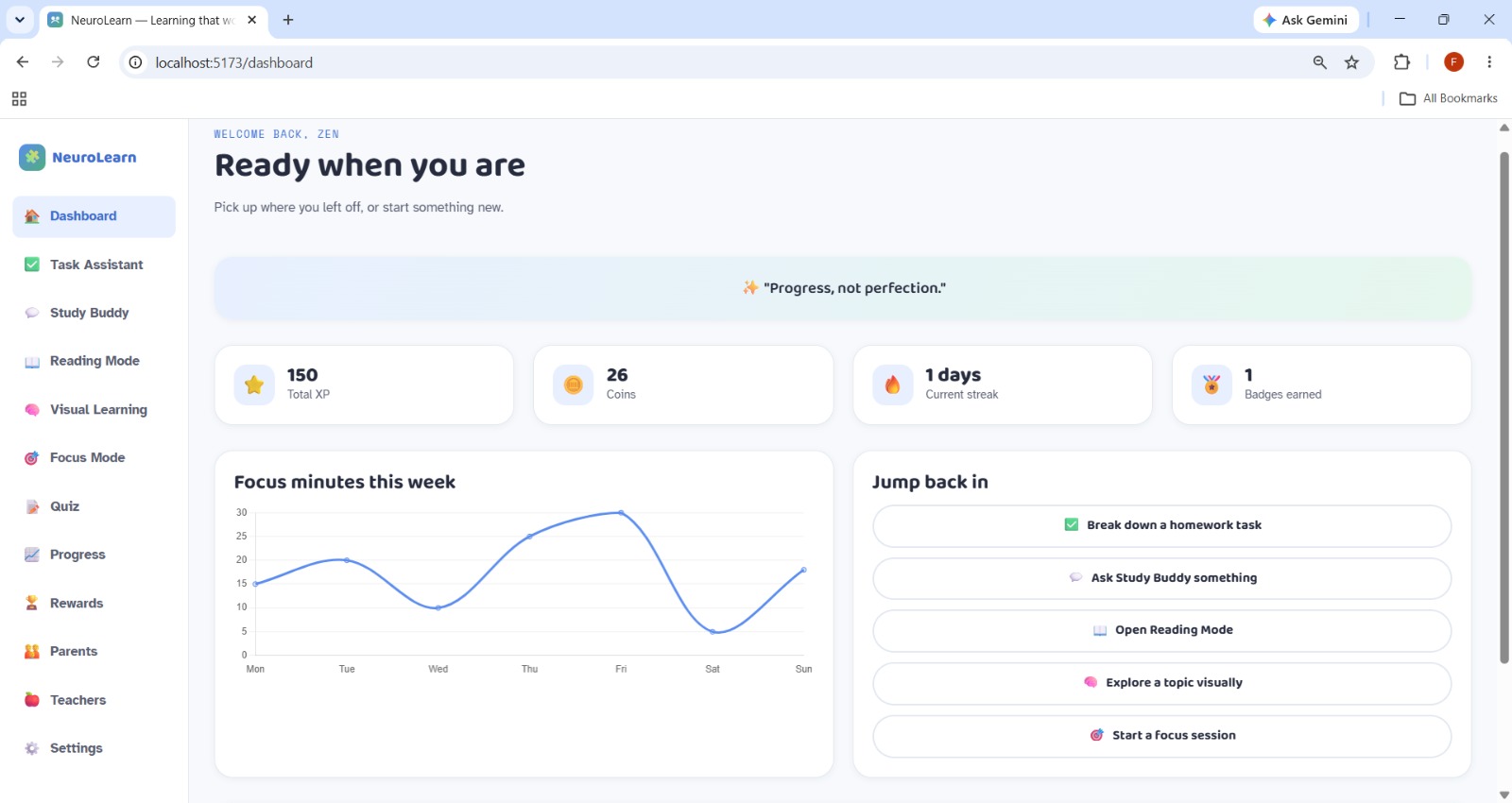
NeuroLearn AI breaks large academic tasks into small, clear, achievable steps. Instead of showing: "Complete your Science Assignment" NeuroLearn can turn it into: Choose the topic Read the basic concept Write 3 important points Answer practice questions Review your answers Complete the final submission The app also includes Study Buddy, an AI assistant that helps students with homework, explains difficult concepts, provides guidance, and works through problems step-by-step. Key Features 🧩 Task Breakdown – Converts overwhelming assignments into smaller steps. 🧠 ADHD-Friendly Study Support – Helps students get started and maintain momentum. 📖 Dyslexia-Friendly Learning – Presents information in a simpler and easier-to-follow format. 🤖 Study Buddy – AI-powered homework and study assistance. 📈 Progress Tracking – Helps students see their progress and build confidence. 🎯 Focus-Oriented Tasks – Encourages completing one manageable step at a time.
How we built it
We designed NeuroLearn AI around a simple principle: Big task → Smaller tasks → Clear next step → Progress → Confidence The application combines a user-friendly interface with AI-powered assistance. The AI analyzes the student's task or question and converts complex information into simpler explanations, actionable steps, and study guidance. We focused heavily on making the interface clean, encouraging, and less overwhelming, rather than creating another complicated productivity application.
Challenges we ran into
One of the biggest challenges was finding the right balance between helping students and doing the work for them. We wanted Study Buddy to guide students rather than simply give them answers. This led us to design interactions that encourage students to understand the problem, follow smaller steps, and learn along the way. Another challenge was designing a system that works for different learning preferences without making the application complicated. We focused on simplicity, clear instructions, manageable tasks, and positive feedback.
Accomplishments that we're proud of
NeuroLearn AI is built around one simple belief: Learning differently shouldn't mean learning alone. Our goal is to make studying feel less overwhelming and help students turn "I don't know where to start" into "I can do the next step." NeuroLearn AI is not about making students learn faster. It's about helping them start, understand, progress, and build confidence.
What we learned
Building NeuroLearn AI taught us that effective AI solutions are not just about generating intelligent answers — they are about understanding the user's difficulties and presenting information in a way that works for them. We learned how to: Design AI-powered features around real student challenges. Break complex academic tasks into smaller, actionable steps. Use AI to provide guidance instead of simply giving students answers. Create simpler and more accessible learning experiences. Design interfaces that reduce distractions and cognitive overload. Connect frontend features with AI APIs and backend services. Improve AI responses through prompt engineering and structured instructions. Think about accessibility and different learning needs when designing technology. Most importantly, we learned that a small, well-designed step can make a difficult task feel achievable.
What's next for Neurolearn
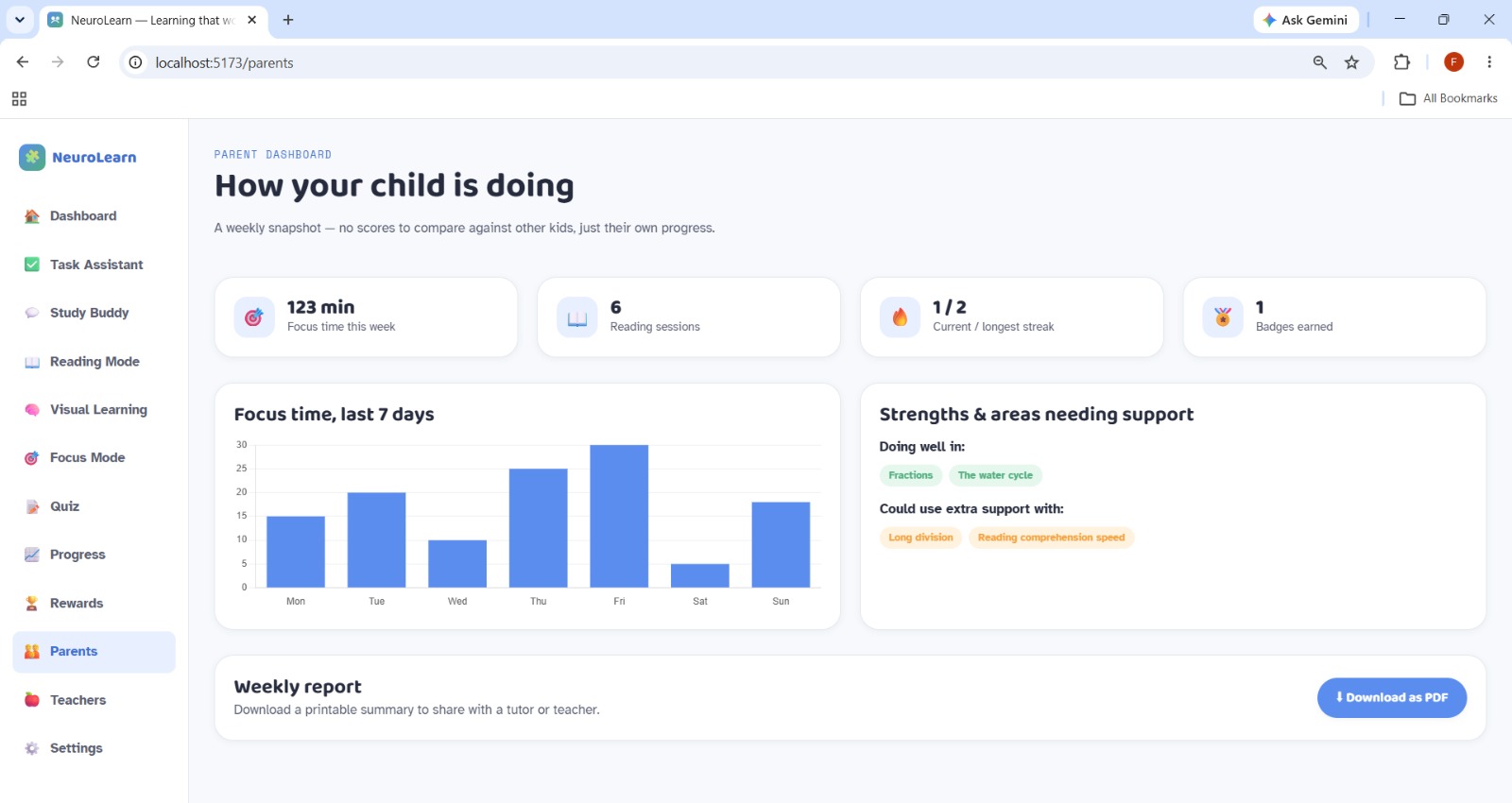
NeuroLearn AI is only the beginning. Our next goal is to make the platform more personalized, adaptive, and supportive for every learner. 🚀 Future Plans Personalized Learning Paths – Create study plans based on each student's subjects, goals, pace, and preferences. Adaptive AI Tutor – Make Study Buddy adjust its explanations based on the student's understanding. Focus Sessions – Add distraction-free study sessions with timers, breaks, and gentle reminders. Progress Insights – Help students understand their learning patterns and celebrate their progress. Dyslexia-Friendly Tools – Expand text simplification, formatting, reading assistance, and comprehension support. ADHD Support Features – Improve task initiation, prioritization, reminders, and step-by-step workflows. Multilingual Support – Make NeuroLearn accessible to students who learn more comfortably in different languages. Teacher/Parent Dashboard – Provide optional progress insights while keeping the student's privacy and independence at the center. Mobile App – Bring NeuroLearn to Android and iOS so students can use their study companion anywhere. Our long-term vision is to build an AI learning environment where students don't have to change who they are to fit the way technology works. Instead, technology adapts to the learner. NeuroLearn AI — One small step at a time.

Log in or sign up for Devpost to join the conversation.