-
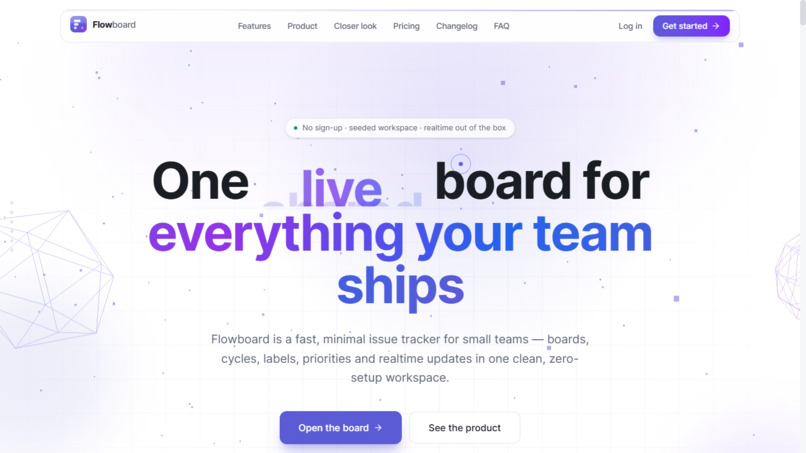
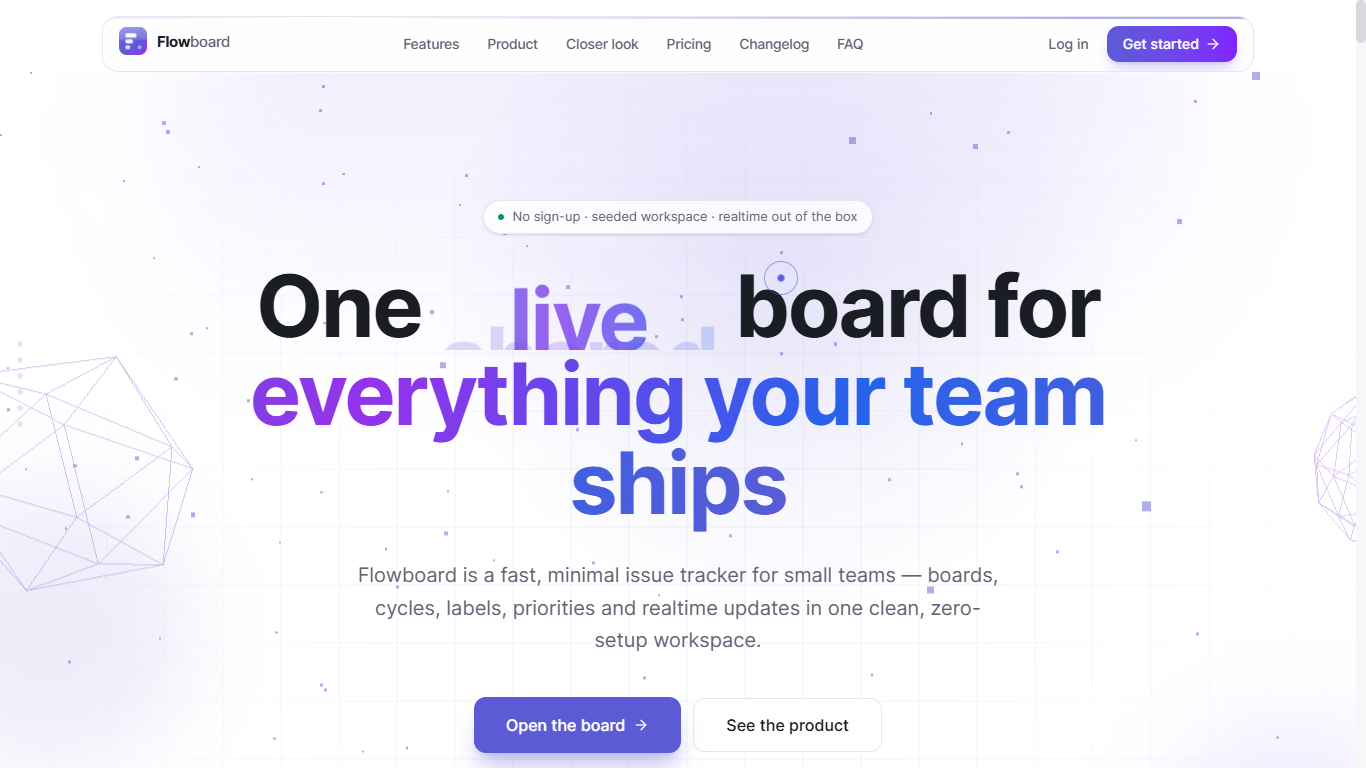
Flowboard landing page: one live board for everything your team ships, with no sign-up and a seeded workspace ready to open.
Inspiration
Most issue trackers are either a spreadsheet with extra steps or an enterprise suite that needs three admins before you can file a bug. We wanted to keep the parts that make a small team fast: a board you can drag, cycles that close on time, and an inbox that only pings you when it matters. No org chart, no seat maths, no tracking scripts.
What it does
Flowboard is a Linear-style issue tracker you can run yourself.
Issues
- Backlog, To Do, In progress, Done,e and Canceled statuses
- Four priority levels, estimates, due dates, es and sub-issues
- Comments with emoji reactions, watchers, and @mentions that land in someone's inbox
Five views of the same data
- Board: drag cards between columns, group by status, priority or assignee, bulk actions, CSV export
- List: keyboard navigation and inline status editing
- Timeline: a Gantt of every issue, with zoom from weeks to quarters
- Analytics: weekly velocity, priority mix and per-assignee load
- Cycles: scope, progress, and rolling unfinished work into the next cycle
Shareable filters
- Search, status, priority, assignee, label, due date, ate and project filters are mirrored into the URL, so a filtered view is a link you can paste
- Saved views appear in the sidebar
Realtime
- Presence, card moves, comments, reactions,s and notifications stay in sync across every open tab
Workspaces and roles
- Owners, members and viewers
- People join through an invite link, and the owner approves everyone before they get in
Honest by default
- No fake teammates, testimonials,nials or tracking scripts
- Every number on screen comes from the database
- Continue as a guest to get a private starter workspace instantly
How we built it
- Front end: React 19, React Router 7, Tailwind CSS 4, Zustand and Vite, with a Three.js hero on the landing page
- Back end: Express 5 with JWT auth (bcryptjs) and hand-written validation
- Database: Prisma 6 on SQLite, with 11 models
- Realtime: Socket.IO with separate rooms for each team, project,roject and user
- Deployment: front end on Vercel
- Testing: an end-to-end API smoke test covering auth, issues, cycles, invites ,and approvals
Design decisions
- Being signed in and being a team member are treated as different things, and the owner approves every join request
- Motion uses only transform and opacity, with a reduce-motion option in Settings
- Even the marketing pages avoid invented customers and metrics
What's next
- Notion and Linear import
- Notification digests
- GitHub sync, linking a branch or PR to an issue key
- A Playwright test suite
- An optional Postgres data source for hosted deployments
Built With
- express.js
- html5
- javascript
- jwt
- node.js
- prisma
- react
- react-router
- render
- socket.io
- sqlite
- tailwindcss
- three.js
- vercel
- vite
- zustand

