Inspiration
We wanted to explore how computer vision could transform conventional traffic camera footage into actionable traffic insights without the need for expensive infrastructure. Our goal was to develop an intelligent system capable of automatically detecting, tracking, and analyzing vehicles to support smarter traffic management.
What We Built
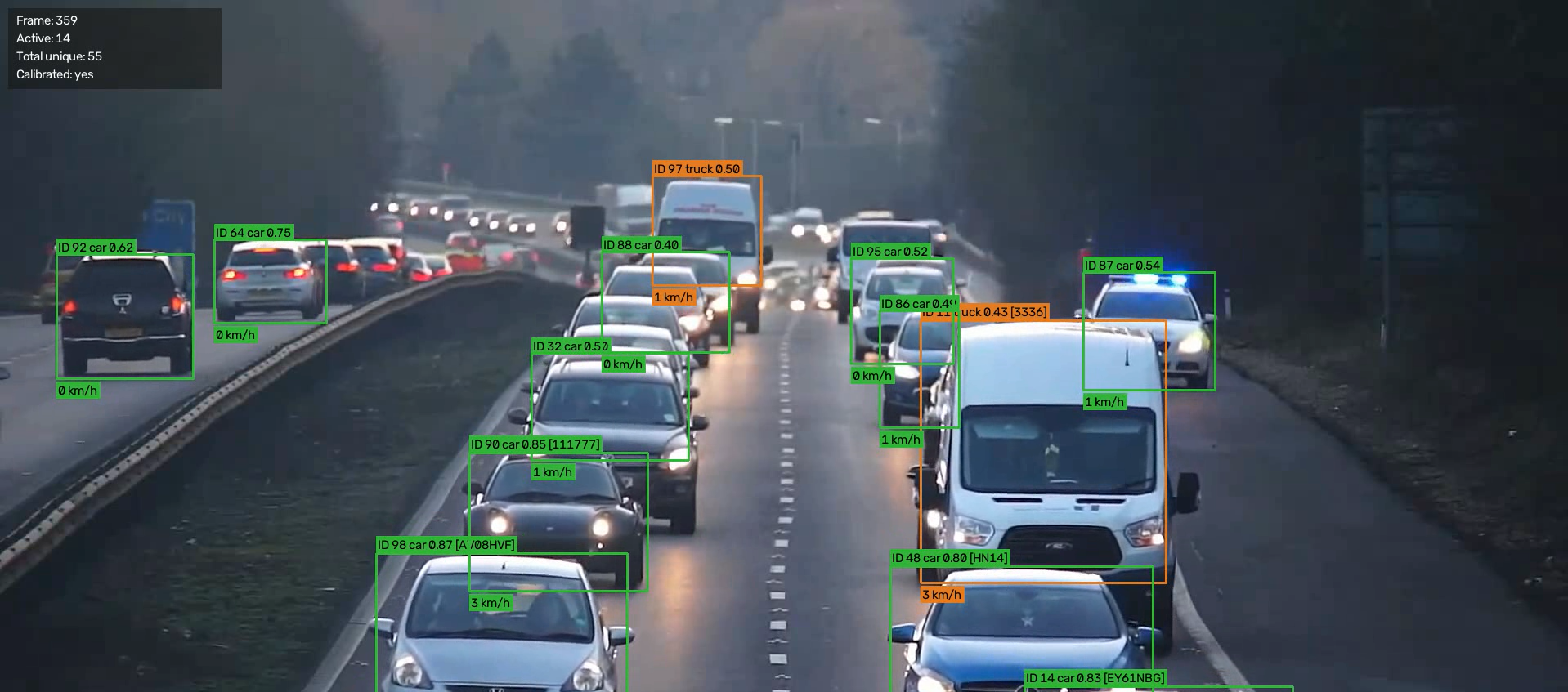
FlowVision is an powered traffic analysis system that detects and tracks vehicles in video streams, estimates their speed using camera calibration, recognizes license plates through OCR, and generates annotated videos along with detailed CSV reports. Its modular architecture allows for easy expansion with features such as traffic violation detection, real-time dashboards, and database integration.
How We Built It
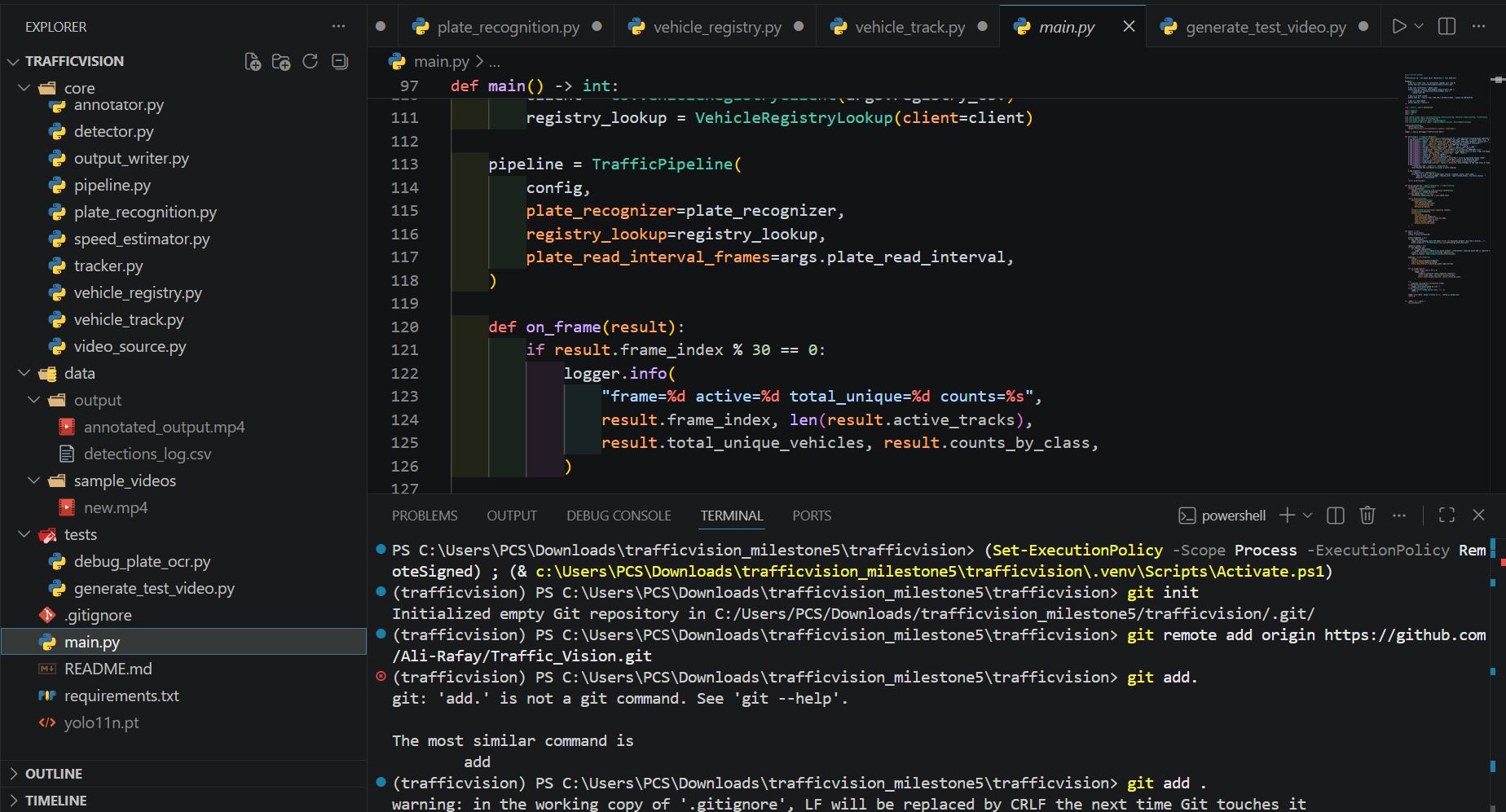
The project was built in Python using OpenCV, Ultralytics YOLO, ByteTrack, EasyOCR, NumPy, and PyYAML. Each video frame is processed through a pipeline that performs vehicle detection, multi-object tracking, speed estimation, license plate recognition, and output generation, ensuring accurate and efficient traffic analysis.
Challenges
The biggest challenges included achieving reliable speed estimation through precise camera calibration, maintaining consistent tracking IDs during vehicle occlusions, and improving license plate recognition under varying lighting conditions and camera perspectives.
What We Learned
Building FlowVision strengthened our understanding of computer vision, deep learning, multi-object tracking, optical character recognition (OCR), and designing scalable pipelines for real-world traffic monitoring. The project also highlighted the importance of modular software architecture for developing intelligent transportation solutions.

Log in or sign up for Devpost to join the conversation.