-
-
Flow-Fi Logo
-
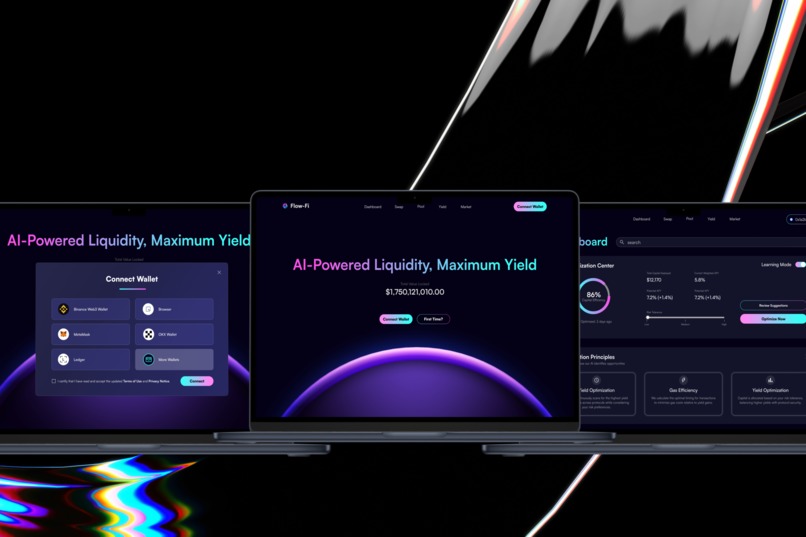
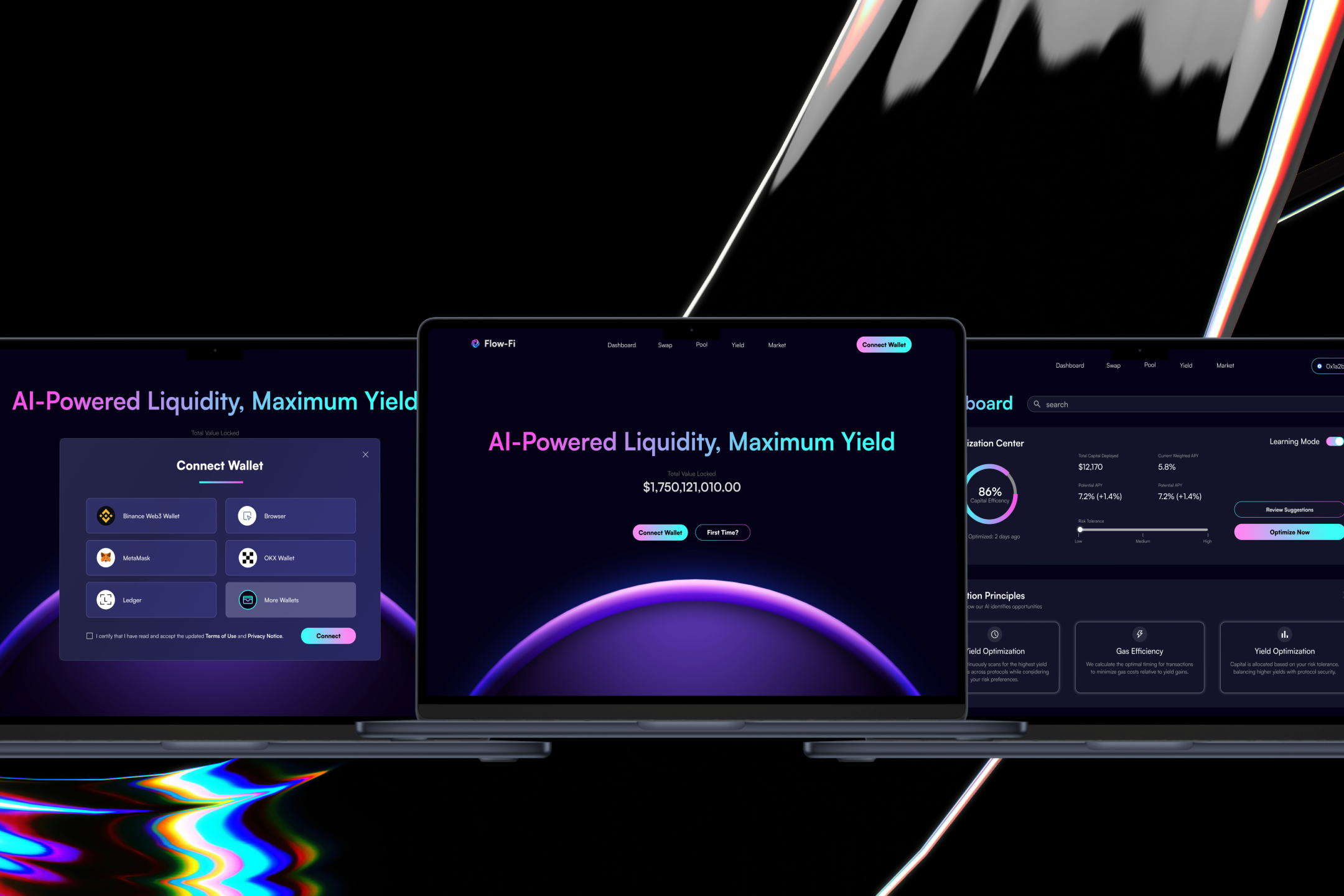
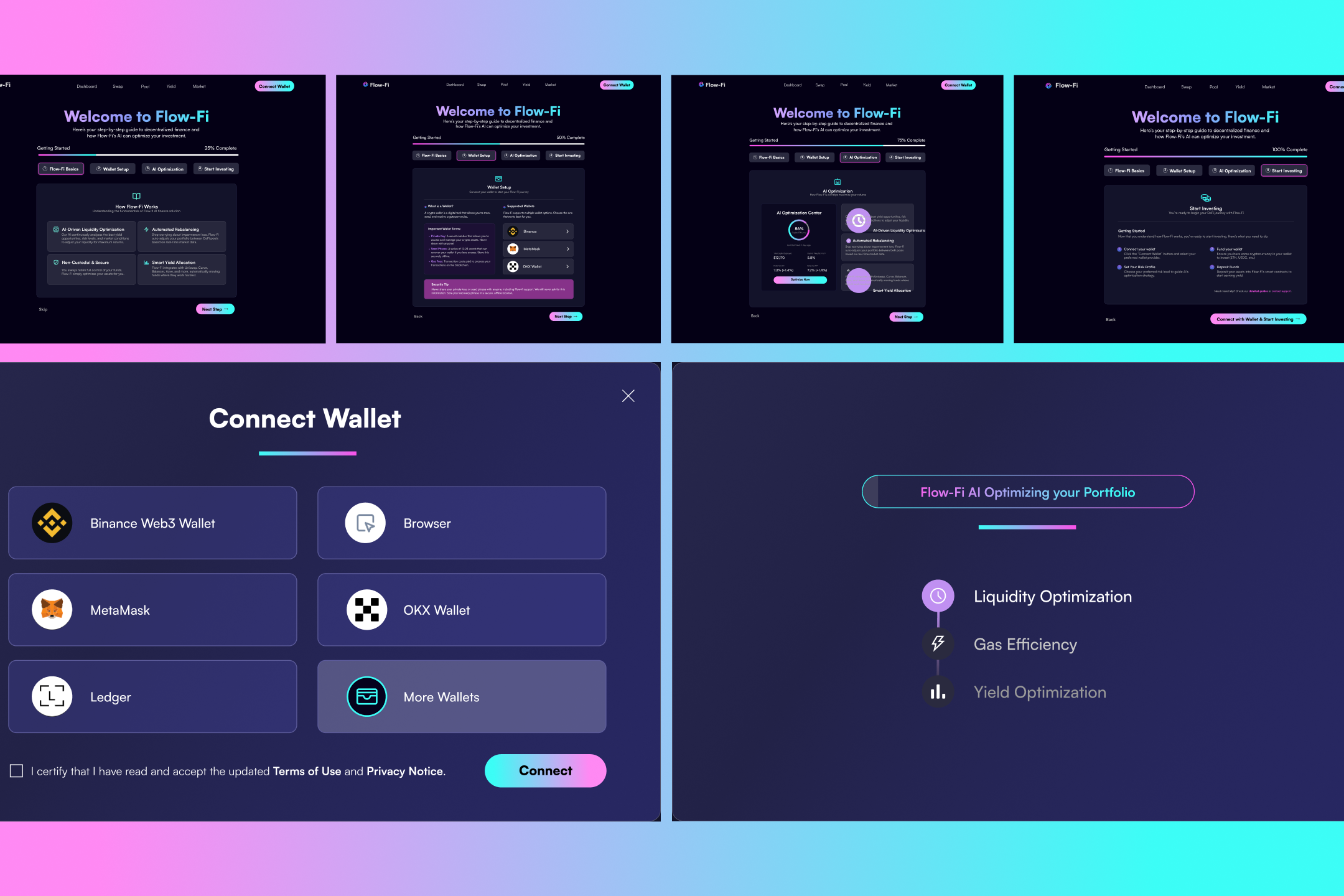
Main pages mock up
-
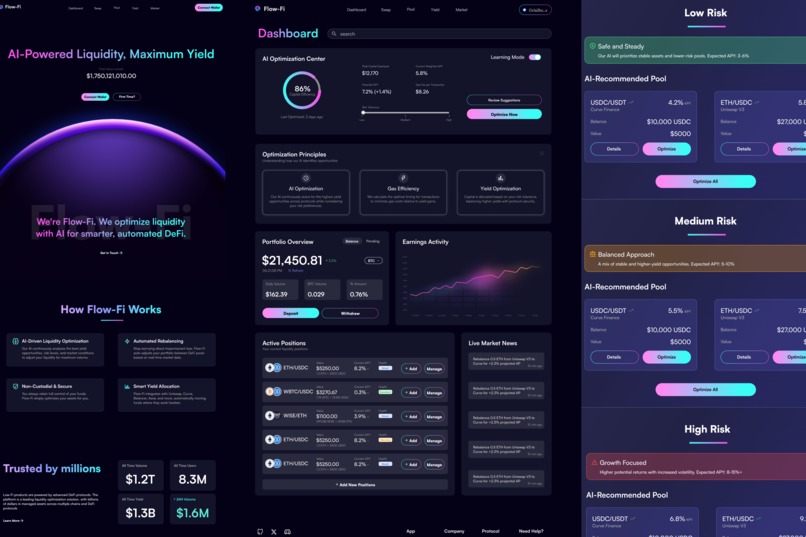
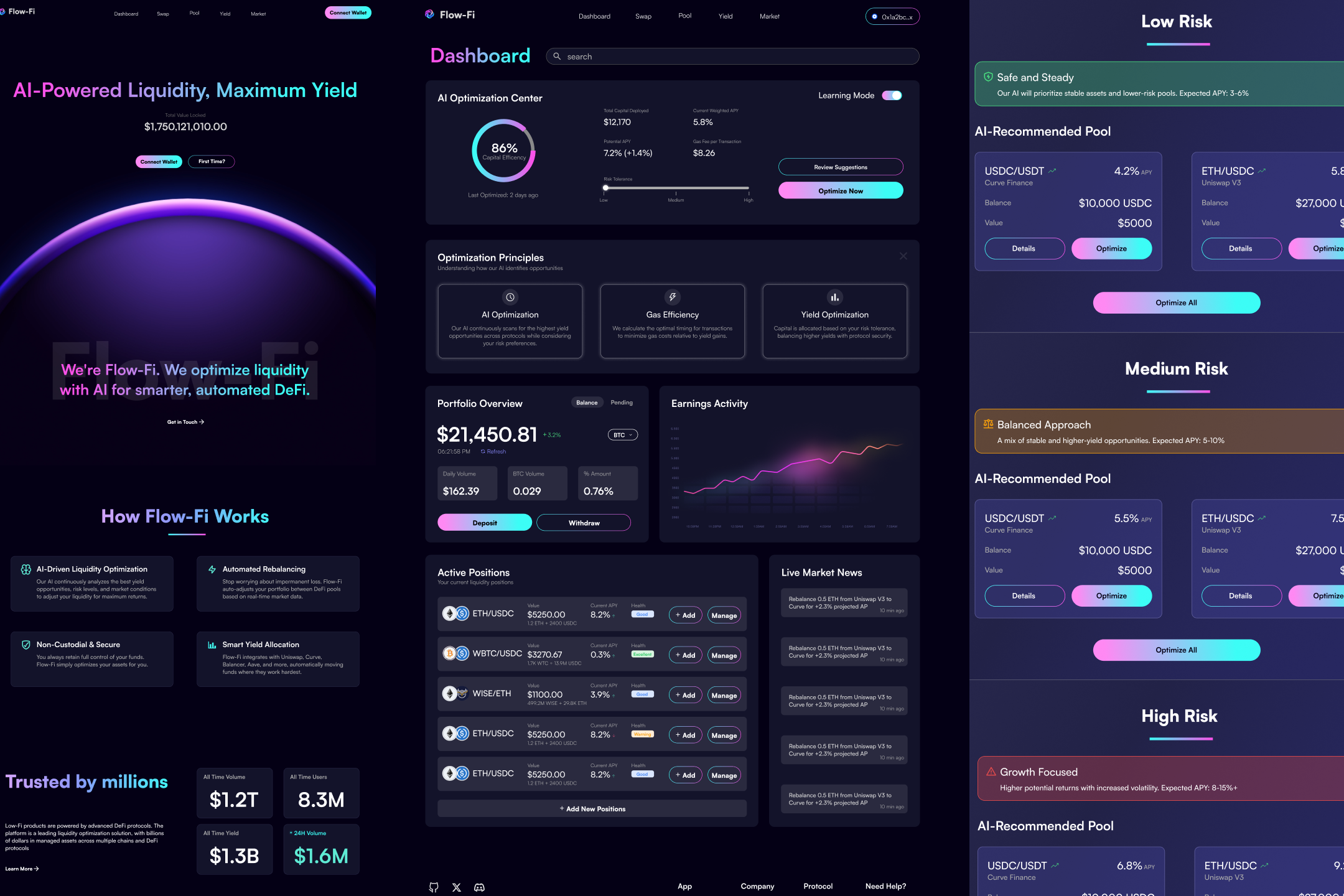
Landing page, Dashboard with AI optimization, Risk Levels
-
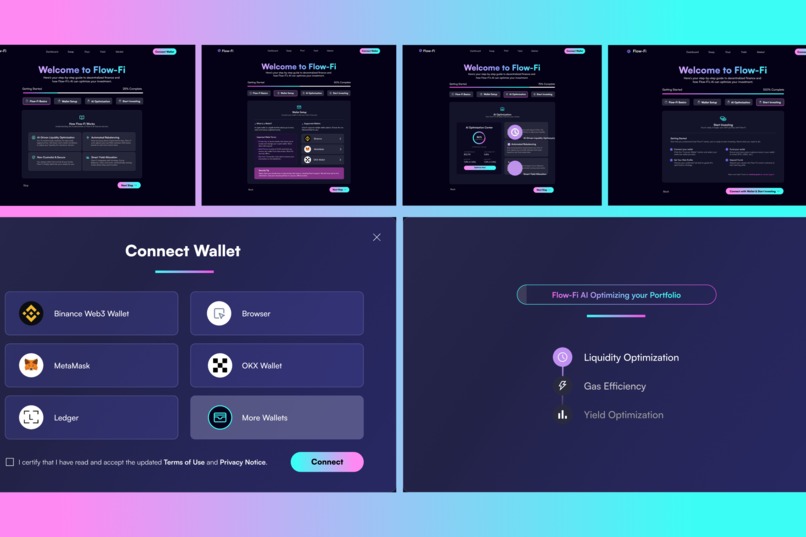
First Time Onboarding
-
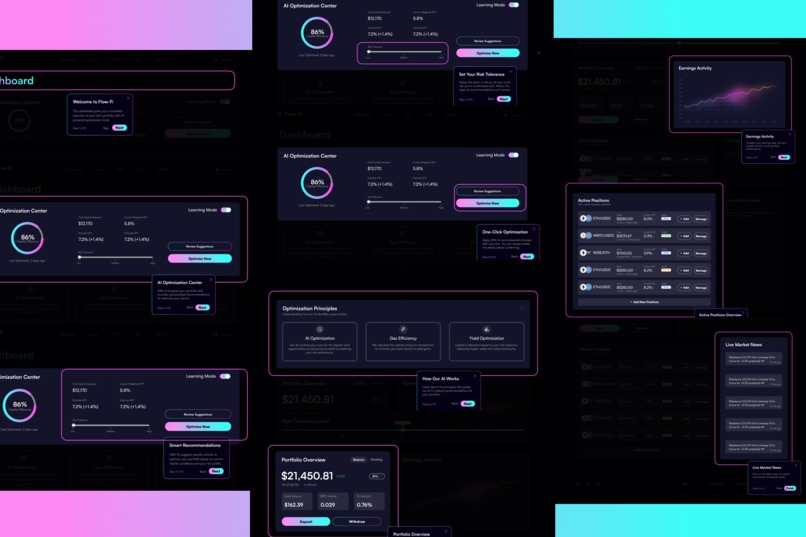
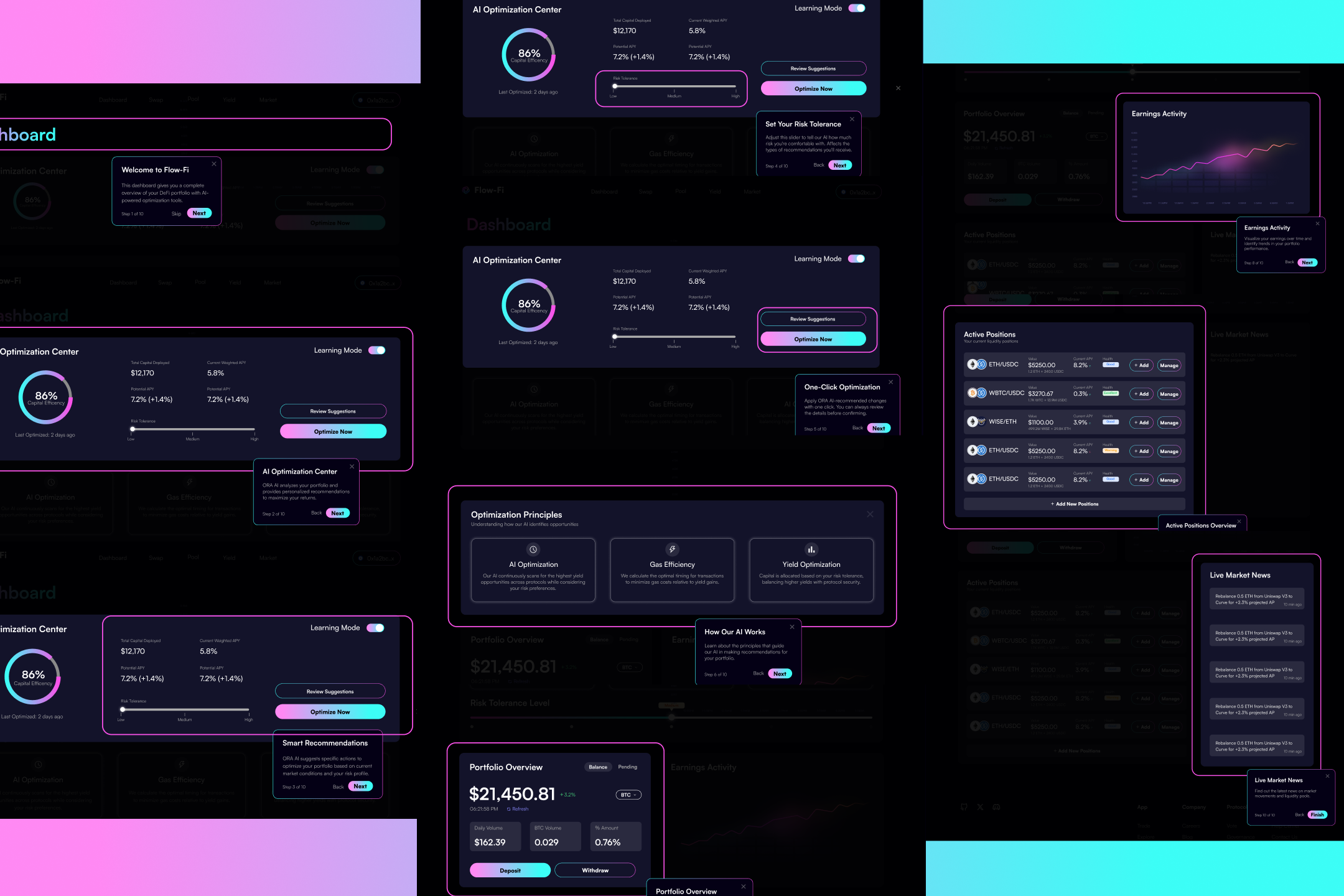
Dashboard tutorial walkthrough
Flow-Fi
Inspiration
Managing capital across DeFi pools is harder than it should be. Currently, users have to manually track multiple pools, rebalance their positions, and react quickly to market changes - often at the cost of time, efficiency, and missed opportunities. The complexity of keeping up with shifting yields and liquidity conditions makes it easy to fall behind.
We believe there’s a better way. Instead of forcing users to constantly manage and adjust their positions, we’re creating a solution that simplifies the process and helps them make the most of their capital. DeFi should be about opportunity, not endless micromanagement. We aim to make capital allocation seamless so users can focus on strategy, not spreadsheets.
Problem Statement
DeFi users struggle with complex platforms and manual capital management, leading to costly mistakes and missed opportunities, highlighting the need for an automated, user-friendly solution.
Solution
Introducing Flow-Fi: Smarter Liquidity Management
Flow-Fi is redefining how DeFi users manage liquidity. Built with ORA’s AI Agent, Flow-Fi automates rebalancing strategies, ensuring capital is always optimally allocated without the hassle of manual intervention. No more tracking multiple pools or making split-second adjustments - Flow-Fi does the heavy lifting so users can focus on their strategy, not the mechanics.
But we go beyond automation. Flow-Fi provides the insights and education needed to help users understand their positions and make informed decisions with confidence. Whether you're a seasoned DeFi investor or just getting started, Flow-Fi simplifies the complexity of liquidity management, making it more intuitive, efficient, and accessible. By combining intelligent automation with real-time insights, Flow-Fi transforms DeFi capital management, helping users stay ahead, seize opportunities, and maximize their returns effortlessly.
How We Built It
We started with research by mapping user flows, identifying pain points, and refining our problem statement: manual rebalancing is inefficient and time-consuming. Using FigJam and Figma, we designed user-friendly workflows and iterated from lo-fi to hi-fi wireframes to ensure an intuitive experience.
To provide real-time market insights, we integrated APIs from DeFi Llama and CoinGecko and used Claude AI to analyze conditions and recommend rebalancing strategies. By combining live data, automation, and smart insights, Flow-Fi simplifies liquidity management, helping users optimize capital with ease.
User Research
- 60% of people do not understand cryptocurrencies well enough.
- 32% of non-investors cite this lack of understanding as a reason for not investing.
- 52% of respondents indicated that not knowing where to start is a primary obstacle to entering the crypto ecosystem.
- Slow Execution & High Costs – Manual asset movement is too slow for volatile markets, leading to missed opportunities, unnecessary liquidations, and high gas fees during peak times.
- Complex & Inefficient Asset Management – Traders struggle with moving funds across multiple blockchains, lack real-time alerts, face poor UI/UX on platforms, and deal with collateral inefficiencies that impact capital allocation.
User Flow
Wireframe
Figma Prototype
GitHub Repository
Key Challenges
- Took time to grasp how DeFi, crypto, and liquidation pools work, making implementation harder. This is why we spent time researching and simplifying key concepts for our use case.
- Tried using ORA’s Onchain Perpetual Agent Kit but couldn’t get an API key. This is why we pivoted to fetching market data from CoinGecko, Alchemy, and DeFi Llama APIs.
- Needed a way to analyze liquidity data. This is why we sent the fetched data to Claude AI to generate user-friendly recommendations.
- Limited time meant we couldn’t build everything. This is why we scoped down the project to focus on core functionality.
- Struggled with structuring the navbar and liquidation pool data. This is why we simplified the navigation to focus on essential features.
What We Accomplished
- Pivoted from ORA API to alternative data sources (CoinGecko, Alchemy, and DeFi Llama APIs) and built a working proof of concept.
- Integrated Claude AI to analyze market data and generate liquidity recommendations using tailored prompting methods.
- Simplified navigation and structured liquidation pool data for better usability, focusing on UI interfaces and simplifying it for beginners to understand.
- Scoped the project effectively to deliver key features despite time constraints.
What We Learned
- When things don’t go as planned (like the ORA API issue), adapting quickly is crucial.
- Understanding liquidation pools and market dynamics took time, but breaking it down made implementation easier.
- Having backup data sources saved us from roadblocks.
- Time constraints forced us to focus on core features, which helped streamline development.
What’s Next?
- Implement deeper liquidity optimization using real-time data analysis.
- Integrate automation tools to reduce manual asset movement for traders.
- Explore more reliable API solutions for seamless data fetching.
- Improve the UI/UX for clearer insights into liquidation pools.
- Expand AI-driven recommendations for better decision-making.
Built With
- ai
- alchemyapi
- anthropicapi
- claude
- coingekoapi
- css
- defillamaapi
- express.js
- git
- html
- javascript
- node.js


Log in or sign up for Devpost to join the conversation.