-
-
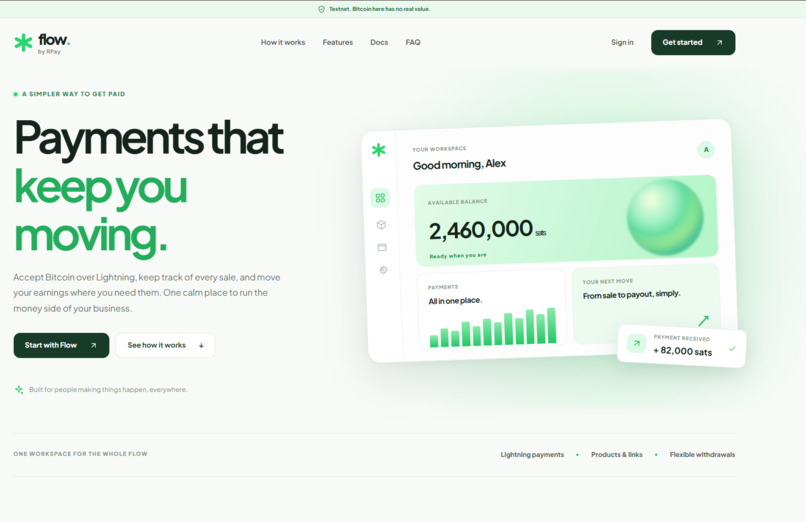
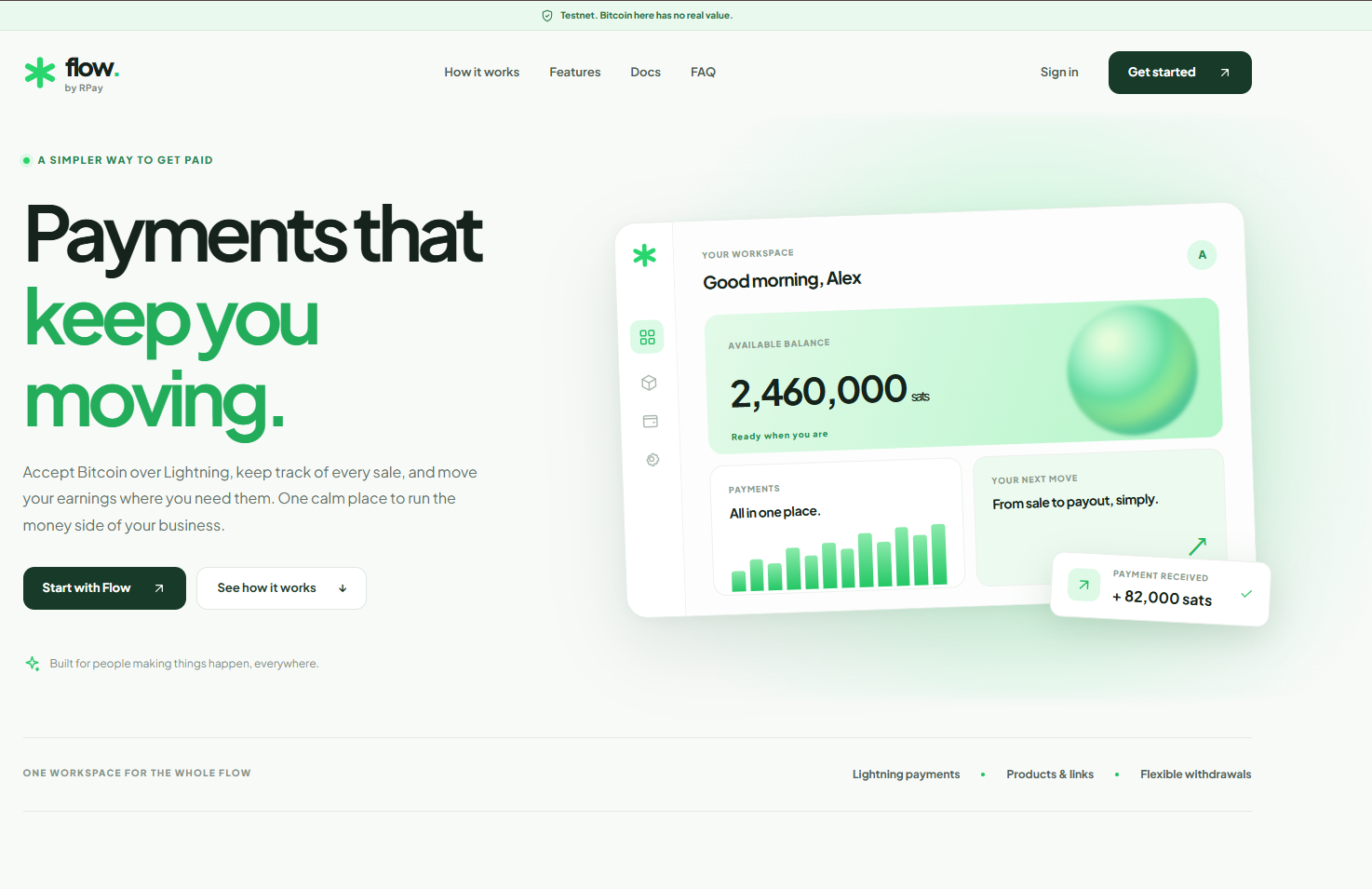
landing page
-
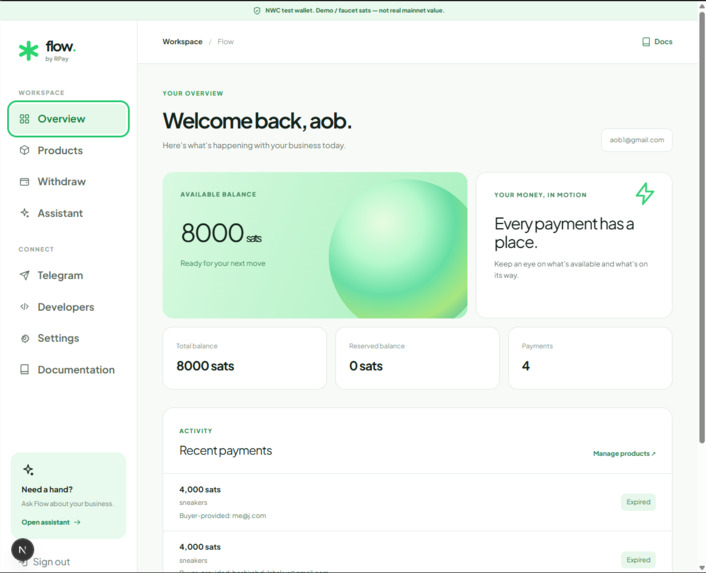
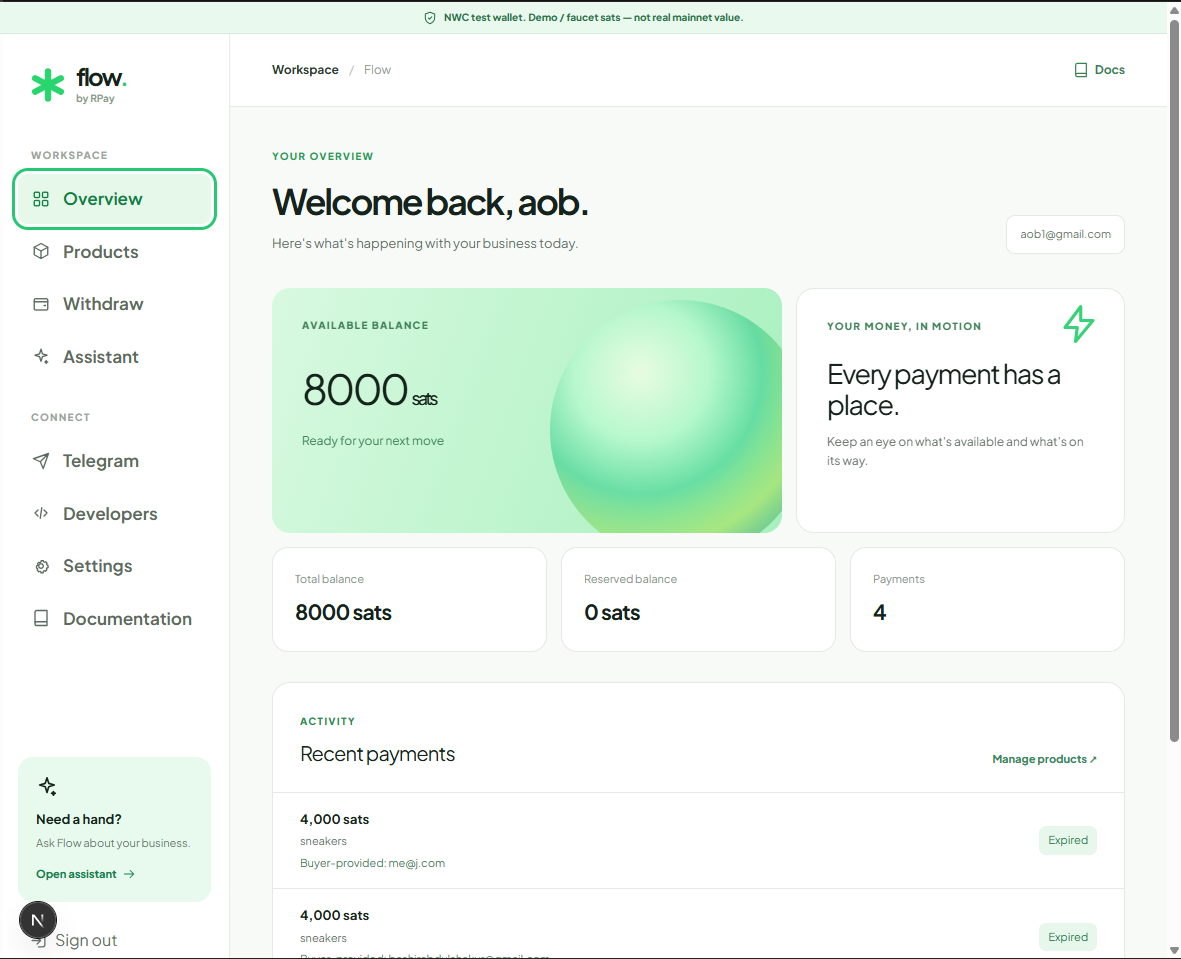
dashboard
-
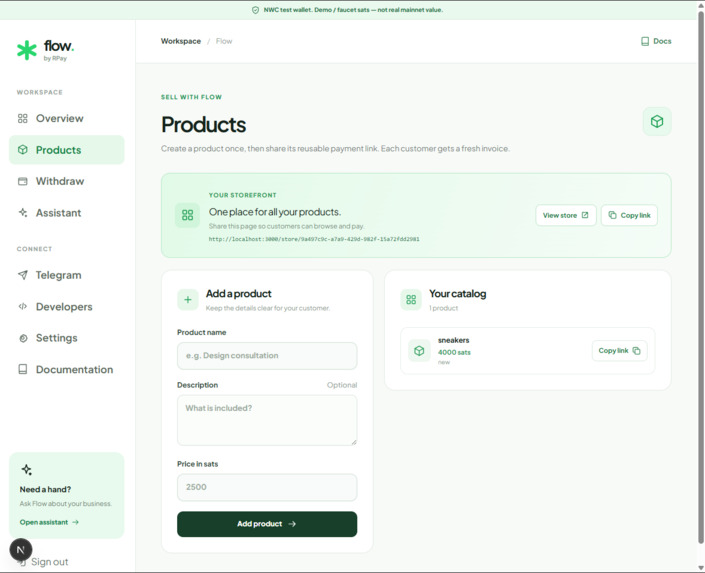
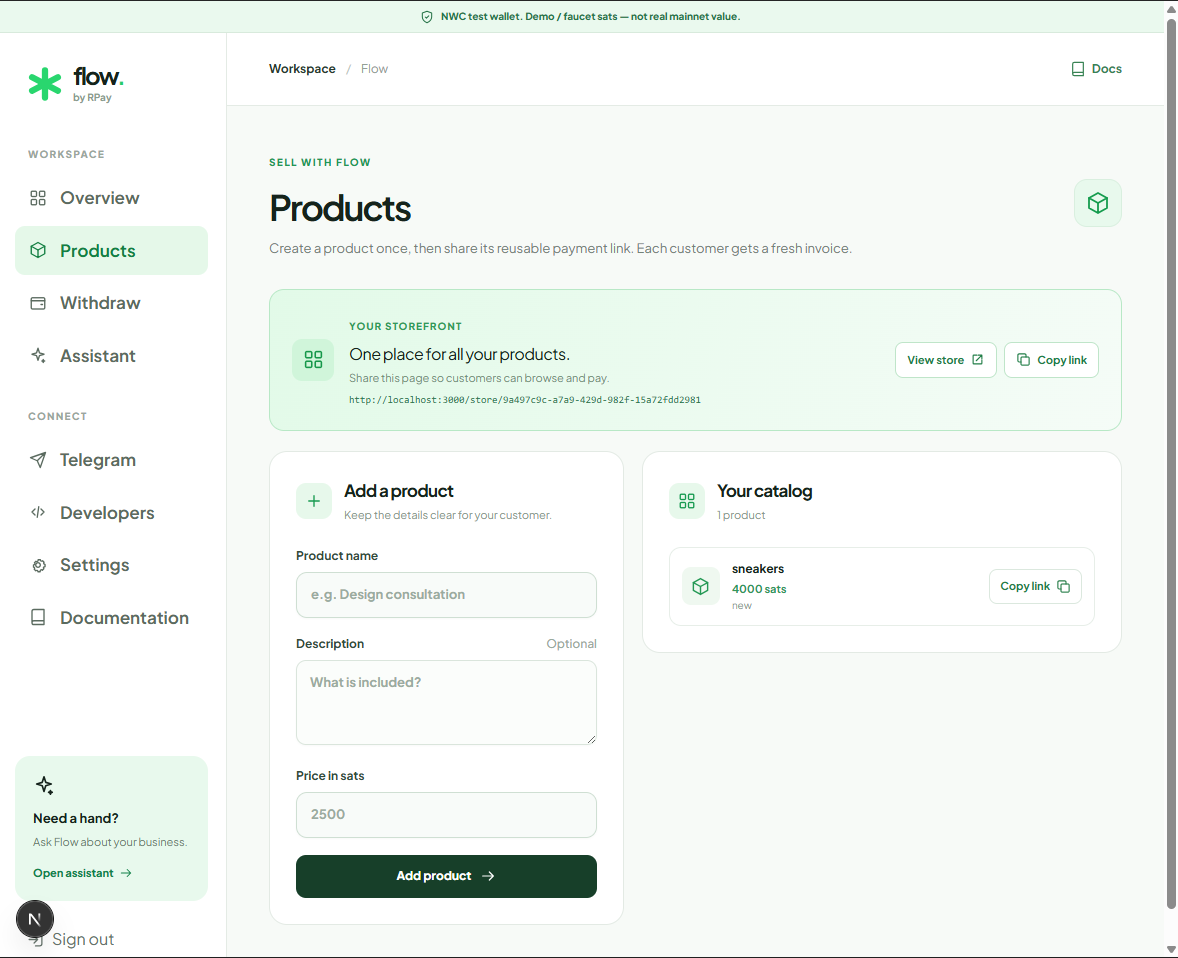
product page
-
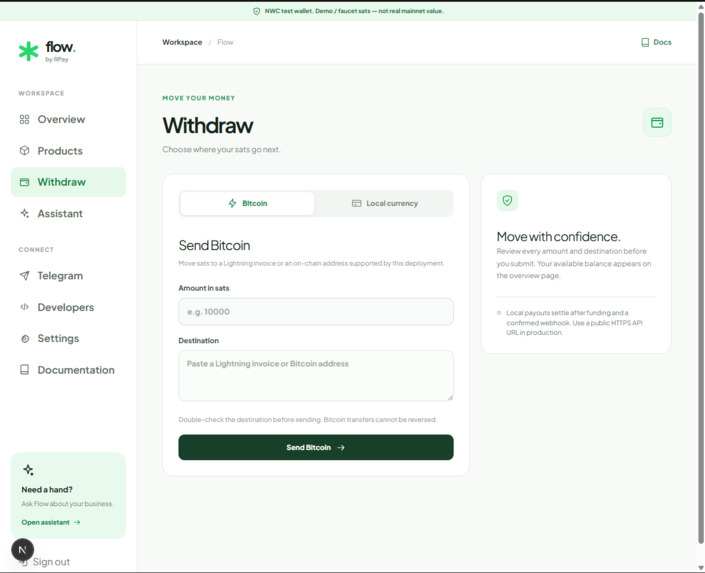
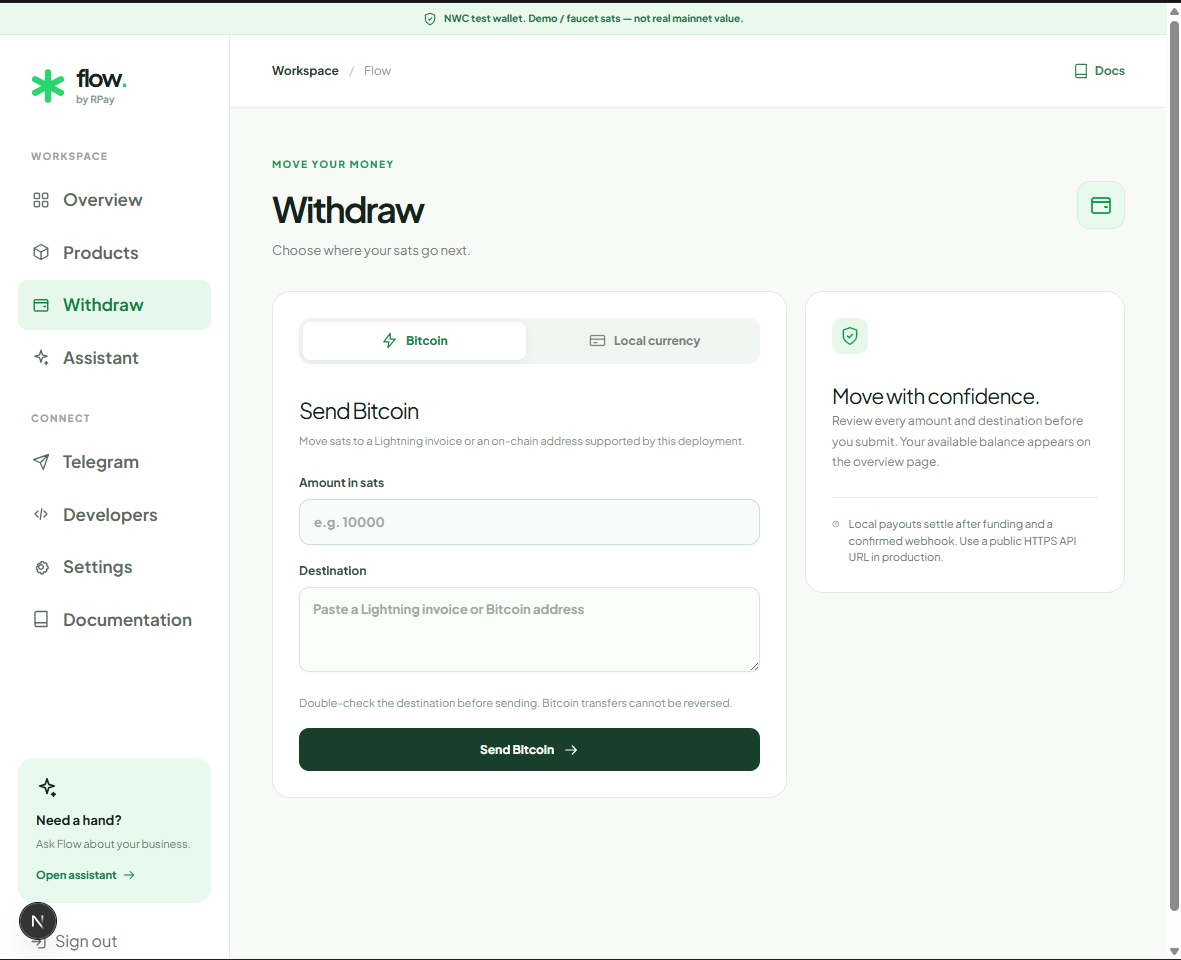
withdraw
-
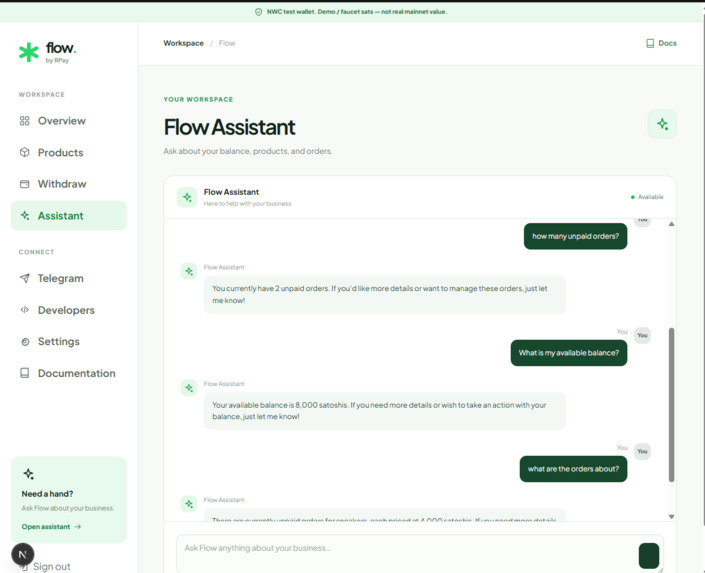
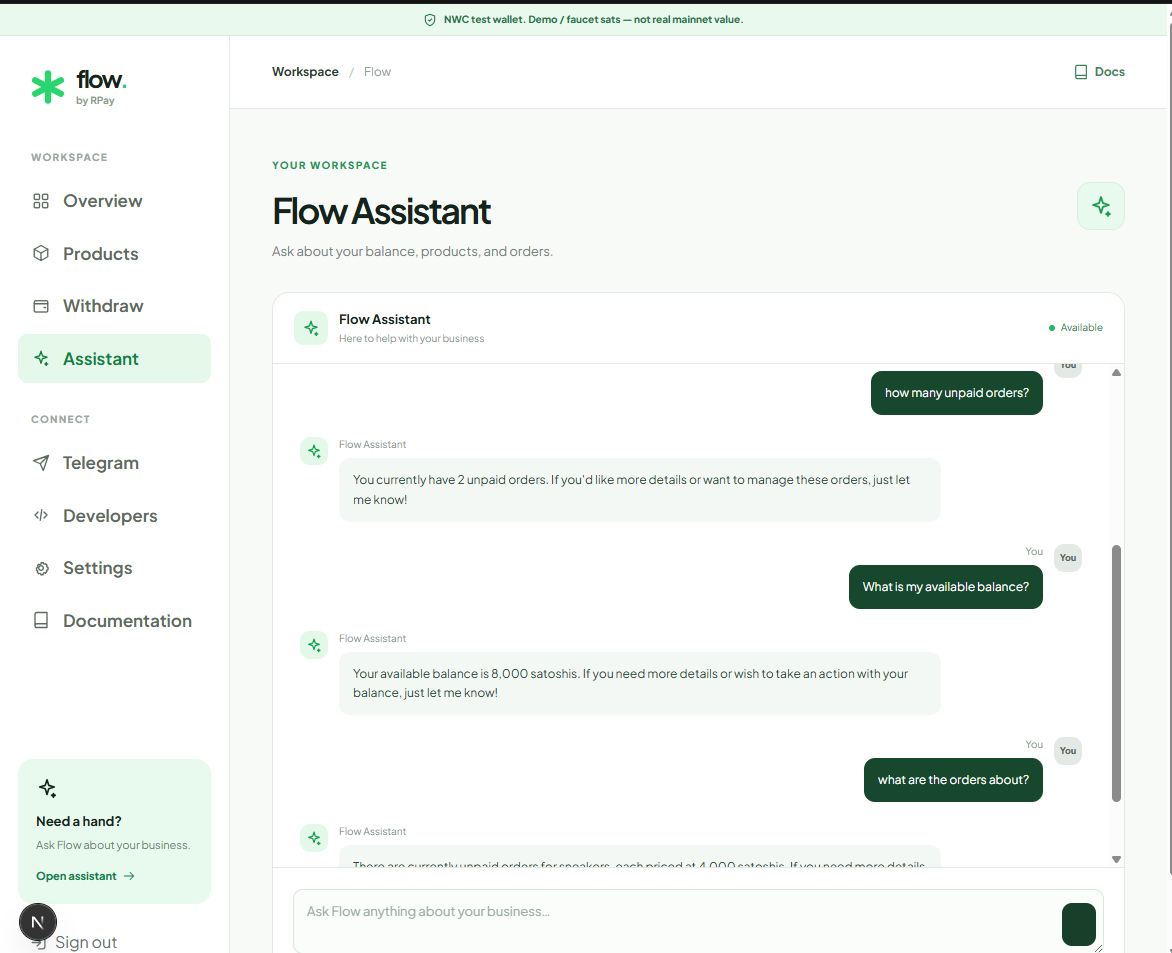
AI assistant
-
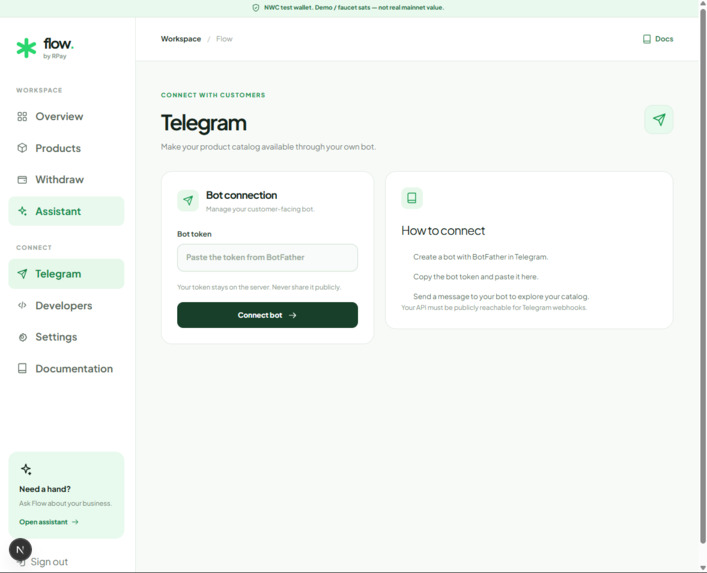
telegram integration
-
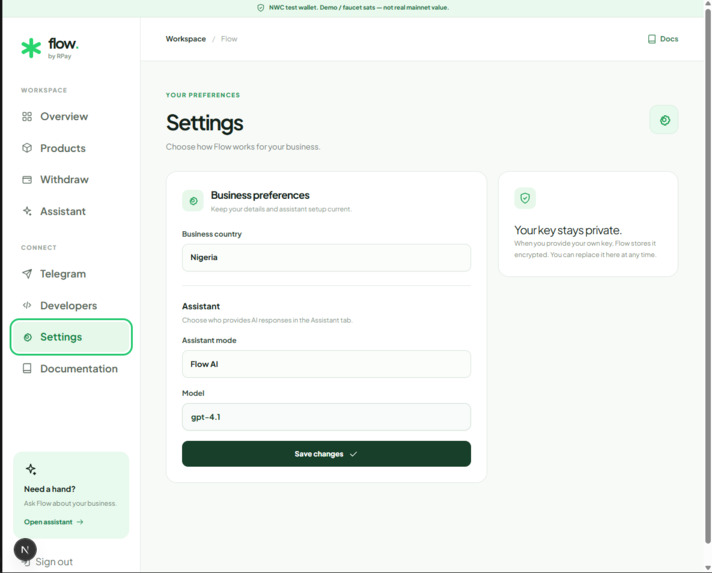
settings
-
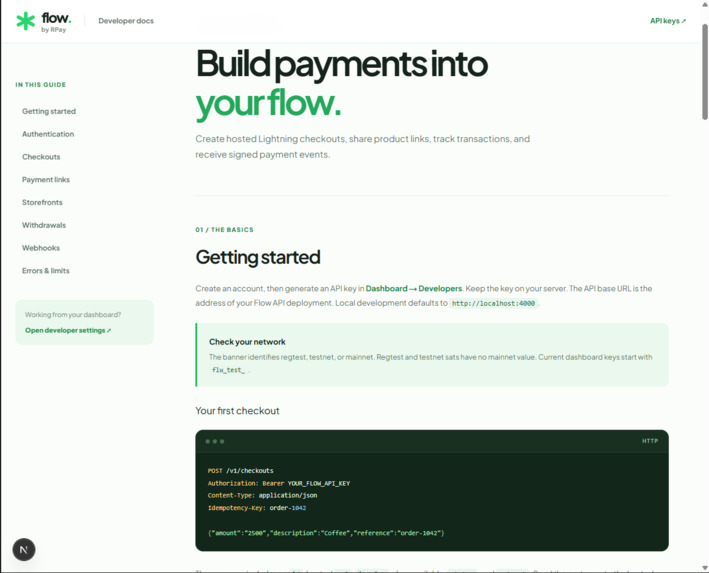
API documentation
-
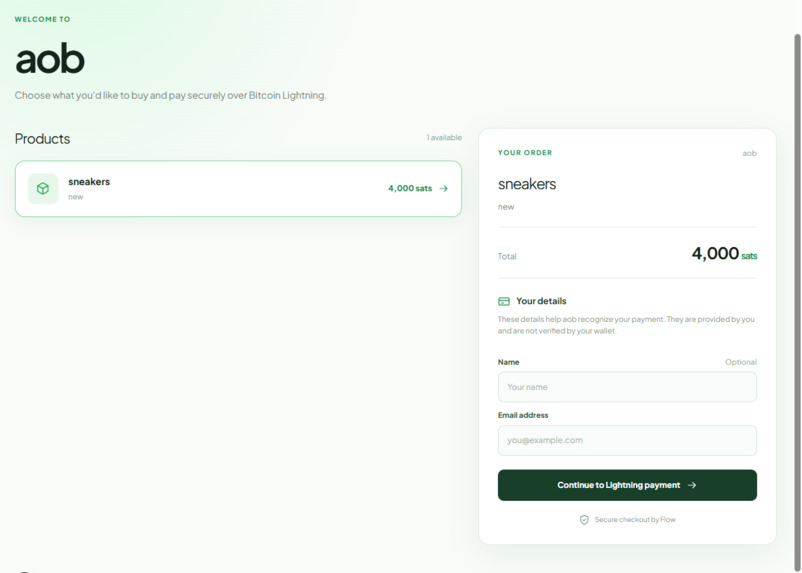
Store front
-
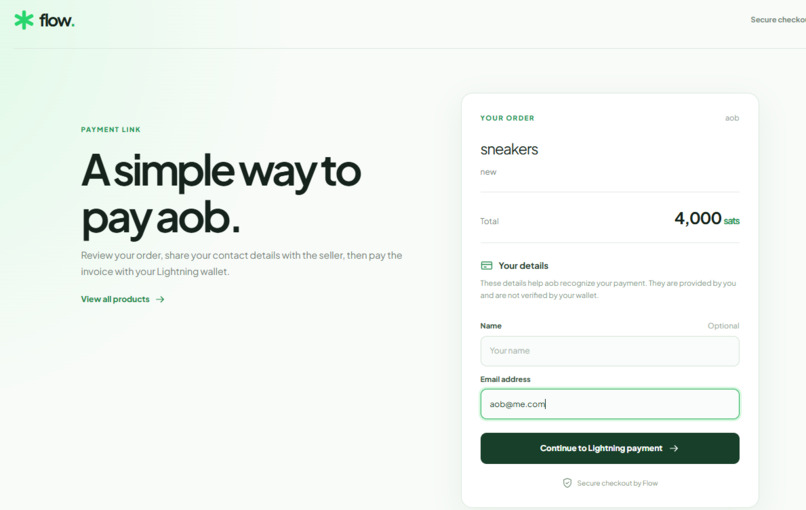
Paying the store
-
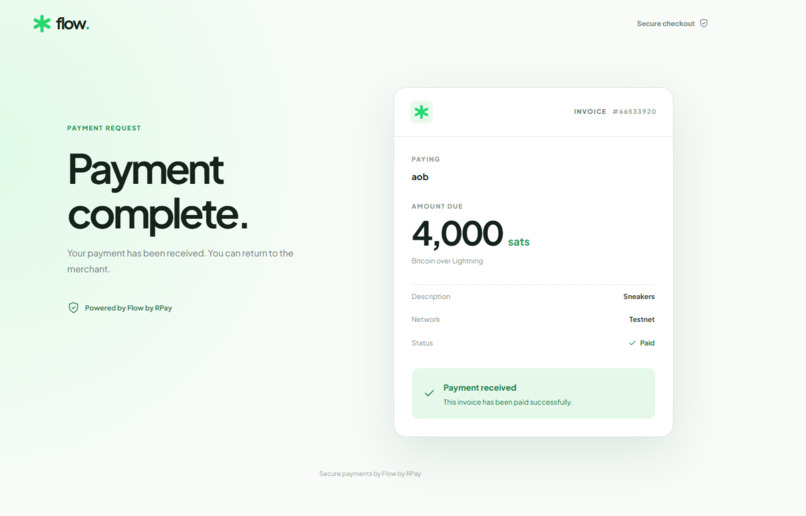
complete payment status
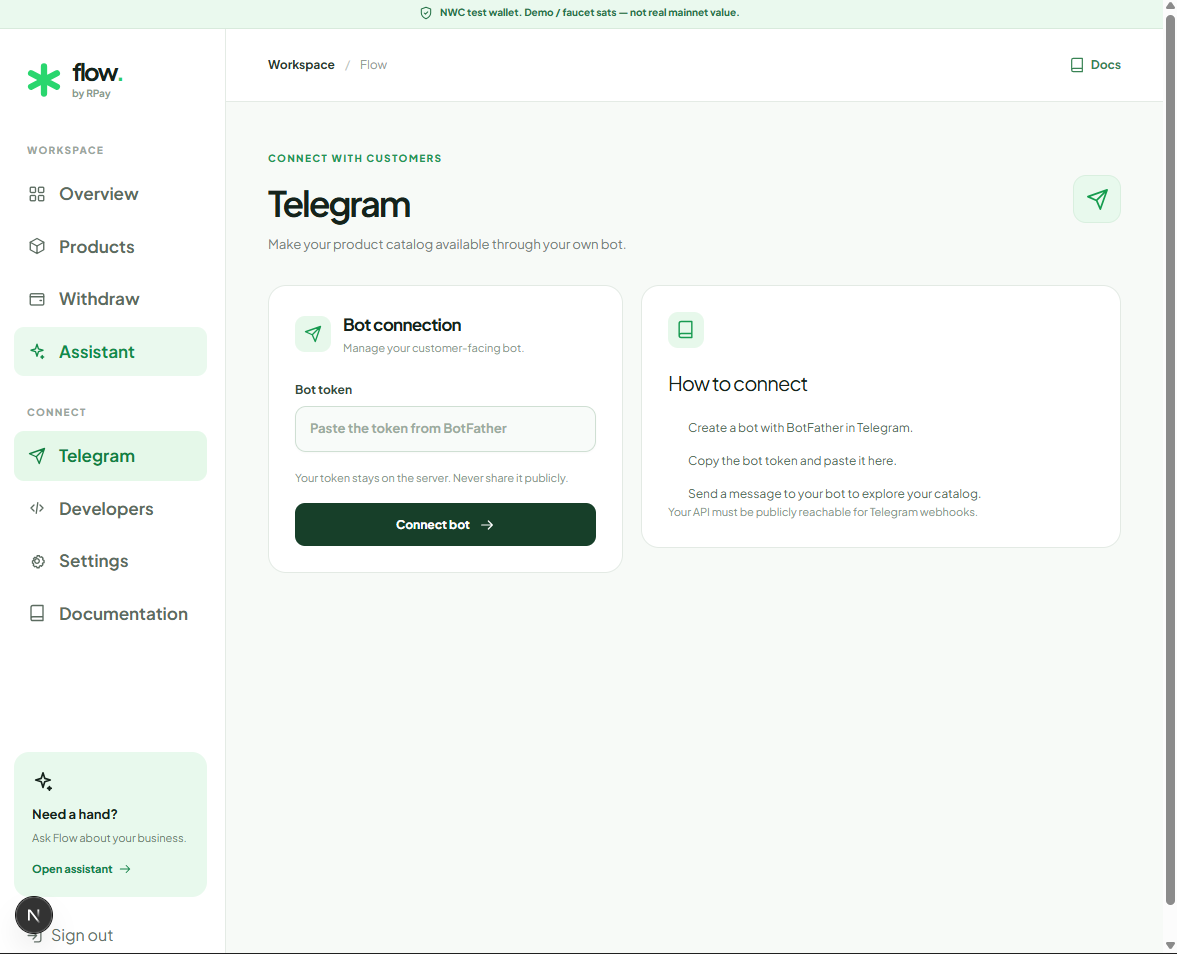
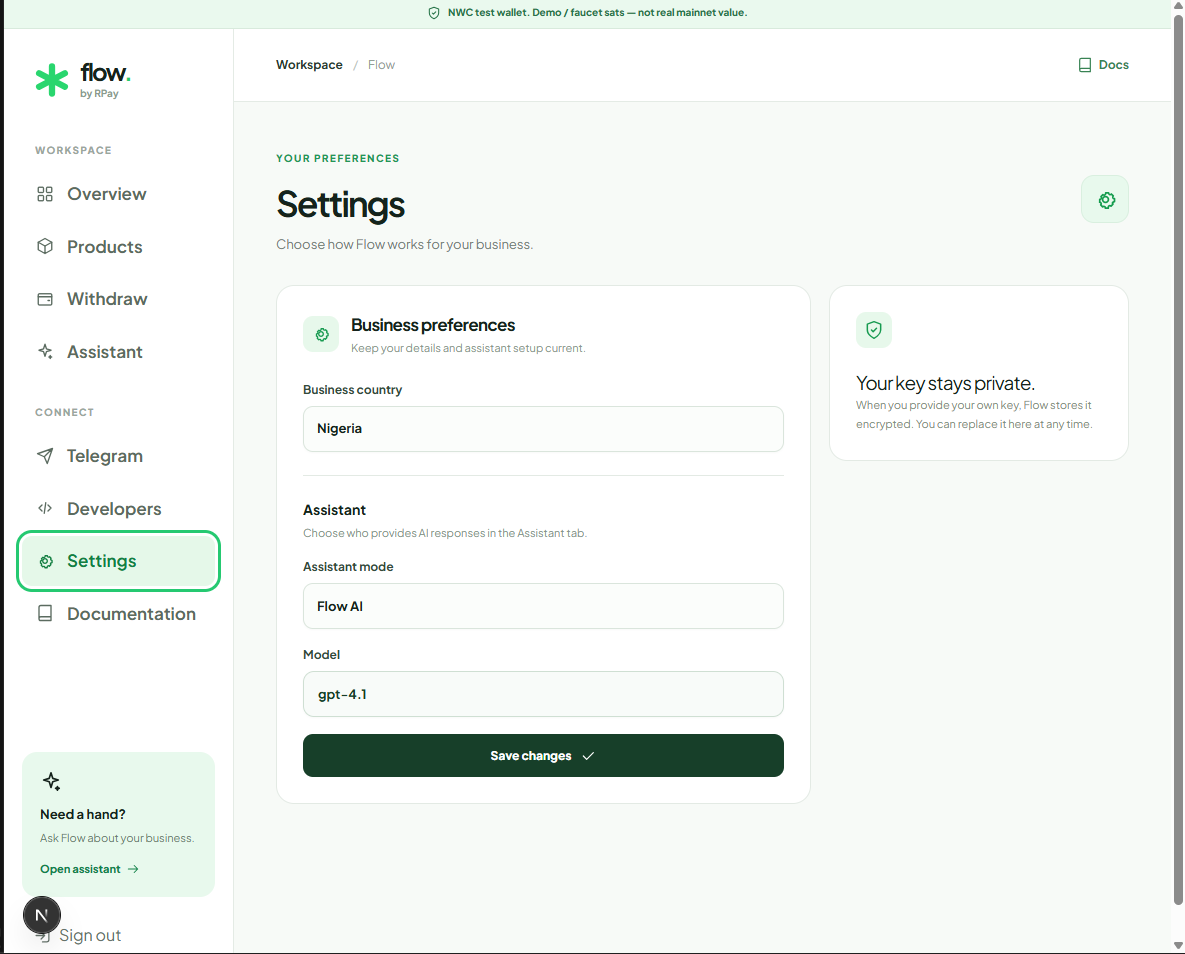
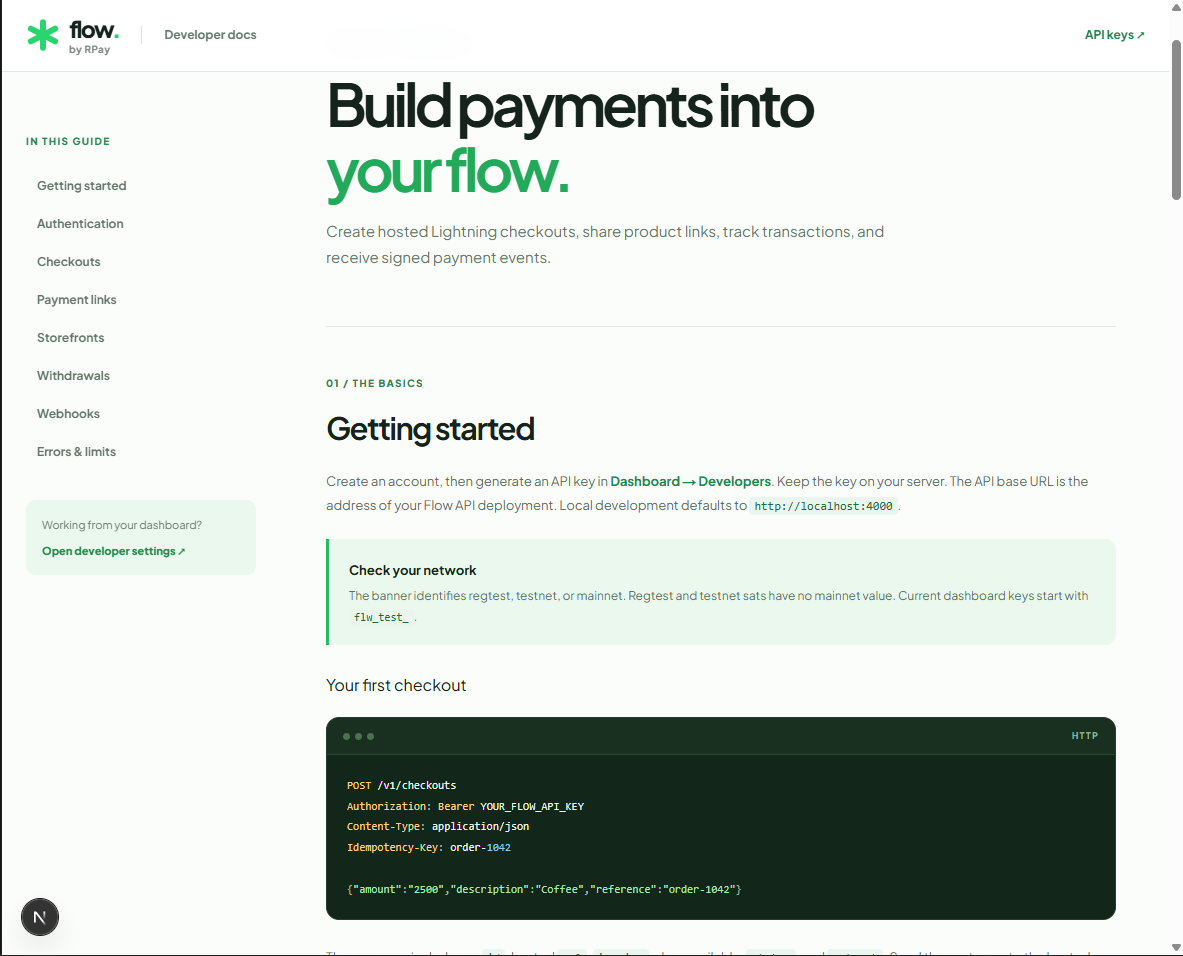
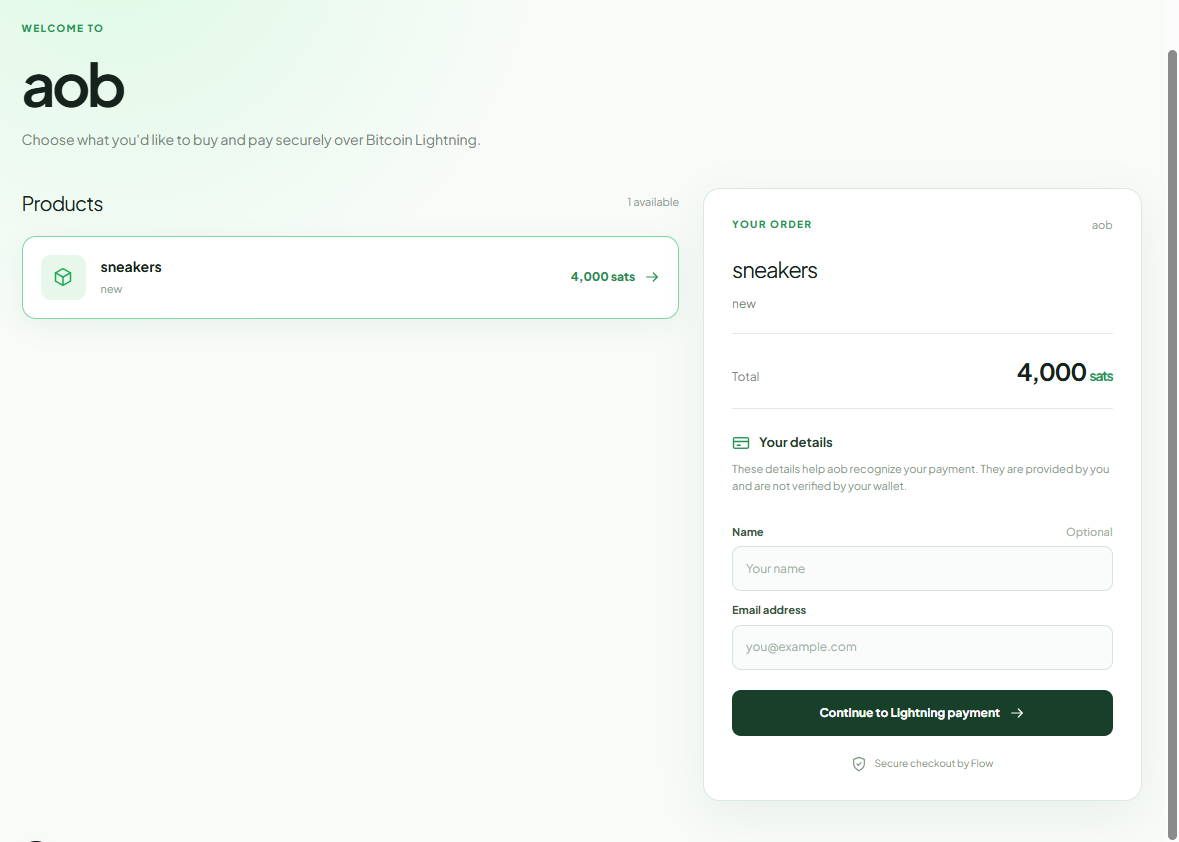
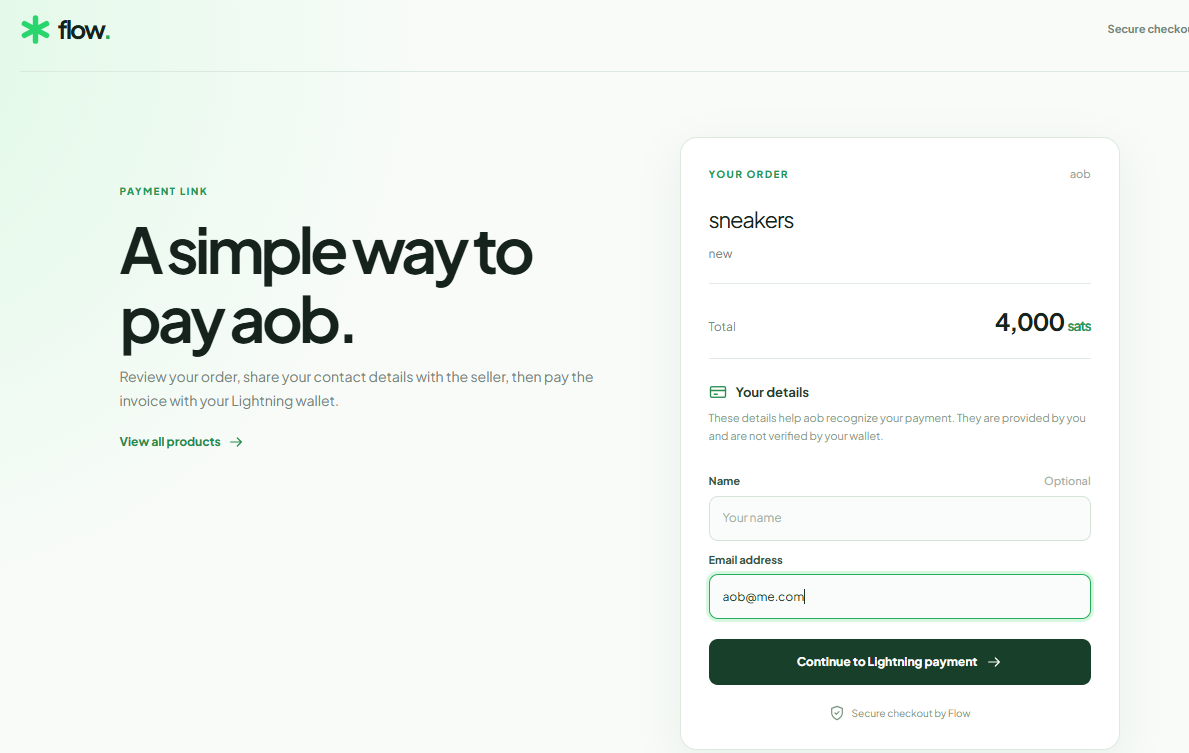
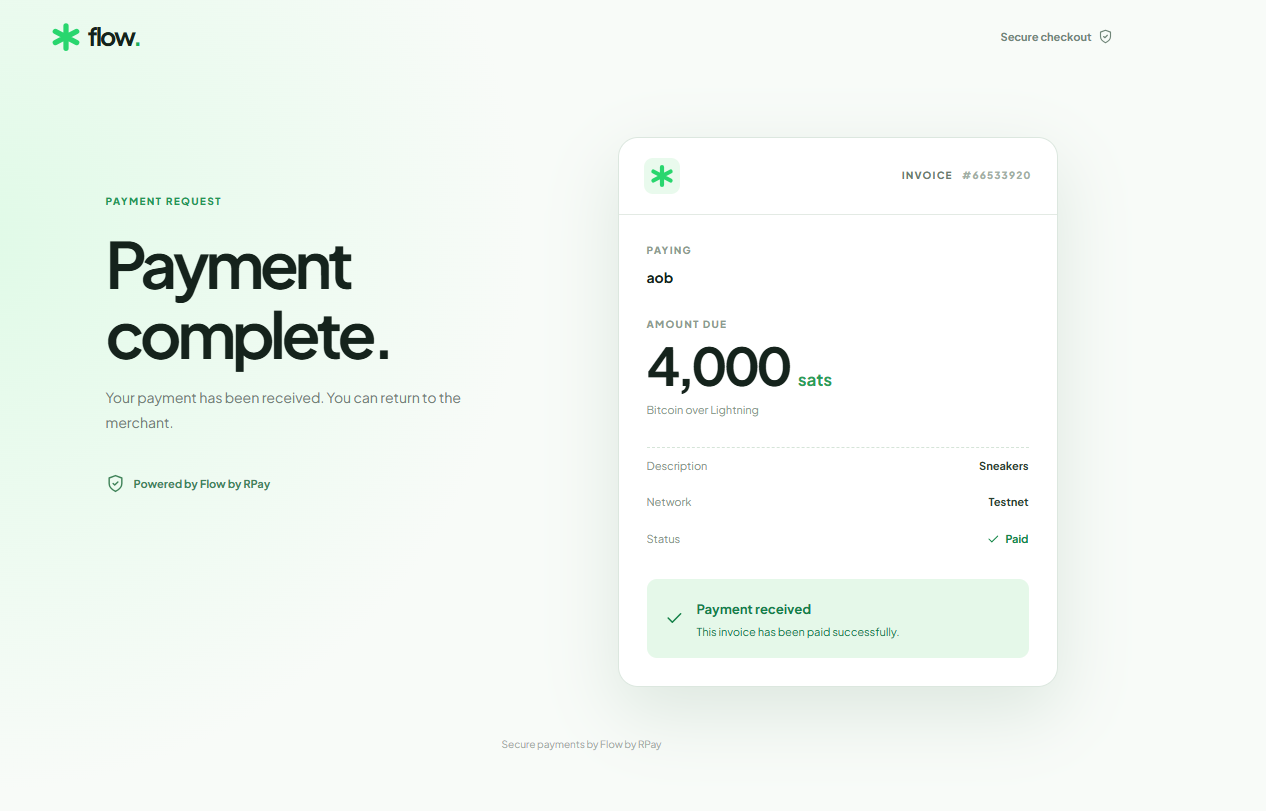
Development Status: Flow currently operates in a test environment. Lightning payments use Nostr Wallet Connect (NWC) with a demo wallet and simulated sats, not real Bitcoin mainnet funds. Local-currency withdrawal functionality has been implemented but is not yet enabled for real-money settlement pending provider credential verification and production integration. Flow does not currently process real customer funds and is not yet production-ready.
Inspiration
For many African businesses, reaching customers around the world is easier than getting paid by them.
A developer in Nigeria can build software for someone in Europe. A creator can sell digital products to customers across continents. A small business can find international customers through social media. Yet receiving payments can still be difficult because of geographical restrictions, expensive intermediaries, currency conversion challenges, and complicated integrations.
This got us thinking: What if accepting payments globally could be as simple as sharing a link?
Bitcoin's Lightning Network offers an interesting solution. It enables fast, low-cost payments across borders. But most business owners don't want to understand Lightning invoices, payment channels, or cryptocurrency infrastructure. They simply want to sell their products and receive their money.
We also realized that many small businesses don't have dedicated e-commerce websites. They sell through social media, messaging platforms, and direct conversations with customers. A payment button alone wouldn't address the entire problem.
That's what inspired Flow by RPay, a platform that brings together Lightning payments, online storefronts, local-currency withdrawal, and AI-powered commerce tools.
Our goal is to make global commerce more accessible to African businesses, whether they have an existing website or are just starting out.
What it does
Flow helps businesses create online storefronts, accept Bitcoin Lightning payments, manage orders, and interact with customers through AI-powered tools and Telegram bots.
The platform brings together several capabilities:
- Lightning payments: Merchants can accept Bitcoin through hosted checkout pages and payment links without operating their own Lightning nodes. Our current implementation uses Nostr Wallet Connect (NWC) with a demo wallet.
- Online storefronts: Businesses can create storefronts, list products, set prices, and share a single link where customers can browse and purchase items.
- Merchant dashboard: Merchants can manage products, orders, payment links, balances, and transaction activity from one interface.
- Local-currency withdrawal: Flow includes functionality for converting sats and initiating withdrawals to supported local currencies. This is separate from Lightning payment acceptance and is not yet enabled for real-money settlement.
- AI-powered commerce: Merchants and customers can interact with AI assistants that retrieve actual product and order information and help perform commerce tasks.
- Telegram bots: Businesses can connect Telegram bots to answer customer questions, provide product information, and generate checkout links directly within conversations.
- Developer API and SDK: Developers can integrate Flow's payment capabilities into their applications using REST APIs and the
@rpay/flowTypeScript SDK.
For example, a Nigerian creator can set up a storefront, upload digital products, and share a link with customers anywhere in the world. A customer can browse the products, select an item, and proceed to a Lightning checkout.
Alternatively, the customer can ask the merchant's Telegram bot about available products and receive a checkout link directly in the conversation.
Once the payment is verified, the merchant can see its status in the dashboard without needing to understand the underlying Lightning infrastructure.
We see Flow as more than a Bitcoin payment gateway. We want it to provide the tools businesses need to sell, accept payments, and manage commerce across different channels.
Try Flow yourself: Flow is publicly accessible at flow.rpay.space. You can create an account, set up your business, build a storefront, and generate payment links.
You can also explore our demo storefront or try a payment link without creating an account.
To test a payment: Select a product or open the payment link, generate and copy the Lightning invoice, then visit NWC Faucet. Select Pay Invoice, paste the invoice, and pay using demo sats. Return to Flow to see the payment confirmation. No real Bitcoin is required.
How we built it
We designed Flow around a modular architecture that separates the payment infrastructure from the commerce experiences built on top of it.
Lightning payments with Nostr Wallet Connect
For Lightning payment acceptance, we integrated Nostr Wallet Connect (NWC).
NWC allows Flow to communicate with a connected Lightning wallet to create invoices and verify payment settlement without requiring merchants to operate their own Lightning nodes.
Our implementation handles BOLT11 invoices, invoice expiration, payment references, payment states, and settlement verification.
For the current version, we use a demo wallet with simulated sats. This allows us to demonstrate Lightning payment workflows without processing real Bitcoin mainnet funds.
Commerce infrastructure and storefronts
We built the commerce layer around businesses, products, orders, payment links, checkout sessions, and transaction records.
Storefronts allow merchants to list products and share a dedicated store link with customers, removing the need to build a separate e-commerce website.
The storefront, payment links, and other commerce interfaces share the same backend services, keeping orders and transactions connected.
Merchant dashboard and hosted checkout
The dashboard provides merchants with a central place to manage their storefronts, products, orders, payment links, balances, and transactions.
Customers interact with a hosted checkout that displays payment details, a Lightning invoice, a QR code, and payment status.
We designed the payment lifecycle so an order is only marked as paid after the backend verifies settlement.
We also separated Lightning acceptance from local-currency withdrawal because receiving Bitcoin and completing a fiat payout are different financial operations.
AI and Telegram integration
We built the AI integration around structured tools connected to actual business data.
Instead of allowing the language model to invent product details, balances, or payment confirmations, the assistant retrieves information and performs supported operations through authorized backend services.
Telegram provides another interface to these capabilities. Merchants can connect their bots so customers can ask questions, discover products, and receive checkout links without leaving their conversations.
Developer infrastructure
Flow follows an API-first approach so its payment capabilities can be reused by other applications.
Our technology stack includes TypeScript, Next.js, a Node.js API, PostgreSQL, Nostr Wallet Connect, and AI integrations.
We also built developer-facing functionality through REST APIs, webhooks, and the @rpay/flow TypeScript SDK, published on npm. Developers can explore the SDK and integration guides through our developer documentation.
Challenges we ran into
One of our biggest challenges was getting the Lightning payment integration working.
We initially explored different ways to connect Flow to Lightning infrastructure. Some hosted services required additional onboarding or approval, which made it difficult to start integrating immediately.
We eventually chose Nostr Wallet Connect (NWC), which allowed us to communicate with a Lightning wallet without managing the underlying node infrastructure.
Integrating NWC also required understanding how wallet connections, invoice generation, and payment verification worked together. We used @getalby/sdk to communicate with the connected wallet and had to figure out how to test the complete payment flow.
One thing we discovered was that the NWC Faucet operates in an isolated demo environment. This meant invoices generated through our demo wallet couldn't be paid using regular Lightning wallets on the public network. We had to use the faucet environment to test payments properly.
After working through that, we were able to successfully generate invoices, pay them using demo sats, and confirm the updated payment status in Flow.
Another challenge was connecting the payment infrastructure to the rest of the commerce platform. A payment link, a storefront checkout, and a merchant dashboard all interact with the same underlying payment records. We needed to make sure that a payment initiated through one interface could be tracked and reflected correctly in the others.
With limited development time, we focused on getting the complete Lightning payment flow working first, then built the surrounding commerce and developer features around it.
Accomplishments that we're proud of
One of the things we're most proud of is that Flow goes beyond a basic Bitcoin payment button.
We built a commerce experience around Lightning payments, bringing together tools that businesses would otherwise need to manage separately.
Some of our key accomplishments include:
- Integrating Nostr Wallet Connect for Lightning invoice creation and payment verification.
- Building and testing the complete demo payment flow, from generating an invoice to confirming settlement and updating merchant records.
- Designing a Lightning-aware payment lifecycle with a simpler merchant experience.
- Building online storefronts so merchants can sell products without having an existing website.
- Connecting product discovery, checkout, and transaction management through a shared commerce backend.
- Integrating Telegram bots that can help customers discover products and initiate purchases.
- Connecting AI assistants to real business tools and records rather than relying on generated financial information.
- Publishing the
@rpay/flowTypeScript SDK on npm. - Making Flow publicly accessible so merchants and developers can create accounts and explore the platform.
We're particularly proud of how these components work toward a common goal: making commerce simpler for businesses.
A merchant shouldn't need to understand Lightning infrastructure to benefit from it.
What we learned
Working on Flow taught us that building payment infrastructure involves much more than generating an invoice and waiting for a successful transaction.
Merchants need clear payment statuses, reliable transaction records, order management, customer communication, and confidence that their money has actually arrived.
We also learned that payment acceptance and withdrawal are two separate problems.
Lightning can provide a fast way to receive payments, but local-currency withdrawal introduces additional requirements involving conversion, provider integrations, and settlement.
Another important lesson was about AI.
We realized that the most useful role for AI in financial applications is often to make existing functionality easier to access.
An assistant can help merchants create payment requests, retrieve information, or interact with customers through natural language. But it should never replace the deterministic logic responsible for verifying payments or managing funds.
We also learned to think beyond payment processing.
For many businesses, having somewhere to display products, communicate with customers, and manage orders is just as important as accepting payments.
That's why we included storefronts and Telegram commerce alongside Lightning infrastructure.
Ultimately, Flow reinforced our belief that useful technology should adapt to how people already work.
What's next for Flow
We see Flow growing into a broader commerce infrastructure platform for African businesses and developers.
Our next priorities include:
- Local payment methods: Supporting additional payment options alongside Lightning so customers can choose how they pay.
- Improved storefronts: Adding more customization, product management features, and tools for running online businesses.
- Production settlement: Completing provider verification and enabling supported local-currency withdrawals with real funds when the necessary requirements are met.
- Developer experience: Improving APIs, webhooks, documentation, and the
@rpay/flowSDK. - Smarter Telegram agents: Giving merchants more control over their bots, customer conversations, and automated workflows.
- Multilingual and voice support: Making commerce tools more accessible through natural-language and voice interactions, including African languages.
- Additional Lightning backends: Expanding infrastructure options as the platform evolves.
- Production readiness: Strengthening security, reconciliation, compliance, monitoring, and merchant onboarding.
In the long term, we want Flow to make it easier for anyone to start and run an online business, whether they sell through a storefront, messaging platform, existing website, or application built with our APIs.
Our vision is simple: help African businesses sell globally, accept payments confidently, and receive their money locally.
Built With
- bitcoin-lightning
- fastify
- neon
- next.js
- node.js
- nostr-wallet-connect
- openai
- pnpm
- postgresql
- prisma
- rest-api
- telegram-bot-api
- typescript
- vercel

